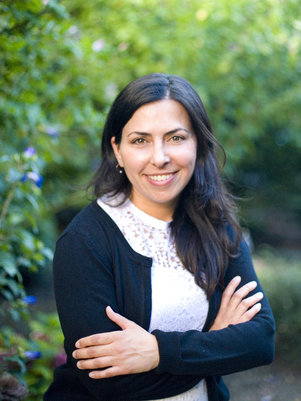
Dr. Haneen Farah is an Associate Professor in the Department of Transport & Planning at Delft University of Technology and co-director of the Traffic and Transportation Safety Lab. She also serves as head of the Traffic Systems Engineering section. Her research focuses on road infrastructure design, road user behavior, and traffic safety, integrating transportation engineering, human factors, and econometrics. Prior to TU Delft, she was a postdoc at KTH Royal Institute of Technology and earned her M.Sc. and Ph.D. in Transportation Engineering from the Technion-Israel Institute of Technology. Her work includes national/international projects like SAMEN (mixed automated/human traffic implications), AfroSAFE (road safety in Africa), and XCARCITY (sustainable city mobility). She teaches undergraduate and graduate courses on road design and traffic safety, including online programs for low/middle-income countries. Farah supervises multiple PhD and Master students in her research areas, contributing to over 50 peer-reviewed publications. Key research themes include infrastructure design for automated vehicles, driver behavior modeling, cyclist safety, and policy implementation of the Safe System approach. Her interdisciplinary approach bridges engineering and psychology to enhance traffic safety and efficiency through advanced analytics and simulation models.
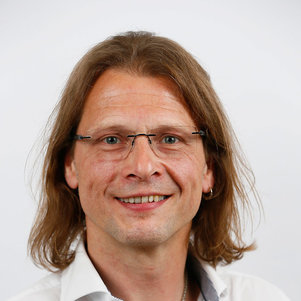
Javier Alonso-Mora is a Professor in the Department of Mechanical Engineering at Delft University of Technology, specializing in Learning & Autonomous Control. His research focuses on autonomous systems, robotics, motion planning, and transportation logistics, with applications in mobile manipulation, dynamic environments, and urban mobility. He leads key projects such as INTERACT (Intuitive Interaction for Robots among Humans) and ACT (Perceptive Acting Under Uncertainty), exploring human-robot interaction, autonomous vehicles, and healthcare robotics. Notable achievements include an ERC Starting Grant (2022) and a Veni Grant (2017). His work addresses challenges in robot navigation, control systems, and fleet optimization, with contributions to both theoretical advancements and practical implementations. Projects like TRiLOGy focus on sustainable water transportation, while HARMONY advances assistive robotics in healthcare. Alonso-Mora’s research leverages geometric fabrics for motion planning, probabilistic modeling for dynamic environments, and multi-agent coordination. He collaborates internationally and contributes to open-source frameworks for robotics. His recent publications emphasize safety-aware control, instance-aware semantic mapping, and adaptive systems for cluttered environments.
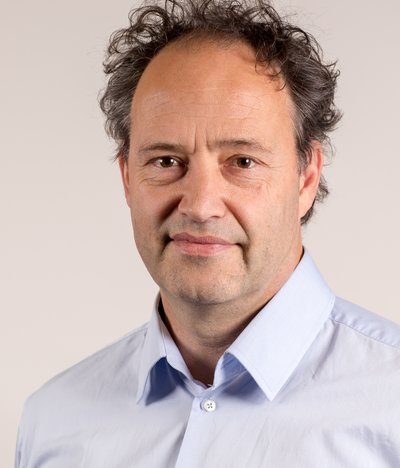
Prof. Hans van Lint is a Professor of Traffic Simulation and Computing at Delft University of Technology (TU Delft), where he holds the Anthony van Leeuwenhoek Chair since 2013. He is affiliated with the Department of Transport & Planning within the Faculty of Civil Engineering and Geosciences. His research focuses on the intersection of traffic flow theory, data analytics, and traffic simulation, with applications in estimating and predicting traffic states in networks. He has supervised numerous PhD students and contributed to valorization projects translating research into practical solutions. Van Lint earned his MSc in Civil Engineering in 1997 and returned to TU Delft for his PhD, which he completed in 2004 on 'Freeway Travel Time Prediction.' He has held roles including Assistant Professor (until 2009), Associate Professor, and has served as Director of Education for the MSc Transport, Infrastructure and Logistics program from 2010–2016. His research interests include traffic simulation frameworks, data assimilation techniques, and the development of tools for traffic state estimation. He has authored influential papers on topics such as microscopic traffic modeling, congestion pattern analysis, and macroscopic fundamental diagrams. His work emphasizes bridging theoretical models with real-world applications, enhancing traffic management and infrastructure planning. Van Lint teaches courses like 'Transport & Planning' and 'Interdisciplinary Fundamentals,' reflecting his commitment to both research and education. He actively contributes to TU Delft's labs, including the Traffic Dynamics, Modelling and Control Lab, advancing interdisciplinary approaches to mobility challenges.
Dr. Yan Feng is an Assistant Professor at Delft University of Technology's Department of Transport and Planning and Director of the Mobility in eXtended Reality (XR) Lab. Her research focuses on using XR technologies (Virtual, Augmented, and Mixed Reality) to study human mobility behavior in urban environments, including walking, cycling, automated vehicles, and public transportation. She leads interdisciplinary research at the intersection of transportation engineering, design, architecture, and human-computer interaction, aiming to advance human-centered and inclusive mobility systems. Her research interests include mobility behavior analysis, XR-based methodologies for studying wayfinding, evacuation scenarios, human-vehicle interaction, safety training, and accessibility. Key contributions involve developing XR tools for urban mobility research and addressing diversity and inclusion in transportation systems. Recent work emphasizes validating VR simulations against real-world environments and analyzing pedestrian behavior in high-risk scenarios. Articles highlight methodologies for crowd management strategies, pedestrian choice modeling, and evacuation dynamics. No scientific awards are explicitly mentioned in the provided texts. Dr. Feng’s activities include organizing conferences (e.g., XRIA 2024), delivering keynote talks on automated driving and cycling simulator studies, and serving on editorial boards like the Delft Young Academy. The Mobility in eXtended Reality Lab is central to her work, fostering collaborations across disciplines to innovate mobility solutions.
Bart Somers is an Associate Professor at Eindhoven University of Technology , affiliated with the Department of Mechanical Engineering . His primary affiliations include the Power & Flow Group and his own research group, Group Somers , alongside cross-cutting roles in EAISI (Eindhoven Artificial Intelligence Systems Institute) and EIRES (Eindhoven Research on Innovation and Sustainability in Energy Systems). He focuses on advancing combustion science , sustainable fuels , and engine efficiency , leveraging computational fluid dynamics (CFD) and experimental methods. His research interests span alternative fuels (hydrogen, bio-oils, biofuels), high-pressure spray combustion , and low-emission engine design . He investigates combustion optimization through CFD tools like large-eddy simulation (LES) and flamelet-generated manifolds (FGM), emphasizing fuel stratification , ignition dynamics , and emission control . His work bridges experimental diagnostics (e.g., spray visualization, OH* chemiluminescence) and numerical modeling. Academically, he teaches courses such as Thermodynamics , Clean Engines and Future Fuels , and Sustainable Vehicles , integrating practical projects into curricula. His educational activities emphasize interdisciplinary sustainability and innovation, including honors programs focused on professional development. Recent publications highlight his contributions to hydrogen injection strategies, biofuel applications in genset engines, and optimization of diesel-biofuel blends. His work aligns with global sustainability goals, addressing energy transition challenges through advanced combustion technologies.
Prof. Jack van der Vorst is the Personal Professor of AgriFood Supply Chain Logistics at Wageningen University's Operations Research and Logistics Group. Previously serving as a member of the Board of Directors of Wageningen University & Research (until 2024) and General Director of the Social Sciences Group, he leads over 1000 personnel across three institutes. His advisory roles include the Topteam AgriFood (Science Captain), Top consortium for Knowledge and Innovation (TKI), The Sustainability Consortium (TSC), and Florensis BV's Supervisory Board. With 20+ PhD supervisions and 200+ publications, his research focuses on innovative logistics concepts in AgriFood systems, including supply chain resilience, sustainability, and system innovation. His work integrates modeling frameworks with practical industry applications, emphasizing perishable products, horizontal collaboration, and environmental efficiency. Research interests span AgriFood System Design, Supply Chain Strategy, and Performance Management. His recent studies address challenges like postharvest loss reduction in developing countries, CO2 emission minimization in cold chains, and circular economy implementation in mushroom supply chains. Methodologically, he employs multi-criteria decision models, optimization techniques, and simulation to address complex logistics problems. Publications highlight themes such as horizontal collaboration success factors, vulnerability assessment frameworks, and green supply chain design. His work bridges academic rigor with industry needs, often collaborating with policymakers and international organizations to promote sustainable agri-food systems.
Theo Hofman is an Associate Professor and Program Director in the Mechanical Engineering Department at Eindhoven University of Technology (TU/e). He specializes in integrated design methods for complex engineering systems, focusing on powertrain systems for automotive, maritime, and aerospace applications. His work emphasizes computational design synthesis, machine learning, and model-based optimization. Education: Hofman holds an MSc (1999) and PhD (2007) in Mechanical Engineering from TU/e. He has held roles at Thales Cryogenics and Drivetrain Innovations before joining TU/e. He also served as an Invited Professor at ETH Zurich and Université Polytechnique Hauts-de-France. Research Interests: His research spans hybrid electric vehicles, powertrain design, energy management systems, and sustainable transportation. Key areas include automated design tools, thermal management, and co-design of plant and control systems. Applications include electric trucks, ships, and aircraft. Articles Trends: His recent publications (2021–2025) emphasize electric vehicle infrastructure optimization, battery systems, and control strategies. Key themes include energy efficiency, thermal management, and co-design methodologies for automotive and mobility systems. Scientific Awards: IEEE VPPC 2024 Best Paper Award. Advising & Grants: He has supervised over 104 MSc, 14 PDEng, and 10 PhD students. Active projects include the 'Green Transport Delta' initiative (2021–2024) and Bosch Transmission collaborations. His courses include 'Electric and Hybrid Vehicle Powertrain Design' and 'Automotive Systems Engineering Project.' Labs/Teams: He leads the Group Hofman and collaborates with the MEGEVH (France) and TU/e’s EAISI Mobility initiative. His work contributes to UN Sustainable Development Goals related to affordable and clean energy, industry innovation, and climate action.
Dr. Stella Boess is a Researcher at the Department of Industrial Design Engineering, Faculty of Industrial Design Engineering at Delft University of Technology. She focuses on interdisciplinary research bridging social sciences and engineering, particularly in sustainable renovation, accessibility, and health technology. Her work emphasizes user-centered design in residential environments, addressing challenges such as heat pump adoption and inclusivity for visually impaired individuals. She teaches courses like Inclusive Design and Prototyping for Interaction , and has collaborated on projects including the HiPP initiative for optimized patient experiences and the NWO usability project. She appeared in media such as NPO's Programme Reference Man in 2022. Her research interests include human-technology relations, sustainable building practices, and co-creation methodologies. She explores how design interventions impact occupant behavior and satisfaction, advocating for holistic approaches to integrate technology with human practices. Recent projects also address mobility design improvements for automotive interiors and inclusive medical solutions for the Global South. Research Projects: HiPP: Optimizing orthopedic patient care pathways NWO design for usability project REIL project: Enhancing rehabilitation interactions AAL project MyGuardian: Supporting aging populations Stella’s publications from 2022 to 2025 reflect a trend toward analyzing socio-technical dynamics in sustainable housing and mobility systems. She highlights the importance of stakeholder collaboration and participatory frameworks to ensure equitable outcomes. No scientific awards are listed, but her contributions to inclusive design and zero-energy renovation are notable.
Dr. Ilias Gerostathopoulos is an Assistant Professor at the Faculty of Science, Vrije Universiteit Amsterdam, affiliated with the Network Institute and the Department of Information Management & Software Engineering. He specializes in self-adaptive systems, cyber-physical systems, and machine learning operations (MLOps). His work focuses on software architectures for autonomous systems, decision-making under uncertainty, and experiment-driven adaptation frameworks. He teaches courses such as 'Fundamentals of Adaptive Software' and 'Information Management', emphasizing practical applications of adaptive systems and data-driven decision-making. Gerostathopoulos has been awarded the Best Presentation Award (2021) for contributions to evaluating self-adaptive systems. His research addresses challenges in industrial self-adaptation, MLOps architectures, and robotics. Key research themes include: Architecture-based self-adaptation in robotics and CPS MLOps frameworks and systematic analysis of AI systems Uncertainty management in autonomous systems Experiment-driven learning and tool development Notable contributions include the ExpEngine tool for workflow optimization and the ReBeT framework for robotic systems. His work bridges theoretical software engineering with practical industrial implementations.
National Research Institute for Mathematics and Computer ScienceNetherlands
Tim Baarslag is a Senior Researcher and group leader of the Intelligent and Autonomous Systems group at CWI (The Dutch research institute for Mathematics and Computer Science). He holds the title of Professor of Mathematics of Cooperative AI at Eindhoven University of Technology and serves as a Visiting Associate Professor at Nagoya University of Technology, Visiting Fellow at the University of Southampton, and Visiting Scholar at MIT. His research focuses on automated negotiation systems for collaborative decision-making in smart energy trading, IoT, autonomous vehicles, and digital privacy. Education : MSc (cum laude) and BSc (cum laude) from Utrecht University; PhD (cum laude) from Delft University of Technology Tim pioneered the COMBINE project (NWO Vidi grant) for coordinating multi-deal negotiations and developed the widely-used Genius negotiation environment. His work appears in prestigious venues like Science Magazine , Artificial Intelligence , and MIT Technology Review . He also leads the International Automated Negotiating Agent Competition and contributes to policy through memberships in The Young Academy and Netherlands Academy of Engineering . Recent research trends emphasize multi-deal negotiation protocols (2024), preference uncertainty modeling in privacy negotiations (2022), and scalable algorithms for handling outcome spaces as large as 10²⁵⁰ possibilities. His 2023 work on search algorithms for large negotiation domains has applications in energy trading and supply chain management. Scientific Awards : Cor Baayen Young Researcher Award (2017), Springer Theses Award (2016), multiple Best Paper Awards (AAMAS 2022, WI-IAT 2015, IJCAI 2014), and recognitions as Science Talent (2018), Academic Pioneer (2020), and Young Talent (2019) As a grant recipient , Tim leads NWO Vidi project COMBINE and previously held a Veni grant for preference uncertainty research. He mentors through organizing competitions, serving on conference PCs (AAAI, IJCAI), and reviewing in top journals like Artificial Intelligence . His work bridges theory and practice through the Genius framework and real-world implementations in smart grid and vehicular platooning.
Maurice Heemels is a Full Professor at Eindhoven University of Technology (TU/e), leading the Control Systems Technology group. He holds additional professorships in EAISI Mobility, EAISI Foundational, EAISI Health, and EAISI High Tech Systems. His research focuses on hybrid and networked systems, emphasizing resource-aware control, event-triggered strategies, and cyber-physical systems integration. He is an IEEE Fellow and chairs the IFAC Technical Committee on Networked Systems. Academic Background: MSc and PhD in Mathematics (TU/e, 1995 and 1999, both summa cum laude ) Visiting Professorships: ETH Zurich (2001), UC Santa Barbara (2008) Industry Experience: Research & Development at Océ NV Research Interests: Hybrid Systems, Networked Control, Event-Triggered Control Model Predictive Control (MPC) in healthcare and high-tech systems Cyber-Physical Systems for applications like lithography and precision agriculture Key Contributions: Developed Hybrid Integrator-Gain (HIGS) systems and Projection-Based Control methodologies Recipient of a VICI Grant for wireless control systems research Oversaw over €7M in research funding from NWO, EU, and industry Awards & Recognition: Automatica Outstanding Service Award (2014) Best Paper Awards (EBCCSP 2017, etc.) Invited Keynote Speaker at ECC, CDC, and others Grants & Projects: Current Projects: COMEDI (Cost-effective Mechatronics), PROACTHIS (Projection-based Control) Past Projects: Fault Detection in Wafer Scanners, Drone-based Farming Labs & Teams: Active in TU/e’s Cyber-Physical Systems and Systems Engineering research groups, collaborating globally on nonsmooth dynamics and hybrid systems.
Nathan van de Wouw is a Full Professor at the Mechanical Engineering Department of Eindhoven University of Technology (TU/e), affiliated with ICMS, EAISI Mobility, EAISI High Tech Systems, EAISI Foundational, and EIRES. He also holds an adjunct Full Professor position at the University of Minnesota and a part-time Full Professorship at Delft University of Technology. His research focuses on dynamics and control of mechanical systems, including mechatronics, robotics, smart manufacturing, energy systems, and networked control. He has supervised over 150 students and led numerous projects funded by industry partners like ASML, Philips, and Shell. Education: M.Sc. (with Honors) in Mechanical Engineering, TU/e (1994) Ph.D. in Mechanical Engineering, TU/e (1999) Research Interests: Nonlinear systems and control Model reduction and complexity analysis Data-driven and networked control strategies Applications in high-tech systems, autonomous vehicles, and energy systems Awards: IEEE Control Systems Technology Award (2015) for variable-gain control in motion systems Grants & Projects: Lead projects on mechatronic design, lithography systems, and thermodynamic optimization Collaborations with TNO, ASML, and industrial partners Labs & Teams: Member of TU/e’s Dynamics and Control group Affiliated with EAISI (Eindhoven AI Systems Institute)
Wolf Ketter is a Full Professor of Next Generation Information Systems at the Department of Technology and Operations Management, Rotterdam School of Management, Erasmus University, and Chaired Professor of Information Systems at the University of Cologne. He serves as Director of the Institute of Energy Economics (EWI) in Cologne and leads the Erasmus Centre for Future Energy Business in Rotterdam. He is a leading figure in designing sustainable smart markets using advanced computing and simulation techniques. His research focuses on Information Systems , Machine Learning , Energy Economics , and Sustainable Smart Markets . He pioneered the use of Competitive Benchmarking through simulation platforms like Power TAC to tackle complex sustainability challenges. His work bridges computer science, economics, and business to design intelligent systems for energy, transportation, and resource allocation. The recent articles highlight a strong trend toward real-time decision-making in sustainable systems—such as electric bus operations, shared electric vehicles, traffic signal control via reinforcement learning, and local energy markets. These reflect his focus on AI-driven optimization , smart market design , and urban sustainability . Scientific Awards: INFORMS ISS Design Science Award (2012) Runner-up for Best European IS Research Paper (2013) ERIM Top Article Award (2013) ERIM Impact Award (2014) He has supervised over 10 PhD students and secured significant research impact through grants and collaborative projects. His editorial roles include serving on the boards of Information Systems Research and MIS Quarterly , the top journals in the IS field. He has chaired over 20 international conferences and workshops, advancing global discourse in trading agents and sustainable systems. Wolf Ketter founded and leads the Learning Agents Group at Erasmus University and chairs the annual Erasmus Energy Forum . His labs and teams focus on building simulation environments and AI agents to model and improve real-world sustainable markets, particularly in energy and mobility.
René M.B.M. de Koster is a Full Professor of Logistics and Operations Management at the Rotterdam School of Management (RSM), Erasmus University, where he has been a faculty member since 1995. He holds a PhD from Eindhoven University of Technology (1988) and is a leading expert in warehousing, material handling, and sustainable logistics. PhD, Eindhoven University of Technology, 1988 Professor, RSM, Erasmus University, 1995–present Honorary Francqui Chair, Hasselt University, 2018 His research focuses on warehousing systems , robotics in logistics , container terminals , and behavioural operations . He integrates operations research with real-world logistics challenges, emphasizing sustainability and automation. His work contributes to UN Sustainable Development Goals related to responsible consumption and industry innovation. The most recent publications highlight a strong trend toward autonomous systems and AI-driven logistics , particularly in robotic fulfillment, dynamic routing, and human-robot collaboration. These works reflect interdisciplinary engagement with computer science, industrial engineering, and behavioural science. Notable scientific awards include: IISE Annual Conference Best Student Paper Award (2024) Transportation Science Paper of the Year (2023) EJOR Best Paper Award (2023) Best European Journal of Operational Research Review Paper (2022) Best Paper Finalist at major logistics conferences Professor de Koster has supervised over 30 students and is actively involved in editorial service for top journals such as Transportation Science , Production and Operations Management , and International Journal of Production Research . He is chairman of Stichting Logistica and founder of the Material Handling Forum, contributing significantly to both academic and industry advancement in logistics. He leads research in advanced logistics labs focusing on robotic sorting, mobile fulfillment, and sustainable supply chains, often in collaboration with European institutions and industry partners.
Dongsheng Yang is an Assistant Professor with the Electrical Energy Systems Group at the Department of Electrical Engineering of Eindhoven University of Technology (TU/e). He has been working at TU/e since 2019, focusing on power electronics and renewable energy integration, and previously served as Assistant Professor at Aalborg University's Department of Energy Technology (2018-2019). Dr. Yang received his B.S., M.S., and Ph.D. degrees in electrical engineering from Nanjing University of Aeronautics and Astronautics, Nanjing, China, in 2008, 2011, and 2016, respectively. His academic journey progressed from postdoctoral researcher at Aalborg University (2016) to faculty positions at both institutions. Dr. Yang's research focuses on the modeling, analysis, control, and design of power electronics dominated power systems , with the goal of safely accommodating high-penetrations of renewable energy sources and energy-efficient end-uses. His work spans several critical areas in modern power systems: Power electronics dominated grid stability and control Renewable energy integration and grid synchronization EV fast-charging infrastructure development Hydrogen production systems Medium-frequency transformer design and modeling AI applications in power electronics Analysis of Dr. Yang's recent publications reveals a strategic research trajectory toward developing advanced control strategies for power converters, improving modeling techniques through AI approaches, and addressing practical implementation challenges for renewable energy systems. His work spans both theoretical developments and practical applications, with increasing emphasis on neural network frameworks for magnetic modeling, safety boundaries for EV charging architectures, and enhanced fault ride-through capabilities for grid-connected systems. This progression demonstrates his commitment to solving real-world engineering challenges in the transition to renewable energy. Dr. Yang has received professional recognition including: Senior Member of IEEE Corresponding Member of CIGRE Working Group C4.56 Topic chair, technical committee member, and reviewer for top-level conferences and journals in power electronics Dr. Yang actively supervises doctoral candidates and postdoctoral researchers, including Xiao Yang (working on AI for power electronics), Saizhao Yang (postdoc), and L.A. Vlaar. He serves as project manager for multiple significant research initiatives totaling over €5 million in funding: REDCON (2023-2028) - Reconfigurable power electronics testbench Flexible Offshore Wind Hydrogen Power Plant Module (2022-2026) Sectorplan-DCES-Y.D.inv.: Reconfigurable power electronics testbench (2021-2029) E2GO-RDC Cost-reduction of EV fast-charging station (2021-2026) CW620863 System impact analysis for large scale renewable hydrogen production (2022-2023) Dr. Yang leads research within the Electrical Energy Systems group at TU/e's High Tech Systems Center, focusing on power conversion technologies. His work connects with multiple research teams across Europe through collaborative projects focused on renewable energy integration, EV infrastructure, and hydrogen production systems. He also teaches the course 'Dynamic control of power conversion in renewable energy systems' and contributes to the UN Sustainable Development Goals related to affordable and clean energy.