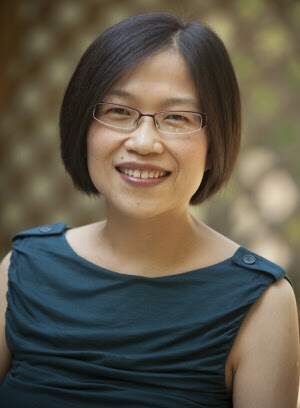
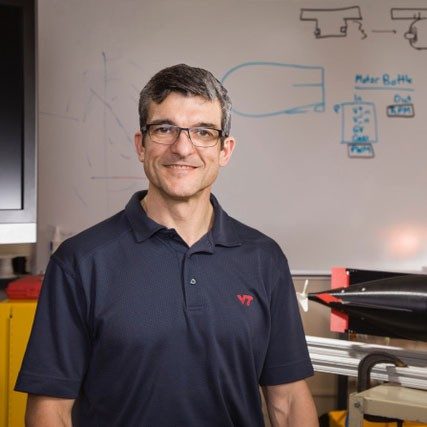
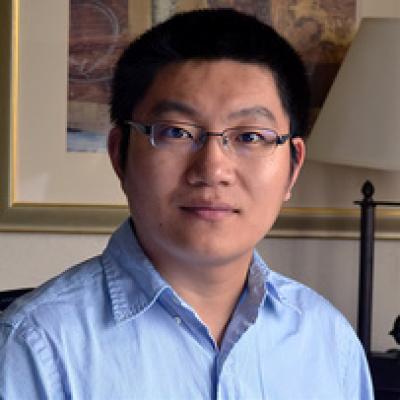
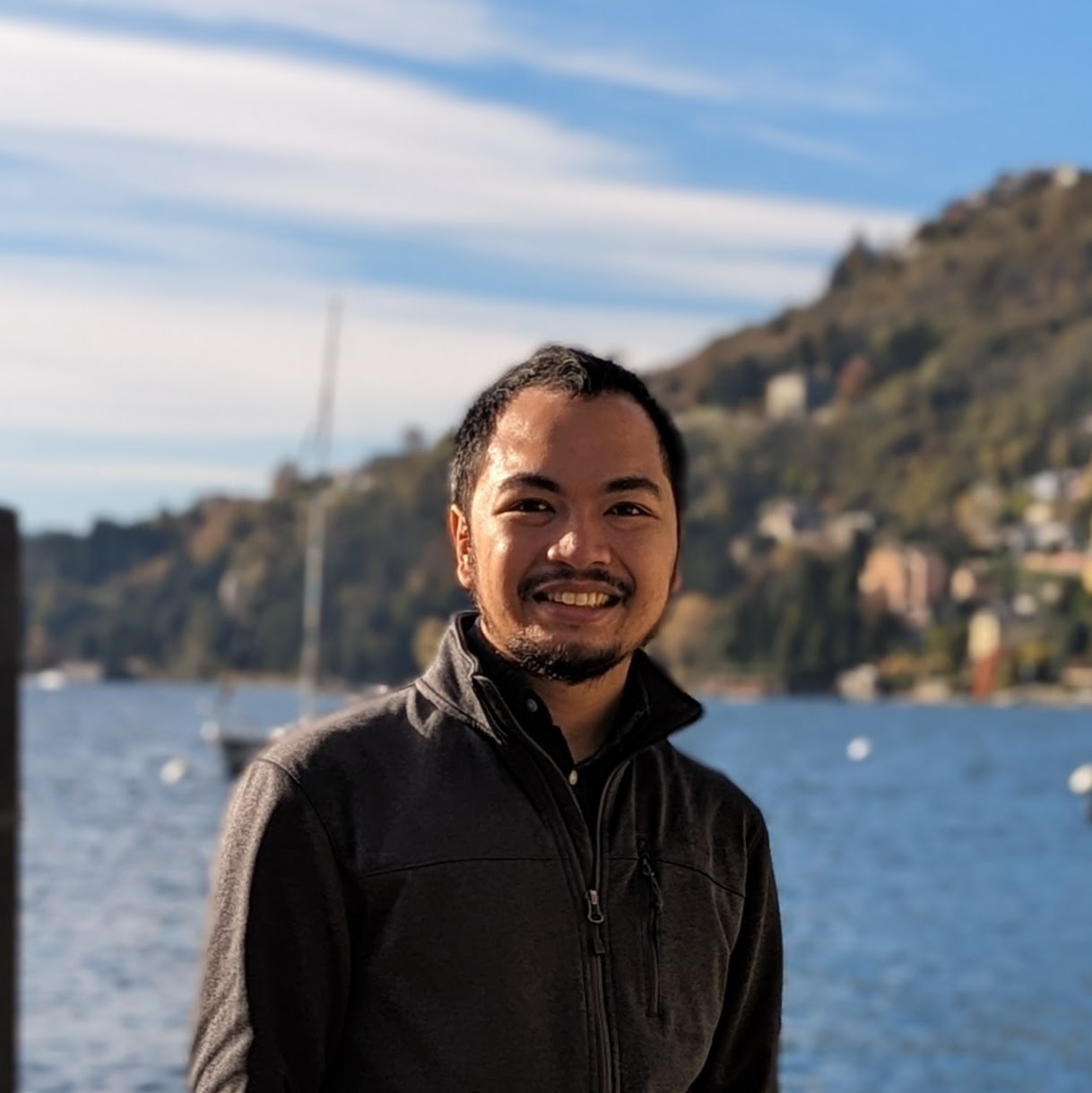
Inna Sharf is a Professor at the Department of Mechanical Engineering, Faculty of Engineering, McGill University. She is affiliated with the Aerospace Mechatronics Laboratory, focusing on dynamics, control, and robotics. Her work spans space robotics, UAVs, forestry automation, and multibody systems. Ph.D., University of Toronto B.ASc., University of Toronto Her research interests include: Dynamics and control of robotic systems Space robotics for debris removal and on-orbit servicing Unmanned aerial vehicles (quadrotors, indoor airships) Forestry robotics for tree-harvesting automation Multibody dynamics and contact modeling Recent publications emphasize: Control algorithms for quadrotors and UAV swarms De-orbitation strategies using natural resonances Motion planning under dynamic constraints Thermalling and energy-efficient flight for gliders Collaborative payload transport and adaptive control Tether and net-based debris capture systems
Waseeq Siddiqui is a Doctoral Researcher at the Department of Energy and Mechanical Engineering, Aalto University. His academic affiliation aligns with the College of Engineering, focusing on interdisciplinary research in aerospace and mechanical engineering domains. Research Groups: Energy Conversion and Systems Email: waseeq.siddiqui@aalto.fi Phone: +358504340184 His research interests span computational fluid dynamics (CFD), aircraft stability analysis, and non-linear aerodynamic phenomena. Recent work includes studies on wing rock dynamics in blended wing–body aircraft and micro aerial vehicles, alongside crosswind stability control systems and vortex lattice method comparisons. Key trends in publications highlight advanced applications of CFD for both aviation and biomedical systems (e.g., vocal fold particle transport), with emphasis on numerical modeling and stability optimization in complex flight scenarios.
Panle Jia Barwick holds the Todd E. and Elizabeth H. Warnock Distinguished Chair Professorship in the Department of Economics at the University of Wisconsin-Madison. She maintains significant affiliations with multiple prestigious research institutions including the National Bureau of Economic Research (NBER) as a faculty research associate and the Center for Economic Policy Research (CEPR) as a research fellow. Her research spans multiple domains within economics, with primary expertise in Industrial Organization, Chinese Economy, Applied Microeconomics, Environmental Economics, and Applied Econometrics. Barwick's work demonstrates strong interdisciplinary connections between economic theory, empirical analysis, and real-world policy applications, particularly focusing on environmental challenges, industrial policy, and market dynamics in both developed and emerging economies. Her extensive publication record reveals a clear progression toward increasingly policy-relevant research, with recent work focusing on industrial policies, environmental economics, and transportation systems. She has developed sophisticated empirical frameworks to analyze network competition in airlines, the impact of pollution information disclosure, and the effectiveness of various government interventions in markets. Zellner Award for Best Dissertation, American Statistical Association Top five most cited article published in RAND from 2015-2017 As an academic leader, Barwick serves in editorial roles for several top economics journals including the American Economic Journal: Applied Economics, Journal of Economic Perspectives, Rand Journal of Economics, and International Journal of Industrial Organization. She also co-founded UW-Madison's Pan Asia Pacific Sustainability Initiative (PAPSI) and the Cornell Institute for China Economic Research (CICER), where she continues to serve on the board. Her teaching portfolio includes advanced courses in Industrial Organization and Applied Econometrics at both UW-Madison and Cornell University.
Xiaonan Lu is an Associate Professor of Electrical Engineering Technology at Purdue University's School of Engineering Technology, with a courtesy appointment in the Elmore Family School of Electrical and Computer Engineering. His research focuses on critical challenges in modern power systems dominated by inverter-based resources, particularly stability and control in microgrids and renewable-integrated grids. His research interests span power systems engineering with emphasis on small-signal stability analysis, dynamic modeling of hybrid AC/DC microgrids, and advanced control strategies for grid-forming and grid-following inverters. He investigates AI-assisted modeling techniques, resilience enhancement through hydrogen integration, and data-driven optimization of microgrid operations to address challenges in low-inertia power systems and distributed energy resource coordination. Analysis of his recent publications (2024-2025) reveals dominant trends toward AI-aided stability assessment, seamless control transitions between inverter modes, and quantifiable trade-offs in voltage regulation and power sharing. His work consistently addresses practical implementation challenges including communication delays, cyber resilience, and standardized testing methodologies for inverter-dominated systems.
Nicolas Binder is a Professor and Head of the Turbomachinery and Propulsion Research Group at ISAE-SUPAERO . His research focuses on turbomachinery aerodynamics, unsteady flow analysis, and innovative propulsion systems for aerospace applications. Member of EuroTurbo executive committee ASME Member Associate Editor, Journal of Turbomachinery Research expertise in off-design operations and windmilling flows Research Interests : Aerodynamics of turbomachinery in severe off-design conditions Unsteady flow dynamics in turbines Innovative propulsion methods including magneto-hydrodynamics Flow analysis techniques for compressors and fans Recent publications (2024-2021) emphasize transient flow modeling in turbines, windmilling operation optimization, and variable geometry turbine performance. Articles span experimental validation of numerical models, shock wave interactions, and novel propulsion concepts like plasma-thrusters for drones.
Assoc. Prof. Dr. Murat Yılmaz is an Associate Professor at Istanbul Technical University's Faculty of Electrical and Electronics Engineering, Department of Electrical Engineering. His academic career spans over 15 years at Istanbul Technical University, including roles as Deputy Head of Department (2015-2020) and Vice Dean (2020-present). PhD in Electrical Engineering from Istanbul Technical University (1999-2006) Postdoctoral Researcher at University of Illinois at Urbana-Champaign (2007, 2011) His research focuses on: Power Electronics - advanced converter designs and semiconductor applications Electrical Machines - optimization of permanent magnet and reluctance motors Energy Storage Systems - battery efficiency and electrification infrastructure Electric Vehicles - cost-effective BRT systems and sensorless control methods Recent publications highlight his work on IPMSM optimization for light EVs (2025), battery chemistry performance analysis (2025), and PMaSynRM parameter estimation (2024). His research outputs demonstrate strong focus on sustainable energy solutions and motor control systems. Notable awards: 2022 IEEE PEMC Best Paper Award 2022 European Rover Challenge - 3rd Place & Best Robot Arm 2009 WORLD SOLAR CHALLENGE Best New Entrant Multiple TÜBİTAK Formula G awards (2006-2008) IEEE Senior Member (since 2020) Prof. Yılmaz leads multiple funded projects including: 2022-2023: Modeling & Design of Rover Systems for Space Exploration 2020-2021: Flexible SPA Web Applications Consultancy 2018-2021: Battery Charging Systems for Electric Vehicles
Daniel J. Stilwell is a Professor in the Bradley Department of Electrical and Computer Engineering at Virginia Polytechnic Institute and State University (Virginia Tech), and Co-Director of the Center for Marine Autonomy and Robotics. He holds affiliations including the Seale Coastal Observatory Faculty Fellow role. His research focuses on autonomous underwater vehicles (AUVs), marine robotics, control systems, and sensor networks. He earned his Ph.D. in Electrical Engineering from Johns Hopkins University (1999), M.S. from Virginia Tech (1993), and B.S. in Computer Engineering from the University of Massachusetts (1991). His notable contributions include advancements in AUV control, underwater acoustic communication, multi-agent systems, and sensor network optimization. Key projects include the "Unconventional Marine Platforms" funded by the Office of Naval Research and collaborative subsea mapping initiatives. His work bridges theoretical control systems with practical robotic applications in marine environments. Dr. Stilwell has received prestigious awards such as the NSF CAREER Award and ONR Young Investigator Program Award. His research emphasizes robust control strategies, adaptive systems, and decentralized learning algorithms. He leads efforts in experimental validation of AUV control systems and underwater sensor networks, contributing to both academic and military applications.
Hao Zhang is an Associate Professor in the Department of Computer Science at the Manning College of Information and Computer Sciences (CICS), University of Massachusetts Amherst. He directs the Human-Centered Robotics Laboratory (HCRLab), focusing on lifelong collaborative autonomy, robot adaptation, and human-robot teaming. His research integrates robotics, AI, and machine learning to develop algorithms for real-world applications like manufacturing, autonomous driving, and environmental monitoring. He holds an NSF CAREER Award and DARPA Young Faculty Award, among other recognitions. Dr. Zhang earned a PhD from the University of Tennessee, Knoxville (2014) and an MS from the Chinese Academy of Sciences (2009). His work addresses challenges in unstructured environments through innovations like self-reflective terrain adaptation and graph-based perception systems. He actively promotes equity in robotics through his PROGRESS outreach program. His research sponsors include NSF, DARPA, and industry partners such as Toyota. Publications span conferences like RSS, ICRA, and IROS, with best paper awards. He serves on editorial and program committees for top-tier journals/conferences including RA-L, NeurIPS, and AAAI.
Ramadan El Shatshat is an Associate Professor (Teaching Stream) and Director of the Electric Power Engineering Program at the University of Waterloo's Department of Electrical and Computer Engineering. He holds a PhD from the University of Waterloo (2001) and is a registered Professional Engineer in Ontario. His research focuses on distribution system engineering, smart grids, renewable energy integration, and electric vehicle impact analysis. Dr. El Shatshat has received multiple awards, including the James A. Field Teaching Excellence Award (2016) and the University of Waterloo Outstanding Performance Award (2010, 2017, 2021). He teaches courses like ECE 360 (Power Systems and Smart Grids) and ECE 668 (Distribution System Engineering). Education: PhD in Electrical Engineering, University of Waterloo (2001) MSc in Electrical Engineering, University of Garyounis, Libya (1992) BSc in Electrical Engineering, University of Garyounis, Libya (1984) Research Interests: Smart grids and microgrids Optimization for distribution systems Electric vehicles and renewable energy integration AI-based monitoring techniques Awards: 2021 University of Waterloo Outstanding Performance Award 2018 Marsland Faculty Fellowship 2016 James A. Field Teaching Excellence Award Advising & Grants: Supervised/co-supervised 26 students (undergraduate, master's, doctoral, and postdoctoral) His work spans over 50 peer-reviewed publications and patents in fault detection, voltage control, and EV integration.
Dr. Dilum Dissanayake is an Associate Professor in Human Geography and Transportation Planning at the University of Birmingham's School of Geography, Earth and Environmental Sciences. She holds a PhD from Nagoya University, Japan, and has expertise in transport planning, data analysis, and behavioral change to mitigate climate change. Her research integrates computing, data mining, and behavioral sciences with a focus on sustainable mobility, smart infrastructure, and innovative transport solutions. Education: PhD (Transport Planning), Nagoya University, Japan MEng (Infrastructure Planning and Management), Asian Institute of Technology, Thailand BSc (Hons) (Civil Engineering), University of Moratuwa, Sri Lanka Diploma in Programming Research Interests: Travel demand modeling, electric/autonomous vehicles, behavioral change for sustainability, transport policy analysis (e.g., congestion pricing, telecommuting), and developing country transport challenges. She applies methods like discrete choice models, machine learning, and NLP. Awards & Grants: Co-Investigator in CLEETS (UK-Japan £10m project), Principal Investigator in Capitalisation and eHUBS (€392k/€412k EU projects). Notable awards include the 2022 Remarkable Women in Transport Award and Duo-India Fellowship. Advising & Grants: Supervises 6 current PhD students and has guided 10 completed PhDs. Leads Transport Demand Management in CLEETS and Transport Modelling in Capitalisation. Teaches modules like Sustainable Cities and One-Planet Thinking. Labs/Teams: Part of Birmingham's Sustainable Cities research group, leading projects on micro-mobility, EV adoption, and post-pandemic transport trends. Engages in international collaborations via CLEETS and eHUBS.
Dr. Damian Nale Dailisan is a Lecturer in the Department of Humanities, Social and Political Sciences at ETH Zürich, affiliated with the Computational Social Science group. He holds a Ph.D. in Physics from the University of the Philippines, specializing in traffic modeling and machine learning applications. His research focuses on multi-agent systems, particularly in transportation and urban systems. He has held postdoctoral roles and contributed to projects like the ACCeSs@AIM lab. His work bridges computational methods with real-world challenges, including traffic control optimization, AI-driven decision-making, and smart city infrastructure. Notable projects include FAIRLANE for priority lane management and studies on democratizing traffic control systems. Dailisan’s publications span journals like Transportation Research Part C and IEEE Access, addressing topics such as reinforcement learning in traffic signals and ethical AI frameworks. He has presented at workshops like 'Back to the Future' at ETH Zurich and collaborates with interdisciplinary teams to enhance urban mobility solutions. His technical expertise includes Python, network analysis, and agent-based modeling, with contributions to open-source tools for earthquake networks and social systems analysis.
Gregor Pfeifer is a Senior Lecturer in the School of Economics at the University of Sydney, affiliated with CESifo and IZA. Previously, he was a Senior Research Officer at University College London's Department of Economics. His research focuses on Health, Education, and Public Economics, emphasizing applied microeconometrics for policy evaluation. He holds a Ph.D. from Saarland University. **Education**: Ph.D., Saarland University (Germany). **Research Interests**: Applied Microeconomics, with a focus on causal inference in Health, Education, and Public Policy contexts. His work explores topics like school smoking bans, fuel price policies, and gender wage expectations. **Grants**: Received funding from the Baden-Wuerttemberg Stiftung (€118k, 2017–2019) for STEM education research, the German Research Foundation (€17k, 2017–2018) for school tracking effects, and seed grants for junior researcher networks. **Media**: His work on school smoking bans and gender wage expectations has been covered in outlets like *The Sunday Times* and *Frankfurter Allgemeine Zeitung*. **Affiliations**: Serves as an Associate Editor at *Empirical Economics*. Active in policy evaluation, synthetic control methods, and labor market dynamics.
Donovan Fuqua is an Assistant Professor in the Department of Accounting and Information Systems at New Mexico State University's College of Business. He specializes in supply chain management, operations research, and the application of artificial intelligence in logistics. His research focuses on optimizing supply chain resilience, disaster recovery models, and the use of advanced algorithms in solving complex logistical challenges. He holds a physical office at the Business Complex, 127, and can be reached at dfuqua@nmsu.edu. Address: Business Complex, 127 • Las Cruces, NM 88003 Phone: (575) 646-2812 His research interests span supply chain resilience , optimization algorithms , and neural networks in logistics . He has published extensively on topics such as commodity demand forecasting, state-of-charge prediction in vehicle batteries, and chaos theory applications in military decision-making. Recent work analyzes the Bank of North Dakota's financial strategies and explores resilience models for global disruptions. His articles often bridge theoretical frameworks with real-world applications, such as using deep learning for humanitarian logistics planning. Dr. Fuqua has not been noted for scientific awards in the provided texts. His advising and grant activities are not detailed here, but his research portfolio reflects a strong focus on interdisciplinary solutions for complex logistical systems.
Elena Panteley is a Research Director at the CNRS and a member of the Laboratoire des Signaux et Systèmes (L2S) at CentraleSupélec. She holds a PhD in Applied Mathematics from Saint Petersburg State University (1997) and has extensive experience in research, including roles at the Institute of Problems in Mechanical Engineering, Russian Academy of Sciences (1986–1998). She co-chairs the International Graduate School of Control at the European Embedded Control Institute (EECI-IGSC) and serves as a Book-reviews Editor for Automatica and Associate Editor for IEEE Control Systems Letters . Education: PhD in Applied Mathematics, Saint Petersburg State University, 1997 MSc/BSc in relevant fields (implied by career progression) Research Interests: Focuses on stability and control of nonlinear dynamical systems, networked systems, multi-agent systems, and their applications. Her work emphasizes robust control, consensus algorithms, synchronization, and distributed control strategies for autonomous systems. She explores theoretical frameworks like Lyapunov methods and adaptive control, with practical applications in robotics and communication networks. Publications: Over 100 peer-reviewed articles in top journals like IEEE Transactions on Automatic Control and Automatica . Recent trends include advancements in consensus algorithms for multi-agent systems, synchronization of nonlinear oscillators, and control under communication delays. Awards: No specific awards mentioned, but contributions to control theory and networked systems are widely recognized. Grants/Advising: Leads research on adaptive control, network synchronization, and robotics. Collaborates internationally and advises on projects involving autonomous vehicles and distributed systems. Labs/Teams: Active in L2S and affiliated with CNRS, contributing to teams like MODESTY, COMEDY, and SYCOMORE. Engaged in transverse research on energy, industry automation, and healthy systems.
Dr. Xingpeng Li is an Associate Professor in the Department of Electrical & Computer Engineering at the University of Houston (UH), where he has held this position since 2024, following his tenure as Assistant Professor (2018–2024). His research focuses on smart grid technologies, renewable energy integration, and optimization of power systems. He holds a Ph.D. in Electrical Engineering from Arizona State University (2017) and multiple master’s degrees in Computer Science (Georgia Tech, 2023), Industrial Engineering (ASU, 2016), and Electrical Engineering (Zhejiang University, 2013). His work emphasizes machine learning applications in power systems, including battery degradation modeling, microgrid design, and climate-resilient grid planning. He leads the RPG Lab (https://rpglab.github.io), advancing solutions for offshore renewable energy systems, hydrogen transmission, and grid cybersecurity. His research has been funded by the NSF CAREER Award (2024) and the NAS Gulf Research Program (2023). Education : Ph.D., Electrical Engineering, Arizona State University (2017) M.S., Computer Science, Georgia Institute of Technology (2023) M.S., Industrial Engineering, Arizona State University (2016) M.S., Electrical Engineering, Zhejiang University (2013) B.S., Electrical Engineering, Shandong University (2010) Dr. Li’s recent publications highlight advancements in AI-driven grid optimization, battery lifecycle modeling, and offshore microgrid planning. He has received awards such as the Early-Career Research Follow (NAS Gulf, 2023) and the IEEE Phoenix Section Student Scholarship (2016). Awards : NSF CAREER Award (2024) Early-Career Research Follow, NAS Gulf Research Program (2023) Emerging Leader, Offshore Technology Conference (2023) His teaching includes courses like ECE 6327 (Smart Grid Systems) and ECE 6379 (Power System Operations), bridging theoretical research with practical grid challenges. His lab collaborates on projects like 100% renewable offshore platforms and hydrogen energy transmission systems, addressing climate resilience and decarbonization goals.