Aziz Amoozegar is a Professor in the Department of Crop and Soil Sciences at NC State University's College of Agriculture and Life Sciences. His research focuses on environmental soil physics, specifically investigating water and pollutant movement through soils, phosphorus dynamics, and soil characterization for agricultural and engineering applications. Research programs include evaluating soil-water interactions in contaminated environments, assessing fertilizer-enhanced phosphorus transport, and developing soil analysis techniques. Key areas of study involve pollutant migration through saprolite, cadmium release kinetics in amended soils, and hydraulic functioning of compacted soils. His work bridges environmental science, agricultural engineering, and soil chemistry. Recent publications cover topics such as phosphate mobility under unsaturated conditions, cadmium release in contaminated soils, and bioenergy grass residue effects on evaporation. He has contributed to methodological advancements in soil testing and remediation strategies for heavy metals like lead. Dr. Amoozegar's research emphasizes practical applications for sustainable agriculture and environmental protection. No specific awards or grants are listed in the provided information, but his involvement in USDA and EPA-related programs suggests active collaborative research efforts.
Virginia Moore is an Assistant Professor in the School of Integrative Plant Science , Plant Breeding and Genetics Section at Cornell University. She joined the faculty on February 1, 2021. Her research program focuses on plant breeding for sustainable cropping systems, including organic systems, intercropping, pest resistance, and ecosystem services. She works with diverse species such as cover crops, perennial forages, bioenergy crops, and hemp. Dr. Moore earned her PhD in Plant Breeding & Plant Genetics from the University of Wisconsin-Madison (2018), MS from the same institution (2015), and BS from McGill University (2010). Prior to Cornell, she was a post-doctoral researcher and project manager for the USDA Sustainable Agricultural Systems Lab. Research Focus: Her work bridges plant breeding and agroecology through: Developing cover crops and perennial systems for enhanced sustainability Breeding crops for organic and polyculture environments Improving pest resistance and ecosystem service provision Advancing cold tolerance in crops like winter pea Publications: Her 9 recent articles (2016-2020) demonstrate consistent focus on sustainable agriculture, cover crop breeding, and organic systems. Research spans field experiments, genetic studies, farmer surveys, and cultivar development, with strong emphasis on practical applications for sustainable farming. Awards: NIFA-AFRI Postdoctoral Fellowship Mentoring & Grants: Dr. Moore leads the Moore Lab and mentors graduate students including Turner Fellow Maia Payne. She directs projects funded by USDA and USAID, and manages the Legume Cover Crop Breeding network. The lab offers PhD fellowships and summer internships focused on plant breeding for sustainability. Lab & Team: The Moore Lab researches cover crops, forages, hemp, and dry beans. Current projects include cold tolerance studies in winter pea and Johnsongrass, rye breeding initiatives, and farmer surveys on cereal rye usage.
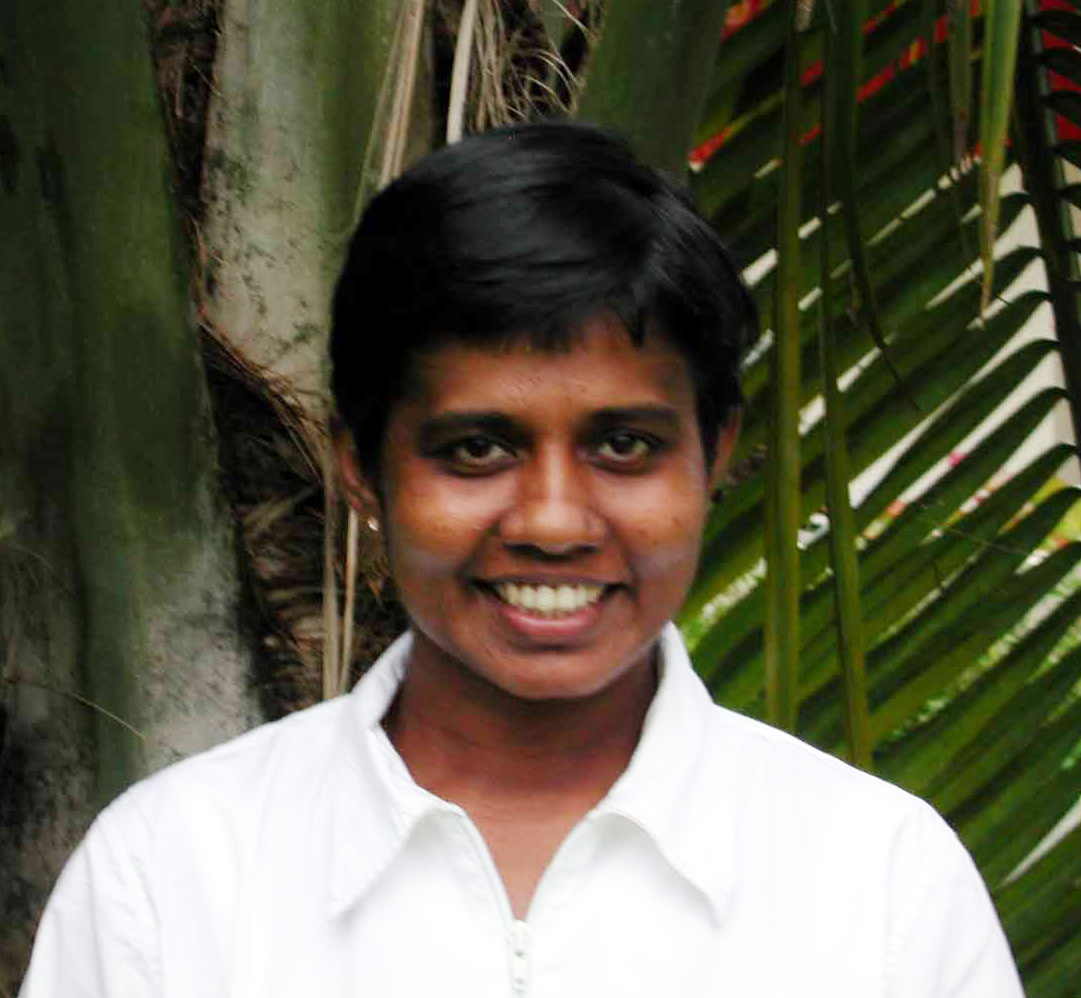
Dr. Kaushalya G. Amarasekare is an Associate Professor and Extension Specialist in Entomology at the Department of Agricultural Sciences and Engineering, College of Agriculture, Tennessee State University. Her research focuses on integrated pest management (IPM), biological control, and pesticide efficacy. She joined TSU in November 2015 and holds a Ph.D. in Entomology from the University of Florida, an M.S. from Oklahoma State University, and a B.S. (Honors) in Agriculture from the University of Peradeniya, Sri Lanka. Her research interests include pest-natural enemy interactions, effects of reduced-risk pesticides, and invasive pest management. She has authored numerous publications in journals like Journal of Economic Entomology and Biological Control , focusing on pesticide selectivity, insecticide residues, and biological control strategies in orchards. Her work often combines field and laboratory studies to assess ecological impacts of agricultural chemicals. Dr. Amarasekare has received grants totaling over $300,000 for projects like improving IPM practices for cucurbits and enhancing biological control in orchards. She is actively involved in professional societies such as the Entomological Society of America and the International Organization for Biological Control. Awards include the Outstanding Young Researcher Award (2019) and multiple ESA participation awards. Teaching responsibilities include AGSC 5900/7900 Applied Entomology (graduate) and AGSC 4900 Entomology (undergraduate). She leads Extension activities including farmer training, K-12 outreach, and stakeholder field visits. Her lab, the Fruit, Vegetable and Field Crop Entomology Lab, contributes to applied research and community education.
Saumik Basu is an Assistant Professor in the Department of Entomology at the University of Georgia (UGA), based at the Tifton Campus within the College of Agricultural & Environmental Sciences. His research focuses on developing sustainable integrated pest management (IPM) strategies for vegetable crops in South Georgia. He leads the Vegetable Entomology Lab, which investigates pest complexes like whiteflies, diamondback moths, and pepper weevils, along with their interactions with plant pathogens. His work emphasizes molecular ecology, plant defense mechanisms, and the role of abiotic factors (e.g., climate, soil microbiota) in pest management. Education: B.S. in Human Physiology, University of Calcutta M.S. in Biotechnology, Visva-Bharati University Ph.D. in Molecular Plant Virology, Jawaharlal Nehru University Postdoctoral Research: University of Nebraska-Lincoln (UNL) and Washington State University (WSU) Research Interests: Molecular mechanisms of plant-insect interactions Sustainable IPM for vegetable pests Plant defense signaling and phytohormonal crosstalk Impact of soil microbiota on pest-pathogen dynamics Climate change effects on agroecosystems Lab & Collaborations: The lab collaborates with county extension agents, growers, and other research groups to translate findings into practical solutions. Current projects address pest attack order effects on plant defenses and the role of biopesticides like Metarhizium fungus. Graduate students and postdocs work on topics such as soil amendments for pest resistance and vector-borne disease transmission. Advising & Grants: Advises Ph.D. candidate Sourav Pal and M.S. student Rajesh Udavant. Technical staff includes Charles Laney Gruver, an expert in field trials and insect rearing. Undergraduate Alexis Crossgrove supports lab activities. Labs/Teams: Vegetable Entomology Lab (UGA), previously affiliated with Molecular Plant Sciences at WSU.
Isabella "Izzi" Hinks serves as a Teaching Assistant Professor in the Computer Science Department at the University of North Carolina at Chapel Hill. She completed her Ph.D. in Geospatial Analytics at NC State University's Center for Geospatial Analytics in 2024, where she was advised by Dr. Josh Gray. Her academic journey began with dual B.Sc. degrees in Computer Science and Environmental Science, along with a minor in Statistics and Analytics, all earned at UNC Chapel Hill. Dr. Hinks' research focuses on developing innovative algorithms to estimate the adaptive potential of small-scale agriculture in poverty-affected regions. Her work combines computer science expertise with environmental applications, particularly in using remote sensing technologies and deep learning techniques to monitor smallholder farming systems. She has made significant contributions to understanding how smallholder farmers can enhance their climate resilience through strategic adaptations, leveraging both satellite data and field observations. Her publication record demonstrates a consistent focus on applying advanced computational methods to agricultural monitoring challenges. The most recent articles show a progression from basic field boundary mapping using deep learning toward more sophisticated analyses of climate adaptation impacts on smallholder resilience. Her work increasingly integrates multiple data sources, including satellite imagery, household surveys, and on-the-ground measurements, to create comprehensive assessment frameworks for agricultural systems in developing regions. Among her notable recognitions is the Gladys West Award from the Center for Geospatial Analytics' fourth annual CGA Awards, received in January 2023. Her research on deep learning-based smallholder field delineation was featured in an NC State University News article in April 2023, highlighting the practical significance of her work. Dr. Hinks has been actively involved in several research initiatives, including work with the RESCuE Consortium in Thailand monitoring coastal ecosystem rehabilitation and supporting underserved communities during the Covid-19 pandemic through Curamericas Global. She was also a founding member of Acta Solutions, a tech start-up focused on helping local governments optimize decisions using constituent data. Her presentations at major conferences like the AGU Fall Meeting demonstrate her growing prominence in the field of geospatial analytics for agricultural applications.
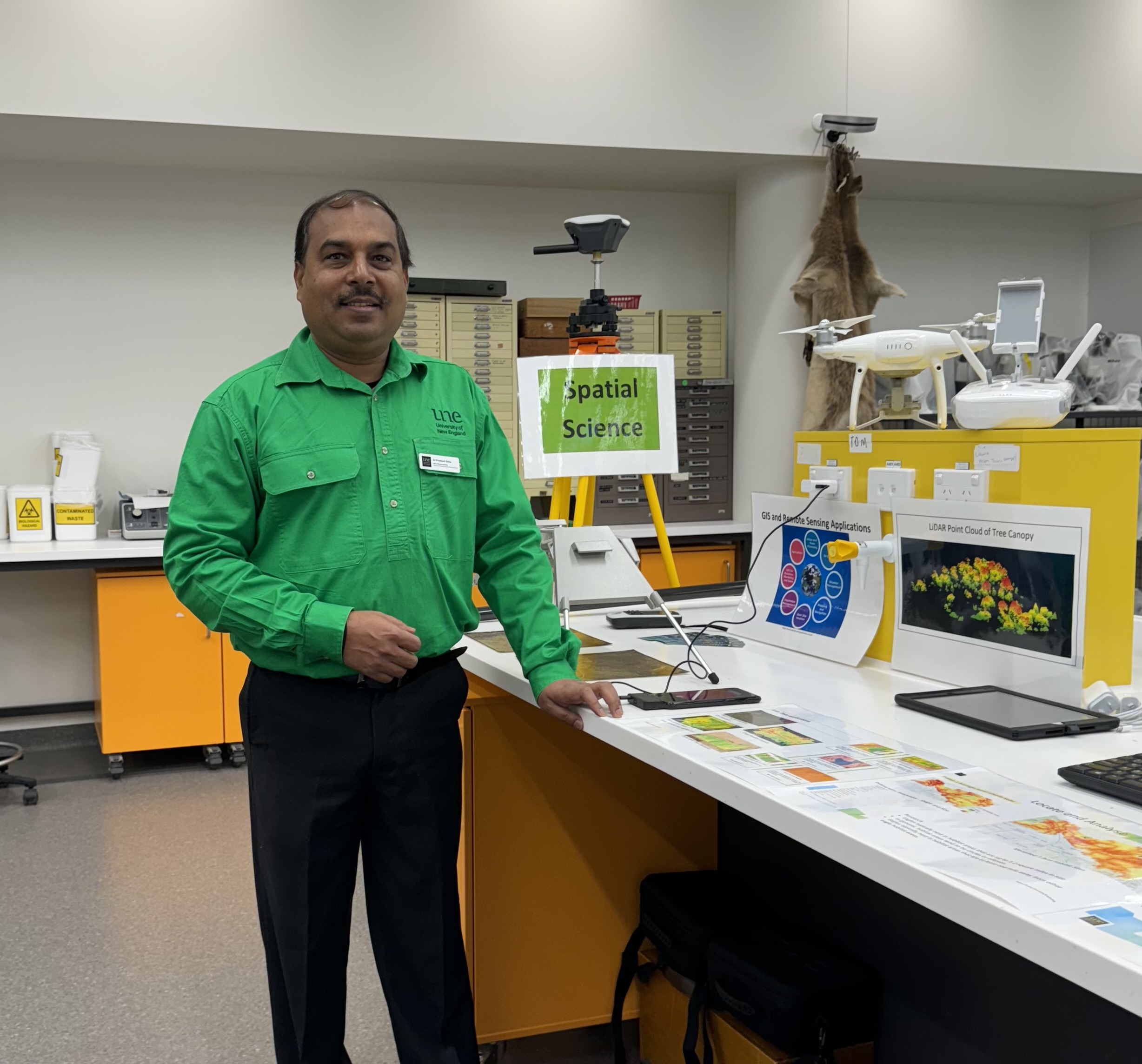
Dr. Priyakant Sinha is a Senior Lecturer in Spatial Science at the University of New England's School of Environmental and Rural Science, with over 20 years of research experience in remote sensing and geospatial science. He specializes in applying remote sensing technologies to agriculture, environmental monitoring, and natural resource management. His research focuses on: Advanced agricultural remote sensing and precision agriculture Time-series crop monitoring and yield prediction UAV/Drone-based 3D imaging for farm management Vegetation species mapping and change detection Hyperspectral and LiDAR data analysis Dr. Sinha teaches courses in GIS, spatial analysis, precision agriculture, and remote sensing applications. He has successfully supervised multiple PhD students in areas ranging from flood hazard mapping to drought monitoring using earth observation data. Technical expertise includes advanced digital image processing, GIS analysis and modeling, and specialized software including ENVI, ArcGIS, QGIS, and Pix4D. He develops innovative methods for temporal change analysis using machine learning and Google Earth Engine.
Melanie Kalischuk is an Assistant Professor in the Department of Plant Agriculture at the University of Guelph, Ontario Agricultural College. She holds a B.Sc. in Biological Sciences from the University of Lethbridge, an M.Sc. in Forest Biology from the University of Alberta, and a Ph.D. in Biomolecular Science from the University of Lethbridge. Her research focuses on biotic and abiotic interactions impacting specialty crops such as wine grapes, berries, hazelnuts, ginseng, hops, and high-value vegetables. Key areas include early detection of plant pathogens, developing strategies to enhance crop resilience under environmental stress, and translating research into industry solutions through interdisciplinary collaboration. Her work leverages advanced tools like UAV-assisted multispectral imaging and molecular assays for rapid disease detection. She is affiliated with the Edmund C. Bovey Building and the Ontario Crops Research Centre – Simcoe. Dr. Kalischuk’s contributions span plant pathology, agricultural biotechnology, and crop improvement, with publications addressing fungal pathogens, RNA interference applications, and virus resistance mechanisms. No scientific awards are explicitly listed in her profile. Her research narrative emphasizes practical applications in crop protection, including whitefly-transmitted virus resistance and disease management in cucurbitaceae. While no advising or grant details are provided in the text, her lab focuses on innovation in diagnostics and sustainable agricultural practices.
Dr Natalia Falagan Sama is a Senior Lecturer in Food Science and Technology at Cranfield University, affiliated with the Plant Science Laboratory within the Centre for Soil, Agrifood and Biosciences. Her work focuses on reducing food waste and improving food security through innovative postharvest strategies for fruits and vegetables. University: Cranfield University School: Centre for Soil, Agrifood and Biosciences Department: Plant Science Laboratory Academic Rank: Senior Lecturer Dr Falagan Sama's research centers on understanding the biological mechanisms of ripening and senescence in fresh produce and developing sustainable technologies to extend shelf life. Her expertise spans food quality, food safety, controlled and modified atmosphere storage, and urban agriculture. She investigates how stress responses in crops can be harnessed to maintain nutritional quality and reduce losses across the supply chain. Her work integrates plant physiology, food engineering, and sustainable systems thinking. Her recent publications highlight a strong focus on postharvest biology, sustainable packaging, cold chain optimization, and the role of urban agriculture in food security. Trends in her research show increasing emphasis on climate resilience, net-zero food systems, and the societal impacts of food production, particularly during crises like the COVID-19 pandemic. She frequently publishes in high-impact journals such as Postharvest Biology and Technology , Journal of the Science of Food and Agriculture , and Frontiers in Plant Science . Top 50 Women in Engineering: Engineering Heroes award (2021) Medal from the Royal Academy of Engineering (Spain) (2022) Best Research Supervisor at Cranfield University (2023) Dr Falagan Sama advises on major research projects funded by BBSRC, GCRF, ESRC, and NERC, including initiatives on avocado waste reduction in Mexico and the Rurban Revolution for resilient UK food systems. She collaborates with clients such as the World Bank, Johnson Matthey, and the Department of International Trade. As a STEM ambassador, she leads the Postharvest Technology module for MSc students and is a Fellow of the Higher Education Academy. She contributes to policy through advisory roles in the Food Standards Agency, the Cool Coalition, and the African Centre of Excellence for Sustainable Cooling and Cold Chain. She is actively involved in research teams focusing on sustainable food systems, cold chain innovation, and urban agriculture resilience. Her labs and projects emphasize interdisciplinary collaboration, integrating plant science, engineering, and social science to address global food challenges.
Dr. Luan Oliveira is an Assistant Professor and Precision Agriculture Extension Specialist at the University of Georgia's College of Agricultural & Environmental Sciences (CAES), Department of Horticulture. His roles are distributed as 75% Extension, 20% Research, and 5% Service. He holds a Ph.D. in Agronomy (Crop Production) from São Paulo State University and a B.Sc. in Agronomic Engineering from Federal University of Paraíba, Brazil. His research focuses on precision agriculture tools, agricultural machinery optimization for vegetables and specialty crops, and mechanized operations like planting, spraying, and harvesting. He leads the Precision Horticulture Team, aiming to improve crop quality through innovative technologies. Dr. Oliveira has received the 2021 Gerald O. Mott Award for Meritorious Graduate Student in Science. He has authored/co-authored 9 refereed articles, 7 Extension Publications, 40 conference papers, and 13 book chapters, securing ~$220,000 in grants as PI/Co-PI. His work emphasizes practical applications in precision agriculture, including drone spraying, robotic systems, and mechanized sugarcane planting. Key grants and awards highlight his contributions to agricultural technology and crop management. His research spans diverse crops like peanuts, corn, cotton, and sugarcane, addressing challenges in seeding depth, soil compaction, and equipment wear. He collaborates with the Institute for Integrative Precision Agriculture and UGA's Precision Agriculture initiatives.
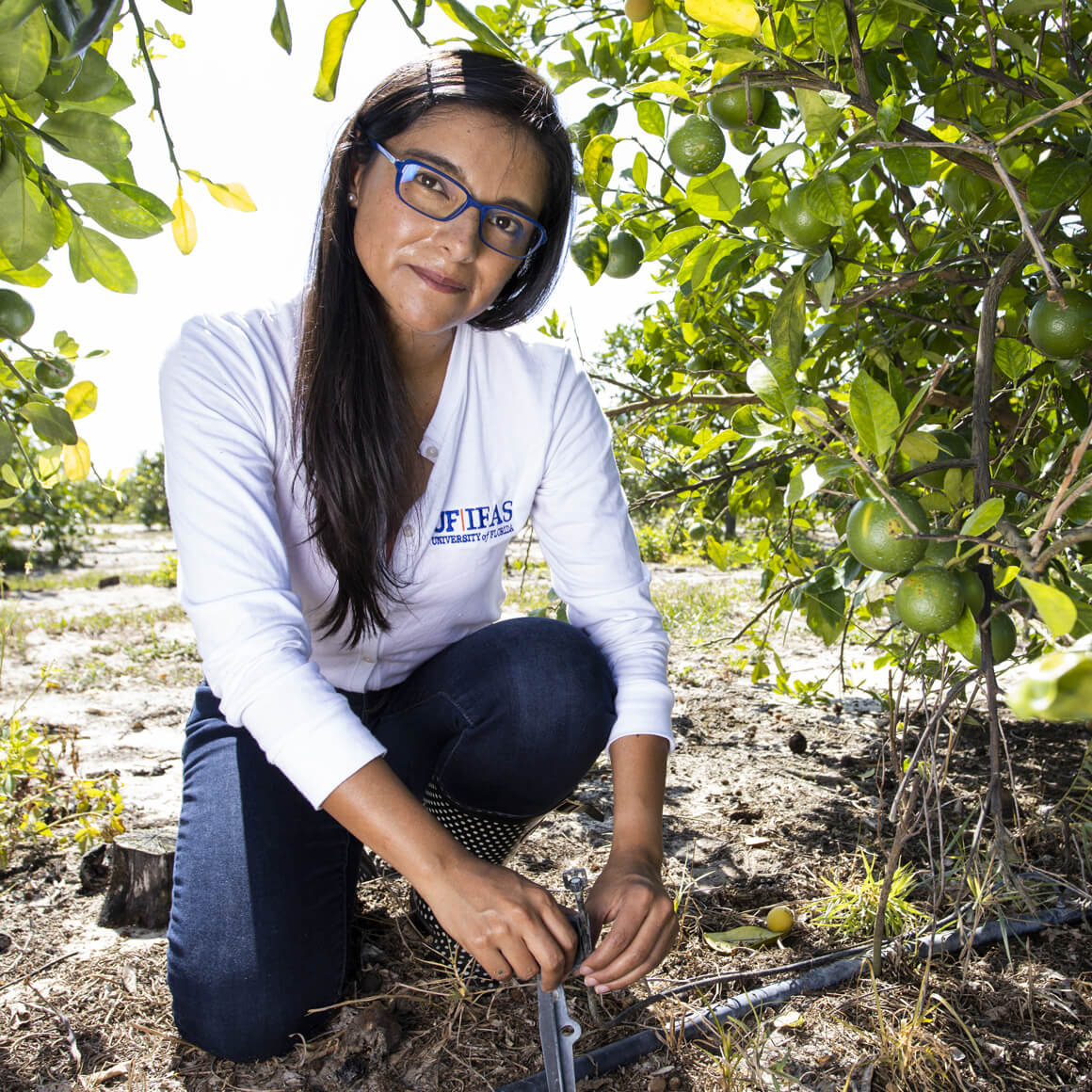
Dr. Sandra Guzmán is an Assistant Professor in the Department of Agricultural and Biological Engineering at the University of Florida/IFAS Indian River Research and Education Center (IRREC) . Her work focuses on technology-driven solutions for agricultural water management , particularly in citrus-vegetable production systems across Southeast Florida. She leads the Smart Irrigation and Hydrology Program , emphasizing collaboration with local producers to address water challenges through a bottom-up approach. Research Interests: Guzmán’s program integrates Development of decision support systems for water management Implementation of smart irrigation sensors and devices Application of artificial intelligence for hydrological forecasting Monitoring soil-water-plant interactions Her work spans scales from farm-level irrigation to watershed-level water resource protection , with a specific focus on the Upper Floridan aquifer . Scientific Publications highlight trends in: ET-based irrigation scheduling for Florida crops AI integration in environmental data analysis Improper system design risks (e.g., water pollution, public health threats) Water storage agreements with Florida districts Her articles reflect interdisciplinary collaboration with UF/IFAS researchers and stakeholders.
Dr. Zane Grabau serves as an Assistant Professor in the Department of Entomology and Nematology at the University of Florida, based in Steinmetz Hall, Gainesville, FL. His dual research-extension program focuses on developing practical nematode management solutions for Florida's agronomic and horticultural industries, with direct engagement with agricultural professionals across the state. Dr. Grabau's research centers on integrated management of plant-parasitic nematodes through chemical controls (fumigant/non-fumigant nematicides), resistant cultivars, and ecological strategies including cover cropping and crop rotation. He investigates soil ecology by analyzing nematode communities as biological indicators of soil health, particularly in subtropical perennial systems on sandy soils. His work emphasizes adapting solutions to Florida-specific cropping systems to enhance crop productivity while maintaining environmental sustainability. Analysis of his 15 most recent publications reveals a dominant focus on managing key nematode pests (Meloidogyne spp., Rotylenchulus reniformis, Belonolaimus longicaudatus) across major Florida crops including peanut, cotton, potato, and sweetpotato. His research consistently evaluates nematicide efficacy, cultivar resistance, and cultural practices while pioneering the use of nematode communities as soil health metrics in cover-cropped and perennial systems. Scientific Awards: None documented in available sources. Dr. Grabau actively disseminates research findings through extension publications targeting agricultural professionals, though specific advising roles and grant details remain unreported. His program bridges laboratory research with field applications to address real-world nematode challenges in Florida agriculture. He leads a research-extension team within the Entomology and Nematology Department conducting field trials and laboratory analyses on nematode ecology and management. The program emphasizes practical solutions for Florida's unique sandy soil environments, with strong collaborations across agricultural industries and extension networks statewide.
Cassandra Swett is an Associate Professor in Cooperative Extension at the University of California, Davis. Her research focuses on fungal pathogen ecology in vegetables and field crops, particularly investigating how adaptive water use strategies impact plant-pathogen interactions. She examines the effects of deficit irrigation, soil salinity, and water recycling on disease dynamics in crops such as tomatoes, hemp, strawberries, and nursery plants. Her work bridges fundamental microbial ecology with applied agricultural solutions to address challenges posed by water scarcity and climate change. Key research areas include: (1) managing Fusarium wilt and root-knot nematode complexes in tomatoes under water-stressed conditions, (2) optimizing irrigation practices to reduce soil-borne disease risks in nursery crops, and (3) identifying resistance-breaking pathogen strains threatening California agriculture. Swett collaborates closely with growers to translate scientific findings into practical management strategies. Her lab (http://swettlab.faculty.ucdavis.edu/) develops disease forecasting tools, evaluates water conservation techniques, and explores symbiotic microbial interactions that enhance crop resilience. She emphasizes co-management approaches that balance disease control with sustainable resource use.
Dr. Naidu Rayapati is a Professor of Virology at Washington State University (WSU), where he serves as Director of the Prosser Irrigated Agriculture Research and Extension Center. He is affiliated with the Department of Plant Pathology within the College of Agricultural, Human, and Natural Resource Sciences. Dr. Rayapati leads the Grape Virology program at WSU-IAREC in Prosser, focusing on management strategies for virus diseases impacting fruit quality and vine health in Washington's wine grape industry. Dr. Rayapati's research focuses on virus diseases of horticultural, vegetable and food crops, with particular emphasis on virus characterization, diagnostics, plant-virus-vector interactions, and development of integrated crop improvement strategies. His current work centers on virus diseases of grapevines and vegetables, addressing critical challenges for Washington State's agricultural industry. He has established an integrated program of research, extension, and education through the Grape Virology program at WSU-IAREC. Analysis of Dr. Rayapati's recent publications reveals a strong focus on grapevine viruses, particularly Grapevine leafroll-associated viruses and Grapevine red blotch virus. His research spans molecular characterization of plant viruses, epidemiology of viral diseases, development of diagnostic tools, and management strategies for virus diseases in agricultural settings. There is also significant work on emerging viruses in legumes and other vegetable crops, reflecting his broader interest in plant virus diseases across multiple cropping systems. Scientific Awards: CAHNRS Land Grant Mission Award (2020) WSU's Top Industry Engaged Researchers (2017) International IPM Excellence Team Award, The 6th International IPM Symposium (2009) International Service Award, American Phytopathological Society (2007) Dr. Rayapati actively mentors graduate students and postdoctoral researchers, with current lab members including Sridhar Jarugula, Sudarsana Poojari, Tefera Mekuria, Linga Reddy Gutha, and Olufemi Alabi. His research program has received funding from various sources, supporting interdisciplinary collaborations that draw expertise from multiple institutions. Through his extension work, Dr. Rayapati translates scientific knowledge into practical applications for the grape and wine industry stakeholders and regulatory agencies. Dr. Rayapati leads the Grape Virology Program at WSU-IAREC, which employs a 3-D approach: Discovery of knowledge, Development of tools and techniques, and Deployment of knowledge-based strategies. The program works closely with the Washington State Grape and Wine Industry to address virus disease management as a key research priority for achieving the industry's goal of tripling economic value. His team conducts fundamental and applied research on wine grape virus diseases through interdisciplinary collaborations, creating experiential education opportunities for Viticulture and Enology students.
Dr Peter Long is a researcher at the University of Oxford specializing in satellite remote sensing and environmental modeling to study biodiversity, ecosystem services, and land cover dynamics. His work focuses on algorithm development for processing satellite data, high-performance computing, and GIS/RS software applications. Key projects: Biodiversity monitoring in Madagascar, Marine LEFT/LEFT tools, NaturEtrade, and Community-Based Conservation evaluation Technical expertise: Databases, R programming, web-based environmental tools, stakeholder engagement Research trends indicate interdisciplinary applications of remote sensing in conservation biology, agroforestry, and climate resilience. His publications span ecological modeling, historical land-use impacts, and wetland bird conservation. He has not been documented receiving scientific awards or mentoring students. No information is available about laboratory affiliations or team memberships.
Dr. Fan-Rui Meng is a Professor at the Faculty of Forestry and Environmental Management, University of New Brunswick (UNB). He holds an adjunct professorship at Fujian Agriculture and Forestry University, China. His expertise spans hydrology, ecological modeling, watershed management, and climate change impacts. Dr. Meng earned his PhD in forest ecology from UNB and has held research leadership roles at institutions like the Noranda/Avenor and Bowater/Nexfor Forest Watershed Research Centres. He has extensive experience in soil conservation, GIS applications, and drone technology for environmental protection. Education: Bachelor and Master of Forestry Engineering, Northeast Forestry University, China PhD in Forest Ecology, UNB Research Interests: Hydrological processes in agricultural and forested watersheds Climate change adaptation in forest ecosystems Soil erosion and conservation strategies Integration of drone technology for environmental monitoring Carbon cycling in forest systems Modeling forest growth under climate projections Recent Research Trends: His recent work focuses on nitrate dynamics in agricultural watersheds, impacts of climate change on crop yields, and improving SWAT model accuracy through detailed land-use data. He has explored innovative methods for riparian zone mapping using UAVs and photogrammetry, emphasizing precision in environmental assessments. Awards: None explicitly listed in the provided texts. Grants & Advising: Dr. Meng has led numerous research projects but no specific grants or student advisees are mentioned. His work has been published in journals like Hydrological Processes , Journal of Hydrology , and Water Resources Management . Labs & Teams: He has directed research at the Noranda/Avenor and Bowater/Nexfor Forest Watershed Management Centres, focusing on applied ecological and hydrological research.




.jpg)