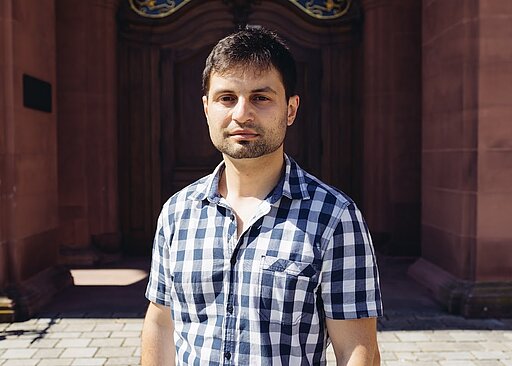
Oliver G. Ernst is a Professor of Numerical Analysis at Technische Universität Chemnitz . His research focuses on Numerical Analysis , Uncertainty Quantification , and Inverse Problems , with applications in Thermo-Hydro-Mechanical (THM) processes , Electromagnetics , and Stochastic Partial Differential Equations . He is associated with the Numerical Analysis group at TU Chemnitz. Key Research Areas : Efficient numerical methods for PDEs Krylov subspace techniques Stochastic finite element methods Multi-physics modeling Geoscientific applications Recent Publications (2025-2010): THM simulations under uncertainty Neural network PDE solvers Bayesian inversion frameworks Rational Krylov algorithms Deflated restarting strategies Collaborations : TU Bergakademie Freiberg University of Manchester Technical University of Munich University of Maryland University of Geneva Software Development : Contributor to OpenGeoSys platform Developer of FEMALY MATLAB library Academic Recognition : h-index 32, i10-index 66, with over 4423 citations since 2020.
Prof. Dr.-Ing. Holger Blume serves as Vice President for Research and Transfer at Leibniz University Hannover while maintaining his academic position as Professor in the Architectures and Systems Section within the Faculty of Electrical Engineering and Computer Science. He holds multiple leadership positions including Chairperson of the Research Commission and Central Ethics Committee, Executive Board member of eNIFE (Leibniz Research Initiative for Neurosciences), and membership in both the Laboratory of Nano and Quantum Engineering and L3S Research Centre. His research interests span computer architecture, hardware design, signal processing, AI accelerators, hearing aid technology, and biomedical engineering. His work bridges theoretical computer science with practical applications in automotive systems, medical devices, and quantum engineering. Professor Blume's research demonstrates strong interdisciplinary connections between electrical engineering, computer science, and biomedical applications, with particular emphasis on hardware-oriented solutions for real-world problems. Analysis of his recent publications (2023-2025) reveals a strong focus on hardware acceleration for AI and signal processing applications, particularly in automotive radar/LiDAR systems and hearing aid technology. His work shows consistent innovation in RISC-V processor design, specialized hardware for mathematical functions, and biomedical applications of engineering principles. The research demonstrates a clear trajectory toward energy-efficient, specialized computing architectures for specific application domains. As Vice President for Research and Transfer, Professor Blume oversees significant research initiatives at Leibniz University Hannover, which hosts multiple Clusters of Excellence including PhoenixD (Photonics, Optics, and Engineering), QuantumFrontiers, and Hearing4all. The university participates in numerous collaborative research centers and junior research groups funded by DFG, BMBF, and EU programs. Professor Blume is actively involved in multiple research facilities including the Laboratory of Nano and Quantum Engineering and the L3S Research Centre. His work connects with Leibniz University's research focuses on optical technologies, quantum optics and gravitational physics, and biomedical research and technology. His leadership positions indicate strong involvement in shaping the research strategy and ethical framework of the university's scientific endeavors.
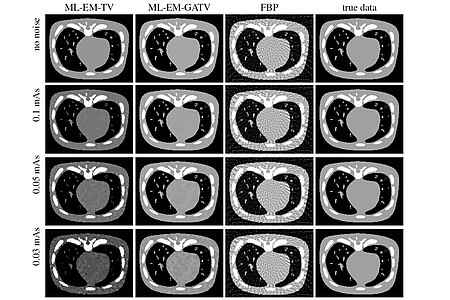
Jürgen Hesser is a Professor at the Mannheim Medical Faculty , Heidelberg University, specializing in Experimental Radiotherapy and Medical Imaging . His research focuses on solving inverse problems in imaging, particularly for CT reconstruction , brachytherapy planning , and low-dose imaging . Current affiliations: Clinic for Radiotherapy and Radiooncology, Mannheim University Hospital Collaborative ties: Interdisciplinary Center for Scientific Computing (IWR) and Center for Bioinformatics (ZITI) at Heidelberg University Research interests center on anisotropic total variation techniques for medical and industrial applications, including MR-guided interventions and real-time radiation therapy . His work has led to a 1000x speed improvement in brachytherapy planning algorithms. Recent publications highlight expertise in image reconstruction (CT/X-ray), noise optimization , machine learning for cancer classification, and big data management solutions. His methods are applied to both clinical and industrial imaging challenges. Additional contributions include scientific data infrastructure development and variance stabilization techniques for medical sensors. The research group maintains strong interdisciplinary links with Physics, Mathematics, and Computer Science faculties.
Yuan Liu is a faculty member affiliated with Guangzhou University's Cyberspace Institute of Advanced Technology. Their research focuses on cybersecurity, blockchain technology, federated learning, and IoT systems. They have held roles at multiple institutions, including Northeastern University (Software College) and Nanyang Technological University (PhD in Computer Engineering). Liu's work emphasizes secure communication, edge computing, and distributed systems, with contributions to protocols like blockchain-based redactable systems and quantum federated learning frameworks. They have collaborated extensively on projects addressing IoT security, smart healthcare, and privacy-preserving technologies. Key research trends include leveraging AI for enhanced security (e.g., watermarking frameworks, attack detection) and optimizing resource allocation in edge computing environments. Their publications span journals like IEEE Communications Surveys & Tutorials and conferences such as GLOBECOM.
Julia Lawall is a Senior Research Scientist (Directrice de Recherche) at Inria-Paris, where she leads research in the Whisper group. She has made significant contributions to the fields of programming languages, operating systems, and software engineering, with a particular focus on program transformation and Linux kernel development. Her work bridges theoretical computer science with practical software engineering challenges. Dr. Lawall's research primarily centers on the design and implementation of domain-specific languages for operating system problems, program transformation techniques, and automated software evolution. Her most notable contribution is the Coccinelle framework, which has been instrumental in automating the evolution of Linux device drivers for over a decade. Her work spans from theoretical foundations in optimal reduction of the lambda calculus to practical tools that address real-world software maintenance challenges in large-scale systems like the Linux kernel. Her publication record demonstrates consistent contributions across multiple domains, with recent work focusing on Android API evolution, Linux kernel bug detection, and program transformation techniques. The trajectory of her research shows a progression from theoretical programming language concepts to increasingly practical applications in system software maintenance and evolution. EuroSys Test of time award for 'Documenting and Automating Collateral Evolutions in Linux Device Drivers' at EuroSys 2008 Best paper award for 'Diagnosys: Automatic Generation of a Debugging Interface to the Linux kernel' at ASE 2012 Most Influential ICFP Paper Award for foundational work on lambda calculus Best Reviewer at GPCE 2020 and Distinguished Reviewer at ASE 2020 Dr. Lawall has been actively involved in the academic community, serving as program co-chair for numerous prestigious conferences including ASE 2019, FSE 2026, and EuroSys 2025. She has also contributed to community initiatives as the Linux kernel coordinator for Outreachy (2015-2018) and as a member of the advisory board for Software Heritage. Her leadership extends to editorial roles, including associate editor for Higher-Order and Symbolic Computation and membership on the editorial board of Science of Computer Programming. She leads the Whisper research group at Inria-Paris, which focuses on program transformation techniques and their applications to system software. The group has developed several influential tools including Coccinelle, Coccinelle4J, LiLiput, Prequel, and JMake, which have had substantial impact on both academic research and industrial practice in software maintenance and evolution.
Prof. Nils Pohl is a Professor for High Frequency Integrated Circuits at Ruhr-Universität Bochum and Deputy Head of the Integrated Circuits and Sensor Systems Department at Fraunhofer Institute FHR. His research focuses on microwave and terahertz integrated circuits, radar systems, and high-frequency sensor technologies. He holds a Dr.-Ing. in electrical engineering from Ruhr-Universität Bochum (2010) and has led multiple collaborative projects in radar technology and sensor development. Prof. Pohl is actively involved in IEEE technical committees and serves as a reviewer for top conferences like IEEE MTT-S and ISSCC. His awards include the IEEE MTT-S Outstanding Young Engineer Award (2018) and the IHP Fellowship (2017). Education : PhD in Electrical Engineering (2010), Ruhr-Universität Bochum Doctoral thesis on 80 GHz radar system design Research Interests : High-frequency integrated circuits for radar (FMCW, MIMO), terahertz sensors, antenna design, and material characterization Applications in automotive radar, industrial sensing, and non-destructive testing Grants & Projects : Leadership in Fraunhofer-Government collaborations for radar sensor development EU-funded projects on terahertz imaging and 6G communication systems Labs/Teams : Integrated Systems Team at Ruhr-Universität Bochum Fraunhofer FHR’s Chip Design Team
Tina Kabelitz is a Researcher at the Leibniz-Institut für Agrartechnik und Bioökonomie e.V. (ATB) , leading the working group Infections and AMR in Farm Animals since September 2021. Her work integrates sensor technology, digitalization, and artificial intelligence to address antimicrobial resistance (AMR) in livestock systems through a One Health approach. Education : PhD in Epigenetics of Plants (University of Potsdam, 2011-2015) MSc Molecular and Cellular Biology (University of Potsdam, 2009-2011) BSc Molecular Biology/Physiology (University of Potsdam, 2006-2009) Her research focuses on antimicrobial resistance dynamics in livestock, particularly through environmental pathways in pig and poultry farming. She investigates resilient housing design for biosecurity and animal welfare, microbiome changes in manure storage , and machine learning-based mastitis risk assessment using multisensor systems. Her projects include LeibnizLabPP (pandemic preparedness), AirBarn (bioaerosol AMR transmission), ENVIRE (AMR control in chicken systems), and AMR-PIG (AMR spread mechanisms). Recent publications analyze AMR gene dynamics in manure systems (2025), machine learning applications for mastitis prediction (2025), and environmental impacts of dairy farming mitigation strategies (2024). Her work emphasizes systemic solutions like anaerobic digestion plants and slurry injection techniques to reduce emissions.
Prof. Dr. rer. nat. Matthias S. Müller is a Universitätsprofessor and Director of the IT Center at RWTH Aachen University. His research focuses on High-Performance Computing (HPC), parallel programming models, correctness verification, energy-aware computing, and tools for distributed systems. He leads the High-Performance Computing group, contributing to advancements in HPC resource management, runtime systems, and sustainable computing practices. Key areas of expertise include MPI and OpenMP correctness checking, static and dynamic analysis techniques, performance optimization for heterogeneous architectures, and energy footprint modeling. Müller has extensively collaborated on projects like MUST (MPI correctness tool), OMPT tools, and frameworks for analyzing hybrid parallel applications. His work bridges theoretical computer science with practical implementation challenges in large-scale computing environments. Notable contributions include developing methods for data race detection in Remote Memory Access (RMA) programs, latency-aware power management models, and educational frameworks for HPC lab courses. His research often emphasizes tool development, runtime systems, and interdisciplinary applications of HPC across engineering domains. Müller's lab is part of RWTH Aachen's IT Center, which provides infrastructure and expertise for computational research. He actively publishes in top-tier conferences and journals, addressing challenges in parallel programming, energy efficiency, and distributed computing systems.
Michael Cochez is an Assistant Professor in the Learning and Reasoning group at the Faculty of Science, Vrije Universiteit Amsterdam . His research focuses on Machine Learning , Knowledge Graph Embedding , and Prototype-Based Ontologies , with applications in Scalable Hierarchical Clustering , Ontology Matching , and Knowledge Evolution . He teaches Intelligent Systems , Data Mining , and Machine Learning courses. His research explores integrating Knowledge Graphs into end-to-end ML models , addressing challenges in Approximate Query Answering and Knowledge Representation . He has also contributed to Multi-Agent Systems and Cloud Communication through projects like Graphino.nl (his consultancy business). His students include Jiawen Chen (supervised thesis on Smart Semantic Multi-channel Communication ).
Catherine Faron is a Full Professor at Université Côte d'Azur , affiliated with the I3S laboratory and Inria center . She serves as vice-head of the Wimmics joint research team and leads the Artificial Intelligence and Data Engineering (IAID) program at Polytech Nice Sophia engineer school. Habilitation à diriger les recherches (HDR) in Computer Science, UCA (2017) PhD in Computer Science, Univ. Paris 6 (1997) Her research focuses on Artificial Intelligence , particularly in Knowledge Representation and Reasoning (KRR) and Semantic Web technologies. She develops hybrid intelligent systems combining KRR with machine learning for knowledge extraction, integration, and exploitation across education, health, and digital humanities. Recent publications highlight her work on: 2025 : Knowledge graphs for historical zoological data 2024 : Semantic annotation frameworks in agronomy 2023 : Agricultural data mapping and medical record enrichment 2022 : Visual exploration of big linked data Scientific recognitions include: 2023: Best Paper Award, ESWC 2017: Scientific Excellence Award, UCA 2016: Best Demo Award, ISWC 2015: Best Paper Award, IC 2008: Best PhD Paper Award, ECPPM She has supervised 19 PhD/Master's students and leads/has led projects like D2KAB , DEKALOG , and ZOOMATHIA , with partnerships across academic and industrial institutions.
Prof. Dr. Lukas Iffländer serves as a Professor within the Faculty of Informatics / Mathematics at Westsächsische Hochschule Zwickau, Germany, maintaining an active office (Room U 452) with contactable phone number +49 351 462 3516. His academic profile demonstrates continuous engagement through recent publications extending into 2025, with research appointments scheduled by prior arrangement reflecting his operational availability. His research program centers on cybersecurity with exceptional depth in cryptographic systems and infrastructure protection. Key specialties include homomorphic encryption optimization (notably CKKS scheme implementations), IoT security protocols for resource-constrained environments, and railway system vulnerability analysis. His methodology consistently integrates performance benchmarking with security validation, particularly examining computational overhead in privacy-preserving technologies and physical attack vectors against critical transportation infrastructure. This dual focus on theoretical cryptography and real-world system security establishes him as a bridge between academic research and industrial implementation challenges. Analysis of his 15 most recent publications (2023-2025) reveals three dominant research trajectories: (1) Cryptographic performance evaluation, where he pioneers benchmarking frameworks for homomorphic and attribute-based encryption in practical scenarios like linear regression; (2) Railway security innovation, addressing digital interlocking systems and physical attack mitigation through technology forecasting; (3) IoT security optimization, developing multi-objective recommendation systems for group communication protocols. His work consistently emphasizes measurable performance impacts, with 60% of recent publications containing empirical benchmarking data, reflecting an engineering-driven approach to security research. No scientific awards were documented in the source materials. Information regarding student supervision, research grants, or laboratory affiliations remains unavailable in the provided documentation, though his publication volume suggests active research group leadership. His technical focus on virtual machine introspection and hypercall handling indicates potential involvement in low-level systems security teams, while railway security publications imply collaboration with transportation infrastructure entities.
Philipp Slusallek is a Professor for Computer Graphics at Saarland University since 1999 and Scientific Director at the German Research Center for Artificial Intelligence (DFKI), leading the "Agents and Simulated Reality" research area since 2008. He has held leadership roles such as Director for Research at the Intel Visual Computing Institute (2009-2017) and Dean of the Faculty of Computer Science and Mathematics (2002-2004). His affiliations include being a Principal Investigator in the German Excellence Cluster "Multimodal Computing and Interaction" (2007-2019) and a Visiting Professor at NVIDIA Research (2007-2008). PhD in Computer Science from Erlangen University Diploma in Physics from Frankfurt and Tübingen University His research spans computer graphics, artificial intelligence, and high-performance computing, with contributions to real-time ray tracing, digital reality, motion synthesis, and domain-specific languages (DSLs). Recent work includes visual programming tools for image processing (2022), DSL frameworks for high-performance libraries (2018), and compiler optimizations for vectorized code (2018). Key themes include simulation technologies, programming models, and computational sciences. Scientific honors include Fellow of Eurographics, Associate Editor of Computer Graphics Forum , membership in acatech (German National Academy of Science and Engineering), and advisory roles in AI policy. He has led research groups at institutions like Stanford University (Visiting Assistant Professor, 1998-1999) and the University of Tübingen (Researcher, 1990-1992).
Prof. Andreas Bernig is a faculty member at Goethe University Frankfurt am Main, affiliated with the Department of Computer Science and Mathematics. He has held a W3 professorship in Differential Geometry since October 2009 and served as Dean of the Faculty (2017-2019) and Director of the Institute for Mathematics (2022-2024). His research spans Integral Geometry, Finsler Geometry, Riemannian Geometry, Geometric Inequalities, and Geometric Measure Theory, with a focus on valuations, kinematic formulas, and curvature measures in singular and pseudo-Riemannian settings. His recent publications explore topics such as the Hard Lefschetz theorem in convex valuation theory Weyl principle for Kähler manifolds Kinematic formulas in pseudo-Riemannian space forms Dual area measures in Hermitian integral geometry Invariant valuations on complex and quaternionic spaces These works often involve collaborations with leading mathematicians like J.H.G. Fu, Gil Solanes, and Thomas Wannerer. Prof. Bernig has received notable scientific recognition, including First prize at the German Mathematical Olympiad (1991, 1992) DFG and SNFS funding for projects like "Invariants of Singular Spaces" and "Tensor Valuations" He has supervised doctoral and Master’s students such as Luca Iffland, Frederik Herget, and Frank Steinke, and actively participates in international conferences and workshops in integral geometry, convex geometry, and geometric analysis.
Goran Glavaš is a Professor at the University of Würzburg's Faculty of Mathematics & Computer Science, holding the Chair for Natural Language Processing (Computer Science XII) and affiliated with the Center for Artificial Intelligence and Data Science (CAIDAS). His research focuses on computational semantics, multilingual/low-resource representation learning, and democratizing language technologies through fairness and sustainability. Former Assistant Professor at University of Mannheim (2017-2021) Interim Associate Professor at LMU Munich (2021-2022) Doctorate in 2014 at University of Zagreb under Jan Šnajder Recent research trends emphasize cross-lingual learning, multilingual knowledge integration, and ethical AI frameworks. His group contributes to robust multilingual models, vision-language systems, and sustainable NLP applications in social sciences. Outstanding Paper Award at ACL 2024 (IRCoder) Outstanding Paper Award at EACL 2024 (Kardeş-NLU) Extensive publications in EMNLP, ACL, NAACL, EACL, and TACL Advises a team of researchers at the University of Würzburg's NLP Chair, including Benedikt Ebing, Gregor Geigle, and Fabian David Schmidt. Leads the WüNLP group within CAIDAS, focusing on democratizing language technologies.
Johannes Geier is a Researcher at the Chair of Design Automation at the Technical University of Munich (TUM). His work focuses on electronic design automation, fault injection simulations, and security countermeasures for RISC-V processors. University: Technical University of Munich Department: Chair of Design Automation Email: johannes.geier@tum.de Research Interests Electronic Design Automation (EDA) for analog and digital circuits Fault tolerance and reliability in RISC-V architectures Security analysis of post-quantum cryptographic systems Timing analysis and microfabrication techniques Optical Networks-on-Chip (NoC) and emerging technologies Compiler-assisted hardware security implementations Recent Research Trends Specializes in fault injection methodologies for hardware security validation Develops open-source tools like vRTLmod for RTL simulation acceleration Explores RISC-V vector extensions for post-quantum cryptography Investigates differential fault effect equivalence checks for efficiency Designs compiler-based security countermeasures against instruction skip attacks Works on concurrent multi-node XCP proxy server architectures