Christodoulou Chris is a Professor at the Department of Computer Science, University of Cyprus. He joined in 2005 and holds a Visiting Research Fellowship at Birkbeck College, University of London. His educational background includes a BEng in Electronic Engineering from Queen Mary and Westfield College (1991), a PhD in Neural Networks from King's College London (1997), and a BA in German from Birkbeck College (2008). His research focuses on Computational Neuroscience, Neural Networks, and Machine Learning, with specific interests in neural coding, self-control modeling, computational neuronal modeling, multi-agent reinforcement learning, and practical machine learning applications. Recent publications (2013-2025) demonstrate interdisciplinary approaches combining neuroscience, computer science, and optimization techniques, with emerging emphasis on protein structure prediction and biomedical applications. Scientific awards include: Best Paper Award, ICSR 2015 Best Paper Award, MODELS 2008 Doctoral Symposium He leads the Computational Intelligence and Neuroscience (CIN) research group and has secured funding from European projects (SocioCoast, CYberSafety, TAMIT). He mentors students through Google Summer of Code and collaborates internationally.
Prof. Dr. Osman Kukrer is a full-time faculty member at Eastern Mediterranean University (EMU), Faculty of Engineering, Department of Electrical and Electronics Engineering. He has been actively supervising graduate students in power electronics, control systems, and renewable energy integration since the 1990s. His research spans advanced power conversion topologies, including quasi-Z-source inverters multilevel converters active power filters grid-connected systems adaptive beamforming algorithms electric vehicle grid integration Notable contributions include the EMU Publication Citation Award (2017) and extensive supervision of 41 graduate theses, with research interests aligning with modern energy systems and signal processing techniques.
Professor Panos Papanastasiou is affiliated with the Department of Civil and Environmental Engineering at the University of Cyprus, within the School of Engineering. He has held significant administrative roles including founding President of his department, Dean of the School of Engineering, and founding Director of the Master's Program in Natural Gas Engineering. PhD in Civil Engineering, University of Minnesota (1990) MS in Civil Engineering, University of Minnesota (1986) BSc in Civil Engineering, National Technical University of Athens (1984) His research focuses on geomechanics across petroleum engineering, energy transition, and environmental applications. Key areas include hydraulic fracturing , wellbore stability , sand production , and CO2 geological storage . He also investigates green hydrogen storage , photovoltaic cracking , and offshore pipeline dynamics . Recent publications highlight his leadership in hydraulic fracturing modeling (2025), green hydrogen integration (2024), and geomechanical analysis of faulted reservoirs (2025). His work spans computational mechanics, energy systems, and environmental risk assessment. Scientific Recognition : Top 2% scientist worldwide in Geoscience, Energy and Engineering (Stanford University ranking)
Dr. Christiana Ioannou is an Assistant Professor in Cybersecurity and Course Leader of the MSc Cybersecurity and MSc Cybersecurity Distance Learning programs at University of Central Lancashire Cyprus (UCLan Cyprus). She holds a PhD in Computer Science from the University of Cyprus (2017) and has extensive experience in academia and industry, including roles as Research Associate at CYENS Center of Excellence and NCC Team Leader at the Digital Security Authority of Cyprus. Education: PhD in Computer Science, University of Cyprus (2017) MSc in Computer Science, Florida Institute of Technology (2006) PGDiploma in Management, Mediterranean Institute of Management (2004) BSc in Computer Science, San Diego State University (2003) Research Interests: Her research focuses on Cybersecurity , Internet of Things (IoT) , and Intrusion Detection Systems (IDS) . She explores secure data management in industrial IoT and WSN environments, attack classification, and decentralized security agents. Her work emphasizes practical applications in constrained networks and industrial settings. Grants & Awards: Recipient of the Onisilos Postdoctoral Fellowship (2022) Winner of the Cyprus Entrepreneurship Competition (3rd Prize, 2021) Recipient of the Cyprus-America Scholarship for Graduate Studies (2004–2006) Professional Activities: She serves on the Technical Program Committees of conferences like WiOpt and MedComNet, and reviews for journals including IEEE Access and Computers & Security. Her work bridges academic research with real-world cybersecurity challenges in IoT and industrial systems. Labs & Collaborations: Active in the CYENS Center of Excellence and collaborates on projects like METACITIES (EU-funded) and BluePark (smart parking system for disabled persons).
Panagiotis (Panos) Papanastasiou is a Professor in the Department of Civil and Environmental Engineering at the University of Cyprus (UCY), where he also served as Founding President (2002–2008), Dean of the School of Engineering (2009–2014), and Director of the Natural Gas Engineering Master's Program (2013–present). He is a Research Partner at NIREAS International Water Center and member of the Phaethon Research Center Board. His career includes roles as a research scientist at Schlumberger Cambridge Research (1991–2002) and advisor to Cypriot hydrocarbon policies (2011–2017). Education: Bachelor's in Civil Engineering, National Technical University of Athens (1984) M.Sc. in Civil Engineering, University of Minnesota (1986) Ph.D. in Civil Engineering, University of Minnesota (1990) Research Interests: Geomechanics applications in petroleum engineering, including wellbore stability, hydraulic fracturing, and sand production prediction CO2 geological storage and green hydrogen energy systems Offshore infrastructure resilience against tectonic faults Environmental applications of biochar in agriculture and wastewater treatment Publications & Awards: 90+ journal articles, 120+ conference papers, 6 edited books, and 3 patents Ranked in top 2% globally in Geoscience, Energy, and Engineering (Stanford University, 2020) Editor-in-Chief of Geomechanics for Energy and the Environment (Elsevier) Advisory & Grants: Advisor to the Cyprus Hydrocarbons Company since 2019 Recipient of EU and national grants for geomechanics and renewable energy projects Labs & Collaborations: Energy Geomechanics Research Group at UCY International collaborations on CO2 storage, offshore engineering, and renewable integration
Marios Georgiou is the Head of the PROTEAS Facility Operations at the Energy, Environment & Water Research Center (EEWRC) of the Cyprus Institute (CyI). He holds a PhD in Environmental and Atmospheric Sciences from CyI and has been a core member of the Energy and Renewables Group for eight years. His work focuses on the implementation of the CSP-DSW project, combining concentrated solar power with desalination technology. Prior to this role, he served as a postdoctoral researcher at CyI, focusing on thermal characterization and energy storage systems within the PROTEAS pilot plant. Education: Bachelor and Master of Science in Physics, National and Kapodistrian University of Athens, Greece. PhD in Environmental and Atmospheric Sciences, Cyprus Institute. Research Interests: Dr. Georgiou’s research emphasizes solar thermal desalination , concentrated solar power (CSP) , and energy storage systems . His work integrates experimental and theoretical approaches to optimize thermal performance, particularly in molten salt systems and receiver designs. He also explores the application of CSP in cogeneration for electricity and water production, addressing water scarcity and climate change mitigation in Cyprus and beyond. Articles and Contributions: His publications highlight advancements in CSP technologies, molten salt systems, and desalination processes. Recent work includes optimizing aiming strategies for heliostats and evaluating thermal losses in energy storage tanks. He has also contributed to EU collaborations, such as EU-SOLARIS, advancing CSP infrastructure research. Awards and Recognition: No scientific awards explicitly mentioned in the provided texts. Advising and Grants: Marios has mentored Master and Bachelor students in laboratory settings and contributed to securing joint research projects with European institutions and universities. His involvement in proposal preparation underscores his role in fostering international collaborations. Labs and Facilities: He leads the PROTEAS facility, a center for experimental research in CSP and desalination technologies, focusing on innovative solutions for sustainable energy and water systems.
Sotiris Nikoletseas is a Full Professor and Founding Director of the Internet of Things Laboratory (IoT-Lab) at the Computer Engineering and Informatics Department of the University of Patras, Greece. He also serves as a Senior Researcher of the Algorithms Group at the Computer Technology Institute and Press "Diophantus" (CTI), Greece. His academic career includes Visiting Professor positions at the Universities of Geneva, Ottawa and Southern California (USC). Professor Nikoletseas's research spans several cutting-edge domains in computer science, with primary focus on algorithmic aspects of wireless sensor networks and the Internet of Things (IoT). His work extends to Artificial Intelligence of Things (AIoT), wireless energy transfer protocols, probabilistic algorithms and random graphs, and innovative applications of psychoanalysis driven computing to social networks and interactive media. His interdisciplinary approach bridges theoretical computer science with practical applications in networked systems. His publication record is exceptional, with over 300 publications in international journals and refereed conferences, three influential books, and 30 invited chapters in publications by major publishers. His most recent book, 'Wireless Power Transfer Algorithms, Technologies and Applications in Ad Hoc Communication Networks' (Springer, 2016), represents a significant contribution to the field. Best Paper award at the 18th International Conference on Distributed Computing and Networking (ICDCN), Hyderabad, India, 2017 Best Paper Award at the 6th IEEE International Conference on Distributed Computing in Sensor Networks (DCOSS), Santa Barbara, USA, 2010 Inclusion in the list of highly cited computer scientists based on Google Scholar h-index As an academic leader, Professor Nikoletseas has supervised over 50 diploma theses and numerous graduate students, including 7 PhD candidates who have completed their degrees under his guidance. His research has been supported by substantial external funding, including multiple European Union projects where he served as site leader or coordinator. His work with industry includes direct contracts with organizations like Pfizer through their Center for Digital Innovation. The IoT-Lab he founded at the University of Patras serves as a hub for research in algorithms and systems for the Internet of Things, fostering collaboration between academia and industry. His current research directions include AI-enhanced IoT applications, wireless power transfer systems, and innovative approaches to cybersecurity and environmental monitoring through advanced sensor networks.
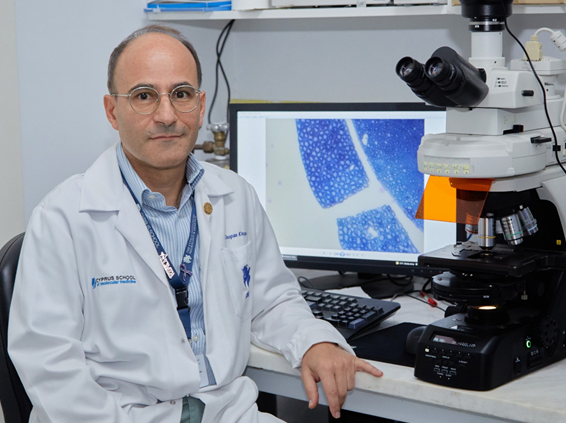
Kleopas A. Kleopa is a distinguished Senior Consultant Neurologist and Professor at The Cyprus Institute of Neurology and Genetics (CING), where he serves as Head of the Neuroscience Department, Director of the Neuropathology Lab, and Coordinator of both the Neuroscience MSc/PhD Graduate Program and the Center for Neuromuscular Disorders. His academic leadership extends to teaching Cellular and Molecular Neuroscience and supervising graduate students in research. His educational background includes Medical Studies (1987-1993) and Doctoral Thesis Project (1991-1994) at the University of Würzburg Medical School, Germany, where he earned his Medical Degree with "very good" grade (1993) and Doctor of Medicine Title Award with "magna cum laude" (1994). He completed Neurology residency at Drexel University (1999) and a fellowship in neuromuscular disorders at the University of Pennsylvania. Prof. Kleopa's research focuses on elucidating mechanisms of neurological disorders, particularly inherited neuropathies and leukodystrophy, with pioneering work in cell-targeted gene therapy approaches for demyelinating diseases. His laboratory investigates cellular and molecular mechanisms of X-linked Charcot-Marie-Tooth Disease (CMT1X), glial connexin pathology in multiple sclerosis, and mechanisms in autoimmune encephalopathies and chemotherapy-induced neurotoxicity. His work has established responsive blood biomarkers and developed gene therapy methods using lentiviral and AAV vectors for cell-targeted expression. His extensive publication record includes over 130 peer-reviewed papers cited in PubMed with more than 8,800 citations (H-index 42), many published in high-impact neuroscience journals. His research demonstrates a clear trajectory toward clinical translation, particularly in gene therapy approaches for inherited neuropathies, with several papers showing successful preclinical results using viral vector delivery systems that could be adapted for human treatment. Scholarships from Cyprus Government and DAAD for Medical School (1987-1993) Distinction in Neuroscience and Erasmus Winter School (1990) Neurology Teaching Award (1999) Bursary Award of EFNS (2003) Fellowship Award of Peripheral Nerve Society (2009) European Academy of Neurology Investigator Award (2015) National Distinguished Researcher Award (2017) 2025 Research and Commercialization Award As Principal Investigator, Prof. Kleopa has secured over 5 million Euros in external funding across 25 research projects. He supervises MSc and PhD students, teaches medical students and residents, and participates in clinical trials. He maintains extensive collaborations with leading institutions in Europe and the USA, and serves on numerous professional boards including the International Charcot-Marie-Tooth Consortium, Peripheral Nerve Society, and European Reference Networks for rare neuromuscular and neurological disorders. His laboratory serves as a hub for translational neuroscience research with strong industry partnerships aimed at clinical application of gene therapies.
Demetris Zeinalipour is a Professor of Computer Science at the University of Cyprus, where he founded and directs the Data Management Systems Laboratory (DMSL). He holds a Ph.D. (2005) and M.Sc. (2003) in Computer Science and Engineering from the University of California - Riverside, CA, USA and a B.Sc. in Computer Science from the University of Cyprus (2000). His career includes research positions at Akamai Technologies, University of Athens (as a Marie-Curie Fellow), University of Pittsburgh, and the Max Planck Institute for Informatics (as a Humboldt Fellow). He is an ACM Distinguished Speaker (2017-2020), a Senior Member of ACM and IEEE, and serves on the editorial boards of ACM Transactions on Spatial Algorithms and Systems and Distributed and Parallel Databases. His primary research spans Data Management in Computer Systems and Networks, with expertise in Mobile, Sensor and Spatio-Temporal Data Management; Big Data Management in Parallel and Distributed Architectures; Network, Blockchain and Telco Data Management; Crowd, Web 2.0 and Indoor Data Management; Data Privacy Management; Data Management for Sustainability; and AI and Data Management. His work bridges theoretical foundations with practical applications, resulting in numerous systems including Anyplace Indoor Information Service, ChatUCY, GreenCap, EcoCharge, and Triabase. His research has evolved from early work in sensor networks to current focus on sustainable computing applications addressing climate change challenges. Professor Zeinalipour's publication record shows a strong trajectory toward sustainability-focused data management, with recent work on energy management for smart homes, electric vehicle charging, and solar self-consumption. His research integrates multiple disciplines including spatial databases, mobile computing, IoT systems, and blockchain technologies, with increasing emphasis on addressing real-world environmental challenges through computing solutions. Scientific Recognition IEEE ICDE'24 Outstanding Reviewer Award IEEE MDM'21 Best App Paper Award IEEE MDM'18 Best of MDM Award and Best Demo Award Humboldt Fellow (2016) ACM Distinguished Speaker (2017-2020) ACM and IEEE Senior Member status He has advised numerous PhD students and postdocs, many of whom have established successful careers in both academia and industry. His laboratory maintains strong industry connections and contributes to open-source development. Professor Zeinalipour is deeply committed to addressing real-world challenges through computing research, with recent work focusing on climate change mitigation and sustainable energy management solutions.
Pouya Bolourchi is an Associate Professor in the Faculty of Engineering at Final University. He holds a Doctoral Degree in Electrical and Electronic Engineering from Eastern Mediterranean University (2018), a Master's Degree from the same institution (2012), and a Bachelor's Degree from Girne American University (2009). His research focuses on machine learning applications in biomedical engineering, optimization algorithms, medical imaging, and signal processing. Key research interests include Alzheimer's disease diagnosis through statistical methods, SAR (Synthetic Aperture Radar) image recognition using moment-based techniques, and industrial optimization problems leveraging swarm intelligence (e.g., particle swarm optimization). His work bridges computational methods with real-world applications in healthcare and engineering systems. Recent publications emphasize advancements in feature selection strategies, ensemble learning, and genetic algorithm implementations for medical diagnostics and industrial system reliability. Notable contributions include improving gene expression analysis via entropy-fisher score and developing novel approaches for Parkinson’s disease detection using biogeography-based optimization. His academic contributions span over 20 peer-reviewed articles, with a focus on interdisciplinary applications of machine learning in healthcare, remote sensing, and industrial engineering. Collaborations highlight the practical deployment of optimization algorithms in electrostatic precipitator systems and baghouse design.
Oluwaseun Priscilla Olawale is a Lecturer in Software Engineering at Near East University (Nicosia, Cyprus), where she is concurrently pursuing her master's degree in Software Engineering. She previously served as a teaching assistant at the same institution. Her academic background includes a Bachelor's degree in Computer Science from Bowen University, Nigeria, complemented by professional experience as an IT Specialist at the Standards Organisation of Nigeria and Software Developer at Royal Niger Company. Research Focus: Her work centers on developing reliable software solutions with emphasis on artificial intelligence applications. Primary domains include healthcare technology (medical imaging, remote healthcare, IoHT security), industrial systems (Industry 4.0 automation), cybersecurity (blockchain integration, anomaly detection), and educational technology (post-pandemic learning environments). She demonstrates consistent interest in interdisciplinary AI implementations bridging theoretical models and practical challenges. Publication Trends: Recent articles (2020-2025) reflect a progression from foundational surveys in data mining and blockchain verification toward applied AI solutions. Emerging themes include disaster prediction systems, audio-visual signal processing, and security-enhanced healthcare networks. Her technical approach frequently employs deep learning architectures (CNNs, VGG-16), blockchain frameworks, and signal processing techniques to address real-world problems across diverse sectors.
El Mostafa Kalmoun is a Professor at Al Akhawayn University's School of Science and Engineering. He received his doctorate in Applied Mathematics (Optimization) from Cadi Ayyad University, Morocco, in 2001. He subsequently held a postdoctoral position at Erlangen-Nürnberg University, Germany (2001–2004), and was a recipient of the MIF grant at Niigata University, Japan. His academic appointments include roles as Assistant Professor (2001–2007), Associate Professor (2007–2015), and Full Professor (2015) at Cadi Ayyad University; Visiting Professor at CRM and Pompeu Fabra University, Spain (2007–2008) and University Utara Malaysia (2009–2011); Associate Professor at King Khalid University, Saudi Arabia (2011–2018); and Associate Professor at Qatar University (2018–2021). His research specializes in vector optimization and computational mathematics , applied to domains like image processing, nanocomposites, and flow dynamics. He has received prestigious awards and grants, including: MIF grant (Japan) DAAD fellowship (Germany) DFG grant (Germany) Fellowship from Spanish Ministry of Education and Sciences Grant from Spanish Agency of International Cooperation Grant from French Cooperation Service Fellowship from The World Academy of Sciences
Dr Theodosis Mourouzis serves as an Assistant Professor of Information Management at the University of Nicosia and directs the MSc in Business Intelligence and Data Analytics program within the Department of Information Technologies. Academic Background: PhD in Information Security and Cryptography from University College London (UCL) MSc in Advanced Studies in Mathematics from University of Cambridge BA/MA in Mathematics from University of Cambridge Research Expertise: Dr Mourouzis specializes in information security with deep technical focus on cryptography (including symmetric/asymmetric cryptanalysis) and blockchain ecosystems . His work spans theoretical cryptanalysis of algorithms like GOST and SIMON to practical implementations such as privacy-preserving healthcare blockchain solutions. Current research emphasizes efficient blockchain design and security evaluation frameworks. Publication Trends: His 14 publications (2011-2021) reveal an evolution from foundational cryptanalysis (differential/algebraic attacks on ciphers) toward applied blockchain systems. Key thematic clusters include cryptographic security evaluation (35% of works), blockchain innovation (40%), and authentication systems (25%), demonstrating consistent technical rigor across theoretical and implementation challenges. Academic Leadership: As MSc Director, he oversees program development bridging technical cryptography research with business intelligence applications, indicating strong curriculum design capabilities and industry-academia translation focus.