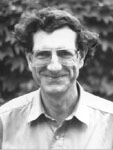
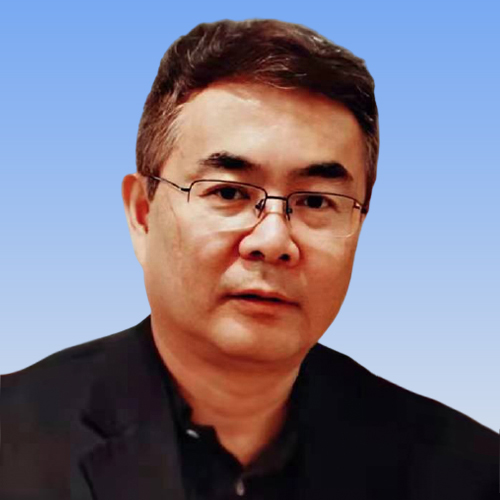
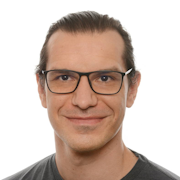
Didier Astruc is a Full Professor of Chemistry at the University of Bordeaux I, specializing in molecular nanosciences and catalysis. He holds prestigious awards such as the Humboldt Award and the Le Bel Prize. His research spans green chemistry, catalysis, and nanomaterials. Astruc leads the 'Molecular Nanosciences and Catalysis' group, focusing on electron reservoirs, dendrimers, and functional nanoparticles. He has authored books on organometallic chemistry and edited several volumes. His work includes over 350 publications and 340 conference lectures, with notable contributions to molecular sensors, drug delivery, and sustainable catalytic processes. Education: Rennes undergraduate, thèse d’Etat under R. Dabard, postdoc at MIT with R.R. Schrock. Roles: Former CNRS researcher, President of the Coordination Chemistry Division (2002–2005), Senior Member of the Institut Universitaire de France. Research Interests: Pioneered electron reservoir concepts, organometallic dendrimers, and nanoparticle-cored dendrimers. Current work emphasizes green chemistry, molecular electronics, and biomedical applications. His group explores catalytic systems using water as a solvent and nanocatalysts for hydrogen production. Publications: Over 350 research articles and four books, including Organometallic Chemistry and Catalysis . Recent work focuses on nanocatalyzed hydrogen generation, sustainable upcycling of pollutants, and single-molecule nanopore analysis. Awards: Leopoldina Academy membership (2006), Gauss Professorship (2008), multiple editorial roles in journals. Legacy: Mentored ten Chemistry Professors. Active in international conferences and serves on editorial boards.
Hervé Bourhy is a distinguished Professor at Institut Pasteur in Paris, where he serves as Head of the Global Health Department since 2019. He also leads the Research Unit "Lyssavirus Epidemiology and Neuropathology" and serves as Head of the National Reference Centre for Rabies, which is also designated as a WHO Collaborating Centre for Reference and Research on Rabies. With a career spanning over three decades at Institut Pasteur since 1987, Dr. Bourhy has established himself as a leading expert in rabies and other neurotropic viral diseases. Dr. Bourhy's educational background includes: Doctor of Veterinary Medicine (1986) from the Faculty of Medicine, Nantes PhD in Microbiology (1992) from the University of Paris VI, Paris, France Certification to supervise PhD students (HDR) (2000) from the University of Paris VI Dr. Bourhy's research focuses on the complex interactions between neurotropic viruses and their hosts, with particular emphasis on rabies virus and SARS-CoV-2 . His work spans multiple dimensions of viral pathogenesis, including the mechanisms of nervous system invasion , viral evolution and adaptation , and the innate immune response to viral infections . A significant portion of his research operates under the One Health framework, recognizing the interconnectedness of human, animal, and environmental health in addressing zoonotic diseases. His laboratory has made groundbreaking contributions to the development of prophylactic and therapeutic approaches against rabies, including innovative post-exposure prophylaxis regimens and human monoclonal antibody therapies. Analysis of Dr. Bourhy's extensive publication record (200+ PubMed entries) reveals a consistent focus on rabies virus epidemiology, evolution, and pathogenesis, with a recent expansion into SARS-CoV-2 neurotropism. His work demonstrates a progression from fundamental virology to translational research with direct public health applications, particularly in resource-limited settings. The keywords that frequently appear across his publications include rabies, lyssavirus, zoonoses, viral evolution, neuropathology, and One Health. His research has increasingly incorporated advanced genomic and phylogenetic methods to understand viral transmission dynamics at micro and macro scales. Dr. Bourhy's significant contributions to the field have been recognized through numerous honors: Corresponding member of the Danish Academy of Clinical Microbiology (DSKM) since 2013 Corresponding member of the French Veterinary Academy (AVF) since 2006 Deschiens Prize from the Academy of Medicine, Paris (2003) Award from the University of Medicine, Nantes (1986) With an impressive h-index of 46 and over 6,620 citations (Web of Science), Dr. Bourhy's research has had substantial impact in the field of virology and public health. His work has led to 4 patents and has been influential in shaping WHO recommendations for rabies post-exposure prophylaxis. Dr. Bourhy has also been invited to present his research at more than 75 international symposiums and conferences, demonstrating the global recognition of his expertise. While specific details about his students are not provided in the available documentation, his leadership position as Head of the National Reference Centre for Rabies and WHO Collaborating Centre suggests substantial mentorship responsibilities. Dr. Bourhy leads the Lyssavirus Epidemiology and Neuropathology research unit at Institut Pasteur, which functions as both the National Reference Centre for Rabies in France and a WHO Collaborating Centre for Reference and Research on Rabies. His team conducts research across multiple dimensions of rabies and other neurotropic viral diseases, from basic molecular virology to field epidemiology in endemic regions. The unit maintains strong international collaborations, particularly in Africa where they have conducted extensive studies on rabies transmission dynamics in urban settings like Bangui, Central African Republic. Their work integrates laboratory research with field studies to develop practical solutions for rabies control and prevention in resource-limited settings.
Jiebo Luo is a Professor of Computer Science at the University of Rochester, where he has been since 2014. Prior to this, he spent over 15 years at Kodak Research Laboratories, rising to Senior Principal Scientist. His research spans computer vision, natural language processing, machine learning, and computational social science. BS and MS in Electrical Engineering from University of Science and Technology of China (USTC), 1989 and 1992 PhD in Electrical Engineering from University of Rochester, 1995 Dr. Luo's work focuses on bridging computer vision with social science through multimedia analysis, social media modeling, and digital health. His research includes innovative approaches to unsupervised learning, event recognition in videos, and multi-label classification. His publications highlight trends in deep learning for medical imaging, social media as sensors, and video analytics. Key subfields include semantic understanding, attention mechanisms, and multimodal fusion. 2021 ACM SIGMM Technical Achievement Award 2018 IEEE Region 1 Technological Innovation in Academic Award 2004 Eastman Innovation Award Fellowships: ACM, AAAI, IEEE, IAPR, SPIE Dr. Luo serves as Editor-in-Chief for IEEE Transactions on Multimedia (2020-2022) and has held leadership roles in multiple IEEE Technical Committees. He is a Data Science CoE Distinguished Researcher at the Goergen Institute for Data Science and a Board Member of the Greater Rochester Data Science Industry Consortium.
Dr. Johannes Ludwig Frieß is a Researcher at the Institute of Safety and Risk Sciences within the Department of Landscape, Water and Infrastructure at the University of Natural Resources and Life Sciences, Vienna (BOKU). He has held postdoctoral research positions at several institutions including the University of Hamburg, University of Vechta, and University of Bremen, with his current position at BOKU dating from 2018 to present. His educational background includes a Doctorate from Aschaffenburg University of Applied Sciences in cooperation with Technische Universität Darmstadt (2011-2015) on the topic "Influence of ionizing radiation on the electrophysiology of cardiac cells," and a Biology Diploma from Technische Universität Darmstadt (2004-2011) with specializations in Cell- and developmental biology, genetics and microbiology. Frieß specializes in biosecurity and biosafety with a particular focus on bioweapons, Novel Invasive Environmental Biotechnologies (NIEB), and gene drives. His work bridges molecular biology, population modeling, and technology assessment to address the regulatory challenges posed by emerging biotechnologies. He has developed expertise in modeling gene drives and their ecological consequences, particularly in agricultural contexts like oilseed rape. His research emphasizes the dual-use potential of biotechnologies and the need for comprehensive risk assessment frameworks that go beyond traditional GMO evaluation. His publication record shows a clear trajectory toward increasingly sophisticated analysis of gene drive systems, moving from basic modeling concepts to comprehensive technology characterization and risk assessment frameworks. His work consistently addresses the intersection of biotechnology, environmental impact, and security concerns, with a growing emphasis on policy implications and regulatory needs. Dr. Frieß currently serves as Project Leader for the EU-funded research project "Biotechnology and AI: Biosecurity and Bioweapon Proliferation Risks in Research" (2025), and has been involved as Project Staff in several other significant projects related to synthetic bioweapons, GMO risk assessment, and gene drive technology. He has supervised at least one Master's thesis on computational modeling of gene drives in Drosophila suzukii.
Markus Steinberger is an Associate Professor at Graz University of Technology (Austria), leading the GPU Computing and Visualization Group at the Institute for Computer Graphics and Vision. He holds an MSc and PhD in Computer Science from TU Graz, with a postdoc and multiple leadership roles in academic and industry labs, including NVIDIA and the Max Planck Institute. His research focuses on GPU scheduling, parallel computing, and high-performance visualization techniques. He has led teams at TU Graz, Huawei Technologies (Cloud Rendering Lab), and the Max-Planck-Center for Visual Computing. Education 11/2020: Habilitation in Practical Computer Science at TU Graz 10/2013: PhD in Computer Science (Dynamic Resource Scheduling on Graphics Processors) 10/2010: MSc in Telematics 10/2005: BSc in Telematics Research Interests Steinberger’s work centers on optimizing GPU computing for real-time rendering and parallel processing. He explores efficient resource scheduling, dynamic graph management, and high-performance visualization techniques, with applications in cloud rendering, scientific visualization, and interactive graphics. His methods emphasize scalability and real-world applicability in both academic and industrial settings. Awards Heinz Zemanek Prize (2016) – First Austrian recipient GI Dissertation Prize (2014) – Best dissertation in German-speaking computer science Multiple Eurographics Best Paper Awards (2021, 2020, 2014) HPEC Best Student Paper (2017) ACM CHI Honorable Mention (2014) Advising & Grants Steinberger has advised numerous students and led projects funded by EU initiatives and industry partnerships. His research has been recognized through grants supporting GPU scheduling, cloud rendering, and parallel computing. Labs & Teams Leads the GPU Computing and Visualization Group at TU Graz and directed the Cloud Rendering Lab at Huawei, focusing on scalable rendering solutions for distributed systems.
Rodolphe Poupardin is a Research Fellow at Paracelsus Medical University 's University Institute for Experimental and Clinical Cell Therapy. His research spans immunology, neuroscience, entomology, and biomedical applications of extracellular vesicles (EVs). Research Areas : Immunology, Neuroscience, Entomology, Cell Therapy, Biomedical Research Poupardin's work focuses on: EV standardization and functional analysis for regenerative medicine Mechanisms of neuroinflammation in Alzheimer's and Parkinson's diseases Insecticide resistance in Anopheles gambiae and Aedes aegypti Role of T-cell repertoires and cytokine imbalances in multiple sclerosis Botanical synergists for vector control Recent publications (2025) examine EV documentation tools (EV-Checklist) T-cell dynamics in neurological disorders Anatomical variations linked to carpal tunnel syndrome Alzheimer's serum effects on microglia Activities include speaking engagements on EV research standards (2021-2022). No formal student advisement or awards documented in available records.
Regina Kratzer is an Associate Professor at the Graz University of Technology , affiliated with the Institute of Biotechnology and Bioprocess Engineering . Her academic work focuses on advancing CO₂-based biotechnology, enzyme engineering, and sustainable bioprocessing techniques. Her research emphasizes: Bioprocess optimization for Cupriavidus necator cultivation CO₂ utilization in microbial systems Enzyme engineering for industrial applications Integration of reaction engineering with protein design Development of sustainable chemical production systems Analysis of microbial growth dynamics and substrate interactions Recent publications highlight trends in microbial CO₂ fixation, bioplastic production, and enzymatic reduction mechanisms. She maintains a focus on practical implementation of green biotechnology solutions. Contact: regina.kratzer@tugraz.at Location: Room BC01124, 8010 Graz, Petersgasse 10-12/I
Nicole Borth is Associate Professor (associate Univ.Prof.) at the University of Natural Resources and Life Sciences, Vienna (BOKU) and Deputy Head of the Institute of Animal Cell Technology and Systems Biology . Her work sits at the intersection of cell engineering, systems biology and biopharmaceutical manufacturing, with CHO and HEK293 cells as primary platforms. Research in a nutshell: Genome-wide CRISPR/Cas deletion and activation screens to map essential loci and boost recombinant protein titres. Epigenetic and synthetic-biology toolboxes (dCas9-DNMT, synthetic promoters, RNA devices) for multiplexed gene-control. Glyco-engineering and biomarker discovery to optimise critical quality attributes of monoclonal antibodies. Low-cost, animal-component-free media design and microfluidic single-cell cloning to shorten development timelines. Between 2022-2025 her group released a rapid succession of papers exploiting nanopore Cas9-targeted sequencing to pinpoint transgene integration sites, unveiled novel stress-biomarkers for difficult-to-express mAbs, and provided public-domain glyco-analytics for the NIST CHO reference line. Parallel projects apply similar tool-chains to AAV production in HEK293 and characterise human diamine oxidase biopharmaceuticals. Awards & funding: Specific prizes not enumerated in supplied text; however, the volume and recency of high-impact publications indicate sustained competitive funding. Contact: nicole.borth@boku.ac.at | Tel +43 1 47654-79064 | Muthgasse 11, 1190 Vienna, Austria.
Herbert Egger is a Professor of Numerical Analysis and Scientific Computing at Johannes Kepler University (JKU) Linz and heads the Institute of Numerical Mathematics. He is also a Group Leader at RICAM (Johann Radon Institute for Computational and Applied Mathematics) and Scientific Director at the Austrian Academy of Sciences. His research focuses on advanced numerical methods for partial differential equations, including structure-preserving discretizations, inverse problems, and computational electromagnetics. Current projects include SFB F90-N (CREATOR) for electric machine co-simulation, SPP 2256 for phase-field modeling in additive manufacturing, and TRR 146 on multiscale soft matter systems. Key research areas: mixed/hybrid finite element methods, energy-based modeling, model order reduction, radiative transfer, and inverse problem stabilization. His recent work emphasizes nonlinear magnetostatics, phase separation models, and efficient solvers for time-dependent systems. Egger collaborates internationally with institutions like TU Eindhoven and TU Darmstadt.