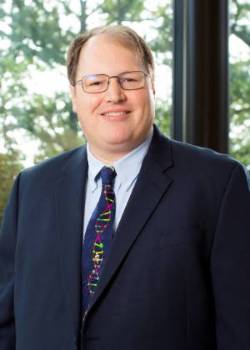
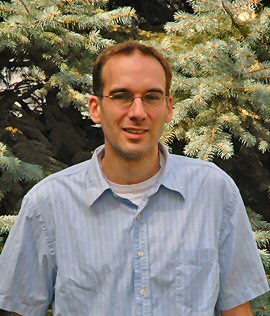
Brian Gill is a Professor of Mathematics and Chair of the Mathematics Department at Seattle Pacific University (SPU) since 1999. He teaches probability, statistics, real/complex analysis, differential equations, and vector calculus, while integrating Christian values into a liberal arts framework. PhD in Mathematics (complex analysis) from University at Albany (1999) MS in Biometry and Statistics from University at Albany (1999) MA in Mathematics from University of Kentucky (1994) His research bridges geometric function theory with applied statistics in social sciences and health sciences. Recent work focuses on human-robot interaction (HRI) and human-computer interaction (HCI) , funded by National Science Foundation grants through partnerships with University of Washington labs. Key themes include: Moral accountability of robots Privacy in public spaces Security for implantable medical devices Technologically mediated natural experiences Publications span ACM/IEEE conferences, environmental psychology journals, and mathematical journals like Complex Variables . Outside academia, Dr. Gill prioritizes family life and outdoor activities, aligning with his emphasis on 'God’s creation.'
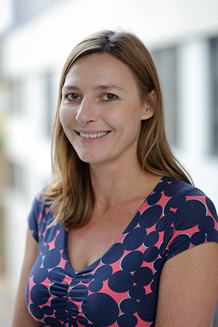
Alessandra Orfano is an Associate Research Scientist in the Department of Epidemiology of Microbial Diseases at Yale School of Public Health, with affiliations to the Yale Institute for Global Health and the Aksoy Lab. Her research focuses on parasite-vector interactions, particularly the genetic diversity of Plasmodium falciparum and its impact on transmission to Anopheles mosquitoes. PhD in Health Sciences (2016), Oswaldo Cruz Foundation, Brazil MSc in Health Sciences (2012), Oswaldo Cruz Foundation BSc in Biology (2009), Pontifical Catholic University of Minas Gerais Her work spans vector biology, tropical diseases, and genetic analysis, with recent studies on malaria vaccine candidates, arboviral coinfections, and vector microbiome dynamics. She employs techniques in metagenomics, microscopy, and paratransgenesis to dissect transmission mechanisms. Her publications highlight collaborations with experts like Brian Weiss and Sunil Parikh, addressing challenges in malaria, leishmaniasis, and Zika virus transmission. Notably, she received the KL2 Award from Yale Center for Clinical Investigation in 2023. She is involved in training at Yale, contributing to the Janeway Society, and advancing interdisciplinary research in infectious disease modeling.
Patrick Forré is an Assistant Professor and Lab Manager of the AI4Science Lab at the Informatics Institute, Faculty of Science, University of Amsterdam. His work bridges theoretical machine learning and scientific applications, fostering interdisciplinary collaboration across informatics, mathematics, ecology, chemistry, physics, biology, and astrophysics. His research centers on mathematical foundations of machine learning including causal inference, graphical models, information theory, conditional independence structures, and geometric deep learning. He specializes in applying these techniques to scientific data problems, particularly in electro-catalysis and nitrogen fixation, where machine learning enhances molecular simulations and quantum chemical modeling. His theoretical work addresses non-linear structural causal models with cycles and latent confounders. The AI4Science Lab under his management focuses on detecting hidden patterns in scientific data through projects like electrode-electrolyte interface modeling, nitrogen-fixing coordination complexes analysis, and classical DFT neural approximations. Located in LAB42 Building at Amsterdam Science Park, the lab connects diverse scientific disciplines through machine learning innovation while organizing colloquia, workshops, and PhD defenses.
Alexandre Nikolaev is a University Lecturer in General Linguistics at the School of Humanities, University of Eastern Finland. His research focuses on morphological complexity, paradigmatic defectivity in inflectional systems, and cognitive approaches to language structure. Key methodologies include corpus analysis, behavioral experiments, and computational modeling. Affiliation: University of Eastern Finland Research Areas: Morphology, Corpus Linguistics, Psycholinguistics, Neurolinguistics Prominent Research Themes: Paradigmatic defectivity as dynamic systems rather than static gaps Cognitive load in inflectional choice production Interaction of corpus frequency and subjective acceptability ratings Comparative analysis of Finnish, Czech, and Russian inflectional patterns Methodological Expertise: Network analysis, mixed-effects modeling, optimal string alignment techniques, cross-linguistic corpus studies, multi-lab collaboration frameworks. No scientific awards or student advising details were explicitly mentioned in the provided text.
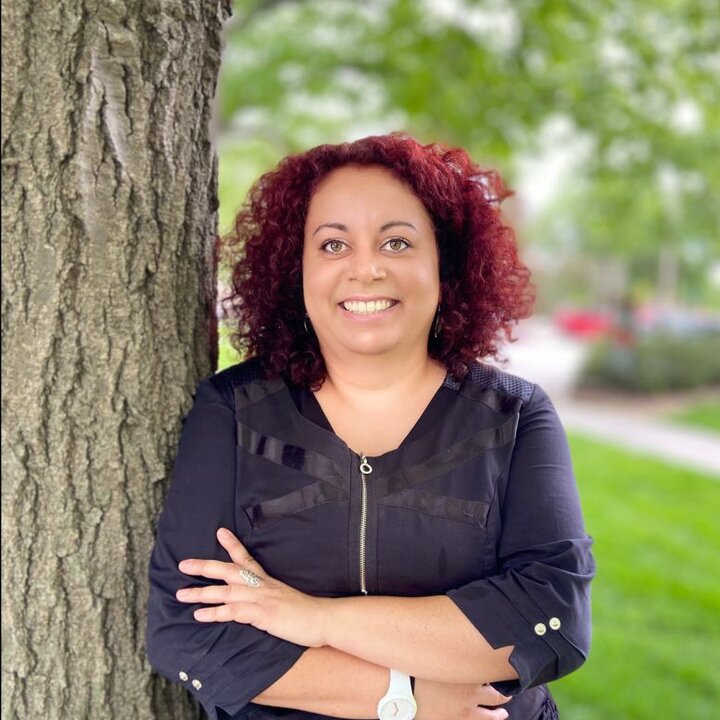
Dr. Victoria Allgar holds a joint appointment as a Reader in Medical Statistics between Hull York Medical School and the Department of Health Sciences at the University of York. She serves as Head of the Centre for Health and Population Sciences (CHaPS), HYMS Athena SWAN Champion (Chair), Deputy Chair of the HYMS Department Research Committee, and holds multiple other leadership positions across both institutions including membership on the HYMS Management Board, Ethics Committee, and Exceptional Circumstances Committee. Dr. Allgar earned her BSc(Hons) in Statistics from the University of Newcastle upon Tyne, followed by a PhD from the same institution. She maintains professional recognition as a Chartered Statistician with the Royal Statistical Society and a Chartered Scientist with the Science Council, reflecting her expertise in statistical methodology and research design. Her research focuses on medical statistics and study design, bringing together experts from various specializations to identify and answer key research questions through the design and conduct of new studies. Dr. Allgar provides statistical and project oversight for these studies, with particular expertise in clinical trials methodology. Her research spans multiple domains including autism spectrum disorders, palliative care, child mental health, epidemiology, and health services research, demonstrating her ability to bridge statistical methodology with clinical applications across diverse medical specialties. Dr. Allgar's extensive publication record (approximately 150 research outputs) reveals a strong commitment to methodological rigor and interdisciplinary collaboration. Her recent work shows particular strength in autism research, clinical trial design, and palliative care studies, often addressing health inequalities and service delivery improvements. She frequently serves as statistical lead on complex interdisciplinary projects, applying sophisticated analytical approaches to challenging clinical questions. Chartered Statistician, Royal Statistical Society Chartered Scientist, The Science Council Member of Charitable Trust Scientific Panel, The Chartered Society of Physiotherapy Member of Treatment Sub-committee, Versus Arthritis UK Member of MS Society's Grant Review Panel Dr. Allgar actively mentors the next generation of researchers as a PhD Supervisor and MSc Dissertation Supervisor. She serves as both an Internal PhD Examiner (Health Sciences) and External PhD Examiner. Her teaching responsibilities include delivering HYMS MBBS statistical plenary lectures and serving as a personal mentor to three cohorts of MBBS students. She also contributes significantly to the scholarly community as Statistical Editor for Health & Social Care in the Community and Associate Editor for Trials, while reviewing for numerous high-impact journals including Palliative Care, BMJ Open, Lancet, and Trials. Additionally, she reviews for major UK funding bodies including HTA, NAEDI, NICE, and MRC. As Statistical Editor for Health & Social Care in the Community and Associate Editor for Trials, Dr. Allgar plays a pivotal role in advancing methodological standards in medical research publication. Her leadership in the Centre for Health and Population Sciences reflects her commitment to fostering interdisciplinary research collaborations that address pressing health challenges through rigorous statistical methodology and innovative study design.
Leah Johnson is an Associate Professor in the Department of Statistics at Virginia Polytechnic Institute and State University (Virginia Tech), within the College of Science. Her research focuses on the intersection of statistics, biology, and mathematics, particularly in understanding how individual variability in populations influences broader ecological and epidemiological patterns. Education: Ph.D. in Applied Mathematics and Statistics and Physics, University of California Santa Cruz (2006), Dissertation: Mathematical Modeling of Cholera M.S. in Physics, University of California Santa Cruz (2003) B.S. with Honors in Physics, The College of William and Mary (2001) Research Interests: Dr. Johnson’s work centers on infectious disease epidemiology, vector-borne disease dynamics, and the impact of climate change. She employs Bayesian statistical methods and mechanistic models to study how environmental drivers, population structure, and individual behaviors shape disease transmission and persistence. Key areas include malaria, dengue, and amphibian pathogens. Recent Article Trends: Her publications emphasize the role of temperature and humidity in vector performance, the development of databases for vector traits, and ecological forecasting under climate change. Studies highlight the importance of integrating empirical data with theoretical models to address public health challenges. Awards and Honors: Early Career Fellow, Mathematical Biosciences Institute (2013) Finalist, Kings College Junior Research Fellowship (2008) College Research Associate, University of Cambridge (2006–2009) Grants and Funding: Principal Investigator: Vector Behavior in Transmission Ecology (VectorBiTE) (NIH-NSF-USDA, 2015–2020) Co-PI: Effects of Temperature on Vector-Borne Disease Transmission (NSF-NIH-USDA, 2015–2020) Labs and Teams: She leads the QED Lab, which explores quantitative methods for ecological and epidemiological systems. The lab collaborates on global initiatives like the VectorByte platform for vector trait data and climate-driven disease forecasting.
Dr. Justin McMechan is an Associate Professor in the Department of Entomology at the University of Nebraska-Lincoln. He holds a joint appointment with 50% Extension and 50% research responsibilities. Education: Doctor of Plant Health (2016) and Ph.D. in Entomology (2016) from University of Nebraska-Lincoln Research Areas: Soybean Gall Midge ecology, Insect Pest Management, Cover Crop Systems, Wheat Curl Mite-Virus Complex, Plant-Insect Interactions His work focuses on biological control strategies for field crops, with recent studies on Resseliella maxima in soybean and hail damage impacts on wheat virus transmission. He pioneered innovative extension methods combining automated communication tools with traditional field demonstrations. Notable scientific awards include: 2023 Outstanding Paper Award in Agronomy Journal 2022 Harold & Esther Edgerton Junior Faculty Award 2020 FMC Researcher of the Year Dr. McMechan actively supervises graduate students and has secured over $4.9 million in research funding from federal agencies and commodity boards, with particular emphasis on sustainable pest management solutions.
Dr. Lise Pingault is a Research Assistant Professor in the Department of Entomology at the University of Nebraska-Lincoln. Her research focuses on the molecular mechanisms of arthropod vectors and the development of innovative pest management strategies. PhD, Physiology and Molecular Genetics, University Blaise Pascal, France (2014) M.S., Molecular and Cellular Biology, University Pierre & Marie Curie Paris 6 (2010) B.S., Biology, University Francois Rabelais (2008) Dr. Pingault’s work integrates Arthropod Genomics , Plant-Insect Interactions , and Bioinformatics to study pathogen transmission dynamics and vector adaptation. She employs multi-omics and computational biology to develop novel pest control solutions. Her recent publications highlight trends in plant defense transcriptomics , molecular interactions between vectors and hosts, and bioinformatic tools for analyzing large datasets. Notable studies include aphid resistance in sorghum and viral tolerance in wheat. Dr. Pingault teaches graduate-level courses in sequencing data analysis and is an active member of the Entomological Society of America and American Society of Plant Biologists .
Brent Bill is an Associate Professor of Biology at the University of Texas at Tyler (UT Tyler). His academic journey includes a Ph.D. in Molecular, Cellular, Developmental Biology and Genetics from the University of Minnesota (2008), an M.S. in Biotechnology, and a B.S. in Biology from Illinois State University (2002 and 1999 respectively). Prior to his current role, he held positions as a Postdoctoral Researcher at UCLA's Semel Institute for Neuroscience (2008–2014) and a Lecturer at UCLA's Department of Life Sciences (2014). Bill’s research focuses on neurodevelopmental disorders, zebrafish models, and genetic mechanisms underlying behaviors and neurological conditions. He has pioneered studies using zebrafish to investigate autism spectrum disorder (ASD) risk genes like CNTNAP2 and CYFIP1, as well as Parkinson’s disease modeling through dopamine pathway studies. His work integrates molecular genetics, behavioral assays, and bioengineering approaches. Notable contributions include developing tools for optic fissure closure assessment and characterizing virus-like particle (VLP) toxicity. His research spans topics from neuropharmacology (nicotinic receptors) to environmental engineering (graywater treatment systems). Labs/Teams: Bill has been affiliated with UCLA’s Center for Autism Research and Treatment under Dr. Daniel Geschwind’s mentorship. His UT Tyler lab likely continues neurobehavioral and developmental studies using zebrafish systems. Advising & Grants: His postdoctoral work was supported by the AP Giannini Foundation (2009–2012). He advises students through UT Tyler’s undergraduate courses in Cell Biology and Developmental Biology, emphasizing hands-on lab training and genetics education.
Dr. Joseph Duchamp is a Professor in the Biology Department at Indiana University of Pennsylvania (IUP), affiliated with the John J. and Char Kopchick College of Natural Sciences and Mathematics. He holds a PhD in Wildlife Science from Purdue University, an MS in Ecology from Indiana State University, and a BS in Biology from the University of Michigan. His research focuses on wildlife population dynamics, community ecology, mammalogy, and biostatistics, with an emphasis on improving human-wildlife coexistence through conservation and management strategies. Dr. Duchamp's work spans diverse taxa including birds, mammals, amphibians, and insects, addressing habitat use, species interactions, and conservation challenges in fragmented landscapes. Recent projects include studies on elk resource selection, endangered species translocations, and tick-borne disease ecology. He has published extensively on topics such as golden-winged warbler habitat requirements, Allegheny woodrat genetics, and bat ecology in human-altered environments. His research integrates field observations with advanced analytical techniques, contributing to evidence-based management practices. He collaborates on initiatives like ungulate exclusion fencing studies and translocation programs for endangered species. Dr. Duchamp's office is located in Kopchick Hall, Room 112, with regular office hours Monday-Friday 9:30 AM–4:00 PM.
Phivos Mylonas is an Associate Professor at the Department of Informatics and Computer Engineering within the School of Engineering at the University of West Attica. He also maintains academic appointments at Ionian University where he previously served as Associate Professor and Assistant Professor in the Department of Informatics. His academic journey includes adjunct professor positions at several Greek institutions including University of Central Greece, University of the Aegean, and University of Crete. Dr. Mylonas holds a PhD in Electrical and Computer Engineering from the National Technical University of Athens, a Master's Degree in Advanced Information Systems from the National and Kapodistrian University of Athens, and a Diploma in Electrical and Computer Engineering from the National Technical University of Athens. His research spans Artificial Intelligence applications, data science, user modeling, personalization technologies, and semantic frameworks. His scholarly output shows a clear trajectory toward increasingly sophisticated AI applications, with recent publications focusing on ChatGPT integration, fuzzy logic systems, and multimodal interaction. The research demonstrates strong interdisciplinary connections between computer science, education, and cultural heritage preservation. Thomaidio Grant for Science and Art Progress (2005, 2006) ICCS-NTUA Short Term Research Grant (2005-2006) As an academic leader, Dr. Mylonas has served as Director of the Humanistic and Social Informatics Laboratory at Ionian University (2013-2022) and as a Senior Researcher at the Image, Video and Multimedia Laboratory at National Technical University of Athens. He has been instrumental in organizing numerous international conferences and has served on over 200 conference program committees. His laboratory work spans multiple institutions including collaborations with University of Patras and Ionian University.
Prof. Leszek Jerzak is a Professor at the University of Zielona Góra, affiliated with the Department of Nature Conservation within the Institute of Biological Sciences. His primary focus is on biological sciences with 100% disciplinary participation. His work integrates ornithology, urban ecology, and conservation biology, emphasizing avian population dynamics, urban wildlife adaptation, and ecosystem health. Research interests include white stork ecology, corvid species behavior, tick-borne diseases in urban environments, and the impacts of pesticides on wildlife. He has extensively studied the effects of anthropogenic landscapes on biodiversity, particularly in Central-Western Poland. Prof. Jerzak actively contributes to conservation strategies for farmland birds and urban biodiversity preservation. His recent publications (2021-2025) highlight themes like seed dispersal mechanisms, urban bird community resilience, and disease ecology. Notable studies include the role of electricity pylons in plant succession and the paradoxical benefits of human infrastructure for avian diversity. His work bridges empirical field studies with applied conservation outcomes.
Dr. Carla E. Cáceres is a Professor and Director of the School of Integrative Biology at the University of Illinois. She holds additional appointments in the Carl R. Woese Institute for Genomic Biology, Prairie Research Institute, and Institute for Sustainability, Energy, and Environment. Her research focuses on population, community, and evolutionary ecology, exploring how biodiversity arises and is maintained, with emphasis on disease ecology and limnology. She has received numerous awards including Fellowships from AAAS and Ecological Society of America, and the Presidential Early Career Award for Scientists and Engineers (PECASE). Education: Ph.D. in Ecology and Evolutionary Biology, Cornell University (1997) BS in Biology, University of Michigan (1991, High Honors) Additional training in Environmental Genomics and Undergraduate Education (2009-2010) Her research integrates ecological and evolutionary processes to address questions about life-history variation, metacommunity dynamics, and disease distribution. Recent work examines predator-prey interactions influencing disease spread, fungal pathogen dynamics in Daphnia, and microbiome impacts on mosquito larvae. Over 100 peer-reviewed articles demonstrate her focus on aquatic ecosystems and disease ecology. Awards: AAAS Fellow (2017) Ecological Society of America Fellow (2016) PECASE (2003) Multiple teaching awards recognizing excellence in undergraduate education Research & Leadership: Leads interdisciplinary teams at multiple institutes, oversees grants exploring disease ecology mechanisms, and advises students in ecological research. Her lab actively investigates zooplankton-parasite systems and urban aquatic habitats.
Cinnamon Bloss is a tenured Professor in Public Health, Psychiatry, and Medicine at the University of California San Diego (UCSD), serving as Founding Director of the Center for Empathy and Technology and Associate Director of the Institute for Empathy and Compassion. She holds leadership roles as Associate Dean for Academic Affairs in the Herbert Wertheim School of Public Health and previously served as a licensed clinical psychologist. Her research focuses on the societal and ethical implications of emerging technologies, including genomic sequencing, gene drives, and digital health tools. Dr. Bloss leads interdisciplinary projects funded by NIH, DARPA, and philanthropic organizations. Notable contributions include developing frameworks for stakeholder engagement in gene drive research and creating measures of empathy in healthcare. She chairs the NIH Novel and Exceptional Technology and Research Advisory Committee, advising on ethical and safety aspects of biotechnologies. Her work bridges science policy, public health, and empathy-driven clinical practices. Research areas span precision medicine, technology adoption, and health equity, with over 100 publications. Awards include the Carmel Prize for Research Excellence and the 2022 American Society of Human Genetics Mentorship Award. She pioneered a Technology and Precision Health concentration in UCSD’s MPH program and has mentored over 50 trainees. Key projects include studies on genomic utility perception, privacy in health data, and community engagement in biotechnology. She actively addresses ethical challenges in genomic medicine, digital surveillance, and global health interventions, advocating for compassionate and equitable science.
Todd C. Holmes, PhD, is a Professor in the Department of Physiology & Biophysics at the University of California, Irvine (UCI) School of Medicine. His research focuses on the structural and functional organization of neural circuits, particularly in the visual cortex and hippocampus. Dr. Holmes employs advanced techniques like laser scanning photostimulation and viral tracing to map synaptic connectivity, emphasizing the balance between excitatory and inhibitory inputs in cortical microcircuits. His work has revealed layer-specific synaptic wiring diagrams and redefined understanding of how inhibitory connections mirror excitatory pathways in the mouse visual cortex (V1). Dr. Holmes is affiliated with the UCI Center for Neural Circuit Mapping, contributing to interdisciplinary studies on Alzheimer’s disease models, optogenetic tools, and neurovascular interactions. He has secured funding from NIH grants (e.g., MH105427, R01NS095355) and collaborates on projects involving genetic engineering and high-resolution brain imaging techniques. His research extends to circadian rhythms, Drosophila neurobiology, and neuropsychiatric disorder models, leveraging transgenic approaches and behavioral analyses. Recent studies explore microglia’s role in synaptic connectivity and the application of novel viral vectors for circuit tracing.