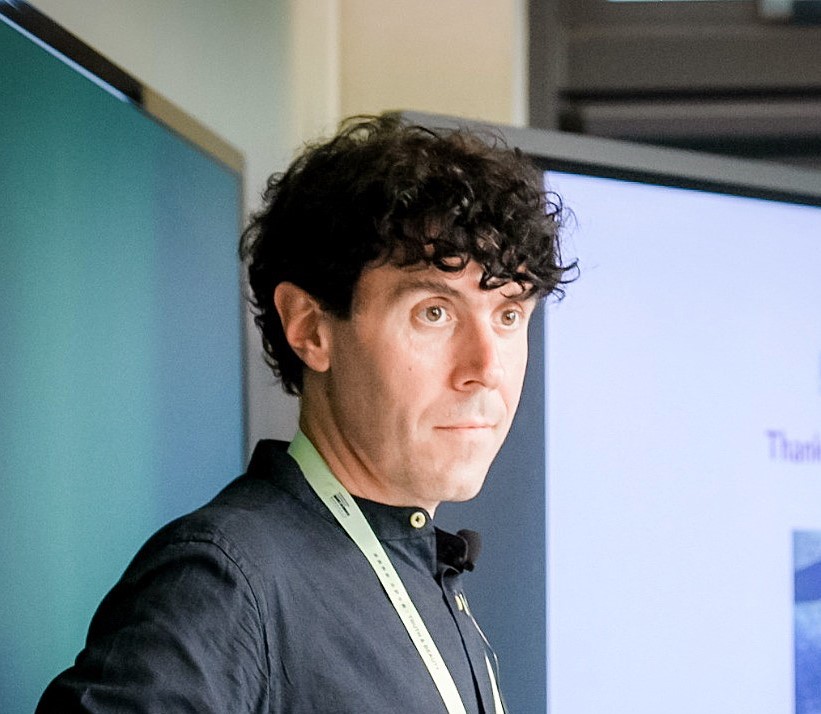
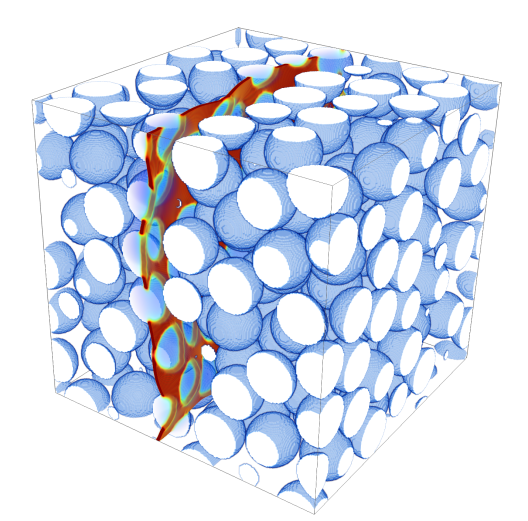
Andrea Malchiodi is a Full Professor of Mathematical Analysis at the Scuola Normale Superiore (SNS) in Pisa, Italy, affiliated with the Class of Sciences. He holds a Physics degree from the University of Milan and a PhD from SISSA, Trieste. His research focuses on geometric analysis, particularly problems involving lack of compactness and variational structures addressed via topological methods. He has authored influential works including books on perturbation methods, semilinear elliptic problems, and conformal geometry. Before joining SNS in 2015, he held professorships at SISSA and the University of Warwick. Education: Laurea in Fisica, University of Milan PhD in Mathematics, SISSA, Trieste Postdoctoral Research: Rutgers University, Institute for Advanced Study (Princeton), ETH Zurich His research interests emphasize geometric analysis, nonlinear PDEs, and conformal geometry. He directs the Research Center at SNS and has contributed to advancing methodologies in variational problems and scalar curvature prescriptions.
Lucia Avallone is an Associate Professor at the University of Bergamo, teaching Arabic language and literature. She holds a PhD in 'Near Eastern and Maghreb Studies. Cultural Specificities and Intercultural Relations' from the University of Naples 'L'Orientale' (2011) and graduated from the University of Turin (1989). National Scientific Qualification for Full Professor in Cultures of the Ancient Near East, Middle East, and Africa (2024-2035) Member of AIMA (International Association for the Study of Middle and Mixed Arabic) Advisor for Master's Degree in Modern Languages for International Communication and Cooperation (LM-38) Member of PhD programs in Philological and Linguistic Studies (Bergamo) and Linguistic Sciences (Bergamo-Pavia) Her research focuses on modern and contemporary Arabic language and literature , especially linguistic variation , code switching between standard and vernacular Arabic , and Arabic-European language contact . She analyzes political discourse and develops methodologies for Arabic language teaching, with particular attention to dialect-standard dynamics in literary and pedagogical contexts. Recent publications examine: Linguistic creativity in contemporary Egyptian fiction Sociolinguistic aspects of modern Arabic narratives Translation challenges between Arabic dialects and Standard Arabic Historical connections between Arabic and Mediterranean cultures She supervises master's theses and participates in doctoral committees, emphasizing: Intercultural communication Postcolonial Arabic literature Language pedagogy innovations
Giuseppe Mingione is a Full Professor in the Department of Mathematical, Physical and Computer Sciences at the University of Parma, Italy. His research spans Calculus of Variations , Elliptic and Parabolic PDEs , and Nonlinear Potential Theory . He has delivered over 25 lecture series and 180+ invited talks globally. PhD in Mathematics, University of Naples Federico II (1999) Degree in Mathematics, University of Naples Federico II (1994) His work focuses on regularity theory for nonlinear PDEs, nonuniform ellipticity, and geometric analysis. Publications include breakthroughs in Schauder estimates, double phase problems, and nonlocal systems. He has received the Amerio Prize (2016) , Caccioppoli Prize (2010) , and Stampacchia Medal (2006) . Recent articles address nonuniform ellipticity, nonlocal PDEs, and gradient regularity. Awards include the Order of the Merit of the Italian Republic (2017) and Von Staudt Chair (2004) . He serves on editorial boards for international journals.
Cristiana De Filippis serves as Associate Professor in the Department of Mathematical, Physical and Computer Sciences at the University of Parma. Her academic journey includes a Bachelor's degree from the University of Torino (2014), Master's from University of Milano-Bicocca (2016), and PhD from the University of Oxford (2020), followed by a tenure-track position at Parma since 2021 and habilitation to full professorship in 2023. Her research focuses on Mathematical Analysis , particularly Regularity Theory for elliptic and parabolic partial differential equations and the Calculus of Variations . She investigates fundamental properties of solutions to nonlinear PDEs, including sharp growth conditions, nonuniform ellipticity, and double-phase functionals. Her work bridges abstract mathematical theory with applications in physics and engineering through rigorous analysis of solution behavior. Analysis of her 15 most recent publications reveals a concentrated research program in nonuniformly elliptic systems (2022-2025), double-phase variational problems (2023-2024), and gradient regularity under irregular coefficients (2020-2024). Key contributions include establishing sharp growth rates in Schauder theory and developing novel techniques for nearly linear growth conditions. European Mathematical Society Prize 2024 Bartolozzi Prize 2023 (Italian Mathematical Union) Iapichino Prize 2020 (Accademia dei Lincei) Premio per la Cultura Mediterranea 2023 G-Research Prize 2019 Forbes 100 Most Successful Italian Women 2023 European Mathematical Society Young Academy (inaugural cohort) Professor De Filippis has delivered invited lectures at prestigious institutions including Erwin Schrödinger Institute (2025), Charles University Prague (2024), and Accademia Nazionale dei Lincei (2022). She teaches Mathematical Analysis courses for Computer Science, Geological Sciences, and Management Engineering programs at undergraduate level. Her research is supported through multiple international collaborations, particularly with Giuseppe Mingione at Parma and researchers at European institutions.
Lorenzo Melito is a Professor in the Faculty of Engineering at Università Politecnica delle Marche (UNIVPM) in Ancona, Italy. His research focuses on coastal engineering, fluid dynamics, and environmental modeling with particular emphasis on wave dynamics, tsunami inundation, and coastal adaptation to climate change in Mediterranean environments. Dr. Melito's research interests span several critical areas in coastal engineering and environmental fluid mechanics. His work on wave-current interactions, steady streaming, and infragravity dynamics provides fundamental insights into coastal processes. He has developed semi-empirical approaches for tsunami inundation mapping that have been applied to Italian coastlines. His research on munitions mobility in estuaries addresses important environmental contamination issues, while his work on coastal inundation modeling contributes to climate change adaptation strategies for the Marche Region and beyond. His publications demonstrate expertise in both theoretical modeling and experimental approaches to understanding complex coastal phenomena. Analysis of Dr. Melito's recent publications reveals a strong focus on coastal processes in the Adriatic Sea region, particularly in microtidal environments. His work combines theoretical modeling, numerical simulation, and experimental approaches to understand complex wave-bottom interactions, sediment transport, and coastal flooding mechanisms. A recurring theme is the application of fundamental fluid dynamics principles to solve practical coastal engineering problems, with emphasis on Italian coastal regions including the Marche Region and the Tyrrhenian and Adriatic coasts. His research bridges theoretical fluid dynamics with practical coastal management applications, particularly for hazard assessment and climate change adaptation.
Stefano CAMPOSTRINI is a Full Professor in the Department of Economics at Ca' Foscari University of Venice, specializing in Social Statistics (STAT-03/B). He serves as a Member of the technical-scientific Committee of the Ca' Foscari Challenge School and the Department of Economics' Committee. His research activities are supported by affiliations with the Research Institute for Social Innovation and the Research Institute for Innovation Management. Professor CAMPOSTRINI's research spans the intersection of statistical methodology, public health, and social policy. His work demonstrates expertise in advanced statistical techniques including Bayesian modeling, spatial analysis, and complex survey methodology. His primary focus areas include healthcare systems analysis, social innovation, public administration, and the economic aspects of health policy. He frequently addresses issues related to comorbidity patterns, healthcare service accessibility, and the application of artificial intelligence in healthcare settings. His publication record from 2021-2025 reveals significant trends in healthcare innovation, with particular emphasis on virtual hospital systems, AI applications in medicine, sustainable healthcare practices, and the statistical analysis of social services like early childhood education. His methodological contributions include novel approaches to analyzing regional health disparities and developing web-based tools for disease prevalence estimation. His research often employs expert consensus methods like Delphi techniques to address complex healthcare organizational challenges. Professor CAMPOSTRINI maintains active involvement in research initiatives through the Research Institute for Social Innovation and the Research Institute for Innovation Management. His work bridges advanced statistical methodology with practical applications in healthcare policy and social service delivery, making significant contributions to evidence-based decision making in public health and social policy domains across Italy and European contexts.
Luigi Ambrosio is a Full Professor at the Scuola Normale Superiore di Pisa (SNS), specializing in geometric measure theory, optimal transport, and partial differential equations. His research focuses on the interplay between geometric analysis, functional analysis, and calculus of variations, with applications to metric measure spaces and stochastic processes. He has organized numerous conferences and schools on optimal transport and geometric analysis, including the 2025 'XXXV Convegno Nazionale di Calcolo delle Variazioni.' Key research interests include the theory of currents, regularity of flows, and the application of optimal transport to problems in probability and geometry. Notable contributions include foundational work on metric Sobolev spaces, RCD spaces, and the analysis of geometric flows. Ambrosio frequently collaborates with leading institutions and has supervised numerous seminars on topics ranging from gradient flows to non-smooth geometric structures. His publications span over 150 papers, addressing topics such as the regularity of vector fields, entropy flows in Carnot groups, and the stability of action functionals. Recent works (2021–2025) explore superposition principles for currents, sharp PDE estimates for random matching, and embedding theorems for metric spaces. Ambrosio is also active in academic leadership, contributing to editorial boards and international research networks.
Simon Masnou is a Full Professor at Université Claude Bernard Lyon 1, affiliated with the Institut Camille Jordan (CNRS UMR 5208). He holds leadership roles as Head of the 'Applied Mathematics, Statistics' Master's degree and Head of the 'M2 Maths in Action' program. Previously, he served as Director of the Camille Jordan Institute (2018-2022). His research focuses on applied mathematics, image processing, shape optimization, and geometric measure theory, with contributions to variational models, geometric flows, and applications in computer vision and materials science. Education: PhD in Mathematics (1998, Paris Dauphine) and HDR (2008, Paris 6). Research projects include ANR STOIQUES (2024-2028), PEPR PDE-AI (2023-2028), and collaborations with industry on topics like defect prediction in aluminum production and high-dimensional data analysis. Teaching includes courses on linear algebra, optimization, and machine learning at undergraduate and graduate levels. Key contributions span phase field models, varifold-based surface approximation, and image inpainting. He supervises PhD students in geometric variational problems and computational methods. His work bridges theoretical mathematics with industrial challenges, addressing issues in materials science, medical imaging, and cultural heritage preservation.
Roberta Spallone is a Full Professor in the Department of Architecture and Design (DAD) at Politecnico di Torino, where she conducts research and teaches in architectural representation, digital modeling, and cultural heritage. Her work bridges historical architectural theory with cutting-edge digital technologies like AR, VR, and AI. Research Interests: Her research focuses on 3D and reconstructive modeling, augmented and virtual reality (AR/VR) for cultural heritage, descriptive geometry, history of architectural representation, and the study of architectural treatises—especially those on military engineering. She explores digital technologies for the survey, representation, and communication of cultural heritage, with a strong emphasis on geometric analysis and historical accuracy. The trends in her recent publications reflect a consistent focus on the digital interpretation of early modern military architecture, particularly through parametric modeling and geometric analysis of treatises by figures like Guarini. She applies AR and VR to enhance accessibility and storytelling in museum and urban heritage contexts, emphasizing inclusive and sustainable cultural tourism. Scientific Awards: Best paper award, Italian Union for Drawing - UID (2021) Best Paper, 40th International Conference of Teachers of Representation Disciplines UID (2018) Best paper, FORTMED Conference 2015 (Historical Research) UID Silver Plaque (1997) PhD 1st prize ex aequo, Italian Design Union (1997) Advising and Grants: She supervises PhD students including Enrico Pupi and Fabrizio Natta. She leads the national PRIN research project INFORTREAT and multiple applied research contracts involving AR/VR for heritage sites like Palazzo Carignano and Mirafiori Castle. She is the Scientific Responsible for collaborative agreements with Fondazione Torino Musei and the Regional Directorate of Museums in Piedmont. Labs, Teams, and Collaborations: She is a key member of the scientific committees of FORTMED, UID, and Nexus Architecture and Mathematics. She serves on editorial boards for journals such as Nexus Network Journal and Diseñar Con... , and has guest-edited special issues. She frequently collaborates with researchers across Europe on projects linking architecture, mathematics, and digital heritage.
Alfio Grillo is a Full Professor at the Department of Mathematical Sciences (DISMA) of Politecnico di Torino, with research interests in biomechanics, continuum mechanics, and mathematical physics. His expertise spans classical mechanics and multiscale modeling of biological tissues. Research Focus: Grillo's work integrates analytical mechanics with nonholonomic constraints, fractional calculus applications, and multiscale modeling of growth/remodeling phenomena in biological systems. Recent articles emphasize poroelasticity, viscoelastic composites, and bi-phasic material behavior. Scientific Contributions: Editorial roles in leading journals since 2014 Member of INdAM-GNFM since 2009 Recipient of National Scientific Qualification in 2017 €128,609 PRIN grant for multiscale biological modeling Academic Leadership: Supervises PhD students in Civil Engineering, Mathematics, and Mathematical Engineering. Teaches advanced courses in Differential Varieties, Variational Methods, and Porous Media Mechanics.
Alfonso Sorrentino is a full professor of mathematical analysis at the Department of Mathematics, University of Rome Tor Vergata. He specializes in Hamiltonian dynamical systems, with expertise in nonlinear analysis, differential geometry, and mathematical physics. He earned his Ph.D. in mathematics from Princeton University (2008) and held academic positions at the Fondation des Sciences Mathématiques de Paris (2008–2009) and the University of Cambridge (2009–2012). His research focuses on invariant structures in Hamiltonian systems, billiard dynamics, and spectral rigidity. Key recognitions include the Fubini Prize (2018), Barcelona Dynamical Systems Prize (2019), Best Paper Award (Gold medal, 2020), and Frontiers of Science Award (2023). His work bridges pure mathematics and applications, emphasizing geometric and analytic approaches to dynamical systems. Recent studies explore topics like invariant Lagrangian graphs, spectral properties of billiards, and homogenization of Hamilton-Jacobi equations on networks. His contributions reflect a commitment to advancing theoretical frameworks in dynamical systems and their interdisciplinary implications.
Hannes Schuler is a Tenured Associate Professor of Agricultural and Forest Entomology at the Faculty of Agricultural, Environmental and Food Sciences, Free University of Bozen-Bolzano (UniBZ). His research focuses on the evolutionary ecology of insect pest species, with particular emphasis on host-microbe interactions and symbiont-mediated adaptations. He leads the Schuler Lab and is a member of the Competence Centre for Plant Health at UniBZ. Dr. Schuler's primary research interests include: Evolutionary ecology of insect pest species Microbial symbionts and their impact on host ecology and evolution Population genomics of invasive insect species Sustainable pest management approaches Tripartite interactions between phytoplasma, vectors, and microbiomes His research combines genomic and population genomic approaches with in vivo experiments in laboratory and semi-field settings. Dr. Schuler's lab has made significant contributions to understanding the role of bacterial symbionts in invasion processes, particularly in fruit flies (Rhagoletis species), psyllids, and bark beetles. Recent work has focused on the microbiome of invasive species, symbiont-mediated adaptations, and the development of sustainable pest control strategies that reduce chemical pesticide use. Dr. Schuler has edited a special issue of the journal Insects titled "Insect Symbionts: Evolution and Application," which features 11 publications spanning topics from symbiont-driven seasonal adaptation to Wolbachia-mitochondrial DNA associations. His research has been presented at numerous international conferences including the European Conference of Entomology and the Population Genetics Group Meeting, with recent presentations at CNIE 2025 in Siena covering apricot aphids, olive fly symbionts, and psyllid symbionts. Among his notable achievements: Successful supervision of multiple PhD students including Maja, Juan, and Giulia Calia Securing funding for multiple research projects on insect symbionts and pest management Establishing international collaborations with researchers across Europe Organizing lab activities and mentoring junior researchers Dr. Schuler actively supervises Master's and PhD students, teaches courses on plant protection, theory of scientific method, and plant and livestock health, and maintains an active research program with multiple ongoing projects investigating the role of symbionts in invasion biology and sustainable pest management.
Professor Caterina Ida Zeppieri is an Associate Professor at the Institute for Numerical and Applied Mathematics , University of Münster, Germany. Her research focuses on homogenization theory, calculus of variations, and applications in material science. She leads the Analysis and Modelling Research Group , which explores variational methods and their computational implications. Research Interests: Her work centers on stochastic and deterministic homogenization of free-discontinuity problems, Γ-convergence, and the analysis of heterogeneous materials. She investigates mathematical models for fracture mechanics, phase transitions, and plasticity, often employing advanced techniques from calculus of variations and partial differential equations. Recent Contributions: Recent articles address topics such as strong approximation of SBV functions (2025), stochastic homogenization in perforated domains (2024), and gradient damage models (2022). These studies emphasize rigorous mathematical analysis with applications to real-world material behavior. Grants & Collaborations: Zeppieri’s research is supported by grants from the German Research Foundation (DFG), including projects within the Cluster of Excellence 2044 (e.g., C1: Evolution and Asymptotics). She collaborates with institutions globally, advancing interdisciplinary approaches to material modeling. Teaching: She teaches advanced courses like Applied Functional Analysis and Calculus of Variations , and mentors students through seminars and thesis supervision. Her group hosts regular colloquia and workshops, fostering academic exchange in applied mathematics.
Alessandro Del Tomba is a Tenure-Track Researcher in Linguistics and Glottology at Sapienza University of Rome, specializing in historical linguistics, Indo-European studies, and Central Asian philology. He holds a PhD in Linguistics from Sapienza and Comparative Indo-European Linguistics from Leiden University. Historical linguistics Indo-European studies Eastern Iranian philology Language contact theories His research focuses on Khotanese and Tocharian languages, with recent publications analyzing manuscript transmission, morphological variation, and phonological developments. He serves as Principal Investigator for the FIS project "Khotanese language and texts in contexts (KhoTxt): A multimodal approach to the classification and periodisation of the Khotanese language and its texts within the cultural and historical framework of medieval Central Asia". He teaches General Linguistics at undergraduate levels and Linguistics courses at the graduate level in Modern Philology. Active in international academic networks, he participates in conferences across Italy, Europe, and Asia.
Vanessa Leonardi serves as an Associate Professor in the Department of Methods and Models for Economy, Territory and Finance at Sapienza University of Rome. She teaches English language courses across multiple degree programs including Geographic Sciences and Technologies for the Environment and Health (3rd year), Modern Philology (2nd year), Sustainable Tourism Sciences (1st/2nd year), Literature Music Entertainment (1st year), and Linguistics (1st year). Her research centers on the ideological dimensions of language and translation, with particular emphasis on gender representation in legal and medical texts, corpus-based analysis of academic discourse, and pedagogical innovations for English language instruction. She investigates how power structures manifest in translated materials through linguistic choices and cultural adaptation strategies. Recent publications (2024-2025) demonstrate sustained focus on corpus-driven legal translation studies, intralingual translation in children's literature, and digital communication challenges including emoji translation. Her work consistently examines the intersection of gender ideology with translation practices across diverse text types from EU legal documents to children's books. Dr. Leonardi maintains Wednesday office hours by appointment and is contactable at vanessa.leonardi@uniroma1.it . No scientific awards or student advising information appears in the available records.