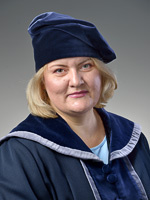
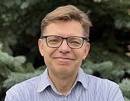
Paweł Kliber is a Professor at the Department of Econometrics within the Institute of Informatics and Quantitative Economics at Poznań University of Economics and Business. His research spans Economics and Finance , with a focus on Econometrics , Portfolio Optimization , and Financial Modeling . Role: Professor (since 2014) Institution: Poznań University of Economics and Business Email: p.kliber@ue.poznan.pl Kliber’s research emphasizes liquidity risk , regional economic convergence , and stochastic volatility in financial markets . His work includes empirical analyses of the Frankfurt Stock Exchange , Polish financial markets , and theoretical contributions to quantile hedging and multi-criteria portfolio selection . Recent publications highlight trends in portfolio choice integrating financial statements, supply chain resilience , and Okun’s law variations across Polish regions. His methodological approaches combine jump-diffusion models , quantitative risk analysis , and panel data econometrics . Kliber has authored 36 publications and supervised 2 promoted theses. His academic contributions include studies on monetary policy effectiveness in Poland and convergence dynamics in OECD economies.
Andrzej Matras is an Assistant Professor at the Department of Production Engineering, Faculty of Mechanical Engineering, Jagiellonian University. He holds a PhD and BEng in Mechanical Engineering, awarded in 2010. His research focuses on machining optimization, surface engineering, and advanced manufacturing processes, particularly in difficult-to-cut materials like Inconel and titanium alloys. He has published 46 peer-reviewed articles and supervised one promoted thesis. Education: PhD in Mechanical Engineering (2010) BEng in Mechanical Engineering Research Interests: Specializes in CNC machining strategies, tool material selection (PCD/CBN), simulation-driven process optimization, and surface integrity analysis. His work addresses challenges in precision machining of aerospace components and complex geometries. Publications Trends: His recent work emphasizes cutting parameter optimization (e.g., Inconel 718 turning), material model validation in FEA, and laser cutting surface analysis. Key themes include minimizing deformation in thin-walled parts and improving tool life in hard milling operations. Achievements: Holds an h-index of 9 (Web of Science) and 8 (Scopus), with a total citations score of 1,560. His research contributes to advancing manufacturing efficiency in high-precision industries. Advising & Grants: Supervised 1 promoted thesis without specific grant details mentioned. His work integrates CAD/CAM systems for process automation and error compensation in manufacturing.
Dr. Marcin Mazur is a retired professor at the Department of Rural Geography and Local Development, Institute of Geography and Spatial Organization (IGiPZ PAN) of the Polish Academy of Sciences. He has been affiliated with IGiPZ PAN since 2007, contributing extensively to cartography and rural development studies. Holding a Master’s degree from Maria Curie-Skłodowska University in Lublin (2002-2007), his research focuses on cartographic methodologies, map perception, urban-rural continuum dynamics, and suburban zone transformations. He served as cartographic editor for the Agricultural Atlas of Poland (2007-2010) and has authored/co-authored 27 scientific publications, including works in English. His research interests emphasize the application of cartographic methods to analyze rural development, spatial policy, and socio-economic indicators. Mazur has explored topics such as voting behavior in rural Poland, ICT adoption in agriculture, and functional classifications of local administrative units (gminas). His scholarship from the Faculty of Biology and Earth Sciences (2003-2007) supported his early academic trajectory. Mazur’s publications span cartographic theory, rural governance, and regional development, with notable contributions to the analysis of peripheral regions in Central-East Europe and Visegrad countries. His work integrates spatial analysis with policy implications, addressing challenges in rural-urban transitions and socio-economic disparities.
Krzysztof Brzostowski, DSc, PhD, Eng. is a Professor at the Wrocław University of Science and Technology, affiliated with the Faculty of Information and Communication Technology. He holds a position in the Department of Computer Science and Systems Engineering, located at ul. Z. Janiszewskiego 11/17, building C-3, room 15. His research focuses on nonlinear signal processing, biomedical signal processing, time-frequency signal representation, sparsity techniques, system identification, and multi-sensor fusion. Brzostowski's work integrates advanced signal processing methodologies with practical applications in biomedical engineering, sensor networks, and data-driven decision systems. He has contributed significantly to noise reduction techniques, real-time signal fusion, and adaptive systems for physical effort planning. His research often bridges theoretical signal analysis with clinical and engineering applications, addressing challenges in electromechanical delay measurement, gait analysis, and medical imaging enhancement. Notable contributions include a monograph on signal processing in data stream fusion (2020) and pioneering studies on MRI denoising, gyroscope signal enhancement, and hybrid reality data sharing protocols. His articles span journals like Biomedical Signal Processing and Control , Applied Intelligence , and conference proceedings in systems engineering and artificial intelligence. Brzostowski's academic service includes office hours on Wednesday, Thursday, Friday, and Saturday mornings, and he maintains active participation in academic conferences and editorial roles. While no specific awards are listed, his extensive publication record reflects sustained excellence in interdisciplinary signal processing research.
Karolina Jakubczyk is a Professor at the Department of Human Nutrition and Metabolomics, Faculty of Health Sciences, Pomeranian Medical University in Szczecin. Her research focuses on nutritional science, functional foods, and the biochemical mechanisms underlying antioxidant activity in plant-based products. Her work spans topics like the health impacts of kombucha, matcha tea, spirulina, and edible flowers, with a strong emphasis on phytochemical analysis, oxidative stress modulation, and food safety. She has published 150+ articles, contributed to 1 doctoral thesis, and conducted research on topics ranging from vitamin D metabolism in cardiac patients to the influence of cultivation methods on tea quality. Key Research Areas: Antioxidant mechanisms, functional food development, dietary interventions for metabolic disorders, and microbiological safety of fermented foods. Notable Projects: Analysis of fluoride content in dietary supplements, optimization of extraction techniques for bioactive compounds, and gut microbiome studies in liver disease patients. Her articles highlight trends in understanding how environmental factors (e.g., light exposure, fermentation processes) affect nutrient profiles and bioactivity. She has also examined the clinical relevance of gut microbiota alterations caused by medications. Awards: No specific prizes listed, though her extensive publication record reflects sustained scholarly impact. She has advised one doctoral student and contributed to research projects involving over 6,674 ministry points. Labs/Teams: Active in the Department of Human Nutrition and Metabolomics laboratory, collaborating on metabolomics and nutritional profiling studies.
Dr. Olga Witczak is an Assistant Professor at the Faculty of English, Adam Mickiewicz University in Poznań, where she conducts research and teaches in translation studies, with a focus on cognitive and technological aspects of translation. She holds a Ph.D. in English Linguistics and specializes in post-editing of machine translation, computer-assisted translation, and eye-tracking methodologies. Her educational background includes: B.A. in English, Poznań, 2013 M.A. in English (European Master's in Translation), Poznań, 2015 Ph.D. in English Linguistics, Poznań, 2021 Dr. Witczak's research centers on the cognitive processes involved in translation, particularly in post-editing environments. She investigates how translators interact with machine translation outputs, use external resources, and manage cognitive effort. Her work employs empirical methods such as eye-tracking, key-logging, and screen recording to analyze translation processes. She is particularly interested in information-seeking behavior, productivity in post-editing versus translation from scratch, and student attitudes toward machine translation. The trends in her recent publications reveal a strong interdisciplinary approach combining translation studies, cognitive science, and human-computer interaction. Her research consistently focuses on empirical analysis of translation processes, with an emphasis on Polish-English language pairs and the use of digital tools. Key themes include cognitive load, technological integration in translation, and pedagogical implications for training future translators. She has received several academic honors, including: Adam Mickiewicz University Vice-Chancellor's scholarship for outstanding PhD students (2017/2018, 2018/2019) Adam Mickiewicz University Vice-Chancellor's scholarship for the 30% best PhD students (2016/2017, 2017/2018, 2018/2019) Adam Mickiewicz University Rector’s scholarship for academic achievements (2017, 2019) Dr. Witczak is actively involved in research projects funded by the National Science Centre and the Polish National Agency for Academic Exchange. She serves as Principal Investigator on a project exploring boredom as a modulator of creativity in translation tasks. She supervises student research and has organized academic conferences such as the Young Linguists’ Meeting in Poznań. She also contributes to professional development through workshops on eye-tracking, E-Prime, and audiovisual translation. She is a member of academic and professional organizations including the Konsorcjum do Badań nad Edukacją Tłumaczy and the Stowarzyszenie Społeczności LGBT+ UAM, reflecting her commitment to both scholarly excellence and inclusive academic communities.
Łucja Biel is an Associate Professor at the Institute of Applied Linguistics, University of Warsaw, where she has been employed since 2013. She currently serves as Head of the EUMultilingua Research Team and Editor-in-Chief of The Journal of Specialised Translation (JCR, Scopus). Previously, she was Acting Head of the Institute of Applied Linguistics (2016) and Deputy Director for International Cooperation and Organisation (2014-2016). She has also held positions as Assistant Professor at the Department of Translation Studies, Institute of English and American Studies (2004-2013), Visiting Lecturer at City University London (2009-2014, 2018), and External lecturer at Jagiellonian University (2018-present). Dr. Biel earned her MA in English Studies/Translation from Jagiellonian University (1998), Ph.D. in Linguistics (cum laude) from University of Gdańsk (2004), and completed her Habilitacja (postdoctoral degree) at University of Warsaw (2015). She further pursued postgraduate studies in English Law and EU Law at University of Cambridge (2005-2007) and School of American Law (2004-2005). Her research focuses on corpus linguistics, corpus translation studies, LSP translation (particularly legal, institutional and business contexts), translation technologies, and translator training . She employs corpus-based methodologies to analyze specialized translation phenomena, with particular attention to EU multilingual contexts and legal discourse. Her work bridges theoretical linguistics with practical translation challenges in institutional settings. Dr. Biel's recent publications demonstrate a strong trend toward interdisciplinary research at the intersection of translation studies, legal linguistics, and digital humanities. Her work increasingly addresses the practical challenges of multilingual communication in EU institutions, with growing attention to digital solutions for translation challenges in healthcare and legal contexts. Her research shows consistent methodological sophistication, combining corpus linguistics with discourse analysis and legal studies perspectives. Bronze Cross of Merit for contribution to translator training (2017) Warsaw University Rector's Award for Academic Achievements (2017, 2019, 2022) Łódź University Rector's Team Award for 'Ways to Translation' textbook (2015) Rector's Team Award for innovative Translation Programmes at University of Gdańsk (2011) Dr. Biel has successfully supervised numerous doctoral students including Dr. Dariusz Koźbiał (2021), Dr. Katarzyna Wasilewska (2022), and Natalia Zawadzka-Paluektau (2024), while also guiding 80 MA and BA theses. She has secured significant research funding including the LeMALC project (2024-25), MHEALTH ALL project (AMIF Fund, 2022-2025), Termness of terms project (2022-2023), and The Eurolect project (NCN grant, 2015-2020). Her current research focuses on legal metaphors, mental healthcare access for language-minority populations, and the anatomy of legal terms in multilingual contexts. As Head of the EUMultilingua Research Team, Dr. Biel leads a multidisciplinary group investigating EU multilingualism phenomena, particularly through corpus-based approaches. The team collaborates with institutions across Europe on projects related to legal translation, institutional discourse, and translation technologies. Their work combines theoretical linguistic research with practical applications for EU institutions and translation professionals.
Agnieszka Zgoła-Grześkowiak is a Professor at Poznań University of Technology (PUT), affiliated with the Faculty of Chemical Technology and the Department of General and Analytical Chemistry. With a career spanning over two decades, she has become a leading figure in environmental and analytical chemistry. PhD (2003) and habilitation (2015) in chemical sciences Acting/Head of Department (2019-2020) Vice-Dean for Student Affairs Research Focus: High-performance liquid chromatography with mass spectrometry (HPLC-MS) for pollutant analysis Development of microextraction methods (LLME, SPME) Biodegradation of pharmaceuticals and endocrine disruptors Food chemistry (bioactive compounds in teas) Environmental monitoring and protection Recent Publications (2025): Highlight her work on biodegradation of tetracycline antibiotics, azole antifungals in water systems, antioxidant stability in nanoemulsions, and novel sorbents for environmental analysis. Academic Leadership: Served on PUT Senate, Council of the Faculty of Chemical Technology, and various academic committees. Currently Vice-Dean for Student Affairs. Education: Chemical Technician (1994), MSc (1999), PhD (2003), Habilitation (2015). Collaborations: Institute of Plant Genetics, Institute of Bioorganic Chemistry (PAS), Poznań University of Medical Sciences, Faculty of Wood Technology (PUT).
Dr. Marcin Styborski is an Assistant Professor at the Institute of Applied Mathematics, Faculty of Applied Physics and Mathematics, Gdańsk University of Technology. His office is located in Building B, room 610e, and he can be contacted via phone (583472328) or email. He obtained his doctoral degree (dr) in Mathematics on April 16, 2010, from the Institute of Mathematics of the Polish Academy of Sciences. His research centers on nonlinear analysis and topological methods, with a specialized focus on: Conley index theory and its applications in dynamical systems Morse inequalities and homology in functional spaces Equivariant flows and topological degree theory LS-flows and Property-(C) compactness conditions Styborski's publications predominantly explore topological invariants in dynamical systems, with recurring themes of Conley index extensions to Hilbert spaces, equivariant flows, and Morse-theoretic approaches. His work bridges abstract topology with practical analysis of differential equations. He is a member of the Department of Nonlinear Analysis and Statistics research team, which develops topological and variational methods for differential equations, bifurcation theory, and dynamic systems.
Ph.D. Eng. Aleksandra Teresa Wiśniewska is an Assistant Professor at Gdańsk University of Technology's Faculty of Mechanical Engineering and Ship Technology. She has held multiple leadership roles, including Vice-Dean for Education (2020–2024) and serves as an e-learning consultant/administrator (since 2015). Her academic journey includes a PhD in Mechanical Engineering (2008) and postgraduate studies in Scandinavian Studies, Research Project Management, and Lean Manufacturing. Education history: Master's in Automation and Robotics (Gdańsk Tech, 1995–2000) Postgraduate studies in Control & Management of Lean Manufacturing (Fachhochschule Karlsruhe, 1998–2000) Postgraduate in Research Project Management (Gdańsk Tech, 2010–2011) Postgraduate in Scandinavian Studies (University of Gdańsk, 2019–2020) Research focuses on optimizing manufacturing processes using simulation tools and fuzzy logic, particularly in logistics, quality management (TQM/ISO standards), and Lean Production. She explores machine repair principles, automated systems design, and productivity-enhancing investments. Key areas include flexible manufacturing systems (FMS) and adaptive quality control. Her publications span over 20 years, emphasizing fuzzy logic applications in manufacturing control, port logistics optimization, and sustainable energy transitions. Recent works address online education strategies and infrastructure management case studies. Awards: 2022 Rector Award (faculty consolidation), 2019 Rector Award (didactic excellence) Grants/Projects: Polish-French bilateral research (2004–2008), STER R&D internship (2012), KBN grant (2006–2008) She advises PhD student Bogdan Ścibiorski and coordinates internships/teams in educational practice. Active in the Polish Society of Production Management (since 2023).
Agnieszka Cydzik-Kwiatkowska is a Professor at the University of Warmia and Mazury in Olsztyn, where she is affiliated with the Department of Environmental Biotechnology within the Faculty of Geoengineering. She is an active researcher and PhD supervisor, contributing significantly to the fields of wastewater treatment, microbial ecology, and environmental biotechnology. Research Interests: Advanced wastewater treatment using aerobic granular sludge Microplastics removal and impact on biological systems Biopolymer and bioenergy recovery from sludge Molecular methods in microbial community analysis Microbial fuel cells and bioelectrochemical systems Circular economy applications in waste management The recent publications reflect a strong trend toward understanding the impact of microplastics on wastewater treatment efficiency, optimizing biogas and bioproduct recovery, and enhancing nitrogen removal through innovative bioreactor designs. Her work integrates molecular microbiology with process engineering to improve sustainability and resilience of treatment systems. Scientific Supervision and Grants: Supervised 2 doctoral students 1 PhD graduate promoted Open to supervising both Polish and international PhD candidates Research projects are supported by available funding and adequate laboratory infrastructure Laboratory and Research Team: She leads her own research lab and collaborates extensively with colleagues on interdisciplinary environmental projects, particularly in soil phytostabilization, anaerobic digestion, and membrane technologies. Her team includes researchers focusing on microbial fuel cells, bioplastics biodegradation, and microplastic fate in sludge systems.
Dr. Jerzy Wójcik serves as an Assistant Professor in the Department of English-Polish Comparative Linguistics at the Institute of Linguistics, Faculty of Humanities, John Paul II Catholic University of Lublin, Poland. His academic career spans over two decades with a focus on historical linguistics and English language studies. Dr. Wójcik earned his PhD in 2002 with a dissertation on The Phonology of Old English Syllable Structure under Prof. Dr. hab. Edmund Gussmann. His MA degree from 1994 focused on Infinitive Marking in the History of English. A Syntactic Study , supervised by Prof. Ph.D. Adam Pasicki. His educational background established his expertise in historical syntax and phonology. Dr. Wójcik's research centers on historical linguistics , with particular emphasis on the history of English , historical phonology , and historical orthography . His scholarly work explores semantic field development across historical periods, contrastive English-Polish linguistics, and increasingly incorporates computational methods for textual analysis. His recent publications demonstrate a clear methodological evolution from theoretical historical linguistics toward digital humanities approaches. His publication trajectory reveals a progression from traditional Old English phonology studies toward computational analysis of historical texts, particularly focusing on 16th-century Bible translations. His recent work employs cluster analysis, N-gram modeling, and cosine similarity measurements to examine textual relationships in Psalm translations and devotional manuals, representing significant contributions at the intersection of linguistics and digital humanities. Dr. Wójcik has been an active thesis supervisor since 2006, guiding numerous Master's and Bachelor's students through research on semantic field development, contrastive linguistics, and corpus-based analyses. His supervision spans diverse topics including historical terminology, collocation studies, and Bible translation comparisons, with recent emphasis on computational methods using R for linguistic analysis.
Professor Sławomir Dresler is a faculty member at the Faculty of Biology and Biotechnology, University of Maria Curie-Skłodowska (UMCS), Poland. He works in the Department of Plant Physiology and Biophysics, focusing on environmental stress impacts on plants and analytical chemistry methodologies. His research interests include: Heavy metal toxicity and plant adaptation Antioxidant responses in metal-stressed organisms Development of electrophoretic and spectroscopic analytical methods Chemometric profiling of plant populations Phytochemical analysis of medicinal species Recent publications highlight his work on: Metal-induced oxidative stress mechanisms in lichens and plants Capillary electrophoresis for coumarin and furanocoumarin analysis Development of modified sorbents for plant sample extraction Comparative studies of metallicolous vs. nonmetallicolous plant populations Physiological responses to selenium biofortification and heavy metal exposure His work spans environmental science, analytical chemistry, and plant physiology, emphasizing chemometric approaches and stress biomarker identification.
Katarzyna Marcisz is a Polish palaeoecologist affiliated with Adam Mickiewicz University in Poznań . Her research focuses on reconstructing environmental changes using peatland archives, with expertise in isotope geochemistry, testate amoebae analysis, and fire history modeling. Lead author on Neodymium isotope studies in peatlands Developed continental-scale testate amoebae transfer functions Recipient of multiple National Science Centre (Poland) grants Research Highlights: Her work spans three key areas: Peatland Dynamics: Investigated hydrological stability over the Holocene using high-resolution 14 C and 210 Pb dating Fire Ecology: Quantified fire activity interactions with vegetation across European lowlands and alpine regions Isotope Tracing: Advanced Nd isotopes as local environmental disturbance indicators in peat records Recent publications emphasize: Carbon sequestration potential in kettle-hole peatlands Human-climate interactions in fire regimes Testate amoebae as bioindicators for ecosystem changes Key methodological contributions include improving dating resolution in ombrotrophic peat profiles and developing eDNA metabarcoding applications for palaeoecological studies.
Jakub Duralak, M.A., Assistant Professor at the Department of Language Acquisition and Teaching, Institute of Linguistics, Faculty of Humanities, John Paul II Catholic University of Lublin, specializes in innovative language pedagogy with a focus on inclusivity and technology integration. Academic Rank: Assistant Professor Affiliation: John Paul II Catholic University of Lublin Department: Language Acquisition and Teaching His research explores: Universal design for blind language learners Remote/online language education French language acquisition methodologies Regional linguistic variations in Lorraine Technology-enhanced teaching techniques Recent publications include a 2023 peer-reviewed book chapter on pandemic-era educational adaptations and a 2024 conference paper comparing language request formulations between Polish and French speakers. His 2019 case study on audiovisual French teaching techniques demonstrates practical applications. Scientific achievements: Erasmus Scholarship (2025) He has also organized multiple science festivals, national competitions, and workshops for educators and students, emphasizing inclusive learning practices.