Andreas Kautt is Assistant Professor of Biology at Washington University in St. Louis, investigating evolutionary mechanisms driving biological diversity through integrative approaches combining genomics, behavioral experiments, and fieldwork. Research focuses on two primary systems: North American deer mice and Missouri crayfish. Research themes include: Genomic basis of behavioral divergence and sensory evolution Molecular mechanisms of speciation in cichlid fish radiations Genetic assimilation in morphological evolution Development of novel genomic tools for speciation research Recent work explores olfaction genetics in deer mice, parallel evolution in pigmentation, and hybrid speciation mechanisms. Publications demonstrate expertise in evolutionary genomics, behavioral ecology, and molecular evolution across diverse vertebrate systems.
Karin Pfennig is a Professor in the Department of Biology at the University of North Carolina at Chapel Hill. Her research focuses on understanding how behavior drives biodiversity, particularly through the evolution of mating behavior and its role in speciation, hybridization, and species distributions. She uses spadefoot toads as model organisms to study adaptive hybridization, behavioral plasticity, and the ecological consequences of species interactions. Her work combines field studies, laboratory experiments, and genetic analyses. Key research themes include the evolution of mate choice plasticity, the role of hybridization in range expansions, and the mechanisms underlying reproductive character displacement. Pfennig’s lab is located in Wilson Hall, and she actively mentors graduate students such as Catherine Chen, Patrick Kelly, and Gina Calabrese. Notable awards include winning the NSF’s 2026 Idea Machine competition for her proposal on community-driven carbon capture solutions. Her findings have been published in prestigious journals like *Science*, *Proceedings of the Royal Society B*, and *Journal of Heredity*. Pfennig’s research bridges ecology and evolution, addressing critical questions about biodiversity maintenance and adaptation in human-impacted environments. Her lab emphasizes interdisciplinary approaches, integrating behavioral, ecological, and genetic perspectives to unravel complex evolutionary processes.
Dr. Xiaohan Yu is a Lecturer in Artificial Intelligence at Macquarie University's School of Computing, joining in December 2023. Previously, he completed his doctoral studies at Griffith University and served as a Research Fellow at the ARC Research Hub for Driving Farming Productivity. His research focuses on Ultra-Fine-Grained Visual Categorization (Ultra-FGVC), Smart Farming, and Automated Crop Cultivar Identification, with over 70 publications in top-tier venues like ICCV, CVPR, and IEEE Transactions. He holds editorial roles at Pattern Recognition and SN Computer Science , and received the APRS Early Career Award (2022) and ACM MM 2024 Outstanding Area Chair distinction. Education: Completed doctoral studies in Artificial Intelligence at Griffith University, Australia. Research Interests: Ultra-Fine-Grained Visual Categorization (Ultra-FGVC) Smart Farming and Agricultural Robotics Computer Vision Applications in Healthcare (e.g., trachoma detection) Deep Learning, Continual Learning, and Domain Adaptation Key Contributions: Pioneered Ultra-FGVC research, developed frameworks like Mix-ViT and CLE-ViT, and contributed to benchmarking multi-object tracking in farming. His work bridges pattern recognition with real-world applications in agriculture and healthcare. Scientific Awards: Australian Pattern Recognition Society (APRS) Early Career Researcher Award 2022 ACM Multimedia 2024 Outstanding Area Chair Award Advising & Grants: Actively involved in editorial roles (Area Chair for ACM MM, IJCNN) and grant-funded research through ARC hubs. His work is supported by collaborations in agriculture and AI-driven solutions for crop cultivar identification. Labs & Affiliations: Member of Macquarie's Smart Green Cities Research Centre and Frontier AI Research Centre , advancing interdisciplinary AI applications.
Dr. Constantin Christof is a Lecturer (Akademischer Rat auf Zeit) at the Department of Mathematics , Technische Universität München , with prior roles as a W2 Stand-in Professor at Universität Augsburg and Research Associate at TUM and TU Dortmund. His research focuses on Optimal Control of PDEs , Variational Inequalities , and Nonsmooth Optimization , with applications in Non-Newtonian Fluids and Neural Networks . May 2015 - July 2018: Dr. rer. nat. in Mathematics, TU Dortmund Oct. 2013 - July 2014: MAST (Part III of Mathematical Tripos), University of Cambridge Oct. 2009 - Sept. 2012: B.Sc. in Technomathematics and Mathematics, TU Dortmund Christof's work bridges Finite Element Error Analysis , Sensitivity Analysis , and Physics-Guided Machine Learning , particularly in problems involving Contact Mechanics and Parabolic PDE Constraints . His recent publications address challenges in Semilinear Elliptic PDEs , Obstacle Problems , and Nonsmooth Superposition Operators , with a focus on theoretical and numerical advancements. Scientific awards include the Dissertation Award and Best Graduate Award from TU Dortmund, and the Award for Academic Excellence by the Minister President of North Rhine-Westphalia. He has supervised 11 theses at the Master's and Bachelor's levels, covering topics from Neural Network Surrogate Models to Bingham Fluid Simulations .
Ira Hall is a Professor of Genetics and Director of the Yale Center for Genomic Health at Yale School of Medicine. His research focuses on genomic variation, structural variation analysis, and computational methods in human genetics. He leads major initiatives like the Human Pangenome Project and studies cardiometabolic disease genetics. Education: B.A. in Integrative Biology (UC Berkeley, 1998), Ph.D. in Genetics (Cold Spring Harbor Lab, 2003), postdoctoral training at Cold Spring Harbor Lab and faculty roles at University of Virginia, Washington University, and now Yale. Research interests include structural variation's role in disease, genomic data science, and developing tools for variant detection. His work integrates multi-omics data to understand genetic contributions to traits like coronary artery disease. Key achievements include co-leading the Human Pangenome Project, developing svtools for structural variation analysis, and identifying genomic drivers of cardiometabolic traits. Over 30+ peer-reviewed publications span Nature, Cell, and Genome Research. Grants include NIH/NHGRI funding for large-scale genomic projects. Collaborates with institutions globally on projects like AnVIL cloud platform and GTEx gene expression studies. Labs/Teams: Active in Yale Center for Genomic Health, Computational Biology & Biomedical Informatics program, and Wu Tsai Institute collaborations.
Pier Palamara is an Associate Professor of Statistical and Population Genetics at the University of Oxford's Department of Statistics, affiliated with the Centre for Human Genetics. He holds a PhD in Computer Science from Columbia University (2014) and completed postdoctoral training at Harvard Chan School of Public Health and the Broad Institute of MIT and Harvard. His research integrates statistics, computer science, and genetics to develop methods for analyzing large genomic datasets, focusing on evolutionary parameters, demographic history, complex trait genetics, and disease variation. Key research interests include reconstructing population movements via genetic data, studying natural selection and mutation rates in human genomes, and developing scalable algorithms for genomic analysis. He leads the Palamara Lab, which collaborates on projects like the Genomics England haplotype reference panel and the UK Biobank imputation. His lab's work is supported by grants and partnerships, and they develop software tools such as ASMC, Quickdraws, and Threads. Recent publications highlight contributions to Indo-European genetic origins, scalable mixed-model association methods, and ancient DNA analysis of European farmers. He advises graduate students and has mentored researchers in computational biology and statistical genetics.
Norma Mendoza Denton is a Professor of Anthropology at the University of California, Los Angeles (UCLA), specializing in linguistic anthropology. Her research explores youth culture, language practices, migration, and political discourse, with a focus on marginalized communities such as Latina/o gangs and immigrant populations. She has held academic positions at institutions including the University of Arizona and The Ohio State University, where she directed the Interactional Sociolinguistics Laboratory. Denton’s work integrates sociolinguistics, ethnography, and political analysis, addressing topics like identity formation, media representation, and language variation in global contexts. Education includes a B.A. with Honors in Languages and Linguistics from Grinnell College (1991), an M.A. (1994) and Ph.D. (1997) in Linguistics from Stanford University. Her doctoral dissertation focused on Chicana/Mexicana identity and linguistic variation among urban high school students. Notable awards include the Mellon Foundation Grant (co-PI) for inclusive graduate admissions and the Rockefeller Foundation Bellagio Residency. Denton has also contributed to public outreach through media consultations, including work on bilingual Miranda rights cases and NPR interviews about California accents and Chicano English. Her research has been published in journals like Journal of Linguistic Anthropology and Annual Review of Anthropology . Recent projects include investigations into digital ethnography, police encounters with non-native speakers, and the sociolinguistic impact of political rhetoric in the Trump era.
David Weisblat is a Professor in the Department of Molecular and Cell Biology at UC Berkeley's College of Letters & Science. His research focuses on developmental and evolutionary processes in glossiphoniid leeches (e.g., Helobdella ), particularly their segmentation mechanisms and molecular phylogeny within Lophotrochozoa. He leads studies integrating embryological, genomic, and genetic approaches to understand how developmental pathways evolved across bilaterian animals. Research Interests: Weisblat’s work addresses how cell fates and signaling pathways (WNT, NOTCH, TGFβ) shape leech development, with emphasis on the evolutionary origins of segmentation. His lab combines microinjection techniques, transcriptome analysis, and CRISPR mutagenesis to explore stem cell dynamics and conserved developmental programs. Key Projects: Current efforts investigate grandparental stem cell divisions in segmentation and intercellular signaling during early embryogenesis. The lab’s genomic resources—including BAC libraries and EST databases—facilitate comparative studies across Lophotrochozoan taxa. Lab Contributions: The Weisblat lab pioneered Helobdella as a model organism, enabling breakthroughs in Evo-Devo. Their findings bridge developmental plasticity and evolutionary innovation, particularly in annelids versus arthropods/deuterostomes.
Shashi Kumar is a doctoral student in the Doctoral Program in Electrical Engineering (EDDEE) at École Polytechnique Fédérale de Lausanne (EPFL) , affiliated with the School of Engineering (STI) and the IDIAP Research Institute (LIDIAP) . He holds the role of Doctoral Assistant at LIDIAP, contributing to research in speech technology and machine learning. His work focuses on advancing automatic speech recognition (ASR), optimal transport frameworks, and variational autoencoders for speech enhancement and signal processing. Research interests include speech recognition systems , multimodal task unification , far-field speech processing , and machine learning applications in signal processing and computer vision. His publications highlight contributions to SLAM-ASR performance analysis, joint speaker change detection, and PCB defect classification using image segmentation techniques. Shashi's research is anchored at the IDIAP Research Institute , where he collaborates on projects involving deep learning, audio signal processing, and speech technology. While no awards or grants are explicitly listed, his work reflects active engagement in international challenges like the Interspeech DiCOVA competition.
Jane Wang is a Professor in the Department of Food Science at the University of Arkansas , where she has served since 1999, progressing from Assistant to Full Professor. She also holds the title of Director of the Experiment Station in the Department of Food Science. Her research focuses on starch structure-functionality relationships , rice quality , and biomaterial utilization , with over 120 refereed publications and 5 patents. Education: B.S. in Agricultural Chemistry (1986) from National Taiwan University , M.S. in Food Science (1989) from the University of Minnesota , and Ph.D. in Food Science (1992) from Iowa State University . Postdoctoral research in starch chemistry at Iowa State University (1993-1994). Research Interests: Jane Wang's work explores starch chemistry, rice processing optimization, and value-added applications of agricultural byproducts. She investigates how starch modifications affect food and pharmaceutical properties, with a particular focus on parboiling, germination, and enzymatic treatments. Her research also examines the impact of environmental factors on rice starch development and quality. Scientific Awards: Outstanding Departmental Research Award (2008) Outstanding Volunteer, IFT Carbohydrate Division (2007) Outstanding Mentor, University of Arkansas (2005) Grants & Professional Service: She has secured over $3M in research funding, including USDA-NIFA grants and industry contracts with more than 50 food companies. Jane has served on numerous academic committees (Patent, Promotion & Tenure, Curriculum) and held leadership roles in professional organizations like IFT and AACC. She has also acted as associate editor for Cereal Chemistry and Carbohydrate Polymers , and reviewed for multiple journals and agencies. Labs & Teams: Dr. Wang leads the Carbohydrate Research Program at the University of Arkansas, focusing on starch structure-functionality, rice fortification, and biomaterial development. Her lab collaborates with industry partners and academic institutions to advance food science applications.
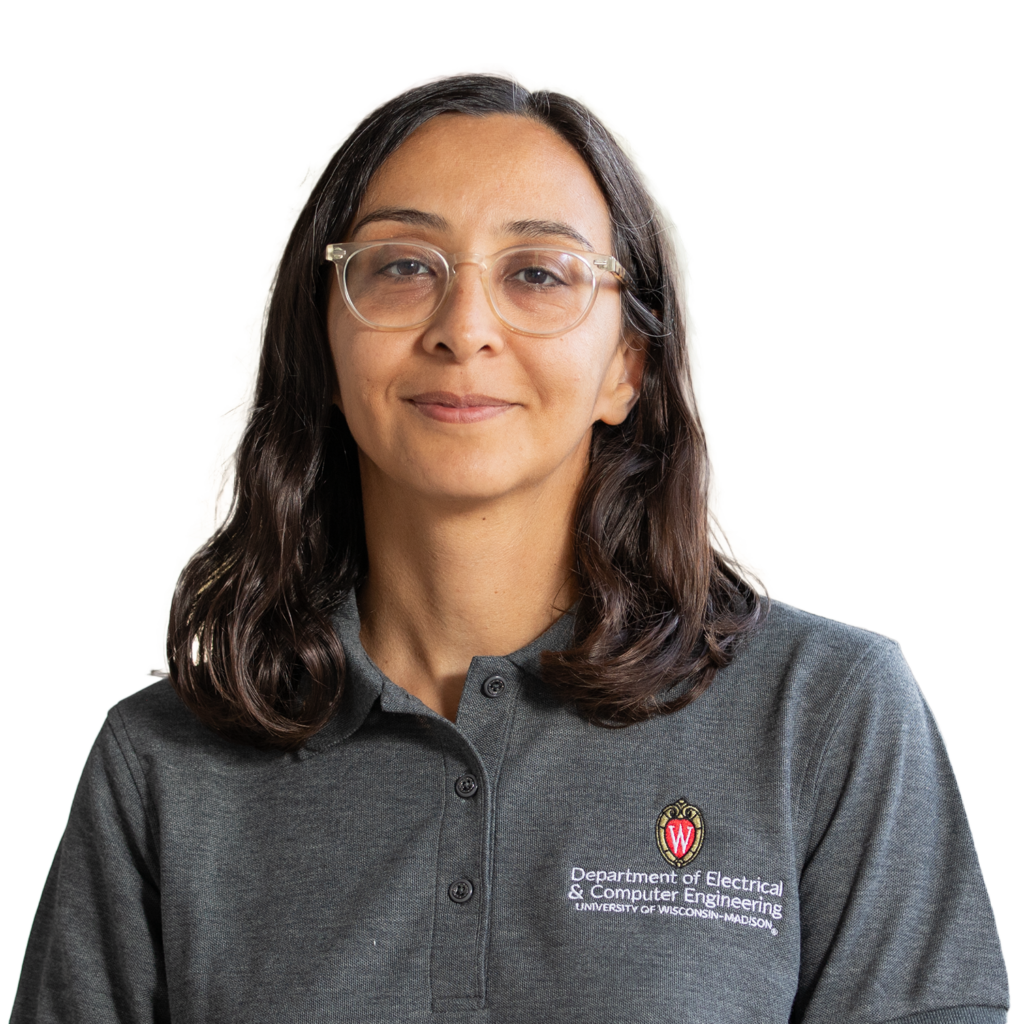
Azadeh Davoodi is a Vilas Distinguished Achievement Professor and Associate Chair of Undergraduate Studies in the Department of Electrical and Computer Engineering at the University of Wisconsin-Madison. Her research focuses on Electronic Design Automation (EDA), integrated circuit debug, and machine learning applications in VLSI design. She holds editorial roles in journals like IEEE TCAD and ACM TRETS, and has chaired major conferences such as ISPD 2015 and served on technical program committees for DAC, ICCAD, and others. Education: PhD in Electrical Engineering, University of Maryland-College Park (2006) Research Interests: Machine learning for VLSI chip design VLSI design automation for machine learning IC-CAD for emerging nanotechnologies Hardware security Recent Research Trends: Her work bridges machine learning and hardware design, with publications on neural network optimization, distributed inference, and explainable AI for circuit design. She emphasizes energy-efficient CNNs, latency reduction in edge computing, and security in split manufacturing. Awards: 2025 DATE Best Paper Candidate 2024 Vilas Distinguished Achievement Professor 2015 ACM Best Paper Award 2011 NSF CAREER Award Service and Grants: Leads NSF-funded projects on explainable ML for CAD and holds grants for distributed neural network synthesis. Her service includes roles as IEEE HKN member and editorial board positions. Labs/Teams: Engages in interdisciplinary research teams at UW-Madison, focusing on EDA innovation and hardware-software co-design.
J. Ross Chapman is a Professor of Genome Maintenance Biology at the University of Oxford, affiliated with the MRC Molecular Haematology Unit. He holds fellowships from Cancer Research UK and the Lister Institute, and is part of the EMBO Young Investigator Programme. His research focuses on DNA repair mechanisms, particularly the balance between accurate and mutagenic repair pathways in cancer and immune disorders. Career highlights include roles as a Sir Henry Wellcome Fellow and Principal Investigator. His group studies genetic recombination mechanisms, aiming to develop cancer therapies targeting repair pathway dysfunctions. Key research areas include the role of BRCA1, BARD1, 53BP1, and CST complexes in DNA repair. Awards include CRUK and Lister Institute Fellowships, alongside EMBO recognition. His lab’s work spans genomic stability, immune system development, and cancer therapy strategies. Recent studies explore chronic inflammation in leukemia evolution and synthetic lethality in BRCA-deficient cells.
Dr. Alison Oates is an Associate Professor at the University of Saskatchewan's College of Kinesiology, specializing in biomechanics and motor control. Her research focuses on neuromuscular adaptations, healthy aging, and managing chronic conditions through gait analysis and balance control. She holds a PhD from the University of Waterloo, with postdoctoral training at McGill University on locomotor rehabilitation post-stroke. Her academic background includes a B.Sc. in Kinesiology from Waterloo, followed by advanced studies in dynamic stability during gait termination in Parkinson's patients. She teaches advanced courses such as Motor Control of Neurological Conditions (KIN 422.3) and Sensorimotor Control of Posture & Locomotion (KIN 822.3). Dr. Oates' research explores biomechanical and neuromuscular aspects of balance and gait, particularly in neurologically impaired populations and older adults. Recent work includes studies on haptic feedback systems, sex-and-gender-based analysis in balance research, and fall prevention strategies. Her articles highlight innovative methods like IMU-based motion capture and clinical applications for spinal cord injury and stroke rehabilitation. While no formal academic awards are listed, her contributions to gait rehabilitation and biomechanical measurement techniques are widely recognized. She currently oversees research projects investigating the efficacy of haptic input on walking stability and neuromuscular adaptation mechanisms. Her work bridges clinical practice and biomechanical theory to improve rehabilitation outcomes for individuals with neurological disorders.
Walter Szeliga is a Professor and Department Chair at Central Washington University. He holds a Ph.D. from the University of Colorado (2010). His research focuses on seismology, GPS, and InSAR technologies, with emphasis on earthquake early warning systems, crustal deformation monitoring, and natural hazards mitigation. Dr. Szeliga leads efforts in integrating real-time geodetic data streams for disaster response and has contributed to the development of ShakeAlert® systems. His work spans global geophysical networks, ionospheric perturbations, and paleotsunami studies. Key research interests include: Real-time GNSS applications for seismic monitoring Crustal deformation analysis using InSAR and GPS Earthquake source characterization through multi-method approaches Historical seismotectonic reconstructions Disaster forecasting and early warning system optimization Recent studies highlight advancements in trapping atmospheric lee waves detection via GNSS, volcanic plume dynamics during the 2022 Tonga eruption, and long-term paleotsunami records in Chile. His work bridges geophysical instrumentation with computational modeling to address critical questions in tectonic processes and hazard assessment. Scientific contributions include 50+ peer-reviewed articles on topics ranging from Cascadia subduction zone dynamics to global navigation satellite system innovations. His research has implications for civil infrastructure resilience, space weather impacts, and international geohazard collaboration frameworks.
Nicolas Roulin is an Associate Professor of Industrial/Organizational (I/O) Psychology at Saint Mary’s University, Halifax, Canada. He holds a PhD in Work and Organizational Psychology from the University of Neuchâtel, Switzerland, and previously served as a Senior Lecturer at the University of Lausanne and an Assistant Professor at the University of Manitoba. His research focuses on personnel selection, including impression management tactics, faking detection, employment discrimination, and innovative selection tools like social media and asynchronous video interviews. Education: Ph.D. in Work and Organizational Psychology, University of Neuchâtel M.Sc. and B.Sc. in Management, University of Lausanne Research interests include applicant behavior during selection processes, cross-cultural interview practices, and the integration of new technologies in recruitment. Key projects include studies funded by SSHRC (e.g., on asynchronous video interviews and cultural impression management). Awards: SIOP Fellow. Editorial roles include Associate Editor for the International Journal of Selection and Assessment (IJSA) and contributions to Personnel Psychology . He has authored/co-authored influential works like The Psychology of Job Interviews and the 8th edition of Recruitment and Selection in Canada . Consulting work includes advising multinational assessment firms and Canadian consulting companies. He actively supervises graduate students and teaches courses on staffing, assessment, and HR management.