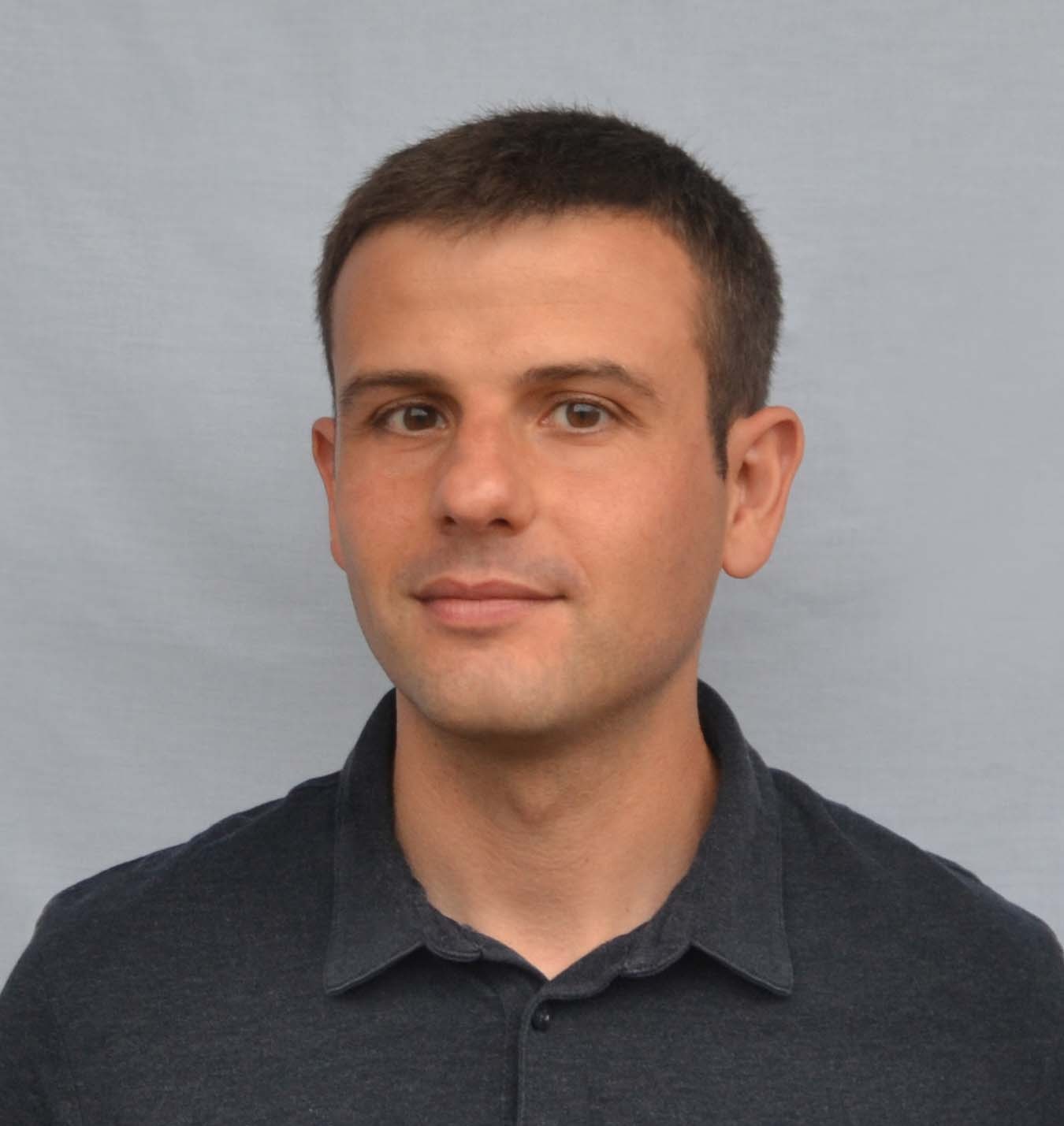
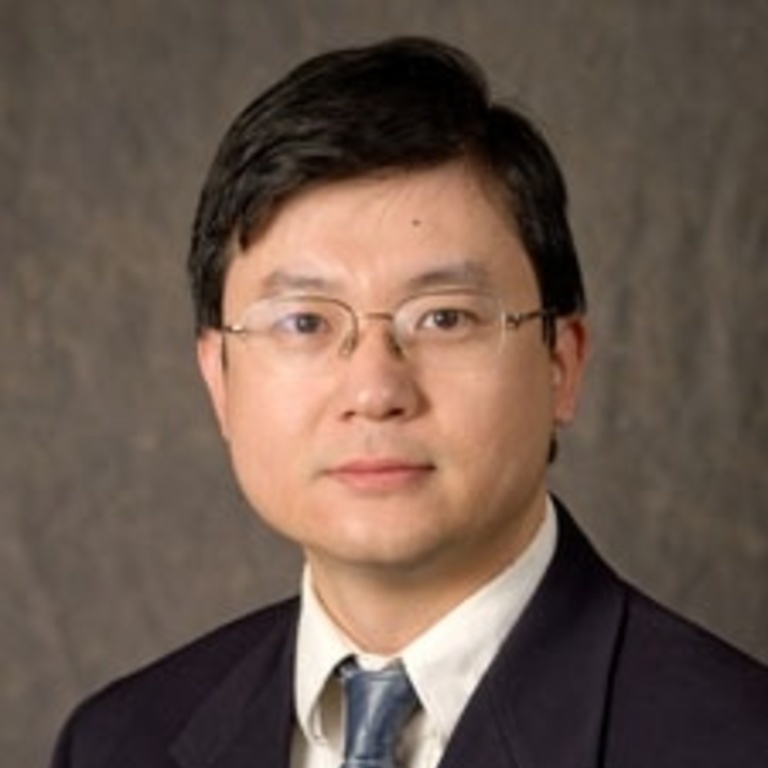
Elie Bou-Zeid is a Professor of Civil and Environmental Engineering at Princeton University and serves as the Director of the Program in Environmental Engineering and Water Resources . He previously directed the Metropolis Initiative for urban technology until 2022. His research integrates theory, numerical simulations, and field observations to study atmospheric flows, heat/pollutant transport, and sustainability in cities . Bachelor's : American University of Beirut Master's : American University of Beirut and Johns Hopkins University PhD : Johns Hopkins University He leads the Thermofluids of Urban and Natural Environments (TUNE) Lab , focusing on urban meteorology, renewable energy integration, and climate resilience . His work addresses inequitable urban environmental conditions and develops technologies for sustainable cities , including the CityReader Project . Recent publications explore urban heat islands, blue infrastructure, machine learning for climate, and boundary layer dynamics . Awards include the 2024 STAC Award , Beyond Bauhaus Prototyping the Future Award , and Fondation Latsis Internationale Prize . Awards : STAC 2024, Beyond Bauhaus 2024, EPFL Latsis Prize 2022 Editorial Roles : Editor of Journal of the Atmospheric Sciences (2020–2025) He advises five Ph.D. students and collaborates with postdocs like Einara Zahn and Young Paul Yi . His lab investigates kirigami-inspired ventilation, agrivoltaic farms, and downscaling climatic variables using Bayesian deep learning .
Sanjeev R. Kulkarni is the William R. Kenan, Jr., Professor of Electrical and Computer Engineering and Professor of Operations Research and Financial Engineering at Princeton University. He serves as Dean of the Faculty and is affiliated with the Department of Philosophy and the Center for Statistics and Machine Learning. His career spans roles as Dean of the Graduate School (2014-2017), Director of the Keller Center (2011-2014), and Master of Butler College (2004-2012). His research intersects machine learning , information theory , and wireless networks , focusing on statistical pattern recognition, nonparametric estimation, and econometrics. He has pioneered work in universal information estimation , energy-efficient wireless communication , and distributed learning in sensor networks. Recent publications highlight his work in forecast aggregation , robust geometric fitting , and variational Bayesian methods . These span communications , machine learning , and signal processing applications. Scientific awards include the ARO Young Investigator Award , NSF Young Investigator Award , and IEEE Fellowship . He has received Princeton's President's Award for Distinguished Teaching and multiple Undergraduate Engineering Council Excellence Awards . Prof. Kulkarni has advised 19 PhD students, including notable alumni at IBM, Google, Amazon, and RAND Corporation. His teaching spans four departments and includes courses like Learning Theory and Epistemology (cross-listed with Philosophy) and Wireless Revolution (telecom policy).
Jose A. Carrillo de la Plata is Professor of the Analysis of Nonlinear Partial Differential Equations at the University of Oxford's Mathematical Institute and Tutorial Fellow in Applied Mathematics at The Queen's College. He serves as ICIAM Officer at Large and previously held positions at Imperial College London (2012-2020), Universitat Autònoma de Barcelona (2003-2012), University of Texas at Austin (1998-2000), and Universidad de Granada (1992-1998, 2000-2003). His educational background includes a PhD from Universidad de Granada alongside MA, MSc, and BSc degrees: PhD in Mathematics, Universidad de Granada MA, MSc, BSc (unspecified institutions) Carrillo's research centers on Partial Differential Equations with applications across physics, engineering, life sciences, and socio-economical modeling. His expertise includes long-time asymptotics, qualitative properties, and numerical schemes for nonlinear diffusion, hydrodynamic, and kinetic equations modeling collective behavior in many-body systems. Key applications span gas molecules in rarefied gases, granular media, semiconductor charge transport, neural synchronization in computational neuroscience, and cell movement via chemotaxis or adhesion forces. His work bridges rigorous mathematical analysis with computational implementation and real-world biological applications. His recent publications demonstrate strong trends in aggregation-diffusion equations, nonlocal interactions, and structure-preserving numerical methods for gradient flows. Key thematic areas include tissue growth modeling, neural field dynamics, pattern formation in particle systems, and the development of computational frameworks for complex biological phenomena. His work increasingly integrates Bayesian inference with continuum mechanics for biological applications. His scientific achievements have been recognized with prestigious awards: SEMA prize (2003) and GAMM Richard Von-Mises prize (2006) for young researchers Wolfson Research Merit Award (2012-2017) ERC Advanced Grant (2019) Echegaray Medal (2022) and International Tartufari Prize (2024) Election to European Academy of Sciences (2018), SIAM Fellow (2019), Academia Europeaea (2023), and Royal Academy of Sciences of Spain (2021) As an educator, Carrillo received the 2016 SACA award for best PhD supervision at Imperial College London. He leads research in Oxford's Mathematical Biology group and Oxford Centre for Nonlinear PDE, currently directing an ERC Advanced Grant on nonlocal PDEs for complex particle dynamics, phase transitions, patterns, and synchronization. His service includes chairing the European Mathematical Society's Applied Mathematics Committee (2014-2017) and serving as ICIAM Officer at Large since July 2024. He actively collaborates with Oxford's Mathematical Biology, Nonlinear PDE, and Numerical Analysis research groups while leading the European Academy of Sciences' Mathematics Division. His work bridges theoretical mathematics with interdisciplinary applications through partnerships with computational biologists and neuroscientists.
Michael Unser is a Full Professor at EPFL’s School of Engineering and Academic Director of EPFL’s Center for Imaging in Lausanne, Switzerland. His research focuses on biomedical imaging, applied functional analysis, sampling theory, wavelets, splines, and computational bioimaging. Current Position: Full Professor, EPFL School of Engineering Academic Role: Director of EPFL Center for Imaging Key Research Areas: Inverse problems, sparse stochastic processes, machine learning for imaging Dr. Unser’s research bridges mathematical theory with practical biomedical imaging applications. He has pioneered the use of splines for image processing, developed advanced regularization frameworks for inverse problems, and contributed to computational bioimaging techniques like SMLM and optoacoustic tomography. His recent work explores connections between deep learning and classical kernel methods through variational formulations. He has published over 400 journal papers and authored the seminal book on sparse stochastic processes. His scientific contributions have been recognized with multiple awards including IEEE and EURASIP Technical Achievement Awards, five IEEE-SPS Best Paper Awards, and three consecutive ERC Advanced Grants (FUN-SP, GlobalBioIm, FunLearn). He has served on editorial boards for leading journals and founded the IEEE SPS Bio Imaging and Signal Processing Technical Committee.
Badr-Eddine Chérief-Abdellatif is a CNRS Researcher at Sorbonne Université , affiliated with the Laboratoire de Probabilités, Statistique et Modélisation (LPSM) . His research spans mathematical statistics and machine learning theory , focusing on generalized Bayesian inference , robustness , and variational inference . He previously held a postdoctoral position at the University of Oxford and earned his PhD in 2020 from Institut Polytechnique de Paris under Pierre Alquier. His work addresses robust statistical methods using Maximum Mean Discrepancy (MMD) , PAC-Bayesian theory , and kernel techniques . Recent publications explore meta-learning , VAE reconstruction guarantees , and missing data analysis . He received the Best Student Paper Award at AISTATS 2022 and a Best Paper Award at ACML 2019. Chérief-Abdellatif contributes to online learning , copula estimation , and sparse deep learning . His theoretical results on variational inference have been published in top venues like NeurIPS , JASA , and JMLR . He also co-invented a patent for proportions determination in biological ensembles (2024). Scientific Awards : Best Student Paper Award, AISTATS 2022 Best Paper Award, ACML 2019 Travel Award for Academic Conferences
Line Clemmensen serves as Associate Professor at DTU Compute (Department of Applied Mathematics and Computer Science), Technical University of Denmark, where she has held faculty positions since 2010. Her interdisciplinary work bridges statistical learning, machine learning, and real-world applications in mental healthcare, biotechnology, and agricultural informatics. Her academic credentials include: Ph.D. in Image Analysis and Computer Graphics from DTU (2010), thesis: "High-dimensional sparse data analysis" M.Sc. in Applied Mathematics from DTU (2006) Exchange studies at Universitat Politecnica de Catalunya, Barcelona (2004) Mathematical graduate from Falkonergården upper secondary school (2000) Clemmensen's research centers on machine learning and statistical learning with emphasis on low-resource modeling, representation learning, and AI evaluation methodologies. She applies these techniques to mental health (developing biosensor-based OCD monitoring systems), biotechnology (spectral data analysis for pharmaceutical quality control), and environmental science (crop health assessment via remote sensing). Her work consistently addresses challenges in data scarcity and model interpretability. Analysis of her recent publications reveals dominant trends in computational psychiatry (e.g., detecting OCD episodes through physiological signals and oxytocin biomarkers) and agricultural AI (linking soil microbiome composition to crop health via machine learning). Methodologically, she pioneers interpretable deep learning frameworks for low-resource settings and robust time-series analysis techniques for physiological data. She has supervised 10 PhD students to completion (including Jacob Søgaard Larsen on NIR management and Gudmundur Einarsson on psychiatric motion quantification) and mentored 13 Master's/Bachelor's students. Current funding includes the LundbeckFonden LF-Experiment grant for the FAST project (Fast Assessment of psychiatric Symptoms to Transform Mental Health Care). Within DTU Compute's Section for Statistics and Data Analysis, Clemmensen leads collaborations with Novo Nordisk (biostatistics), the Danish Meat Industry, and clinical psychiatry teams, focusing on real-world AI deployment in mental healthcare and industrial applications.
Associate Professor Tamir Hazan is a faculty member at Technion - Israel Institute of Technology, where he joined in 2015. His research focuses on theoretical and practical aspects of machine learning, with applications spanning computer vision, natural language processing, and computational biology. His work bridges mathematical foundations with real-world problem solving in complex systems. Professor Hazan received his Ph.D. from the Hebrew University in 2009. His academic trajectory has established him as a leading researcher in machine learning theory and its applications, with a particular emphasis on developing mathematically rigorous approaches to modern AI challenges. Professor Hazan's research centers on mathematically founded solutions to problems demonstrating non-traditional statistical behavior. His work encompasses perturbation models for efficient learning of high-dimensional statistics, deep learning of infinite networks, and primal-dual optimization for high-dimensional inference problems. His research program spans three major interconnected areas: attention models that improve prediction interpretability, perturbation frameworks that integrate optimization and sampling through extreme value statistics, and convex duality approaches to message-passing in graphical models. His work demonstrates both theoretical depth and practical relevance across multiple domains. Analysis of Professor Hazan's recent publications reveals an evolving research trajectory with increasing emphasis on interpretable machine learning, causal modeling, and applications in medical imaging and behavioral science. His work consistently bridges theoretical foundations with practical implementations, with recent publications showing strong connections between perturbation theory, attention mechanisms, and optimization frameworks. The interdisciplinary nature of his research is evident in applications ranging from pedestrian navigation using smartphone sensors to video-text matching systems and medical image analysis. Professor Hazan has mentored numerous students throughout his career, including: Alex Schwing, now Assistant Professor at UIUC Alon Cohen, now Associate Professor at Tel Aviv University Idan Schwartz, currently Postdoc at Tel Aviv University Current Ph.D. students: Guy Lorberbom, Itai Gat, and Hedda Cohen Multiple M.Sc. students including Adi Manos, Ram Yazdi, and others Professor Hazan's research group maintains an active program with several key focus areas: Attention models for interpretable and improved prediction processes in visual question answering and multimodal applications Perturbation models that enable efficient statistical reasoning in complex systems with exponential configuration spaces Markov random fields, convex duality, and message-passing algorithms for structured prediction and distributed computing
Maximilian Dinkel serves as a Research Fellow at the Institute for Computational Mechanics, Technical University of Munich, where he has been a Research Associate since 2022 under Prof. Wolfgang A. Wall's Chair of Numerical Mechanics. His work bridges computational engineering with advanced statistical learning methodologies. His academic credentials include: Master of Science in Mechanical Engineering (2022, TUM) Bachelor of Science in Management and Technology (2019, TUM) Bachelor of Science in Mechanical Engineering (2018, TUM) Dinkel specializes in Bayesian inverse problems with expensive computational models, developing constrained Gaussian process frameworks and active learning strategies. His research integrates physics-informed machine learning to enhance uncertainty quantification in engineering simulations, particularly addressing challenges in computational mechanics where traditional likelihood evaluations are prohibitively costly. This work enables more efficient parameter estimation and model calibration in complex systems. Analysis of his 2023-2024 publications reveals a cohesive research trajectory focused on overcoming computational bottlenecks in Bayesian inference. Key themes include constrained optimization of Gaussian process surrogates, adaptive sampling techniques, and stochastic variational inference with dynamic learning rate adjustments. These contributions significantly advance the application of machine learning to large-scale engineering problems requiring high-fidelity simulations. He actively contributes to academic mentoring, having co-supervised D. Still's 2023 Master's thesis on adjoint-based Bayesian inference of random fields using Hamiltonian Monte Carlo methods. Dinkel also teaches Numerical Methods for Engineers exercises at TUM, supporting the department's educational mission in computational techniques for engineering applications. As a core member of TUM's Numerical Mechanics research group, he participates in developing next-generation simulation tools within the Institute for Computational Mechanics, collaborating on projects that merge traditional computational mechanics with cutting-edge machine learning approaches to solve previously intractable engineering challenges.
Assad Anshuman Oberai is a Professor at the University of Southern California's Viterbi School of Engineering . His research spans computational mechanics, inverse problems, and machine learning applications in nuclear engineering and biomedical imaging. Key Research Areas: Multi-fidelity modeling, Bayesian inference in mechanics, conditional GANs for posterior estimation, ultrasonic sensing of nuclear fuel canisters, mechano-microscopy for tumor elasticity imaging Methodological Contributions: Novel operator network architectures, dimension-reduced Bayesian frameworks, active noise cancellation techniques, and error estimation in variational multiscale methods Recent work focuses on non-invasive nuclear fuel inspection using ultrasonic sensing and machine learning, achieving significant signal-to-noise ratio improvements with active noise cancellation. In biomedical domains, his team develops cGAN-enhanced elasticity imaging for cancer differentiation, outperforming traditional algebraic methods. Methodologically, he pioneered VarMiON (Variationally Mimetic Operator Networks) with rigorous error analysis, demonstrating superior performance over DeepONet in partial differential equation approximations. His publications address high-dimensional inverse problems through generative models, with applications in epidemic modeling (capturing algebraic decay via behavioral feedback), 3D traction microscopy accounting for cell-induced matrix degradation, and compressible phase change simulations using discontinuous finite element methods. Co-authors include researchers from mechanical engineering, biomedical informatics, and nuclear safety domains.
Víctor Elvira is a Senior Lecturer at the University of Edinburgh, specializing in Bayesian inference, sequential Monte Carlo methods, and computational statistics. He serves as an Associate Editor for IEEE Transactions on Signal Processing and organizes major academic events like the Sequential Monte Carlo Workshop (SMC 2024) and Summer School in Bayesian Filtering (SSBF 2024) . Key research areas: Bayesian filtering, importance sampling, state-space modeling, and machine learning applications Recent work focuses on sparse graphical models, differentiable particle filters, and Monte Carlo optimization Scientific Awards : 2025 EURASIP Early Career Award 2024 ELLIS Fellow 2023 Leverhulme Research Fellow 2021 Alan Turing Fellow 2018 Fulbright & Marie Curie Fellow 2018 IEEE Senior Member He has delivered PhD courses on Monte Carlo methods and Bayesian filtering in Madrid (2025) and Barcelona (2025), and maintains open-access software implementations for publications like Sparse Graphical Linear Dynamical Systems and Graphical Inference in Linear-Gaussian State-Space Models .
Bert Kappen is a Professor of Physics at Radboud University Nijmegen, affiliated with the Department of Biophysics and the Donders Center for Neuroscience. His research focuses on the intersection of physics, machine learning, and neuroscience, with emphasis on quantum machine learning, stochastic control theory, and Bayesian inference methods applied to neural systems. His core research integrates statistical physics and quantum mechanics to develop computational methods for AI, exploring how intelligence emerges in biological systems. Key areas include: Quantum Machine Learning : Developing quantum algorithms for Boltzmann machines and exploring quantum advantage in optimization Path Integral Control : Creating efficient solutions for stochastic optimal control problems in robotics and neuroscience Bayesian Inference : Building probabilistic models for medical diagnosis and DNA identification (e.g., Bonaparte system used by Interpol) Atomic-scale Neural Networks : Implementing neuromorphic computing using nanoscale atomic switches Kappen leads an active research group with multiple PhD and Master's students, working on projects ranging from quantum perceptrons to multi-agent UAV control. His publication output shows strong recent focus on quantum computing applications (2020-2025), atomic-scale machine learning implementations, and advanced control theory. He teaches courses including Introduction to Machine Learning , Advanced Computational Neuroscience , and Statistical Machine Learning at Radboud University. Externally funded projects include EU FP7 initiatives (NETT, CompLACS), NWA Quantum Learning, and collaborations with Thales Nederland.
Josh Patrick serves as a Senior Lecturer at Baylor University, where he maintains an active research program spanning theoretical statistics and applied biostatistics. His core research domains include: Theoretical statistics: Matrix quadratic forms, Wishart distributions, and covariance matrix structures Time series analysis: Functional-coefficient autoregressive models and forecasting methodologies Biostatistics: Trauma research, survival analysis for ECMO patients, and combat casualty care Spatio-temporal modeling: Applications in renewable energy data such as solar irradiance Publication trends from 2009-2021 reveal consistent methodological innovation, with recent work (2020-2021) emphasizing matrix distributions and medical applications, while earlier contributions (2013-2016) focus on time series and environmental modeling. His approach integrates semiparametric techniques, Bayesian inference, and simulation-based validation across disciplines. No scientific awards or honors were documented in the source materials. Details regarding graduate student supervision, research funding, or laboratory affiliations remain unspecified in available information.
James Stamey serves as Chairman and Professor of Statistical Science at Baylor University in Waco, Texas, holding a leadership role within his academic unit while maintaining active research and teaching responsibilities. His research centers on Bayesian statistical methodologies with specialized focus on data imperfections including misclassification, underreporting, and unmeasured confounding. He has developed innovative approaches for sample size determination in cost-effectiveness studies, diagnostic test evaluation, and clinical trial design. His work bridges theoretical statistics with practical applications in epidemiology, public health surveillance, and evidence-based medicine, addressing critical challenges in real-world data analysis such as correcting misreported COVID-19 counts and modeling hospital admission risks. Analysis of his recent publications (2021-2025) reveals consistent methodological innovation in Bayesian computation and sensitivity analysis. His work demonstrates increasing emphasis on developing practical tools (like the unmconf R package) for real-world evidence generation, with applications spanning physical activity assessment, schizophrenia-related hospitalizations, and pharmaceutical statistics. The publications show strong integration of spatial modeling, hierarchical structures, and meta-analytic techniques to address data limitations in observational studies.
Yong Chen serves as a Professor in the Department of Industrial and Systems Engineering within the College of Engineering at the University of Iowa. His academic appointment centers on advancing methodologies in industrial engineering with emphasis on system reliability and optimization across diverse applications. Chen's research spans Industrial Engineering, Reliability Engineering, and Maintenance Optimization, with significant contributions to Statistical Process Control, Bayesian Statistics, and Machine Learning applications. His work develops novel frameworks for condition-based maintenance, multi-component system optimization, and IoT-enabled industrial analytics, addressing critical challenges in manufacturing quality control and system reliability. The integration of stochastic modeling and data-driven approaches characterizes his methodological innovations. Analysis of his 15 most recent publications (2016-2025) reveals a dominant research trajectory in Markov decision processes for maintenance optimization (35% of publications), Bayesian modeling for process monitoring (27%), and IoT/data analytics applications (13%). His work demonstrates increasing interdisciplinary expansion from traditional manufacturing systems into healthcare (dementia care analysis) and renewable energy sectors, while maintaining core focus on reliability engineering fundamentals. Scientific awards: No scientific awards were mentioned in the provided text. Advising and grants: The available documentation contains no information regarding doctoral students, postdoctoral researchers, or research funding sources. His academic profile focuses exclusively on research outputs and methodological contributions without reference to mentoring activities or sponsored projects.
Vahid Tarokh is the Rhodes Family Distinguished Professor of Electrical and Computer Engineering at Duke University within the Pratt School of Engineering. His research focuses on advancing machine learning, data science, and computational physics to optimize datasets and model complex systems. Research Interests: Machine Learning, Signal Processing, Optimization, Computational Physics, Neural Networks, Statistical Modeling. Recent Courses: Introduction to Deep Learning (COMPSCI 675D, ECE 685D), Advanced Topics in Deep Learning (COMPSCI 676, ECE 689), and Adaptive System Identification. Publications highlight innovations in: Score-based methods for change detection and hypothesis testing. Neural operators for solving partial differential equations. Regularization techniques in deep learning. Domain adaptation and federated learning frameworks. Applications in medical imaging, radar signal processing, and turbulent flow modeling.