معرفی
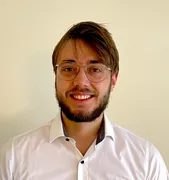
Maximilian Dinkel serves as a Research Fellow at the Institute for Computational Mechanics, Technical University of Munich, where he has been a Research Associate since 2022 under Prof. Wolfgang A. Wall's Chair of Numerical Mechanics. His work bridges computational engineering with advanced statistical learning methodologies.
His academic credentials include:
- Master of Science in Mechanical Engineering (2022, TUM)
- Bachelor of Science in Management and Technology (2019, TUM)
- Bachelor of Science in Mechanical Engineering (2018, TUM)
Dinkel specializes in Bayesian inverse problems with expensive computational models, developing constrained Gaussian process frameworks and active learning strategies. His research integrates physics-informed machine learning to enhance uncertainty quantification in engineering simulations, particularly addressing challenges in computational mechanics where traditional likelihood evaluations are prohibitively costly. This work enables more efficient parameter estimation and model calibration in complex systems.
Analysis of his 2023-2024 publications reveals a cohesive research trajectory focused on overcoming computational bottlenecks in Bayesian inference. Key themes include constrained optimization of Gaussian process surrogates, adaptive sampling techniques, and stochastic variational inference with dynamic learning rate adjustments. These contributions significantly advance the application of machine learning to large-scale engineering problems requiring high-fidelity simulations.
He actively contributes to academic mentoring, having co-supervised D. Still's 2023 Master's thesis on adjoint-based Bayesian inference of random fields using Hamiltonian Monte Carlo methods. Dinkel also teaches Numerical Methods for Engineers exercises at TUM, supporting the department's educational mission in computational techniques for engineering applications.
As a core member of TUM's Numerical Mechanics research group, he participates in developing next-generation simulation tools within the Institute for Computational Mechanics, collaborating on projects that merge traditional computational mechanics with cutting-edge machine learning approaches to solve previously intractable engineering challenges.