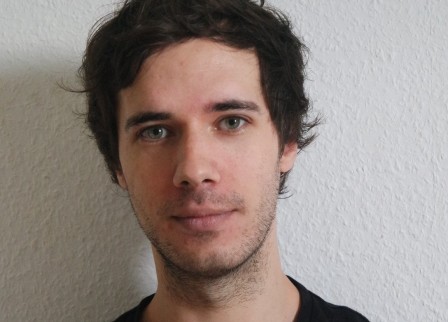
Niccolò Bonacchi is an Assistant Professor at ISPA - Instituto Universitário, where he teaches graduate-level courses in experimental programming and neurobiology. He is an Integrated Member of the Social Cognitive and Applied Neuroscience Team and maintains strong connections with the Champalimaud Neuroscience Programme in Lisbon. Education: Ph.D. in Neuroscience from the Nova University of Lisbon (UNL) M.Sc. in Psychobiology from the Higher Institute of Applied Psychology (ISPA) Bonacchi's research focuses on bridging mechanistic explanations of brain processes with emergent cognitive constructs. His doctoral work at the Champalimaud Center for the Unknown examined how brains represent spatial objectives, olfactory cues, and anticipated results. He has concentrated on developing precise approaches to behavioral quantification and data analysis, believing these are critical for contextualizing experimental measurements. His expertise spans cognitive neuroscience, behavioral neuroscience, neurobiology, electrophysiology, and Python programming, with a strong commitment to open science practices. His publication record demonstrates significant contributions to collaborative neuroscience initiatives. He developed the Bonsai-RX programming language now used worldwide, served as Data Architect for the International Brain Laboratory, and currently contributes to the COGITATE consortium researching consciousness. His work emphasizes standardized protocols, data architecture, and FAIR data-sharing practices to improve reproducibility across neuroscience laboratories. Bonacchi actively participates in major international collaborations and maintains profiles across scientific platforms including ResearchGate, Google Scholar, ORCID, and Twitter (@nbonacchi). His personal website (https://bonacchilab.github.io/) showcases his ongoing work in experimental programming and neurobiology.
Dr. Jonghyun Harry Lee is an Associate Professor at the University of Hawai'i at Manoa with joint appointments in the Water Resources Research Center and Department of Civil and Environmental Engineering. He holds a PhD in Civil and Environmental Engineering from Stanford University (2014), MS from Colorado State University (2009), and BS from Seoul National University (2007). His research integrates high-performance computing with environmental modeling, focusing on: Scalable inverse methods for subsurface systems Physics-informed neural operators for coastal dynamics Uncertainty quantification in hydrological systems Machine learning applications for satellite hydrology Generative models for geophysical characterization Recent publications (2021-2025) demonstrate strong emphasis on ML-enhanced environmental modeling, with 70% of articles combining deep learning with traditional physical models. Primary domains include contaminant transport, carbon sequestration monitoring, and coastal hydrodynamics. Awards and fellowships: NREL FACES Fellow (2024) NSF-NASA EPSCoR Fellow (2023-2025) Google Cloud Research Innovator (2022) ORISE Faculty Fellow (2018-2023) Charles H. Leavell Fellowship, Stanford Dr. Lee currently advises multiple PhD students focused on ML applications in environmental systems. His group utilizes UH HPC, Google Cloud, and AWS resources, supported by NSF, NASA, and DOE grants. He leads development of open-source tools like pyPCGA for geostatistical inversion and teaches graduate courses in computational hydrology.
Dr. Ralf Brinkmann serves as Group Leader at the Institute for Biomedical Optics, University of Lübeck, and Managing Director of MLL GmbH. His research focuses on advancing optical imaging technologies for medical applications, particularly in neurosurgery and ophthalmology. His primary research interests include: Optical Coherence Tomography (OCT) and Elastography (OCE) Medical imaging for brain tumor detection Retinal laser therapies with precise temperature control Laser lithotripsy and urological applications Development of microscope-integrated imaging systems Dr. Brinkmann has published extensively with numerous high-impact publications from 2023-2025. His work demonstrates significant advancements in real-time temperature-controlled retinal treatments, in-situ brain tumor tissue delineation during neurosurgery, and improved laser stone ablation techniques. His research bridges engineering, physics, and clinical medicine to develop novel diagnostic and therapeutic approaches. His publication record shows a strong focus on: Real-time temperature-controlled retinal laser treatments Brain tumor tissue delineation during neurosurgery Optical methods for stone ablation in urology Fluorescence lifetime imaging for age-related macular degeneration Advanced image processing for medical diagnostics Dr. Brinkmann leads the AG Brinkmann research group and collaborates with numerous students and researchers, including Nicolas Detrez, Sazgar Burhan, Jessica Kren, and Paul Strenge, who frequently appear as co-authors on his publications. His work demonstrates strong interdisciplinary collaboration between engineering, physics, and clinical medicine, with direct applications to improving surgical outcomes and diagnostic capabilities.
Yang Li serves as Associate Professor of Marketing and Associate Dean for the MBA Program at Cheung Kong Graduate School of Business (CKGSB). Holding a PhD in Marketing from Columbia Business School alongside dual master's and bachelor's degrees from Columbia and Peking University respectively, he bridges advanced statistical methodologies with practical business applications. His research centers on statistical machine learning and Bayesian nonparametrics applied to consumer behavior analysis, with specialization in online personalization, text mining, and choice modeling. Recent work demonstrates significant focus on fragmented attention economies, ethical AI frameworks, and NFT network dynamics, reflecting contemporary digital market challenges. Management Science Marketing Science Journal of Marketing Research Journal of Consumer Research Harvard Business Review Professor Li's publications reveal evolving expertise from foundational pricing elasticity studies toward cutting-edge AI applications in consumer contexts. His work increasingly integrates generative models and graph neural networks to decode complex consumer collection behaviors and digital ecosystem dynamics. Scientific recognition includes being a Finalist for the 2021 Paul E. Green Best Paper Award. Industry impact is demonstrated through executive education programs and strategic consultancies with Tencent, Haier, and Tmall. As Associate Dean for MBA Programs, he oversees curriculum development while maintaining active corporate governance roles on boards of publicly traded companies across China and Hong Kong, directly applying his research insights to strategic decision-making in digital transformation initiatives.
Arnór Ingi Sigurdsson serves as a Research Fellow within the Rasmussen Group at the Novo Nordisk Foundation Center for Protein Research, University of Copenhagen, under the Faculty of Health and Medical Sciences. His work bridges computational innovation with biomedical applications, focusing on genomic data analysis and machine learning methodologies to address complex healthcare challenges. His research spans computational genomics, deep learning, and bioinformatics, with specific emphasis on genetic risk prediction for surgical outcomes, metagenomic binning techniques, and integrative models for human genomic data. Sigurdsson develops advanced neural network architectures to improve precision medicine applications, particularly in surgical risk assessment and microbiome characterization, demonstrating strong interdisciplinary collaboration across computational and clinical domains. Recent publications reveal a clear trajectory toward leveraging deep learning for genomic data interpretation, with impactful contributions in PLoS ONE and Communications Biology. His work consistently applies cutting-edge AI techniques—including adversarial autoencoders and integrative modeling—to solve concrete biomedical problems, establishing him as an emerging contributor in computational genomics. As an integral member of the Rasmussen Group, Sigurdsson collaborates extensively with cross-institutional teams at the Center for Protein Research, utilizing large-scale genomic datasets to advance personalized medicine solutions while contributing to the group's reputation in computational biology.
Prof. Dr. Thomas Kopinski is a Professor at the Faculty of Engineering and Economics, South Westphalia University of Applied Sciences in Meschede, Germany. He leads the AI Safety and Collective Intelligence Lab, focusing on cutting-edge research in machine learning applications for industrial and automotive systems. His work bridges academic research and industry collaborations, notably with BMW AG. Research Focus: His team explores: Deep learning architectures for real-time gesture recognition and automotive HMI AI safety protocols and collective intelligence frameworks Industrial applications including predictive maintenance and anomaly detection 3D programming and sensor fusion techniques Team & Students: Current advisees include PhD candidates working on: Bayesian deep learning for predictive maintenance (Felix Neubürger) Generative models for image synthesis (Yasser Saeid) Object recognition in crash test videos (Daniel Gierse) Key Projects: Actively directs WiTraPres and Core Transformer initiatives, with upcoming R&D in AI Safety launching in 2025. Industrial collaborations focus on automotive safety systems and manufacturing optimization.
Jakob Nybo Nissen serves as an Assistant Professor and Affiliate Professor with the Rasmussen Group at the Faculty of Health and Medical Sciences, University of Copenhagen. His research focuses on computational biology with emphasis on metagenomics, bioinformatics, and machine learning applications for genomic data analysis. Dr. Nissen's primary research interests include: Metagenome binning and taxonomic classification Application of deep learning to genomic sequence analysis Development of computational tools for microbial community analysis Influenza virus evolution and zoonotic transmission Multi-omics data integration for disease research His recent publications demonstrate a strong focus on improving computational methods for metagenomic analysis, with several papers published in high-impact journals including Nature Communications, Nature Biotechnology, and Nature Methods. His work bridges computer science and biology, developing novel algorithms that address critical challenges in genomic data processing. Dr. Nissen is actively involved in collaborative research efforts, particularly through the Rasmussen Group, and has contributed to major initiatives like the Critical Assessment of Metagenome Interpretation. His work has practical applications in microbial ecology, disease surveillance, and personalized medicine approaches. Based at the Center for Protein Research at the University of Copenhagen, Dr. Nissen works in a vibrant research environment that integrates computational and experimental approaches to address fundamental biological questions with biomedical relevance.
Yu Cao, Ph.D., is a tenured full professor at the Miner School of Computer & Information Science, University of Massachusetts Lowell, where he also serves as Director of the UMass Center for Digital Health. His academic journey includes faculty positions at The University of Tennessee (2010-2013) and California State University (2007-2010), followed by a Visiting Fellowship at Mayo Clinic. Dr. Cao holds a Ph.D. in Computer Science from Iowa State University (2007), where he also earned his M.S. (2005), along with an M.Eng. from Huazhong University of Science and Technology (2000) and a B.Eng. from Harbin Engineering University (1997), all in Computer Science. His educational background includes: Visiting Fellow, Biomedical Engineering, Mayo Clinic (2007) Ph.D., Computer Science, Iowa State University (2007) M.S., Computer Science, Iowa State University (2005) M.Eng., Computer Science, Huazhong University of Science and Technology, China (2000) B.Eng., Computer Science, Harbin Engineering University, China (1997) Dr. Cao's research spans multiple domains of knowledge discovery from complex data, with particular focus on Medical Imaging, Multimodal Deep Learning, Computer Vision, Artificial Intelligence, and Digital Health. His work emphasizes intelligent, multi-modal, and data-intensive medical image analysis and retrieval; motion tracking, analyzing, and visualization; and intelligent data analysis for electronic medical records and pervasive healthcare monitoring. His research program has produced over 150 peer-reviewed publications with more than 8,000 citations and an h-index of 40+, appearing in top venues including IEEE CVPR, IJCAI, ICLR, ACM MM, and IEEE ICME, as well as prestigious journals like IEEE TNNLS, TBME, TPAMI, TSC, and JBHI. Analysis of Dr. Cao's recent publications reveals a strong focus on applying deep learning techniques to medical imaging problems, particularly in endoscopy and diagnostic imaging. His work spans multiple subfields including polyp detection in colonoscopy videos, tuberculosis detection in chest X-rays, diabetic retinopathy analysis, and food recognition systems for dietary assessment. The publications demonstrate a consistent pattern of applying cutting-edge AI techniques to solve practical healthcare challenges, with increasing emphasis on multimodal approaches and real-world deployment considerations. Dr. Cao has received numerous accolades for his work, including Best Paper Awards from ACM/IEEE CHASE (2023), IEEE IJCNN (2020), and IEEE NAS (2015). His paper was the most downloaded from Smart Health Journal by Elsevier (2017-2018), and he was recognized for having the highest number of peer-reviewed publications among faculty members in the College of Sciences (2017-2018). He was named a Senior Member of IEEE in 2013, an honor granted to only 8% of IEEE members worldwide. His research has been supported by dozens of NSF/NIH/Industry sponsored grants totaling approximately $10 million. Notable projects include NIH/NSF Award #1R01EB021900 ($1.29 million) as Principal Investigator, NSF Award #1547428 ($500,000) as Co-PI, and NSF Award #1541434 ($1 million) as Co-PI. Dr. Cao has successfully mentored numerous graduate and undergraduate students, with current advisees working on medical image retrieval, data analysis for body sensor networks, and motion tracking and visualization. He has served on organizing committees for over 30 international conferences and workshops, demonstrating strong leadership in the academic community. As Director of the UMass Center for Digital Health, Dr. Cao leads a multidisciplinary team focused on developing innovative solutions for healthcare challenges using digital technologies. His lab maintains active collaborations with medical institutions including Mayo Clinic, Harvard Medical School, and Erlanger Hospital, facilitating the translation of research findings into clinical practice. The center's work spans multiple research areas including medical video/image analysis, motion tracking and visualization, context-aware data analysis for body area sensor networks, and risk analysis for acute coronary syndromes.