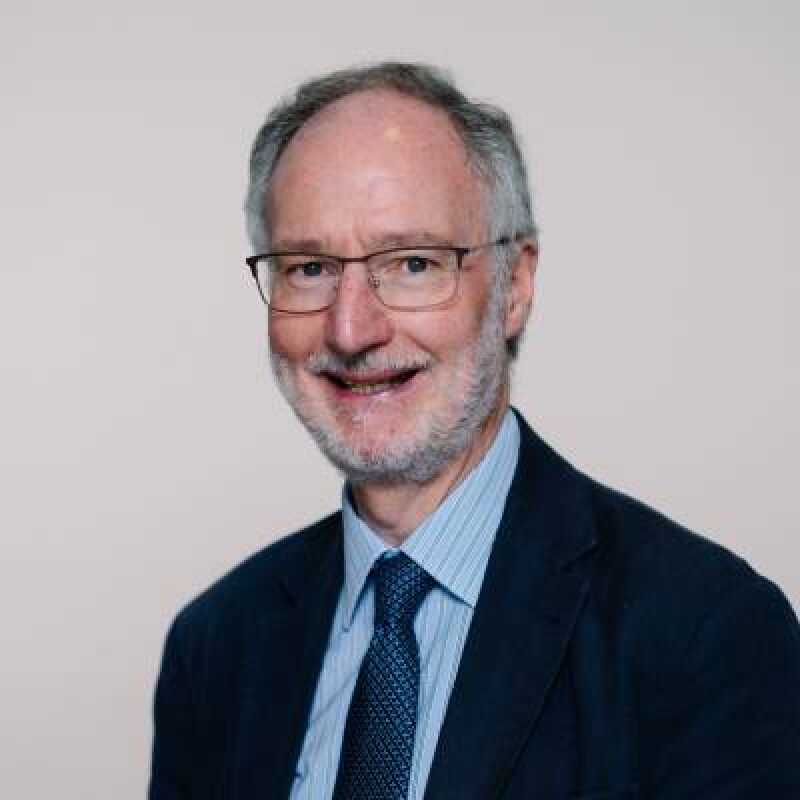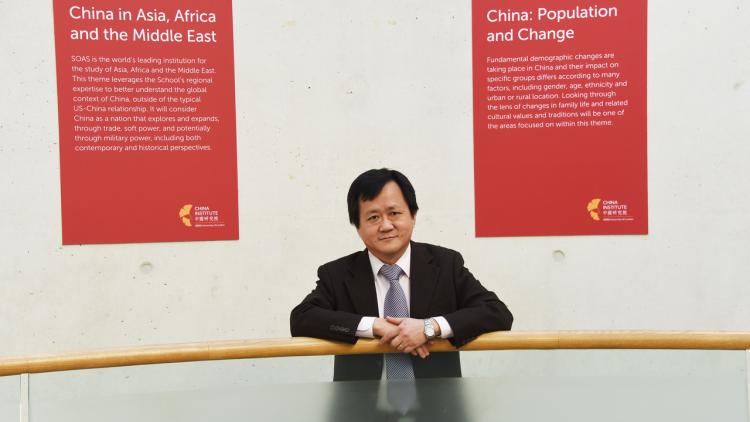
Roles and Affiliations: Steve Tsang is the Director of the SOAS China Institute at the School of Oriental and African Studies (SOAS), University of London. Previously, he served as Head of the School of Contemporary Chinese Studies at the University of Nottingham (2016) and held positions as Professorial Fellow (now Emeritus Fellow) at St Antony’s College, Oxford. He maintains strong ties with both SOAS and the Nottingham China Policy Institute through his editorial and research activities. Education: Steve Tsang holds an MA and DPhil (PhD) from the University of Oxford. Research Interests: His work focuses on Chinese politics, the evolution of China’s political system, and the Chinese Communist Party’s engagement with democracy and human rights. He explores China’s foreign policy dynamics, including soft power strategies, relations with the UK, EU, U.S., and Asia, as well as geopolitical issues like Taiwan’s security and Hong Kong’s post-colonial governance. His historical research delves into 20th-century Chinese history, decolonization processes, and colonial legacies in Hong Kong. Publications Trends: Recent scholarship emphasizes Xi Jinping’s political thought and its global implications, alongside analysis of China’s technological ambitions and military strategy. Earlier work chronicled Taiwan’s democratization journey and explored Hong Kong’s administrative challenges during its transition to Chinese rule. A consistent thread is the interplay between historical narratives and contemporary policy-making. Advising and Grants: He has supervised PhD theses on topics ranging from Taiwan’s party-movement relations to UK-China relations. Major research projects include a Smith Richardson Foundation-supported study on China’s global strategy under Xi Jinping. His advisory roles extend to governmental bodies, having testified before UK Parliament committees and the Canadian House of Commons. Labs/Teams: Central to his work is the SOAS China Institute, which focuses on China’s domestic and international dynamics, and the Nottingham China Policy Institute, where he previously led research initiatives.