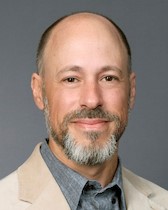
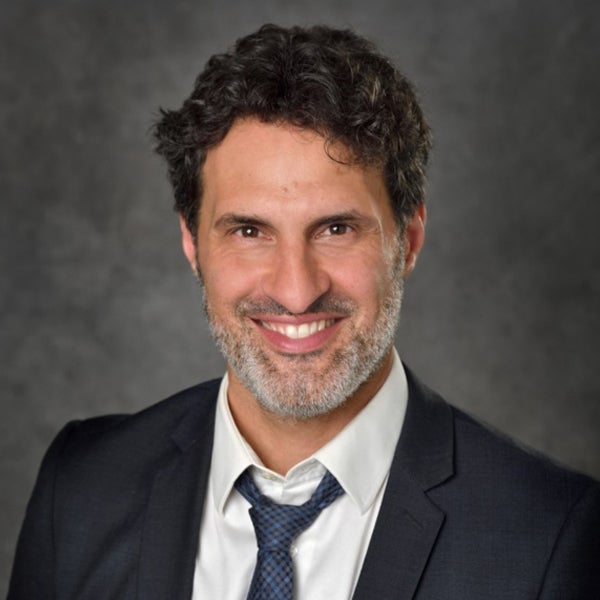
Alain Durmus is a Professor at École Polytechnique, affiliated with the applied mathematics department (CMAP). His research focuses on computational statistics, machine learning, and stochastic methods, including Monte Carlo algorithms, Bayesian inference, and optimization. He explores topics such as Markov chain Monte Carlo (MCMC), stochastic approximation, and generative models. His work emphasizes theoretical guarantees for algorithms like Langevin Monte Carlo and Hamiltonian Monte Carlo, with applications to high-dimensional Bayesian inference and inverse problems. Key contributions include hypocoercivity analysis of piecewise deterministic MCMC processes, convergence guarantees for stochastic gradient methods, and the development of efficient sampling techniques. He has also contributed to Bayesian imaging and federated learning through works like the QLSD algorithm. Awarded the Best Student Paper Award at ICASSP 2020 for his work on the Sliced-Wasserstein distance. His teaching spans mathematical statistics, stochastic methods, and probability at École Polytechnique and ENS Paris-Saclay. He has also contributed to conferences and workshops on topics ranging from MCMC convergence to optimization in machine learning.
Dr. Kevin G. Jamieson is a faculty member at the University of Washington , School of Computer Science , with prior affiliations at the University of California, Berkeley (Department of Electrical Engineering and Computer Sciences) and the University of Wisconsin-Madison (Department of Electrical and Computer Engineering). His work spans machine learning, reinforcement learning, bandit algorithms, and robotics. Current university: University of Washington Academic rank: Professor His research focuses on: Bandit algorithms and sequential decision-making Optimization in non-stationary environments Reinforcement learning with real-world applications Multi-agent systems and game theory Efficient data selection for multimodal learning Human-in-the-loop AI systems Recent publications highlight his expertise in pure exploration strategies, robotic manipulation, and bridging simulation-to-reality gaps in RL. He has mentored numerous collaborators, though formal student advising details are not explicitly listed here. No scientific awards are mentioned in the provided data.
Prof. Dr. Sandra Transchel is a Full Professor of Supply Chain and Operations Management at Kühne Logistics University (KLU) in Hamburg, Germany. She has held this position since 2019, previously serving as Associate Professor (2011-2019) and Dean of Programs (2014-2015). Her academic journey includes appointments as Assistant Professor at Pennsylvania State University (2008-2011) and Visiting Assistant Professor at Tuck School of Business at Dartmouth (2011). Education includes: PhD in Business Administration, University of Mannheim (2008) Diploma in Business Mathematics, Otto-von-Guericke University Magdeburg (2004) Her research integrates supply chain management, inventory control, and revenue management with a strong focus on retail operations optimization and food supply chain sustainability . Key investigations examine perishable inventory systems, demand-supply synchronization, and substitution behavior. Current projects address food waste reduction through contract-based coordination in fresh food supply chains and development of urban food production networks (FabCity). Publications demonstrate consistent focus on inventory optimization under uncertainty, with recent work extending into pandemic impacts on humanitarian logistics and perishable inventory systems with lead-time variability. Research consistently bridges theoretical models with retail/manufacturing applications. Teaching includes Decision Analysis, Inventory and Warehouse Management, and Warehousing and Intralogistics across BSc, MBA, and MSc programs at KLU.
Dr. Roy Lederman is an Assistant Professor at the Department of Statistics and Data Science , Yale University. He is affiliated with the Quantitative Biology Institute (QBio) , the Applied Math Program , the Institute for Foundations of Data Science (FDS) , and the Wu Tsai Institute (WTI) . He was awarded the Sloan Research Fellowship (2023) . He previously held a Gibbs Assistant Professorship at Yale (2014-2015) and a postdoc at Princeton University (2015-2018) . Education: PhD in Applied Mathematics, Yale University (2014); dual BSc in Physics and Electrical Engineering, Tel-Aviv University. Teaching: Courses include Computational Tools for Data Science, Signal Processing, and Mathematical Machine Learning. Research Areas: Dr. Lederman works at the intersection of computational biology , structural biology , Bayesian inference , numerical analysis , and machine learning . His recent work focuses on cryo-EM and hyper-molecules for studying molecular heterogeneity, alternating diffusion for common variable recovery, and Zernike polynomials for 3D imaging. He also develops Hamiltonian Monte Carlo methods and randomized DNA sequencing algorithms . Publications Trends: His publications (15 most recent) emphasize structural biology and cryo-EM applications, machine learning (Bayesian deep learning, diffusion maps), numerical analysis (Fourier/Laplace transforms), and computational biology (DNA sequencing algorithms). Key sub-fields include heterogeneity analysis , manifold learning , Hamiltonian Monte Carlo , and Zernike polynomials . Scientific Awards: Sloan Research Fellow (2023) Dr. Lederman actively mentors graduate students and postdocs at Yale, and co-organizes the One World Cryo-EM seminar series . His lab develops open-source software (e.g., prolate function implementation ) and explores theoretical bounds on transforms and common variable recovery in multi-sensor experiments.
Ivan Canay is a Professor of Economics and Director of the Mathematical Methods in the Social Sciences Program at Northwestern University’s Weinberg College of Arts & Sciences. He holds a PhD from the University of Wisconsin, Madison (2008). His research focuses on econometric theory, particularly developing statistical methods for assessing partially identified models, including tests for moment inequalities and randomization-based inference techniques. Recent work addresses challenges in clustered data analysis, covariate-adaptive randomization, and regression discontinuity designs. Canay’s academic contributions include advancing methodologies for handling non-ignorable cluster sizes and improving the robustness of inference in settings with limited data. He serves as an associate editor for the Journal of Econometrics , Journal of Business and Economic Statistics , and Econometrics Journal . His work bridges theoretical econometrics with practical applications in policy evaluation and causal inference. Key research themes include: Partially identified models and moment inequality frameworks Bootstrap methods for clustered data Covariate-adaptive randomization in clinical trials Statistical software development (e.g., Stata modules) His publications emphasize methodological rigor while addressing real-world complexities in economic data. Current projects likely expand his work on inference under structural constraints and improving accessibility of econometric tools for applied researchers.
Frederi G. Viens is a Professor of Statistics at Rice University, where he leads research in probability theory, stochastic processes, and their applications to finance, climate science, and agro-ecology. Previously, he was a full professor at Michigan State University (2016–2022) and Purdue University (2000–2015), serving as Department Chair and Director of Actuarial Science. His work bridges theoretical mathematics with practical problems in agriculture, economics, and nuclear physics. Education: Ph.D. Mathematics, University of California, Irvine (1996) M.S. Mathematics, University of California, Irvine (1991) Maîtrise de Mathématiques Pures, Université de Paris VII, France (1991) Research Interests: Probability Theory & Stochastic Analysis Quantitative Finance & Actuarial Science Climate Science & Bayesian Statistics Agro-ecology & Agricultural Economics His collaborative projects include climate modeling, nuclear physics simulations, and sustainable crop diversity initiatives like the DRIVES network. Awards & Honors: Fellow of the Institute of Mathematical Statistics (2012) Franklin Fellow, U.S. State Department (2010) Purdue College of Science Research Award (2013) Grants & Collaborations: Funded by the NSF, USDA, and private donors, Viens has organized major conferences and serves on editorial boards for journals like Annals of Finance . He advises transnational research groups, including Sustainability Lake Chad , addressing agrarian sustainability in West Africa. Labs & Initiatives: Founding member of the DRIVES agro-ecology collaborative and moderator of the Seminar on Stochastic Processes.
Alain PIROTTE is a Professor of Economic Sciences at University Paris-Panthéon-Assas, affiliated with the Center for Research in Economics and Law (CRED). His research and teaching focus on econometrics, particularly panel data and spatial econometrics, with applications in labor, transportation, and urban economics. His research interests include: Panel data econometrics and forecasting Spatial econometrics and spatial dependence modeling Transportation and urban economics Labor market dynamics Environmental and agricultural econometrics The recent articles highlight a strong focus on spatial panel data models, prediction techniques, and applications to real-world economic issues such as housing prices, traffic demand, and urban sprawl. His work frequently employs advanced econometric methods, including hierarchical Bayesian models and instrumental variable approaches, often in collaboration with leading scholars like B.H. Baltagi. He has held significant academic responsibilities, including: Head of Master 1 in Managerial and Industrial Economics Member of the Scientific Council at Panthéon-Assas University Member of Doctoral Schools at both Panthéon-Assas and University of Paris-Est Member of AERES expert evaluation committee He is actively involved in research leadership and academic governance, contributing to the development of econometric theory and its application across economic domains.
Amir Bahadori serves as Professor and Nuclear Engineering Program Director in the Department of Mechanical and Nuclear Engineering at Kansas State University's Carl R. Ice College of Engineering, holding the Hal and Mary Siegele Professorship in Engineering. He directs the Radiological Engineering Analysis Laboratory (REAL) and established the Institute for Radiation Health Studies (IRHS) in 2024, focusing on radiation protection, space radiation environments, and radiation health effects. His educational background includes: Ph.D. in Biomedical Engineering, University of Florida (2012) M.S. in Nuclear Engineering Sciences, University of Florida (2010) B.S. in Mechanical Engineering and Mathematics, Kansas State University (2008) Bahadori's research spans radiation transport modeling, dosimetry, and risk assessment with applications in space exploration, medical physics, and radiation epidemiology. He develops computational frameworks for radiation exposure scenarios and biological response prediction, emphasizing space radiation protection for Artemis missions and chronic exposure studies through the Million Person Study collaboration. Analysis of his recent publications reveals dominant themes in space radiation measurement (Artemis missions), radiation epidemiology (Million Person Study innovations), and advanced detection systems (miniaturized neutron spectrometers). His work increasingly integrates big data approaches for radiation risk assessment and electrostatic shielding concepts for deep-space exploration. His scientific recognition includes: NASA Graduate Student Research Fellowship (2009) Certified Health Physicist designation Big 12 faculty fellowship (2022-2023) NCRP council election (2024) Two USPTO patents Bahadori secures substantial research funding from NASA for space radiation instrumentation, Department of Energy projects via the Kansas City National Security Campus, and collaborative epidemiological studies. He mentors nuclear engineering graduate students while leading interdisciplinary teams developing radiation protection solutions for aerospace and medical applications. His laboratory infrastructure includes the REAL with Beocat high-performance computing resources, radiation detectors, and a 3D printer, plus the IRHS with a Precision X-ray XRad320 irradiator and radon chamber. These facilities support collaborations across K-State colleges and external organizations for radiation health effect studies.
Dr. John O. Miller is an Associate Professor of Operations Research in the Department of Operational Sciences at the Air Force Institute of Technology (AFIT), where he has served since 1997 in roles including Military and Civilian Deputy Department Head and Director of the Center for Operational Analysis. A retired U.S. Air Force Lieutenant Colonel, he combines more than three decades of military experience with scholarly expertise in simulation modeling, defense logistics, and operations research. Education: Ph.D. in Industrial Engineering, The Ohio State University, 1997 M.S. in Operations Research, Air Force Institute of Technology, 1987 M.B.A., University of Missouri at Columbia, 1983 B.S. in Biology, United States Air Force Academy, 1980 Dr. Miller’s research focuses on the development and application of simulation methodologies—especially agent-based and discrete-event modeling—to military logistics, weapon system evaluation, and combat readiness. His work often integrates multivariate statistics, experimental design, and optimization techniques to address Air Force and Department of Defense challenges such as sortie generation, munitions supply chains, and directed-energy weapon assessment. Across more than 40 refereed articles, recent publications demonstrate a sustained emphasis on: Metamodeling of large-scale simulations using dynamic Bayesian networks and bootstrapping Agent-based exploration of air-to-air missile concepts and aircraft maintenance manpower Statistical evaluation of pattern-recognition and automatic-target-recognition algorithms Logistics degradation modeling for bomber fleets and brigade combat teams These contributions underscore his leadership in military simulation and defense-focused operations research. Scientific & Teaching Honors: AFIT Instructor of the Quarter, 2005 Tau Beta Pi Engineering Honor Society (Alumnus Member), 2001 AFIT Student Chapter ORSA Outstanding OR Educator, 1999 MORS Barchi Prize Nominee, 1998 Alpha Pi Mu & Omega Rho Honor Societies USAFA Department Instructor of the Year, 1993 Dr. Miller has advised numerous M.S. and Ph.D. students whose dissertations and theses advance simulation optimization, military logistics, and combat modeling. His teaching interests span simulation modeling and analysis, design of experiments, probability and statistics, and operations research methods for defense applications. He maintains active professional memberships in INFORMS, the Military Operations Research Society, and the Air Force Association, and he frequently presents at both invited and organized conferences, fostering collaboration among military, academic, and industry analysts.
Wei Pang is a Professor of Computer Science and Bicentennial Research Leader at the School of Mathematical and Computer Sciences, Heriot-Watt University, Edinburgh. He leads the BCML Lab and is affiliated with the Edinburgh Centre for Robotics and National Robotarium. His expertise spans bio-inspired computing, machine learning, and AI applications in healthcare, robotics, and sustainability. Pang holds a PhD in Computing Science from the University of Aberdeen, with prior roles including Senior Lecturer at the University of Aberdeen and research fellowships in systems biology. Affiliations: Heriot-Watt University, Edinburgh Centre for Robotics, National Robotarium Education: PhD in Computing Science (2009), MEng (by research), BSc (Jilin University, China) Research Interests: Bio-inspired computing (e.g., artificial immune systems, swarm intelligence), machine learning (deep learning, explainable AI), healthcare applications (medical imaging, disease detection), and interdisciplinary projects in robotics and environmental science. His work addresses challenges in robust AI, fairness, and accountable machine learning. Recent Projects: EPSRC-funded RAIns and MI projects, CRUK-funded Endo.AI, and PRIME project on minority ethnic communities' digital experiences. His research has secured over £10M in grants, including £3.5M institutional funding. Awards: Scottish Crucible Award (2015), ADMA Best Paper Runner-Up (2016), EPSRC PRIME Award (2024) Grants/Advising: Supervised 12 PhD completions; contributed to £10M+ external funding. Labs/Teams: BCML Lab (focusing on bio-inspired AI), collaborations with Oxford, Cambridge, and industrial partners like Weather2 and Data2Text.
Frédéric Vrins is a Professor at the Louvain School of Management (LSM) , UCLouvain , affiliated with the Louvain Institute of Data Analysis and Modeling in economics and statistics (LIDAM) and Louvain Finance (LFIN). His work bridges theoretical and applied finance, with a focus on risk modeling, portfolio optimization, and machine learning applications. His research interests include: Quantitative Finance: Derivatives pricing, stochastic processes, and model calibration. Risk Management: Credit concentration risk, recovery rates, and wrong-way risk in financial markets. Portfolio Optimization: Mean-variance strategies, diversification metrics, and robustness under parameter uncertainty. Machine Learning in Finance: Applications to recovery rate prediction and option pricing frameworks. Recent publications highlight trends in: Credit risk modeling for Collateralized Loan Obligations (CLOs) and consumer credit. Machine learning integration in derivatives pricing and portfolio construction. Stochastic methods for Brownian bridges, CDS spreads, and recovery rates. Empirical studies on Loan-to-Value policies and business cycle impacts. Affiliations and locations: Louvain School of Management (LSM) - Building B, Chaussée de Binche 151, 7000 Mons Louvain Finance (LFIN) - Traverse d'Esope 1, 1348 Louvain-la-Neuve Louvain School of Management (LSM) - BATA Building, Chaussée de Binche 151, 7000 Mons
Daniela M Witten is a Professor of Statistics and Biostatistics at the University of Washington, holding the Dorothy Gilford Endowed Chair in Mathematical Statistics. Her research focuses on developing statistical machine learning methods for high-dimensional data, with a particular emphasis on unsupervised learning and theoretical foundations. Witten earned her BS in Math and Biology with Honors and Distinction from Stanford University in 2005 and her PhD in Statistics from Stanford University in 2010 under Robert Tibshirani. Her academic journey established her expertise in bridging mathematical theory with biological applications. Her research program centers on high-dimensional statistical learning , where she develops methods for unsupervised learning and graphical modeling when features outnumber observations. She pioneers statistical models for neural activity through collaborations with the Allen Institute for Brain Science and Princeton University, addressing functional connectivity and neuron sub-population identification. Her groundbreaking work on selective inference solves the "double-dipping" problem in hypothesis generation and testing, enabling valid inference after hierarchical clustering and regression trees. Additionally, she advances multi-view data analysis to integrate complementary data sources like clinical and genomic measurements. Applications span genomics, neuroscience, microbial ecology, and pathology, demonstrating her commitment to solving real-world biomedical challenges. Her 2025 publications reveal a cohesive trend toward developing theoretically rigorous inference frameworks for high-dimensional settings, with emphasis on linear regression validity, semi-supervised efficiency, Gaussian decomposition, and PCA variance quantification—showcasing her signature blend of methodological innovation and practical applicability. Witten's exceptional contributions are recognized through extensive honors: Presidents’ Award, Committee of Presidents of Statistical Societies (COPSS) (2022) Mortimer Spiegelman Award, American Public Health Association (2019) Simons Investigator Award (2018-2023) Sloan Research Fellowship (2013-2015) NSF CAREER Award (2013-2018) NIH Director’s Early Independence Award (2011-2016) 23 major awards including named lectureships, fellowships, and editorial leadership As a dedicated mentor, she has guided students like Olivia McGough (NSF GRFP winner), Dwight (Zichun) Xu (ASA Nonparametrics Student Paper Award winner), Yiqun Chen (Hopkins Biostat faculty), and Anna Neufeld (Williams College faculty). Her research is sustained by major grants from NIH, NSF, and Simons Foundation. Witten co-authored the seminal textbook "Introduction to Statistical Learning" and currently serves as Joint Editor of the Journal of the Royal Statistical Society, Series B (2023-2025), shaping the field through both scholarship and community leadership.
Guofu Zhou , the Frederick Bierman & James E. Spears Professor of Finance at Washington University's Olin Business School , has been a faculty member since 1990. His academic career includes multiple Reid Teaching Awards (2020, 2019, 2018, 2014, 2010) Best Paper Awards (Institute for Quantitative Investment Research 2019, Chinese Finance Association 2010, Inquire UK/Europe 2019 & 2024) and affiliations with journals like the Journal of Financial Economics and Management Science . Education: PhD, Duke University (1990) MA, Duke University (1987) MS, Academia Sinica (1985) BS, Chengdu University of Technology (1982) His research bridges empirical asset pricing and applied AI/machine learning , with a focus on market efficiency anomaly exploitation Bayesian inference option pricing Chinese financial markets behavioral finance He has contributed to understanding equity risk premium predictability, technical analysis, and portfolio optimization techniques. Key trends in his Journal of Financial Economics , Journal of Finance , and Review of Financial Studies publications include machine learning applications in asset pricing , anomaly-market linkages , and fear sentiment in Treasury markets . Recent work with ChatGPT explores textual analysis of earnings calls. Scientific Awards: Best Paper Award, Institute for Quantitative Investment Research (2019) Finalist for Crowell Memorial Prize (2024) Led multiple Best Paper Awards at conferences like FMA and SIF Contact: zhou@wustl.edu | Office: Simon Hall Room 207
Associate Professor Seojeong Lee is a faculty member at the University of New South Wales (UNSW) Business School, School of Economics, specializing in advanced econometric theory. She joined UNSW in 2012 after completing her PhD at the University of Wisconsin-Madison and has established herself as a leading researcher in robust inference methods under complex data conditions. Her educational background includes: Ph.D. in Economics, University of Wisconsin-Madison (2008-2012) M.A. in Economics, Seoul National University (2006-2008) B.A. in Economics and Political Science (dual major), Seoul National University, summa cum laude (2000-2006, with military service 2002-2004) Professor Lee's research centers on developing theoretically rigorous methods for econometric inference, with primary focus on generalized method of moments (GMM), instrumental variables (IV), and two-stage least squares (2SLS) under model misspecification. Her work addresses critical challenges including invalid/many/weak instruments, heterogeneous treatment effects, and clustered sampling, contributing foundational advances to statistical inference in economics. Analysis of her recent publications reveals a strong trajectory in refining methods for many-instrument settings and misspecified models, with increasing emphasis on computational implementations (e.g., Stata packages) and applications to causal inference. Her work bridges theoretical econometrics with practical policy-relevant analysis. Her scientific achievements include: Australian Research Council DECRA Fellowship (2017-2019) UNSW Dean's Research Fellowship (2020-2022) Zellner Thesis Award Honorable Mention from American Statistical Association (2014) Multiple competitive UNSW research awards Professor Lee actively supervises PhD candidates Wei Tian and Fangzhou Yu, and has secured over AUD 700,000 in research funding including ARC Discovery Projects. She teaches undergraduate and postgraduate econometrics courses, integrating her research into pedagogy. Her ongoing work continues to push boundaries in robust econometric methodology for modern data challenges.
Ming Lu is a Professor in the Department of Civil and Environmental Engineering at the University of Alberta, Faculty of Engineering. Specializing in Construction Engineering and Management (CEM), he leads the Construction Automation Lab (AutoLab) since 2010, focusing on integration, automation, and optimization in construction. Dr. Lu holds professional engineering licensure (PEng) in Alberta and has extensive academic experience across Canada, Hong Kong, and China. PhD in Civil Engineering (University of Alberta, 2000) B.Eng. in Road & Traffic Engineering (Tongji University, 1994) His research spans Construction Automation , Project Scheduling , and Resource Optimization , with over 150 publications in top journals. Recent work emphasizes model trees , time-window constraints , and labor cost regression . Publications appear in Automation in Construction , Journal of Computing in Civil Engineering , and ASCE Journal of Construction Engineering and Management . Notable awards include the 2022/23 CSCE Stephen G. Revay Award , Fiatech STAR Award (2013) , and multiple Best Paper Awards from ASCE. His software tools like SDESA and S3 revolutionized construction simulation and resource-constrained scheduling. Dr. Lu supervised numerous graduate students in projects involving BIM applications , earthwork optimization , and steel fabrication scheduling . He developed key courses like CIV E 406 (Construction Estimating) and CIV E 607 (Productivity Modeling), integrating simulation-based learning into construction education.