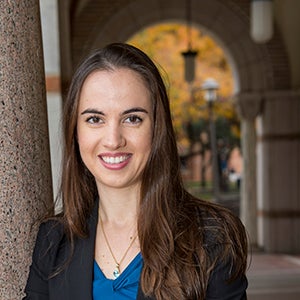
Jacob Gardner is an Assistant Professor in the Department of Computer & Information Science at the School of Engineering and Applied Science, University of Pennsylvania. His research bridges machine learning and scientific discovery with emphasis on computational biology and molecular design. His primary research interests include: Machine Learning Bayesian Optimization Computational Biology Molecular Design Artificial Intelligence Gaussian Processes Analysis of his 2024-2025 publications reveals a dominant focus on Bayesian optimization techniques integrated with large language models for biological applications. Key trends include therapeutic design using knowledge distillation from scientific literature, RNA splicing prediction, antibiotic development, and scalable Gaussian process methods. His work consistently addresses dimensionality challenges in molecular modeling while improving computational efficiency for high-dimensional biological data. No scientific awards were mentioned in the provided text. No information regarding student advising or research grants was provided in the source material. His research appears supported by institutional initiatives including Penn AI, Innovation in Data Engineering and Science (IDEAS), and the Data Driven Discovery Initiative (DDDI).
Qixuan Chen, PhD, is an Associate Professor of Biostatistics at Columbia University Mailman School of Public Health. She obtained her PhD from the University of Michigan in 2009, with dual expertise in biostatistics and survey sampling. Education: BA in Economics (Nankai University), MS in Applied Statistics (Bowling Green State University), PhD in Biostatistics (University of Michigan) Her research focuses on advanced statistical methods for complex surveys, causal inference, and handling missing data. Key contributions include developing Bayesian predictive inference frameworks using machine learning and regularized regression for integrating administrative records with survey samples. Recent publications emphasize environmental health applications, including measurement error correction for immunoassays and variable selection in multiply imputed data. Her work bridges biostatistics with computational methods for data integration. Scientific Awards: NIEHS Career Development Award, Teaching Award, Calderone Research Prize, Bryant Scholarship, Hutzinger Award She actively contributes to public health through dashboards like the New York City Neighborhoods COVID-19 tracker and PRIME radiology diagnostics platform. Grants such as R01ES035784 support her ongoing work in exposure-response analysis.
Eduardo Mercado III is a Professor in the Department of Psychology at the University at Buffalo, College of Arts and Sciences. His research focuses on bioacoustics, cognitive psychology, and marine ecology, particularly the vocal behavior of humpback whales and its implications for understanding human impact on marine ecosystems. He is also known for his work in perceptual learning, autism spectrum disorder, and comparative cognition. Scientific Awards Guggenheim Fellowship Harvard Radcliffe Institute Fellowship Research Trends His recent publications emphasize bioacoustic analysis of humpback whale songs, including their spectral entropy, cyclical variations, and adaptive adjustments to anthropogenic noise. Additional work explores perceptual learning mechanisms in autism, neural network modeling for acoustic classification, and cognitive processes in canines and rodents. Projects Mercado’s “Singers as Sentinels” project combines acoustic analysis of humpback whale songs with public awareness initiatives about ocean noise pollution. The project will produce a book, Why Whales Sing and Dolphins Don’t , and a web-based interface for public engagement.
Niels Richard Hansen is a Professor at the Department of Mathematical Sciences , University of Copenhagen, leading research at the intersection of Artificial Intelligence and Statistics . He co-founded the Copenhagen Causality Lab and focuses on automating causal explanation discovery from data using Bayesian networks, stochastic processes, predictive models, and machine learning. His work emphasizes creating interpretable and robust AI systems capable of generalizing across domains. His research has produced over 56 publications spanning causal inference , graphical modeling , stochastic processes , and machine learning . Recent work includes: Predictive and causal learning (2018 keynote) High-dimensional regression solutions (2016 lecture) Interdisciplinary applications in actuarial science , environmental statistics , and neuroscience He actively contributes to scientific communication through media appearances and public explanations of statistical concepts, including analyses of: Gaussian correlation inequality proofs Daylight saving time and blood clots Mathematical approaches to lotteries Climate change vs lunar effects
Tao Zou is an Associate Professor at the Research School of Finance, Actuarial Studies and Statistics, Australian National University. His research spans covariance regression modeling, network data analysis, and applications in financial and environmental statistics. He earned a Ph.D. in Statistics in 2016. Ph.D. in Statistics, 2016 Dr. Zou’s work pioneers covariance regression, where covariances are modeled as functions of covariiates. Key contributions include robust estimation techniques, spatio-temporal modeling, missing data imputation via semi-supervised learning, and distributed data aggregation. His methods address challenges in high-dimensional and non-Euclidean data analysis. Recent publications (2025–2023) explore quasi-score matching for spatial autoregressive models, regularization in network regression, functional principal component analysis for complex data, and environmental applications like PM2.5 pollution studies. These works emphasize robustness, scalability, and interdisciplinary relevance in economics, finance, and environmental science. Dr. Zou collaborates on projects like the 2023 Data Analysis App to Empower Assessment of Immunogenicity of Biologics (Co-Investigator). While his student supervision list isn’t explicitly provided, his methodological advancements influence big data and spatial statistics. He contributes to open-access software and continues expanding covariance regression for non-normal and functional data.
Sara Wade is a Lecturer in Statistics and Machine Learning at the University of Edinburgh , within the School of Mathematics . Her research focuses on Bayesian statistics, machine learning, and their applications in health sciences, particularly in dementia diagnosis and predictive modeling. She holds a PhD from the University of Milan and has held academic positions at the University of Cambridge and University of Warwick before joining Edinburgh. She teaches a popular Machine Learning and Python course for Master’s and final-year undergraduate students, attracting nearly 200 enrollments annually. Her work integrates Bayesian methods with modern machine learning, emphasizing interdisciplinary applications such as scalar-on-image regression and biomarker analysis. Notable contributions include developing hierarchical Dirichlet processes for clustering and uncertainty quantification in RNA velocity studies. She secured a Royal Society of Edinburgh grant for her dementia research project, which aims to improve early diagnosis through statistical modeling. Education: PhD in Statistics, University of Milan Bachelor’s in Mathematics, University of Maryland Wade advocates for diversity in STEM, actively participating in the Women in Machine Learning community. Her research bridges statistical rigor and computational tools, fostering collaborations across academia and healthcare sectors.
Garvesh Raskutti is an Associate Professor in the Department of Statistics at the University of Wisconsin–Madison, affiliated with the School of Computer, Data & Information Sciences. He holds joint affiliations with the Departments of Computer Science, Electrical and Computer Engineering, and the Wisconsin Institute of Discovery Optimization Group. His research focuses on statistical machine learning, optimization, graphical/network modeling, and information theory, with applications to systems biology and neuroscience. Education: MEng from the University of Melbourne (2008), PhD from UC Berkeley (2012, advised by Martin Wainwright and Bin Yu), and postdoctoral work at SAMSI. Teaching awards include Honored Instructor (2014, 2017) and Madison Teaching and Learning Excellence Fellow (2015). He advises multiple PhD and undergraduate students, including Yuan Li, Hyebin Song, and Lili Zheng. His grants include NGA HM0476-17-1-2003 (Co-PI), ARO W911NF-17-1-0357 (Co-PI), and NSF-DMS 1407028 (Sole PI). Research interests span large-scale statistical inference, computational-statistical trade-offs, and applications in systems biology and neuroscience. His work bridges optimization (e.g., gradient descent, convex regularization), high-dimensional regression, and network analysis. Recent trends in publications emphasize methods for non-convex optimization, sparse models, and network structure learning. Awards include teaching recognition and grants in statistical methodology. Advising spans theoretical and applied projects, with former students like Gunwoong Park (now at University of Korea). Collaborations include interdisciplinary teams in machine learning and signal processing.
Associate Professor Seojeong Lee is a faculty member at the University of New South Wales (UNSW) Business School, School of Economics, specializing in advanced econometric theory. She joined UNSW in 2012 after completing her PhD at the University of Wisconsin-Madison and has established herself as a leading researcher in robust inference methods under complex data conditions. Her educational background includes: Ph.D. in Economics, University of Wisconsin-Madison (2008-2012) M.A. in Economics, Seoul National University (2006-2008) B.A. in Economics and Political Science (dual major), Seoul National University, summa cum laude (2000-2006, with military service 2002-2004) Professor Lee's research centers on developing theoretically rigorous methods for econometric inference, with primary focus on generalized method of moments (GMM), instrumental variables (IV), and two-stage least squares (2SLS) under model misspecification. Her work addresses critical challenges including invalid/many/weak instruments, heterogeneous treatment effects, and clustered sampling, contributing foundational advances to statistical inference in economics. Analysis of her recent publications reveals a strong trajectory in refining methods for many-instrument settings and misspecified models, with increasing emphasis on computational implementations (e.g., Stata packages) and applications to causal inference. Her work bridges theoretical econometrics with practical policy-relevant analysis. Her scientific achievements include: Australian Research Council DECRA Fellowship (2017-2019) UNSW Dean's Research Fellowship (2020-2022) Zellner Thesis Award Honorable Mention from American Statistical Association (2014) Multiple competitive UNSW research awards Professor Lee actively supervises PhD candidates Wei Tian and Fangzhou Yu, and has secured over AUD 700,000 in research funding including ARC Discovery Projects. She teaches undergraduate and postgraduate econometrics courses, integrating her research into pedagogy. Her ongoing work continues to push boundaries in robust econometric methodology for modern data challenges.
Dr. Bei Jiang is an Associate Professor in the Department of Mathematical and Statistical Sciences at the University of Alberta , Canada. She holds the Canada CIFAR AI Chair and is affiliated with the Alberta Machine Intelligence Institute (Amii) . Her academic journey includes a PhD in Biostatistics (2014) from the University of Michigan, MS (2008) and BS (2004) from the University of Alberta and Beijing University of Technology, respectively. Current Positions : 2021–Present (Associate Professor), 2022–Present (CIFAR AI Chair) Past Appointments : Assistant Professor (2015–2021), Postdoctoral Fellow at Columbia University (2014–2015), Research Assistant at University of Michigan (2009–2013) Research Interests : Dr. Jiang specializes in methods for joint modeling of longitudinal and health outcome data , Bayesian hierarchical modeling , functional and imaging data analysis , and statistical machine learning . Her work integrates kernel machine regression , differential privacy , and synthetic data generation to address challenges in heterogeneous health data and neuroimaging. Scientific Awards : Highlights include the 2015 SAMSI New Research Fellow , multiple Rackham Conference Travel Awards (2013, 2012), and prestigious NSERC scholarships (2009–2012). She has also received the J Gordin Kaplan Graduate Award (2008) and Statistical Society of Canada Travel Award (2008). Grants : $375,000 (CIFAR AI Chairs, 2022–2027), $480,000 (MITACS Accelerate, 2022–2025), and $210,000 (Canadian Statistical Sciences Institute, 2022–2025) Students and Postdocs : She mentors numerous PhD , MSc , and Postdoctoral Fellows , including Junxi Zhang (2023–Present), Enze Shi (2022–Present), and former advisees like Wenxing Guo (now Lecturer at University of Essex) and Yafei Wang (Assistant Professor at University of Alberta).
Genevera Allen is an Associate Professor of Electrical and Computer Engineering, Statistics, and Computer Science at Rice University. She is also an Investigator at the Jan and Dan Duncan Neurological Research Institute at Texas Children’s Hospital and Baylor College of Medicine, and the Founding Director of the Rice D2K Lab, a hub for data science education and real-world problem-solving. Education: Ph.D. in Statistics from Stanford University (2010), B.A. in Statistics from Rice University (2006). Her research develops statistical machine learning tools for reproducible discoveries in neuroscience and bioinformatics, focusing on interpretable models, graphical networks, and data integration. She pioneers methods for high-dimensional and multi-modal data, including convex clustering, sparse PCA, and fairness-aware algorithms. The 15 most recent publications span statistical machine learning theory, neuroscience applications, and bioinformatics. Key trends include graphical model estimation, convex optimization for clustering, latent variable adjustment, and ethical AI frameworks. Applications emphasize neuroimaging and single-cell genomics. Scientific Awards: NSF Career Award (2016), Duncan Achievement Award (2021), Curriculum Innovation Award (2020), Research and Teaching Excellence Award (2017), Forbes 30 Under 30 (2014), elected Fellow ASA (2022), Member ISI (2021). Dr. Allen leads the Rice D2K Lab, which connects students with industry and academic data science projects. She serves as Editor for the Journal of Machine Learning Research and Springer Texts in Statistics . Her teaching innovations include client-sponsored capstone programs and courses on machine learning.
Dr. Giang Tran is an Associate Professor in the Department of Applied Mathematics at the University of Waterloo, where she leads research in sparse modeling and computational mathematics. She holds a PhD from UCLA and previously served as a Bing Instructor at the University of Texas at Austin. Her research explores sparse optimization techniques with applications in medical imaging, dynamical systems, and data science. Recent publications focus on developing novel algorithms for sparse random feature expansions and dynamical system identification. She mentors numerous graduate and undergraduate researchers through projects on neural networks, transformers, and epidemic forecasting. Awards include the NSERC Discovery Grant and SIAM Student Paper Prize. Dr. Tran teaches advanced courses in numerical methods and functional analysis, contributing to curriculum development in computational mathematics.
Lei Liu, PhD, is a Professor of Biostatistics, Medicine, and Statistics and Data Science at Washington University in St. Louis. He holds positions in the Roy and Diana Vagelos Division of Biology & Biomedical Sciences (DBBS), the Institute for Informatics, Data Science and Biostatistics (I2DB), and the Center for Biostatistics and Data Science (CBDS). His research focuses on biostatistical and data science methods, including survival analysis, longitudinal data modeling, and machine learning applications in healthcare. He collaborates with clinicians across disciplines like cardiology, ophthalmology, and addiction medicine. Dr. Liu’s work emphasizes high-dimensional omics data analysis, medical cost modeling, and joint multi-outcome models. He is an Associate Editor of Biometrics and a former member of the NIH Biostatistical Methods and Research Design Study Section. He mentors underrepresented minority researchers through the NHLBI PRIDE program.
Lexin Li is a Professor in the Department of Biostatistics and Epidemiology at the University of California, Berkeley School of Public Health, with additional affiliations at the Helen Wills Neuroscience Institute, the UC Berkeley-UCSF Joint Program on Computational Precision Health, and the Center for the Theoretical Foundations of Learning, Inference, Information, Intelligence, Mathematics and Microeconomics at Berkeley (CLIMB). He received his BE in Electrical Engineering from Zhejiang University (1998) and PhD in Statistics from the University of Minnesota (2003), followed by postdoctoral training at UC Davis School of Medicine. He joined North Carolina State University as Assistant Professor in 2005, was promoted to Associate Professor in 2011, and served as visiting faculty at Stanford University and Yahoo Research Labs (2011-2013) before joining UC Berkeley as Associate Professor in 2014, where he was promoted to Full Professor in 2018. Dr. Li's research spans statistical methodology development for neuroimaging data analysis, tensor statistics, and machine learning applications to biomedical problems. His work focuses on brain connectivity and network analysis, imaging causal inference, tensor regression, dimension reduction, and statistical machine learning with applications to Alzheimer's disease, Parkinson's disease, and other neurological disorders. His methodological innovations bridge theoretical statistics with practical neuroscience applications, particularly in multimodal neuroimaging analysis and brain network modeling. His recent publications demonstrate a strong trajectory in integrating deep learning with classical statistical inference, particularly in tensor analysis, functional data modeling, and causal inference. The research shows increasing sophistication in handling high-dimensional, complex neuroimaging data while developing rigorous statistical frameworks for inference. His work increasingly focuses on multimodal data integration and developing methods that can handle the complexity of real-world neurological data. Dr. Li has received numerous prestigious honors including being elected as a Fellow of the American Statistical Association (2017), Fellow of the Institute of Mathematical Statistics (2021), Elected Member of the International Statistical Institute, and Fellow of the American Association for the Advancement of Science (2024). Fellow, American Statistical Association (2017) Fellow, Institute of Mathematical Statistics (2021) Elected Member, International Statistical Institute Fellow, American Association for the Advancement of Science (2024) Editor-in-Chief, Annals of Applied Statistics (2025-2027) As an academic leader, Dr. Li serves as Co-Director of the Biostatistics Program (2019-) and Director of Graduate Admissions (2015-) at UC Berkeley. He is an active editor, currently serving as Editor-in-Chief of the Annals of Applied Statistics (2025-2027), and has held associate editor positions at multiple top statistical journals including the Journal of the American Statistical Association and Journal of Computational and Graphical Statistics. He also serves as a Standing Member of the NIH Emerging Imaging Technologies in Neuroscience Study Section (2023-2027). His research has been supported by various NIH grants focused on statistical methodology for neuroimaging analysis. Dr. Li leads a vibrant research group focused on statistical neuroimaging and machine learning methodology, with strong connections to the Helen Wills Neuroscience Institute and collaborations across multiple departments at UC Berkeley. His team develops innovative statistical methods that address real challenges in neuroscience research while maintaining rigorous theoretical foundations. The group maintains active collaborations with neuroscientists and clinicians working on Alzheimer's disease, Parkinson's disease, and other neurological conditions.
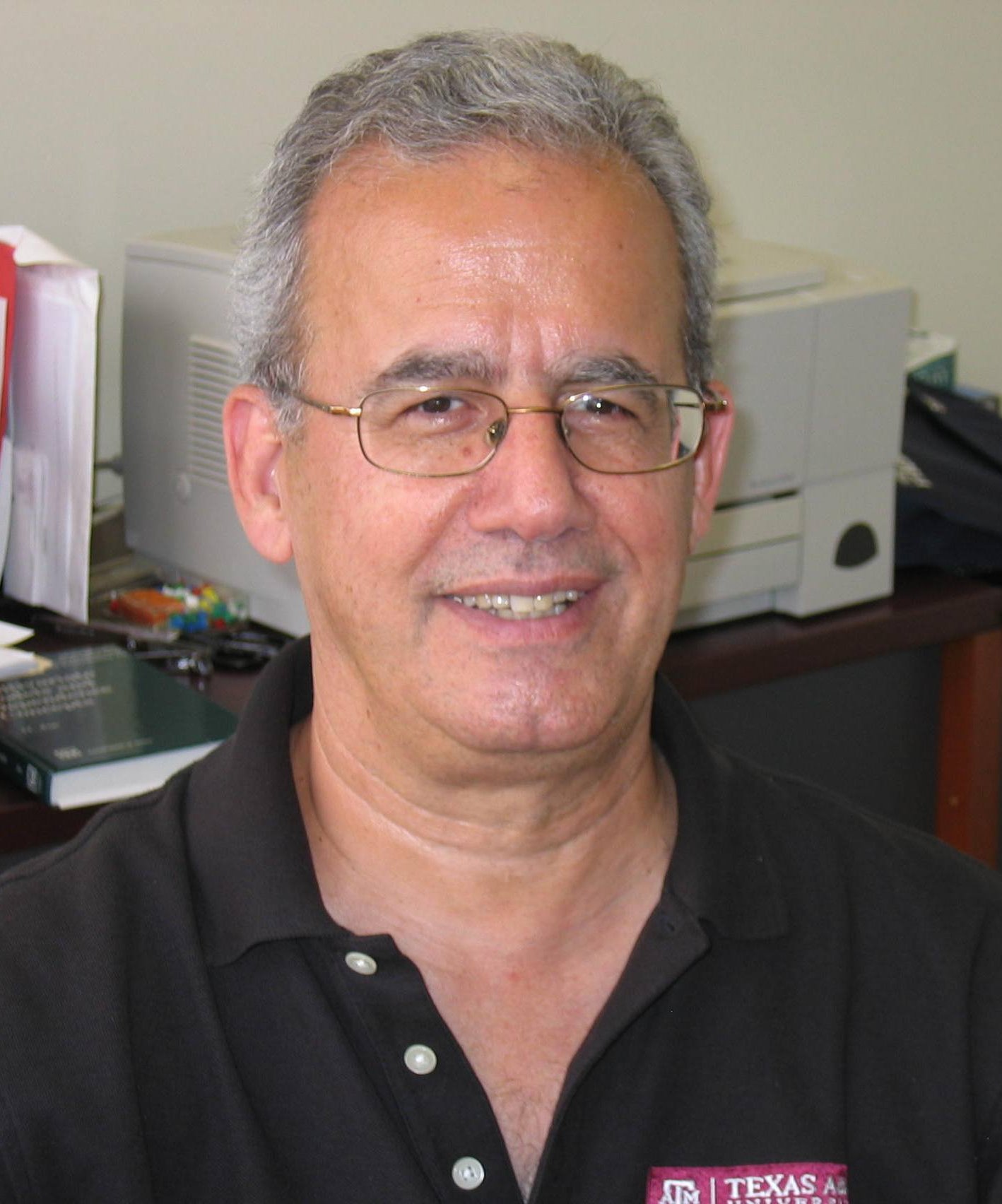
Mohsen Pourahmadi is a Professor in the Department of Statistics at Texas A&M University, part of the College of Arts & Sciences. His research focuses on developing methodologies for modeling covariance matrices in multivariate and time series data, with applications to financial analysis, longitudinal studies, neuroeconomics, and high-dimensional data. Key tools include graphical lasso algorithms, Cholesky decomposition, and Bayesian approaches. He emphasizes extending generalized linear models (GLM) to covariance matrix estimation, leveraging prediction theory and stochastic processes. Education details are not explicitly provided in the text. His work spans theoretical advancements in covariance estimation, such as sparse VAR models, nonstationary process analysis, and regularized multivariate regression. He has contributed to applications like detecting cyber attacks on infrastructure systems and analyzing breast cancer data through Bayesian networks. Research interests include time series graphical models, antedependence models for longitudinal data, and regularization techniques for high-dimensional covariance matrices. His recent work explores fused-lasso penalties, Bayesian correlation matrix estimation, and stationary subspace analysis. Pourahmadi has authored numerous articles on topics ranging from multivariate volatility modeling to nonparametric covariance estimation, emphasizing both computational efficiency and theoretical rigor.
Tianyu Guan is an Assistant Professor in the Department of Mathematics and Statistics at York University, Faculty of Science. He previously served as an Assistant Professor at Brock University and joined York University in 2024. He holds a PhD in Statistics from Simon Fraser University (2020), an MSc in Actuarial Science from the same institution (2014), and a BSc in Statistics from Jilin University (2011). PhD in Statistics, Simon Fraser University, 2020 MSc in Actuarial Science, Simon Fraser University, 2014 BSc in Statistics, Jilin University, 2011 His research centers on sports analytics, functional data analysis, and nonparametric statistics, with strong applications in machine learning and data science. He applies statistical methodologies to understand sports performance, player behavior, and game dynamics. His work also extends to theoretical developments in sparse modeling and functional regression. The recent publications highlight a clear trend toward integrating advanced statistical techniques with real-world sports and entertainment data. His work combines functional data analysis, machine learning, and probabilistic modeling to extract insights from complex longitudinal and high-dimensional datasets. Topics span soccer, rugby, football, and movie reviews, demonstrating interdisciplinary reach. While no formal scientific awards are listed in the provided text, his publications in high-impact journals such as Annals of Applied Statistics and Statistics and Computing reflect strong academic recognition. Tianyu Guan actively advises multiple graduate students at both MSc and PhD levels, primarily at Brock and Simon Fraser Universities. His teaching portfolio includes advanced courses in nonparametric statistics, sampling theory, and experimental design at the undergraduate and graduate levels. He has not received external grant information in the provided text, but his research output suggests active engagement in funded or independent research projects. He leads methodological and applied research in sports analytics, often co-supervising students with colleagues across institutions. His lab or research group appears focused on developing and applying statistical tools for performance analysis and decision-making in sports, supported by computational implementations such as the R package ngr .