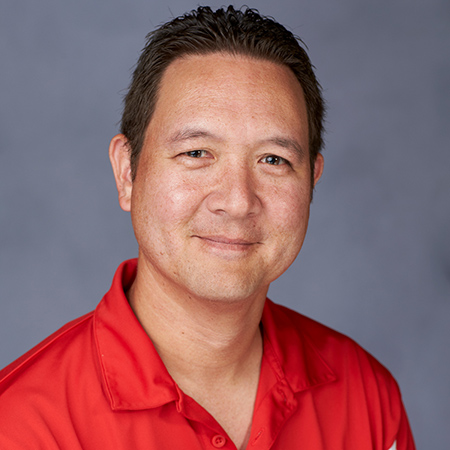
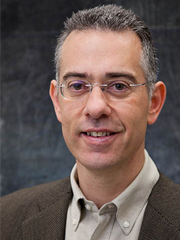
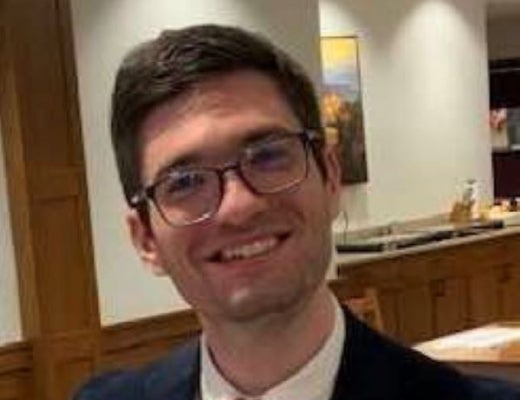
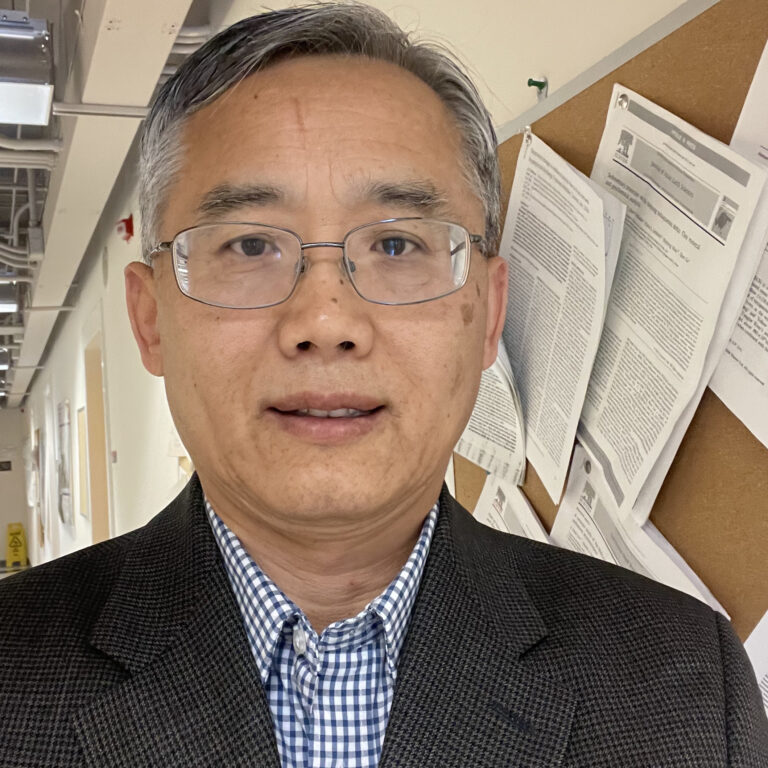
Dr. James W. Navalta is an Associate Professor in the Department of Kinesiology and Nutrition Sciences at the University of Nevada, Las Vegas. His research focuses on physiological responses to outdoor exercise (hiking, trail running) and the validity/reliability of wearable technology. He earned his B.S. in Physical Education and Biology from Brigham Young University–Hawaii, M.S. in Kinesiology from UNLV, and Ph.D. in Exercise Physiology from Purdue University. Education: B.S. - Physical Education & Biology, Brigham Young University–Hawaii M.S. - Kinesiology, University of Nevada, Las Vegas Ph.D. - Exercise Physiology, Purdue University His research portfolio includes: Wearable technology validation for physiological measurements Comparative studies of indoor vs outdoor exercise environments Impact of gender-inclusive approaches on sports science Metabolic and cardiovascular responses to unconventional workouts Psychological benefits of nature immersion Recent publications demonstrate expertise in: Wearable device accuracy testing VO2max and lactate threshold validation Environmental influence on exercise physiology Methodological improvements in data collection Gender-inclusive research design Outdoor activity impact assessment As co-founder and executive editor of the International Journal of Exercise Science, he contributes significantly to academic discourse. He also serves on editorial boards for journals related to digital health and exercise technology.
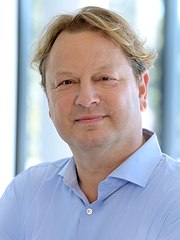
Prof. Michel Clement is a Professor of Marketing & Media at the University of Hamburg Business School, holding the Chair for Marketing & Media since 2006. He previously held academic positions at the University of Passau (2005/2006) and Christian-Albrechts-University Kiel (2002–2005). His research focuses on entertainment media product management, new technologies, and donor/customer management. He has held significant administrative roles including Academic Senate Member (2013–present), Faculty Council Member (2014–present), and Director of the Research Center Media and Communication (2008–present). Education: PhD in Marketing from Christian-Albrechts-University Kiel (mentor: Prof. Sönke Albers), with a Master's in Business Administration focusing on Marketing, Innovation Management, and Psychology. Pre-academic career included management roles at Bertelsmann mediaSystems and Bertelsmann eCommerce Group, where he founded Snoopstar.com GmbH as Vice President. Research interests span digital media economics, prosocial behavior in healthcare donations, platform business models, and consumer decision-making in entertainment industries. He has contributed to understanding blood/plasma donation retention strategies, smart speaker impacts on media consumption, and pandemic-related behavioral changes. Leadership roles include supervisory board memberships at MADSACK Mediengruppe (2018–present), Studierendenwerk Hamburg (2017–present), and Universität Hamburg Marketing GmbH (2015–present). He has directed major initiatives like the Hamburg Graduate School for Media and Communication (2009–2016) and co-developed international MBA programs with Fudan University (2006–2008). Grants and collaborations include state-funded excellence initiatives and industry partnerships. His work integrates academic research with practical applications in media technology scouting, venture consulting, and digital platform governance.
Rajendra Acharya is a Professor (Artificial Intelligence in Health) at the University of Southern Queensland's School of Mathematics, Physics and Computing. He holds qualifications including BEng, MTech, two PhDs, and a DSc. His research focuses on AI applications in healthcare, pattern recognition, and medical diagnostics, with notable contributions to EEG analysis, deep learning, and disease detection. Awards include multiple Research.com Leader Awards in Computer Science for Australia and Singapore (2022–2025). His work spans over 650 publications, with high-impact studies on automated disease diagnosis via AI, including COVID-19 detection using X-rays and EEG-based seizure detection. His research interests integrate machine learning, signal processing, and healthcare technologies. He collaborates internationally and advises on AI-driven health solutions. No student list provided; however, his extensive supervision is implied through his research output.
Dr. Sam Schreyer is a Professor of Economics at the Department of Economics, Finance & Accounting, Fort Hays State University. He holds a Ph.D. in Economics from Claremont Graduate University (2009), an M.A. in Economics (2004), and a B.M. in Music (2001), both from Wichita State University. His research focuses on applied macroeconomics, developing economies, financial crises, and inflation dynamics. Education: Ph.D. in Economics, Claremont Graduate University, 2009 M.A. in Economics, Wichita State University, 2004 B.M. in Music, Wichita State University, 2001 Research Interests: Dr. Schreyer examines macroeconomic policies in emerging markets, the impact of financial crises, and inflation dynamics. His work often integrates econometric models to analyze sudden stops, currency crises, and university contributions to local economies. Recent projects include annual economic impact reports for Fort Hays State University, emphasizing institutional roles in regional development. Collaborations & Grants: He frequently collaborates with Emily Breit and Tom Johansen on institutional impact studies and Docking Institute-funded projects. His research also explores educational policy through online vs. in-person learning outcomes, addressing retention strategies and selection bias. Labs/Teams: Affiliated with the Department of Economics, Finance & Accounting and the Docking Institute of Public Affairs. Office: McCartney Hall 203D.
Prof. Raimon Jané Campos is a leading figure in biomedical signal processing at the Universitat Politècnica de Catalunya (UPC) and Universitat de Barcelona (UB). As co-director of UPC's Biomedical Signal and System Group (CREB) and coordinator of the Biomedical Engineering PhD Programme, he bridges engineering and clinical applications. His work focuses on respiratory and sleep disorder diagnostics, with significant contributions to COPD and sleep apnea monitoring through wearable devices and machine learning. PhD in Biomedical Engineering (UPC, 1989) Visiting researcher at Université de Nice-Sophia Antipolis Vice-president of Spanish Society of Biomedical Engineering Research spans respiratory mechanics , sleep-disordered breathing , acoustic biomarkers , bioimpedance , and machine learning in biomedical contexts . His 2025 work on microcalorimetric pathogen classification and 2024 spiking neural networks for apnea detection demonstrate cutting-edge integration of computational methods with physiological monitoring. Articles from 2017-2024 reveal consistent focus on non-invasive diagnostics , cardiorespiratory synchronization , and smartphone-based health solutions . Awarded the Barcelona City Technology Research Award (2005) and serving on the International Advisory Board for Physiological Measurement since 2010, his career combines academic leadership with real-world clinical translation through IBEC's technology transfer initiatives.
Omer T Inan is the Regents Entrepreneur Endowed Chair and Assistant Professor at the School of Electrical and Computer Engineering (ECE) at Georgia Institute of Technology. His work bridges biomedical engineering and wearable technology, focusing on non-invasive physiological monitoring for chronic disease management. He holds a Ph.D. in Electrical Engineering from Stanford University (2009) and previously worked at Countryman Associates (2007-2013) as Chief Engineer, developing professional audio systems. Education: B.S., M.S., Ph.D. in Electrical Engineering, Stanford University (2004-2009) His research interests include medical devices for home-based cardiovascular monitoring, musculoskeletal sound analysis, and neuromodulation of stress responses. He has pioneered technologies for heart failure patients, PTSD treatment, and osteoarthritis diagnostics. Recent publications highlight innovations in AI-driven cardiac parameter estimation, motion artifact removal in seismocardiograms, and multimodal stress tracking via wearables. His work spans biomedical signal processing, clinical translation, and portable diagnostic systems. Scientific Awards 2024 IEEE Fellow 2023 IEEE Distinguished Lecturer 2023 American College of Cardiology Fellow 2022 American Institute for Medical and Biological Engineering Fellow 2021 Academy Award for Technical Achievement (The Oscars) 2018 ONR Young Investigator Award 2018 NSF CAREER Award At Georgia Tech, Inan leads the Inan Research Lab, which develops technologies for physiological monitoring and modulation. Projects include musculoskeletal sound analysis for joint health, non-invasive cardiovascular sensing, and neuromodulation to treat PTSD via vagal nerve stimulation.
Prof. Dr. Eling de Bruin is a Lecturer at the Department of Health Sciences and Technology (D-HEST) at ETH Zurich. His research focuses on developing and evaluating exergame-based interventions targeting neurocognitive disorders, motor-cognitive training for aging populations, and stroke rehabilitation. He leads studies on personalized exergame protocols (e.g., PEMOCS framework) and their impact on cognitive function, gait recovery, and fall prevention. His work integrates wearable sensor technology, biofeedback systems, and clinical assessment tools to improve outcomes for chronic conditions like stroke, diabetes, and sarcopenia. Key areas include exergame design, hybrid training modalities, and biomarker validation (e.g., heart rate variability for neurocognitive screening). His research also explores sports biomechanics in youth athletes and injury prevention strategies for alpine skiers. Collaborative projects involve interdisciplinary teams from rehabilitation medicine, biomedical engineering, and computer science to create user-centered exergame solutions. Current initiatives emphasize home-based interventions and tele-rehabilitation to enhance accessibility for older adults and long-term care residents. Methodological contributions include validation of motor-cognitive assessment systems using virtual reality and inertial measurement units.
Bruno Basso serves as the Hannah Distinguished Professor in the Department of Earth & Environmental Sciences at Michigan State University, based in 307A Natural Science Building. He teaches GLG 446: Water and Food and maintains active research in sustainable agricultural systems, with contact via 517-353-9009 or basso@msu.edu. His work bridges academic research with practical farm applications across the US Midwest. His core research interests include: Food Security and Plant Resilience mechanisms Soil Science with emphasis on organic carbon dynamics Precision Agriculture technologies (drones, remote sensing) Climate-Smart Agriculture practices Nitrogen and phosphorus use efficiency Yield stability analysis through spatial-temporal modeling Regenerative agriculture impacts on greenhouse gas emissions Ecosystem services valuation in crop-livestock systems Analysis of his 2023-2025 publications reveals a dominant focus on quantifying climate benefits from regenerative practices using multi-model ensembles. His work consistently addresses scalability for farmer adoption, with strong emphasis on N₂O emissions mapping, soil carbon durability, and yield stability zones. Key methodological innovations include hybrid SAR-remote sensing integration and AI-driven nutrient prescription systems, primarily applied across Midwest corn-soybean systems. No scientific awards were documented in the provided materials. While specific advising details are absent, his leadership in the LTAR cropland common experiment and Soil Inventory Project indicates active mentorship of graduate researchers. His research likely attracts significant USDA and NSF funding given the scale of field experiments and modeling initiatives focused on decarbonizing agriculture. Dr. Basso co-leads the Soil Inventory Project at Kellogg Biological Station, developing integrated sampling, data repository, and modeling frameworks for regenerative agriculture. His team combines ground observations, remote sensing, and biophysical modeling to quantify soil carbon and greenhouse gas fluxes, collaborating with farmers, industry partners, and international researchers to translate science into on-farm practices.
Zhi-Pei Liang is the Franklin W. Woeltge Professor in the Department of Electrical and Computer Engineering at the University of Illinois at Urbana-Champaign, with joint appointments in the Department of Bioengineering, Beckman Institute for Advanced Science and Technology, and Coordinated Science Laboratory. His research spans biomedical engineering, medical imaging, and signal processing with a focus on advancing magnetic resonance imaging and spectroscopy technologies. His educational background includes a Ph.D. in Biomedical Engineering from Case Western Reserve University (1989) and a B.S. in Electrical Engineering from South-China University of Technology (1982), followed by postdoctoral training at UIUC (1989-1991). Professor Liang's research interests center on magnetic resonance imaging and spectroscopy , with particular emphasis on ultrafast imaging techniques , model-based reconstruction methods , and the integration of physics-based modeling with machine learning . His pioneering work on SPICE (SPectroscopic Imaging by exploiting spatiospectral CorrElation) has revolutionized high-resolution metabolic brain imaging by enabling label-free molecular imaging through the marriage of spin physics and machine learning. His research spans pattern recognition, parameter estimation, image formation theory, and algorithms for medical imaging applications. Analysis of his recent publications reveals a strong focus on high-resolution metabolic imaging , particularly using SPICE methodology to map brain metabolism with unprecedented detail. His work bridges fundamental physics of magnetic resonance with advanced computational methods to overcome traditional limitations in imaging speed and resolution. Current research directions include J-resolved spectroscopic imaging, deuterium-based metabolic mapping, and multimodal integration of PET and MRSI for studying neurological disorders. Elected to International Academy of Medical and Biological Engineering (2012) Gold Medal, International Society for Magnetic Resonance in Medicine (2022) Technical Achievement Award, IEEE Engineering in Medicine and Biology Society (2014) Fellow, National Academy of Inventors (2021) Author of influential book 'Principles of Magnetic Resonance Imaging' (1999) President of IEEE Engineering in Medicine and Biology Society (2011-2012) Professor Liang has advised numerous students and postdocs in biomedical imaging research and has received multiple teaching honors including the Ronald W. Pratt Outstanding Teaching Award (2005) and multiple listings among UIUC's Excellent Teachers. His research has been supported by various grants from NIH, NSF, and other funding agencies. He leads the SPICE (Spectroscopic Imaging by exploiting spatiospectral Correlation) research group which focuses on developing novel imaging techniques that combine physics-based modeling with machine learning for ultrafast metabolic imaging. His laboratory, part of the Beckman Institute's Integrative Imaging Theme, collaborates extensively with clinical researchers at Carle Illinois College of Medicine and other institutions to translate advanced imaging techniques into clinical applications for neurological disorders, cancer, and metabolic diseases. Current projects focus on high-resolution mapping of brain metabolism in Alzheimer's disease, stroke, and brain tumors using novel MR spectroscopic imaging techniques.
Dr. Masoumeh Dashti is an Associate Professor in Mathematics at the University of Sussex, UK, affiliated with the School of Mathematical and Physical Sciences. She holds a PhD in Mathematics from the University of Warwick (2008) and prior degrees in Mechanical Engineering from Sharif University of Technology and Tehran Polytechnic. Her research focuses on Partial Differential Equations, Inverse Problems, Bayesian Inference, and their applications in fluid dynamics and epidemiology. Key research interests include: Bayesian approaches to inverse problems, sparsity-promoting estimators, uncertainty quantification, and mathematical modeling of epidemics on networks. She has contributed to foundational work on Besov priors and MAP estimator consistency in nonparametric Bayesian frameworks. Her publications span topics like network inference from epidemic data, contraction rates of posterior distributions, and fluid-structure interaction problems. She has secured grants including 'Two-dimensional stochastically perturbed shallow water equations' (2019-2023) and 'Confronting High Dimensional Network Models With Data' (2018-2022). Currently, she serves as an Associate Editor for SIAM-ASA Journal on Uncertainty Quantification and AIMS Foundations of Data Science . Teaching expertise includes Functional Analysis, Partial Differential Equations, and Calculus of Several Variables at both undergraduate and postgraduate levels.
Stavros G. Vougioukas is a Professor and Vice Chair in the Department of Biological and Agricultural Engineering at the University of California, Davis. His research focuses on agricultural robotics, mechanization, and automation for specialty crops, with particular emphasis on robotic harvesting systems and precision agriculture technologies. He leads initiatives in developing actuator systems, perception, and control mechanisms to optimize crop management. Key areas of expertise include robotic fruit harvesting, autonomous vehicle navigation in orchards, and site-specific pest management strategies. His work integrates mechanical engineering principles with advanced automation to address labor shortages and improve agricultural efficiency. Recent projects emphasize data-driven solutions for yield estimation, worker activity analysis, and economic viability of robotic systems. Academic contributions span over 50 peer-reviewed publications (2023-2025), with a focus on robotic orchard platforms, crop transport systems, and sensor-based automation. Notable innovations include vacuum suction end-effectors for fruit harvesting and GNSS-free navigation systems for autonomous vehicles. He also explores sustainable agricultural machinery through techno-economic analyses of electric/hybrid tractors. Current research bridges robotics and agricultural economics, addressing labor cost optimization and precision irrigation. His lab collaborates with industry partners to translate prototypes into field-ready solutions, emphasizing practical applications for specialty crop production systems.
Patrick Skeba is a Teaching Assistant Professor at the University of Pittsburgh's Department of Computer Science within the School of Computing and Information. He holds a PhD in Computer Science from Lehigh University (2022) and bachelor's degrees in Cognitive Science and Computer Science from Johns Hopkins University (2017). His research focuses on internet privacy, AI ethics, and the responsible use of data. He teaches courses in machine learning and programming. Research Interests: Skeba's work bridges technology and societal impact, emphasizing privacy risks in data systems, algorithmic fairness, and user-centric privacy frameworks. His recent studies explore informational friction in data collection, community-based privacy strategies, and lay-expert disparities in understanding privacy-enhancing technologies (PETs). Publications: His articles analyze privacy dynamics in digital spaces, from pandemic-era discourse on r/privacy to methodological approaches for categorizing technology non-use. His earlier work includes breakthroughs in sleep disorder diagnostics, particularly periodic leg movement (PLM) analysis and telemedicine applications for neurological conditions. Awards: No scientific awards listed. Grants and advising details are currently unspecified. Labs/Teams: No specific lab affiliations mentioned in provided materials. His teaching and research emphasize collaboration across computational and social domains.
Dr. Manuel Carro Dominguez is a Researcher at the Department of Neural Control of Movement, ETH Zürich. His work focuses on understanding the neural mechanisms underlying sleep dynamics, arousal regulation, and their impact on motor performance and cardiovascular function. He specializes in techniques such as auditory stimulation, pupil-based neurofeedback, and EEG/ECG monitoring to explore sleep oscillations, cortical excitability, and their clinical applications. His research bridges neuroscience, biomedical engineering, and sleep medicine, with a particular emphasis on enhancing human physiology through targeted interventions during sleep. Key research interests include: sleep modulation via auditory stimuli, pupilometry as a marker of arousal states, and the development of medical devices for gas sensing and closed-loop biofeedback systems. His studies often integrate multidisciplinary approaches to address translational challenges in neurophysiology and cardiovascular health. Recent publications highlight advancements in auditory stimulation effects on cardiac function, the role of K-complexes in sleep dynamics, and the design of gas sensing technologies for biomedical applications. His work contributes to both fundamental neuroscience and applied biomedical engineering, aiming to improve clinical outcomes through innovative sleep-based interventions.
Maria Camila Ceballos Betancourt is an Assistant Professor (Teaching & Research) in Beef Cattle Welfare at the Faculty of Veterinary Medicine , University of Calgary . She holds a Ph.D. and M.Sc. in Animal Welfare and Behaviour from São Paulo State University (UNESP) , Brazil, and a B.Sc. in Animal Science from National University of Colombia . Her research focuses on animal welfare , human-animal interactions , and cattle temperament , with an emphasis on livestock handling practices and sustainable production systems . Education: B.Sc. in Animal Science, National University of Colombia (2010) M.Sc. in Animal Welfare and Behaviour, UNESP (2014) Ph.D. in Animal Welfare and Behaviour, UNESP (2017) She teaches VETM322: Animal Welfare and Behaviour annually since 2020. Her research integrates animal behavior , physiological and reproductive performance measures , and applied handling interventions . Recent publications address grimace scales for pain assessment , human-animal dynamics in livestock systems , and technological innovations for piglet monitoring , reflecting her interdisciplinary approach between agricultural science , veterinary medicine , and behavioral neuroscience . Her work spans continents, including internships at the Animal Welfare Science Centre (University of Melbourne, Australia) and postdoctoral research at the University of Pennsylvania (USA). While no formal awards are listed, her research has been highlighted in media outlets like Canadian Cattlemen’s The Beef Magazine and CBC Calgary .
Paul Liu is a Professor and Director of International Affairs at the College of Sciences, NC State University. He holds a Ph.D. in Geological Oceanography from the Virginia Institute of Marine Science (2001) and academic roles spanning 2003 to present. His research focuses on sediment dynamics, sea-level changes, and large river systems in Asia. He leads the World Large River and Delta Systems Source-to-Sink Webinar Series and serves as an NC State Provost Faculty Fellow for Global Leadership. Education: Ph.D. (2001) Virginia Institute of Marine Science; M.S. (1995) Chinese Academy of Sciences; B.E. (1992) Ocean University of China Research expertise includes AI applications in geoscience, sediment transport modeling, and paleoenvironmental reconstruction. His work integrates field observations, numerical models, and geophysical data to address coastal evolution and climate change impacts. He has published over 50 peer-reviewed articles on river deltas, continental margins, and marine sedimentation processes. Recent articles analyze delta dynamics in the Nile, Indus, and Yellow River systems, and explore sediment-carbon interactions in the South China Sea. Liu’s research also addresses human impacts on sediment fluxes and coastal management strategies in Asia. As a global leader, he collaborates internationally on delta sustainability and leads workshops on AI applications in Earth sciences. His lab, linked at https://sealevel.wordpress.ncsu.edu, focuses on bridging geoscience and emerging technologies.