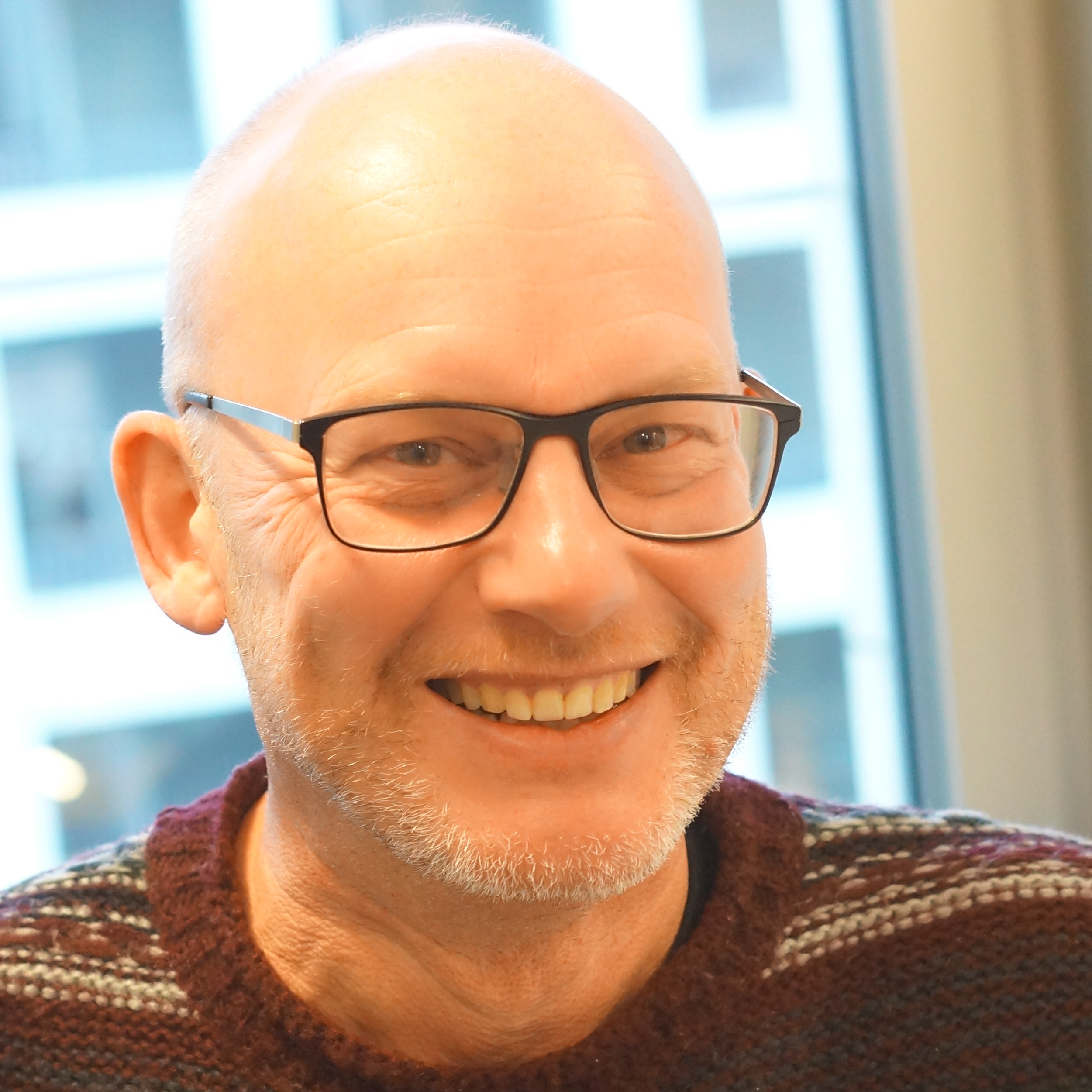
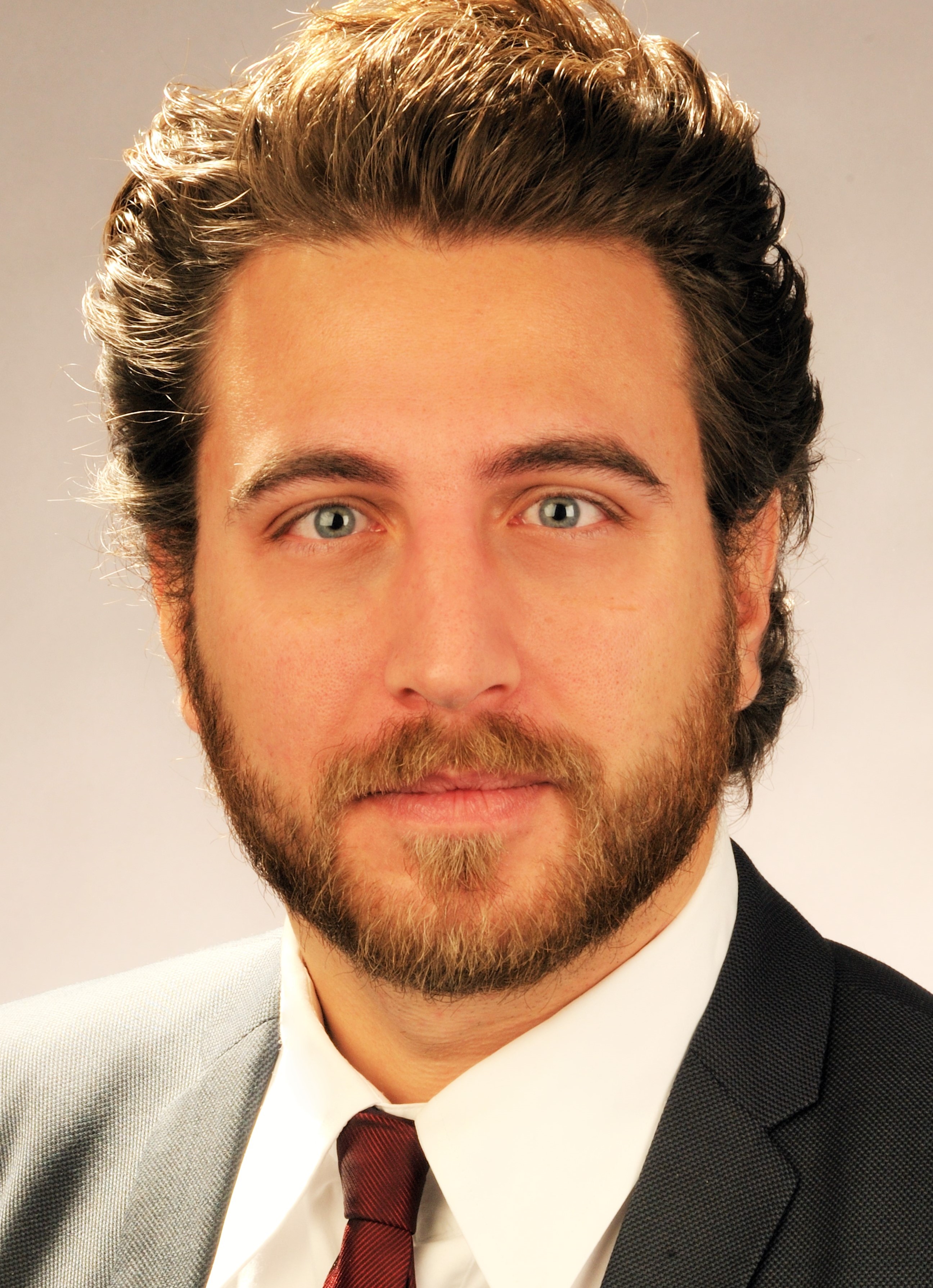
Paul Lukowicz is a distinguished researcher affiliated with the University of Kaiserslautern and DFKI, Kaiserslautern, Germany. His work focuses on Human Activity Recognition (HAR) using wearable sensors, Augmented Reality for surgical navigation, and Quantum-Inspired Computing for AI efficiency. He leads interdisciplinary projects involving capacitive sensing , bio-impedance , and large language models (LLMs) in real-world applications. Research Trends from his recent publications (2024-2025) reveal a focus on Energy-efficient AI for wearables Context-aware AR systems Physics-informed neural networks Quantum machine learning Human-in-the-loop training frameworks Medical device innovation His work spans health applications , industrial IoT , and human-AI collaboration , often involving partnerships with institutions like University of Passau and international collaborators. Key technical approaches include sensor fusion , cross-modal learning , and edge computing for wearable systems.
Jessica M. Furrer is a researcher active in environmental science, computational modeling, and soil processes, with publications in interdisciplinary journals like Frontiers in Environmental Science and Granular Matter . She has contributed to studies on pore-scale soil water dynamics and microbial influences on soil structure.
Ramona Schmid is a researcher focused on the intersection of Psychology, Computer Science, and Medicine. Her work primarily explores emotion recognition systems using psychophysiological parameters, human-robot interaction dynamics, and virtual reality applications for mental health and autism spectrum disorder (ASD) interventions. Research Trends: Recent publications highlight her contributions to digital health applications, emotional stimuli analysis, and VR-based training systems for social and emotional skill development. Collaborations: She frequently collaborates with Verena Wagner-Hartl, Herag Arabian, and Knut Möller on interdisciplinary studies bridging biomedical engineering and psychological sciences. Scientific Focus: Her articles consistently address challenges in emotion recognition for neurodiverse populations, the impact of task complexity in human-robot collaboration, and validation of psychophysiological measurement environments. Key subfields include affective computing, healthcare technology, and cognitive modeling for ASD.
Prof. Dr. Claudius Wagemann is a Professor of Political Science at the Institute of Political Science, Department of Social Sciences, Goethe University Frankfurt. He has held this position since 2012, after serving as an Associate Professor at New York University (Florence) and as a Research Associate at institutions like the Scuola Normale Superiore di Pisa and the European University Institute (EUI) in Florence.
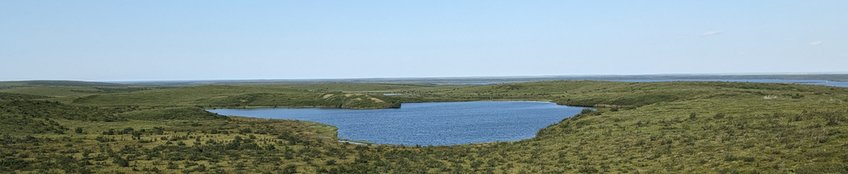
Dr. Judith Vogt is a PostDoc researcher at the Biogeochemical Signals department of the Max Planck Institute for Biogeochemistry in Jena, Germany. Her work focuses on Arctic and sub-Arctic freshwater carbon dynamics, particularly CO 2 and methane fluxes across lakes and rivers, with an emphasis on environmental drivers and anthropogenic impacts. Education: PhD in Environmental Science (2023), Memorial University of Newfoundland MSc in Meteorology (2017), University of Hamburg BSc in Meteorology (2014), University of Hamburg Research Highlights: Lead author of ARGO metadata synthesis for Arctic greenhouse gas observations Conducted field campaigns in northern Fennoscandia (Teno River) and Inuvik, Canada Key contributor to projects like Q-ARCTIC and GreenFeedBack Email: jvogt@bgc-jena.mpg.de
Prof. Sophia Walther is a Project Group Leader at the Max Planck Institute for Biogeochemistry in Jena, Germany, since 2024. She co-leads the FLUXCOM initiative and previously worked as a PostDoc (2018–2023) in the same institute. Her research focuses on terrestrial carbon cycle dynamics, remote sensing of vegetation, and data-driven modeling of land-atmosphere fluxes using machine learning. PhD in Satellite-based Vegetation Assessment (2018) MSc and BSc in Meteorology from Freie Universität Berlin
Dr. Larisa Tarasova is a tenured Research Group Leader of "Watershed Dynamics & Hydrological Extremes" at the Helmholtz Centre for Environmental Research – UFZ, Department of Catchment Hydrology, Germany. She leads projects on large-scale flood analysis, catchment regionalization and hydrological modelling uncertainty, and has published extensively on these topics since 2016. Education: PhD in Hydrology, Department of Catchment Hydrology, UFZ (2016-2020) M.Sc. Water Resources & Environmental Management, Leibniz University Hannover (2013-2015) B.Sc. Ecology & Environmental Engineering, Peoples' Friendship University of Russia (2007-2012) International exchange semesters at Nanjing Normal University and Xiamen University, China Research interests revolve around understanding and predicting hydrological extremes across large domains. She develops data-driven and process-based approaches to classify flood events, quantify their space-time dynamics, and unravel how catchment properties and climate patterns control runoff generation. Her work integrates statistical learning, large-sample datasets (e.g., CAMELS-DE) and uncertainty analysis to improve predictive models for floods and water quality under change. Her publications (≥60 peer-reviewed since 2016) exhibit a clear trajectory from event-based process studies to continental-scale modelling and machine-learning applications, culminating in recent high-impact papers on compound flood drivers, catchment descriptors and neural-network flood forecasting. Scientific awards include the Gordon Research Conference Rising Star Award, AGU and Wiley citations for excellence, and national Best Dissertation and UFZ Best PhD awards in 2021, underlining her early-career leadership. She convenes sessions on hydrometeorological extremes at EGU and AGU meetings, serves as reviewer for top journals (Science, Nature Climate Change, WRR, etc.) and acts as referee for NSF and Hungarian Academy grant programmes, underlining her active service to the community.
Dr. Roman Hornung is a Research Fellow at the Institute of Medical Informatics, Biometry and Epidemiology (IBE) within Ludwig-Maximilians-Universität Munich (LMU), specializing in Biometry in Molecular Medicine. His work focuses on advancing statistical and machine learning methodologies for biomedical applications. Academic Rank: Research Fellow Key Research Areas: Random Forests, Multi-Omics Data Integration, Interpretable Machine Learning, Cross-Validation Techniques, Biomedical Informatics, and Meta-Research on Prognostic Modeling Teaching: Leads seminars on applied statistics in epidemiology and contributes to clinical epidemiology tutorials Software Contributions: Maintainer of R packages like diversityForest and prioritylasso His research bridges statistical theory and practical biomedical applications, with a particular emphasis on reproducibility and robustness in predictive modeling. He has developed novel random forest variants for multi-class outcomes and multi-omics data. Hornung’s recent publications and submitted work highlight trends in benchmarking machine learning methods, improving cross-study prediction, and understanding the impact of data preparation on model performance. Notably, he has contributed to methodologies for generalization error estimation, variable importance measures, and diversity-enhanced forest algorithms. As a member of the Biometry in Molecular Medicine working group, he collaborates on interdisciplinary projects integrating clinical and omics data. His habilitation at LMU Munich (2024) and editorial roles at Biometrical Journal and Scientific Reports underscore his academic leadership in statistical methodology for health sciences.
Christoph Beck is an extraordinary Professor in the Chair of Physical Geography with a focus on Climate Research at the Institute of Geography, University of Augsburg. He serves as Senior Academic Councillor and has been affiliated with the university since 2006, with his appointment as extraordinary professor occurring in July 2022. His research spans multiple domains within physical geography and climate science, with particular emphasis on urban climate systems and human-environment interactions. Beck's primary research interests include synoptic climatology, circulation and weather classifications, empirical-statistical downscaling, large-scale atmospheric circulation patterns, urban and terrain climatology, and the relationships between climate change and health effects. His work particularly focuses on urban microclimates, heat island phenomena, and the climatic and health-related effects of urban green spaces. His research integrates field measurements, numerical modeling, and statistical analysis to understand climate processes at various spatial scales. Analysis of Beck's recent publications (2021-2025) reveals a strong focus on urban climate challenges, particularly heat stress in urban environments, the relationship between weather patterns and health outcomes (especially stroke incidence), and air quality issues in urban settings. His work increasingly incorporates high-resolution spatial analysis, citizen science approaches, and advanced modeling techniques like PALM-4U to address urban climate challenges. A significant portion of his recent research addresses the intersection of climate science and public health, particularly examining how atmospheric circulation patterns influence health outcomes. Beck actively participates in several research projects including HEATS (Heat Risk Management in the City), interdisciplinary studies on the health-related effects of urban forests, and investigations into the role of environmental factors in neurological diseases. His work demonstrates strong interdisciplinary collaboration across geography, environmental science, public health, and urban planning disciplines. As an educator, Beck teaches a wide range of courses including urban and terrain climatology, physical geography, geostatistics, and specialized seminars on climate change, extreme events, and urban climate modeling. He serves as study advisor for Bachelor and Master programs specializing in Physical Geography and Climate and Environmental Sciences, and has coordinated the Master's program in Climate and Environmental Sciences.
PD Dr. Andreas Philipp serves as a Senior Lecturer and Research Associate in Physical Geography and Climate Science at the Institute of Geography, University of Augsburg, Faculty of Applied Computer Science. With over two decades of academic experience, his work bridges climate science, urban meteorology, and environmental health. His research focuses on understanding atmospheric circulation patterns and their impacts on urban environments and human health. His educational background includes studies in Geography, Geology, and Sociology at the University of Würzburg (1991-1997), followed by graduate research in Geoscientific Research in Africa (1997-2000). He completed his doctorate (Dr. rer. nat.) at Würzburg in 2003 and habilitated in Physical Geography in 2014, earning the title of Privatdozent. Philipp's research interests span atmospheric circulation dynamics, urban climate systems, air quality monitoring, and climate-health relationships. His work particularly emphasizes the development and application of circulation type classifications, urban heat island effects, and the relationship between weather conditions and health outcomes. He has pioneered innovative approaches using unmanned aerial vehicles (UAVs) for boundary layer measurements and developed sophisticated methods for urban air quality monitoring. His publication record demonstrates consistent contributions to climate science, with recent work focusing on urban climate modeling, air quality assessment using novel sensor networks, and the health impacts of meteorological conditions. His research shows a clear progression from fundamental climate pattern analysis toward applied urban climate solutions and health-related climate studies. Philipp leads several significant research initiatives including the Virtual Alpine Observatory (VAO), Smart Air Quality Network (SAQN), Thunderstorm Asthma in the Region Augsburg (TARA), and the Urban Climate under Change ([UC]² 3DO) projects. These initiatives demonstrate his commitment to addressing contemporary climate challenges through interdisciplinary approaches. His collaborative approach is evident in numerous co-authored publications with researchers across disciplines including geography, medicine, environmental science, and engineering. This cross-disciplinary work has resulted in significant contributions to understanding how atmospheric conditions affect urban environments and human health, particularly regarding stroke incidence and thunderstorm asthma phenomena.
Peter Fiener serves as Professor for Water and Soil Resource Research at the Department of Geography, Faculty of Applied Computer Sciences, University of Augsburg since 2013. He concurrently holds the position of Dean of Students in the Department of Geography (since 2016) and coordinates the Marie Skłodowska-Curie Innovative Training Network SOPLAS (since 2021). His academic journey includes prior appointments as Professor at the Indo-German Centre for Sustainability, Indian Institute of Technology Madras (2011-2012) and Senior Scientist at the University of Cologne (2004-2013). PhD from Technische Universität München (2003) Habilitation from University of Cologne (2010) Master's in Geography from Universität Augsburg and LMU München (1998) Professor Fiener's research program focuses on measuring and modeling surface runoff, soil erosion, and lateral matter fluxes in agricultural landscapes. He investigates the effects of spatio-temporal patterns and connectivity on water and matter movement, coupling these processes with biogeochemical cycles in terrestrial and aquatic ecosystems. A significant recent emphasis has been on macro and microplastics in arable soil systems, particularly their redistribution mechanisms. His geographical research areas of specialization include South India and Central Africa, where he has conducted extensive field studies on sustainable agricultural practices. Analysis of his 2024-2025 publications reveals a strong research trajectory toward microplastic detection methodologies, advanced soil erosion modeling using machine learning, and carbon dynamics in eroding landscapes. His work increasingly integrates remote sensing technologies with computational approaches to address large-scale soil conservation challenges, demonstrating particular innovation in plasticulture detection using satellite data and erosion nowcasting systems. Coordinator of Marie Skłodowska-Curie Innovative Training Network SOPLAS Professor Fiener leads the Water and Soil Resource Research Team comprising multiple doctoral researchers including Dr. Florian Wilken, Dr. Pedro Batista, and Dr. Lena Katharina Öttl, alongside numerous M.Sc. researchers. His M²ESH laboratory supports advanced measurement and modeling of soil hydrological processes. Current research directions include understanding tillage erosion's role in carbon dynamics, developing cost-effective microplastic detection protocols, and assessing long-term impacts of agricultural practices on landscape evolution across multiple temporal scales.
Jiali Wang is a Researcher affiliated with the Institute of Biological Information Processing IBI-3 at Forschungszentrum Jülich GmbH and the Faculty of Mathematics, Computer Science and Natural Sciences at RWTH Aachen University . Her primary research focus lies in Optogenetic actuator engineering for subcellular targeting Polarized cell membrane protein localization Channelrhodopsin modification with mucin tandem repeats She has contributed to the development of TR-ChR2XXL constructs showing stable electrophysiological properties while enabling precise subcellular targeting in epithelial and neuronal cells. Her research (2023) demonstrates that N-terminal mucin motif fusions maintain high photocurrents in polarized cells while achieving compartment-specific expression. Key articles span neuroscience, biomedical engineering, and clinical oncology applications. Scientific awards include China Scholarship Council (CSC) financial support Helmholtz Association open access funding
Rolf Plötzner serves as Professor for Media Didactics within the Department of Learning with Media at Freiburg University of Education's Institute of Psychology. He maintains active consultation hours for Summer Semester 25 via Zoom, demonstrating ongoing academic engagement in teacher education programs across primary, secondary, and vocational disciplines. His research program investigates cognitive mechanisms in multimedia learning, with concentrated expertise in instructional animations , interactive videos , and 3D visualizations for understanding technical system changes. Key theoretical frameworks include cognitive load theory and visuospatial working memory models, examining how interactivity features influence learning outcomes when mastering dynamic processes. Recent publications (2020-2025) reveal consistent experimental and meta-analytic approaches comparing animation efficacy against static media. Research trends emphasize change-specific learning demands , interaction feature optimization , and cognitive predictor variables , with emerging exploration of AI applications in educational media design. Professor Plötzner supervises Bachelor's and Master's theses requiring rigorous theoretical grounding in educational psychology. His supervision spans analytical literature reviews, empirical classroom studies, and development-oriented media projects across teacher education programs. Students must submit preliminary research questions with theoretical frameworks and methodological plans, focusing on digital media applications for programming education, cooperative learning, and technical system comprehension.
Prof. Dr. Malte Fliedner is a faculty member at the University of Hamburg within the Business School 's Institute for Operations Management . His research focuses on operations research , assembly line balancing , logistics , and just-in-time (JIT) production . He has held academic positions at TU Darmstadt and Friedrich-Schiller-Universität Jena. PhD in Business Administration (University of Hamburg, 2008) with distinction Habilitation in Business Administration (FSU Jena, 2012) Studium der Betriebswirtschaftslehre (University of Hamburg, 1999-2004) His research explores scheduling optimization , container terminal operations , and mixed-model assembly line balancing . Key themes include resource allocation , cross-docking , and train/shunting logistics . Recent trends in his publications address emergency job scheduling and multi-yard crane workload levelling . Scientific Awards: IIE Transaction Award (2013) Handelsblatt Betriebswirte Ranking Top 6 (2012) Herbert Jacob-Preis (2010) Promotionspreis der GOR (2009) Nachwuchspreis der VHB (2008) He is affiliated with the Institute for Operations Management and collaborates with colleagues like Prof. Dr. Karl-Werner Hansmann and Dr. Julian Golak.
Agorastos Agorastos is an Associate Professor and Senior Physician at the Clinic and Polyclinic for Psychiatry and Psychotherapy of the University Medical Center Hamburg-Eppendorf . He holds an MD from Medical University of Vienna (2006) and a medical doctorate (Dr. med.) from the Center of Interdisciplinary Addiction Research (ZIS) at UKE. His academic career includes postdoctoral research at the University of California, San Diego (UCSD) and habilitation in 2015 on heart rate variability in stress-related diseases. Research Profile : Agorastos specializes in stress neurobiology with focus on psychoneuroendocrinological, neurophysiological, and immunological aspects of PTSD and depression. He investigates biomarkers like cytokines, copeptin, and neuroendocrine function in stress pathophysiology, autonomic-cardiovascular interactions, and predictive markers for antidepressant response. His work spans interdisciplinary collaborations between UKE and UCSD. Clinical Expertise : He treats stress/trauma disorders (PTSD, postpartum depression), anxiety, treatment-resistant depression, and psychosomatic emergencies. He leads the Psychiatric Outpatient Services Unit since 2016. Scientific Awards : Maudsley Forum Fellowship (2008) EPA Young Researcher Award (2009) APS Fellow Travel Award (2012) ECNP Summer School Fellowship (2013) SOBP International Travel Award (2015) B. Braun Educational Fellowship (2015) Publications : His 48+ works include peer-reviewed studies on neuroimmunology, stress biomarkers, and clinical trials. Key trends involve HPA-axis dynamics, autonomic-cardiovascular interactions in mental illness, and immunological correlates of depression.