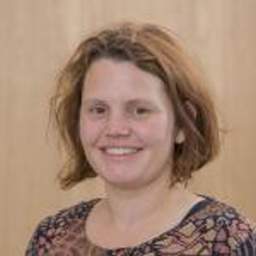
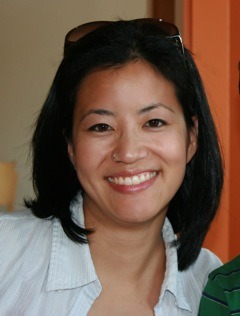
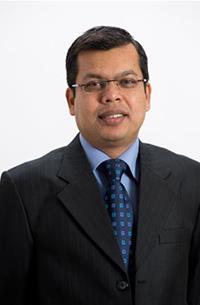
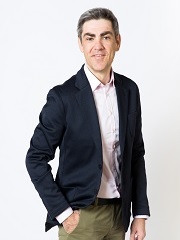
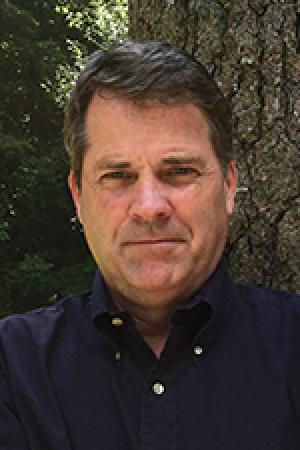
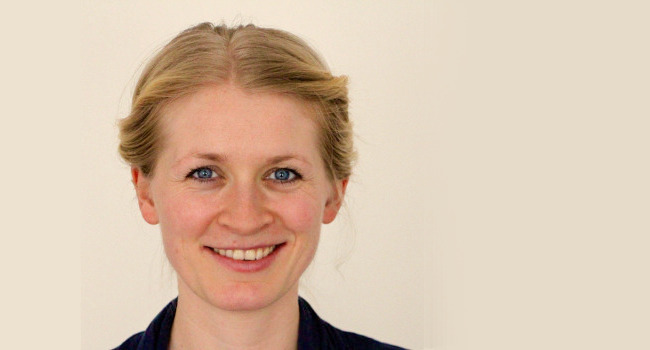
Hokeun Kim is an Assistant Professor in the School of Computing and Augmented Intelligence (SCAI) at Arizona State University (ASU), part of the Ira A. Fulton Schools of Engineering. He previously held positions at Hanyang University (2021-2023) and worked in industry roles at Google, LinkedIn, and HP Labs. His research focuses on cyber-physical systems, IoT security, and computer architecture, with a particular emphasis on safety and security aspects of time-sensitive systems. Education: Ph.D. in EECS, University of California, Berkeley (2017) M.S. in EECS, Seoul National University (2012) B.S. in Computer Science and Engineering, Seoul National University (2010) Research Interests: Kim’s work spans secure IoT frameworks, real-time embedded systems, and edge computing. He develops tools like the Secure Swarm Toolkit (SST) and Lingua Franca, addressing challenges in distributed system security, interoperability, and performance. Key Contributions: Authored over 30 peer-reviewed publications in top venues like IEEE Transactions, ACM Conferences, and DATE. Received the ACM/IEEE Best Paper Award (IoTDI 2017) and IEEE Micro Top Picks Honorable Mention (2017). Active in organizing conferences (e.g., DATE, FDL) and serves on technical committees for top journals/conferences. Teaching: Courses include Computer Architecture I/II, Real-Time Embedded Systems, and IoT design at both undergraduate and graduate levels.
Emanuele Brancati serves as Associate Professor of Economics at Sapienza University of Rome and maintains a research affiliation with the IZA Institute of Labor Economics. His academic work bridges theoretical economics with empirical analysis of real-world business dynamics. Brancati's research centers on applied microeconomics with strong emphasis on firm behavior under financial constraints and global interconnectedness. His investigations span financial economics (debt structure, credit access), international economics (global value chains, export dynamics), and innovation economics (R&D responses to crises). Notably, his work examines how production networks transmit shocks through supply chains and how political risk influences economic decision-making. The COVID-19 pandemic and Great Recession serve as critical natural experiments in his research on firm resilience. Analysis of his 15 most recent publications reveals consistent methodological rigor using firm-level datasets across multiple countries. His work demonstrates evolving focus from traditional banking-firm relationships (2017-2020) toward complex network effects in globalized economies (2021-2025), with increasing attention to digital transformation and political economy dimensions. The integration of production network theory with financial shock transmission represents a distinctive contribution to contemporary economic literature. Brancati actively contributes to policy-relevant research through working papers on labor market power in Latin America and conflict impacts on firms, reflecting his commitment to addressing pressing economic challenges in developing economies. His collaborative approach is evident in extensive co-authorship patterns across international research teams.
Lotte Asveld is an Associate Professor at Delft University of Technology, specializing in the societal aspects of biotechnological innovations. Her work focuses on responsible innovation in biotechnology and synthetic biology, addressing moral, technical, and institutional uncertainties, integrating societal values into innovation trajectories, and analyzing actor responsibilities. Her research spans the bioeconomy, social sustainability, and risk governance. Key themes in her recent publications include: Responsible innovation frameworks and ethical education Inclusive design in biobased value chains Social Life Cycle Assessment (SLCA) for justice in bioeconomy Safe-by-Design (SbD) principles and risk management Digital Sequence Information (DSI) equity and bioethics
Dr. Yurie Hong is Associate Professor of Classics and Gender, Women, and Sexuality Studies at Gustavus Adolphus College, where she also serves as a dedicated educator and mentor. She holds a Ph.D. from the University of Washington, Seattle, and a B.A. from UCLA. Her interdisciplinary work bridges classical antiquity with contemporary social issues, particularly in the areas of gender, reproduction, and civic responsibility. Ph.D., University of Washington, Seattle M.A., University of Washington, Seattle B.A., University of California, Los Angeles Her research focuses on ancient Greek representations of pregnancy, childbirth, and gender roles, exploring how these themes inform both ancient and modern identities. She is particularly interested in how ancient medical and literary texts conceptualize the maternal-fetal relationship and how motherhood was experienced by women of different social statuses in classical Athens. Her teaching reflects this interdisciplinary engagement, connecting Greek literature and historiography to modern questions of trauma, identity, and justice. Dr. Hong’s scholarly work spans ancient medicine, mythology, gender studies, and pedagogy. Her recent publications examine topics such as gender violence in antiquity, the intersection of biology and classical studies, and the relevance of ancient democracy to modern civic life. She emphasizes narrative analysis and close reading, especially in original Greek texts, to foster deep student engagement. Among her notable recognitions is her role as Chair of the 2017 Nobel Conference, highlighting her leadership in academic discourse. She is also deeply committed to social justice, leading community initiatives on inclusion and democratic values. Dr. Hong advises numerous students, supervising honors theses and capstone projects. She has collaborated across disciplines, notably with Biology, through the Möbius Initiative, to integrate classical and scientific perspectives on reproduction. Her mentorship extends beyond the classroom into community activism and civic education. She is actively involved in building interdisciplinary connections across campus and in the wider community, emphasizing that ideas must take root in individuals to effect real-world change. Her work exemplifies the transformative power of the humanities in addressing contemporary challenges.
Campbell Drake is a Senior Lecturer in Interior Architecture at the University of Technology Sydney's School of Architecture within the Faculty of Design, Architecture and Building. Registered as an architect in New South Wales and Victoria with over 15 years of professional experience, he specializes in sustainable eco-tourism development in environmentally sensitive locations. His work bridges academic research and practical application through partnerships with government and non-government agencies focused on Indigenous infrastructure and housing. Education: PhD from RMIT University (2012-2018) Masters of Research Architecture from Goldsmiths College, University of London (2009-2010) Bachelor of Architecture from RMIT University (1999-2005) Dr. Drake's research centers on the interaction between urban infrastructure and social formation within remote communities, particularly investigating socio-architectural relations in Indigenous contexts. His work explores how infrastructure can enhance wellbeing, cultural practices, and environmental sustainability. He specializes in participatory design methods that empower communities through culturally responsive approaches that integrate Indigenous knowledge systems. His research spans sustainable tourism development in Indonesia, Indigenous housing policy in Australia, cultural burning practices, and the spatial politics of tourism infrastructure, demonstrating a commitment to decolonizing design practices and creating architecture that serves community needs. His recent publications reveal a clear trajectory toward evaluating specific programs (like the Roads to Home Program and Wreck Bay housing strategy) while simultaneously developing theoretical frameworks for culturally responsive architecture. There's a consistent focus on Indigenous infrastructure, housing, and participatory design methodologies, with increasing attention to the intersection of traditional knowledge systems with contemporary design practices in remote Australian communities. His work bridges practical implementation with critical theoretical analysis of power dynamics in architectural practice. Scientific Awards: 2018 UTS Teaching and Learning Awards: Indigenous Professional Capabilities High Commendation Interior Design/Interior Architecture Educators Association Teaching Award (2018 Third place finalist) 2018 AILA Research, Policy & Communication Landscape Architecture Award International Interior Design Association 2014 Global Excellence Awards Dr. Drake supervises Masters and PhD students with a focus on Indigenous architecture and sustainable design. His funded research includes culturally responsive design principles for Aboriginal housing, evaluations of the Wreck Bay Village housing program, Roads to Home evaluations for Gulargambone & Bowraville Reserves, and solar lighting projects for Namoi and Gingie Reserves. His grants come from diverse sources including the NSW Aboriginal Land Council, National Indigenous Australians Agency, and Department of Planning Industry and Environment, reflecting the practical impact of his work. As a founding member of UTS TIISHA (The Indigenous Infrastructure and Sustainable Housing Alliance), Dr. Drake leads collaborative research projects focused on 'health enabling infrastructure' to address structural factors of Indigenous disadvantage. TIISHA works with multiple Aboriginal Land Councils and government agencies to evaluate and implement housing and infrastructure programs that respect cultural values and community needs, demonstrating his commitment to creating tangible benefits for Indigenous communities through architectural practice.
Associate Professor Catherine Evans (MLArch, UPenn; AB, Vassar) is Deputy Head of School (Learning and Teaching) at UNSW's School of Built Environment and a Senior Fellow of the Higher Education Academy. She has twice directed UNSW's Landscape Architecture Program (2004-2006, 2015-2018) and chaired the AILA National Education Committee (2018-2021). Her research examines the performance of designed landscapes, evolution of urban park planning, and frameworks for sustainable green space. She contributes to the Sustainable Cities and Landscapes Hub of the Association of Pacific Rim Universities, co-convening working groups since 2018. Prior to UNSW (2000), she worked as a consultant in Sydney and a Historical Landscape Architect for the U.S. National Park Service. Publications highlight trends in urban sustainability , green infrastructure , and public participation in planning, with specific focus on Sydney's Olympic Park, Centennial Parklands, and Bicentennial Park. Recent works address climate-resilient design and low-carbon landscape frameworks. Scientific Awards: Senior Fellow of the Higher Education Academy (2021) AILA NSW Chapter Award for Low Carbon Landscape Guide (2020) Grants: Landscape Architecture Foundation ($7,700, 2020), NSW Department of Planning ($66,600, 2020), CRC for Low Carbon Living ($10,000, 2019), and multiple UNSW research grants for international student studies, green roofs/walls, and parkland environmental history. Teaching: Courses include Introduction to Landscape Architecture, Landscape Analysis, Management, and Plants, Design and Ecology.
Dr. Fazlul Rabbanee is an Associate Professor of Marketing at Curtin University's School of Management and Marketing, within the Faculty of Business and Law. He holds a PhD in CRM from Curtin, an MBA in International Business from the University of Akron, and degrees from the University of Chittagong, Bangladesh. His research focuses on digital marketing, consumer resilience, customer engagement, and technology adoption. He has led over 15 industry projects with organizations like RAC and Pharmacy 777, and received grants totaling $900k+ in areas like climate resilience and volunteering. Dr. Rabbanee supervises HDR students across Honours, Masters, and PhD levels, with completed projects on topics like green product habits and luxury retail experiences. His teaching spans Digital Marketing Strategy, International Marketing, and Marketing Research. Awards include the 2016 School of Marketing Paper of the Year and multiple teaching excellence recognitions. He serves as Course Coordinator for Marketing postgraduate programs and has been a peer reviewer for the World Bank and journals like European Journal of Marketing (A*). Research interests include consumer digital experiences, technology adoption, and supply chain management. Notable works address envy's impact on unethical behavior, resilience in healthcare operations, and mobile commerce value frameworks. His work bridges theory and practice, emphasizing real-world applications in marketing strategy and education.
Prof. Dr. Michael Merz holds the Chair of Mathematics and Statistics in Economics at the University of Hamburg's Faculty of Business Administration. He specializes in actuarial science, risk management, and quantitative finance. His research focuses on stochastic claims reserving, solvency frameworks (Basel II/Solvency II), credibility theory, and risk-adjusted performance measurement. Education: Completed his Diplom in Mathematics (1.1 grade) at the University of Tübingen (2001) with a focus on stochastic processes and mathematical statistics. Earned his PhD (summa cum laude) in 2004 at Tübingen with a thesis on credibility models using orthogonal projections. Previously studied in Valencia, Spain (1998-1999). Research Interests: Actuarial valuation, stochastic reserving methods, risk theory, filter/control theory applications in finance, and capital allocation strategies. Key areas include Solvency II compliance, pricing models for insurance risks, and quantitative risk management frameworks. Publications: Authored/co-authored influential works like Financial Modelling, Actuarial Valuation and Solvency in Insurance (Springer, 2013) and Stochastic Claims Reserving Methods in Insurance (Wiley, 2008). Recent articles address claims uncertainty quantification, multivariate reserving models, and cost-of-capital approaches. Awards: SCOR Prize for Actuarial Science (2004), Promotionspreis der Universität Tübingen (2005), and academic distinctions in physics competitions during high school. Professional Roles: Program director for the Wirtschaftsmathematik program, speaker of the Institute for Statistics and Econometrics, and adjunct faculty at the University of Basel's Actuarial Science program. Served as actuary at Basler Versicherung (2004-2006) and held junior professorships at University of Tübingen (2006-2009).
Somayeh Moazeni is an Associate Professor at the School of Business, Stevens Institute of Technology. She holds a PhD in Computer Science from the University of Waterloo and has held academic appointments including Visiting Associate Professor at Northwestern University and Postdoctoral Research Associate at Princeton University. Her research focuses on Reinforcement Learning, Stochastic Dynamic Optimization, and applications in Energy Markets, Inventory Management, and Algorithmic Trading. She has authored over 30 peer-reviewed articles and serves as an associate editor for INFOR and PLOS One . Education: PhD (Computer Science, 2012), University of Waterloo; Postdoc (Operations Research, 2012-2014), Princeton University Industry Experience: Senior Risk Analyst at RBC (2011-2012), Risk Analyst at BMO (2010) Awards: IEEE Senior Member (2019), Anita Borg Institute GHC Faculty Scholar (2017), MITACS Poster Competition First Place (2009) Her research spans Bayesian Optimization , Resilient Network Design , and Energy Efficiency . Current funded projects include PSEG Foundation grants for energy resilience and NSF funding for distributed energy resource controls. She advises PhD students in Operations Research and Energy Systems and teaches graduate courses in Reinforcement Learning and Financial Engineering. Key Contributions: Developed stochastic optimization frameworks for energy storage, contact center reliability modeling, and risk-aware trading strategies. Her work on sequential learning for consumer-driven demand response programs has advanced smart grid applications.
Professor Peter Demerath is a scholar in Organizational Leadership, Policy, and Development at the University of Minnesota. His research focuses on equity in education through an anthropological lens, emphasizing ethnographic methods. He holds degrees from the University of Massachusetts (Ed.D.), University of Pennsylvania (M.A.), and Haverford College (B.A.). His work examines school culture, leadership, and student mindsets, with notable projects in Papua New Guinea and U.S. urban/suburban schools. Recent research includes trust-building in high-performing urban schools and emotion culture in school improvement. He advocates for decolonizing education and bridging anthropological insights with policy. Notable awards include the 2005 Ohio State Distinguished Teaching Award and the 1999 Bereday Scholarship Award. His teaching spans cultural leadership, ethnography, and education policy. Current research explores psychological capital, neoliberalism’s impact on education, and decolonizing educational practices.
Kevin A. Haas is a Professor of Civil Engineering and Associate Chair for Undergraduate Programs at the Georgia Institute of Technology's School of Civil and Environmental Engineering, part of the team developing Coastal Engineering programs in Savannah. He holds a B.S. (Ohio State University, 1994), M.S. (Ohio State University), and Ph.D. (University of Delaware, 2001) in Civil/Coastal Engineering, followed by a postdoctoral fellowship at the University of Delaware. Education: B.S. in Civil Engineering (Distinction), The Ohio State University, 1994 M.S. in Civil Engineering, The Ohio State University, 1997 Ph.D. in Coastal Engineering, University of Delaware, 2001 Research Interests: Focuses on coastal dynamics, numerical modeling of nearshore circulation, sediment transport, and hydrodynamics of rip currents. Explores wave energy extraction, tidal marsh sediment transport, and applications of video-based field observations. His work bridges environmental engineering and renewable energy, emphasizing sustainable coastal systems. Key Achievements: Recipient of the Delaware Sea Grant Award for outstanding Ph.D. research on rip currents Lead in securing a $1M educational grant for undergraduate programs at Georgia Tech Active in developing tidal and wave energy assessment methodologies Grants & Labs: Principal investigator on projects funded by federal agencies and industry partnerships Conducts fieldwork and modeling at Georgia Tech's Savannah campus and coastal sites Collaborates with USGS, NOAA, and international teams on marine energy initiatives
Dr. Katharina Graf is a Research Fellow at the Institute of Cultural Anthropology and European Ethnology, Faculty of Linguistics, Cultures and Arts, Goethe University Frankfurt. She leads the DFG-funded ethnographic research project Cyborg Cook – Domestic Cooking in the Digital Age , investigating how digital technologies transform domestic cooking practices, knowledge reproduction, and socio-political negotiations around gender, class, and race in German households. Previously, she was a Postdoctoral Research Fellow at the SOAS Food Studies Centre, University of London, where she conducted research on bread as a measure of urban stability in Morocco, funded by the AXA Research Fund. Her educational background includes a PhD in Social Anthropology from SOAS, University of London (2016), with fieldwork in Marrakech, and a Diplom in Geography from the universities of Tübingen, Bonn, and Cologne, focusing on water supply in rural Morocco. Katharina Graf’s research lies at the intersection of cultural anthropology, food studies, gender, urban life, and science and technology studies. She explores how everyday practices—especially cooking—reflect and shape broader social, political, and technological transformations. Her work emphasizes the entanglement of material culture, digitalization, and human agency, particularly in domestic spaces. She investigates how food serves as a lens for understanding political legitimacy, social change, and human-machine relations. Her recent publications and blog posts from the Cyborg Cook project reveal a strong trend toward understanding digital domesticity through ethnographic, sensory, and feminist lenses. Themes include the role of mothers as technological pioneers, the disruption of routines by smart devices, and the multisensory experience of digital cooking practices. Her earlier work on bread in Morocco highlights how food security and culinary practices are deeply tied to political stability and state-society relations. Postdoctoral Fellowship, AXA Research Fund Principal Investigator, DFG-funded 'Cyborg Cook' project Dr. Graf has supervised undergraduate and postgraduate students at SOAS and Goethe University. While no specific grants beyond DFG and AXA are named, her role as principal investigator indicates leadership in competitive research funding. She is actively involved in academic service, including as associate book reviews editor for the FoodAnthropology Blog (Society for the Anthropology of Food and Nutrition) and former co-convenor of the Anthropology of Food Network at EASA. She disseminates research through innovative public formats such as photo exhibitions, cookery classes, and comedy clubs, reflecting a commitment to engaged scholarship. She is affiliated with the Cyborg Cook research team at Goethe University, an interdisciplinary group using ethnographic methods to study digital kitchen technologies. The project emphasizes collaborative, sensory, and participatory research approaches, often involving co-creation with participants through shared meals and observational cooking sessions.
Noah Gans is the Anheuser-Busch Professor of Management Science at the Wharton School of the University of Pennsylvania, where he serves as Professor in the Operations, Information and Decisions department. His research focuses on service operations with particular emphasis on call center management, stochastic processes, and queueing system control. Department Editor, Stochastic Models and Simulation at Management Science President of Manufacturing and Service Operations Management Society (MSOM) PhD Program Coordinator for the OID Department His academic work spans diverse domains including healthcare technology pricing, container inspection security, workforce optimization, and revenue management. He has pioneered adaptive clinical trial designs and developed novel models for customer demand sensitivity in overbooking scenarios. Key research areas include: Bayesian sequential learning for multi-arm clinical trials Value-based pricing under uncertainty Stochastic control in service systems Security policy analysis for global supply chains Risk-sharing mechanisms in healthcare Scientific honors include NSF CAREER Award (1998), INFORMS George E. Nicholson Prize (1995), and multiple teaching awards from the Wharton MBA program (2004, 2010-2011, 1997-2001). His publications bridge theoretical operations research with practical implementation across healthcare, transportation, and service industries.
Dr. Wei Shao is a Senior Lecturer in the Department of Tourism and Marketing at Griffith University, affiliated with the Griffith Asia Institute and Griffith Agribusiness. She holds a PhD in Marketing from Griffith University (2007) and a Bachelor of Business from Tianjin Foreign Studies University (1997). Her research bridges traditional marketing with emerging technologies like VR retailing and AI-enabled consumer engagement, focusing on digital marketing strategies, cross-cultural communication, and tourism in the Asia-Pacific region. She has secured grants totaling over $45,000, including projects on women’s empowerment in tourism and consumer choice behavior. Education: PhD in Marketing, Griffith University, 2007 Bachelor of Business, Tianjin Foreign Studies University, 1997 Research Interests: Dr. Shao explores technology-driven marketing innovations, including VR retail environments, AI applications in customer service, and the role of memes and social media in brand-building. Her work emphasizes inclusive marketing practices, intercultural dialogue, and leveraging digital media to amplify marginalized voices. Grants & Projects: "Empowering Sulawesi Women in Tourism: Innovation and Sustainable Business" ($35,000, 2025–2026) "Fun or Function: The Impact of Affect and Cognition on Consumer Choice" ($10,514, 2008–2010) Advising: Dr. Shao supervises doctoral research on topics including NFT marketing, AI chatbots in service recovery, and authentic brand experiences on social media. She has guided over 11 PhD candidates since 2009. Labs & Groups: Member of the Griffith Asia Institute and Griffith Institute for Tourism, focusing on collaborative research initiatives strengthening industry-academia ties in the Asia-Pacific region.
Professor Justin Marshall is a Professor at Northumbria University’s School of Design, specializing in digital craft and interdisciplinary research. He holds a PhD in architectural ceramics and digital technologies, and has pioneered work in integrating digital tools into craft practices, co-founding the ‘Autonomatic’ research group. His research emphasizes a ‘Digital Craft Ethos’ to explore ethical and aesthetic dimensions of technology use in craft. Education: PhD in architectural ceramics and digital technologies (2000), BA and MA in fine art, ceramics, design, and craft. Qualifications include an Associate Fellowship of the Higher Education Academy (AFHEA). Research Interests: Craft ethics in digital making Interdisciplinary collaboration (e.g., with computer scientists, social scientists) IoT ethics and ‘healthy’ internet development (hiCraft project) Community-centered design and public engagement Grants and Projects: Principal Investigator for the AHRC-funded ‘hiCraft: Crafting a Healthier Internet’ project (2024–), exploring IoT trust and transparency via craft practices. Previously led the RCUK Digital Economy ‘Bespoke’ project (2011–2014), focusing on community innovation through bespoke devices. Exhibitions and Awards: Exhibited nationally/internationally (e.g., ‘LabCraft’ UK touring show, Design Museum Barcelona). Awards include Fellow of the RSA and AHRC Peer Review College membership (2012–2018). Labs/Teams: Leads the hiCraft project team and collaborates with diverse disciplines across Northumbria and global partners.