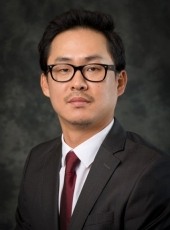
Thomas Lee is a Senior Lecturer at the School of Business, University of Wollongong, Australia. He holds a PhD in Marketing from the University of Tasmania and bachelor's degrees in Management and Marketing from Curtin University. His research focuses on brand management, strategic ambidexterity, frontline employee behavior, and luxury branding. Lee's work explores how organizational strategies and market dynamics influence consumer behavior and business performance. His research outputs span cybersecurity in retail, workplace psychology, and sustainable housing, reflecting a blend of marketing, organizational behavior, and strategic management. Lee has secured grant funding, including the AEGiS grant (2022–2023), to investigate workplace competition's impact on service behaviors. He supervises PhD students on topics like customer incivility and frontline service excellence. Teaching interests align with his research, emphasizing brand strategy, strategic ambidexterity, and frontline motivation. Lee is available to supervise Master's and PhD students in related fields.
Prof. Federica Pascucci is an Associate Professor in the Management Department at the Polytechnic University of Marche. Specializing in Business Economics and Management (ECON-07/A), her research focuses on digital transformation, innovation strategies, and entrepreneurial ecosystems. She has held office hours in the Management Department’s faculty office since 2025. Her work explores topics such as blockchain applications in civic tech, servitization trends, and SME internationalization strategies. Key areas of investigation include the role of knowledge-based capabilities in managing innovation paradoxes and the impact of digital technologies on marketing and business models. Recent studies highlight her contributions to understanding blockchain’s potential in urban governance, customer involvement in smart product development, and the behavioral drivers of Bitcoin mining activities. She has published over 50 peer-reviewed articles since 2004, with a focus on SME competitiveness, export strategies, and digital transformation challenges faced by small enterprises. No scientific awards are listed, though her extensive publication record reflects sustained academic engagement. She advises students through her teaching activities but no formal advisee list is provided.
Gunnar Stevens is a Professor and Divisional Director of IT-Security and Consumer Computing at the University of Siegen's Faculty of Information Systems and New Media. His research focuses on consumer-oriented technologies, including privacy-enhancing systems, human-robot interaction, sustainable mobility solutions, and explainable AI. Dr. Stevens' work bridges technical security with human-centered design, investigating topics such as algorithmic accountability in dating apps, digital sovereignty, privacy norm formation through gamification, and sustainable transportation behavior. Recent projects examine the digitalization of household administrative labor and renewable energy preferences for EV charging. He has led numerous projects on usable security policies, smart home intelligibility, and trust in voice assistants. His methodological approach combines design studies, living lab implementations, and empirical evaluations of technology adoption.
Mike Coldwell is a Professor of Education at Sheffield Hallam University and currently serves as Assistant Dean for Research and Innovation (R&I) on secondment. He holds a BA, MA (Econ), PGCE, and PhD. His research focuses on evaluation methodology, education policy, and teacher professional development, with over £4m in research funding and 70+ reports/presentations. He collaborates with institutions like NFER, UCL Institute of Education, and the Education Endowment Foundation (EEF). Currently leads evaluations for the Youth Endowment Fund and DfE Family Hubs, and advises government and charitable organizations on evaluation strategies. Research Interests: Education Policy, Teacher Career Development, Evaluation Methodology His work bridges theory and practice, emphasizing contextualized evaluation frameworks and systems-based approaches. Key projects include reviews of EEF projects and trials in primary English education. Collaborations span national and international partners, influencing policy through impactful evaluations. Grants & Projects: Lead SHU's Youth Endowment Fund evaluation Directed £4m+ in research studies for government and charities Co-led EEF reviews and trials (e.g., Integrating English curriculum) Advisory roles for DfE, EEF, and SHINE Trust Supervision & Academic Contributions: Supervised 20+ doctoral students focusing on education leadership, teacher development, and policy. Notable supervisees include Tasker (Values-Led Leadership), Williams (Primary PE Beliefs), and Elonga Mboyo (Comparative Leadership). Key publications span educational evaluation, teacher career pathways, and systemic research use. Recent work addresses RCT limitations and systems approaches in education policy implementation.
Hilde Nikoline Hambro Dybsand is a Researcher (Post Doctor) affiliated with the Department of Ecology and Natural Resource Management at the Norwegian University of Life Sciences (NMBU). Her work focuses on understanding tourist behavior and its environmental impacts, particularly in wildlife tourism and sustainable destination management. Her research interests span wildlife tourism experiences, sustainable practices in guided tours, and the role of tourists’ motivations in shaping satisfaction and loyalty. She has conducted case studies in Norwegian national parks like Dovrefjell-Sunndalsfjella and Hornøya, examining musk ox and birdwatching safaris. Additionally, she explored virtual tourism alternatives during the pandemic and opportunities for waterway tourism in Norway through comparative studies. While no scientific awards or grants are explicitly mentioned in the text, her articles highlight a consistent focus on balancing tourism development with ecological conservation. The provision of sustainable wildlife experiences and visitor management in sensitive ecosystems are central to her work.
Maria Rosa Giovanna Scarlata is an Associate Professor at the Department of Management, University of Bergamo, where she teaches courses in entrepreneurship, international business, and sustainable development. She serves as co-Director of StartCup, an educational program designed to transform entrepreneurial aspirations into action and guide participants through new venture creation. Her academic appointments include teaching Globalization and Sustainable Development, Applied Internationalization, New Business Venturing, Principles of Management and Social Analysis, and Start-Up and Ecosystems for Innovation. Dr. Scarlata earned her PhD in Management Sciences from ESADE Business School in Barcelona, Spain, along with a Diploma of Advanced Studies (DEA) from the same institution. She also holds an MSc in Finance from Bocconi University. Her educational background provides a strong foundation for her interdisciplinary research that bridges business theory with practical entrepreneurial applications. Her research primarily focuses on understanding resource acquisition mechanisms for new ventures and how diverse actors collaborate to foster entrepreneurial ecosystems. She has developed significant expertise in social ventures, impact investing, and social venture capital, particularly examining how organizations with multiple objectives secure resources. A substantial portion of her work investigates the role of global certifications like B Corp in shaping hybrid ventures and their performance outcomes. More recently, she has explored how universities can function as catalysts for new firm development, examining the emergence and evolution of university-based accelerators and entrepreneurial support systems. Analysis of her recent publications (2021-2025) reveals a clear trajectory toward examining the intersection of traditional business models with social impact frameworks. Her work increasingly focuses on the identity challenges faced by hybrid organizations, the certification processes for socially responsible businesses, and gender dynamics in impact investing. The publications demonstrate a methodological diversity spanning qualitative case studies, quantitative analyses of venture performance, and theoretical frameworks for understanding organizational identity in socially oriented enterprises. Dale Mayer Award for the most impactful research on social entrepreneurship As an active academic leader, Dr. Scarlata serves on the Board of the Babson College Entrepreneurship Research Conference (BCERC) and provides consulting services to organizations developing social business models to generate economic and social impact. She is an editorial board member for the Journal of Business Ethics, Journal of Business Venturing, and Journal of Social Entrepreneurship, and serves as an ad-hoc reviewer for prestigious journals including Journal of Management, Technovation, and Technological Forecasting & Social Change. Her research has appeared in top-tier journals such as Journal of Business Ethics, Information Systems Journal, Technovation, and International Small Business Journal. Dr. Scarlata is actively engaged in the entrepreneurial ecosystem through StartCup, which functions as both an educational program and practical support system for new ventures. Her work bridges academic research with practical entrepreneurship support, creating a feedback loop between theoretical understanding and real-world application in venture creation and development.
Justin B Craig is a Research Professor at Bond Business School , Bond University, with a focus on family enterprises . His work explores the strategy, management, and performance of multi-generational entrepreneurial families. Ph.D. in Behavioral Science from Bond University Masters in Counseling from Bond University Bachelor of Psychology (Honors) from Griffith University Research interests emphasize Family Business , Stewardship , and Entrepreneurship , with a particular interest in behavioral dynamics and organizational trust. Recent publications highlight evolutionary theories of family businesses, innovation in family firms, and servant leadership's impact on wellbeing. His network includes collaborations across institutions, with a h-index of 29 and over 3616 citations. He is actively involved in supervising research and mentoring students in family enterprise studies.
Peggy McDermott is a Senior Lecturer at the Lally School of Management at Rensselaer Polytechnic Institute. She serves as Coordinator for the Accelerated Master's Engineering/Science + MBA Program, bridging technical and business disciplines. With a Ph.D. in Management and a BS in Electrical Engineering, her career combines academic expertise with industry experience from Fairchild Space Company and Alcatel Network Systems. Ph.D. in Management, University at Albany BS in Electrical Engineering, Duke University Her research focuses on strategic management and organizational performance, particularly examining: Strategic use of Advanced Practice Providers in medical groups Operations management in entrepreneurship Impact of organizational competencies on business performance Value chain activities and competitive advantage Recent publications highlight trends in healthcare strategy, entrepreneurial operations, and innovation management. Her work spans empirical studies on firm capabilities, experimental approaches to blended learning in management education, and strategic implications of provider workforce composition. Notable affiliations and roles include: Lally School of Management (Senior Lecturer & Program Coordinator) Industry experience in technical marketing and product development Researcher in business strategy and healthcare operations
Dr. Kostas Retsikas is a Reader in Social Anthropology at SOAS University of London's Department of Anthropology and Sociology. With a BA from Athens, MA from Kent, and PhD from Edinburgh, he has taught at SOAS since 2004. His research explores personhood in Java, Islamic economics in Indonesia, and the films of Theo Angelopoulos through post-structuralist theoretical frameworks. Retsikas' fieldwork includes ethnographic studies in Probolinggo (East Java) on personhood and becoming, resulting in his monograph 'Becoming – An Anthropological Approach to Understandings of the Person in Java'. His Surabaya/Jakarta research on Islamic economics examines zakat and micro-finance as temporal synthesis in divine worship. Recent cinematic research analyzes Angelopoulos' 'other Greece' concept through the communicative artifice of cinematic images. He currently supervises doctoral candidate Flora Hastings on urban ecology in Barcelona.
Evy Sakellariou serves as Associate Professor of Creativity and Innovation and Gen AI Innovation Lead at the Foresight & Creativity Hub within Kingston Business School, Kingston University. She concurrently holds the position of PG Course Director for the MSc Innovation Management and Entrepreneurship program and founded the 'Women4AInnovation Futures' think tank to advance female leadership in Gen AI-driven innovation. Her academic credentials include: Doctorate in Business Administration, University of Surrey UK (Unilever funded studentship) MBA, School of Business, Loyola University of Chicago USA (Honors Degree, Module student scholarship) BBA, School of Business Administration, University of Piraeus Greece (Class Valedictorian) Senior Fellow Higher Education Academy (2021) Fellow Higher Education Academy (2018) RISE Research Leadership Academy KU Graduate (2023) Fellow Institute of Innovation and Knowledge Exchange (2022) Certified Management and Business Educator (2022) Fellow Chartered Institute of Marketing Her research investigates the confluence of creativity, innovation, and strategic foresight through emerging technologies, with particular emphasis on human-led Generative AI applications. She explores underground (hidden) creativity within organizational paradoxes, storytelling for future-oriented sensemaking in new product development, and the role of playfulness in AI-augmented innovation. Her recent work focuses on how women leaders can harness Gen AI while navigating resistance and building organizational resilience. Analysis of her publication trajectory reveals a significant pivot toward Gen AI integration since 2023, establishing frameworks for human-centered AI implementation in innovation management and education. Her work consistently bridges qualitative methodologies with practical applications, emphasizing sensemaking under uncertainty and the translation of user insights into foresights. The research demonstrates growing industry relevance through collaborations with major organizations and thought leadership in female leadership contexts. Her scientific recognition includes: Fellowship of the Chartered Institute of Marketing UK Fellowship of the Institute of Innovation and Knowledge Exchange Achievement of the Year 2024: Ranked Top 5 in Student Evaluations Across All Kingston University Modules Impact Award Nomination 2020: Kingston University London Runner-up Lecturer of the Year 2019: Kingston Business School Best Paper Track Award 2016: Innovation and Product Management Development Conference Senior Fellow Higher Education Academy (2021) As an academic advisor, she supervises doctoral research on underground creativity, storytelling for innovation, and AI-tacit knowledge integration, while leading curriculum development for entrepreneurship programs. Her grant portfolio includes the Gen-AI Innovation Kickstarter Award for 'The Trusted Innovation Gen AI Mentor' and REF21/REF27 panel membership. Industry knowledge exchange occurs through the 'Women4AInnovation Futures' think tank, which partners with Unilever, Salesforce, British Telecom, and KPMG. She directs the Foresight & Creativity Research Hub and founded the 'Women4AInnovation Futures' initiative, which convenes senior female leaders from FTSE 100 companies to co-create Gen AI implementation strategies. The think tank produces bi-monthly thought leadership publications and hosts workshops at venues like London City Hall, focusing on transforming uncertainty into innovation opportunities through collective sensemaking.
Sarah Barriage is an Associate Professor in the School of Information Science at the University of Kentucky's College of Communication and Information (CI). She holds a Ph.D. from Rutgers State University (2018) and specializes in youth information behavior, library science, and LGBTQ+ studies. Her work bridges child psychology and information practices, with notable contributions to understanding drag queen storytimes in public libraries and youth substance use prevention. Research interests include how children and youth engage with information in educational and social contexts, ethical implications of technology use, and inclusive library programming. She has been awarded the ALISE/ProQuest Methodology Paper Competition (2017) and has received grants from the Office of the Vice President for Research (2020-2021) and the American Library Association (2019-2021). Her recent articles explore topics such as bibliographic invisibility in LGBTQ+ materials, privacy concerns in educational technologies, and decision-making processes for controversial library programs. She collaborates with institutions like the Lucille Little Library and emphasizes interdisciplinary approaches to information science.
David G. Renter is a Professor of Epidemiology at Kansas State University's College of Veterinary Medicine , where he serves as Director of the Center for Outcomes Research and Epidemiology and holds the Dr. Robert MacDonald Professorship in Veterinary Medicine . With a BS in Biological Sciences (1994, University of Nebraska at Kearney) , DVM (1998) , and PhD in Veterinary Microbiology (2002) from Kansas State University, his career focuses on applying epidemiological principles to enhance animal health, food safety, and human health intersections. Academic background in biological sciences, veterinary medicine, and microbiology Leadership role in veterinary outcomes research Teaching focus on epidemiology and evidence-based practice Industry-aligned research with beef production systems His research emphasizes experimental/observational epidemiology in feedlot cattle, addressing complex issues like bovine respiratory disease , antimicrobial stewardship , economic modeling , and food safety . A Fellow of the Conference of Researchers in Animal Disease , he has published extensively on feedlot management , statistical disease modeling , and veterinary decision analytics . Recent publications (2022-2025) demonstrate a pattern of economic risk modeling in cattle operations, antibiotic metaphylaxis outcomes , weather-disease correlations , and structural equation modeling for feedlot data. His work bridges statistical rigor with practical agricultural applications . 2025: Economic modeling of feedlot interventions 2024: Causal inference frameworks in veterinary research 2023: Anthelmintic refugia strategy validation 2022: Vaccine efficacy testing in neonatal calves As a continuing education developer and graduate training architect , he mentors DVM, MPH, MS, and PhD students while directing population health initiatives. The Center for Outcomes Research under his leadership implements data-driven strategies for livestock sustainability and economic viability in animal health systems.
Kalipso Karantinou serves as Associate Professor of Marketing at Athens University of Economics and Business (AUEB), holding appointments in the Department of Marketing and Communication within the School of Business. She maintains active teaching responsibilities across undergraduate, postgraduate, and doctoral programs while leading significant research initiatives including an EU-funded project on Managing Digital Transformation. Her academic credentials include: BSc in Communication and Mass Media (valedictorian), National and Kapodistrian University of Athens Masters in Marketing, University of Manchester Postgraduate Certificate of Academic Practice, University of Manchester PhD in Marketing, University of Manchester Dr. Karantinou's research investigates consumer behavior through multiple lenses including services marketing, tourism, and digital transformation. She examines how servicescapes (physical and virtual environments), economic austerity, and neuromarketing techniques shape customer experiences. Her work bridges marketing theory with psychological and socioeconomic perspectives, particularly regarding consumer resilience during crises and the impact of digital innovation on service delivery. Analysis of her 15 most recent publications (2018-2025) reveals three dominant trajectories: (1) austerity-driven consumer adaptation and resilience strategies across European markets, (2) servicescape dynamics in tourism/hospitality contexts using complexity theory, and (3) innovative methodological applications including EEG neuroscience and video-ethnography. Her 2025 complexity theory paper extends foundational servicescape research into nonlinear consumer response modeling. She has received multiple teaching excellence awards and research recognition, including service as Greece's representative to the European Marketing Academy Executive Committee (2013-2019). Her current EU-funded project on digital transformation exemplifies her leadership in connecting academic research with industry applications. Dr. Karantinou actively supervises students at all academic levels while directing a robust research team focused on digital transformation and consumer behavior. Her professional engagement extends to executive training programs for business leaders, translating academic insights into practical business solutions through collaborations with industry partners.
Soonkwan Hong is an Associate Professor of Marketing at the College of Business, Michigan Technological University , and serves as the IPEC Associate Director. He holds a PhD in Marketing from the University of Texas-Pan American. Dr. Hong specializes in sociocultural and ideological aspects of consumption, emphasizing consumer identity, sustainable lifestyles, and algorithmic consumer culture. His research bridges postcolonialism, globalization, and alternative food systems, exploring how technology reshapes consumption practices. He teaches courses on consumer behavior, global marketing, branding, and marketing ethics. Dr. Hong’s work appears in journals like Journal of Marketing Management and Marketing Theory , and he actively contributes to academic communities such as the Consumer Culture Theory Consortium. His teaching philosophy centers on 'edutainment,' leveraging innovative technologies to engage learners. Key research themes include the polysemic nature of consumer-market dynamics, consumers as self-emancipating agents, and the role of technology in transforming food systems. His recent publications address prosumption, degrowth transitions, and algorithmic culture. Dr. Hong’s interdisciplinary approach integrates cultural studies, technology, and sustainability to advance marketing scholarship.
Reinhard Jung is a Full Professor of Business Engineering at the University of St. Gallen , where he also serves as Director of the IWI-HSG institute. Since 2021, he has held the role of Dean of the School of Management . Prior to this, he was a Full Professor at the University of Duisburg-Essen (2007-2009) and an Assistant Professor at the University of Bern (2002-2007). His research focuses on Digital Transformation , Blockchain Technology , Business Ecosystems , and Wearable Technology . Key areas include analyzing how technology impacts organizational processes, value creation in ecosystems, and behavioral change mechanisms driven by digital tools. His work bridges theoretical frameworks with practical applications in industries like healthcare, finance, and logistics. He advises students such as Tobias Mirsch and has contributed to over 100 publications since 2008, addressing topics ranging from social CRM to agile IT governance . His research emphasizes the intersection of technology, business strategy, and human behavior. Jung’s leadership roles include shaping the IWI-HSG as a hub for innovation in business engineering and driving strategic initiatives as Dean, focusing on interdisciplinary education and digital transformation strategies.