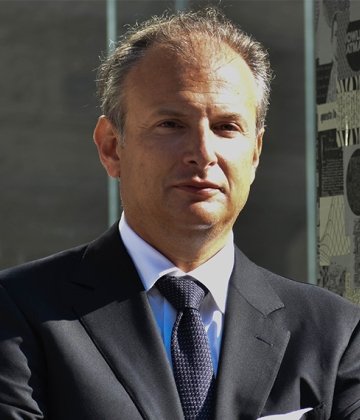
Dr. Ali Shafiq is a Lecturer in Marketing and Advertising at CBL School of Management. He holds a PhD from the International Islamic University of Malaysia, with expertise in Islamic marketing ethics and consumer behavior. His research examines advertising compliance, Muslim consumer dynamics, and cross-cultural marketing challenges. His research spans Islamic advertising principles, consumer satisfaction in e-learning, women's entrepreneurship in Muslim contexts, and ethical frameworks for targeted marketing. Recent publications analyze regulatory aspects of Islamic advertising, audience targeting ethics, educational technology adoption in China, and entrepreneurial success models for women. The research combines empirical analysis with theoretical frameworks from Islamic business ethics. He has held prior academic positions at Taylor's University and industry roles. No advising relationships, awards, or lab affiliations are documented.
Virpi Jylhä is a Postdoctoral Researcher at the University of Eastern Finland's Department of Health and Social Management, Faculty of Social Sciences and Business Studies. She serves as Senior Lecturer in the Health and Human Services Informatics Master’s Degree Program, Postdoctoral Researcher in the PROSHADE research project focused on "Process and Practice of Shared Decision Making," and Trainer in the JBI Comprehensive Systematic Review Training Program. Health and Human Services Informatics Research Group House of Effectiveness (2001–present) PROSHADE project (2020–2026) Her research focuses on shared decision-making in healthcare, patient safety, health informatics, information management, digitalization, and evidence-based practice. She investigates patient-generated data, privacy concerns in digital health services, and technology acceptance among healthcare professionals. Her work spans Finland's national patient portal analysis, chronic disease management, and systematic review methodology. Key publications include: 2025 studies on health technology readiness (Sustainable Futures), conditional adherence (Patient Education and Counseling), and ICT acceptance in healthcare (International Journal of Medical Informatics). 2024 work includes validation of the Finnish SDM-Q-9 questionnaire (Scandinavian Journal of Public Health) and privacy concerns in national patient portals (IJMI). Earlier studies (2011–2017) examine adverse drug events, information culture's impact on patient safety, and digital healthcare documentation challenges. She collaborates with multidisciplinary teams across nursing, medicine, and public health, contributing to digital health policy and practice through projects like PROSHADE and publications in journals such as BMC Medical Informatics, International Journal of Medical Informatics, and Studies in Health Technology Informatics. Her methodological expertise includes systematic reviews, confirmatory factor analysis, and psychometric validation.
Paul Jones is a Professor of Architecture at Northumbria University's School of Design, leading research in wellbeing, sustainability, and placemaking. As Director of the 'Homes for the Future' Innovation Centre with MOBIE, he focuses on enhancing housing quality and value. His work includes award-winning architectural projects like environmental housing schemes and the Bradley Lowery Foundation's respite home. Paul contributes to national research assessments (REF 2021) and has exhibited designs globally at venues such as the Lincoln Centre and Palazzo Isimbardi. Education: EdD in Architecture (2015) BArch (1997) BA (Hons) Architecture (1990) His research explores architectural education, off-site construction innovation, and sustainable design practices. Key themes include modular construction supply chains, disaster relief housing, and aging-in-place solutions. Paul's National Teaching Fellowship (2011) and Principal Fellow HEA status reflect his pedagogical impact. Awards & Roles: National Teaching Fellow (2011) RIBA Education Committee Member Chair of RIBA Visiting Boards Member of SCHOSA (Standing Council of Heads of Schools of Architecture) He supervises PhD students addressing urgent issues like youth housing crises and design detailing processes. Paul's work bridges academic research with real-world applications through exhibitions, competitions, and industry partnerships.
Dr. Sun Da-Wen is a Full Professor at University College Dublin (since 2006), with a career spanning over three decades in food engineering and refrigeration science. He has held academic roles from Lecturer (1995) to Full Professor, and has been affiliated with UCD since 1995. His research focuses on food safety, advanced imaging technologies (e.g., terahertz imaging), refrigeration systems, and bioprocess optimization. He leads global initiatives in agricultural and biosystems engineering, including founding the International Academy of Agricultural and Biosystems Engineering. Education & Career: 1988-1989: Lecturer at South China University of Technology 1989-1990: Postdoctoral Researcher at University of Stuttgart (Germany) 1990-1991: Research Fellow at Queen’s University Belfast 1991-1994: Research Fellow at University of Newcastle upon Tyne Research Interests: Dr. Sun’s work addresses cutting-edge challenges in food engineering, including non-destructive quality assessment (e.g., pest detection via terahertz imaging), novel drying and freezing technologies, and sustainable food preservation. He pioneers innovations like green cryoprotective agents and smart packaging materials for temperature regulation. Awards & Recognition: Highly Cited Researcher (Clarivate Analytics, 2015–2023) Member of Academia Europaea (2011) Foreign Member of Polish Academy of Sciences (2017) IAEF Lifetime Achievement Award (2015) Labs & Collaborations: His research integrates interdisciplinary approaches, leveraging advanced spectroscopy, machine learning, and nanotechnology. Key projects include developing SERS-based sensors for pesticide detection and optimizing non-thermal processing techniques for food safety and quality.
Guo Yike is the Provost of The Hong Kong University of Science and Technology (HKUST) and concurrently a Chair Professor in the Department of Computer Science and Engineering. He holds a PhD in Computational Logic from Imperial College London (1994) and a first-class honours degree in Computing Science from Tsinghua University (1985). His academic leadership roles include Director of the Data Science Institute at Imperial College London (2014–2020), Honorary Dean of Shanghai University's School of Computer Science (since 2020), and Vice President (Research and Development) at Hong Kong Baptist University (2020–2022). Research interests focus on machine learning, data mining, and large-scale applications in healthcare, finance, and environmental science. He pioneered informatics systems for biology, geophysics, and social media, emphasizing ethical AI and multimodal reasoning. Notable awards include Royal Academy of Engineering Fellowship (2018), ACM SIGMM Best Open Source Software Award (2017), and recognition as one of China's Top 10 Data Scientists (2016). Industry collaborations include leading startups like InforSense and TranSMART, working with GSK, Huawei, and BBC. Editorial roles include editor-in-chief of Annual Reviews of Data Sciences and deputy editor-in-chief of Machine Intelligence Research . His work bridges academia and industry, driving innovation in AI ethics, cloud computing, and interdisciplinary science.
Dr. Daria Jadreškić is a researcher at the Institut für Gesellschaft, Wissen und Politik (Alpen-Adria-Universität Klagenfurt). She specializes in philosophy of science, ethics, and science and technology studies, with a focus on credibility in scientific practices and values in knowledge production. Research Themes include: Philosophy of science in practice Epistemic values and social objectivity Biomedical innovation and clinical trials Temporal ethics in scientific research Sociocultural analysis of scientific communities Projects highlight her role in the Epistemology of the Large Hadron Collider unit, analyzing detector upgrade review processes through qualitative interviews. Education : PhD in Philosophy (2020), Leibniz Universität Hannover Online Profiles : ResearchGate PhilPeople Academia.edu
Nick Stamatiadis is a Professor in the Department of Civil Engineering at the University of Kentucky's Stanley and Karen Pigman College of Engineering, where he has held continuous faculty appointments since 1990. His career progression includes Assistant Professor (1990-1996), Associate Professor (1996-2002), and full Professor (2002-present). His research focuses on transportation safety and multimodal infrastructure, with core expertise in traffic safety analysis, highway geometric design, human factors, public transportation, and congestion mitigation. Key research areas include Complete Streets implementation, e-scooter and bicycle infrastructure safety, and context-sensitive roadway design. His work bridges engineering practice with policy development, particularly through collaborations with the Kentucky Transportation Cabinet (KYTC). Analysis of his 15 most recent publications (2023-2025) reveals strong emphasis on multimodal safety evaluation, context-sensitive design methodologies, and emerging micromobility systems. His research consistently integrates data analytics with practical transportation solutions, focusing on quantifiable benefits of infrastructure improvements and safety countermeasures. Recent work demonstrates growing interest in spatiotemporal demand patterns for shared mobility and advanced scoring approaches for project prioritization. Stamatiadis maintains active engagement with transportation practice through community outreach initiatives within the College of Engineering, though no specific scientific awards are documented in the source materials. His educational background includes a Ph.D. (1990) and M.Sc. (1985) in Transportation Engineering from Michigan State University, and a B.Sc. in Surveying Engineering from Aristotle University of Thessaloniki (1983). This foundation supports his comprehensive approach to transportation systems analysis and safety evaluation.
Alessandro Bozzon is a Researcher at Delft University of Technology, The Netherlands , specializing in Human-Computer Interaction , Crowdsourcing , and Artificial Intelligence . His work bridges technical systems with human-centric design, focusing on conversational interfaces, data integration, and ethical algorithmic frameworks. Key research areas include urban data analysis, AI explainability, and collaborative policy-making Collaborates extensively with multidisciplinary teams in computer vision, semantic web, and mental health diagnostics Recent publications analyze: Episodic framing in news media (2024) Greenspace accessibility for children (2023) Multi-stakeholder algorithmic assessments (2022) Conversational crowdsourcing systems (2019) His work emphasizes human-in-the-loop approaches across machine learning, urban planning, and media bias detection, with applications in smart homes, policy sandboxes, and public health diagnostics.
Sheila A. McIlraith is a Professor in the Department of Computer Science at the University of Toronto, where she leads research at the intersection of artificial intelligence, knowledge representation, and formal methods. With an extensive publication record spanning over three decades, she has made significant contributions to planning, reinforcement learning, and epistemic reasoning in AI systems. Her research interests focus on developing formal frameworks for AI planning and decision-making, with particular emphasis on interpretable AI, reward specification in reinforcement learning, and multi-agent systems. She has pioneered work in reward machines for reinforcement learning, epistemic planning, and the application of formal methods to ensure safety and fairness in AI systems. Her recent work bridges symbolic AI with deep learning approaches to create more transparent and controllable intelligent agents. Analysis of her recent publications reveals a strong trend toward integrating formal specification languages with machine learning, particularly in reinforcement learning where she develops methods for specifying complex tasks using linear temporal logic and related formalisms. Her work increasingly addresses ethical considerations in AI, including fairness in sequential decision making and the impact of ethics education in computer science curricula. McIlraith has mentored numerous PhD students who have become prominent researchers in AI, including Rodrigo Toro Icarte, Toryn Q. Klassen, and Andrew C. Li. Her collaborative network spans major AI research institutions worldwide, with frequent collaborations with researchers at institutions including the Vector Institute and international universities. Her research group explores the theoretical foundations of AI planning while developing practical applications in areas including robotic assistance, ethics-aware AI, and interpretable decision systems. Current projects focus on language-guided reinforcement learning, multi-agent verification, and the development of tools for responsible AI development and deployment.
Christine Rottenbacher is a Researcher at the Center for Environmental Sensitivity, University for Continuing Education Krems, Austria, specializing in environmental sensitivity, ecosystem services, and climate change adaptation. Her work integrates transdisciplinary approaches to address urban resilience and sustainable development challenges. Education: Diplom-Ingenieur (Dipl.-Ing.) in Engineering Doctorate (Dr.) Dr. Rottenbacher's research centers on practical applications of ecosystem services for risk management and climate adaptation. Key focus areas include urban green infrastructure, sustainable mobility solutions through tactical urbanism, biodiversity conservation, and stakeholder-driven environmental planning. She emphasizes leveraging natural cooling processes to mitigate urban heat islands and drought impacts while promoting social equity in green space access. Her recent publications (2022-2024) reveal a strong trajectory in regional environmental management, particularly through projects like ÖKOleita and SeMoNa Reloaded. These works demonstrate methodological innovations in transdisciplinary communication, remote sensing for habitat monitoring, and integrated risk prevention frameworks that bridge scientific research with policy implementation. Scientific Awards: No scientific awards documented in source material Dr. Rottenbacher has secured significant funding from the European Union, Austrian Research Promotion Agency (FFG), and regional governments. She leads projects including SeMoNa Reloaded (2022-2025) on sustainable mobility, Greenergy (2023-2024) on climate regulation, and ÖKOleita (2021-2023) on ecosystem services assessment. Her grant portfolio demonstrates expertise in translating research into actionable urban interventions for climate-resilient communities. As a core member of the Center for Environmental Sensitivity, she collaborates with interdisciplinary teams across Austria and Europe, contributing to initiatives like the Global Transdisciplinarity Conference and regional biodiversity forums. Her work actively bridges academic research with municipal planning practices through urban living labs and stakeholder workshops.
Dr. Saniyat Islam is a Senior Lecturer in Fashion Enterprise and Sustainable Innovation at RMIT University's School of Fashion and Textiles. His research focuses on textile materials science, polymer science, circular economy models, and blockchain innovation in fashion systems. He leads interdisciplinary projects in medical textiles, automotive textiles, and sustainable supply-chain traceability. Teaching emphasizes transformative student experiences through the Master of Fashion Entrepreneurship (MoFE), ranked among the world's top programs. His pedagogical approach integrates industry partnerships, digital technology, and real-world scenarios to develop cross-cultural communication skills and enterprise capabilities. Industry collaborations include Metro Trains Melbourne safety garment studies and AgriFutures Australia-funded hemp-based wound dressing research. He serves on Standards Australia's CS-004 Textile Labelling Committee and contributes to professional bodies like The Textile Institute. Awards include RMIT's 2012 Higher Degree by Research Publication Excellence Award for bioactive wound dressing innovations. Research outputs span 30+ peer-reviewed articles, with recent work addressing AI-driven sustainability, blockchain traceability, and circular economy practices in fashion.
Prof. Dr. Nikolina Kenig is a Full Professor at the Institute of Psychology, Faculty of Philosophy, Ss. Cyril and Methodius University (UKIM) since 2016. She holds a Master's in International Peace Studies (University of Notre Dame, 1994) and a PhD in Social Psychology (2006). Her research focuses on gender studies, gender-based violence, multiculturalism, and ethnic identity. She leads courses in psychological testing, qualitative methods, and gender studies across undergraduate, graduate, and doctoral programs. Key roles include Head of Doctoral Studies (2013-2018), President of the Ethics Board of the Chamber of Psychologists (since 2015), and active involvement in the CICE academic network and Center for Human Rights. Education: PhD in Psychology (2006), Ss. Cyril and Methodius University MSc in Social Psychology (2000), same university MSc in International Peace Studies (1994), University of Notre Dame Research Interests: Gender disparities, violence prevention, multicultural education, and the psychological impact of societal policies. Her work addresses LGBTQ+ rights, ethnic conflict resolution, and pandemic mental health. She has authored textbooks on qualitative research and violence studies. Awards: Manning Award for Best Student in Social Sciences Scholarships supporting studies at ESADE (Spain) and Arizona State University Her recent articles analyze populism's societal impacts, LGBTQ+ attitudes, and pandemic mental health trends. She advocates for inclusive education policies and ethical research practices.
Lucy Bolton is an Assistant Professor at Heriot-Watt University's School of Social Sciences, serving as Global Director of Studies for PG Business Psychology Programmes and Programme Director for MSc Business Psychology and MSc Business Psychology with Coaching (Dubai). Her research focuses on organizational change, generational differences in the workplace, work values, coaching psychology, and socio-technical systems. Global Director of Studies - PG Business Psychology Programmes Programme Director - MSc Business Psychology (Dubai) Research interests include examining how digital transformation impacts business psychology, analyzing leadership dynamics across cultures, understanding work values in modern contexts, and developing coaching frameworks for intercultural settings. Her work often intersects with organizational behavior and socio-technical systems design. Recent publications explore the UAE workforce's attitudes toward disability, cross-cultural leadership, and the psychological implications of robotics/AI implementation. These works demonstrate her focus on bridging psychological research with practical business applications. Her research activity spans from 2013 to 2023, with a notable emphasis on workplace dynamics, coaching methodologies, and socio-technical systems. Current collaborations include international research efforts in business psychology and intercultural coaching.
Prof. Dr. Aneta Barakoska is a Full Professor at the Institute of Pedagogy, Faculty of Philosophy, Ss. Cyril and Methodius University in Skopje. She earned her PhD in 2002 with a dissertation on students' free time as a pedagogical problem. Her academic roles include serving as Head of the Institute of Pedagogy (2009–2017) and President of the University Senate (2020–2021). She has authored over 50 publications across pedagogy, education policy, and leadership. Her research focuses on general pedagogy, educational policies, and values-based education. Education: PhD (2002), MSc (1994), BSc (1987) all from the Institute of Pedagogy, Faculty of Philosophy, Skopje. Professional Roles: Editorial Board Member of International Journal of Cognitive Research in Science, Engineering and Education ; active in Balkan and international pedagogical associations. Research interests include leisure pedagogy, educational management, and multiculturalism. She has led projects on teacher training, school climate, and educational leadership. Her recent work emphasizes value orientations in education and modern pedagogical methodologies. Publications span 20+ years, with themes clustering around educational policy, leadership, and ethical dimensions of teaching. She has advised numerous students on thesis projects and served as a mentor in national and international educational initiatives.
Emanuele Borgonovo is a Full Professor and Director of the Department of Decision Sciences at Bocconi University. He holds a PhD from MIT and an MSc in Nuclear Engineering from Politecnico di Milano. As a Research Affiliate at MIT's Department of Nuclear Science and Engineering, he contributes to interdisciplinary research. His roles include Co-editor-in-Chief of the European Journal of Operational Research and former President of the Decision Analysis Society of INFORMS. His research focuses on sensitivity analysis methodologies, including the development of Differential Importance Measures adopted by NASA. Applications span risk assessment (e.g., space systems, climate models), machine learning, and optimal transport theory. Key contributions include methods for feature importance, interaction quantification, and probabilistic sensitivity measures. Education: PhD, Massachusetts Institute of Technology, 2001 MSc in Nuclear Engineering (Mathematics/Physics focus), Politecnico di Milano Recipient of the 2020 Bocconi Teaching Innovation Award, Borgonovo teaches courses in quantitative methods, analytics, and computer experiments across undergraduate, graduate, and PhD programs. He pioneered the Bachelor in Economics, Management, and Computer Science at Bocconi. His work bridges theoretical advancements with practical applications in sustainability, business analytics, and policy, leveraging collaborations with institutions like NASA and the Silvio Tronchetti Provera Foundation.