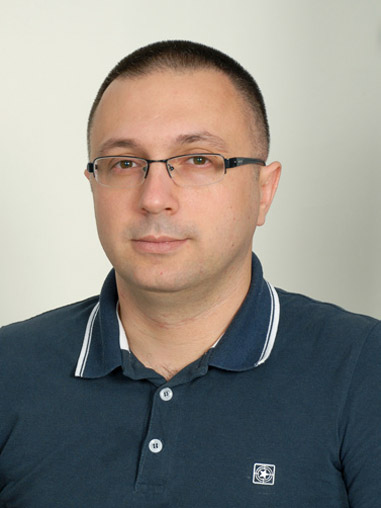
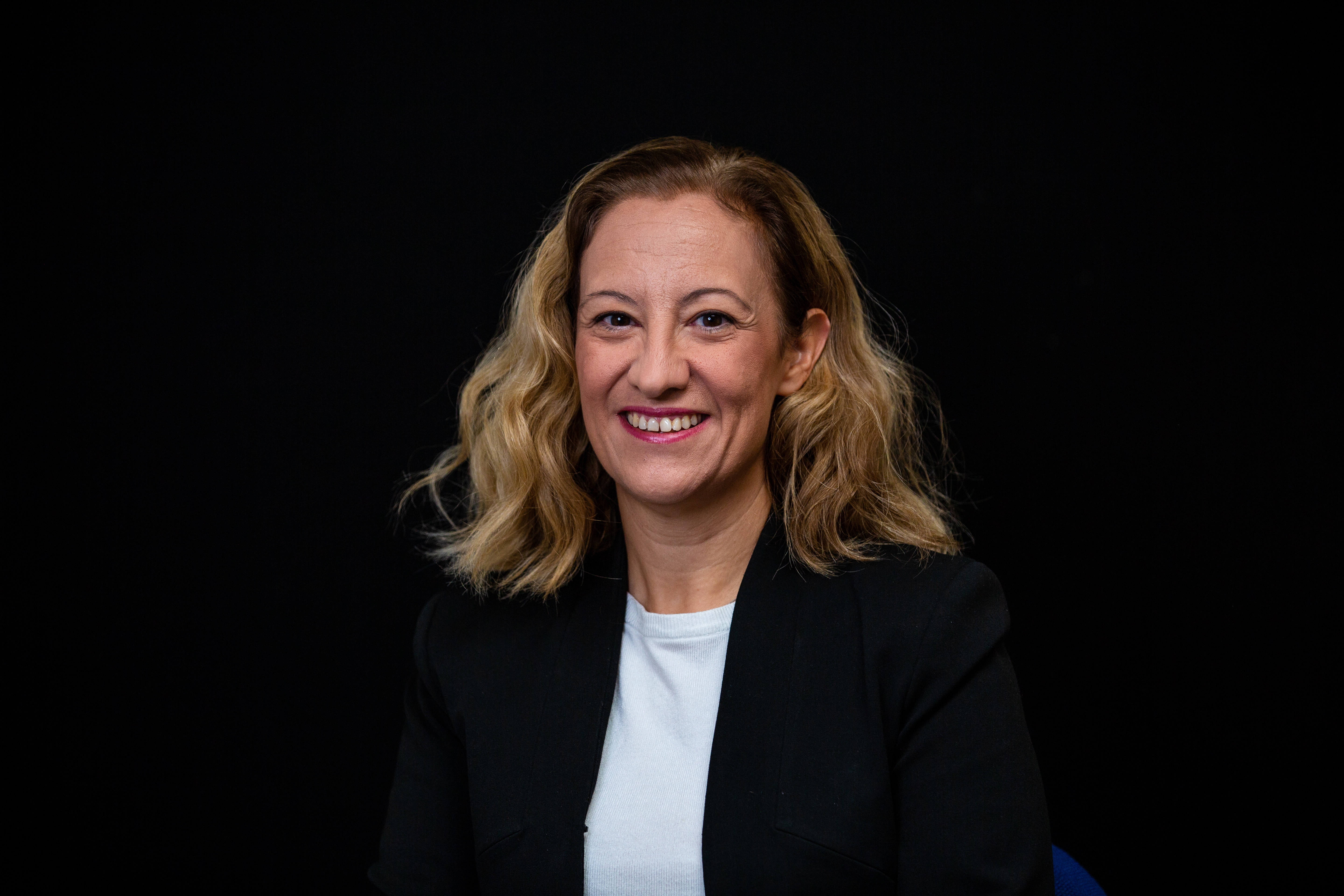
Akshay R. Rao is a Professor and General Mills Chair in Marketing at the University of Minnesota's Carlson School of Management . He holds a PhD in Marketing from Virginia Tech and has served as founding Director of the Institute for Research in Marketing (2005-2010) and Chairman of the Marketing & Logistics Management Department (2003-2006). Rao has also held visiting positions at MIT and Hong Kong University of Science & Technology. Bachelor of Arts in Economics (Honors), Madras University (1978) Master of Business Administration in Marketing, XLRI - Xavier School of Management (1980) Doctor of Philosophy in Marketing, Virginia Polytechnic Institute and State University (1986) Rao's research spans consumer behavior, pricing strategy, brand management , and political marketplace segmentation , with recent work examining vaccine hesitancy , political ideology effects on consumer behavior , and fake news dynamics . His work appears in top journals including Journal of Consumer Research , Journal of Marketing , and Harvard Business Review , covering topics from neuromarketing to information economics . Scientific recognition includes: Robert Ferber Award (1987) Harold Maynard Award (2000) Distinguished Alumnus, XLRI (2011) He has testified before the Federal Trade Commission and served on editorial boards of Journal of Consumer Research and Journal of Marketing . Beyond academia, Rao consults for global firms like 3M and Medtronic, and has conducted the Minnesota Orchestra twice in 2024-2025.
Mohammad Mohammadi Amiri serves as an Assistant Professor in the Department of Computer Science at Rensselaer Polytechnic Institute (RPI), appointed in Fall 2023. His research focuses on advancing artificial intelligence through strategic data utilization, with emphasis on large language models, data valuation, federated learning, and deep learning. Previously, he held postdoctoral appointments at Princeton University and MIT Media Lab, building on his strong educational foundation from Imperial College London, University of Tehran, and Iran University of Science and Technology. Education: Ph.D. in Electrical and Electronic Engineering, Imperial College London (2019) - Best Ph.D. Thesis Award recipient M.Sc. in Electrical and Computer Engineering, University of Tehran (2014) - Ranked 1st among all M.Sc. students B.Sc. in Electrical Engineering, Iran University of Science and Technology (2011) - Ranked 1st among all B.Sc. students Dr. Amiri's research centers on optimizing artificial intelligence systems through innovative data strategies. His work addresses critical challenges in large language models including efficiency, memory usage, alignment, and reasoning capabilities. In data valuation, he develops principled methods to quantify data worth for fair trading platforms. His federated learning research tackles privacy concerns, heterogeneous data distribution, and communication overhead in decentralized environments. The deep learning component explores theoretical foundations to improve model interpretability and robustness. Analysis of his recent publications reveals a strong focus on making AI systems more efficient and accessible, with particular emphasis on large language model optimization, federated learning advancements, and data valuation frameworks. His work bridges theoretical foundations with practical applications in wireless communications and distributed computing environments. Scientific Awards: IEEE Communications Society Young Author Best Paper Award (2022) Best PhD Thesis Award from IEEE Information Theory Chapter of UK and Ireland (2019) Eryl Cadwallader Davies Prize for Outstanding PhD Thesis (2019) EEE Departmental Scholarship at Imperial College London (2015-2019) Ranked 1st among M.Sc. students at University of Tehran (2014) Ranked 1st among B.Sc. students at Iran University of Science and Technology (2011) Dr. Amiri actively mentors graduate students, currently supervising five Ph.D. candidates and one M.Sc. student working on efficient LLM fine-tuning, inference, and storage. His research has attracted significant attention, evidenced by numerous keynote invitations at prestigious institutions including Bell Labs, MIT, King's College London, and various IEEE conferences. He serves on program committees for major conferences including IEEE Globecom and ICC, demonstrating his growing influence in the academic community. His research group operates at the intersection of machine learning and wireless communications, developing innovative solutions for resource-constrained environments while addressing fundamental theoretical challenges in AI systems. Current projects focus on making advanced AI more scalable and accessible through efficiency improvements in model training and inference.
Snehal Banerjee is a Professor of Finance at the Stephen M. Ross School of Business, University of Michigan. He holds the Michael R. and Mary Kay Hallman Faculty Fellowship. Previously, he served as Associate Professor at UC San Diego's Rady School of Management and Northwestern University's Kellogg School of Management. His research focuses on financial markets' information dynamics, liquidity, and behavioral aspects, particularly how investors process information and regulatory policies impact market efficiency. Education: Ph.D. in Finance from Stanford University (2007); B.A. in Economics, Mathematics, and Computer Science from Brandeis University (2002). He has advised multiple Ph.D. students now at institutions like Chinese University of Hong Kong and INSEAD. Research interests include investor disagreement, strategic trading, and transparency effects. Notable publications explore topics like SPACs' theoretical foundations, information acquisition strategies, and securities lending market dynamics. His work has received awards including the RFS Young Researcher Prize and the AES Notable Working Paper Award. Teaching spans PhD and MBA courses in finance theory, asset pricing, and financial management. He serves on editorial boards for Journal of Financial Economics and Management Science, and has held roles in academic service committees at both Ross and Rady Schools.
Professor Merje Kuus is a distinguished political geographer at the Department of Geography , Faculty of Arts , University of British Columbia . Her work bridges political geography , international relations , and sociology to examine knowledge production in policy-making contexts. PhD from Syracuse University (1999) WSET Level 3 Award in Wine holder Active in Arctic Circle's Mission Council on the GlobalArctic Research focuses on expertise in diplomatic practices , with empirical specializations in European Union and Arctic governance . She also explores geographical imaginaries in wine production , connecting policy analysis to cultural geography. Key publications include: Geopolitics and Expertise: Knowledge and Authority in European Diplomacy (Wiley Blackwell, 2014) Geopolitics Reframed: Security and Identity in Europe’s Eastern Enlargement (Palgrave Macmillan, 2007) Ashgate Research Companion to Critical Geopolitics (co-edited, 2013) Recent scientific awards include: Fulbright Fellowship Killam Fellowship SSHRC Canada grants Her supervision portfolio spans climate governance, disaster response expertise, and transnational policy networks, with completed PhD theses on topics ranging from Vancouver's climate governance to Arctic resource governance .
Duane J. Seppi is a Professor of Financial Economics at the Tepper School of Business , Carnegie Mellon University since 2001, currently holding the Richard C. Green Professor chair. His research focuses on market microstructure (price manipulation, limit orders, market liquidity) and derivative pricing for commodities. PhD in Finance from University of Chicago (1988) MBA from University of Chicago (1984) BA from Stanford University (1977) His work bridges financial theory with commodity operations , exploring topics like natural gas storage valuation , electricity price modeling , and merchant commodity asset management . Key publication trends include Nash equilibrium in price impact , latent trading demand analysis , and commodity real options . Scientific awards include: Best Paper Award (2015) WFA/NYSE Prize (2005) George Leland Bach Award (2002) Roger F. Murray Prize (1998) As a dedicated educator , he teaches option pricing , stochastic processes , and algorithmic trading . His editorial board service spans the Journal of Finance , Journal of Financial Markets , and Review of Finance . Duane has held visiting fellowships at the U.S. SEC , University of Vienna , and Nanyang Technical University .
Prof. Willemijn van Dolen is a Professor in the Section of Marketing at the Faculty of Economics and Business, University of Amsterdam. Her research focuses on consumer behavior, marketing strategies in digital environments, and the psychological impacts of communication in service encounters. She has extensively studied topics such as visual influence in consumer decisions, corporate greenwashing detection, and the role of humor in service interactions. Her academic career includes notable contributions to understanding online consumer behavior through multimodal datasets and AI frameworks. She has published widely on social media analytics, CSR communication, and child helpline effectiveness, bridging psychological insights with practical marketing applications. Prof. van Dolen’s work emphasizes empirical investigations into customer engagement, ethical consumption, and the interplay between digital platforms and human decision-making. Her research demonstrates a consistent focus on real-world applications, from optimizing brand posts on Instagram to analyzing CEO communication during global crises. Her studies often employ interdisciplinary methods, combining marketing theory with data science and behavioral economics. Despite her prolific output (over 50+ publications), no specific scientific awards are highlighted in the provided texts.
Aybars Tuncdogan is a Reader in Digital Innovation and Information Security at King’s Business School, King’s College London. He holds affiliations with the King’s AI Institute, King’s Cybersecurity Centre (Informatics), and King’s Cybersecurity Group (War Studies). A Fellow of the Higher Education Academy, he also serves on the editorial review board of Industrial Marketing Management . Education : PhD in Management, Rotterdam School of Management, Erasmus University MPhil in Business Research (Distinction), Erasmus University Bachelor’s in Business Management & Computer Science (Honors), Earlham College Research Interests : His work focuses on three pillars of digital innovation: generation (crowdsourcing, AI), marketing (digital brand personality, sales ambidexterity), and protection (information security, corporate espionage). He integrates psychology (individual differences, social identity) and computer science (machine learning/AI) frameworks. Publications Trends : Recent work addresses cybersecurity challenges in retail, AI ethics in healthcare, and interdisciplinary innovation. He frequently publishes in top-tier journals like Journal of Management and Scientific American , blending academic rigor with practitioner impact. Awards & Contributions : 2015 Best Paper Award (shared) Edited books including Oxford Handbook of Individual Differences and Strategic Renewal Teaching & Pedagogy : Develops innovative teaching methods like inquiry-based learning to foster student creativity. Taught modules on digital marketing, consumer behavior, and research methods. Labs/Teams : Contributes to cybersecurity initiatives at King’s, focusing on AI-driven defense mechanisms and organizational cyber resilience strategies.
Academic Profile: Damir Filipovic is a Full Professor and the Swissquote Chair in Quantitative Finance at the College of Management of Technology (CDM) of École Polytechnique Fédérale de Lausanne (EPFL), Switzerland. He previously held academic positions at the University of Vienna, University of Munich, and Princeton University, and served as Head of the Vienna Institute of Finance. Research Focus: Quantitative finance, risk management, stochastic processes, term structure modeling, volatility risk, and machine learning applications in financial markets. Industry Collaboration: Co-developed the Swiss Solvency Test for insurance capital requirements while consulting for the Swiss Federal Office of Private Insurance. Publications: Contributed extensively to journals like Journal of Financial Economics, Mathematical Finance, and Annals of Applied Probability, with a textbook on Term-Structure Models. Academic Service: Editorial board member of multiple journals and organizer of advanced workshops on systemic risk and financial technology. Recent Research: His work emphasizes machine learning for portfolio risk management, kernel-based yield curve estimation, and robust stochastic modeling. Keynote speaker at international conferences on finance and insurance mathematics, with over 15 recent publications in 2023-2025 addressing high-dimensional financial problems, neural control systems, and causal inference in market data. Education: Ph.D. in Mathematics from ETH Zurich (2000). Graduate of ETH Zurich and University of Vienna. Teaching & Mentorship: Supervises current and former EPFL Ph.D. students in quantitative finance, including Nicolas Camenzind, Joshua Hayes, Andrea Ruglioni, and ten others. Former students like Damien Ackerer and Lotfi Boudabsa now lead research in risk management. Labs & Programs: Directs EPFL's Finance and Technology Programme, leads the Computational Finance Group (CSF) at EPFL, and contributes to Swiss Finance Institute initiatives. Scientific Leadership: Served on EPFL Committee of Academic Evaluation and Doctoral Program Finance committee.
Prof. Dr. Dimitrije Ćeranić is an Associate Professor of Civil Law at the Faculty of Law, University of East Sarajevo. He has been a faculty member since 2005 and was promoted to Associate Professor in 2021. His primary teaching focuses on Inheritance Law, Family Law, Property Relations of Spouses, Children's Rights, and Notarial Law across undergraduate and graduate programs. He also guest lectures at the University of Belgrade and teaches Social Work at the Faculty of Philosophy in East Sarajevo. Education: LL.B. (2005) from University of East Sarajevo. Master’s (2008): University of Belgrade on will validity. PhD (2016): University of Kragujevac on inheritance effects of adoption. Research Interests: Civil Law with emphasis on family law, inheritance rights, adoption law, property rights, and legal conventions. He has published 42 articles, a monograph on inheritance legal consequences of adoption (2020), and a co-authored handbook on domestic violence protection (2021). Administrative Roles: Vice Dean for Research (since 2018), Head of Civil Law Department (since 2022), Editorial Secretary of the Faculty Yearbook, and former Library Board President. He actively contributes to legal reforms in Republika Srpska, including drafting family law and higher education legislation. Professional Activities: Member of national/international legal associations, trade unions, and supervisory boards. Serves as a reviewer for legal journals and proceedings. Fluent in English and Russian.
Patrick Baylis is an Assistant Professor of Environmental Economics at the Vancouver School of Economics, University of British Columbia. His research focuses on how people respond to environmental threats such as wildfires, air pollution, and extreme temperatures. He employs large datasets, natural language processing, and spatial information in his work, primarily using R/RStudio and Python for data analysis. Dr. Baylis earned his PhD from the University of California Berkeley in 2016 in Agricultural and Resource Economics. Prior to joining UBC, he was a postdoctoral fellow at the Stanford Center on Food Security and the Environment. He also worked as a research assistant at the Energy Institute at Haas and is a proud alumnus of Carleton College. His research interests span environmental economics with a particular focus on climate change impacts, energy economics, and behavioral responses to environmental threats. His work often examines the intersection of climate, health, and economic behavior, using innovative methods like social media data analysis to measure sentiment responses to temperature changes and other environmental factors. Analysis of his publication record reveals a strong focus on using big data approaches to understand human responses to environmental challenges. His work frequently appears in top journals including Nature Climate Change, PNAS, and the Journal of Public Economics. His research spans multiple subfields including wildfire economics, air quality valuation, climate migration, and the behavioral impacts of temperature extremes. Dr. Baylis has received significant media attention for his work, with coverage in major outlets including The New York Times, The Washington Post, The Guardian, and The Atlantic. His research on temperature and suicide rates, as well as climate perception, has been particularly influential in connecting environmental conditions with human behavior and mental health outcomes. He maintains an active research program examining critical environmental challenges, including wildfire risk, air pollution impacts, climate adaptation strategies, and the economic dimensions of climate change. His work combines rigorous economic analysis with innovative data collection and processing methods to provide new insights into how humans respond to environmental threats.
Eric Slessarev is an Assistant Professor at Yale University , affiliated with the Department of Ecology and Evolutionary Biology and the Yale Center for Natural Carbon Capture. His research focuses on soil biogeochemistry, particularly how soil properties influence carbon and nutrient cycling in terrestrial ecosystems, with applications to climate change mitigation strategies like enhanced rock weathering and perennial grass cultivation. Teaches Ecology of Landforms and General Ecology Labs located at KGL 318 (research) and KGL 417 (office) His recent publications highlight interdisciplinary approaches to understanding mineral-organic matter interactions, microbial controls on carbon cycling, and policy implications for soil-based carbon removal strategies. Key methodologies include global data synthesis, isotope tracing, and experimental manipulation of soil-plant systems across depth profiles. Notably, his 2025 work demonstrates drought impacts on carbon persistence, microbial harnessing for CO2 removal, and economic modeling of reversible carbon storage. 2024 studies explore deep-rooted plant effects on carbon fractions, calcium's role in mollisol formation, and policy optimization for carbon sequestration.
Prof. Dr. Bernd Skiera holds the first chair for electronic commerce in Germany at Goethe University Frankfurt am Main since 1999. He serves on the board of efl - The Data Science Institute and the Schmalenbach Society, while representing Germany at the European Marketing Community (EMAC). Chair of Marketing, Goethe University Frankfurt am Main Board member, efl - The Data Science Institute National representative, European Marketing Community (EMAC) His research focuses on MarTech/SalesTech integration, customer value management, online advertising analytics, data-driven pricing models, and the economic implications of internet privacy regulations. He leads the ERC Advanced Grant project on cookie usage restrictions' economic consequences. Recent publications examine dynamic pricing in digital markets, competition visualization using big data, and AI applications in marketing analytics. The ERC Advanced Grant research has produced empirical analyses of GDPR impacts on advertising ecosystems. 2015 Journal of Marketing Best Paper Award 2013 International Journal of Research in Marketing Best Paper Award Multiple MSI/H. Paul Root Award recognitions He has mentored 17 doctoral students who became professors globally, including at London Business School and LMU Munich. His work bridges marketing analytics with financial valuation through customer equity modeling.
Tom Greaves is an Associate Professor in Philosophy at the University of East Anglia (UEA), affiliated with the School of Politics, Philosophy and Area Studies. He holds a PhD from Warwick University (2007) and has been at UEA since 2008. His research focuses on ecological phenomenology, environmental ethics, and the philosophical engagement with nature, particularly through the lens of thinkers like Heidegger and Collingwood. His work explores how aesthetic, ethical, and historical perspectives shape human-nature relationships. Greaves teaches courses on phenomenology, environmental philosophy, Nietzsche, and the philosophy of art. His recent publications (2023–2025) address topics such as ecological finitude, the role of movement in animal aesthetics, and the rewilding paradigm. He actively participates in academic events, including conferences on environmental humanities and workshops on nature valuation. His research emphasizes the intersection of ecological communities and valuation processes, advocating for an ecologically grounded understanding of value that transcends traditional economic frameworks. Greaves’ academic activities include editorial roles, hosting academic visitors, and examining PhD theses.
Professor Raghavendra Rau is the Sir Evelyn de Rothschild Professor of Finance at Cambridge Judge Business School, University of Cambridge. He is the Founder and Academic Director of the Cambridge Centre for Alternative Finance (CCAF) and serves on editorial boards of journals like the Journal of Corporate Finance and Journal of Banking and Finance. He will be President of the Financial Management Association in 2025 and has held visiting roles at Gresham College, Universiti Malaya, and University of Jordan. Education: MBA (IIM Bangalore), MSc, PhD (INSEAD) Previous Roles: Principal at Barclays Global Investors, Ambank Chair, Gresham Professorship His research focuses on how investors and firms process information, with key areas including corporate governance, behavioral finance, fintech, digital finance, CEO decision-making, and ESG. He explores links between prenatal environmental exposure and executive risk-taking, gender diversity in finance, and regulatory impacts on crowdfunding and digital lending. Recent publications analyze serial acquirers' behavior, CSR impacts on firm value, superstitious fund managers, and digital financing regulations. His work bridges behavioral biases, environmental factors, and financial innovation. Awards include the 2015 Ig Nobel Prize in Management.
Professor Irem Dikmen is a leading academic in Construction Engineering and Management at the University of Reading, where she serves as School Director of Internationalisation in the Chancellor's Building. Her research integrates engineering, management, and information sciences to advance construction project risk management, particularly focusing on climate resilience, digital technologies, and social value in infrastructure systems. PhD, MSc, and BSc in Civil Engineering from Middle East Technical University Her work leverages systems thinking, artificial intelligence, and digital tools to develop decision-support frameworks for megaprojects and climate adaptation. Recent publications highlight innovations in NLP contract analysis, energy performance ontologies, and risk visualization techniques. She supervises students on topics spanning IoT lifecycle management, ESG risks, and NLP defect detection. Key collaborations include the Climate and Finance Research Cluster and Walker Institute , with contributions to digital construction technologies and sustainability risk assessment. Teaching modules include Construction Risk Management, Economics, and Business Organisation.