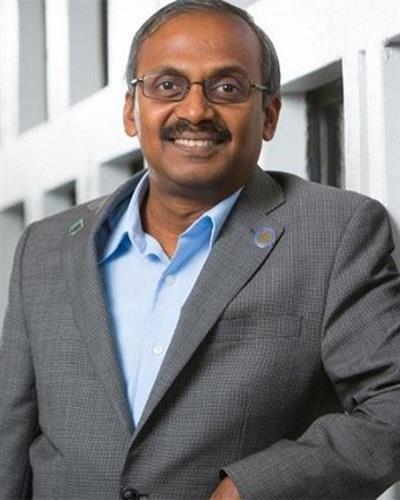
Ramana Vinjamuri is an Associate Professor in the Department of Computer Science and Electrical Engineering at the University of Maryland, Baltimore County (UMBC). He holds a secondary appointment as Visiting Professor at the Indian Institute of Technology, Hyderabad, India. His academic journey includes a Ph.D. in Electrical Engineering from the University of Pittsburgh (2008), M.S. in Bioinstrumentation from Villanova University (2004), and B.Tech. in Electrical and Electronics Engineering from Kakatiya University (2002). Dr. Vinjamuri's research focuses on Brain-Machine Interfaces (BMIs) for upper-limb prostheses control , neuroprosthetics and exoskeletons , machine learning in motor control , and neurophysiological signal processing . His work extends synergy-based models to control 37-dimensional hand movements, addresses human-robot interaction through emotionally intelligent systems, and develops neurotechnologies for substance use disorder using wearable sensors and AI. NSF CAREER Award (2019) NSF IUCRC BRAIN Center Planning Grant (2020) Harvey N Davis Distinguished Teaching Assistant Professor Award (2018) His publications demonstrate expertise in EEG and EMG signal analysis , deep learning for motor decoding , synergy modeling , and humanoid robot control . The Vinjamuri Lab at UMBC involves graduate, undergraduate, and high school researchers, with international collaborations in India and the US.
Jean-Louis Scartezzini is an Honorary Professor at École Polytechnique Fédérale de Lausanne (EPFL), affiliated with the School of Architecture, Civil and Environmental Engineering (ENAC) and the Solar Energy and Building Physics Laboratory (LESO-PB). His research focuses on natural/artificial lighting, solar energy systems, and building technology, with a strong emphasis on energy efficiency and sustainability. Director of LESO-PB since 1994 Founded and led several institutes, including the Institute for Infrastructure, Resources, and Environment (2002–2009) Doctorat in Physics from EPFL (1986) Extensive international collaborations, including visiting roles at NUS (2009) and LBNL/UCLA (1988) Research interests include: - Daylighting and lighting control systems - Passive/active solar technologies - Urban microclimate and energy systems - Stochastic simulation and predictive control Recent work addresses climate change impacts on energy systems, urban sustainability, and machine learning applications in energy optimization. Key publications span lighting health impacts, renewable integration, and microclimate modeling Awards include the European Solar Prize (2001/2002) and Walsh-Weston Bronze Medal (1998) Mentored over 20 PhD students, many leading in academia and industry (e.g., Marilyne Andersen at EPFL, Flavio Foradini at E4Tech).
Georgia Fragkouli is a Researcher affiliated with ETH Zürich's School of Computer and Communication Sciences, working within the Institute of Computer Engineering and Communication Systems. Her role is part of the Professorship for Networked Systems, focusing on advanced networking and distributed systems research. She specializes in analyzing network performance, security, and transparency, with a particular emphasis on BGP convergence dynamics, anomaly detection, and decentralized computing architectures. Her research interests include network protocol validation, machine learning-based traffic analysis, and improving internet transparency through innovative measurement frameworks. She has contributed to projects like MorphIT for packet-level transparency and explored failure mitigation in globally distributed systems. Notable recent work includes studies on transient forwarding anomalies, iBGP convergence effects, and data-plane performance consistency. Her publications span both theoretical advancements and practical implementations, aiming to bridge gaps between networking theory and real-world deployment challenges.
Ed Hopkins is a Professor of Economics at King's College London and the Interim Head of the Economics Department within the King’s Business School. He holds a PhD from the European University Institute in Florence, Italy, and has held positions at the University of Edinburgh and as a visiting scholar at institutions including the California Institute of Technology and the University of British Columbia. His research focuses on game theory, behavioral economics, and social economics, with particular emphasis on topics such as tournament models, inequality, learning dynamics, and experimental economics. Key areas of interest include status concerns, marriage matching, and the implications of non-standard preferences in strategic interactions. Ed has contributed extensively to experimental economics, testing theoretical predictions in laboratory settings. He is actively involved in PhD supervision, accepting students for doctoral research. His work spans theoretical and empirical analyses, with notable contributions to understanding cyclical behavior in strategic situations, the role of information in decision-making, and the interplay between economic inequality and risk-taking.
Professor Rachel Harrison is a Professor in Computer Science at the School of Engineering, Computing and Mathematics, Oxford Brookes University. Her research focuses on software metrics, machine learning, and requirements engineering with emphasis on empirical and automated software engineering solutions. She has over 160 publications and extensive industry collaborations with organizations like IBM and Philips Research Labs. Her work has been recognized through roles as Editor-in-Chief of the Software Quality Journal and leadership in conferences such as ICSE and ESEM. She leads the Dependable System Engineering Centre (DSERC) and is part of the Artificial Intelligence, Data Analysis and Systems (AIDAS) Institute and the Applied Software Engineering and Data Analytics (ASEDA) Group. Her research projects include AI applications for big data analysis (AIMi), automated review classification (ReClass), and software quality improvement (SEQUIN). Professor Harrison has served on over 50 international program committees and initiated workshops like RAISE and AIRE. Her teaching includes advanced computer science modules and leadership in courses like Essential Maths for University Study and Advanced Software Development . Her work bridges academic research and practical applications, particularly in healthcare technology (e.g., diabetes management systems) and mobile application usability. She advocates for rigorous software quality practices and has contributed to frameworks for requirements validation and risk assessment in software projects.
Yonghyun Ha is an Associate Research Scientist in the Department of Radiology & Biomedical Imaging at Yale School of Medicine. His research focuses on advancing magnetic resonance imaging (MRI) technologies, particularly in low-field MRI systems, RF pulse design, and imaging hardware innovation. He collaborates with experts like Duy Phan, Haifan Lin, and Nikhil Malvankar, contributing to projects such as RF pulse distortion compensation and novel RF coil development. Research Interests: His work spans low-field MRI systems , RF engineering , imaging algorithm optimization , and hardware design . He explores applications like point-of-care imaging and cost-effective MRI solutions. Articles Trends: Recent publications address gradient-free imaging, field-cycling magnets, and deep learning for data compression. His work bridges engineering and clinical needs, emphasizing practical MRI advancements. Advising & Grants: No formal advisees are listed, but his collaborations suggest involvement in interdisciplinary research teams. No specific grants are mentioned, but his projects imply funding through institutional or NIH channels. Labs/Teams: Active in Yale’s Radiology & Biomedical Imaging department, contributing to MRI technology development and translational research initiatives.
Dr. Amir Tavakoli Taba is a Senior Lecturer in Medical Imaging Sciences at the University of Sydney, where he co-directs the Medical Image Optimisation and Perception Group (MIOPeG). He specializes in improving medical imaging accuracy, particularly in breast cancer diagnosis, through advancements like phase-contrast tomography and AI integration. His work bridges technological innovations (e.g., low-dose imaging) with clinical practice, emphasizing quality control and radiologist performance analysis. Education: PhD (University of Sydney) MEngSc (University of New South Wales) BSc (University of Tehran) Research Interests: Dr. Taba’s research focuses on phase-contrast computed tomography (PCT), AI-driven diagnostic tools, and clinical workflow optimization. His projects include the world’s first PCT clinical trial (scheduled for 2024 in Melbourne) and collaborations with institutions like ANSTO, Harvard Medical School, and the University of Iowa. He also investigates radiologist expertise development and the role of social networks in medical decision-making. Grants & Awards: NHMRC Synergy Grant (IMPACT: Implementation of X-ray Phase-Contrast Tomography) International recognition, including the SPIE Medical Imaging Award Advising & Labs: Current students: Mohammed ALANAZI (abdominal CT optimization), Jenna ARBID (phase-contrast imaging) Labs: MIOPeG, part of the Sydney Vital and Sydney Catalyst cancer research networks Teaching: Courses in imaging technologies, medical image perception, and clinical capstone projects for diagnostic radiography students.
Abani Patra is a Professor of Computer Science, Mathematics, Mechanical Engineering, and Civil and Environmental Engineering at Tufts University. He also serves as the Center Director for Data Science at the Tufts Institute for Artificial Intelligence (TIAI). His research focuses on computational sciences and data-driven modeling, with applications spanning environmental systems, biomedical imaging, and geophysical hazards. He has directed major initiatives at the National Science Foundation (NSF) and U.S. Department of Energy (DOE), and previously founded the Institute for Computational and Data Sciences at the University at Buffalo. Education: PhD in Mathematics, University of Texas, 1995 MS in Mechanical Engineering, University of Missouri, 1990 BSc in Engineering, Birla Institute of Technology & Science, India Research Interests: Large-scale computational modeling and uncertainty quantification Data-driven approaches for geophysical hazards (e.g., debris flows, volcanic eruptions) Biomedical imaging and metabolic analysis Open science platforms for glaciology and volcanology Key Projects: Developed the Ghub platform for open cryosphere research Launched VICTOR, a cyberinfrastructure for volcanology Advanced AI-driven techniques for postfire debris flow prediction Grants & Leadership: Directed NSF and DOE programs in computational science PI for NSF Cyberinfrastructure grants Former director of the Institute for Computational and Data Sciences
Professor Klaus McDonald-Maier is a full Professor in the School of Computer Science and Electronic Engineering (CSEE) at the University of Essex , where he leads the Embedded and Intelligent Systems (EIS) Research Laboratory and heads the Intelligent Embedded Systems and Environments Research Group . He is also Director of Impact , Visiting Professor at the University of Kent, and Visiting Research Affiliate at NASA Jet Propulsion Laboratory, California Institute of Technology. Education PhD in High-Performance Parallel Neural Network Architectures, Friedrich-Schiller-University Jena (Germany, 1999) Electronic Engineering studies, University of Ulm (Germany) Electronic Engineering studies, Cardiff University (Wales) Electronic Engineering studies, École Supérieur de Chimie Physique Électronique de Lyon (CPE-Lyon) (France) Research Interests Professor McDonald-Maier’s research integrates embedded systems , System-on-Chip (SoC) architectures , and AI-driven robotics . He pioneers visual place recognition techniques that remain robust under severe appearance and viewpoint changes, develops cybersecurity frameworks based on ICMetrics for autonomous vehicles and IoT, and designs approximate real-time computing solutions for energy-constrained multicore and FPGA platforms. His work on radiation-tolerant systems supports space and nuclear applications, while his bio-inspired algorithms enable lightweight, neuromorphic perception on resource-limited robots. Publication Trends Between 2022 and 2025 his output converges on FPGA-accelerated AI , secure edge intelligence , visual navigation for autonomous systems , and healthcare analytics . He repeatedly couples rigorous algorithmic innovation with practical hardware deployment, yielding energy-efficient, real-time systems validated in domains ranging from autonomous driving to post-stroke rehabilitation. Scientific Awards & Recognition Best Paper Award – IEEE Transactions on Sustainable Computing (2024) Best Paper Award – IEEE/ACM DATE (2024) Best Paper Award – IEEE Systems Journal (2022) Best Paper Award – IEEE Sensors Journal (2021) Best Paper Award – IEEE Access (2020) Research Grants & Industrial Collaboration He has secured major funding from EPSRC , EU Horizon 2020 , Innovate UK , and industry partners. Current projects span trustworthy autonomy, radiation-hardened edge AI, and AI-enhanced rehabilitation technologies. He is Chief Scientist of UltraSoC Technologies Ltd and CEO of Metrarc Ltd , commercialising University research in semiconductor debug and cybersecurity respectively. Laboratory & Team Leadership As Director of the Embedded and Intelligent Systems Laboratory (EIS Lab) , he oversees a multidisciplinary team of researchers and PhD students, providing state-of-the-art FPGA, robotics, and embedded-systems facilities. The lab collaborates closely with NASA JPL, UK Atomic Energy Authority, and leading semiconductor firms to translate fundamental research into high-impact industrial solutions.
Nicola Ballhausen is an Assistant Professor in the Department of Developmental Psychology at the Tilburg School of Social and Behavioral Sciences, Tilburg University, Netherlands. Her research focuses on cognitive and psychological aspects of aging, particularly prospective memory, executive function, and social influences on cognitive health in older adults. Her research interests include prospective memory , cognitive aging , metacognition , problem-solving in older adults , social cognition , and longitudinal studies of aging . She investigates how factors such as intergenerational contact, sense of purpose, and technology use impact cognitive performance and well-being in later life. Her work integrates experimental, survey-based, and qualitative methods, often in cross-national datasets like the Health and Retirement Study (HRS) and the English Longitudinal Study of Ageing (ELSA). The most recent articles highlight a strong focus on prospective memory across the lifespan , the role of social engagement in cognitive functioning , and designing accessible cognitive interventions for older adults. Her publications span top journals in gerontology, psychology, and cognitive science, reflecting interdisciplinary collaboration and methodological rigor. Dr. Ballhausen contributes to research aligned with the UN Sustainable Development Goals, particularly those related to healthy aging and well-being. She collaborates extensively with researchers across Europe and has contributed to major reference works such as The Oxford Handbook of Human Memory . Her work includes both empirical studies and methodological advancements, such as exploratory structural equation modeling. While no formal students or awards are listed, her role in supervising research and contributing to academic training is implied through her position and course involvement. Dr. Ballhausen is involved in the design and evaluation of web-based cognitive tools, such as the Shared, Web-based, Intelligent Flexible Thinking Training (SWIFT), emphasizing user-centered design and ecological validity. Her work bridges fundamental cognitive research with practical applications for aging populations.
Dr hab. Krzysztof Węcel serves as Professor and current Head of the Department of Economic Informatics at Poznan University of Economics and Business (UEP), appointed on October 4, 2024. His primary affiliation spans over 25 years with UEP's Department of Economic Informatics, which maintains one of Poland's longest-running academic websites since 1998. He holds dual recognition through habilitation from University of Potsdam (2020) and professorship conferred by UEP (June 24, 2020). His academic milestones: Habilitation degree in Economic Informatics, University of Potsdam (2020) Professor title, Poznan University of Economics and Business (2020) Węcel's research centers on Semantic Technologies and data quality assessment across multilingual Wikipedia, with emphasis on company information verification, citation analysis, and open data applications. His work bridges Big Data analytics with practical business solutions, particularly in maritime logistics where he pioneered evolutionary algorithm-based AIS data processing. Current investigations focus on generative AI's dual role in creating and combating disinformation, including ChatGPT's impact on academic writing and fake news propagation. Recent publications (2022-2025) reveal three dominant trends: First, systematic analysis of Wikipedia's reliability across languages during crises like the pandemic and Ukraine war. Second, development of AI-driven fact-checking frameworks (e.g., OpenFact project's CLEF 2023 victory). Third, exploration of generative AI's societal impact ranging from student creativity to disinformation campaigns. Scientific awards received: Best Paper Award at ICIST 2017 Conference Award for most innovative article at NATCON 2018 conference Microsoft Azure for Research Award (2016) As academic advisor, he leads the 'Semantic Technologies' diploma seminar attracting high-achieving students, with participants winning the 29th UEP Foundation Competition (2025) and Eurostat's Web Intelligence Challenge (2024). His grant portfolio includes the 'Maritime Big Brother' project (2017) for ship voyage prediction using AIS data and Microsoft Azure funding for Wikipedia quality enhancement. Ongoing initiatives include OpenFact (fake news detection) and GOBLIN projects. He actively collaborates with SKN Data Science student circle (evidenced by 2024/2025 inaugural meeting) and international consortia like CLEF and QOD workshops. Departmental leadership involves managing the OpenFact research team that achieved top results in CheckThat! Lab competitions, alongside maritime data analytics groups applying evolutionary algorithms to shipping networks.
Andrea Jamardo Lorenzo is an Assistant Professor at the University of León , affiliated with the School of Law and working within the Department of Public Law . Her research focuses on Procedural Law , with particular emphasis on Chain of Custody mechanisms, Technology in Law , and Legal Education innovations. Education : PhD in Law from the University of León (2023), thesis titled La cadena de custodia: análisis sistemático , supervised by Dr. Piedad González Granda. Her research explores the legal configuration and technological evolution of chain of custody systems in both national and European contexts. She investigates how digital evidence handling , AI applications , and cybersecurity protocols impact judicial integrity and procedural guarantees. Recent work also addresses pedagogical methods like flipped classrooms and role-playing in legal education. Analysis of her publications reveals trends in criminal procedure reforms , comparative chain of custody models (Spain vs. US), and ethical implications of legal technology . While no scientific awards are documented, her work contributes to debates on judicial efficiency , fundamental rights , and data protection in criminal contexts.
Sofie Haesaert is an Assistant Professor in the Control Systems group at the Department of Electrical Engineering, Eindhoven University of Technology. Her work focuses on formal verification and control synthesis methods for cyber-physical systems, particularly through stochastic simulation relations and temporal logic specifications. Education: BSc (cum laude) and MSc (cum laude) in Mechanical Engineering and Systems & Control from Delft University of Technology; PhD from Eindhoven University of Technology (2017) Experience: Postdoctoral researcher at Caltech (2017-2018), then returned to TU/e as Assistant Professor Her research interests include: Cyber-physical systems verification Stochastic control methods Temporal logic specification Markov decision processes Formal methods in control engineering Model abstractions and simulation relations Recent publications show strong focus on: Stochastic temporal logic control Robust and risk-aware control Multi-agent system verification Formal synthesis via simulation relations AI integration in control systems Software tools for formal control Scientific achievements: Veni Grant recipient (2020) Co-developer of the SySCoRe toolset for stochastic control synthesis Contributor to formal verification benchmarks through ARCH-COMP reports She contributes to education through courses on: Control principles for engineered systems Control challenges in autonomous racing Supervisory control of cyber-physical systems Haesaert collaborates across disciplines including computer science, applied mathematics, and robotics, with over 750 citations and significant contributions to formal control theory for stochastic systems. Her work bridges theoretical developments with practical applications in autonomous systems and complex control architectures.
Adrien Depeursinge is a Professor at HES-SO Valais-Wallis - Haute Ecole de Gestion, affiliated with the School of Economics and Services and the Management Information Systems department. His research focuses on radiomics, personalized medicine via image-based analysis, and clinical workflow optimization. He leads the development of the QuantImage platform, a physician-centered web-based tool for radiomics research, and contributes to radiomics standardization efforts through initiatives like the Image Biomarker Standardization Initiative (IBSI). His work emphasizes machine learning applications in healthcare, including tumor segmentation, biomarker extraction, and improving diagnostic accuracy through computational models. Key research themes include: 1) Radiomics – developing quantitative imaging features for cancer diagnosis/prognosis; 2) Medical Imaging Analysis – advancing texture-based models, multi-modal fusion, and automated lesion detection; 3) Physician-AI Collaboration – designing user-centric tools for clinical integration. His contributions span neuro-oncology (brain metastases), head-and-neck cancer, and multiple sclerosis imaging. Publications emphasize methodological advancements (e.g., kernel optimization in CNNs, steerable detectors) and clinical validation (e.g., reproducibility of radiomics features across imaging protocols). He collaborates with institutions like the University Hospital of Lausanne (CHUV) and international teams on projects like the HECKTOR challenge for PET/CT tumor segmentation. His work bridges technical innovation with clinical impact, aiming to translate radiomics into actionable clinical tools. QuantImage v2, his flagship tool, enables no-code development of machine learning models using clinical imaging data. Research also includes phantom-based validation of radiomics features and addressing challenges in feature stability across imaging modalities. Current projects explore improving contour quality for radiomics studies and optimizing AI explainability in medical decision-making.
Rainald Loehner is a Distinguished Professor of Fluid Dynamics at George Mason University's Center for Computational Fluid Dynamics. Since 2003, he has led the Center for Computational Fluid Dynamics at George Mason University. He is currently a Hans Fischer Senior Fellow at the Technical University of Munich's Institute for Advanced Study (TUM-IAS) for 2023, hosted by Professors Kai-Uwe Bletzinger and Roland Wüchner in the 'Adjoint-Based System Identification of Large-Scale Structures' Focus Group. Loehner received his Diplom Ingenieur (Maschinenbau) degree from the Technical University of Braunschweig, and his PhD and a DSc in civil engineering from the University College of Swansea, Wales. After teaching at Swansea for a year, he worked at the Naval Research Laboratory in Washington, DC, followed by a research professorship at George Washington University. He joined George Mason University as an associate professor and was promoted to full professor in 1995 and distinguished professor in 2004. With over 35 years of experience, Professor Loehner's research spans the complete pipeline of numerical solvers and simulation tools. His expertise includes pre-processing, grid generation, numerical methods, field solvers, parallel computing, adaptive mesh refinement, fluid-structure interaction, shape optimization, system identification, and computational crowd dynamics. His current work focuses on developing advanced field solvers for compressible and incompressible flows, acoustics, electromagnetic wave propagation, heat and mass transfer, structural mechanics, and fluid-structure interaction. Key application areas include blast mitigation, ship hydrodynamics, blood flow, contaminant transport, and pedestrian safety. Loehner's recent research output (2020-2024) shows a strong trend toward digital twin technology and adjoint-based methods for structural analysis and optimization. His publications focus on high-fidelity digital twins for detecting structural weaknesses, risk assessment in engineering systems, and optimization of sensor placement. His work bridges computational mechanics with machine learning approaches, particularly in system identification and inverse problems, demonstrating how computational methods can solve complex real-world engineering challenges. 2020: Ranked #15119 in the Stanford List of Most Influential Scientists of the World; #8 in Aerospace and Aeronautics 2010: Distinguished International Career Award, Argentine Association of Computational Mechanics 2008: Fellow, International Association for Computational Mechanics 2006: Associate Fellow, AIAA 2005: Honorary Professor, University of Wales Swansea 2005: Advisory Professor, Shanghai Jiao Tong University 2004: Distinguished Professor of Fluid Dynamics, George Mason University 1999: Computational Mechanics Achievements Award, Japan Society of Mechanical Engineering 1993: Doctor of Science in Civil Engineering, University College of Swansea 1979-1983: Studienstiftung des Deutschen Volkes (Top 1% of German Students) Professor Loehner has mentored numerous students through his work at George Mason University and has supervised research in computational fluid dynamics, structural mechanics, and related fields. His research has been supported by various grants from government agencies and industry partners, enabling the development of advanced simulation tools applied in aerodynamics, hydrodynamics, shock-structure interaction, and medical applications. His codes and methods have been widely adopted in industry and academia for applications ranging from aircraft and ship design to medical simulations and urban pathogen transmission modeling. Loehner leads the Center for Computational Fluid Dynamics at George Mason University, which focuses on developing cutting-edge computational methods for fluid dynamics and related multiphysics problems. The center works on strategic application areas including blast mitigation, ship hydrodynamics, blood flow simulation, and pedestrian movement modeling. As a TUM-IAS Fellow, he collaborates with the Chair of Computational Modeling and Simulation at TUM on adjoint-based system identification of large-scale structures, bringing together expertise in computational mechanics and digital twin technology to address complex engineering challenges.