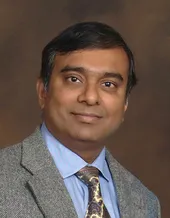
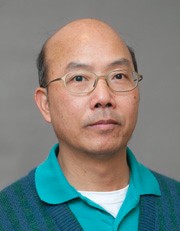
Krishnendu Chakrabarty is the John Cocke Distinguished Professor of Engineering and Professor of Computer Science at Duke University, chairing the Department of Electrical and Computer Engineering. His research focuses on integrated circuits testing, microfluidics, biochips, and cyberphysical systems. He holds honorary titles from institutions globally and has received over a dozen best-paper awards. Education: B.Tech from IIT Kharagpur (1990), M.S.E. and Ph.D. from University of Michigan (1992, 1995). Awards include Humboldt Research Award (2013), IEEE Computer Society Technical Achievement Award (2015), and AAAS Fellowship (2018). Research explores fault diagnosis in hardware, smart manufacturing, and biochip automation. His cyberphysical systems work includes hybrid microfluidic platforms for single-cell analysis and droplet-based bioassays. Collaborations with TUM-IAS focus on Microfluidic Design Automation (MDA). Editor-in-Chief of IEEE Transactions on VLSI Systems and former Editor of ACM Journal on Emerging Technologies. Active in academic leadership and interdisciplinary projects, emphasizing sustainability and advanced manufacturing.
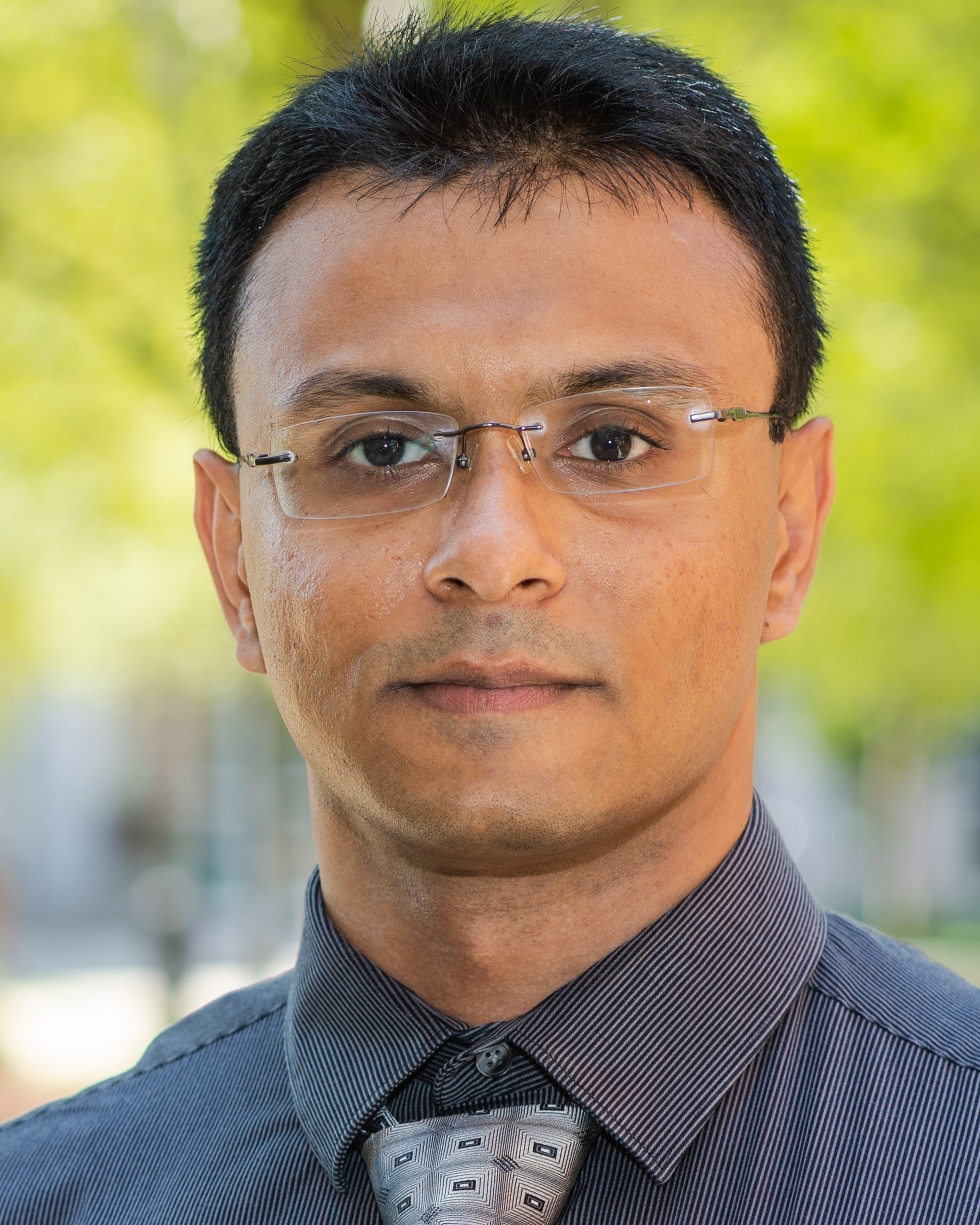
Mehdi Sadi is an Assistant Professor of Electrical and Computer Engineering at Auburn University's College of Engineering. He holds a Ph.D. from the University of Florida, an M.S. from the University of California-Riverside, and a B.S. from Bangladesh University of Engineering and Technology. His research focuses on secure and reliable system-on-chip design, AI/ML-driven VLSI CAD/EDA, neuromorphic hardware, and emerging post-CMOS computing technologies. Notable achievements include earning the NSF CAREER Award for chiplet-based design optimization and a $175k NSF grant for magnetic RAM research. His work integrates machine learning with hardware co-design to enhance AI accelerators' performance, energy efficiency, and security. Recent projects include adversarial attack mitigation on AI hardware and reliability analysis of neuromorphic systems. Dr. Sadi's contributions span chiplet architecture, memory systems (e.g., STT-MRAM/SOT-MRAM), and fault-tolerant computing. He actively publishes on topics like skyrmion logic gates and TRNG implementations using MRAM. His work bridges theoretical machine learning advancements with practical hardware implementations, addressing critical challenges in next-generation computing systems.
Dr. Abusaleh Jabir is a University Reader at the School of Engineering, Computing and Mathematics, Oxford Brookes University. He holds a DPhil in Computing from the University of Oxford and leads the Advanced Reliable Computer Systems (ARCoS) group. His research focuses on reliable hardware design, memristive nanotechnology, edge computing, and secure authentication systems. He has over 80 peer-reviewed publications and multiple patents, including innovations in error-tolerant circuits and memristive architectures. **Education**: DPhil in Computing (University of Oxford). **Research Interests**: Reliable hardware design, electronic design automation, sensing at the edge, physical uncloneable authentication, and emerging memristor technologies. His work addresses challenges in IoT, edge computing, and cybersecurity through innovative electronic systems. **Funding & Projects**: Current projects include the Leverhulme Trust-funded MONITOR gas sensor array initiative. His research has been supported by the UK Ministry of Defence, EPSRC, and Finance South East. **Awards & Patents**: Multiple patents granted, including EU 17706875.6 (memristive logic) and GB 1914221.5 (reconfigurable memristive logic). Recognized with best paper awards. **Advising & Impact**: Supervised PhD students now leading semiconductor and automotive industries (e.g., Infineon Technologies, Continental Teves AG). Collaborates with academic and industrial partners globally. **Labs & Teams**: Leads the ARCoS group within the Artificial Intelligence, Data Analysis and Systems (AIDAS) Institute, fostering interdisciplinary innovation in secure and reliable electronics.
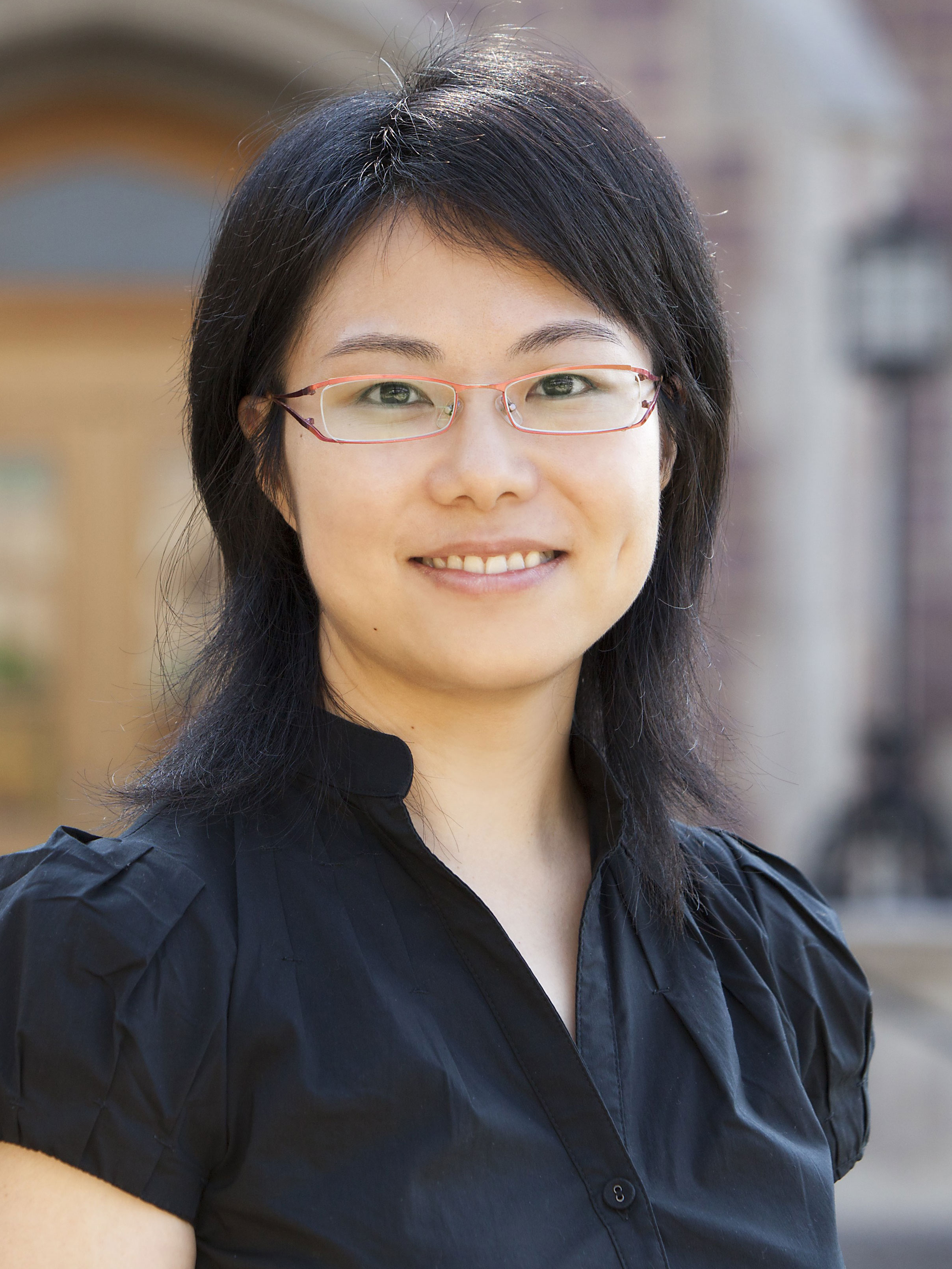
Xuan Zhang serves as Associate Professor in Electrical and Computer Engineering at Northeastern University, leading the Sensory AI Lab since joining in January 2024. Her research bridges computer architecture, integrated circuits, and artificial intelligence to develop miniaturized AI systems for autonomous physical platforms. She earned her PhD in Electrical and Computer Engineering from Cornell University in 2012. Her educational background forms the foundation for her interdisciplinary work spanning hardware and software co-design. Dr. Zhang's research focuses on artificial intelligence hardware, machine vision sensors, and security for autonomous systems. She pioneers techniques for efficient in-sensor computing, analog circuit optimization via machine learning, and hardware-level privacy preservation. Her work addresses critical challenges in energy efficiency, robustness, and security for edge AI deployment, particularly in resource-constrained environments like medical devices and autonomous vehicles. Analysis of her 2023-2025 publications reveals three dominant trends: (1) hardware-accelerated privacy mechanisms for sensors, (2) machine learning-driven analog circuit design automation, and (3) energy-efficient architectures for neural network inference. These works consistently target real-world applications in healthcare, autonomous systems, and semiconductor design. Her accolades include the prestigious NSF CAREER Award (2020) and leadership in a $10 million federal semiconductor initiative. She contributes to national efforts in AI-powered chip design through the National Center for the Advancement of Semiconductor Technology. Dr. Zhang advises graduate researchers in the Sensory AI Lab, securing significant funding for projects spanning hardware security, in-sensor computing, and autonomous system assurance. Her lab collaborates with federal agencies and industry partners on cutting-edge semiconductor research. The Sensory AI Lab operates at the hardware-software interface, developing novel architectures for intelligent edge devices. Current projects include optical privacy preservation, robust analog design tools, and energy modeling frameworks for in-sensor visual computing systems.
Daniel Saab is an Associate Professor in the Department of Electrical, Computer, and Systems Engineering at Case School of Engineering, Case Western Reserve University. His research focuses on computer architecture, VLSI system design, CAD design automation, and MEMS/NEMS-based technologies. He holds a PhD from the University of Illinois at Urbana-Champaign (1988), following a Master of Science (1985) and Bachelor of Science (1983) in the same field. His work emphasizes ultra-low-power and high-speed electronic systems, particularly leveraging nanoelectromechanical systems (NEMS) and MEMS technologies. Key contributions include MEMS-based logic gates for radiation-resistant processors, ultra-fast 1 GHz NEMS switches, and hybrid CNEMS-CMOS FPGA architectures. His research also addresses hardware security, such as Trojan modeling and verification methods for integrated circuits. Publications span conferences like IEEE SENSORS, TRANSDUCERS, and International Symposium on Quality Electronic Design, with a focus on advancing low-power circuits, nanotechnology integration, and high-reliability electronics. Current affiliations include teaching and research leadership at Case School of Engineering.
Alan Mantooth is a Distinguished Professor holding the Twenty-First Century Research Leadership Chair in Engineering within the Department of Electrical Engineering at the University of Arkansas, Fayetteville. He serves as Director of the National Center for Reliable Electric Power Transmission (NCREPT), Executive Director for GRAPES (NSF I/UCRC) and SEEDS (DoE Center), and Deputy Director of the NSF Engineering Research Center for Power Optimization of Electro-Thermal Systems (POETS). His educational background includes: B.S. in Electrical Engineering, University of Arkansas M.S. in Electrical Engineering, University of Arkansas Ph.D. in Electrical Engineering, Georgia Institute of Technology Dr. Mantooth's research centers on analog/mixed-signal IC design, power electronics CAD, and semiconductor device modeling with emphasis on harsh-environment applications. His pioneering work in silicon carbide (SiC) and gallium nitride (GaN) power systems has enabled high-temperature operation for electric vehicles and renewable energy infrastructure, significantly advancing reliability in extreme conditions. His 2025 publications reveal strong trends toward AI-driven power electronics (e.g., SolarFormer++ for PV profiling), wide-bandgap device modeling (β-Ga2O3, SiC), and innovative packaging solutions. Key themes include reliability engineering for extreme environments, multi-physics optimization, and explainable AI for safety-critical power systems. Major scientific recognition includes: IEEE Fellow (2009) for power electronic device modeling Three R&D 100 Awards (2009, 2014, 2016) for SiC power modules IEEE Power Electronics Society Technical Achievement Award (2019) Multiple university teaching/research awards including SEC Faculty Achievement Award (2015) As an exceptional mentor (UA Outstanding Mentor 2006-2008), he co-founded Lynguent and Ozark Integrated Circuits. His centers NCREPT, GRAPES, and SEEDS have secured major funding from NSF, DoE, and industry partners, supporting over 350 refereed publications and numerous patents. Current research focuses on AI-enhanced power electronics, recyclable packaging, and next-generation wide-bandgap device characterization. He leads the NCREPT test facility and multi-institutional teams developing grid-connected power electronic systems, secure energy delivery architectures, and thermal management solutions for high-power-density applications, with direct impact on electric transportation and renewable energy integration.
Marco Vacca is an Associate Professor in the Department of Electronics and Telecommunications (DET) at Politecnico di Torino and a member of the Interdepartmental Center PIC4SeR - PoliTO Interdepartmental Centre for Service Robotics. His work bridges electronics, nanotechnology, and computing architecture with a focus on innovative solutions to the memory wall problem. His research spans Logic-in-memory computing, Machine learning hardware acceleration, and Nanocomputing with specific emphasis on circuit architectures for probabilistic computing, magnetic devices, hybrid technologies integration, and CAD tools for emerging technologies. Dr. Vacca leads research in RISC-V extensions, hardware accelerators for AI, and autonomous robot systems for agricultural applications through the VLSILAB research group. Recent publications reveal a strong trend toward solving fundamental computing challenges through nanoscale innovations, particularly in memory-centric architectures, molecular field-coupled computing, and novel transistor technologies. His work demonstrates how logic-in-memory approaches can overcome traditional von Neumann limitations while improving energy efficiency for AI workloads. Editorial board member of ELECTRONICS (2021-2023) Program committee member for Design, Automation and Test in Europe Conference (DATE) 2020-2021 Dr. Vacca supervises PhD student Alessandro Varaldi working on 'Hardware AI Accelerators for Automotive Applications' and has led significant research projects including 'Device for Storage and Processing Data and Related Method' (2020-2021) and 'Quantum Computing and Quantum Communication: State of the Art and Applications in the Telco Sector' (2020). His grant portfolio shows strong industry and competitive funding support. As a core member of the VLSILAB research group, Dr. Vacca contributes to advancing VLSI theory and design applications with particular focus on implementing Big Data, Machine Learning, and Neural Networks in specialized hardware architectures that push the boundaries of conventional computing.
Prof. Dr. Miroslaw Malek is a Professor and Chair of Computer Architecture and Communication at the Humboldt University of Berlin's Institute of Computer Science. His research focuses on parallel/distributed systems, dependability, real-time systems, and embedded systems. He leads the Computer Architecture Research Group (ROK) and has supervised numerous PhD students across multiple institutions. Malek's work emphasizes fault management, network reliability, and proactive system design. His academic roles include advising on over 25 PhD theses and co-authoring influential books like Responsive Computer Systems . He holds a prominent position in the field, with extensive contributions to service availability, failure prediction, and fault-tolerant computing. Key affiliations include the Faculty of Mathematics and Natural Sciences and the Institute of Computer Science at Humboldt University. Research Interests: - Parallel/distributed/embedded systems - Dependability and real-time responsiveness - Web service architecture and fault tolerance - Network reliability and failure prediction Notable Achievements: - Developed consensus-based frameworks for responsive systems - Pioneered failure prediction methods using hidden Markov models - Authored/co-authored over 30 books and 200+ peer-reviewed publications - Supervised 25+ doctoral students at UT Austin and Humboldt University - Active in international workshops and symposiums on dependability and fault tolerance Labs/Teams: - Computer Architecture Research Group (ROK) at Humboldt University - Collaborations with TU Berlin, Duke University, and University of Minnesota
Houman Zahedmanesh is an Associate Professor in the Department of Mechanical Engineering at KU Leuven's Faculty of Engineering Science. His work focuses on electromigration reliability in nano-interconnects, leveraging machine learning and AI to address thermal hotspots in semiconductor systems. He leads projects like the 2025-2029 BEOL thermal management initiative and contributes to computational materials science research. Current Affiliation: KU Leuven, Faculty of Engineering Science Department: Mechanical Engineering Research Focus: Electromigration, nano-interconnect reliability, AI-driven materials analysis Research Interests: Dr. Zahedmanesh's research bridges materials science and electrical engineering, with emphasis on: Electromigration-induced failure in copper interconnects Thermal gradient effects on electronic reliability Machine learning applications for predictive material modeling Microstructure-aware simulations in nanotechnology Hybrid physical-statistical frameworks for semiconductor reliability Publication Trends: Recent works demonstrate his expertise in AI-driven materials analysis (2025), microstructure modeling (2024), and multiphysics simulations of electromigration (2023). His research aligns with KU Leuven's focus on computational materials science and nanotechnology.
Furat Al-Obaidy is a Lecturer in the Department of Electrical and Computer Engineering at the University of Michigan-Dearborn's College of Engineering and Computer Science. His expertise spans machine learning, intelligent systems, VLSI circuits, multi-core systems, FPGA architecture, and deep learning applications. PhD in Electrical & Computer Engineering from Ryerson University (2021) MSc in Electrical & Computer Engineering from Ryerson University (2016) MSc in Control & Instrumentation Engineering from University of Technology, Baghdad (1999) BSc in Control & Systems Engineering from University of Technology, Baghdad (1996) His research focuses on power-aware computing systems, thermal imaging for IC testing, hybrid cache architectures, and AI-driven network optimization. He has published extensively on topics including GPGPU power management, 3D NoC routing, and wireless sensor networks. His recent publications highlight applications of neural networks in cache optimization, FPGA architecture, and thermal imaging for hardware diagnostics. Earlier work includes control system simulations for wind turbines and power factor analysis in electrical circuits. Ryerson Graduate Development Award (2021) Ontario Graduate Scholarship Award (OGS) (2020) Ryerson Graduate Fellowship (2018) Graduate Research Excellence Award (2017) Queen Elizabeth II Graduate Scholarship in Science and Technology (2017)
Sandip Kundu is a Professor of Electrical and Computer Engineering at the University of Massachusetts Amherst since 2005. Prior roles include Senior Researcher at Intel (1997–2005) and IBM Research (1988–1997). He holds a Ph.D. from the University of Iowa (1988) and a B.Tech from IIT Kharagpur (1984). Research Interests: Focuses on hardware security, VLSI design, CAD algorithms, microarchitecture, and neural processing. Notable contributions include work on physically unclonable functions (PUF), blockchain-based IC traceability, and securing embedded systems against adversarial attacks. Key Activities: Served as Associate Editor for multiple IEEE journals and held visiting professorships at institutions like University of Freiburg (Germany), Kyushu Institute of Technology (Japan), and Tsinghua University (China). Awarded IEEE Fellow and JSPS Invitational Fellowships. Awards: Includes five best paper awards, Intel’s Development Leadership Pioneer Award, IBM’s Outstanding Technical Achievement Award, and recognition as a Distinguished Visitor by IEEE Computer Society. Grants & Labs: Active in NSF-funded research and leads the Advanced VLSI Design and Test Group, exploring secure hardware design, neuromorphic computing, and resilient architectures for edge devices.
Lei Wang is the F. L. Castleman Associate Professor in Engineering Innovation at the University of Connecticut's School of Engineering, Department of Electrical and Computer Engineering. He holds a PhD from the University of Illinois at Urbana-Champaign (2001), an MS (1996) and BS (1992) from Tsinghua University, China. His research focuses on cyber-physical systems , embedded computing with renewable energy , and nanoscale integrated circuit design . Key areas include microbial fuel cells , memristor-based hardware security , and low-power signal processing architectures . Recent work trends involve Quantum-dot transistor applications for in-memory computing Adaptive LDPC decoder optimization Hardware security leveraging memristor properties Energy-efficient power management systems for underwater sensors Scientific recognition includes National Science Foundation CAREER Award (2010) F. L. Castleman Term Professorship in Engineering Innovation Professional roles encompass editorial and committee positions at IEEE and ACM journals. His work spans interdisciplinary domains in renewable energy integration , VLSI design , and bio-inspired computing systems .
Vishesh Mishra is a Prime Minister's Research Fellow at the Department of Computer Science and Engineering, Indian Institute of Technology Kanpur. He concurrently serves as a Visiting Research Fellow at INRIA Centre, University of Rennes, France, and an External Research Collaborator at CANDLE LAB, IIT Roorkee. His research centers on hardware security vulnerabilities in approximate computing systems, with focus areas including hardware trojan detection in approximate circuits, energy-efficient error-resilient architectures, and side-channel attack mitigation. He develops novel methodologies for securing IoT devices and blockchain implementations through circuit-level innovations and floating-point approximation techniques. Analysis of his 15 most recent publications reveals dominant themes in approximate arithmetic unit design (adders/multipliers), hardware trojan countermeasures, and floating-point resilience. His work bridges theoretical security models with practical VLSI implementations, consistently targeting energy efficiency without compromising critical functionality in error-tolerant applications. Scientific recognition includes: Prime Minister's Research Fellowship (India's premier PhD fellowship) Collège doctoral de Bretagne international mobility grant (€9600 for 6-month INRIA research) His research is supported through competitive fellowships rather than traditional grants, with no student advising roles documented. Current collaborations span IIT Kanpur's C3i Center, IIT Roorkee's CANDLE LAB, and INRIA's Rennes research unit, focusing on cross-institutional hardware security projects.
Wen-Ben Jone is an Associate Professor at the University of Cincinnati 's Department of Electrical Engineering & Computing Systems. He previously held positions as Assistant/Associate Professor at New Mexico Institute of Mining and Technology and Visiting Associate/Full Professor at National Chung-Cheng University, Taiwan. His research focuses on VLSI system design, low-power circuits, and fault-tolerant testing methodologies. He has advised over 70 graduate students and authored/co-authored numerous papers in top-tier journals and conferences. Education : PhD: Case Western Reserve University (Computer Engineering, 1987) MS: National Chao-Tung University (Computer Engineering, 1981) BS: National Chao-Tung University (Computer Science, 1979) Research Interests : Reliable VLSI design and testing Low-power and fault-tolerant circuits Many-core processor architectures Parallel computing and debugging tools Awards : 2003 IEEE Donald G. Fink Prize Paper Award 2008 Best Paper Award (International Symposium on Low-Power Electronics) 2012 Best Paper Award (VLSI Design, Automation & Test) Grants : $390k NSF Grant (CCF-0541103) for cache optimization techniques His work emphasizes practical solutions in VLSI testing and reliability, with a focus on low-power strategies and resilient system design.
Dr. Dimitrios Bakalis is an Assistant Professor at the Department of Physics, University of Patras, specializing in Digital Electronic Circuits and Systems. He joined the faculty in 2004 and focuses on the design and control of digital circuits, emphasizing low-power testing and built-in self-test (BIST) methodologies. His academic roles include teaching courses such as Computer Programming I, Digital Electronics, and Microcomputer Architecture at both undergraduate and postgraduate levels. Education: Diploma in Computer Engineering and Informatics (University of Patras) Master’s Degree in Computer Science and Technology (University of Patras) PhD in Computer Engineering and Informatics (University of Patras) Research Interests: His work revolves around VLSI design, arithmetic circuits, and low-power techniques. Key areas include modulo arithmetic circuits, fault-tolerant systems, and reconfigurable computing architectures. He has published over 50 papers in top-tier journals and conferences, contributing to advancements in digital circuit efficiency and reliability. Teaching: He instructs core courses in digital electronics and computer architecture, integrating cutting-edge research into his pedagogy. His MSc courses focus on FPGA-based digital system design, emphasizing practical applications. Labs/Teams: His research aligns with the Electronics & Computers sector within the Department of Physics, collaborating on projects involving arithmetic core optimization and low-power testing strategies.