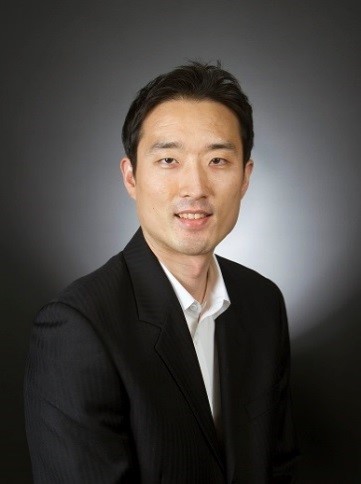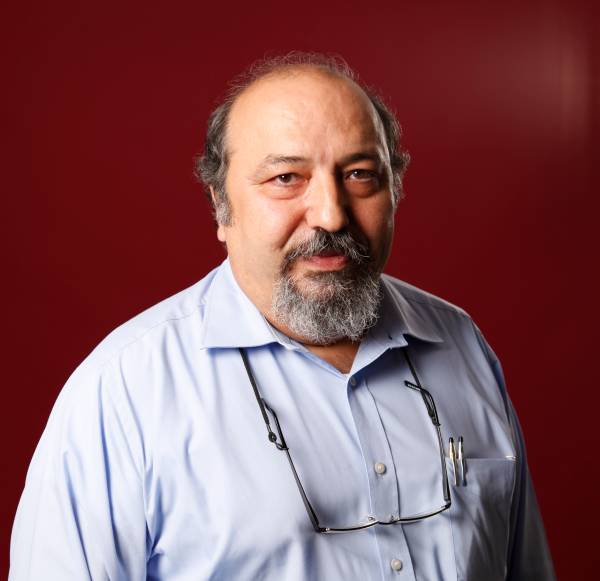
Professor Eran Socher is a Full Professor at the School of Electrical Engineering, Tel Aviv University, where he heads the High Frequency Integrated Circuits and VLSI Labs. He has been a faculty member since October 2008 and previously served as a Visiting Professor at the University of Toronto (2015-2017). Professor Socher received his B.A. in physics (summa cum laude) and B.Sc., M.Sc., and Ph.D. degrees in Electrical Engineering from the Technion – Israel Institute of Technology. Prior to joining Tel Aviv University, he worked as a research engineer in the Israel Defense Forces (IDF) and as an adjunct lecturer at the Technion and Bar-Ilan University (2003-2006), followed by a position as a visiting researcher and assistant professor at UCLA (2006-2008). His research focuses on mm-wave CMOS circuit design for high-speed communications (>20Gbps) , THz sensing and imaging , and chip interfaces at these frequencies including on-chip antennas and waveguide transitions. Professor Socher has co-authored over 50 journal papers and 90 conference papers in prestigious venues including JSSC, T-MTT, MWCL, RFIC, IMS, SiRF and EuMIC. Analysis of his recent publications (2023-2025) reveals a strong focus on millimeter-wave and terahertz technologies, with particular emphasis on CMOS-based circuit design for communication systems, energy harvesting applications, and advanced antenna systems. His work spans frequencies from 5 GHz up to 0.6 THz, addressing challenges in power amplification, signal processing, and efficient RF-to-DC conversion. The research demonstrates consistent innovation in overcoming the limitations of silicon technology at extremely high frequencies. 2011 TAU Rector's Prize for Excellent Teaching 2015 TAU Rector's Prize for Excellent Teaching Professor Socher holds 8 patents in RF and mm-wave circuit design and regularly consults with industry on RFIC design and characterization. He leads the High Frequency Integrated Circuits and VLSI Labs at Tel Aviv University, where his team works on cutting-edge research in high-frequency integrated circuits. His laboratory focuses on developing CMOS solutions for next-generation communication systems, sensing applications, and imaging technologies that operate at millimeter-wave and terahertz frequencies.