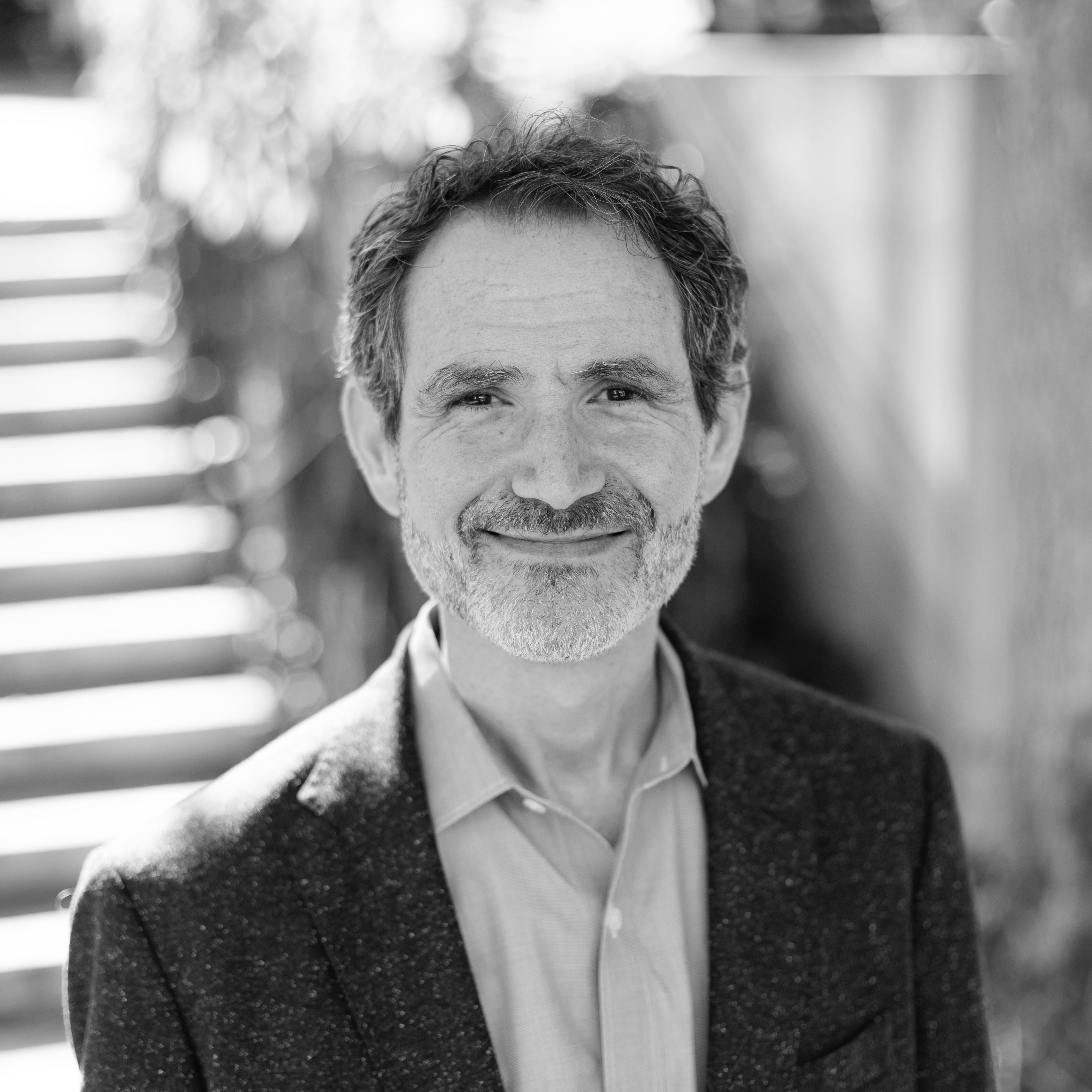
Motahhare Eslami is an Assistant Professor at Carnegie Mellon University’s School of Computer Science, Human-Computer Interaction Institute. Her research bridges human-computer interaction, social computing, and AI ethics. Education : PhD in Computer Science from University of Illinois at Urbana-Champaign, advised by Karrie Karahalios Research Focus : Dr. Eslami investigates algorithmic opacity and user behavior in socio-technical systems, developing frameworks to enhance transparency and stakeholder participation in AI governance. Her work addresses: Algorithmic bias mitigation through participatory audits Ethical implications of generative AI and smart assistants Inclusion of marginalized communities in AI design Transparency mechanisms for opaque algorithms Civic technology and public sector AI Recent Article Trends : Her publications analyze algorithmic harms through lenses of: Medical imaging and data generation Labor market equity and low-wage employment Youth perspectives on AI ethics Content creator experiences with demonetization Explainability in black-box AI systems Scientific Recognition : Best Paper at AAAI HCOMP (2025) Google Academic Research Award (2024) Microsoft AI & Society Fellowship (2024) 100 Brilliant Women in AI Ethics (2023) Teaching Innovation Award at CMU (2023) Advising & Collaborations : Mentors PhD students Shixian Xie, Wesley Deng, Seyun Kim, and former post-doc Jaemarie Solyst. Collaborates with NSF AI Institute for Collaborative Assistance (2022–2027), Amazon, Google, and Microsoft on responsible AI initiatives.
Dr. Dicle Yagmur Ozdemir is an Assistant Professor of Business Information Management at the Rotterdam School of Management (RSM), Erasmus University. She joined RSM in September 2023 after earning a PhD in Management Science (Information Systems concentration) from the University of Texas at Dallas, a Master's in Industrial Engineering from Sabanci University, and a Bachelor's in Industrial Engineering from Istanbul Technical University. Her research focuses on user-generated content dynamics in online platforms and the application of generative AI in healthcare. She employs econometric modeling and natural language processing to study how novel information in reviews influences stakeholders' decisions, and designs algorithms to mitigate information overload. In healthcare AI, she experiments with generative AI's impact on patient-provider interactions. Her work has been presented at top conferences including CIST, WITS, ICIS, WCBA, and INFORMS. Key themes in her research include algorithmic fairness in content selection, the psychological effects of AI-driven health advice, and the mediation effects of review novelty on consumer behavior. She has collaborated internationally, with research outputs including 6 works since 2023. Notable contributions address the moderating role of review dissimilarity in credibility assessments and the paradoxical effects of positive/negative review valence in decision contexts.
Aaron Chatterji is the Mark Burgess & Lisa Benson-Burgess Distinguished Professor at Duke University's Fuqua School of Business and Chief Economist at OpenAI. His work bridges academia, public policy, and business, focusing on AI's societal impacts, innovation, entrepreneurship, and economic growth. He has held senior roles in the Biden Administration, including White House CHIPS coordinator and Acting Deputy Director of the National Economic Council, overseeing U.S. competitiveness and supply chain resilience. Previously, he served as Chief Economist at the U.S. Department of Commerce and worked at the White House Council of Economic Advisers under President Obama. Chatterji also holds a secondary appointment at Duke's Sanford School of Public Policy and is a Research Associate at the National Bureau of Economic Research. Education: Ph.D. in Business Administration, Haas School of Business, UC Berkeley B.A. in Economics, Cornell University Research Interests: Chatterji examines the intersection of business and public policy, with expertise in entrepreneurship, innovation policy, AI ethics, and economic development. His work addresses critical issues like global supply chains, technology competition, and the role of corporate activism in societal challenges. He has authored over 30 peer-reviewed articles and two influential books: Can Business Save the Earth? and The Role of Innovation and Entrepreneurship in Economic Growth . Teaching & Advising: A屡屡 award-winning educator, Chatterji created a popular course on business and politics at Duke. He advises top firms across industries, including finance, healthcare, and technology, and leads OpenAI's research team exploring AI's economic implications. Honors: Kauffman Prize Medal for Entrepreneurship Research Aspen Institute Rising Star Award Strategic Management Society Emerging Scholar Award Public Engagement: Chatterji has written for Harvard Business Review , Wall Street Journal , and Brookings Institution. He previously ran for North Carolina State Treasurer and served on state policy commissions under Governor Roy Cooper.
James Manning is a Lecturer in Digital Design at RMIT University's School of Design. His research focuses on game design, digital media, and cultural memory, exploring topics such as game preservation, livestreaming practices, and the intersection of play and technology. He is particularly interested in 'anarchaeological' approaches to defunct games and the documentation of everyday play practices. His teaching interests include game studies, interactive media, animation aesthetics, and design methodology. He actively supervises research in strategies for reflective shortform game design and has contributed to projects like the Astrosurf interactive dome experience. Key research themes include media archaeology, esports culture, and the sociocultural dimensions of digital games. His work bridges theoretical frameworks with empirical studies, examining how digital platforms shape media consumption and cultural production.
Dr. Ulrike Kuhl is a Researcher at the University of Bielefeld, serving as Project Coordinator for the AI Academy OWL at the Research Institute for Cognition and Robotics and as Scientific Project Coordinator within the Faculty of Engineering's Machine Learning Group. Her office is located at CITEC 2-412, and she can be reached at +49 521 106-12125. Dr. Kuhl's research spans several interconnected domains at the forefront of human-centered AI development: Explainable Artificial Intelligence (XAI) frameworks and their psychological impact Cognitive learning enhanced through AI technologies Counterfactual explanation methodologies and user behavior Human-AI interaction design principles Applications of machine learning in environmental monitoring and sports analytics Analysis of Dr. Kuhl's publication trajectory reveals a consistent focus on bridging the gap between sophisticated AI systems and human understanding. Her work particularly examines how different explanation types affect user trust and decision-making, with recent publications exploring counterfactual explanations in contexts ranging from water distribution networks to educational technology. She has developed experimental frameworks like the 'Alien Zoo' methodology for systematically studying explanation usability. Dr. Kuhl actively contributes to the Center for Cognitive Interaction Technology (CITEC) at the University of Bielefeld, an interdisciplinary hub where computer scientists, engineers, and cognitive scientists collaborate on next-generation interactive technologies. Through her coordination of the AI Academy OWL initiative, she facilitates regional collaboration between academic researchers and industry partners to advance artificial intelligence applications in the Ostwestfalen-Lippe region.
David Salesin is an Affiliate Professor in the Department of Computer Science & Engineering at the University of Washington and a Principal Scientist/Director at Google Research since 2019. He has held academic roles at Cornell University (Visiting Assistant Professor, 1991-92) and guest professorships at Zhejiang University. His career spans academia and industry, including leadership at Adobe's Creative Technologies Lab (2005-17) and Microsoft Research (1999-2005). PhD, Stanford University (1991) Sc.B., Brown University (1983) His research focuses on computer graphics, particularly non-photorealistic rendering, digital typography, color science, and adaptive document layout. He pioneered techniques in image-based rendering, pen-and-ink illustration, and facial animation, with applications in multimedia and user interface design. Article Trends : His work bridges procedural content generation, 3D visualization, and artistic computing, emphasizing user-driven tools for creative industries. Key subfields include texture advection, multiresolution modeling, and real-time camera control for virtual cinematography. Scientific Awards : ACM Fellow (2002) ACM SIGGRAPH Achievement Award (2000) Carnegie Foundation Professor of the Year (1998) NSF Presidential Faculty Fellow (1995-98) Alfred P. Sloan Research Fellowship (1995-97) Numerous industry grants and lab donations He has advised over 30 PhD and Master's students, including leaders at Microsoft, Pixar, and Google. His labs at UW and Adobe focused on graphics, imaging, and creativity tools.
Alfred Hermida is a Professor at the University of British Columbia (UBC), holding a joint appointment in the School of Journalism, Writing, and Media. He is renowned for his contributions to digital journalism, media innovation, and the societal impact of social media and artificial intelligence. Hermida was honored as a Fellow of the International Communication Association (ICA) in 2024, recognizing his transformative scholarly work in communication studies. His career spans academic research, teaching, and leadership. Before joining UBC in 2006, he spent 16 years as a BBC journalist, including foundational roles in the BBC News website. As Director of UBC’s Graduate School of Journalism from 2015 to 2020, he secured major SSHRC grants, including two $2.5M Partnership Grants. He co-founded The Conversation Canada in 2017, a platform bridging academic research with public discourse. Research focuses on journalism’s evolution amid technological shifts, including the Global Journalism Innovation Lab, a SSHRC-funded initiative examining innovation practices and policy frameworks shaping journalism’s future. His publications, such as Data Journalism and the Regeneration of News (2019) and Tell Everyone (2014), explore digital media’s role in information sharing and verification. Hermida’s teaching spans media innovation, visual journalism, and research methods. Colleagues praise his triple threat: exceptional scholarship, pedagogy, and administrative leadership. His work consistently bridges theory and practice, emphasizing journalism’s societal relevance in an algorithm-driven world.
Professor Emily S. Cross is a cognitive and social neuroscientist holding dual appointments at the University of Glasgow's School of Psychology & Neuroscience (UK) and Western Sydney University's MARCS Institute (Australia). She directs the Social Brain in Action Laboratory (SoBA), specializing in how embodied experiences shape social perception. Cross earned a BA in psychology and dance from Pomona College, MSc from University of Otago as a Fulbright Fellow, and PhD in cognitive neuroscience from Dartmouth College, followed by postdoctoral training at University of Nottingham and Max Planck Institute. Her research explores experience-dependent plasticity through dance, robotics, and neuroimaging techniques (fMRI, TMS), focusing on four key areas: neural signatures of embodied expertise, neuroaesthetics, visual learning across lifespan, and social engagement with robots. This interdisciplinary work bridges neuroscience, performing arts, and robotics. Cross's research shows strong focus on human-robot interaction dynamics, cultural perceptions of robotics, and the neural correlates of aesthetic experiences. Recent work investigates how social experience shapes human-robot interaction, cross-cultural differences in robot acceptance, and computational approaches to movement analysis. Publications consistently demonstrate methodological innovation through VR, economic games, and large-scale motion capture libraries. Honors & Awards: Jacob Brownowski Award (British Science Association, 2017) Philip Leverhulme Prize in Psychology (2018) World's 50 Most Renowned Women in Robotics (2020) Elected member: Young Academy of Europe Elected member: Royal Society of Edinburgh's Young Academy of Scotland Her ERC Starting Grant funds groundbreaking work on human-robot interaction. Cross leads the Social Brain in Action Lab with focus on mentoring next-generation scientists and research ethics training. The lab employs neuroimaging, training paradigms, and diverse methodologies to study action observation across dance, music, and robotics domains.
Professor Jean Burgess is a leading scholar in digital media studies, holding positions as Distinguished Professor of Digital Media at Queensland University of Technology (QUT) and Associate Director of the ARC Centre of Excellence for Automated Decision-Making and Society (ADM+S). She is affiliated with the Digital Media Research Centre (DMRC) and School of Communication at QUT. Her work focuses on the social implications of digital platforms, algorithmic culture, and innovative digital methods. Education: PhD (Queensland University of Technology) M.Phil (University of Queensland) B. Arts (Hons) and B. Mus (Hons) (University of Queensland) Research Interests: Burgess explores digital media technologies' societal impacts, platform governance, and algorithmic systems. Her recent work includes studies on GenAI, Instagram's visual culture, and automated decision-making. She co-authored Everyday Data Cultures (2022) and contributes to platforms like The Conversation. Awards: Fellow, Australian Academy of the Humanities Member, ARC College of Experts Recipient of the Vice-Chancellor’s Award for Excellence Grants & Projects: Key projects include the ARC-funded ADM+S Centre, research on Instagram’s machine vision, and studies on algorithmic transparency in advertising. She collaborates with industries like Australia Post and the Australian Centre for the Moving Image. Labs/Teams: Leads the DMRC and ADM+S QUT node, fostering interdisciplinary research on digital media's role in society.
Andrew Mondschein is Associate Professor of Urban and Environmental Planning at University of Virginia School of Architecture, serving as Associate Dean of Research. His work focuses on equitable transportation systems, sustainable accessibility, and impacts of emerging technologies on urban mobility. Education includes: PhD, University of California, Los Angeles MA Urban Planning, University of California, Los Angeles BA Architecture, Yale University Research examines how transportation technologies affect social equity and urban form, with emphasis on pedestrian wellbeing, autonomous vehicle adoption, parking policy, and community-centered planning. Recent publications demonstrate strong focus on psychophysiological impacts of urban walking, cross-cultural mobility studies, and spatial analysis of transportation preferences. Articles show consistent themes: urban walkability (especially health impacts), autonomous vehicle integration, parking policy analysis using novel data sources, and community-centered planning approaches. Methodologically, employs mixed methods including biometric sensing, sentiment analysis of social media, geospatial modeling, and participatory design. No specific awards mentioned. Teaching covers transportation policy, land use, environmental impacts, and research methods with emphasis on ethical planning practices.
Elena Simperl is a Professor of Computer Science and Deputy Head of Department for Enterprise and Engagement at King's College London's Department of Informatics. She co-directs the King's Institute for Artificial Intelligence and serves as Director of Research for the Open Data Institute. As a Hans Fischer Senior Fellow at the Technical University of Munich's Institute for Advanced Study, she leads the Trustworthy Knowledge Graphs focus group and contributes to advancing human-centric AI research across European institutions. Professor Simperl obtained her doctoral degree in Computer Science from the Free University of Berlin and her diploma from the Technical University of Munich. Prior to joining King's, she held academic positions in Germany, Austria, and at the University of Southampton, and was a Turing Fellow. Her career trajectory demonstrates consistent leadership in bridging academic research with practical applications in data ecosystems. Her research sits at the critical intersection of AI and social computing, focusing on human-centric approaches to building sociotechnical systems that integrate data, algorithms, and human capabilities. She investigates how to make knowledge engineering more accessible, how to leverage collective intelligence for data quality improvement, and how to design participatory AI systems that address societal challenges like misinformation. Her work spans knowledge graphs, semantic technologies, crowdsourcing, and open data, with particular emphasis on the social dimensions of data-intensive systems and the governance frameworks needed for trustworthy AI deployment. Analysis of her recent publications reveals a strong evolution toward integrating large language models with traditional knowledge engineering practices while maintaining human oversight. There's a clear trajectory from foundational work on knowledge representation toward increasingly applied research addressing real-world challenges in media ecosystems, citizen science, and data governance, with growing attention to policy implications of AI technologies. Fellow of the British Computer Society Fellow of the Royal Society of Arts Hans Fischer Senior Fellow at TUM-IAS (2023) Ranked among top 100 most influential scholars in knowledge engineering of the last decade Included in Women in AI 2000 ranking Professor Simperl has led 14 major European and national research projects totaling millions in funding, including MediaFutures (a Horizon 2020 program tackling online misinformation), QROWD, ODINE, Data Pitch, and ACTION. She currently co-chairs the Croissant working group in ML Commons developing data standards for AI, and serves as president of the Semantic Web Science Association. Her research has directly influenced the development of data ecosystems supporting startups and citizen science initiatives across Europe, demonstrating exceptional ability to translate theoretical advances into practical impact. As Director of Research at the Open Data Institute, she oversees initiatives connecting data entrepreneurs with artists and civic organizations. Her leadership in the MediaFutures project established a data-driven innovation hub that supported 51 startups/SMEs and 43 artists through three open calls, creating a sustainable model for arts-technology collaborations addressing media challenges. Her work with the ODINE project helped create a European ecosystem for data-driven startups, demonstrating her commitment to building practical applications of open data principles.
David Lie is a Professor at the University of Toronto, jointly appointed in the Edward S. Rogers Department of Electrical and Computer Engineering, Department of Computer Science, and Faculty of Law. He directs the Schwartz Reisman Institute for Technology and Society, co-founded the IT3 Lab, and serves as Associate Director at the Data Sciences Institute. His research focuses on securing computer systems through operating systems, architecture, and formal verification approaches. B.A.Sc (University of Toronto, 1998) M.S. (Stanford, 2001) Ph.D. (Stanford, 2004) His research emphasizes building secure systems for mobile platforms and cloud computing, with significant contributions to trusted execution environments (XOM architecture precursor to Intel SGX/ARM TrustZone) and Android permission mapping (PScout tool). Recent work spans cryptographic side-channels, web tracking detection, and AI safety. Key honors include SOSP 2003 Best Paper, Ontario MRI Early Researcher Award (2008), Connaught Global Challenge Award (2017), and Canada Research Chairs (Tier 2 2013-2018, Tier 1 current). He has secured over $30M in research funding and served as General Chair for CCS 2018. Lie leads the IT3 Lab (Technology and Policy Integration), collaborates with industry leaders (Google, VMware, Telus), and mentors graduate students working on practical security implementations. He co-teaches ECE1724: Privacy Problems with Lisa Austin from the Faculty of Law, reflecting his technology-policy interests.
Cecilia O. Alm is a Professor in the Department of Psychology within the College of Liberal Arts at Rochester Institute of Technology (RIT), where she serves as the Artificial Intelligence Program Director. She holds multiple leadership roles including Director of the Center for Human-aware AI and Director of the Computational Linguistics and Speech Processing Lab (CLaSP). Her institutional affiliations span the School of Information, Ph.D. Programs in Cognitive Science and Computing and Information Sciences, Department of Computer Science, and MS in Data Science program. Dr. Alm earned her Ph.D. from the University of Illinois at Urbana-Champaign. Her research focuses on human-centered artificial intelligence with particular emphasis on linguistic and multimodal sensing, affective computing, and natural language processing. She investigates how AI systems can better understand and respond to human communication through multimodal dialogue processing, with applications in accessibility, education, and healthcare. Her recent publications demonstrate a strong trend toward developing inclusive AI systems, particularly through projects addressing Deaf community needs (MULTICOLLAB-ASL), subtle emotion recognition (FUSE corpus), and bias mitigation in NLP. The work consistently integrates multimodal data streams (speech, gaze, gesture) to create more responsive human-AI interaction frameworks. Current research directions emphasize diversity in AI education, visual prosody in sign languages, and human-in-the-loop AI development. Dr. Alm leads several significant NSF-funded initiatives including the AWARE-AI program, IRES AI-PROWIL international research experience, and collaborative projects with Gallaudet University focused on Deaf scientist-centered AI research. She has secured over $2.5 million in external funding for her work on human-aware AI systems. She directs the CLaSP lab which provides research opportunities for PhD, MS, and undergraduate students, with graduates employed at major technology companies including Amazon, Apple, Microsoft, and Facebook. The lab focuses on real-world AI applications in accessibility, human-robot interaction, and multimodal communication systems.
Tim Van de Cruys is a Senior Lecturer at the Faculty of Arts, KU Leuven, serving as Head of the Centre for Computational Linguistics (CCL). He maintains significant affiliations with LECTIO (KU Leuven Institute for the Study of the Transmission of Texts, Ideas and Images), Leuven.AI (KU Leuven Institute for Artificial Intelligence), and LILI (KU Leuven Interdisciplinary Language Institute). His work bridges computational linguistics, artificial intelligence, and humanities research with practical applications across multiple disciplines. Dr. Van de Cruys specializes in computational semantics and creative language generation, with particular expertise in applying NLP techniques to historical and classical texts. His research spans multiple domains including: Natural Language Processing for ancient languages (Latin, Ancient Greek) Computational approaches to lexical and compositional semantics Large language models and their applications in humanities research Creative language generation and human-AI collaboration Named entity recognition and disambiguation in historical contexts Non-autoregressive modeling for sequential generation tasks His recent publications demonstrate a strong focus on applying cutting-edge NLP techniques to humanities challenges, particularly in processing ancient languages. He frequently employs transformer models to address named entity recognition, word sense discrimination, and semantic analysis in low-resource language contexts. His work consistently bridges formal linguistic theory with practical computational applications, creating valuable tools for digital humanities scholars. As promotor and co-promotor on numerous research projects extending through 2029, Dr. Van de Cruys supervises PhD students working at the AI-humanities intersection. His current major projects include "Living Corpora" (exploring human-AI collaboration in digital humanities), "Stochastic processes and non-autoregressive models for sequential generation," and "NIKAW" (exploring knowledge networks from classical antiquity). These projects demonstrate his commitment to advancing both theoretical understanding and practical applications of computational linguistics. He teaches various courses including Computational Linguistics, Scripting Languages, Programming for Humanities, Computational Creativity, and AI for Humanities, training students to work at this critical interdisciplinary crossroads. His leadership of the Centre for Computational Linguistics positions him at the forefront of computational linguistics research in Belgium, where he continues to expand the boundaries of what's possible at the intersection of language, computation, and humanistic inquiry.
Jay Henderson is an Assistant Professor in the Department of Computer Science at Memorial University of Newfoundland, leading the Human-Computer Interaction (HCI) Lab. His research focuses on quantitative HCI, measuring human performance with emerging technologies such as mixed reality and generative AI. He holds a PhD from the University of Waterloo and has held roles including Postdoctoral Fellow at Carleton University and Senior Research Scientist at Huawei Technologies Canada. Education: PhD in Computer Science, University of Waterloo (2021) BSc Hons in Computer Science (minors in Mathematics and Psychology), Mount Allison University (2016) Research Interests: Henderson’s work bridges computer science with psychology and mathematics, emphasizing objective measurement of user interactions. Key areas include mixed reality productivity, generative AI interfaces, gesture-based input, and multimodal feedback systems. His quantitative approach ensures practical insights for technology design. Key Grants & Awards: NSERC Discovery Grant ($155,000 over 5 years) NSERC Discovery Launch Supplement ($12,500) David R. Cheriton Graduate Scholarship ($20,000 over 2 years) Teaching & Supervision: Teaches courses like COMP 4303 (AI for Games) and supervises multiple graduate and undergraduate researchers. Notable supervisees include Daniel Jo (MSc) and Arunav Saha (BSc Honours). Service Contributions: Served on ACM committees including Graphics Interface and CHI Late Breaking Work. Acted as Virtual Chair for ACM ASSETS 2024 and contributed to ACM’s name change policy as a transgender advocate.