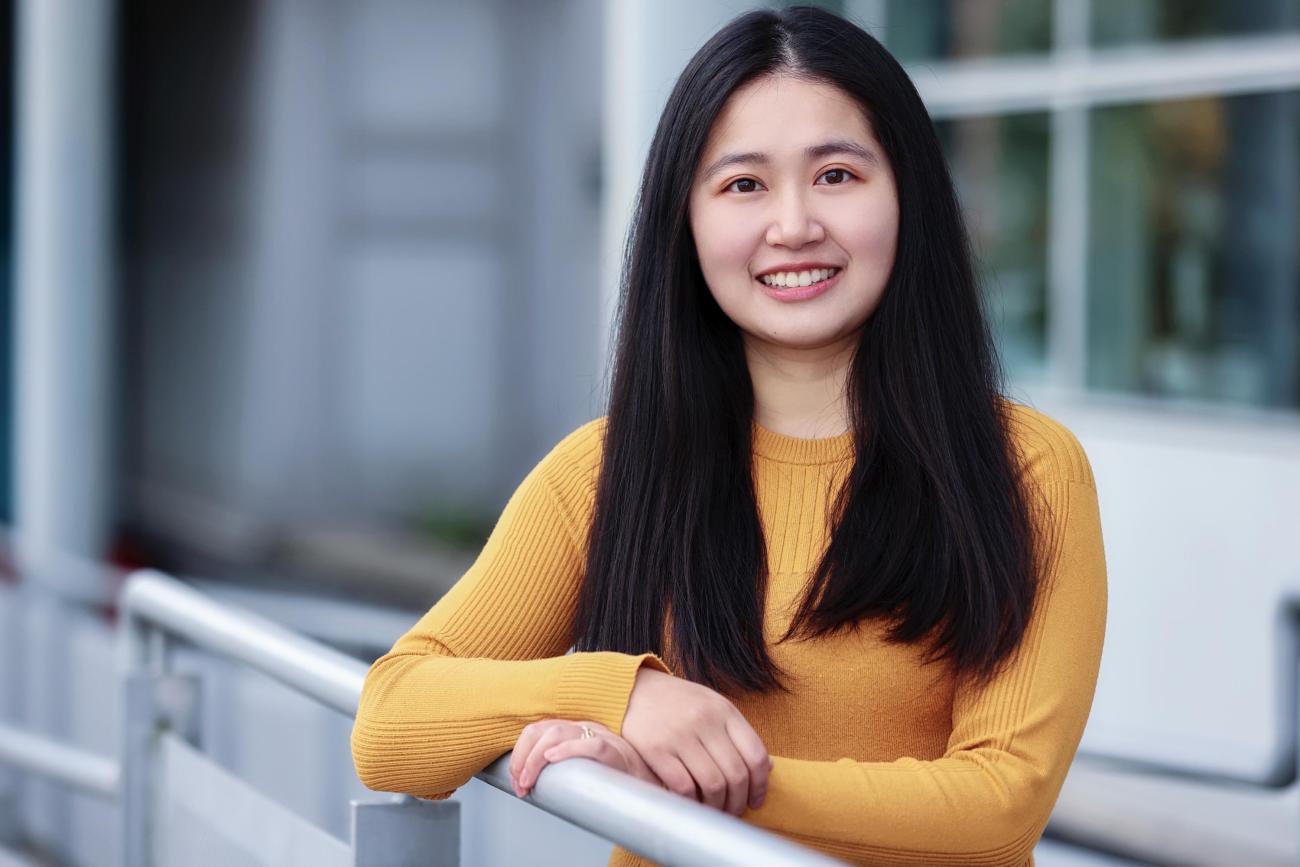
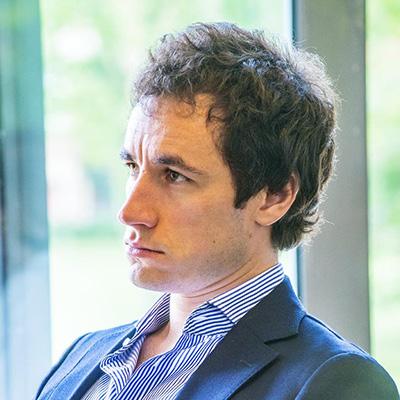
Dr. Miriam Gieselmann was a researcher at the Media Technology Department of the University of Tübingen from November 2020 to June 2024. Her work focused on human-AI interaction dynamics, trust in AI systems, and methodological challenges in studying human-machine relationships. She contributed to interdisciplinary research on AI acceptance in business contexts and pedestrian behavior analysis in urban environments. Her research interests span: Multimodal interaction design Trust and disclosure behaviors toward AI Ethical implications of conversational AI Methodological innovations for human-machine interaction studies Applications of AI in education and traffic psychology Her publications analyze AI adoption barriers, disclosure decision-making mechanisms, and perceptual dynamics in human-AI relationships. She co-authored foundational work on pedestrian communication patterns at urban intersections, contributing to safer street design principles. Miriam collaborated with interdisciplinary teams across business, psychology, and urban studies domains. Her work emphasizes bridging theoretical insights with practical applications in technology design and public policy.
Francis Y. Yan is an Assistant Professor of Computer Science at the University of Illinois Urbana-Champaign (UIUC), holding an affiliate appointment in Electrical & Computer Engineering within the Grainger College of Engineering. He leads the Illinois Networked Systems and AI (NSAI) research group, focusing on building intelligent networked systems that are safe, robust, and performance-optimized through practical machine learning integration. Prior to joining UIUC in January 2025, he served as a Senior Researcher at Microsoft Research Redmond under Victor Bahl. His educational background includes: Ph.D. in Computer Science from Stanford University (2020), advised by Keith Winstein and Philip Levis B.S. in Computer Science (Yao Class) and B.A. in Economics from Tsinghua University (2015) Additional undergraduate studies at MIT Yan's research adopts a holistic approach to practical machine learning for networked systems, emphasizing judicious application rather than indiscriminate use. He builds real-world systems and research platforms to lay ML foundations, devises deployable algorithms using domain insights, and validates performance through extensive empirical evidence. His work consistently addresses operator concerns regarding ML deployment—focusing on safety, robustness, generalization, and efficiency—while strategically combining ML with classical networking and systems techniques. Analysis of his 15 most recent publications (2023-2025) reveals dominant themes in resource allocation for microservices (DeDe, Autothrottle), real-time video optimization (Mowgli, GRACE), and LLM-driven network algorithm design. His work bridges theoretical advances with industrial deployment, evidenced by platforms like Puffer (400,000+ users) and OpenNetLab that have become community standards for validating congestion control algorithms. His research has been recognized with top honors: USENIX NSDI Outstanding Paper Award (2024) for Autothrottle APNet Best Paper Award (2022) IRTF Applied Networking Research Prize (2021) USENIX NSDI Community Award (2020) USENIX ATC Best Paper Award (2018) for Pantheon Yan actively recruits master's and undergraduate researchers for his NSAI group, prioritizing self-motivated students for projects in networked systems and AI. His research is supported by industry collaborations (notably Microsoft) and manifests in deployable platforms like Puffer—which has enabled award-winning research at NSDI and SIGCOMM—and OpenNetLab for real-time communications. His work directly impacts production systems including Microsoft Teams and Bing. He founded and directs the Illinois Networked Systems and AI (NSAI) research group, which operates critical infrastructure including Puffer (a live TV service and research platform) and OpenNetLab. These platforms facilitate community-wide validation of novel algorithms, with Puffer alone supporting multiple best-paper awards at top conferences. Current workstreams span cloud resource management (Teal, Autothrottle, DeDe), low-latency video (Puffer, Tambur, Mowgli), and LLM-augmented systems (Nada, Designing Network Algorithms via LLMs).
Mahsan Nourani is a Research Assistant Professor at Northeastern University, specializing in intersections of human-computer interaction, artificial intelligence, and healthcare informatics. Their research focuses on explainable AI systems, user behavior in AI partnerships, and design of interactive machine learning tools. Current work explores cognitive biases in human-AI collaboration, predictive analytics in healthcare, and activity recognition in videos. Key research areas include user profiling in AI applications, trust dynamics in intelligent systems, and visual debugging tools for machine learning models. Notable projects include the HEART initiative for real-time healthcare analytics and development of the DETOXER explanation framework for temporal classification systems. Recent publications investigate nudge techniques for behavioral change (Romadoro project), anchoring bias effects in AI system trust, and evaluation of view rotation techniques in virtual reality navigation. Their work consistently bridges technical AI advancements with human-centered design principles. No academic awards are listed in the provided materials. Current affiliations include Northeastern University's research groups in AI ethics, human-computer interaction, and healthcare technology innovation.
Dr. John Hastings is a Professor in the Department of Computer Science at Dakota State University, part of the Beacom College of Computer & Cyber Sciences. With nearly 35 years of experience, he specializes in teaching and curriculum development in computer science, combining academic rigor with industry insights from his roles as an AI/ML engineer, team leader, and business owner. Education: Ph.D., Computer Science, University of Wyoming M.S., Computer Science, University of Wyoming B.S., Computer Science, University of Wyoming Research interests include machine learning, AI applications in natural language processing (LLMs), generative AI, computer vision, ecological/environmental AI, AI in games, and gamification in education. Recent publications focus on cybersecurity challenges, AI ethics, and insider threat detection. His work has been recognized with awards such as the AAAI’s Innovative Applications of Artificial Intelligence (IAAI) Award and an International IPM Award for Excellence related to the CARMA AI tool. Teaching emphasizes active learning and practical skills, including courses on programming, data structures, AI, and cybersecurity. He advocates for gamification in education to enhance student engagement and success.
Carles Padro Laimon is a Professor at the Universitat Politècnica de Catalunya (UPC), affiliated with the Department of Mathematics and the School of Telecommunications Engineering. He is a leading researcher in cryptography and information security, focusing on secret sharing schemes, combinatorial structures, and cryptographic protocols. His work integrates discrete mathematics, coding theory, and algorithmic design to address security challenges in digital systems. Padro leads the MAK Research Group (Mathematics Applied to Cryptography) and the ISG-MAK Information Security Group. He has been involved in numerous competitive research projects, including initiatives on post-quantum cryptography and secure multi-user systems. His contributions span over 211 documented activities, including articles, theses, and conference participations. His research interests include the theoretical foundations of cryptography, with a focus on optimizing secret sharing schemes, analyzing matroid-based structures, and developing secure communication protocols. He has collaborated extensively with institutions like the UPC and European research networks, contributing to both academic and practical advancements in cybersecurity. Padro holds a PhD in Mathematics from UPC and has supervised doctoral theses and mentored researchers in his field. His work frequently appears in top journals like IEEE Transactions on Information Theory, Designs, Codes and Cryptography, and SIAM Journal on Discrete Mathematics.
Dr. Joyoung Lee is an Associate Professor in the Department of Civil and Environmental Engineering at New Jersey Institute of Technology (NJIT). He previously served as Laboratory Manager at the Federal Highway Administration's Saxton Transportation Operations Laboratory. His research focuses on Connected Vehicle (CV) systems, including applications in traffic management, signal control optimization, and autonomous vehicle infrastructure integration. Dr. Lee holds a Ph.D. (2010) and M.S. (2007) in Transportation Engineering from the University of Virginia, and a B.S. (2000) in Transportation Engineering from Hanyang University. His work emphasizes CV-based solutions for real-time traffic systems, cooperative vehicle-infrastructure systems (CVIS), and autonomous vehicle integration. Notable achievements include the 2019 IEEE CAVS Best Paper Award and multiple best paper recognitions from PTV User Group Meetings. His research also addresses traffic safety through innovations like the Virtual Guide Dog system for visually impaired pedestrians and advanced traffic monitoring frameworks using LiDAR and computer vision. Education: Ph.D., Transportation Engineering, University of Virginia (2010) M.S., Transportation Engineering, University of Virginia (2007) B.S., Transportation Engineering, Hanyang University (2000) Dr. Lee's research interests span smart city infrastructure, edge computing for traffic systems, and sustainable transportation solutions. He has pioneered algorithms for cooperative intersection management, automated platooning systems, and federated learning-based traffic optimization. His work bridges theoretical models with real-world implementation through partnerships with FHWA and industry stakeholders. Key contributions include development of the Cumulative Travel-Time Responsive (CTR) traffic signal control system, smart arrival notification systems for paratransit services, and advanced microsimulation calibration techniques. His lab focuses on translating CV data into actionable strategies for safer, more efficient transportation networks. Awards: IEEE CAVS Best Paper Award (2019) ASCE Grand Challenge Innovation Contest Honorable Mention (2017) PTV VISSIM Best Paper Awards (2012, 2008) Excellence in Research Award (University of Virginia, 2011) Ongoing projects include semi-decentralized graph neural networks for traffic forecasting and low-cost LiDAR-based traffic monitoring systems. His work addresses critical challenges in autonomous vehicle integration, incident management, and infrastructure resilience through interdisciplinary collaborations.
Dr. Dongyun Nie is an Assistant Professor at Dublin City University's School of Computing. She holds a PhD in Computer Science with a specialization in Customer Relationship Management. Her core research explores customer lifetime value, forecasting, data mining, and record linkage. Her recent publications demonstrate interdisciplinary work spanning health informatics, sports analytics, and environmental data engineering. Research predominantly focuses on machine learning applications for real-world data challenges including eye-tracking systems, lifelog analytics, and public health data infrastructure. Teaching responsibilities include modules on Machine Learning (CA4109), Enterprise Systems Configuration (CA2049), and Web Design (CA106), integrating research expertise into computing education.
Dr. Chutima Boonthum-Denecke is a Professor in the Department of Computer Science at Hampton University's School of Science. She joined Hampton University in 2006 as an Assistant Professor and now serves as Director of the Information Assurance and Cyber Security Center (IAC@HU). She leads the NSF CyberCorps Scholarship for Service program and has contributed to NSF initiatives like ARTSI and STARS Alliances. Her educational background includes a Ph.D. in Computer Science from Old Dominion University (2007), an MS in Applied Computer Science from Illinois State University (2000), and a BS in Computer Science from Srinakharinwirot University (1997). Dr. Boonthum-Denecke's research integrates artificial intelligence, natural language processing, and cybersecurity. Key interests include: Developing intelligent tutoring systems and educational games Secure coding practices for software engineering NLP applications in information retrieval and assessment tools Cyber-physical security for IoT and robotics Her recent publications (2016-2021) focus on machine learning applications in cybersecurity, including sentiment analysis for threat detection, blockchain-enhanced IoT security, and vulnerability assessments of emerging technologies. Collaborative work with students frequently addresses privacy ethics in AI assistants, RFID implants, and cloud systems. She mentors students through the IAC@HU lab, resulting in award-winning conference presentations on cybersecurity topics. As Principal Investigator of NSF CyberCorps, she oversees scholarship programs that bridge academic research with national security needs.
Mustafa A. Mustafa is a Senior Lecturer (Associate Professor) in the Department of Computer Science at The University of Manchester, where he leads the Trusted Digital Systems Cluster as part of the university-wide Centre for Digital Trust and Society. His academic journey spans prestigious institutions including The University of Manchester, where he completed his PhD, and KU Leuven in Belgium, where he served as a post-doctoral research fellow. Dr. Mustafa earned his educational qualifications through an impressive academic path: a B.Sc. in communications from the Technical University of Varna, Bulgaria (2007), an M.Sc. in communications and signal processing from Newcastle University, UK (2010), and a Ph.D. in computer science from The University of Manchester, UK (2015). His doctoral research focused on "Smart Grid Security: Protecting Users' Privacy in Smart Grid Applications," laying the foundation for his subsequent research career. Dr. Mustafa's research expertise centers on information security, data privacy, and applied cryptography with particular focus on smart grid systems, smart city applications, e-health, and IoT. His work addresses critical challenges in securing peer-to-peer electricity trading markets, smart metering infrastructure, electric vehicle charging systems, and health data management. He has developed innovative solutions for keyless car sharing systems, frictionless authentication mechanisms, and privacy-preserving protocols for data collection and distribution. His scholarly contributions demonstrate a consistent trajectory toward increasingly sophisticated privacy-preserving techniques applied across multiple domains. Recent work shows a growing integration of artificial intelligence and machine learning approaches with traditional cryptographic methods, particularly in federated learning systems and large language model verification. His research bridges theoretical cryptography with practical implementations in energy systems and healthcare applications. Dr. Mustafa's scientific achievements have been recognized with several prestigious awards: Winner of the Student Video Competition at IEEE SmartGridComm 2017 for "Secure and Privacy-friendly Local Electricity Trading" Best Paper Award at SECURWARE 2017 Distinguished Achievement Award as Postgraduate Research Student of the Year nominee by the School of Computer Science of The University of Manchester (2015) Dame Kathleen Ollerenshaw Research Fellowship (2018-2023) As an academic supervisor, Dr. Mustafa has mentored numerous graduate students through their PhD and Master's research, with a particular focus on privacy and security challenges in emerging technologies. His current supervision portfolio includes research on privacy-friendly multi-agent systems for smart grids, security for IoT in e-health, vulnerability detection in IoT cryptography, and bot detection systems. He has secured significant research funding through multiple competitive grants including EnnCore: End-to-End Conceptual Guarding of Neural Architectures (EPSRC, 2020-2024), SCorCH: Secure Code for Capability Hardware (EPSRC, 2019-2023), and SNIPPET: Secure and Privacy-friendly Peer-to-peer Electricity Trading (FWO-SBO project, 2019-2023). Dr. Mustafa leads the Trusted Digital Systems Cluster within the Centre for Digital Trust and Society at The University of Manchester. His research group comprises PhD students, postdoctoral researchers, and collaborators working on cutting-edge security and privacy solutions. The team maintains strong international collaborations, particularly with KU Leuven in Belgium, and contributes to standards development as evidenced by Dr. Mustafa's role as an expert in the IEC/SYC/WG 3 "IEC Smart Energy Roadmap."
Dr. Dijiang Huang is an Associate Professor in the School of Computing and Augmented Intelligence at Arizona State University (ASU). He joined ASU in 2005 after completing his Ph.D. in Telecommunications and Computer Networking from the University of Missouri-Kansas City (2004). His research focuses on cybersecurity, mobile computing, and cloud computing, supported by grants from the National Science Foundation (NSF), Office of Naval Research (ONR), and industry partners like HP. He has received prestigious awards, including the ONR Young Investigator Award and HP Innovative Research Award. Education: B.E. in Telecommunications, Beijing University of Posts and Telecommunications (1995) M.S. in Computer Science, University of Missouri-Kansas City (2001) Ph.D. in Telecommunications and Computer Networking, University of Missouri-Kansas City (2004) Research Interests: Huang’s work emphasizes secure communication protocols, privacy-preserving techniques, and resilient network architectures. He has pioneered frameworks like Secure Group Communication (SeGCom) and Attribute-Based Cryptography , addressing challenges in VANETs, SDN, and edge computing. His recent projects include developing Waterfall for SDN security and SmartDefense for DDoS mitigation. Grants & Awards: ONR Young Investigator Award (2008) HP Innovative Research Award (2008) NSF grants for secure mobile cloud frameworks and cyber-physical systems Professional Contributions: Huang has served as a reviewer for journals like IEEE Transactions on Wireless Communications and conferences such as ACM MobiArch. He co-developed the Open Human-Robotic Mobile Networking and Security Testbed (OHReST) and the Virtual Laboratory (VLab) for cybersecurity education.
Prof. Dr. Frank-Martin Belz is a full professor of corporate sustainability at the TUM School of Management and Director of the TUM SEED Center, a global interdisciplinary research hub. His career includes studies in business administration at the University of Mannheim (1990), followed by doctoral and post-doctoral research at the University of St. Gallen in Switzerland. He has conducted extensive research stays in Sweden, the USA, Canada, and Finland. His research focuses on sustainable entrepreneurship, sustainability marketing, and community-based enterprise creation. He emphasizes integrating social identity theory and structuration theory into entrepreneurial processes, particularly in environmental and social contexts. His work bridges academic theory with practical applications, including innovative approaches to consumer integration in product development and sustainability-driven marketing strategies. Key achievements include the award-winning textbook "Sustainability Marketing: A Global Perspective" (2010) and influential publications on sustainable entrepreneurship models and community-based enterprises. He actively promotes cross-sector collaboration through his leadership at the TUM SEED Center, fostering global partnerships in sustainability research and education.
Ivano Cardinale is a Professor and Head of the Institute of Management Studies at Goldsmiths, University of London. He previously held a Junior Research Fellowship at Emmanuel College, Cambridge, and has been a Visiting Fellow at Clare Hall, Cambridge. He founded and directs the Structural Economic Analysis Unit and serves as Editor-in-Chief of Structural Change and Economic Dynamics . PhD, University of Cambridge 2022 Feltrinelli Giovani Prize for Social Sciences (Italy's top award for researchers under 40) 2019 Guest Faculty, Learning Innovation Laboratory, Harvard University His research in Structural Political Economy examines how material, social, and cognitive structures shape economic conflicts and policy outcomes. Key areas include institutional theory, industrial dynamics, and energy transition frameworks. He analyzes systemic interests, sectoral conflicts, and structural conditions through theoretical and empirical studies. Recent publications explore gas market vulnerabilities in EU energy policy, Pasinetti's institutional theory, and networked economic structures. His work appears in Structural Change and Economic Dynamics , Energy Economics , and Cambridge Journal of Economics . Scientific awards include: 2022: Feltrinelli Giovani Prize (Social Sciences) 2019: Political Economy Research Fellowship (ISRF) 2016: Life Membership, Clare Hall, Cambridge He contributes to academic governance through editorial roles and co-edited major handbooks including The Palgrave Handbook of Political Economy (2018) and The Political Economy of the Eurozone (2017).
Duygu SALMAN ÖZTÜRK is an Assistant Professor at Boğazici University's Department of Tourism Administration. She holds a Ph.D. in Organization Studies from Bilgi University (2014), an M.A. in Industrial/Organizational Psychology from City University of New York (2003), and a B.A. in Tourism Administration from Boğazici University (2000). Her research focuses on diversity management, socio-cultural impacts of tourism, equality in the tourism industry, organizational culture, and emotional labor. Ph.D., Organization Studies, Bilgi University (2014) M.A., Industrial/Organizational Psychology, City University of New York (2003) B.A., Tourism Administration, Boğazici University (2000) Her research spans organizational psychology and tourism studies, examining intersections between gender, labor dynamics, cultural heritage, and sustainable development. She has led projects on implicit bias, human factors in cybersecurity, and diversity management frameworks. Her 2024 article on gender and gig economy tourism labor highlights contemporary trends in precarious work environments. Scientific awards include the Best Doctoral Paper Award (2008). She has supervised PhD student Serra Yağış and collaborated with scholars like Prof. Dr. Burak Güçlü and Prof. Dr. Bengi Ertuna. Her teaching portfolio includes undergraduate and graduate courses such as Diversity Management, Organizational Behavior, and Qualitative Research.
Changjian Li is an Assistant Professor in the School of Informatics at the University of Edinburgh. He leads the GraphViX Group (Graphics, Vision and X) and is a member of the Institute of Perception, Action and Behaviour (IPAB). His research spans computer graphics, computer vision, and human-computer interaction with a focus on 3D generation and analysis. Education: Bachelor's Degree from Shandong University (2014) Ph.D. from the University of Hong Kong (2019) under Prof. Wenping Wang Postdoc at University College London (UCL) with Prof. Niloy Mitra Starting Researcher position at Inria with Dr. Adrien Bousseau Research Interests: Changjian's research focuses on sketch-based 3D modeling, CAD modeling, point cloud processing, and medical imaging applications. He develops systems that bridge intuitive sketching with precise CAD workflows, enhances 3D animation pipelines, and applies neural methods to sparse medical data reconstruction. Scientific Recognition: Best Paper Honorable Mention Award (MICCAI 2021) CADTalk selected as Highlight (CVPR 2024 top 10%) ACM SIGGRAPH Asia 2018 cover image selection ACM SIGGRAPH Asia 2015 technical paper highlight CVPR 2019 poster highlighted in 'Computer Vision News' Advising & Collaborations: He mentors postdocs and PhD students including Duolikun Danier, Haocheng Yuan, Ankan Bhunia, and Lei Zhong. Former advisees include Salvatore Esposito (now at Edinburgh), Guangshun Wei (Shandong University), and Mingjun Yang (University of Melbourne). Collaborates with Oisin Mac Aodha, Hakan Bilen, and Niloy Mitra. Professional Service: Currently serves as Associate Editor for IEEE TVCG and participates in program committees for SIGGRAPH Asia, SIGGRAPH, EuroGraphics, and Geometry Design and Computing (GDC) conferences.
Professor Ewa Luger serves as Professor and Chair of Human-Data Interaction at the University of Edinburgh, co-Programme Director of AHRC’s Bridging Responsible AI Divides (BRAID), and codirector of the EPSRC Responsible NLP Centre for Doctoral Training. She actively bridges academia, policy, and industry through roles in the DCMS college of experts and Centre for Artificial Intelligence (Future of Privacy Forum). Her educational background spans: BA (Hons) in International Relations & Politics MA in International Relations PhD in Computer Science Luger’s research investigates social, ethical, and interactional dimensions of AI systems, with emphasis on policy design, user consent, and exclusion frameworks. She pioneers work on responsible AI implementation across critical domains including voice interfaces, journalism, public service media, and accounting institutions. Her specific research trajectories include: Responsible AI governance and ethical deployment Human-Data Interaction paradigms Intelligibility of AI for expert/non-expert users Security/safety of cloud/edge systems AI adoption readiness in professional contexts Language model applications in real-world settings Her scholarly recognition includes: Alan Turing Institute Fellowship Fellowship at Corpus Christi College, University of Cambridge Luger has secured over £40 million in research funding since 2016 through EPSRC, ESRC, AHRC, and DataLab grants. Current leadership roles span the AHRC BRAID programme, EPSRC Fixing the Future project, UKRI Digital Twinning Network, and Responsible NLP CDT. She founded the annual 'Conversations' workshop on chatbot research in 2015, fostering global academic-industry collaboration. Her interdisciplinary work operates through dynamic project teams including the Network Plus in Human Data Interaction, DCODE EU consortium, and BBC-focused PubVIA initiative, integrating computer science, social sciences, and humanities perspectives to address AI’s societal challenges.