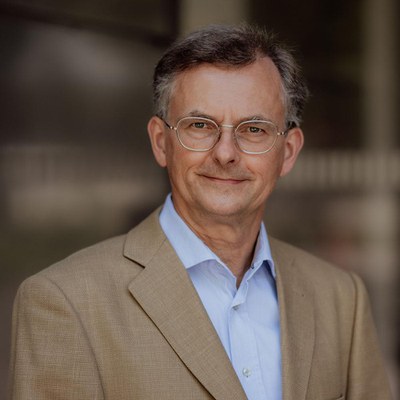
Guido Reina is a Senior Academic Councillor at the Visualization Institute of the University of Stuttgart (VISUS), affiliated with the Ertl Working Group. His research focuses on scientific visualization, computer graphics, and virtual reality, with a particular emphasis on rendering techniques for particle data, foveated visualization, and reproducibility in visualization workflows. His work spans interdisciplinary applications, including porous media analysis, energy-efficient rendering, and integration of visualizations into gaming consoles. He has contributed to frameworks like MegaMol and explored adaptive resolution scaling for high-performance 2D visualization. Guido is also a co-author of the EGPGV 2023 Best Paper Award. EGPGV 2023 Best Paper Award Guido collaborates with teams at VISUS and the University of Stuttgart, advancing immersive analytics and in situ visualization methodologies. His publications highlight the evolution of visualization research toward handling large-scale datasets, optimizing rendering pipelines, and enhancing user interaction in augmented/virtual reality environments.
Prof. Dr. Gunnar Teege is a faculty member at the Institute for Computer Engineering within the Faculty of Computer Science at Bundeswehr University Munich. His career spans over two decades, focusing on distributed systems, virtualization, and formal verification of operating system components. He has led numerous research projects, including collaborations with institutions like the Runder Tisch GIS eV and the Bavarian State Office for Surveying and Geoinformation. Education: Diploma in Computer Science from Technical University of Munich (1985), Doctorate in Computer Science from TUM (1991) Affiliations: Member of GI (Gesellschaft für Informatik) and ACM (Association for Computing Machinery) Research interests include formal verification of software components for secure systems, virtualization frameworks, distributed systems, military communications, geospatial data interoperability via OpenGIS standards, computer-supported cooperative work (CSCW), and E-Learning platforms. His work often bridges theoretical and applied domains, particularly in defense IT systems and education technology. He has contributed to projects like Targeteam (XML-based adaptable teaching materials), HoBIT (high-security embedded systems), and MiKscHA (microkernel applications for high-security environments). His publications emphasize modularity, tailorability, and security in software design. Teaching activities at Bundeswehr University Munich include courses on operating systems, distributed systems, virtualization, and cybersecurity. Previously, he taught problem-based learning in computer science at TU Munich and developed virtual lectures for the Virtual University of Bavaria (vhb) from 2001–2005.
Gruia-Catalin Roman is a Professor in the Department of Computer Science at the University of New Mexico, within the College of Engineering. He has maintained a long-standing and impactful career in computer science research and education, with a focus on mobile computing, distributed systems, and the Internet of Things. His work bridges theoretical foundations and real-world applications, particularly in sensor networks and smart environments. Ph.D., Computer and Information Sciences, University of Pennsylvania, 1976 M.S., Computer and Information Sciences, University of Pennsylvania, 1974 B.S., Computer Science and Engineering, University of Pennsylvania, 1973 Roman's research interests center on enabling natural, responsive, and personalized interactions between people and smart environments. He explores middleware, formal methods, and human-centered computing to support IoT, mobile systems, and distributed applications. His work emphasizes paradigm shifts in how users interact with technology, particularly through spatial characteristics, augmented reality, and context-aware automation. The recent articles reflect a strong trajectory toward intelligent, user-aware IoT systems. Themes include conflict prediction, seamless automation, AR-based control, and abstraction layers like the Space Broker. These works demonstrate a shift from device-centric to human-centric computing, leveraging machine learning, middleware, and distributed algorithms to reduce user cognitive load and enhance personalization. SenSys 2022 Test of Time Award for early efforts to introduce sensor networking technology into clinical practice Roman has supervised 19 doctoral students, many of whom have pursued academic careers. He has secured significant research funding, including an NSF grant on context-assisted interactions in IoT with UT Austin. His leadership extends to organizing flagship conferences such as ICSE 2005 and FSE 2010, and serving on editorial boards of top software engineering journals. He is known for his innovative teaching, mentoring, and advocacy for active learning and multidisciplinary collaboration. Roman leads the Mobile Computing Laboratory (MobiLab), where students and researchers prototype and evaluate IoT interaction paradigms. The lab explores smart glasses, QR-based interfaces, and spatial control algorithms. His work often involves collaborations across institutions and disciplines, reflecting his commitment to impactful, real-world computing solutions.
Prof. Dr.-Ing. Frank Schwarzbach is a Professor of Geoinformatics at the Faculty of Spatial Information , HTW Dresden. He teaches core modules like Geographic Information Systems I/II , Geodatabase Systems , and GIS Applications across Geomatics, Environmental Engineering, and Archaeology programs. His role includes being Studiendekan for the Master's in Geoinformatics/Management and a member of the university Senate. Current research focuses on GIS applications, historical map georeferencing, and multimedia spatiotemporal visualization. Projects include the Bohemian-Saxonian Literature Landscape interactive map and collaborations with museums, archaeological institutes, and government agencies. He has led GIS software testing initiatives and developed educational materials for geospatial standards. His publications and workshops since 2002 emphasize GIS interoperability, WebGIS, and vector graphics. He is also involved in laboratory operations for geoinformatics and data processing.
Charles Cusack is a Professor of Computer Science at Hope College, where he has taught since 2005, with a joint appointment in the Department of Mathematics & Statistics since 2016. His expertise spans theoretical and algorithmic domains, particularly in discrete mathematics, graph theory, and algorithmic art. Ph.D. in Computer Science (2000), University of Nebraska–Lincoln M.S. in Computer Science (1998), University of Nebraska–Lincoln M.S. in Discrete Mathematics (1994), Michigan Technological University B.S. in Pure Mathematics (1992), Michigan Technological University His research focuses on graph pebbling, Lemke graphs, and their connections to network optimization, number theory, and computational complexity. He has also pioneered algorithmic art creation using mathematical principles and Lego/Pix Brix since 2022, generating over 3 million unique works through custom programs. Recent publications highlight his work in graph algorithms, combinatorial design, computational complexity, and innovative applications of gaming to distributed computing. While specific scientific awards are not named, his algorithmic art has been recognized in local and international exhibitions. Outside academia, he is an active runner and disc golfer, contributing to community engagement through the Holland Running Club.
Christopher Reid Becker is an Adjunct Associate Professor and experienced Interaction Designer, Sr. UX Designer, and Design Researcher with over 16 years of professional experience. He serves as a Lead Curriculum Architect at Trilogy Education Services (a 2U Inc Brand) and works as a Sr. UX Design Mentor with Designlab. Becker has consulted with Bttr Agency as a Product/Sr. UX Design consultant from 2021-2023 and has authored multiple publications on human-computer interaction and UX design. Becker's educational background includes: MFA in Media Design from Art Center College of Design (2008-2010) Incomplete BFA in Graphic Design from Art Center College of Design (2007-08) BFA in Graphic Design/Painting from Colorado State University (2004) Becker specializes in Human-Computer Interaction (HCI), User Experience Design, and Interaction Design with a strong focus on human-centered methodologies. His research and practice emphasize designing systems that are useful, usable, accessible, and delightful for all users. He extends the ethos of human-centered design and empathy-based software development across various platforms including web, mobile, and physical products. Becker's work bridges the gap between theoretical design principles and practical application in business contexts. His recent publications demonstrate a clear trend toward integrating emerging technologies like AI with established UX practices while maintaining a strong human-centered focus. Becker explores how generative AI can enhance ideation and scenario planning in UX design while cautioning against technology's obsession with speed at the expense of quality and craft. His work consistently emphasizes foundational HCI principles while adapting to new technological landscapes. As an educator, Becker has received positive testimonials from students who praise his well-structured curriculum and passion for teaching. He has developed design thinking workshops and created educational materials to facilitate the design thinking process. His approach to education emphasizes student-centered principles and aims to prepare learners for real-world design challenges. Becker actively contributes to the design community through speaking engagements, including a lecture on Information Architecture at World IA Day (WAID 2025) at Art Center College of Design. His recent book "Effective UX Design Strategies," published in March 2025, provides practical guidance on human-centered design and agile UX implementation for new and aspiring professionals.
Prof. Dr. Marco C. Meier holds the Chair of Business Information Systems and Management Support at the Faculty of Business and Economics, University of Augsburg. His work bridges business, computer science, psychology, and engineering, focusing on digital transformation and human-centered management systems. Research Areas: Business Intelligence & Analytics, Persuasive Technology, Design Thinking, and Theme-Centered Interaction (Ruth Cohn). His team explores technologies like business analytics and information visualization, methods including design science research, and collaborative frameworks for meaningful decision-making. Recent Publications highlight gamification in information security education (HICCS 2023), educational game design (AMCIS 2025), and long-term contributions to ERP systems and SAP integration. Articles emphasize cross-disciplinary approaches to data overload and adaptive management support. Scientific Recognition: Nominated for Gesellschaft für Informatik Dissertation Prize (2000) Best Paper Award at International Conference Wirtschaftsinformatik (2001) Multiple "Best Teacher" and "Lecturer of the Year" awards (2009-2020) Academic Leadership: Former Managing Director of Bavarian Business Informatics Research Network (FORWIN), Deputy Director of Finance & Information Management Competence Center (FIM), and Head of Business Intelligence Department at Fraunhofer Project Group. Supervises PhD students and research assistants like Ramona Reinelt and Raphaela Stöckl. Teaching Philosophy: Advocates active learning through inverted classroom models and blended learning approaches. Requires prior research module completion for thesis supervision. Emphasizes methodological rigor and practical relevance in exams and research projects.
Alexander Repenning is a Professor in the Department of Computer Science at the University of Colorado Boulder's College of Engineering and Applied Science. He has been a leading researcher in computer science education, particularly in the areas of visual programming, computational thinking, and game-based learning for over three decades. Repenning's research focuses on making programming accessible to novices through innovative environments like AgentSheets and AgentCubes. His work emphasizes blocks-based programming, computational thinking patterns, and scalable approaches to computer science education. He has pioneered the Scalable Game Design methodology which has been implemented in schools worldwide to teach computational thinking through game design. His recent publications (2021-2024) show a continued focus on blocks-based programming environments, with emerging work integrating AI concepts into educational programming tools. His research demonstrates consistent interest in understanding how to make programming more accessible while preserving computational thinking principles, with particular attention to flow theory, scaffolding techniques, and measuring educational impact. Significant contributions to scalable game design methodology Pioneering work in blocks-based programming for education Development of AgentSheets and AgentCubes environments Repenning has mentored numerous researchers who have become leaders in computer science education themselves, including Ashok Basawapatna, Andri Ioannidou, and David Webb. His work has been supported by multiple NSF grants focused on broadening participation in computing and developing scalable approaches to computer science education. He leads the Scalable Game Design project which has created a comprehensive ecosystem for teaching computational thinking through game design. His laboratory focuses on developing and evaluating visual programming environments, with particular attention to how students engage with computational concepts through game design activities. The team has developed sophisticated analytics to measure computational thinking patterns in student projects, enabling formative assessment in programming education.
Claudio Giovanni Demartini is a Full Professor of Computer Engineering at the Department of Control and Computer Engineering (DAUIN) at Polytechnic University of Turin . Holding the academic rank of Professor, he has been actively involved in teaching, research, and institutional governance since the 2000s. His affiliations include the GRAINS research group (Graphics and Intelligent Systems), NEXA Center on Internet and Society, and leadership roles in the Academic Senate and Department of Computer Engineering (2015-2019). PhD in Information and Systems Engineering (1987) Engineering Degree in Electronics (1980), Polytechnic University of Turin Research Interests span multiple domains of Computer Engineering and Information Systems , with specific focus on: IT Governance and Enterprise Architecture Digital Transformation in Education Blockchain and Distributed Ledger Technologies Wireless Sensor Networks and Cyber-Physical Systems Innovation Management in Industrial Contexts Human-Machine Interfaces and Virtual Reality Research Trends Analysis reveals consistent engagement with: Data-driven learning organizations (2023-2025) TSCH wireless protocol optimization (2019-2020) Social-technical aspects of IT governance AI applications in educational systems Blockchain for industrial and societal applications Immersive VR interfaces for system control Scientific Distinctions Fellow, IEEE (2007-) Senior Member, IEEE Member, Eta Kappa Nu Honor Association (2017-) Editorial Board, IEEE IT Professional Magazine Advising and Governance includes: Scientific Director for 15+ competitive research projects Leadership in European educational technology initiatives Advising on Italian national education reforms Board roles at Mario Boella Institute and INVALSI
Jasper Korte is a researcher affiliated with the Deutsches Institut für Erwachsenenbildung (German Institute for Adult Education) since 2025, where he works in the Organization and program planning department. His career spans roles at the German Aerospace Center, Breitenbach Media, and the University of Münster. He holds a doctorate in Philosophy from the University of Münster (2021) and a diploma in Sociology, Political Science, and Psychology from the Free University of Berlin. Current: Researcher at DIE (2025–present) 2021–2024: Research Associate at the Institute of Software Technology, German Aerospace Center 2019–2021: Project Manager Media Analysis at Breitenbach Media 2012–2018: Research Associate at the Institute of Sociology, University of Münster Research interests include sociology, media analysis, digitalization, and climate change communication. His work explores the public representation of social sciences, data-driven foresight in space policy, graph theory applications for knowledge mapping, and interdisciplinary communication. Recent publications analyze climate change discourse in scientific and Wikipedia contexts, as well as computational tools for graph exploration. Publications span peer-reviewed articles in computational linguistics, environmental policy, and media studies, alongside monographs on public sociology and digital self-presentation. Collaborative projects highlight his focus on integrating sociological theory with technological innovation. Education : 2021: Doctorate in Philosophy from the University of Münster Diploma in Sociology, Political Science, and Psychology from the Free University of Berlin
Heather Hornbeak is an active Associate Professor of Web Design in the Art Department at Charleston Southern University (CSU), where she teaches Web Design, UX/UI, and Photography. She joined CSU in 2024 after previously serving as Professor of Interactive Media at Asbury University (2016-2024) and teaching photography at Union University during graduate studies. Her career uniquely bridges academia and industry, with designs featured globally in Apple stores and major trade shows like CES and MacWorld. Education: M.F.A. in Graphic Design & Photography, Azusa Pacific University (2016) B.A. in Graphic Design, Union University (2004) Animation Design Training, School of Visual Arts (2022) Production Design Training, Asbury University (2017) Her research focuses on user-centered digital design, particularly Web Design and UX/UI methodologies. She investigates practical applications of Data Visualization in education and corporate settings, alongside sustainable design innovations demonstrated through her tiny home project and van conversion. Her work consistently connects technical design skills with real-world user behavior and ethical digital communication practices. Recent publications (2016-2024) reveal three key trends: (1) UX/UI design for corporate and educational contexts, (2) data visualization as a communication tool, and (3) design's role in lifestyle innovation. She emphasizes the intersection of technology, user behavior, and physical space optimization, with growing attention to social media's impact on community events. Heather Hornbeak has not received any listed scientific awards or fellowships in the provided text. While no formal graduate students are documented, she mentors through teaching and industry leadership. She trained employees in her AV & Home Automation business and taught photography at Union University. Grant history isn't mentioned, but her corporate work included major accounts for Target, Walmart, and Best Buy, reflecting applied research funding through industry partnerships. She co-owns a studio and AV & Home Automation business with her husband, personally training employee teams. At CSU, she collaborates with the Art Department but no dedicated research lab is specified. Her Creo Art Guild membership and AIGA judging role indicate professional team engagement.
Natalia Stash is a researcher in the Department of Mathematics and Computer Science at Eindhoven University of Technology. Her work focuses on adaptive learning systems, hypermedia, and recommender technologies, with a particular emphasis on educational applications for autistic students and personalized content delivery. Research Interests include: Content-Based Recommender Systems Hypermedia and Semantic Relations User Modeling and Adaptive Learning Environments Educational Technology for Special Needs Integration of Personalization Tools in CMS Underwater Acoustic Signal Processing Recent Publications highlight interdisciplinary trends, blending computer science with educational innovation. Her 2018 work on hydroacoustic signal processing demonstrates expertise in underwater acoustics, while her 2016 contributions to adaptive educational applications for autism reflect a commitment to inclusive technology. Collaborative efforts on authoring tools like ALAT and WiBAF underscore her focus on accessible, user-friendly systems for personalized learning. Academic Engagement involves teaching the course Information HBO-Top CS since 2020 and supervising multiple research outputs (4 total), though specific student names are not listed. No scientific awards are explicitly mentioned in the provided text.
Michael A. Palley is a Professor in the Paul H. Chook Department of Information Systems and Statistics at Zicklin School of Business, Baruch College (CUNY) . His expertise spans Accounting Information Systems , IT and Organizational Strategy , and Healthcare Information Systems . Education: PhD, MS, and MPhil in Information Systems from NYU Stern School of Business; BS in Finance & Multinational Enterprise from the Wharton School. His research focuses on information system security , statistical database confidentiality , and the intersection of IT with financial markets . He has contributed to journals such as Health Care Management Review and Journal of Official Statistics , with notable work on regression-based disclosure risks and IT diffusion in human services. Recent publications explore portfolio risk/return models for security and consequence frameworks for IT adoption . His work bridges theoretical rigor with practical applications, including user interface design and healthcare reimbursement systems . Scientific Awards: Zicklin Teaching Excellence Award (2001) Beta Gamma Sigma Honors (1986) IBM Fellowships (1983-1984) Invited Participant to ICIS Doctoral Consortium (1984) Paley has held leadership roles in academic governance, including Faculty Committee on Educational Technology and CUNY Baccalaureate Program Mentor . He has also served as a consultant for organizations like Citigroup and IBM.
Tommaso Calo' is a Research Fellow at the Department of Control and Computer Science (DAUIN) at Polytechnic University of Turin. He serves as an external teacher and teaching assistant, contributing to various courses in Computer Engineering and Engineering and Management programs. His research focuses on the intersection of Human-Computer Interaction, Artificial Intelligence, and UI/UX design. Specifically, he explores: Generative AI applications in UI design Code generation from visual designs Visual prompting modalities for AI-assisted design Intelligent tutoring systems and educational technology Algorithms and tools for creating interactive systems Dr. Calo' has been actively involved in teaching Human Computer Interaction courses across multiple academic years (2022/23-2024/25) for Computer Engineering students, as well as contributing to courses like Image Processing and Computer Vision, and Introduction to Web Applications. His research output shows a strong focus on AI-enhanced design tools and methodologies, with multiple publications in 2025 covering topics from visual prompting to synthetic exercise generation for educational systems. His work with the ELITE - Intelligent and Interactive Systems research group demonstrates practical applications of AI in design workflows, particularly through projects that bridge design tools like Figma with web implementation and explore how visual prompts can effectively guide generative AI systems in UI creation.
Regina Stodden is a Research Fellow at the Department of Computational Linguistics, Heinrich Heine University Düsseldorf, since January 2019. She is affiliated with the NRW Research College for Online Participation (second funding phase) and works under the supervision of Prof. Dr. Marc Ziegele. Education: B.A. in Educational Science, Text Technology, and Computational Linguistics from Bielefeld University M.A. in Information Science and Language Technology from HHU Düsseldorf Her research focuses on automatic text processing , particularly text simplification for online discussions. This includes: Enabling participation for people with limited German proficiency Reducing manual workload in text analysis Exploring accessibility in Open Data portals She has contributed to tools like TS-ANNO for corpus annotation and EASSE-DE for simplification evaluation, with recent work extending to CEFR-based language proficiency assessment . Her research intersects Natural Language Processing , Machine Learning , and Usability Studies , often addressing accessibility challenges in digital participation. Scientific awards: No explicit awards mentioned. Advising and grants: Participates in the NRW Research College for Online Participation funding program and collaborates under Prof. Dr. Laura Kallmeyer's supervision. Her work involves grants related to text simplification for online participation processes.