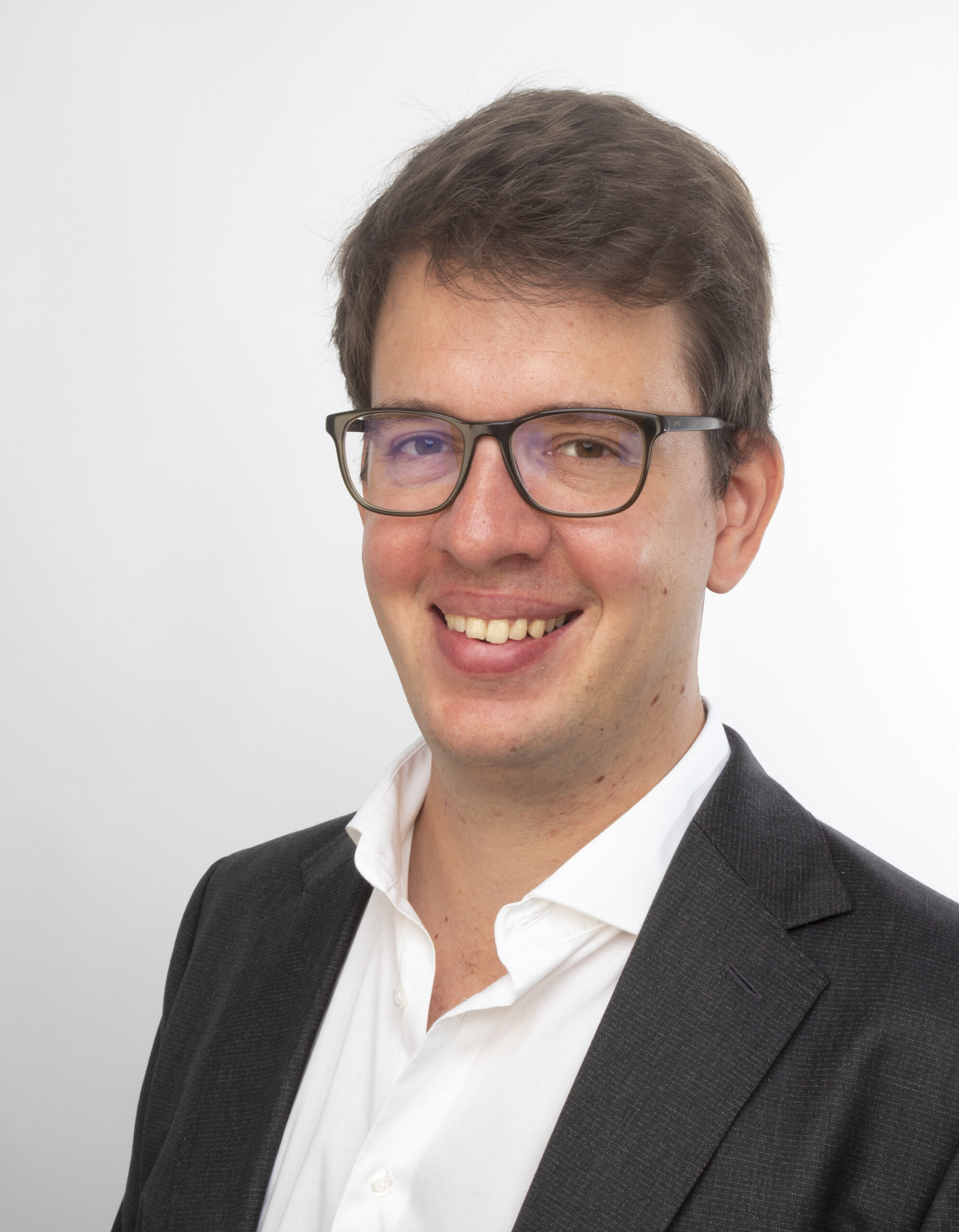
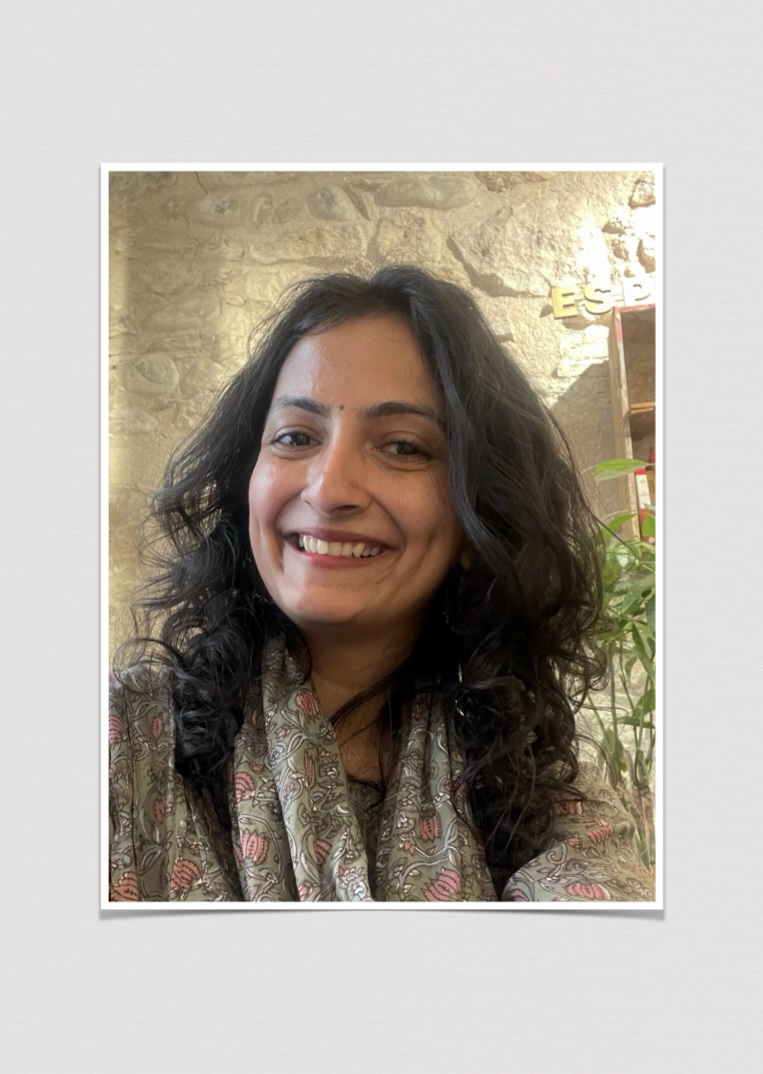
Kirsten Cater serves as Professor of Human-Computer Interaction in the School of Computer Science at the University of Bristol, while concurrently holding the senior administrative role of Associate Pro Vice Chancellor (Education & Students) for the Science and Engineering Faculty, overseeing institutional educational strategy and student welfare initiatives. Her research expertise centers on Human-Computer Interaction, examining the design, usability, and accessibility of interactive computing systems through user-centered methodologies. This field bridges theoretical computer science with practical applications in interface design and user experience optimization. Contact details: Email: kirsten.cater@bristol.ac.uk Phone: +44 117 456 1945 Office: Merchant Venturers Building, Woodland Road, Bristol BS8 1UB
Brenna Argall is an Associate Professor at Northwestern University with joint appointments in the Departments of Computer Science, Mechanical Engineering, and Physical Medicine & Rehabilitation . She is also a Faculty Research Scientist at the Shirley Ryan AbilityLab , the nation’s premier rehabilitation hospital. Her research focuses on robotics autonomy, machine learning, and human rehabilitation , particularly in developing assistive and rehabilitation robotics that utilize shared control and interface-aware intelligence to enhance user autonomy. Education: Ph.D. in Robotics (2009), Carnegie Mellon University M.S. in Robotics (2006), Carnegie Mellon University B.S. in Mathematics (2002), Carnegie Mellon University Research Interests: Argall's work sits at the intersection of robotics, artificial intelligence, and rehabilitation . Key themes include trust-based control systems, dynamic autonomy allocation, and human-in-the-loop machine learning . Her lab, the Assistive & Rehabilitation Robotics Laboratory (argallab) , develops semi-autonomous wheelchairs, robotic arms, and adaptive control systems tailored to users’ physical and cognitive abilities. Projects emphasize customizable shared control, intent inference, and human-robot collaboration . Article Trends: Recent publications highlight advancements in shared autonomy, interface-aware robotics, and human-robot co-adaptation . Key areas include 7-DoF robot arm teleoperation, eye gaze tracking for control, high-dimensional body-machine interfaces, and trust-based dynamic control allocation , reflecting her lab’s focus on user-centric AI and rehabilitation technology . Scientific Awards: NSF CAREER Award (2016) Crain's Chicago Business 40 under 40 (2016) NSF Convergence Accelerator Phase 1 & 2 Awards (2022, 2024) AIMBE College of Fellows (2023) Office of Naval Research (ONR) Grant Advising & Grants: Argall advises students in the Masters of Science in Robotics program and has secured significant funding from NSF, NIH, and ONR for projects on self-driving wheelchairs, intent disambiguation, and trust-aware autonomy . Labs & Teams: As founder and director of the argallab , she leads a multidisciplinary team at the Shirley Ryan AbilityLab . The lab’s mission is to advance human ability through robotics autonomy , focusing on motor-impaired users and human-robot co-adaptation .
University of Illinois Urbana-ChampaignUnited States
Matthew Turk is an Assistant Professor at the University of Illinois' School of Information Sciences and holds a Research Assistant Professor appointment in the Department of Astronomy. His work bridges computational astrophysics and data science, focusing on data analysis tools, human-computer interaction, and the social structures of scientific software communities. PhD in Physics from Stanford University (2009) Postdoctoral work at University of California, San Diego NSF Fellowship in Transformative Computational Science at Columbia University Turk's research centers on data visualization , reproducibility in scientific workflows , and computational infrastructure for astrophysics . He has developed tools like yt, a widely-used astrophysical simulation analysis toolkit, and explores how researchers interact with data through software and visualization techniques. His recent publications highlight trends in scientific software sustainability , machine learning applications in cosmology , and interdisciplinary data sonification . Turk's work demonstrates a consistent focus on integrating computational methods with human-centric approaches to scientific discovery. NSF Fellowship in Transformative Computational Science Turk contributes to scientific education through courses like Data Visualization (IS445ACG) and Independent Study (IS589MJT). His involvement in grants and collaborative projects, including the yt toolkit development and the Data Storytelling Toolkit for Libraries (DSTL), showcases his commitment to expanding computational literacy across domains.
Carolyn Conner Seepersad serves as the J. Mike Walker Professor of Mechanical Engineering at the University of Texas at Austin and directs the Center for Additive Manufacturing and Design Innovation. She holds membership in the U.T. System Academy of Distinguished Teachers and maintains active leadership in the additive manufacturing community through roles such as co-organizer of the Solid Freeform Fabrication Symposium and ASME Design Engineering Division Executive Committee membership. Her academic credentials include: PhD in Mechanical Engineering from Georgia Tech (2004) MA/BA in Philosophy, Politics and Economics from Oxford University (1998, Rhodes Scholar) BS in Mechanical Engineering from West Virginia University (1996) Dr. Seepersad's research centers on computational design methodologies and additive manufacturing innovation , with particular expertise in simulation-based design of complex systems, environmentally conscious product development, and materials engineering. Her work bridges theoretical design frameworks with practical manufacturing applications, emphasizing sustainability and performance optimization across aerospace, automotive, and energy systems. Current projects explore reactive extrusion additive manufacturing, negative stiffness materials, and machine learning integration for process-aware design. Analysis of her 15 most recent publications reveals a dominant focus on process innovation in additive manufacturing (70%), particularly stereolithography and selective laser sintering, with growing emphasis on data-driven design approaches (20%) and sustainable engineering applications (10%). Her work demonstrates consistent progression from fundamental material design toward integrated system optimization and industrial scalability. Her scientific recognition includes: International Outstanding Young Researcher Award in Freeform and Additive Manufacturing (2009) UT System Regents’ Teaching Award (2010) ASME Design Automation Committee Outstanding Young Investigator Award (2010) ASEE Outstanding New Mechanical Engineering Educator Award (2013) Multiple ASME and ASEE best paper awards U.T. System Academy of Distinguished Teachers membership Dr. Seepersad maintains an extensive advising portfolio with 48 graduate students (16 PhD, 24 MS, and 8 current) plus 2 postdoctoral researchers, reflecting sustained research productivity and educational impact. Her Product, Process, and Materials Design Lab fosters interdisciplinary collaboration between mechanical engineering, materials science, and computational design teams.
Dawn Laux serves as Assistant Dean of Academic Programs and Professor of Practice in the School of Applied and Creative Computing at Purdue Polytechnic Institute, Purdue University. She concurrently holds the position of Division Head for Military Science and Technology and chairs the Purdue University Teaching Academy. With over 15 years of service since 2007, Dr. Laux teaches undergraduate information governance courses and has earned recognition including the Charles B. Murphy Award for Outstanding Undergraduate Teaching (2019) and induction into Purdue's Book of Great Teachers (2023). Her educational background includes: PhD in Human Computer Interaction, Iowa State University (2014) MS in Management Information Systems, Iowa State University (2007) BS in Business Education and Office Administration, Ball State University (1994) Dr. Laux's research centers on data governance, computer-supported collaborative learning, and student persistence in technology education. She investigates technology acceptance, recruitment of women and minorities into IT, database management, and information governance frameworks. Her work bridges educational theory with practical applications to enhance student engagement and diversity in computing fields. Analysis of her publications (2011-2016) reveals consistent focus on educational technology interventions, particularly examining virtual communities for student persistence, diversity initiatives in computing, and classroom technology adoption. Her research demonstrates interdisciplinary integration of information systems, educational psychology, and social computing principles with practical applications in higher education settings. Her distinguished recognition includes: Book of Great Teachers, Purdue University (2023) Academic Leadership Program Fellow, Big Ten Academic Alliance (2022-2023) Teaching Academy Member, Purdue University (2019) Charles B. Murphy Award for Outstanding Undergraduate Teaching (2019) College of Technology Exceptional Early Career Teaching Award (2014-2015) Teaching for Tomorrow Fellowship Award (2013-2014) Bringing 10 years of pre-academic industry experience from Purdue Employees Federal Credit Union and Insight Communications, Dr. Laux integrates practical IT expertise into her teaching and leadership. Her administrative roles encompass academic program oversight and military technology education initiatives, supported by her active participation in the National Center for Women and Information Technology Academic Alliance since 2011. As Division Head of Military Science and Technology, Dr. Laux leads specialized technology education programs while chairing the university-wide Teaching Academy to advance pedagogical excellence across Purdue's academic units.
Marcus Rogers is Professor and Associate Dean for Faculty at Purdue Polytechnic Institute, Purdue University, where he directs the Cyber Forensics Lab. He holds dual fellowships with the American Academy of Forensic Sciences (AAFS) and the Center for Education and Research in Information Assurance and Security (CERIAS). Previously, he served as Editor-in-Chief of the Journal of Digital Forensics Security & Law and Secretary of AAFS. Education includes: PhD in Forensic Psychology, University of Manitoba (2001) MA in Personality Psychology, University of Manitoba (1995) BA in Psychology/Criminology, University of Manitoba (1986) His research integrates behavioral science with digital forensics, focusing on: Psychological profiling of cybercriminals and online offenders Advanced cyber forensic methodologies including mobile/GPU forensics Predictive modeling of cyber threats and adversarial behavior IT insider threats and cyber terrorism dynamics This interdisciplinary approach advances evidence analytics and digital crime scene interpretation. His publications demonstrate consistent focus on cybercrime psychology, forensic methodologies, and digital evidence innovation, with recent work emphasizing behavioral analytics, adversarial modeling, and advanced data recovery techniques. Major scientific honors include: Paul H. Chapman Medal for justice innovation (2009) AAFS Digital Sciences Research/Case Study Awards (2012, 2013) Fellow distinctions from AAFS and CERIAS University Faculty Scholar (2008) He leads the Cyber Forensics Lab, developing novel investigative tools like SMIRK (SMS forensics) and TracHac (cell phone analysis). Secured multiple grants for digital evidence research from federal and industry partners. Extensive professional engagements include chairing NIST OSAC committees and FBI InfraGard membership.
Christina Elmer is Professor for Digital Journalism and Data Journalism at the Institute of Journalism, Technical University of Dortmund. Prior to her academic career, she held significant positions at DER SPIEGEL as Deputy Head of Development, Member of the Editorial Board of SPIEGEL ONLINE, Head of the Data Journalism Department, and Science Editor (2013-2021). She is recognized as a leading expert in data journalism, AI in media, and digital transformation of journalism. Elmer's research focuses on data journalism, algorithmic accountability, and the integration of artificial intelligence in journalistic workflows. Her work explores how digital transformation affects media production, distribution, and reception, with particular attention to user-centered journalism, ethical dimensions of digital media, and the development of editorial products. She has pioneered approaches to structured journalism and modular content creation that adapt to changing audience needs. Her recent publications examine AI's impact on journalism, methods for combating disinformation, and strategies for maintaining journalistic integrity in algorithmically mediated information ecosystems. Her work shows a clear trend toward investigating how journalism can maintain societal relevance while adapting to technological changes, with increasing focus on AI systems as both tools and challenges for quality journalism. scoop award of the nextMedia.Hamburg initiative, 2023 Helmut Schmidt Journalist Prize (second prize) for 'Blackbox Schufa', 2019 Philip Meyer Award (third place) for 'Hanna and Ismail', 2018 dpa-infografik Award for 'Die Pendlerrepublik', 2018 Journalistin des Jahres, Fachkategorie Wissenschaft, 2016 Deutscher Journalistenpreis Forst & Holz (Print), 2007 Elmer actively contributes to the journalism community as a board member of Netzwerk Recherche (serving as second chair 2021-2023), shareholder of AlgorithmWatch, and member of various advisory boards including Science Media Center Germany and MIP.labor. She frequently collaborates with students through the KURT student editorial team, guiding them in applying design thinking to develop new journalistic formats. Her approach emphasizes the importance of user-centered thinking while maintaining journalistic integrity in the digital age.
Pedro Oliveira is a leading academic and administrator with diverse roles across institutions. He currently serves as Dean at Nova School of Business and Economics , where he holds the Cascais Chair in Operations, Technology, and Innovation Management . Additionally, he is a Professor MSO at Copenhagen Business School , Academic Fellow at Cornell University , and Adjunct Professor at MIT Sloan School of Management . He also founded the Patient Innovation platform and co-founded PPL Crowdfunding . Education: Ph.D. in Operations, Technology, and Innovation Management (2004), University of North Carolina at Chapel Hill M.Sc. in Operations Research and Systems Engineering (2000), Instituto Superior Técnico Licenciatura in Naval Engineering (1996), Instituto Superior Técnico Research Focus: Pedro Oliveira's work centers on Open and User Innovation , Patient Innovation , and Social and Impact Innovation , with a strong emphasis on Service Operations Management and Artificial Intelligence in Innovation . His studies often bridge Technology Strategy with Healthcare and Financial Services , exploring how users can drive innovation in resource-constrained environments. Publication Trends: His recent works emphasize collaborative innovation in public and semi-public domains , patient-driven healthcare solutions , and user innovation in digital finance . He has also published extensively on knowledge commons and innovation during crises , such as the COVID-19 pandemic . Leadership and Advisory Roles: Pedro has held significant administrative roles, including Senior Associate Dean for Faculty & Research and Director of the Research Unit in Business and Economics . He has advised the Portuguese Ministry of Science, Technology, and Higher Education and served on the Environment & Sustainability Council at EDP Energias de Portugal . He is also the President of the Open and User Innovation Society and a counselor on the National Council for Science, Technology, and Innovation (CNCTI) and Economic and Social Council (CES) in Portugal. Labs and Teams: As founder of Patient Innovation , he has established a global platform for user-driven healthcare solutions. His work also includes collaborative digital health initiatives , such as the Saúde.Come Senior program addressing food insecurity in elderly populations through TV-based eHealth interventions.
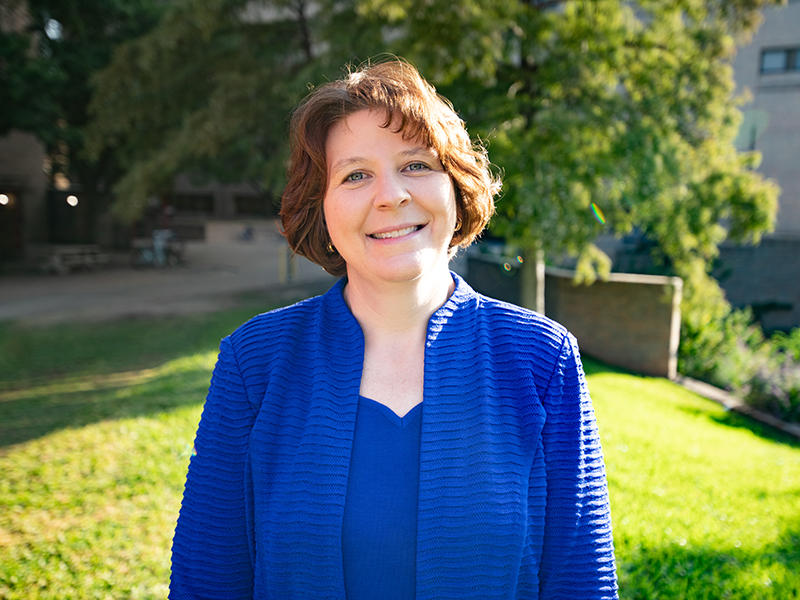
Professor Garry Tew serves as the founding Director of the Institute for Health and Care Improvement and holds the position of Professor of Clinical Exercise Science at York St John University's School of Science, Technology and Health. As a BASES Accredited Sport and Exercise Scientist, he leads interdisciplinary research initiatives focused on improving community health through evidence-based practices. He also serves as the Academic Lead of Scarborough Coastal Health and Care Research Collaborative (SHARC), a partnership with York and Scarborough Teaching Hospitals NHS Foundation Trust. Professor Tew's research program centers on the role of physical activity and exercise in preventing, managing, and treating long-term health conditions. He is internationally recognized for his pioneering work on exercise interventions for intermittent claudication and exercise-based prehabilitation to enhance surgical readiness. His research spans mental health contexts, inflammatory bowel disease, peripheral artery disease, and multimorbidity in older adults, with a particular focus on developing accessible interventions for diverse patient populations. His extensive publication record demonstrates significant contributions across multiple health domains, with recent work emphasizing co-produced physical activity programs for severe mental illness, chair-based yoga for older adults with multiple conditions, and digital health coaching for surgical preparation. These publications reflect a consistent trajectory toward developing practical, evidence-based exercise interventions that can be implemented in real-world healthcare settings. Professor Tew actively contributes to the research community as a member of the East Midlands Nottingham One Research Ethics Committee and serves on the Selection Committee for the NIHR Doctoral Fellowship Programme. He regularly reviews grant applications for major funding bodies including the National Institute for Health and Care Research, Medical Research Council, and British Heart Foundation. His teaching expertise encompasses research methods and exercise physiology at both undergraduate and postgraduate levels. He also conducts specialized workshops for staff and postgraduate research students on research-related topics, demonstrating his commitment to developing the next generation of researchers in health and care disciplines.
Institute of Science and Technology AustriaAustria
Sylvain Lefebvre is a permanent researcher at INRIA (Institut National de Recherche en Informatique et en Automatique) in France, where he leads the MFX research team since 2018. Previously, he was part of the ALICE group at INRIA Nancy (2009-2018) and the REVES team in Sophia Antipolis (2006-2009). His career includes a postdoctoral position at Microsoft Research Seattle (2005) following his PhD at INRIA Rhones-Alpes under Fabrice Neyret. His educational background includes a PhD in Computer Graphics from Université Joseph Fourier (Grenoble) in 2005, preceded by a Master in Computer Graphics from INP Grenoble in 2001. His habilitation thesis focused on Runtime Texture Synthesis. Lefebvre's research centers on simplifying content creation for highly detailed patterns, structures, and shapes with applications spanning Computer Graphics to additive manufacturing. He develops fast, controllable by-example synthesis approaches that generate content while enforcing user-specified constraints. His work addresses computational challenges through novel data structures and algorithms optimized for GPUs and FPGAs, including his Silice programming language. The ERC-funded ShapeForge project (2012-2017) advanced shape generation for 3D printing, leading to the IceSL software for digital modeling and fabrication. Analysis of his 15 most recent publications reveals a strong focus on additive manufacturing optimization, with recurring themes in structural integrity, material efficiency, and geometric algorithms. His work bridges computer graphics theory with practical fabrication constraints, particularly in microstructure design, slicing techniques, and mechanical metamaterials. The interdisciplinary nature spans computer science, materials engineering, and robotics. EUROGRAPHICS Young Researcher Award (2010) ERC Starting Grant for ShapeForge project (2012) Lefebvre has advised over 25 PhD students and interns including Marco Freire, Thibault Tricard, and Jimmy Etienne. His ShapeForge project received significant ERC funding, supporting research in computational fabrication. He serves on numerous program committees including SIGGRAPH, Eurographics, and SIGGRAPH Asia, reflecting his leadership in the computer graphics community. As leader of the MFX team since 2018, Lefebvre directs research in computational fabrication, focusing on IceSL software development for 3D printing workflows. The team integrates computer graphics techniques with manufacturing constraints, developing tools that simplify complex object design and fabrication while addressing real-world challenges in material usage and structural integrity.
Marcus Nohlberg is an Associate Professor in the Department of Information Technology at the University of Skövde, Sweden. His primary academic affiliation is with the School of Informatics where he serves as a course coordinator for multiple bachelor-level courses in information security. He maintains an active research profile with numerous publications in cybersecurity, particularly focusing on human aspects of security. His research interests center on cybersecurity training methods, social engineering, usable security, and information security management. Nohlberg has developed the Context-Based Micro-Training (CBMT) framework, which has become a significant contribution to security awareness training. His work frequently examines how cognitive factors impact security behaviors and how training can be designed to be more effective and accessible. His publication trends show a consistent focus on human-centered security approaches, with recent work expanding into automotive cybersecurity, digital inclusion for seniors, and relationship security aspects. His research demonstrates a strong interdisciplinary approach, bridging computer science with psychology, education, and organizational behavior. Nohlberg has received recognition through numerous publications in reputable journals and conferences including Information and Computer Security, Computers & Security, and various IFIP WG 11.12 symposiums. His work often appears in Human Aspects of Information Security and Assurance conferences. He has led several research projects including "Development of Decision Support for Users in Risky Online Situations" (2020-2022) and "Information Security Training with Context-Based Microtraining" (2019-2020), demonstrating his commitment to translating research into practical security solutions. His work frequently involves collaboration with Swedish municipalities, auto workshops, and other organizations to address real-world security challenges. Nohlberg maintains active engagement with the public through media appearances and popular science presentations at the University of Skövde, discussing topics like AI risks and opportunities, digital security in relationships, and BankID accessibility issues.
Felix Gille is a researcher at the University of Zurich , affiliated with the Institute for Implementation Science in Health Care under the Faculty of Medicine. He leads the DSI-funded project "Data handling, security and protection: reaching conceptual equivalence for the concept of public trust in national electronic health records in Switzerland and neighboring countries," collaborating with Prof. von Wyl (IfIS/DSI, UZH) and Prof. Thouvenin (Faculty of Law, UZH). His work bridges health system and policy research, digital health, data law, and data security. Education: BSc in European Public Health, Maastricht University MMedSc in Health Economics, Policy and Management, Karolinska Institute PhD in Public Trust in Healthcare Systems, London School of Hygiene and Tropical Medicine Research Focus: Gille specializes in public trust dynamics within healthcare systems, particularly examining data governance, health policy, and ethical dimensions of digital health innovations. His projects analyze cross-national trust frameworks, biobanking ethics, AI in healthcare, and pandemic data sharing mechanisms. Scientific Contributions: His publications address critical issues such as GDPR impacts on research, trustworthiness of mHealth apps, and interdisciplinary approaches to health data policy. Articles span 2015–2025, emphasizing conceptual trust models, policy harmonization, and stakeholder engagement in health data systems. Awards & Roles: Fellow of the Swiss School of Public Health Associate Editor for Public Health Reviews
Liane Colonna is an Assistant Professor in Law and Information Technology at the Department of Law, Stockholm University , where she investigates ethical and legal challenges arising from AI-driven practices in higher education. She also engages in methodologically oriented research at the intersection of AI and Law, contributing to the Wallenberg AI, Autonomous Systems and Software Program – Humanities and Society. Additionally, Liane serves as the director of the Swedish Law and Informatics Research Institute (IRI) and is a member of the New York Bar since 2008. Primary Affiliation: Department of Law, Stockholm University Institute Leadership: Director, Swedish Law and Informatics Research Institute (IRI) Professional Status: Member of the New York Bar Research Interests: Ethical and legal challenges of AI in higher education Methodological approaches in AI and Law Data protection and privacy by design Regulatory frameworks for AI and emerging technologies Privacy implications of lifelogging and health IoT International data governance and surveillance law Publications demonstrate expertise in AI regulation, GDPR compliance, and privacy-preserving technologies, particularly for assisted living and educational contexts. Her work bridges technical implementation with legal accountability, emphasizing human oversight and ethical design.
Pernille Bjørn is a Professor in Computer Supported Cooperative Work (CSCW) at the Department of Computer Science , University of Copenhagen (DIKU), where she has been since May 2015. Her research investigates collaborative work practices to design cooperative technologies, focusing on domains like healthcare, global software development, startup companies, and digital fabrication. Faculty of Science, University of Copenhagen Human-Centred Computing Section Research Interests : Bjørn’s work spans CSCW , Human-Computer Interaction , and Digital Fabrication , with applications in healthcare systems, cross-cultural software development, and inclusive technology design. She explores collaborative virtual reality training, FemTech, and crisis computing. ACM Distinguished Member (2024) Publications : Published in top venues like ACM Transactions on Computer-Human Interaction , CSCW , and CHI , her recent work examines hybrid work asymmetry, neurodiverse accessibility, and art-driven collaborative research.
Anupriya Tuli is a Postdoctoral Research Fellow at the KTH Royal Institute of Technology , affiliated with the Division of Media Technology and Interaction Design . She collaborates with Madeline Balaam and Airi Lampinen to examine ethics in data collection for intimate topics and designs interactions fostering trust and collective care in reproductive/menstrual journeys. Research Focus : Intersection of Human-Computer Interaction (HCI), global health, taboo, marginality, and activism Expertise : Qualitative research, feminist design, health equity Education : PhD in Human-Centered Design from IIIT-Delhi, India Their work emphasizes technology as a tool for equity and empowerment , particularly for marginalized communities. Recent publications explore themes like intimate technologies, post-growth HCI, and menstrual mobilities. Awards include fellowships from the Indian Government, Google, and the MARFATIA AWARD (2018). Scientific Awards Fellowship from the Indian Government (for doctoral research) Google Fellowship (for doctoral research) MARFATIA AWARD (2018)





/prod01/yorksjacuk/media/content-assets/staff-profile-images/garry_tew-2.jpg)