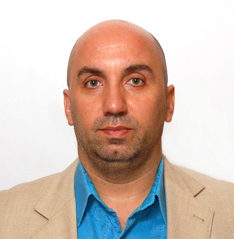
Christopher Kronenberg is a Professor for Business Model Design at the University of Applied Sciences BFI Vienna, where his research focuses on the transition to a circular economy, sustainable development, and competitiveness. He holds the Endowed Professorship for Business Model Design and Value Creation, funded by the City of Vienna. Additionally, he serves as a Visiting Lecturer at ISM and an affiliate MOC faculty at Harvard Business School, teaching strategic management, innovation, entrepreneurship, and Microeconomics of Competitiveness. Roles: Endowed Professor (BFI Vienna), Visiting Lecturer (ISM), Affiliate Faculty (Harvard) Research Focus: Circular economy, business model innovation, sustainable development, strategic management He directs the Certificate Program Circular Economy & Innovation, emphasizing practical implementation of circular solutions in organizations. His international teaching experience includes curriculum design and accreditation of new academic programs. Kronenberg actively contributes to academic discourse through publications, workshops, and advisory roles, aiming to empower future leaders in the global transition to a resilient economy.
Professor Krijn Peters is a sociologist specializing in post-war reconstruction, international development, and rural transport systems at Swansea University's Faculty of Humanities and Social Sciences. He holds a professorship in Politics, Philosophy, and International Relations. His research focuses on armed conflict, youth dynamics, and the socio-economic impacts of transport infrastructure in Sub-Saharan Africa, particularly in Sierra Leone, Liberia, and Ghana. Key research areas include motorcycle taxi systems' role in rural connectivity, gender mainstreaming in transport, and post-conflict peacebuilding. He has led over 15 grants, including studies on rural transport policy and the economic effects of upgrading footpaths to motorcycle tracks. Peters has supervised numerous PhD and MSc students, contributing to interdisciplinary research on topics like hybrid power systems in Africa and land tenure reforms. His work bridges academic and policy realms, with publications in journals like Journal of Agrarian Change and Transportation Research . He advises international bodies such as the Ghanaian Ministry of Roads and Sierra Leone's Road Safety Authority. Peters' research emphasizes practical solutions to poverty and conflict through transport innovation and youth empowerment. Grants include leadership on projects funded by ESRC/DFID, GCRF, and ReCAP, focusing on rural transport, food security, and gender equity. His contributions span over 25 years, with impactful fieldwork in conflict zones and policy engagement in 15+ countries.
Professor Mihajlo Jakovljevic MD, PhD is a globally recognized expert in Health Economics and Global Health with primary appointment as Full Professor and Founding Head of the Department for Global Health, Economics and Policy at the Faculty of Medical Sciences, University of Kragujevac, Serbia. He holds multiple prestigious international positions including Principal GBD Collaborator (the highest tier position) at the Institute for Health Metrics and Evaluation, University of Washington (2025-present), and Visiting Professor of Health Economics at Hosei University, Tokyo (2020-present). His extensive career includes affiliations with Academia Europaea (Ordinary Fellow since 2022), UNESCO-TWAS (Ordinary Fellow since 2021), and the Academy of Medical Sciences of the Serbian Medical Society. His research focuses on the economics of global health with particular emphasis on Emerging Markets and the Global South. Key areas include health financing sustainability, pharmacoeconomics, population ageing, noncommunicable diseases, and BRICS health systems. He has established some of the oldest Pharmacoeconomics and Health Economics Curricula in Balkan universities and published the first complete university textbook of Health Economics in Western Balkan languages in 2014. Professor Jakovljevic has published approximately 400 papers in indexed peer-reviewed journals with an impressive Hirsch Factor of 98, over 151,000 citations, and a cumulative Impact Factor of approximately 6,540. His recent work shows a clear trajectory toward analyzing health system sustainability in resource-constrained settings, with increasing focus on fiscal space for health in LMICs, pharmaceutical pricing policies, and the economic implications of population ageing in transition economies. Academia Europaea, Section Clinical & Veterinary Science (2022) - First representative of Serbia within section comprising almost 800 members UNESCO-TWAS Fellow (2021) - First-Ever Elected Candidate based in Serbia Academy of Medical Sciences Serbian Medical Society (2022) - Youngest member ever elected in Academy's history Serbian Pharmacological Society Award 'Professor Vladislav Varagic' (2017) Multiple international fellowships including JSPS (Japan), FORTE (Sweden), and COST Actions across Europe As Principal Investigator, he has led the largest budget-financed health economics Grant in Serbia (OI 175014; budget 650,000 EUR; 2011-2023) and numerous bilateral inter-governmental science funding agreements with Hungary, Portugal, and other European nations. He serves as Editor-in-Chief of Cost Effectiveness and Resource Allocation journal (BioMedCentral) since 2019 and previously as Founding Specialty Editor-in-Chief of Frontiers in Health Economics (2016-2021). His leadership extends to WHO's EACHR Committee since 2018, advising the Cabinet of WHO Regional Director for Europe. Professor Jakovljevic's Department for Global Health, Economics and Policy at the University of Kragujevac has contributed significantly to the university's recognition in the Shanghai ARWU global specialty ranking for public health/clinical medicine (Top 200-300, 2019-2023). His work bridges academic research with practical policy applications through collaborations with WHO, GBD Project, European Commission, and other multilateral agencies across more than thirty countries worldwide.
Roberto Cibin is a Senior Postdoctoral Researcher at the School of Applied Psychology, University College Cork, focusing on Responsible Software Engineering (RSE) and the BEHAV-I-AIR project. His work integrates societal concerns into software development and explores communication strategies for cleaner air initiatives. He holds a PhD in Social Sciences from the University of Padova and has five years of experience in public administration digitalization. Education: PhD in Social Sciences - Interaction, Communication, Cultural Construction (University of Padova, Italy). Professional experience includes roles in regional public administration supporting digital transition. Research Interests: Focuses on socio-technical systems, participatory design, and technology’s role in empowerment, inclusion, and sustainability. Explores dynamics of power, inequality, and institutional practices in social innovation projects. Grants & Projects: Responsible Software Engineering (RSE) project BEHAV-I-AIR: Digital platform co-design for air quality citizen engagement RESISTIRÉ project: Gender equality in pandemic recovery Labs/Teams: Contributions to interdisciplinary teams in RSE, BEHAV-I-AIR, and RESISTIRÉ, emphasizing collaborative methodologies and stakeholder engagement.
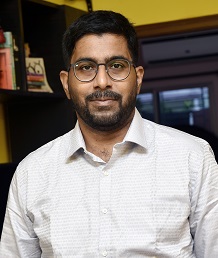
Dr. Darpan Das is a Lecturer in the Department of Environment and Geography at the University of York. He holds a PhD in Environmental Engineering from the Indian Institute of Technology Bombay and has conducted postdoctoral research at Johns Hopkins University (USA) and the Institute of Occupational Medicine (UK). His work focuses on air pollution in the global south, emphasizing exposure assessment, indoor air quality, and waste-to-energy solutions. He has collaborated on studies across multiple countries, including Kenya, Nepal, and Bangladesh. Research Interests: Air quality management using measurement and modeling Health impacts of pollutants and fuel technologies Low-cost sensors and CFD modeling for pollution mapping Emission mitigation strategies for cookstoves and e-cigarettes Publications Trends: Recent work emphasizes interdisciplinary approaches to global environmental health challenges, with a focus on indoor environments and vulnerable populations. Key themes include particulate matter toxicity, CO exposure in urban settings, and pandemic-related transport risks. Awards: Recipient of the 2024 Lila Albin Award from the American Industrial Hygiene Association for his 2022 article on railcar particle removal studies. Grants & Projects: Leads two funded initiatives: (1) dementia risks from vaping, (2) indoor air quality case studies in Kolkata/Dhanbad. Previously developed air quality models for Bangladesh and Kenya. Labs/Teams: Collaborates in multidisciplinary teams addressing global environmental justice issues through fieldwork and computational modeling.
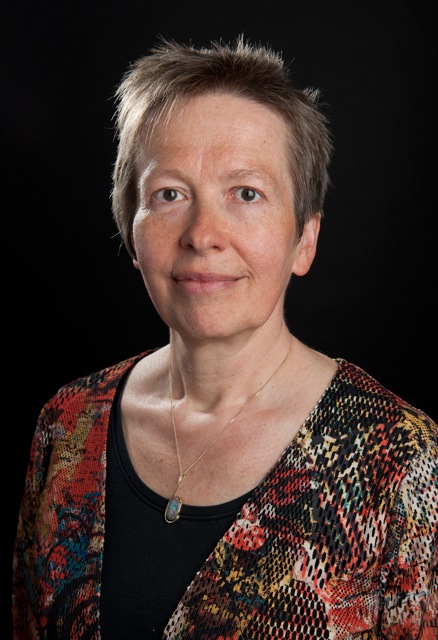
Chiara Tornaghi is an Associate Professor at Coventry University's Centre for Agroecology, Water and Resilience. Her academic journey includes a PhD in Applied Sociology from the University of Milano-Bicocca and a Postgraduate Certificate in European Spatial Planning from Newcastle University. She has held roles at the University of Leeds, TU Vienna, and Politecnico di Milano. Her research focuses on urban agroecology, food justice, and grassroots planning, emphasizing socio-ecological justice and resource sovereignty. She co-chairs the EU-funded COST Action ‘Urban Agriculture Europe’ and leads projects like SOIL NEXUS and GAZA FOODWAYS. A Fellow of the Royal Geographical Society, she actively engages in food sovereignty initiatives like Edible Public Space and Reclaim the Fields. Her work bridges academic research with activism, advocating for transformative agroecological urbanism. Education: MA Political Science, Università di Milano (2001) PhD Applied Sociology, University of Milano-Bicocca (2005) Postgraduate Certificate in European Spatial Planning, Newcastle University (2006) Research Interests: Urban agriculture, food sovereignty, insurgent planning, socio-environmental justice, and agroecological urbanism. Awards: Fellow of the Royal Geographical Society (RGS). Key Projects: SOIL NEXUS (urban soil remediation and food systems) GAZA FOODWAYS (women-led agroecological systems) Agroecological Urbanism in Action (UK) Her vision emphasizes reimagining cities through agroecology, fostering public space as a site of socio-ecological regeneration. Recent publications explore urban metabolic rifts, community kitchens, and policy frameworks for agroecological transitions.
Dr. Joy Gaston Gayles is the Head of the Department of Educational Leadership, Policy, and Human Development and an Alumni Association Distinguished Graduate Professor at North Carolina State University's College of Education. Her research focuses on equity and inclusion in STEM education and intercollegiate athletics, particularly for women and underrepresented minorities. She holds a Ph.D. in Educational Administration and Higher Education from The Ohio State University (2002), an M.S. in Higher Education Administration from Auburn University (1998), and a B.S. in Adapted Physical Education and Kinesiotherapy from Shaw University (1996). Dr. Gayles is internationally recognized for her work on student-athlete development, women in STEM, and anti-racist institutional practices. She has served as President of the Association for the Study of Higher Education (ASHE) and received prestigious awards including the Chancellor’s Creating Community Award and the University Faculty Scholar distinction. Her research bridges theory and practice, emphasizing actionable strategies for advancing equity in education. Her scholarly contributions span over two decades, addressing topics such as student-athlete transitions, gendered academic experiences in engineering, and systemic barriers in STEM retention. She collaborates with the National Center for Faculty Development and Diversity (NCFDD) to promote inclusive faculty practices and has published extensively in top journals like the Journal of Higher Education and Journal of College Student Development . Key Focus Areas: Equity in STEM/athletics, diversity policy, civic engagement Professional Roles: Department Head, Faculty Success Coach, Workshop Facilitator Media Presence: Featured in Diverse: Issues in Higher Ed , Chronicle of Higher Education , and Inside Higher Ed .
Oliver Hensengerth is an Associate Professor in the Geography and Environmental Sciences Department at Northumbria University. He is a member of the Northumbria Centre for Global Development (CID). His research bridges international relations, geography, and development studies, focusing on China’s global development investments in water infrastructure and transboundary water governance challenges. He teaches in International Relations, Geography, and Global Development programs and is currently leading the ISPF-British Council project Adapting Crisis Responses to Salt-Droughts in the Mekong Delta, Vietnam (2024–2026) and co-investigating the ISPF-BBSRC project WAVES (2025–2028). Previously, he contributed to the GCRF-funded Living Deltas (2019–2024) and COP26 Trilateral Research Initiative (2021–2022). Education: Oliver holds a PhD in International Politics from the University of Leeds (2002–2006). His research interests include environmental justice, water-energy-food nexus, climate adaptation, and governance across scales. He collaborates with engineers, geographers, and sociologists on projects addressing hydropower impacts, delta resilience, and policy implementation in Southeast Asia. Research Interests: Oliver’s work examines the intersection of political science and environmental governance. Key themes include China’s influence in transboundary water infrastructure, such as hydropower in Cambodia and Vietnam, and the governance challenges in regions like the Mekong Basin. He analyzes how global norms interact with local practices, focusing on equity, sustainability, and multi-level governance frameworks. His conceptual work explores the relationship between water and identity, emphasizing participatory approaches in policy-making. Grants and Projects: Recent projects include: Lead Investigator: Adapting Crisis Responses to Salt-Droughts (ISPF-British Council, 2024–2026) Co-Investigator: WAVES (ISPF-BBSRC, 2025–2028) Living Deltas Hub (GCRF, 2019–2024) COP26 Trilateral Research Initiative (British Council, 2021–2022) Advising and Labs: Oliver supervises PhD students in environmental governance and water-related research areas. He is affiliated with CID, which focuses on global development challenges, and collaborates with institutions like Can Tho University, Southampton University, and Achelous Energy. His work addresses sustainable development goals, emphasizing climate resilience and equitable resource management in vulnerable regions.
Jiayi Jin is an Assistant Professor in the Department of Architecture and Built Environment at Northumbria University, UK. Previously, she held roles at the University of Nottingham's Mixed Reality Lab and Department of Architecture. With over 12 years' experience in architecture and urban planning, her research bridges practical design with socio-cultural and environmental challenges. She leads projects funded by the British Academy and AHRC, focusing on participatory planning for sustainable urban development, digital urban innovation, and gender-inclusive city design. Education: PhD in Architecture (University of Nottingham, 2018), specializing in augmented spaces and museum design. Her teaching includes MArch studios and research-led courses, emphasizing global urban case studies and planning contexts. Research interests span three core areas: 1) Creative participation in inclusive urban planning (e.g., 'Brown to Green' transition projects), 2) Digital applications in urban resilience (e.g., urban digital twins and climate adaptation), and 3) Gender equity in urban design (e.g., Newcastle's City Centre Transformation Plan). Recent grants include £128K from AHRC for 'Navigating Urban Ecologies' and £17K from RIS for mobility hub research. Key awards include the Digital Culture Award (Arts Council England, 2019), Early Career Artist Bursary (2020), and recognition for gender-inclusive urban research. She supervises PhD students exploring practice-as-research methodologies within her thematic areas. Notable collaborations include Newcastle Culture Investment Fund projects, feminist urban equity walks, and international partnerships addressing eco-social vulnerabilities across the UK, Netherlands, and Norway. Her work contributes to UN SDGs related to sustainable cities (Goal 11), gender equality (Goal 5), and climate action (Goal 13).
Professor Juan C Vasquez is a faculty member at Aalborg University's Department of Energy Technology, serving as Co-Director of the Center for Research on Microgrids (CROM). Recognized as a Highly Cited Researcher (2017-2023), his work spans technical and interdisciplinary domains in energy systems, with a focus on microgrids, renewable integration, and cybersecurity. His research includes smart grid control, power electronics reliability, and AI-driven energy management systems. He also explores computational creativity in electroacoustic music, evidenced by performances at ISEA 2025 and ACMC 2024. Key subtopics involve fault diagnosis, EV infrastructure, and resilience analysis for disaster-struck communities. Scientific accolades include a First Prize at the 'Città di Barletta' competition. His publications bridge energy technology and digital arts, reflecting a unique interdisciplinary approach to sustainable energy systems and computational sound design.
Prof. Clara Mulder is a Professor of Demography at the University of Groningen's Faculty of Spatial Sciences, leading the Department of Demography and the Population Research Centre. She holds notable academic roles including ERC Advanced Grant recipient (FamilyTies project), KNAW Member, and editorial positions in top journals like Environment and Planning A . Her career spans over 20 years with prior professorships at the University of Amsterdam (2001-2011) and Utrecht University (2000-2001). Education: PhD in Demography from University of Amsterdam (1993), thesis: 'Migration dynamics: A life course approach.' Her research focuses on residential mobility, family migration, intergenerational relationships, and housing dynamics. Key projects include analyzing cross-country homeownership patterns and family ties' spatial impacts. Recent work emphasizes ethnic differences in migration timing and post-separation mobility. Awards: ERC Advanced Grant (2017), NWO VICI Grant (2004), Aspasia Grant (2000). She advises graduate programs as former Director of the Graduate School of Spatial Sciences (2014) and chairs academic committees. Active in international demographics through roles like IUSSP Working Group on Lifetime Migration and editorial boards for Housing Studies and European Journal of Population . Research outputs include over 50 peer-reviewed articles, with recent emphasis on family mobility dynamics and intergenerational housing linkages.
Robert Shibley is a SUNY Distinguished Professor of Architecture and Director of the Rudy Bruner Center for Urban Excellence at the University at Buffalo’s School of Architecture and Planning. He also serves as a Senior Fellow at the UB Regional Institute. His career spans four decades, focusing on citizen-driven urban design and planning, revitalizing Buffalo’s Olmsted park system, waterfront, and downtown through the Urban Design Project (UDP) and UB Regional Institute. He co-founded the Rudy Bruner Award for Urban Excellence and led development of UB’s Comprehensive Physical Plan (UB2020), guiding the university’s campus expansion and sustainability initiatives. Education: Bachelor of Science in Psychology, University of Oregon Bachelor of Architecture, University of Oregon Master of Architecture in Urban Design, Catholic University of America His research emphasizes community-based placemaking, sustainable development, and university-community partnerships. Key projects include Buffalo’s comprehensive plan, the One Region Forward initiative, and the Buffalo Billion investment strategy. Over $25M in sponsored projects have advanced regional planning, public engagement, and design standards for projects like UB’s Solar Strand and medical school campus. Awards & Recognition: James R. Haecker Award for Leadership in Architectural Research New York State AIA Nelson Rockefeller Award 2016 DesignIntelligence’s 25 Most Admired Educators Fellowships: American Institute of Architects (FAIA), American Institute of Certified Planners (FAICP) Shibley advises on urban design competitions, sustainability (e.g., UB’s 2030 Climate Action Plan), and serves on national/international policy boards. His scholarly output includes 17 books and 120+ publications on placemaking, urban policy, and design research.
Dr. Cunqiang (Felix) Shi is a Lecturer in Management at Bangor Business School, Bangor University, having joined in August 2023. He completed his PhD in Business Studies at Cardiff University, with research focusing on China's socio-economic transition and its impact on disabled workers. His academic roles include serving as Diversity, Equality, and Sustainability Lead at Bangor Business School, Personal Tutor, Early Career Researcher Representative to the Research Impact and Strategy Committee (College of Arts, Humanities and Social Sciences), and member of multiple university committees including the Equality, Diversity and Inclusion Committee. Education: PhD, School of Healthcare Sciences, Cardiff University (2018-2022) MSc Social Science Research Method, Cardiff University (2017-2018) MSc Human Resource Management, Cardiff University (2016-2017) Research Focus: Dr. Shi specializes in the sociology of work, diversity and inclusion in labor markets, social construction of disability (using the social model framework), and East Asian socio-cultural studies with emphasis on China. His work examines labor politics in East Asia, disability representation, and workplace equality initiatives. Current research explores the intersection of HRM and artificial intelligence. Publication Trends: Dr. Shi's scholarly output consistently addresses disability inclusion within labor markets, with particular focus on China's socio-economic systems. His recent work examines how institutional frameworks like the hukou system impact disabled migrant workers, grassroots disability networks in crisis response, and accessibility in business environments. Methodologically, he employs case studies, empirical labor market analysis, and policy evaluation. Professional Activities: Board Director, Disability Wales (2021-2024) Peer Reviewer for Review of Disability Studies and Social Inclusion journals Member of Arfon Access Group Teaching & Advising: Currently teaches modules in management planning, commercial awareness, HRM practices, and contemporary management issues. Supervises one PhD student researching HRM and AI applications. Nominated for student-led teaching award in 2025.
Dr. Dries Hegger is an Associate Professor of Regional Water and Climate Governance at Utrecht University's Copernicus Institute of Sustainable Development. He specializes in environmental governance, climate adaptation, and water policy, with a focus on citizen engagement and science-policy interfaces. His work addresses societal decision-making around spatial scarcity challenges, particularly in the context of climate change and flood risk management. He holds a PhD in Environmental Sociology and has served on the board of the 'Water, Climate and Future Deltas' hub within Utrecht University's Pathways to Sustainability theme. His research explores modes of governance integration, policy experimentation, and knowledge co-creation in adaptation projects. Notable collaborations include work with Dutch water authorities, municipalities, and international organizations like SNV and IUCN. Key research areas include: citizen participation in climate adaptation, flood risk governance dynamics, and the role of international NGOs in ecosystem-based adaptation. He has published widely on nexus governance (e.g., Water-Energy-Food-Ecosystem), interdisciplinary education, and resilient urban development. Recent projects include developing participatory foresight tools for climate-resilient cities and analyzing governance challenges in peatland subsidence and delta management. His work bridges academic research with practical applications, emphasizing actionable solutions for sustainability transformations.
Dr Robert Skrzypczyński is an Assistant Professor at the Department of Urban Planning and Regional Development, Gdańsk University of Technology. His work focuses on sustainable development paradigms, degrowth theory, rural regeneration strategies, and innovative urban planning approaches. He explores topics such as ecovillage resource management, community-supported agriculture, and socio-technical transitions in agricultural systems. His research interests critically examine post-growth economic models, spatial planning policies, and grassroots initiatives that challenge conventional development paradigms. Notable work includes analyses of the Silesian Metropolitan Region's urban strategies, post-industrial city revitalization, and participatory budgeting mechanisms in Wrocław. Key publications span 2017–2023, emphasizing degrowth discourse, ecovillage sustainability, and urban-rural synergies. Though no formal awards are listed, his academic output demonstrates engagement with transformative urban and regional issues. His advising and grants sections remain underdeveloped in available materials, and there is no mention of specific laboratories or research teams associated with his work.