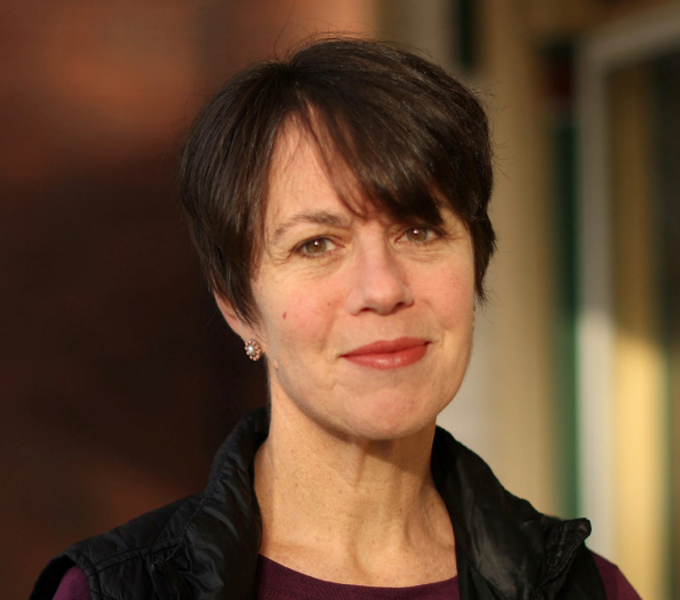
Eva Andersson is a Professor at Stockholm University within the Department of Human Geography. Her research focuses on urban and social geography, residential and school segregation, neighborhood effects, life course analysis, migration patterns, and elderly housing. She employs Swedish register data combined with spatial analysis methods to investigate how residential contexts influence socioeconomic outcomes. Current research projects include Migrant Trajectories (2019-2024), exploring migrant life courses across five domains. Lyckliga gatan examines spatial polarization and social cohesion in Sweden. Socio-spatial stratification analyzes housing tenure trajectories across 21 years. Her work demonstrates that neighborhood context at multiple scales affects educational attainment, income trajectories, and family formation. She finds stronger microscale effects on education and macroscale impacts on income, with Sweden showing less segregation than the Netherlands. Schools in 75% of municipalities successfully mix students from diverse backgrounds, though performance gaps correlate with socioeconomic peer groups. She teaches urban social geography at both undergraduate and graduate levels, supervises doctoral students, and contributes methodological innovations through individualized neighborhood analysis. Her housing research reveals increasing homeownership trends in Sweden and age-related shifts toward central urban housing for elderly populations.
Lara Putnam is a Research Professor at the Department of History, University of Pittsburgh. Her work focuses on race, gender, migration, and grassroots social movements in the modern Americas, with special attention to transnational approaches and digital humanities. Research Interests: She explores the information ecosystems shaping historical research, emphasizing how data creation and absence influence knowledge production. Her projects bridge Caribbean studies, labor history, and Atlantic world analysis, examining intersections of race, capitalism, and anti-racism. Scientific Awards Andrés Ramos Mattei-Neville Hall Article Prize (2014–2015) Elsa Goveia Memorial Lecturer (2016) ACLS/SSRC/NEH Fellowship (2006) Recent Publications reflect trends in political activism, suburban/rural organizing, and methodological critiques of data in the digital age. Grants include the Andrew W. Mellon Foundation-funded Sawyer Seminar on information supply and power dynamics.
David Kimball is a Professor in the Department of Political Science at the University of Missouri–St. Louis, with a career spanning academic research and practical policy analysis. His work focuses on election administration, voter behavior, and the intersection of public policy and electoral systems. Education: Not explicitly mentioned in the provided texts. Research interests include Election Administration , Ranked Choice Voting , Voter Fraud Perception , and Interest Group Influence . His publications highlight trends in voting technology, media impact on electoral beliefs, and administrative challenges in local elections. Recent articles (2025–2022) explore innovations in voting practices, such as Ballots and Booths (2025) and Guardians at the Gates (2025), alongside longitudinal studies on Political Identity (2021–2022) and Media Influence (2018–2022). Key themes include urban-rural disparities, partisan polarization, and procedural reforms like cumulative and ranked choice voting. Scientific Awards: No awards mentioned. Collaborative work includes partnerships with scholars like Jeff Smith (2013), Samuel Patterson (1997), and Marie Hojnacki (1999), with a focus on organizational lobbying, public attitudes toward Congress, and election logistics. Labs or teams not explicitly mentioned in the provided texts, but his research aligns with academic institutions and policy-focused political science initiatives.
Thomas Safford is an Associate Professor in the Department of Sociology at the University of New Hampshire, specializing in environmental sociology and the social dimensions of science. His work bridges sociological theory with practical applications in coastal and marine resource management. His research focuses on: Public perceptions of environmental science and climate change Social bases of environmental attitudes Inter-organizational dynamics in natural resource management Cross-national studies of water and coastal governance He employs mixed-methods approaches to integrate social and biophysical data for policy development. Recent publications reveal a pronounced focus on aquaculture development, pandemic science communication, and climate adaptation, with significant fieldwork in Maine, Brazil, and Ecuador. His work consistently examines how scientific information flows through social networks to influence policy outcomes. Award Highlights: Fulbright Scholar (2014-2015) at Universidade Federal de Santa Catarina, Brazil Major research funding includes principal investigator roles on NSF and NOAA grants, including the New England Sustainability Consortium Project and international collaborations studying Amazon Basin water management. His fieldwork spans community-based research in coastal Maine, Puget Sound, and the Brazilian Amazon. He maintains active research partnerships with the National Oceanic and Atmospheric Administration (NOAA), USDA Rural Development, and international institutions in Brazil and Ecuador, focusing on community resilience and environmental governance.
Albert Sabater Coll is Serra Húnter Professor of Sociology at the University of Girona and Director of the Chair-Observatory of Ethics in Artificial Intelligence of Catalonia (OEIAC) . His institutional affiliation also includes the Educational Research Institute and the Interdisciplinary Research Group on Gender and Social Inequalities (IGESI) . Education PhD in Social Statistics, University of Manchester MSc in Social Research Methods and Statistics, University of Manchester MSc in Demography, Autonomous University of Barcelona Research Interests Professor Sabater’s work sits at the intersection of computational social science , demography and AI ethics . He explores socio-spatial inequalities—housing segregation, generational divides, digital divides—using large-scale census, survey and big-data sources. Methodologically, he develops iterative algorithms to handle missing-data biases and differential non-response in population counts, paying special attention to gender, age, ethnicity and residential location. His recent agenda expands into the ethical governance of AI systems in public services, especially social-welfare assessment. Recent publications (2023-2025) reveal a clear pivot toward AI governance and ethics , with studies on participatory AI in social services, self-assessment models for regulatory compliance, and gender-based violence. Earlier work (2017-2022) focused on housing affordability , age segregation , and intergenerational transfers , utilising advanced demographic and spatial methods. Scientific Awards & Distinctions Marie Skłodowska-Curie predoctoral fellow, European Commission Juan de la Cierva postdoctoral researcher, Spanish Ministry Research Accreditation in Social Sciences, Catalan Agency for University Quality (AQU) Invited researcher, Princeton University (Office of Population Research) Invited researcher, University of Oxford (Oxford Institute of Population Aging) Grants & Leadership Roles Principal Investigator, AI FORA (AI for Assessment) – Horizon Europe case study Lead member, National Plan for Protection of Vulnerable Groups in AI, Spanish Ministry of Foreign Affairs & Digital Transformation Co-investigator & coordination team, RESCHOOL (Horizon Europe) Co-investigator, CLIMA project on energy communities and inter-generational transfers Laboratories & Teams He heads the Chair-Observatory of Ethics in AI of Catalonia (OEIAC) and is a core member of the Interdisciplinary Research Group on Gender and Social Inequalities (IGESI) . He also contributes to the European Lighthouse on Secure and Safe AI Ethics Board and advises the Catalan Government’s Data Ethics and Health/AI Programme Committees.
Francisco Javier Borondo Benito is a researcher at the Polytechnic University of Madrid with a focus on complex systems and social dynamics. His work spans interdisciplinary applications of network theory to agricultural societies, political polarization, and electoral campaigns. Key affiliations: Polytechnic University of Madrid (since 2012), Complutense University of Madrid (co-director 2023 thesis) Research Interests : His research combines nonlinear science with empirical social data analysis, particularly examining how agricultural systems influence communication networks and migration patterns in Senegal, quantifying political polarization through Twitter analytics in Venezuela, and modeling electoral campaign dynamics in Spain. His work often employs complex network theory and computational social science methodologies. Publication Trends : Over 2012-2016, his research output focused on social network analysis (3 journal articles in Chaos: An Interdisciplinary Journal of Nonlinear Science ), digital political communication, and socioeconomic modeling. Collaborative work with multidisciplinary teams demonstrates integration of physics-based computational approaches with real-world social challenges. Doctoral Supervision : Co-directed 2023 thesis on quantum reservoir computing Directed 2015 thesis on complex networks in societal dynamics
Angela Abrami Airiyants is an academic affiliated with Yerevan State University (YSU), currently serving as Administration Specialist in the Faculty of Geography and Geology while concurrently holding a Lecturer position at Russian-Armenian Slavonic University until 2025. Her career spans over 25 years with deep engagement in Armenian geographical sciences. Education: Yerevan State University, Faculty of Geography, Department of Cartography and Geomorphology (1991-1996): Certified specialist Yerevan State University, Faculty of Geography, Department of Cartography and Geomorphology (1998-2002): Postgraduate student Her research integrates geomorphology, cartography, and socio-economic geography with a regional focus on Armenia. Key investigations include surface sediment dynamics, exogenous processes in river basins, ecological geomorphology, and territorial organization challenges like settlement patterns in mountainous regions and socio-economic polarization. She examines vulnerability to natural disasters through interdisciplinary lenses combining physical geography and policy analysis. Recent publications (2020-2025) reveal consistent thematic evolution: early works concentrated on Armenian geomorphological mapping (2000-2015), transitioning to regional development theory (2013-2019), then expanding into contemporary socio-geographical analyses of territorial polarization, settlement patterns, and geopolitical narratives (2022-2025). Her methodology bridges field-based geomorphological studies with policy-oriented socio-economic frameworks. From 2002 to 2023, Airiyants led YSU's Educational Laboratory, directing academic infrastructure development for geographical sciences while maintaining active research output. Her professional memberships include the Armenian Geographical Society (1993-2025) and KANCH Scientific Center (2022-2025), with conference presentations spanning Moscow, Yerevan, and Kharkiv.
Prof. Sigrid Roßteutscher, Ph.D. , is a faculty member at Goethe University Frankfurt/Main . Her research focuses on political efficacy, electoral behavior, youth engagement, and socioeconomic disparities in political participation. Her work examines the impact of political self-efficacy on voting patterns, the consequences of lowering the voting age, and the interplay between academic self-efficacy and educational decisions. She also explores rural-urban divides, gender ideologies, and party polarization's effects on voter turnout. The most recent publications analyze electoral inequality, group-related political efficacy, and the dynamics of extremist violence on religious identification. Her studies often employ natural experiments and longitudinal data to assess democratic quality and reform outcomes. Collaborations with researchers like Garritzmann , Faas , Leininger , and Schäfer are central to her work, particularly in projects related to the German Longitudinal Election Study (GLES) and RISS initiatives.
Karen Haandrikman is a Professor in Geography with a focus on human geography at the Department of Human Geography, Stockholm University. She serves as Programme Director for the Master's Programme in Human Geography and coordinates several advanced courses in human geography and urban planning. Her research focuses on migration, integration, segregation, neighbourhoods, and mixed methods. Dr. Haandrikman leads multiple research projects including "Disentangling Segregation at Different Scales" (Swedish Research Council, 2024-2029) and "Socioeconomic Inequalities among Girls and Boys of the Second Generation" (Swedish Research Council, 2024-2028). Her previous projects include "The Neighbourhood Revisited" (Riksbankens Jubileumsfond, 2019-2024) and "Migration trajectories" (Forte, 2017-2023). Her research interests span migration studies, population geography, urban segregation, neighborhood dynamics, spatial analysis, gender studies, and integration processes. She employs mixed methods approaches to understand how residential patterns, migration trajectories, and neighborhood characteristics affect social outcomes across the life course. Dr. Haandrikman's innovative work on individualized scalable neighborhoods has enabled comparative segregation research across European cities that was previously impossible with traditional administrative boundaries. Dr. Haandrikman's research reveals complex patterns of residential segregation across European cities, showing how neighborhood characteristics intersect with migration status, gender, and socioeconomic factors to shape life outcomes. Her work demonstrates that childhood residential mobility can have cumulative effects on educational attainment and neighborhood quality, and that gender contracts vary significantly across Swedish municipalities, influencing family policy use and social outcomes. Disentangling Segregation at Different Scales (PI, Swedish Research Council, 2024-2029) Socioeconomic Inequalities among Girls and Boys of the Second Generation (PI, Swedish Research Council, 2024-2028) The Neighbourhood Revisited: Spatial polarization and social cohesion in contemporary Sweden (2019-2024) Migration trajectories: Geographical Mobility, Family Careers, Employment, Education, and Social Insurance in Sweden, 1990–2016 (2017-2023) Dr. Haandrikman actively supervises PhD students including Nickella Jose, Linda Randall, and Sofi Johansson, and has successfully guided several PhD candidates to completion including Joeke Kuyvenhoven, Samaneh Khaef, Andrea Monti, and Louisa Vogiazides. She serves as an examiner for PhD defenses at multiple universities including University of Groningen, University of Queensland, and Linköping University. She is affiliated with the Population Geography research group at Stockholm University and serves on the editorial board of Population, Space and Place. Dr. Haandrikman is an active member of the European Association for Population Studies, the Netherlands Demographic Society, and the Swedish Demographic Association (where she served as board member and co-chairman 2018-2022).
Amy A. Quark is a Professor of Sociology at William & Mary, specializing in transnational governance, educational equity, and rural sociology. She leads significant community-engaged research initiatives and maintains an extensive publication record. Her research spans: Transnational Governance : Global regulatory systems, trade standards (e.g., cotton, infant formula), and power dynamics in WTO frameworks Educational Equity & Racial Justice : School rezoning, integration policies, and community advocacy through The Local Black Histories Project Rural Communities : Neoliberal impacts on Saskatchewan, labor markets, and social cohesion in agricultural regions Key awards include: Best Book in Global and Transnational Sociology (ASA 2014) Best Graduate Student Paper Award (Rural Sociological Society 2005) Honorable Mention for Sociology of Development Book (ASA 2014) She directs The Local Black Histories Project, involving over 50 students in oral history collection, archival research, and K-12 curriculum development. This initiative partners with The Village Initiative and includes a Descendant Advisory Board.
Dr. Alex Baumber serves as Director of Teaching and Learning at the Transdisciplinary School of University of Technology Sydney (UTS). With extensive experience in environmental policy, rural land use sustainability, and innovation, he previously spent 10 years at UNSW working on similar research projects before joining UTS. His academic credentials include: PhD in Environmental Policy and Management from UNSW Sydney (2008-2012) Bachelor in Environmental Science (with Honours) from University of Wollongong (1998-2001) Dr. Baumber's research focuses on community engagement and policy options for emerging environmentally beneficial practices. His work spans collaborative carbon farming, social license frameworks, landscape-scale conservation, and low-carbon tourism. His publication record demonstrates how transdisciplinary approaches can address complex sustainability challenges through both theoretical frameworks and practical applications. His funded research portfolio includes significant projects on carbon farming socio-economics, constructive discussion frameworks, and landholder collaboration, demonstrating strong connections between academic work and real-world impact. Dr. Baumber actively supervises postgraduate students and has developed innovative teaching approaches that integrate industry partnerships with transdisciplinary learning. As an educator, he teaches transdisciplinary practice and industry innovation within the Bachelor of Creative Intelligence and Innovation program, building on previous teaching experience in environmental management and renewable energy policy. His educational leadership extends to developing frameworks for transformative learning that prepare students to address complex societal challenges.
Gissur Erlingsson is a Full Professor at Linköping University's Department of Culture and Society (IKOS), where he leads research at the Center for Municipal Strategic Studies (CKS). His academic work focuses on the intersection of local politics, municipal governance, and democratic accountability within the Swedish context. Dr. Erlingsson's primary research interests encompass three interconnected domains: 1) the work of political parties and conditions of elected officials, particularly at the municipal level; 2) risks of corruption in mature welfare states like Sweden; and 3) municipal self-government and optimal organization of municipal structures for future challenges. His work addresses critical questions about power relations in municipal politics, accountability mechanisms, and the urban-rural political divide that has become increasingly pronounced in contemporary Swedish politics. His extensive publication record reveals consistent scholarly output across political science, public administration, and governance studies. A notable trend in his recent work examines the growing polarization between urban and rural areas, with several 2023-2025 publications analyzing geographical tensions within municipalities and their implications for democratic representation. His research methodology often combines quantitative analysis with comparative case studies, frequently focusing on Swedish municipal data while maintaining relevance to broader comparative politics. Hedersomnämnande i Kurslitteraturpriset 2015 for co-authoring 'Politik och förvaltning i svenska kommuner' Filosofiska fakultetens pris 2013 for significant research contribution Pris för bästa artikel i Statsvetenskaplig tidskrift 2012 As a doctoral supervisor, Erlingsson has mentored several successful PhD candidates including Emanuel Wittberg, Gabriella Jansson, and Richard Öhrvall. He currently leads major research projects funded by FORTE and Länsförsäkringar, including a 9.4 million SEK study on urban-rural polarization. His research has practical implications for municipal reform debates in Sweden, particularly regarding optimal municipal size and structure. Beyond academia, he contributes regularly to public discourse through monthly columns in Sörmlands nyheter and as co-editor of the group blog Politologerna.
Thomas Greitens serves as Assistant Professor and Chairperson of the School of Politics, Society, Justice & Public Service at Central Michigan University since 2007, previously directing the NASPAA-accredited MPA program for six years. Educational background: Ph.D. in Political Science (Public Administration & Public Policy), Northern Illinois University, 2007 Master of Public Administration, Arkansas State University, 2001 Bachelor of Science, Arkansas State University, 1996 His research examines privatization and citizen participation impacts on government, with emphasis on administrative capacity, collaborative governance, and Michigan-focused state/local dynamics. Recent work increasingly addresses technology policy implications and regional economic development strategies through empirical analysis of polarization mediators and institutional resilience. Publication trends (2017-2022) reveal deepening engagement with governance challenges, moving from localized Michigan studies to broader theoretical frameworks on administrative capacity erosion. His scholarship maintains practical relevance through connections to performance measurement tools and policy implementation challenges. As educator and administrator, Dr. Greitens teaches core MPA courses in budgeting, personnel management, and research methods while facilitating Washington Center internships. His pre-academic experience with EPA, USDA, and American Farmland Trust informs applied research on government effectiveness.
Roger Buch is a Professor at the Danish School of Media and Journalism, where he holds positions in both the Journalism program and Research department. With a Ph.D. from the University of Southern Denmark (1993-1996), he has established himself as a prominent researcher in Danish political systems and media studies. His research focuses on Political Systems , Party Organization , Danish Politics , and Media's Role in Democracy . Buch employs case study methodology across various political contexts, with particular emphasis on municipal governance, electoral processes, and the intersection of international events with local politics. His fingerprint analysis shows strong engagement with communities, organizational perspectives, and comparative studies of Denmark, UK, and Italy. Buch has produced an impressive 142 research outputs, including numerous journal articles in major Danish publications. His recent work (2024-2025) demonstrates continued productivity with articles examining municipal elections, AI's role in voting decisions, and how international conflicts like Gaza influence local politics despite constitutional limitations on municipal foreign policy. Active Principle researcher on multiple significant projects (2022-2026) 3,899 press/media mentions reflecting substantial public engagement 41 documented academic and public speaking activities Buch maintains an active role in both academic research and public discourse, serving as a bridge between scholarly analysis and practical political understanding in Denmark. His work on media ethics, local journalism, and political decision-making continues to shape discussions about democracy and governance at multiple levels.
Dr. Stuart Cartland is an Assistant Professor in Global Studies (Anthropology) at the University of Sussex, where he has been teaching since 2018. He serves as the Visiting and Exchange Officer for the School of Global Studies and teaches the Anthropology module "Cities and Urban Lives," as well as courses in the Foundation Year programme and International Development department. His academic journey includes previous teaching positions at the University of Brighton (2014-2018) and City College Brighton and Hove (2009-2018). Dr. Cartland completed all his formal education at the University of Brighton, earning a BA (Hons) in Humanities (2002-2005), an MA in Cultural and Critical Theory (2005-2007), a PGCE in Post-Compulsory Education (2008-2009), and a PhD in Historical and Critical Studies (2012-2018). Dr. Cartland's research spans multiple interconnected fields focused on identity, culture, and power. His work critically examines national identity formation, particularly Englishness and British identity, through the lenses of discourse analysis and cultural studies. He investigates how globalization, migration histories, and political ideologies shape contemporary understandings of identity and community. His scholarship also engages deeply with issues of colonialism, neocolonialism, and decolonial thought, as well as the spatial dimensions of identity represented in human and social geography. His recent publications reveal a consistent engagement with current political and cultural debates in Britain. Through his 2023 book "Constructing Realities: Identity, Discourse and Englishness" and numerous articles and blog posts, he analyzes topics ranging from rural studies and pub culture to political rhetoric around immigration, Islamophobia, and multiculturalism. His work often challenges dominant narratives about Englishness and British identity, revealing their constructed nature and political implications. Dr. Cartland actively contributes to public discourse through regular blog posts for Culture Matters, Compass, Tribune, and other platforms, demonstrating his commitment to making academic insights accessible to broader audiences. His writing connects historical analysis with contemporary political issues, offering critical perspectives on topics such as media bias, national identity, and the politics of public space.