معرفی
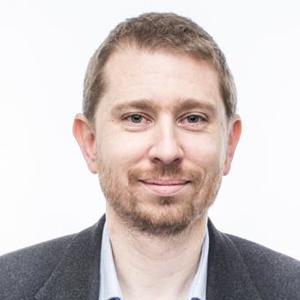
Gissur Erlingsson is a Full Professor at Linköping University's Department of Culture and Society (IKOS), where he leads research at the Center for Municipal Strategic Studies (CKS). His academic work focuses on the intersection of local politics, municipal governance, and democratic accountability within the Swedish context.
Dr. Erlingsson's primary research interests encompass three interconnected domains: 1) the work of political parties and conditions of elected officials, particularly at the municipal level; 2) risks of corruption in mature welfare states like Sweden; and 3) municipal self-government and optimal organization of municipal structures for future challenges. His work addresses critical questions about power relations in municipal politics, accountability mechanisms, and the urban-rural political divide that has become increasingly pronounced in contemporary Swedish politics.
His extensive publication record reveals consistent scholarly output across political science, public administration, and governance studies. A notable trend in his recent work examines the growing polarization between urban and rural areas, with several 2023-2025 publications analyzing geographical tensions within municipalities and their implications for democratic representation. His research methodology often combines quantitative analysis with comparative case studies, frequently focusing on Swedish municipal data while maintaining relevance to broader comparative politics.
- Hedersomnämnande i Kurslitteraturpriset 2015 for co-authoring 'Politik och förvaltning i svenska kommuner'
- Filosofiska fakultetens pris 2013 for significant research contribution
- Pris för bästa artikel i Statsvetenskaplig tidskrift 2012
As a doctoral supervisor, Erlingsson has mentored several successful PhD candidates including Emanuel Wittberg, Gabriella Jansson, and Richard Öhrvall. He currently leads major research projects funded by FORTE and Länsförsäkringar, including a 9.4 million SEK study on urban-rural polarization. His research has practical implications for municipal reform debates in Sweden, particularly regarding optimal municipal size and structure. Beyond academia, he contributes regularly to public discourse through monthly columns in Sörmlands nyheter and as co-editor of the group blog Politologerna.