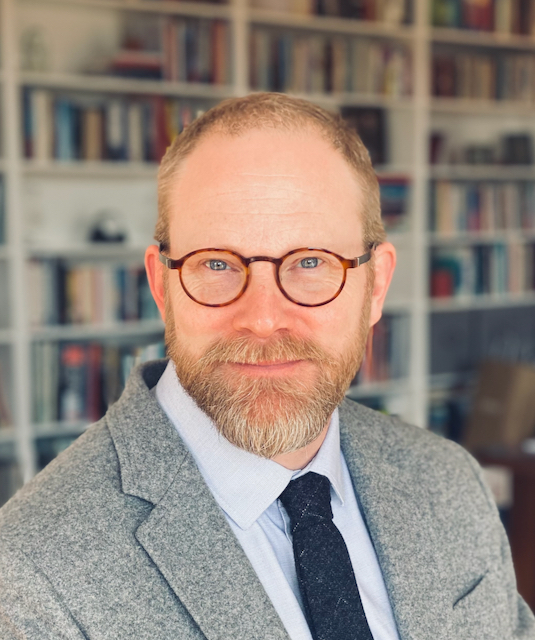
Dr. Jonathan Bright is a Senior Research Fellow and Associate Professor at the Oxford Internet Institute, University of Oxford , specializing in computational approaches to the social and political sciences. His research explores how digital technologies reshape political participation and how new data sources enhance governmental decision-making. Research Interests: Focused on social media, political behavior, computational social science, and big data , Bright’s work addresses digital governance, algorithmic bureaucracy, and the dynamics of political fragmentation online. His empirical studies span open government data usage, crowdsourced geographical information, and the impact of neighborhood effects on data completeness. Scientific Contributions: Leading studies on algorithmic governance in UK local authorities (2020) Investigating geodemographic biases in crowdsourced platforms like OpenStreetMap (2018) Mapping political fragmentation in social media ecosystems (2018) Grants & Collaborations: Funded by UK taxpayers, ESRC, and Google, his work intersects with projects on vaccine misinformation, hate speech monitoring, and digital economies. Formerly held positions as Research Fellow and Research Associate at OII from 2013 to present.
Kathleen R. McNamara is Professor of Government and Foreign Service at Georgetown University, where she also co-founded the Global Political Economy Project with Professor Abe Newman. Her work centers on the European Union, globalization, and the cultural and political foundations of market authority. Her research interests include the political economy of the European Union, monetary politics, culture and identity in global markets, institutional change, and the democratic legitimacy of supranational governance. She examines how ideas, norms, and collective identities shape economic integration and state formation, especially in Europe. Her recent publications (2020–2024) reveal a strong focus on the EU’s geopolitical turn, industrial policy transformation, the impact of crises like COVID-19 on globalization, and the interplay between democracy and populism. These works reflect a deep engagement with both theoretical and policy-relevant dimensions of contemporary European and global political economy. International Studies Association 2018 Distinguished Scholar in International Political Economy ISA 2020 SWIPE Award for Mentoring Women in International Political Economy German Marshall Fund Fellow Fulbright Fellow Simone Veil Fellow at the European University Institute (2023) McNamara has been a visiting scholar at the Russell Sage Foundation, taught at Princeton University and Sciences Po (Paris), and advised the US National Intelligence Council. She is active in public scholarship, writing for Foreign Affairs , Foreign Policy , and The Washington Post . She is a founding figure in the Global Political Economy Project, which aims to reframe the study of global markets through interdisciplinary and critical lenses.
Angelika Sjöstedt serves as Professor and Chair of Gender Studies within the Department of Humanities and Social Sciences at Mid Sweden University. Her academic leadership spans teaching across Bachelor's, Master's, and PhD programs in Gender Studies and Sociology, while actively contributing to institutional discourse through roles such as delivering the 2024 academic celebration lecture. She maintains significant engagement with contemporary academic freedom debates, notably co-organizing the 2024 seminar series addressing responsible internationalization amid the Gaza conflict. Her research profile reveals deep expertise in intersectional analysis of gender, settler colonialism, and labor precarity, particularly examining how chronic crises manifest in peripheralized regions. Recent work demonstrates acute responsiveness to geopolitical emergencies, with 2024 publications directly confronting academic complicity in genocide. Her methodological approach bridges ethnographic rigor with activist scholarship, evident in long-term collaborations like the Båskoes Sámi research network and Forum for Gender Research. Sjöstedt's scholarly trajectory shows consistent thematic development from early work on flexible knowledge-work subjectivity (2012) through nuanced examinations of rural resilience (2017-2020) to current urgent interventions in academic freedom. Her publications reveal distinctive geographic focus on Norrland's inland regions while maintaining transnational theoretical relevance, particularly regarding mining resistance movements and crisis management frameworks. The 2021-2024 output demonstrates accelerated engagement with acute political emergencies, signaling scholarly adaptation to escalating global crises. Professional networks constitute a critical dimension of her work, with sustained involvement in the Forum for Gender Research since at least 2015 and leadership in the Båskoes network advancing Indigenous research methodologies. Her editorial work on critical anthologies like Aktivism: En antologi om arbete för social och politisk förändring (2022) demonstrates commitment to bridging academic and activist knowledge production.
Professor Christopher Carman is the Stevenson Professor of Citizenship at the University of Glasgow, holding a PhD from the University of Houston. He has served in leadership roles including Head of Subject (Politics & International Relations), Head of the School of Social and Political Sciences, and Deputy Head of the School. His research focuses on political representation, electoral processes, public opinion, and Scottish politics, with notable contributions to studies on the Scottish Parliament and rural-urban political divides. Carman has led the Scottish Election Study (SES) since 2011 and co-leads the NORFACE-funded RUDE project on European rural-urban dynamics. He also contributes to the Glasgow-Nankai Joint Graduate School and the Stevenson Trust, fostering citizenship education and democratic research. Education: PhD in Political Science, University of Houston (2000). Previous academic roles include professorships at the Universities of Strathclyde and Pittsburgh. Research Interests: Political representation alternatives (e.g., public petitions systems), electoral behavior, Scottish and UK politics, direct democracy, and comparative legislative politics. Recent work addresses rural-urban divides in Europe and political compromise in democratic systems. Key Projects: Scottish Election Study (SES), Rural and Urban Divide in Europe (RUDE), and studies on political scandals and multilevel governance. His publications span electoral studies, comparative politics, and political behavior, with a focus on institutional trust and democratic engagement. Grants and Funding: ESRC and NORFACE grants support his research. The Stevenson Trust supports his work on citizenship education and public lectures.
Christopher L. Foote is a Principal Economist and Policy Advisor at the Federal Reserve Bank of Boston, where he has worked since 2003. He also holds the title of Professor in the Department of Economics at Harvard University since 2012. Foote earned his BA from the College of William and Mary in 1987 and a PhD in economics from the University of Michigan in 1996. His academic career includes teaching positions at Harvard University (1996–2002) and visiting roles at MIT (2004–2006). His research focuses on labor economics, housing, and macroeconomics. Key areas include labor market polarization, mortgage debt patterns, housing market dynamics, geographic disparities in mortality, and economic impacts of population aging. His work frequently addresses policy implications for financial and labor market stability. Measuring employment through online panels Geographic mortality disparities Mortgage debt and foreclosure analysis Population aging effects Historical labor market discrimination Business cycle modeling Foote has received prestigious awards including the Regents Fellowship, Rackham Pre-doctoral Fellowship, and Alfred P. Sloan Doctoral Dissertation Fellowship. He has also served as Associate Editor and editorial board member for major economic journals. His work spans academic publications in top journals, book chapters, and numerous working papers that analyze economic trends and policy responses. Foote's contributions cover housing economics, labor market dynamics, and macroeconomic policy, with a focus on empirical analysis and real-world applications.
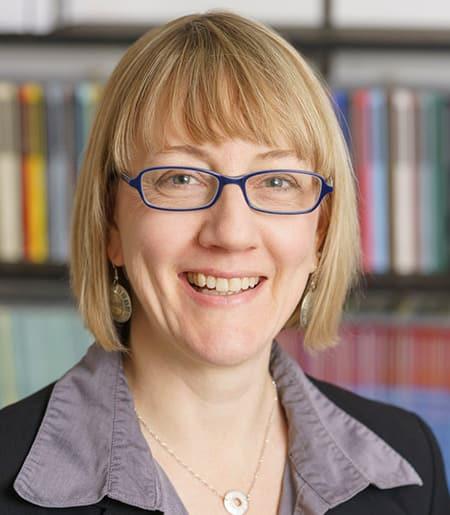
Chuqing Dong serves as Assistant Professor in the Department of Advertising and Public Relations at Michigan State University's College of Communication Arts and Sciences, where her research centers on corporate social responsibility (CSR), ESG communications, government relations, and AI-driven public relations practices through interdisciplinary frameworks. Her academic credentials include a Ph.D. from the Hubbard School of Journalism and Mass Communication at the University of Minnesota, complemented by dual master's degrees in Public Policy (M.P.P.) and Professional Strategic Communication. Research priorities encompass: CSR/ESG communication effectiveness in digital environments Strategic nonprofit-corporate alliances and societal impacts Ethical frameworks for caring public relations Government communication in the AI era Her 30+ publications reveal evolving trends toward AI ethics in PR, cross-cultural CSR analysis, and crisis communication during pandemics, prominently featured in Public Relations Review and Journal of Business Ethics. Recognition includes top paper awards from major associations: International Communication Association (ICA) Association for Education in Journalism and Mass Communication (AEJMC) National Communication Association (NCA) International Public Relations Research Conference (IPRRC) She mentors students in CSR/ESG communication and ethical consumerism while directing research funded by the C.R. Anderson Foundation, SSHRC, and Arthur W. Page Center examining oil industry dialogic communication, employee CSR engagement, and DEI ethics training.
Professor Sara B. Pritchard is a leading scholar in environmental science and technology studies (STS) at Cornell University's College of Arts and Sciences. She holds a Ph.D., M.A., and B.A. in History from Stanford University and University of Puget Sound. Her research critically examines light pollution, environmental ethics, and the intersection of technology and nature. Pritchard has received grants from the National Science Foundation and Cornell's Atkinson Center for a Sustainable Future, among others. Her major works include Night as Environment: Light Pollution and the Anthropocene (2024) and Confluence: The Nature of Technology and the Remaking of the Rhône (2011). She co-edited influential volumes such as New Natures: Joining Environmental History with Science and Technology Studies (2013) and pioneered the concept of 'envirotechnical analysis.' Pritchard advises students across disciplines including Anthropology, Asian Studies, and Natural Resources. Her research explores dark histories, nuclear disasters, and sustainable energy transitions. She collaborates with global scholars through special journal issues on topics like climate justice and polar night studies. Pritchard’s work bridges environmental humanities with technological critique, emphasizing interdisciplinary approaches to urgent ecological challenges.
Dr. Jonathan Lenoir is a CNRS Researcher at the Ecology and Dynamics of Anthropized Systems (EDYSAN) laboratory, University of Picardie Jules Verne , France. His work bridges Ecology and Biostatistics , focusing on ecological dynamics under spatial and temporal global changes, particularly biotic responses to climate change. His research spans broad-scale biodiversity patterns, species distribution modeling, and microclimate ecology, with special attention to forest systems. Dr. Lenoir leads and contributes to multiple research projects including MaCCMic (Impact of forest Management and Climate Change on understory Microclimate) and IMPRINT (Impacts of Microclimatic Processes on forest Biodiversity redistribution under macroclimaTe warming). These projects utilize advanced technologies like LiDAR and microclimate sensors to model understory temperature dynamics and predict biodiversity responses to climate change. His recent publications analyze microclimate buffering in forests ( 2024 ), species thermophilization ( 2024 ), and the application of deep learning to habitat identification ( 2024 ). His work also explores interdisciplinary connections like eco-oncology , comparing invasion dynamics in ecology and medicine. Dr. Lenoir actively mentors researchers and supervises fieldwork campaigns, emphasizing rigorous data collection ( 180 monitoring plots across French forests ) and advanced statistical analyses in R . He collaborates with European institutions and participates in large-scale initiatives like ReSurveyEurope , a database of resurveyed vegetation plots.
Professor Paul A. Raschky is affiliated with the Department of Economics at Monash University , where he also directs the SoDa Labs and co-founded the KASPR Datahaus PTY LTD and IP Observatory . His academic focus spans Political Economy , Environmental Economics , Insurance Economics , and Development Economics , with a specialization in natural hazards and data science applications. Education: PhD (University of Innsbruck, 2008), with a postdoctoral research visit at the Wharton School . Research: Explores intersections of disaster risk , governance , and economic development , leveraging machine learning and big data . Recent Publications: Focus on generative AI productivity , ethnic favoritism , disaster insurance , and conflict economics . Awards: Recipient of the ABDC Award for Innovation and Excellence in Research (2022) and Dean’s Excellence in Research Award (2016) . Projects: Leads initiatives on internet suppression in Myanmar , news media availability , and AI-driven policy insights in South-East Asia and the Pacific. Future Work: Will be on sabbatical in 2025 , likely expanding on AI applications and disaster resilience .
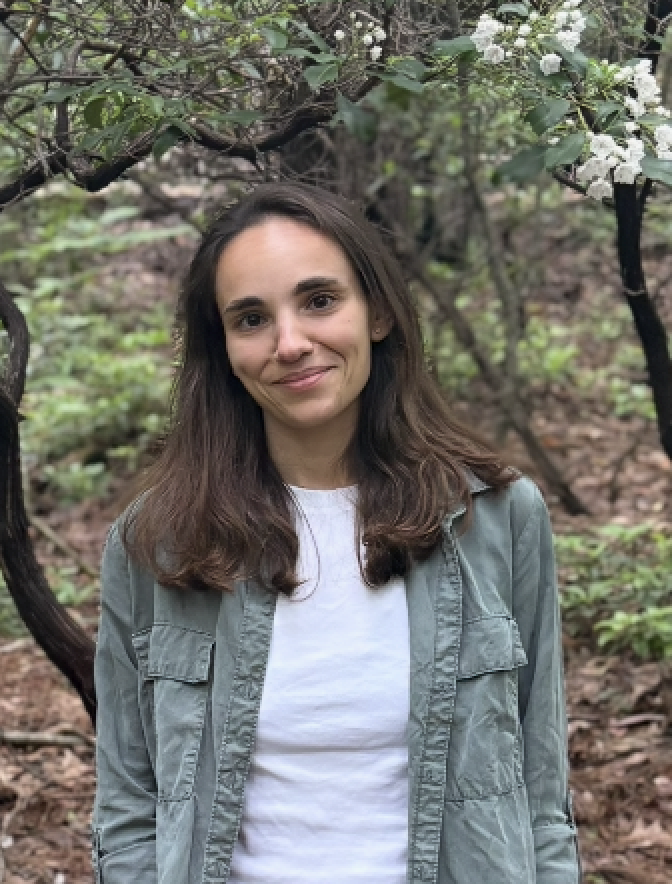
Anna Weissman is a Political Scientist completing her PhD at the University of California, Berkeley in 2025. She will join the Center for the Study of Democratic Politics at Princeton University as a Postdoctoral Fellow starting September 2025. Her academic home is within the Department of Political Science in the College of Letters and Science at UC Berkeley. PhD, Political Science, University of California, Berkeley (2025) B.A., Political Science, Philosophy, and German, Tufts University Weissman's research focuses on representation, local political economy, and political geography, with specific attention to who holds power in American local governments and how this drives policymaking. Her work examines municipal officials' embeddedness in their communities and the implications for policy outcomes, particularly relating to land use, with special interest in small-town and rural America. Another significant branch of her research investigates attitudes about descriptive representation at the national level. She employs diverse methodological approaches including causal inference designs for observational data, text analysis, and original surveys and survey experiments. Her publication record shows a strong focus on representation and local politics, with articles appearing in top political science journals including the Journal of Politics and the Journal of Political Institutions and Political Economy. Her work demonstrates consistent attention to how representation functions across different political contexts and scales. Research Associate, Political Science Department, MIT (prior to graduate school) Weissman has served as a Graduate Student Instructor and Tutor at UC Berkeley for multiple courses including Decision Analysis and Quant Methods, Politics of Public Policy, Introduction to American Politics, and research methods courses. Her teaching experience spans both graduate and undergraduate levels, demonstrating her commitment to political science education. Her research portfolio includes significant work on local government dynamics, representation, and political behavior, with several publications in prestigious journals and multiple works in progress examining the relationship between place-based attachment and political attitudes.
Anders Parment is a Lecturer in Business Administration at Stockholm University , affiliated with the Stockholm Business School and its Department of Business Administration . With a focus on Marketing , he contributes to research on sustainability, generational differences, and urban-rural market dynamics. PhD in Economics from Linköping University (2005) MSc in Economics from Linköping University and Lund University Degree in Competition Law from Örebro University His research bridges Marketing , Sustainability , and Generational Behavior , examining how urbanization, digitalization, and societal polarization influence consumption and labor markets. Current projects explore urbanization effects and marketization in the Swedish school system . Publications highlight trends in Generational Marketing , Sustainable Practices , and Consumer Behavior across diverse contexts like automotive branding, retail evolution, and public administration. Swedish Marketing Association's Marketing Book of the Year (2019, 2016, 2014, 2013) Educational awards for teaching excellence He teaches basic and advanced marketing courses, including eMBA and leadership programs, emphasizing critical perspectives on corporate sustainability and consumer empowerment.
Sebastian Henn is a Professor of Economic Geography at the Institute of Geography, Friedrich Schiller University Jena, where he has held the Chair since 2014. He serves as Dean of Studies for the Faculty of Chemistry and Geosciences (since 2020) and Deputy Director of the Leibniz ScienceCampus "Eastern Europe - Global Area". His research spans transnational entrepreneurship, knowledge-based regional development, cluster dynamics, polarization/peripheralization, and migration studies . Education: Dipl.-Geogr. (University of Mannheim, 2001); Dr. rer. nat. (University of Halle, 2006); Habilitation (University of Halle, 2014) Key research areas include spatial perception, mobilities, health geography, and global-local interactions in sectors like pharmaceuticals, medical technology, and the diamond industry. Publications (2013-2024) focus on global production patterns, cluster evolution, regional embitterment, and the role of transnational entrepreneurs in industries from Gujarat to Antwerp. His 2023 work explores populist resentments in rural regions and health infrastructure disparities in Thuringia. Awards include the 2017 Journal of Economic Geography Best Referee Award. He co-edits the Springer series "Perspectives in Human Geography" and holds leadership roles in academic societies like the Schumpeter Centre for Social and Economic Change. Editorial and Review Activities : Active on boards of the Journal of Economic Geography and ZFW journal. Regular reviewer for 20+ journals and funding bodies including DFG and DAAD. Leads research on BRIC investments, Southern multinationals, and spatialization processes under globalization .
Kjerstin Thorson serves as the Dean of the College of Liberal Arts at Colorado State University, a position she assumed on August 1, 2024. Previously, she was the Brandt Endowed Professor of Political Communication and Associate Dean for Strategic Initiatives at Michigan State University’s College of Communication Arts & Sciences. An internationally recognized scholar, her research centers on digital platforms and their impact on civic life and culture. Her educational background includes: BA in English from Macalester College MA in Journalism from the University of Missouri-Columbia PhD in Mass Communication from the University of Wisconsin-Madison Thorson's research explores the intersection of digital media, political communication, and civic engagement. She investigates how social media platforms shape political participation, news consumption, and civic discourse, with a particular focus on young adults and historically marginalized communities. Her work addresses critical issues such as equity in digital civic infrastructure, the role of algorithms in political exposure, and the dynamics of online moderation and community governance. She examines both the empowering potentials and the challenges of digital media for democratic participation. Her recent publications (2023-2025) reveal a sustained investigation into platform governance, volunteer moderation, and the urban-rural divide in digital civic engagement. She also delves into Gen Z's civic behaviors, the spread of misinformation, and the evolving landscape of political learning on social media. Her work often employs mixed-methods approaches, combining digital trace data with surveys to understand complex media effects. Thorson has received notable recognition for her contributions: Michigan State University’s Teacher-Scholar Award 2022-2023 Fellow of the Big 10 Academic Alliance Leadership Program Her research has been supported by prestigious organizations including the National Science Foundation (NSF), the Social Science Research Council, and the Spencer Foundation. In her administrative roles, she has prioritized student success through initiatives like the Ignite the Future program, which supports first-generation and marginalized students, and has championed faculty development through the creation of a Center for Teaching and Learning. While specific advisees are not listed, her leadership in student success programs underscores her commitment to mentoring. Under her leadership at Michigan State University, the College of Communication Arts & Sciences expanded its revenue-generating partnerships, created a college-wide Center for Teaching and Learning, launched the Ignite the Future family of programs, and grew the esports initiative. She has also focused on improving culture and climate through promotion pathways for non-tenure track faculty, climate surveys, and community-building events.
Fabio Perocco is an Associate Professor at the Department of Philosophy and Cultural Heritage at Ca' Foscari University of Venice. His work focuses on migration, social inequality, racism, and labor precarity. He has conducted extensive research on racialized welfare discourses, migrant labor conditions, and Islamophobia in Europe. Key research interests include the intersection of migration and social policy, structural violence against migrants, and the precarization of labor in the digital economy. His studies often highlight systemic discrimination within welfare systems and analyze the socioeconomic impact of migration policies. Recent publications examine topics such as the racialized discourse on social welfare, gig economy labor dynamics, and the structural roots of torture against migrants. He is affiliated with the Research Institute for Social Innovation, contributing to projects addressing territorial inequalities and global migration challenges.
Prof. Dr. Markus Freitag is a Professor of Political Sociology at the University of Bern . He studied political science, economics, and German language and literature at Heidelberg University, obtaining his Magister Artium in 1995, followed by a PhD in 1999. Positions: Post-Doc at University of Basel, ETH Zurich, University of Essex; Visiting Lecturer at University of Konstanz; Assistant Professor at Humboldt University Berlin; Chair of Comparative Politics at University of Konstanz (2005-2011) Current role: Director of the Institute of Political Science, University of Bern (since 2011) His research focuses on political sociology, political psychology, comparative politics, social capital , and direct democracy . Key themes include: Emotional drivers of political behavior during crises (e.g., pandemic politics) Personality traits and voter decision-making Trust in institutions and associational life Intergroup conflict and polarization Swiss militia system and local governance Global analysis of regime preferences and social cohesion Recent scientific publications emphasize affective polarization, pandemic preparedness, institutional trust , and arms export ethics , with empirical studies across Europe and post-conflict regions . His work appears in journals like British Journal of Political Science , Comparative Political Studies , and Political Psychology . Prof. Freitag leads teaching courses at the University of Bern, including "Demokratie und Gesellschaft I" and "The Political Sociology of Crises" , and collaborates with researchers such as Christopher Claassen, Sascha Göbel, Alina Zumbrunn , and Maximilian Filsinger .