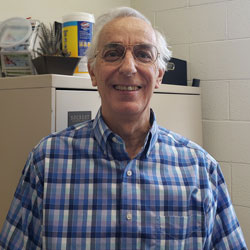
Margit Meyer is a researcher at the Systems Engineering Laboratory (STL) within the Faculty of Engineering at Saarland University of Applied Sciences. She specializes in desktop and server virtualization (Red Hat Virtualization, Linux KVM), software equipment and maintenance (Unix, Linux, MS Windows), and Internet services (email, web servers, wiki). Phone: +49(0)681 5867-145 Email: Margit.Meyer@htwsaar.de Location: Room 8213, Goebenstraße 40, 66117 Saarbrücken Research Focus: Virtualization technologies (Red Hat Virtualization, KVM) Operating system maintenance (Unix/Linux/Windows) Web/email server administration Collaboration on innovative teaching tools
Anthony Aiello is a Lecturer in the Computer Science Department at the University of Wisconsin-Parkside. He holds an MS in CIS from the same institution (2021). His expertise spans Unix/Linux system administration, cybersecurity, and software development. He actively contributes to academic governance through extensive committee work, including multiple Computer Science Search & Screen committees since 2018. Additionally, he advises university clubs like Girls Who Code, Phi Eta Sigma Honors Society, and the Computer Club. Education: MS in CIS, University of Wisconsin-Parkside, 2021 Research & Service: His research focuses on integrating AI tools into computer science education and cybersecurity standards. He has authored publications on topics like AI-enhanced learning assistants and secure software development practices. Beyond teaching, he has served on over 8 academic committees, including roles in faculty recruitment and departmental strategic planning. Courses Taught: CIS 625 - Systems Analysis and Design CSCI 274 - UNIX Concepts and Tools CSCI 435 - Linux/UNIX System Administration MIS 425 - Systems Analysis and Design Community Engagement: He supports student organizations through faculty advising roles, fostering interest in coding, honors societies, and tabletop gaming communities.
Dr. Mark Fearer is an Adjunct Professor at Capitol Technology University and Branch Chief at the U.S. Securities and Exchange Commission (SEC), leading a team examining stock exchange infrastructure security. He holds an Executive Juris Doctor from Concord Law School and a Doctor of Science in Cybersecurity from Capitol Tech. His expertise spans IT Audit, Information Security, and Business Continuity Planning. Education: EJD (Concord Law), D.Sc. Cybersecurity (Capitol Tech), MS/BS Computer Science (Fitchburg State) Research focuses on federal cybersecurity regulations, cloud migration, and C-suite security communication. Authored an ANSI standard on the human element in IT and published a 2020 dissertation on Security Operations Centers. Awards include the SEC's Four Pillars Award (2018) and John P. Wheeler Veterans Charity Award (2017). Active in professional organizations: ISSA National Capital Chapter (Vice President), ASIS Chapter 151 (Chair), and Woodbridge Linux Meetup (Chair). Volunteer roles include Marine Corps League Trustee and Moose Lodge Trustee. Holds certifications: CISSP, CISA, USPTO Patent Agent, and Ham Radio Technician.
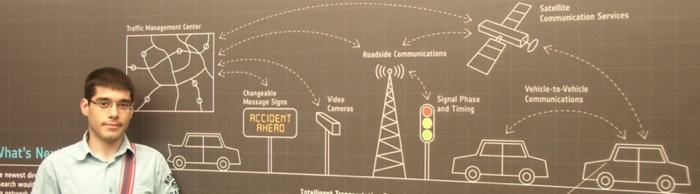
Rui Pacheco Meireles is an Assistant Professor in the Computer Science Department at Vassar College and a Researcher at the Instituto de Telecomunicações in Portugal. His research focuses on networking and distributed systems, particularly vehicular ad-hoc networks (VANETs), with an emphasis on protocol design, wireless communication optimization, and infrastructure integration. He has contributed to projects like WiChoose for Wi-Fi network selection in vehicle-to-infrastructure scenarios and has developed datasets for vehicular communication analysis. Teaching responsibilities include courses such as Software Design and Implementation, Computer Networks, and Analysis of Algorithms. He has also created educational materials like an introduction to Linux and Unix Shell. His work has been recognized with a Best Paper Award at the 2016 IEEE Vehicular Networking Conference. Research datasets are publicly available via Zenodo, facilitating reproducibility and collaborative efforts in vehicular communication studies. Current office hours are Mondays and Wednesdays 12-2 PM at Sanders Physics 304. Professional affiliations include active participation in IEEE conferences and Elsevier journal publications.
Francesco Tommasi is an Associate Professor at the Department of Innovation Engineering, University of Salento, where he teaches Operating Systems, System and Network Programming, and System Security courses for both undergraduate and graduate Computer Engineering programs. His academic affiliation spans multiple departments within the School of Engineering, focusing on the intersection of computer science, networking, and security. His current research interests center on computer security, with specific focus on authentication systems, web security, and mobile security. His past research includes Quality of Service for computer networks, IP mobility, satellite internetworking, and satellite distance learning technologies. Tommasi has made significant contributions to the field of cybersecurity, particularly in identifying and analyzing novel attack vectors including Browser-in-the-Middle attacks and MobileApp-in-the-Middle attacks. His recent publications (2021-2025) demonstrate a strong focus on cybersecurity challenges, particularly authentication vulnerabilities, web security threats, and mobile security issues. The research shows progression from fundamental network security concepts to more sophisticated attack methodologies targeting modern authentication systems and mobile platforms. His work bridges theoretical security concepts with practical attack demonstrations, contributing significantly to the understanding of security vulnerabilities in contemporary systems. Co-author of the first Internet Proposed Standard signed by an Italian university (RFC 2961) Co-author of attack #701 included in the CAPEC database of dangerous cyber attacks Scientific director of the Laboratory for Internetworking and Interoperability between Systems (LIIS) Co-scientific director of the Cybersecurity Research Lab Responsible for the Unisalento node of the CINI Cybersecurity National Lab Tommasi has directed numerous research projects funded by MIUR, European Space Agency, and regional authorities, including satellite distance learning initiatives, cybersecurity projects, and technology transfer initiatives. He created the Salento Satellite Campus and has been instrumental in developing satellite-based educational infrastructure. His laboratory work focuses on practical security testing and developing defensive mechanisms against emerging cyber threats. He leads the Laboratory for Internetworking and Interoperability between Systems (LIIS) and co-directs the Cybersecurity Research Lab, which focuses on practical security testing, vulnerability analysis, and developing defensive security mechanisms. These labs collaborate with national and international partners on cutting-edge cybersecurity research and implementation projects.
Prof. Redha Gouicem holds the Chair of Operating Systems at RWTH Aachen University. His research focuses on operating system design, virtualization, and multicore scheduling, with an emphasis on formal verification and performance optimization. Professorship: Operating Systems Location: RWTH Aachen University, Germany Research interests include: Multicore scheduling algorithms Binary translation and virtualization Formal verification of OS components CPU frequency scaling and performance optimization Comparison of scheduling models in Unix/Linux Domain-specific languages for scheduler development Recent work explores hypervisor-agnostic guest overlays, weak memory model translation, and provably correct multicore schedulers. His publications demonstrate technical depth in system software design and concurrency management. Current affiliations: RWTH Aachen University Chair of Operating Systems
Nikolaos Lembesis is a tenured Assistant Professor in the Department of Chemistry at the University of Ioannina, specializing in Theoretical Physical Chemistry and Computational Chemistry. His research develops multi-scale computational simulation methods to understand structure-property relationships of matter for applications in energy, environment, and quality of life improvement. His educational background includes: PhD in Chemical Engineering, National Technical University of Athens (2013) BSc in Chemical Engineering, Technical University of Munich (2007) BSc and MSc in Chemical Engineering, National Technical University of Athens (2007) Dr. Lembesis's research integrates molecular dynamics, ab initio simulations, and stochastic methods to model materials at atomic-to-macroscopic scales. His group investigates perovskite solar cell interfaces, droplet absorption phenomena, and defect engineering using advanced computational techniques including classical/ab initio molecular dynamics and high-performance computing. Analysis of his 15 most recent publications (2023-2025) reveals dominant focus on perovskite photovoltaics, with recurring themes of interface engineering, strain manipulation, and defect passivation to enhance efficiency and stability. Key subfields include crystal orientation control, wide-bandgap perovskite optimization, and novel monolayer interface designs. His group offers undergraduate and master's thesis opportunities in Computational Chemistry, providing training in molecular simulation techniques, Unix/Linux systems, HPC resources, and software development for materials modeling. The research team utilizes multi-scale simulation approaches to study water-perovskite interactions, organic monolayer protection mechanisms, and thermomechanical properties of advanced materials, with strong emphasis on bridging computational predictions with experimental validation.
Nikos Vasilakis is an Assistant Professor of Computer Science at Brown University, affiliated with the Brown Data Science Institute and the Archimedes Unit on AI and Data Science. His research focuses on software systems, programming languages, and computer security, with emphasis on automated program analysis, parallelization, and supply-chain security. He received his M.Sc. and Ph.D. in Computer and Information Science from the University of Pennsylvania. Current affiliations: Brown University School of Engineering, ATLAS research group Industrial collaborations: technologies applied in software supply-chain security and open-source ecosystems Research interests include enhancing program capabilities through automation, securing software dependencies, and enabling scalable distributed systems. Key projects include BinWrap (Node.js security), PaSh (shell parallelization), and systems for automated regeneration of programs. Recent awards: ACM ASIACCS '23 Distinguished Paper Award for BinWrap. Active in organizing EuroSec'25 and Brown Systems Week. Current courses include Distributed Computing Systems (CS1380) and Systems Transforming Systems (CS1952R). Labs/Teams: Leads the ATLAS group, which collaborates on systems research and secure computing paradigms. Current students/postdocs focus on topics like shell script parallelization, decentralized computing, and confidential computing transformations.
Joseph Helsing is a Lecturer in the Department of Electrical and Computer Engineering at Stevens Institute of Technology (2023–Present). He holds a PhD in Computer Science & Engineering from the University of North Texas (2018), an MS from the same institution (2013), and a BA in Computer Science from Austin College (2010). His research focuses on computational epidemiology, modeling/simulation, and GIS, with applications in epidemic risk assessment, emergency response planning, and distributed algorithm design. His professional experience includes roles as Assistant Professor at Muhlenberg College (2020–2023), Lecturer at University of North Texas (2019–2020), and Adjunct/Teaching Fellow roles at UNT from 2015–2019. He has contributed to peer-reviewed journals and conferences, including work on distributed p-median algorithms and vaccine allocation strategies. Helsing has received the ECE Outstanding Teaching Award (2023–2024) and is an ACM member. He actively participates in institutional service roles such as the Marketing and Alumni Committee Chair and Stevens Day of Giving Committee Member. He teaches courses ranging from foundational programming (Python/C++) to advanced topics in operating systems and database systems across multiple institutions. His educational contributions include curriculum design for UNIX/Linux courses and innovative teaching tools for digital curation.
Dr. Jean Mayo is an Associate Professor in the Department of Computer Science at Michigan Technological University (MTU), where she has served since 1997. She also serves as the Graduate Program Director for the Computer Science program. Her academic background includes a PhD and MS in Computer Science from the College of William and Mary, and undergraduate degrees in Physics (Longwood University) and Mechanical Engineering (Georgia Tech). Dr. Mayo's research focuses on distributed systems, operating systems security, and computer science education. She has developed multiple visualization tools for teaching concepts such as secure coding (e.g., SecureCvisual), cryptography (AESvisual, DESvisual), and access control (RBACvisual, MLSvisual). These tools emphasize hands-on learning for critical topics like concurrency, memory management, and system permissions. Her work in distributed computing includes algorithms for predicate detection, deadlock resolution, and termination detection in dynamic systems. Notable collaborations include grants from NSF for curriculum development in concurrent computing and distributed systems education. She has advised 18 MS students and 1 PhD student to date, with current advisees Lihui Hu and Paul Bonamy. Dr. Mayo has held leadership roles in integrating advanced systems laboratories into undergraduate education and has contributed to the design of fault-tolerant distributed computing curricula for software engineering programs.
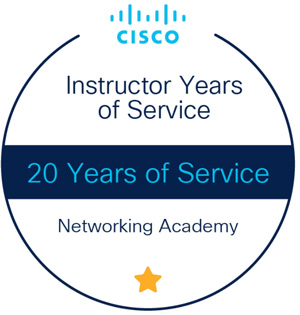
Janet S. Kropff is a Professor in the Department of Computer Information Systems at the University of Akron's College of Engineering and Polymer Science. She specializes in networking, cybersecurity, and IT infrastructure. Dr. Kropff has served as a Cisco-certified academy instructor for 20 years and holds certifications in network security, routing, and switching. Education: M.A., Applied Mathematics, Kent State University, 1992 B.S., Applied Mathematics, Kent State University, 1989 Research & Teaching: Her expertise spans networking fundamentals, Unix/Linux systems, and advanced routing technologies. She teaches courses such as Networking Basics, Router and Routing Basics, and Wireless Networking. Her consulting work includes roles with FirstEnergy, Cutler Real Estate, and technology firms like Bruner Cox. Professional Experience: As an IT consultant and trainer, she focuses on enterprise network design and security. Her certifications include Cisco academy instructor credentials, reflecting her long-term commitment to IT education and industry standards.
Simone Aonzo is an Assistant Professor at Eurecom, a graduate school and research center located in Sophia Antipolis, France. He is a member of the Software and System Security (S3) Group, where he conducts research in mobile and system security, with a focus on malware analysis for Android and Windows platforms. His work also extends to phishing, AI in security, and human factors in security processes. Institution: Eurecom School: School of Computer and Communication Sciences Department: Software and System Security (S3) Group Academic Rank: Assistant Professor Simone Aonzo's research interests lie at the intersection of cybersecurity and real-world system vulnerabilities. He investigates malware behavior, reverse engineering techniques, and security protocols such as Digital Asset Links. His work combines technical depth with practical implications for improving ecosystem security. He actively contributes to the academic community through peer review and program committee service for top conferences including USENIX Security and RAID. The recent publications highlight a strong trend in system-level security research, focusing on debugging techniques for Android malware, core dump analysis, privilege management in Unix systems, and security protocol adoption. These works reflect a deep engagement with low-level system mechanisms and their exploitation by adversaries, particularly in mobile and embedded environments. Scientific awards and recognitions include: Amateur European Champion in K-1 Kickboxing Professional Italian Champion in K-1 Kickboxing Simone advises and mentors students in cybersecurity research, actively recruiting PhD candidates to join the S3 group. He teaches two courses: “Introduction to Cybersecurity” and “Reverse Engineering Malware,” with all course materials openly shared. While no specific grants are mentioned, his startup venture ThreatNemesis indicates entrepreneurial engagement in cybersecurity innovation, particularly in Android sandboxing technology. He leads research activities within the S3 group at Eurecom, fostering a collaborative environment for tackling emerging threats in software and system security. His lab focuses on practical, hands-on analysis of real-world malware and security flaws, promoting both academic and applied outcomes.
David Vincze is a researcher at the Department of Precision Mechanics, Chuo University, Japan. Previously affiliated with the University of Miskolc, Hungary, he has taught courses in Operating Systems, UNIX System Administration, and Modern Information Technologies. His research spans computational intelligence, fuzzy systems, reinforcement learning, and human-robot interaction. PhD in Computer Science Current Position: Researcher, Chuo University Previous Affiliation: University of Miskolc David Vincze's research focuses on Fuzzy Systems , particularly Fuzzy Rule Interpolation (FRI) , and its integration with Reinforcement Learning (e.g., FRIQ-learning). He applies these methods to Human-Robot Interaction (HRI) , drawing inspiration from ethology and animal behavior. His recent work explores applications in Parent-Child Interaction Therapy (PCIT) , using social robots to support child development and family communication. He also investigates Operating Systems Security , especially Linux kernel mechanisms. His publications show a consistent trend in developing and optimizing FRI-based learning methods for real-time, embedded, and robotic applications. He has worked on performance optimization, parallelization, and knowledge injection in FRIQ-learning, aiming to make fuzzy reinforcement learning more efficient and applicable in dynamic environments. Scientific Contributions: Developed FRIQ-learning: Fuzzy Rule Interpolation-based Q-learning Applied ethological models to robot behavior Designed fuzzy automata for HRI Optimized fuzzy inference for real-time systems Explored indoor localization for HRI experiments Vincze has advised students such as Alex Tóth and has been involved in student supercomputing teams (ASC 2014–2017). He has developed various Linux tools, including security extensions for Apache, video filters for MPlayer, and drivers for TV tuner cards. He maintains active research profiles on ResearchGate, Google Scholar, and Scopus. He leads projects in Mihoko Niitsuma's Lab at Chuo University, focusing on social robotics, behavior modeling, and real-time interaction systems.
Quentin Galerneau is a Lecturer in the Department of Computer Science, Engineering, and Physics at the College of Innovation and Technology, University of Michigan-Flint. He is actively involved in teaching computer science courses, particularly focusing on Unix/Linux systems. Education: Master of Arts in Business Administration (1980) His professional interests center around Unix/Linux and foundational computing systems. He currently teaches CSC 137: Fundamentals of Unix/Linux, indicating a strong focus on practical, system-level computing education. While no formal research publications are listed, his teaching expertise contributes significantly to the undergraduate computing curriculum. There are no listed scientific awards or research grants. Quentin Galerneau advises no publicly listed students and is not associated with any named research labs or teams. His role appears to be primarily instructional within the computer science program.
Daniel Cañas is an Associate Professor in the Department of Computer Science at Wake Forest University, where he has been a faculty member since 1987. Prior to this, he served as a faculty member at the University of Kansas from 1984 to 1987 and as founder and Director of the Computer Center at the Instituto Tecnológico de Costa Rica (ITCR) from 1976 to 1980, contributing to the establishment of its Computer Science Department. Education: Computer Engineering, Instituto Tecnológico de Monterrey (1973) M.S. in Information and Computer Science, Georgia Tech (1976) PhD in Computer Science, University of Texas-Austin (1983) Research Interests: Daniel Cañas focuses on enhancing software tools for computer science education and exploring processes and threads in Linux systems. His work bridges educational methodologies with operating system fundamentals, emphasizing practical training in Unix environments and C programming. Teaching: He has taught a wide range of courses at Wake Forest University, including: CSC 101 – Overview of Computer Science CSC 191 – Introduction to Unix and C Programming CSC 251 – Computer Systems II CSC 311 – Computer Architecture CSC 341 – Operating Systems CSC 391 – iOS Programming CSC 611 – Computer Architecture CSC 641 – Operating Systems Research Contact Information: Office: 249 Manchester Hall, Wake Forest University Phone: 336.758.5355 Email: canas@wfu.edu