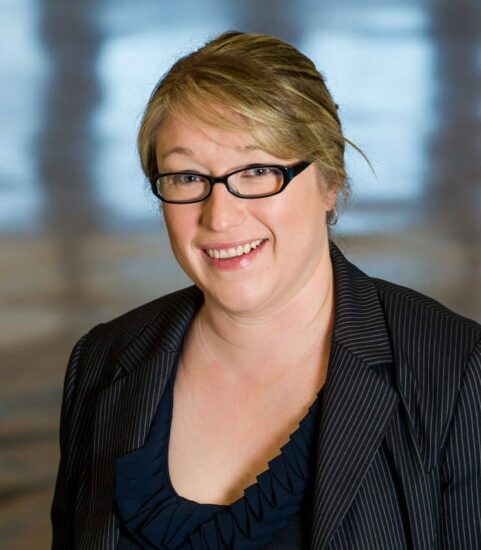
Ujju Aggarwal is an Assistant Professor of Anthropology and Experiential Learning in the Bachelor’s Program for Adults and Transfer Students (BPATS) at The New School, and serves as Coordinator of BPATS’ Self-Directed Learning Program. She holds affiliate faculty appointments in Global Studies and the Department of Anthropology. Her research critically examines public infrastructures, urban space, racial capitalism, rights frameworks, gender dynamics, and state power. Her forthcoming book Unsettling Choice: Race, Rights, and the Partitioning of Public Education (University of Minnesota Press, 2024) interrogates educational justice through these lenses, while her current Spencer Foundation-supported project Education Against Enclosure extends this analysis into transformative pedagogical practices. Her interdisciplinary work bridges anthropology, critical geography, and public policy with deep commitments to social justice movements. Aggarwal mentors National Academy of Education/Spencer Foundation doctoral and postdoctoral fellows and has received research funding from the Institute for Urban Policy Research and Analysis, Center for Place Culture and Politics (CUNY), and Davis Putter Fund. Her community-engaged scholarship manifests through sustained organizational work rather than traditional laboratory structures. She maintains active leadership in social justice initiatives as Board Member of Teachers Unite, Advisory Board Member for the Parent Leadership Project and PARCEO (Participatory Action-Research Center for Education, Organizing), connecting academic work with grassroots movement building in educational justice, immigrant rights, and abolitionist frameworks.
Nicholas Guyatt serves as Professor of North American History in the Faculty of History at the University of Cambridge and is a Fellow of Jesus College. He joined Cambridge in 2014 after teaching positions at Princeton University, Simon Fraser University, and the University of York. His academic foundation includes a BA and M.Phil. from the University of Cambridge and a Ph.D. from Princeton University under Daniel T. Rodgers. Guyatt's research centers on race, national identity, and state formation in 18th-19th century America, with core expertise in colonial history, the Atlantic World, and intellectual history of American imperialism. His work critically examines racial segregation, maritime history, and evolving concepts of citizenship and world order. Analysis of his recent publications reveals consistent thematic focus on racial ideologies, colonization projects, and imperial thought across the early republic and Civil War eras. His scholarship demonstrates methodological breadth spanning political, intellectual, and social history with particular attention to African American experiences and transnational connections. His distinguished recognition includes: Stanford Humanities Center Faculty Fellow (2009-2010) British Academy Mid-Career Fellow (2013-2014) Senior Visiting Research Fellow at Oxford's Rothermere American Institute (2013-2014) He actively supervises M.Phil. and Ph.D. candidates in 18th-19th century American/Atlantic history, especially welcoming research on Native Americans, African Americans, slavery/abolition, and empire. His editorial leadership with Zed Books' 'Global History of the Present' series reflects commitment to diversifying historical scholarship beyond Eurocentric frameworks. Current major projects include co-authoring 'Jefferson's Wolf: The Struggle to End Slavery in the Founding Era' (Harvard University Press, 2026) and editing 'The Oxford Illustrated History of the United States' (OUP, 2026), demonstrating sustained scholarly productivity through collaborative academic networks.
David Mwambari serves as Associate Professor at KU Leuven's Faculty of Social Sciences within the Unit Leuven International and European Studies (LINES). He leads the ERC-funded TMSS project on Life Narratives of Violence Among Refugees from Africa's Great Lakes Region and holds affiliations with the Oxford Consortium on Human Rights and the Centre for Mediation in Africa at the University of Pretoria. His educational background includes BA/MA in International Relations from United States International University-Africa, MA in Pan-African Studies from Syracuse University, and PhD in History from La Trobe University. He previously held academic positions at King's College London, Ghent University, and United States International University-Africa. Mwambari's research centers on memory studies with emphases on post-genocide Rwanda, colonial durabilities, and refugee narratives. His work examines how cultural memory shapes state formation, peacebuilding, and identity politics through interdisciplinary methodologies blending historical analysis, ethnography, and critical theory. Recent projects investigate vernacular memory practices during crises and the spatial dimensions of post-conflict reconstruction. His scientific contributions include the monograph Navigating Cultural Memory (Oxford University Press, 2023), co-edited volume Beyond History (Rowman & Littlefield, 2020), and editorial roles for Qualitative Research journal and Brill's 'Mobilizing Memory' series. His publications demonstrate evolving focus from leadership studies toward memory politics and decolonial research methodologies. European Research Council (ERC) Grant for TMSS Project Fellow at Churchill College, University of Cambridge African Academic Diaspora Fellow at CODESRIA FWO Postdoctoral Research Fellowship Mwambari actively mentors early-career scholars across Africa, Latin America, and East Asia while contributing to public discourse through Al Jazeera and community projects training history teachers in East Africa. His consultancy work addresses cross-disciplinary challenges in healthcare, education, and security, reflecting his commitment to applied scholarship beyond traditional academic boundaries.
Patrick Willems is a full Professor at KU Leuven's Faculty of Engineering Sciences, Department of Civil Engineering. He serves as the head of the Hydraulics Subdivision within the Hydraulics and Geotechnics unit. Professor Willems holds multiple significant roles including chairman of the ADS Bureau, member of the Faculty Council of Engineering Sciences, and participant in the Leuven One Health Institute and KU Leuven Institute for Urban Studies (LUSI). His work addresses critical global water management challenges through advanced hydrological modeling and climate change adaptation strategies. Professor Willems' research spans several critical areas in water resources engineering. His primary expertise includes urban hydrology and river engineering, statistical hydrology with focus on flood prediction and risk analysis, integrated river basin management, precipitation analysis, and climate change impacts on hydrological extremes. He employs both traditional hydrological modeling approaches and innovative machine learning techniques to develop practical solutions for flood warning systems, urban water management, and climate adaptation planning. His research integrates statistical methods, numerical modeling, and data science to address complex water management problems across multiple geographical contexts. Professor Willems leads multiple major international research projects examining hydrological extremes in transboundary river basins, natural climate adaptation measures, hydrological modeling of peatland areas, and deep learning-based prediction of hydrological extremes. His work spans various geographical contexts including Belgium, Vietnam, Bolivia, Tanzania, and the Congo Basin, demonstrating both local relevance and global applicability of his research. Within KU Leuven, Professor Willems teaches diverse courses including Environmental Problems and Techniques, Statistics and Data Science, Stochastic Hydrology, Urban and River Hydrology and Hydraulics, River Modeling, and Probability and Statistics. He also leads the Hydraulic Engineering Project course and an Artificial Intelligence Project course, reflecting his commitment to integrating traditional engineering knowledge with modern computational approaches. As head of the Hydraulics Subdivision, he oversees research activities focused on developing advanced water engineering tools and methodologies that bridge theoretical advancements with practical applications for water management authorities.
Dr. Reece Sophocleous is an Education-Focused Lecturer in the School of Life and Environmental Sciences at the University of Sydney. His office is located in the Carslaw Building (F07) on the University campus. With a background in molecular biology, biochemistry and pharmacology, he brings significant subject matter expertise to his teaching role. Reece is passionate about education innovation, particularly in the areas of: Technology-enhanced learning (TEL) and educational technology Generative AI in higher education Biochemistry and molecular biology His student-focused approach drives him to push beyond traditional delivery models of higher education. As an educator, he is committed to nurturing a future where education is backed by innovation, and where digital technologies and artificial intelligence are embraced as tools to prepare students for a world in which they can thrive. Currently, he is leading the project "Investigating the Impact of AI-Generated Quizzes in Large Units of Study" funded by an EF SoTL Grant for 2025-26. This research aligns with his broader interest in how technology can enhance the educational experience for students in large university settings. Reece specializes in first-year biology teaching and coordination, focusing on making complex concepts in cell and molecular biosciences accessible and engaging for new university students. His work spans across themes of Microbiology, Molecular biology and biotechnology, and Biochemistry and metabolism.
Federica De Stefano is an Associate Professor of Organisation Studies at Saïd Business School, University of Oxford, and a Research Fellow of Green Templeton College. She serves on editorial boards for Organization Science , Human Resource Management , and Human Resource Management Review , while holding roles in the Strategic Management Society (SMS). Previously, she was an Assistant Professor at HEC Paris and a Post-Doctoral Fellow at Wharton People Analytics. She earned a PhD from Bocconi University, with additional degrees from Fudan University and Bocconi. Her research focuses on people management's impact on organizational and individual outcomes, including employee mobility, workplace safety, and social sustainability. Using quantitative methods and large datasets, her work has been published in top journals like Academy of Management Journal and Strategic Management Journal . She has received the Marie Curie Individual Fellowship and recognition as a top 40-under-40 MBA professor. Teaching focuses on people analytics and management, with a 2023 completion of the International Teachers Program (ITP). Her research grants and collaborative work at Wharton People Analytics underscore her commitment to advancing strategic human capital practices. Federica's work bridges academic rigor with real-world organizational challenges, emphasizing ethical and sustainable workforce strategies.
Professor Joy Ho is a Clinical Professor of Medicine at the University of Sydney’s Central Clinical School and a Senior Staff Specialist in Haematology at Royal Prince Alfred Hospital (RPAH). She serves as Director of Research and Head of the Multiple Myeloma Research Unit and Thalassemia/Haemoglobinopathy Unit at the Institute of Haematology, RPAH. Her research focuses on multiple myeloma, lymphoma, thalassemia, and iron metabolism, with a strong emphasis on clinical trials and translational medicine. She has led numerous multi-centre trials, including pioneering studies on CAR-T cell therapy for lymphoma and novel therapies for myeloma. Prof Ho’s education includes MB.BS. (Hons) from Sydney, D.Phil (Oxford), and fellowships from the Royal Australasian College of Physicians (RACP) and Royal College of Pathologists of Australasia (RCPA). She has held leadership roles in major hematology organizations, including the International Myeloma Working Group (IMWG) and the American Society of Hematology (ASH). Her international collaborations span Singapore, Thailand, and the United States. Her research interests include: Multiple Myeloma: Developing therapies targeting tumor microenvironment and immune modulation. Lymphoma: Pioneering CAR-T cell therapy in Australia. Thalassemia: Gene therapy and iron chelation advancements, including the landmark Northstar trial. Iron Metabolism: Investigating hepcidin and its role in transfusion-dependent anemias. Her recent publications highlight breakthroughs in CAR-T efficacy, myeloma biomarkers, and thalassemia management. Awards include the 2019 Sydney Local Health District Clinical Trial Award and election to the International Myeloma Society Board. She has secured over $2 million in grants for cutting-edge equipment and research. Prof Ho’s academic contributions extend to teaching and supervision, training fellows for RACP/RCPA certifications. Her leadership in national registries (e.g., Australian Haemoglobinopathy Registry) and guidelines (e.g., iron chelation protocols) underscores her commitment to advancing hematology care globally.
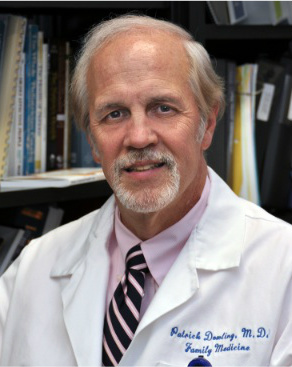
Patrick T. Dowling, M.D., M.P.H., is the Kaiser Permanente Endowed Professor of Community Medicine and Chair of the UCLA Department of Family Medicine. He holds dual degrees from the Medical College of Ohio (1974) and the University of Michigan School of Public Health. Dr. Dowling's career spans over four decades in family medicine, residency training, and health policy advocacy, with a focus on underserved populations. He has directed residency programs at Cook County Hospital, Brown University, and Harbor-UCLA Medical Center before leading UCLA's Family Medicine department since 1998. His research emphasizes health policy, chronic disease management, cross-cultural medicine, and integrating substance abuse treatment into primary care. He co-founded UCLA's IMG pathway program to train bilingual (English-Spanish) international medical graduates for underserved areas. Dr. Dowling has advised the National Health Service Corps and LA County Public Health Commission, and currently serves on Drew University's Board of Trustees. Publications highlight systemic barriers to healthcare access, physician practice location determinants, opioid epidemic responses, and community-based participatory research. His work bridges medical education innovation with socioeconomic health equity, reflecting lifelong commitment to universal healthcare access inspired by his early work with Cesar Chavez's United Farm Workers Clinics.
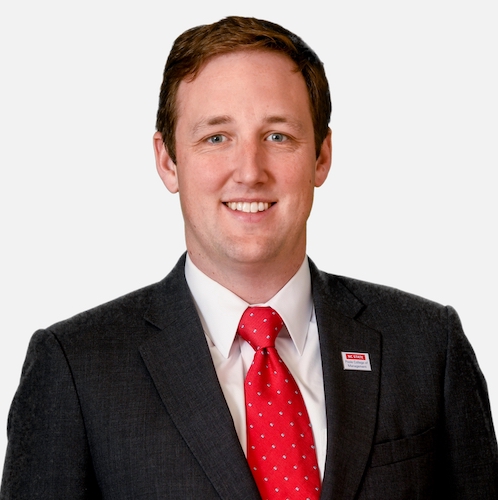
Patrick Flynn is the Matthew and Soogi Hong Fellow and Assistant Professor of Management at North Carolina State University's Poole College of Management, Department of Management, Innovation & Entrepreneurship. He holds a Ph.D. in Organizational Behavior and Human Resources from the University of South Carolina and a B.S. in Supply Chain Management from the University of Maryland. His research focuses on dynamic individual and group processes, including event-based adaptation, team citizenship behaviors, and resilience. He teaches courses in people analytics, management consulting practicum, and leadership consulting. Dr. Flynn’s work has been published in top journals such as Journal of Management , Journal of Applied Psychology , and Annual Review of Organizational Psychology . He serves on the editorial board of Group & Organization Management . His research explores transitions, sustainability, and organizational change, with media features in CNBC, MSN, and the Raleigh News & Observer . His academic contributions emphasize practical applications of organizational behavior theories, particularly in post-pandemic workplace dynamics, remote work adaptations, and employee well-being strategies. His recent work addresses collective turnover, trust dynamics, and proactive sustainability approaches in volatile environments.
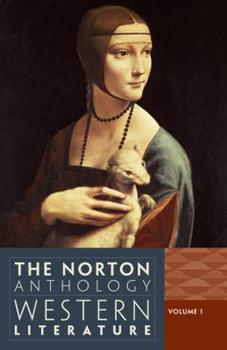
Barbara Fuchs is a Professor in the Department of English at the University of California, Los Angeles, specializing in early modern European literature across Spanish, English, French, and Italian traditions from the 15th to 17th centuries. Her work emphasizes transnational contexts, theater and performance studies, and cultural production within imperial frameworks, with significant contributions to Mediterranean and transatlantic studies. Education Ph.D. in Comparative Literature, Stanford University (1997) B.A./M.A. in Comparative Literature (English, French, Spanish), summa cum laude, Yale University (1992) Research Interests Professor Fuchs' scholarship centers on transnationalism in early modern literature, examining how theater and performance negotiated imperial identities across Mediterranean and transatlantic contexts. Her work critically engages with race and religion in the early modern world, picaresque traditions, and Cervantes studies, revealing how cultural encounters shaped literary production. She bridges historical analysis with contemporary relevance through public humanities initiatives focused on classical Hispanic theater. Publication Trends Her recent publications demonstrate interdisciplinary innovation, merging literary analysis with performance studies and material culture. Recurring themes include transnational exchange mechanisms, racial formation processes, and textual materiality, while recent work addresses pandemic-era digital performance and modern adaptations of classical works. This trajectory highlights her commitment to connecting historical scholarship with current social and artistic practices. Scientific Awards Premio Ñ from the Instituto Cervantes (inaugural award) for promotion of Spanish language and culture Advising and Leadership Professor Fuchs mentors undergraduate and graduate students in early modern studies, translation, and performance. She leads the UCLA "Diversifying the Classics" initiative and LA Escena festival, securing institutional support for these collaborative projects. Her editorial leadership includes serving as articles editor for Renaissance Quarterly and co-editing the Norton Anthology of World Literature , demonstrating field-wide influence. Projects and Teams She directs the "Diversifying the Classics" initiative, which collaborates with theater professionals to adapt Hispanic classical works for contemporary Los Angeles audiences, and founded LA Escena—the biennial festival of Hispanic classical theater. These projects unite scholars, artists, and communities to explore historical texts through modern performance lenses, emphasizing accessibility and cultural relevance.
Stefano Galelli is a tenured Associate Professor in the School of Civil and Environmental Engineering at Cornell University, where he leads the Critical Infrastructure Systems Lab. He also holds an adjunct position as a Research Scientist at the Lamont-Doherty Earth Observatory, Columbia University. His career spans roles in Singapore, including a Postdoctoral Research Fellow at NUS (2011–2013) and faculty at the Singapore University of Technology and Design (2013–2023). Dr. Galelli earned his B.Sc. (2004), M.Sc. (2007), and Ph.D. (2011) in Environmental and Land Planning Engineering and Information Technology from Politecnico di Milano, Italy. His research focuses on the interactions between critical infrastructure systems and natural environments, emphasizing adaptive management solutions for water-energy systems. Techniques include process-based modeling, climatology, statistical learning, control theory, and optimization. He explores topics like hydro-climatic variability impacts, dam re-operation for environmental flows, and cyber-physical security in infrastructure. His contributions to journals such as Nature Sustainability, Earth’s Future, and Environmental Modelling & Software have earned him multiple awards, including the Early Career Research Excellence Award (2014) and SUTD Excellence in Research Award (2017). He has served as an editor for several journals and is recognized for advancing interdisciplinary approaches to water-energy nexus challenges. Teaching highlights include foundational mathematics courses and advanced topics in data analytics, optimization, and water-energy management. He is developing new courses on data-driven control of coupled human-natural systems and risk management for interconnected systems.
Jessica Brannon-Wranosky is a Professor in the Department of History within the College of Humanities, Social Sciences and Arts at East Texas A&M University. She specializes in women, gender and sexuality history and digital humanities applications, and currently serves as Project Director for the Handbook of Texas Women, a statewide public education initiative of the Texas State Historical Association. Her educational background includes: Ph.D. in History from the University of North Texas M.S. in History from Texas A&M University-Corpus Christi B.S. in Political Science from Texas A&M University-Corpus Christi Dr. Brannon-Wranosky's research centers on 19th-20th century U.S. women's history with regional focus on Texas and the South, examining suffrage movements, gender dynamics, and digital historical methodologies. Her work bridges academic scholarship with public engagement through digital platforms and educational outreach. Her publication portfolio reveals consistent thematic focus on Texan women's historical agency, with recent works emphasizing digital curation of primary sources and intersectional analysis of suffrage activism. The Handbook of Texas Women project exemplifies her commitment to transforming archival materials into accessible public resources. Her scholarly contributions have been recognized with: John H. Jenkins Award (Texas State Historical Association, 2015) Best Article Award (Texas Oral History Association, 2016) Liz Carpenter Award (2016) for co-edited volume Texas Women/American Women As lead investigator for the Handbook of Texas Women project, she directs a multidisciplinary team developing digital infrastructure for statewide historical content, collaborating with museums and educational institutions to produce exhibits like the Bob Bullock Texas History Museum's 2019-2020 suffrage exhibition.
J. Daniel Kim is an Assistant Professor of Management at the Wharton School, University of Pennsylvania, where he teaches MBA and PhD courses on entrepreneurship and innovation. His research focuses on high-growth entrepreneurship, venture scaling, strategic human capital, mergers and acquisitions, innovation, and labor markets. PhD - MIT Sloan School of Management BA - Dartmouth College His research explores: Startup hiring challenges and firm-driven search strategies Timing and risks of venture scaling Post-acquisition employee retention patterns Founder impact on organizational change Immigrant founder contributions to entrepreneurship Key article trends show: Focus on talent dynamics in high-growth firms Analysis of organizational antecedents in acquisitions Quantitative approaches using population-level data Interdisciplinary connections between entrepreneurship, strategy, and economics Debunking myths about founder demographics Linkage between labor market mechanisms and startup performance Scientific recognition includes: Multiple Teaching Excellence Awards at Wharton (2024-2020) Best Paper Prize from Strategic Management Society (2020) Kauffman Dissertation Fellowship (2017) MIT Sloan Doctoral Thesis Prize (2019) Prof. Kim serves as an economist with the United States Census Bureau and has published in top journals including Strategic Management Journal , Organization Science , and American Economic Review: Insights . His work has been featured in The Wall Street Journal , New York Times , and Financial Times .
Kyeyoung Park is Professor of Anthropology and Asian American Studies at UCLA, holding the Korea Times-Hankook Ilbo Endowed Chair in Korean-American Studies. She is a sociocultural anthropologist whose work focuses on inequality, social justice, and the migration of people, particularly displaced populations and their relationship to political economy, critical race theory, and transnationalism. Her research spans Korean American communities in the United States and Korean diaspora communities in Latin America, examining how structural forces shape cultural beliefs and ideologies across different contexts. Ph.D., City University of New York (1990) Professor Park's research centers on urban anthropology, inequality across race, class, and gender dimensions, migration and diaspora studies, and transnational processes. She examines how structural imperatives of migration lead to transformations in gender, kinship, family, politics, and religion among Korean diaspora communities. Her work employs intersectional analysis to understand multi-ethnic relations, with particular focus on Korean communities in both the United States and Latin America, exploring how axes of inequality impact racial minorities and their relationships with each other in global contexts. Her recent scholarship demonstrates consistent focus on Korean diaspora communities across the Americas, bridging urban anthropology with critical race theory to examine how race, class, and gender intersect in immigrant experiences. She has made significant contributions to understanding Korean-Latino relations in Los Angeles and Korean immigrant entrepreneurship in South American textile industries, reflecting her broader interest in immigrant adaptation and inter-ethnic dynamics across diverse geographic settings. Professor Park has received numerous prestigious awards and grants for her scholarship: 1998 Outstanding Book Award from the Association for Asian American Studies for "The Korean American Dream: Immigrants and Small Business in New York City" 1997-98 Visiting Scholar Award from the Russell Sage Foundation 2016-19 Research Grant from The Republic of Korea's Ministry of Education and Korean Studies Promotion Service 2008-09 Translation Grant from The Overseas Korea Foundation for "The Korean American Dream" 2008-09 AAP Faculty Recognition Award from UCLA Professor Park has secured substantial research funding throughout her career, including multiple grants from The Academy of Korean Studies, Korea Foundation, and UCLA research programs. Her funded projects have examined Korean diaspora communities across the Americas, with particular focus on transnational connections between Korean American and Latin American contexts. She has served as Principal Investigator on projects exploring Korean routes of migration in the Americas and second-generation Korean American transnationalism, demonstrating her sustained commitment to understanding immigrant experiences through anthropological and interdisciplinary lenses. Professor Park has been actively involved with UCLA's Center for Korean Studies (CKS) and the International Institute, where she served as Deputy Program Chair for Korean Studies in Latin America from 2006-2011. Her collaborative work extends to research teams examining Korean diaspora communities across the Americas, including partnerships with scholars in Latin America. She has also participated in interdisciplinary initiatives such as UCLA's Urban Humanities Institute Faculty Research Seminar, reflecting her commitment to cross-disciplinary approaches to understanding migration, diaspora, and transnational processes.
Richard Garner is a lecturer at Macquarie University's School of Mathematical and Physical Sciences, Faculty of Science and Engineering. He specializes in teaching mathematics to engineering and computing students in units like MATH2055 and MATH1007, focusing on problem-solving and real-world applications. His teaching philosophy emphasizes authentic mathematical experiences, blending abstract concepts with practical examples, such as connecting multivariable calculus to AI technologies. School: School of Mathematical and Physical Sciences University: Macquarie University Teaching Areas: Mathematics for engineering and computing, convolution, multivariable calculus Richard won a Student Nominated Award in the 2023 Vice Chancellor’s Learning and Teaching Awards, reflecting his commitment to student-centered education. He prioritizes clarity in course design, using visual tools and accessible materials to enhance learning, and fosters a supportive environment where students feel comfortable asking questions. Key Teaching Strategies Organized iLearn layouts following Macquarie University's standards Multiple formats for lecture materials (diagrams, color-coded slides) Weekly task clarity and real-world problem framing Live worked examples and transparent success criteria His research spans category theory, computational effects, and homotopy theory, with publications on topics like comodels, monoidal bicategories, and enriched categories. Richard's work bridges abstract mathematics with applications in computer science and logic. Scientific Awards 2023 Vice Chancellor’s Learning and Teaching Award (Student Nominated) Students praise his ability to make complex concepts intuitive, his enthusiasm for mathematics, and his dedication to explaining the 'why' behind the subject. His teaching design, including time-sensitive banners and structured weekly content, has been highlighted as exemplary.