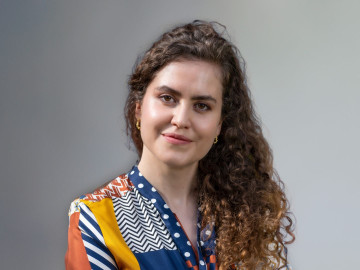
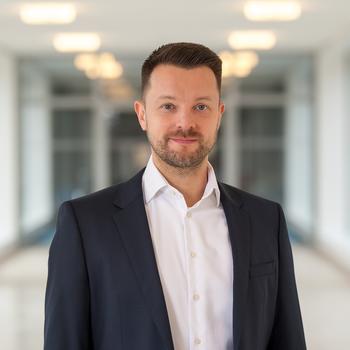
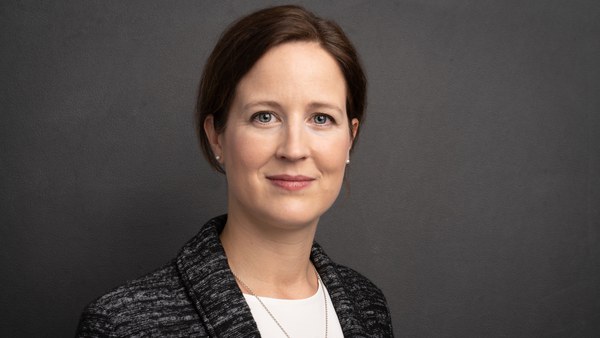
Nils Köbis is a Professor at the University of Duisburg-Essen, leading the chair Human Understanding of Algorithms and Machines . He is also an affiliated researcher at the Center for Humans and Machines (Max Planck Institute for Human Development). His work bridges psychology , social sciences , and artificial intelligence , focusing on corruption, unethical behavior, and human-AI interaction. Education : Ph.D. in Social Psychology from VU Free University Amsterdam, Post-Doc at CREED, University of Amsterdam. Research interests span behavioral ethics , social norms , anti-corruption strategies , and the psychological implications of AI . His articles explore topics like the dual role of AI in corruption mitigation, synthetic relationships, and moral dynamics in human-machine interactions. Key projects include the Interdisciplinary Corruption Research Network and the KickBack - Global AntiCorruption Podcast . His work employs experimental methods to analyze how algorithms shape dishonesty, trust, and social behavior.
Prof. Nicola Breugst is a Professor of Entrepreneurial Behavior at the TUM School of Management, Technical University of Munich. Her research focuses on the psychological dimensions of entrepreneurship, particularly the interplay between founders' thought processes, emotions, and their social/environmental contexts. She explores how entrepreneurial teams influence decision-making, employee motivation, and venture success. Her work challenges the 'lone entrepreneur' myth, emphasizing systemic interactions between founders and their ecosystems. Education: B.A. in Psychology from Ludwig Maximilian University of Munich; Ph.D. in Entrepreneurship from Friedrich Schiller University Jena. Professional Experience: Held academic roles at the University of Duisburg-Essen, Max Planck Institute for Economics, Indiana University Kelley School of Business, and National University of Singapore. Research Interests: Entrepreneurial cognition, team dynamics, equity distribution, founder relationships, and the socio-economic factors shaping new ventures. Notable contributions include studies on trust in teams, envy's role in performance, and pivoting strategies in uncertain markets. Awards: 2022 Teaching Excellence Award (TUM School of Management), 2020 Best Paper in Entrepreneurial Cognition (Academy of Management), and multiple recognitions for mentorship and scholarly contributions. Grants/Advising: Extensive supervision of doctoral students (2018 award), with research supported by international collaborations. Active in entrepreneurial education and cross-cultural studies.
Julia Langdon is an Assistant Professor of Organizational Behavior at ESMT Berlin, holding the Volkswagen Group Junior Chair for Ethics and Diversity in Organizations since April 2024. Her research focuses on preventing unethical behavior in organizations through psychological mechanisms and promoting inclusion for disabled professionals. Ph.D. in Management from London Business School (2023) MSc in Cognitive and Decision Sciences from University College London BSc in Psychology from Warwick University Her work examines how stakeholders respond to ethical scandals and how moral reasoning influences organizational inclusion practices, combining experimental and field methods. Corporate Ethics Diversity Management Behavioral Interventions Moral Psychology Organizational Governance Inclusive Leadership Contact: julia.langdon@esmt.org | Location: ESMT Berlin, Germany
Max Planck Institute for Research on Collective GoodsGermany
Dr. Dorothee Mischkowski is a Senior Research Fellow at the Max Planck Institute for Collective Goods in Bonn, Germany. Her research focuses on cooperation behavior in social dilemmas , social mindfulness , legal judgments , and cheating behavior , often applying dual process models to understand decision-making dynamics. Affiliation: Max Planck Institute for Collective Goods (Bonn), Center for Social and Economic Behavior (University of Cologne) Education: Doctoral thesis on spontaneous behavior in public good games (University of Göttingen Library, 2020) Research Interests center on how individuals balance prosocial and selfish motivations in structured environments. She examines the role of personality traits like social value orientation and situational factors in shaping cooperation, using legal decision-making and experimental economics frameworks. Recent articles highlight trends in low-cost prosociality, fairness perception in ultimatum games, and how open science practices influence psychological research. Her work often integrates cognitive bias analysis and replication studies to enhance methodological rigor. Scientific Awards include: Marie-Sklodowska-Curie Postdoctoral Fellowship (2023) Junior Start-Up Grant (C-SEB, University of Cologne) Multiple DAAD Travel Scholarships and grants for conference participation Grants and Leadership : Acquired funding for the 8th Annual JDM Workshop for Early Career Researchers (2015). Collaborated extensively with institutions in Germany and internationally, emphasizing responsible research assessment and open science principles.
Max Planck Institute for the Study of Crime, Security and LawGermany
Alicia Seidl is a doctoral researcher affiliated with the Max Planck Institute for the Study of Crime, Security and Law (since 2023) and the Experimental Psychology & Personality Lab at RPTU Kaiserslautern-Landau (since 2023). She previously worked as a student research assistant at the University of Koblenz-Landau (2020–2023) and the Max Planck Institute (2022–2023). Her research focuses on interindividual differences in prosocial and unethical behavior , particularly self-knowledge formation and its impact on moral decision-making . She also examines methodological aspects of online research and data quality in behavioral experiments. M.Sc. Psychology (2020–2023), RPTU Kaiserslautern-Landau B.Sc. Psychology (2017–2020), University of Koblenz-Landau Seidl contributes to the project KNOW-THYSELF , which investigates how self-knowledge enhancement can promote moral behaviors like honesty and fairness. Her work bridges experimental psychology , neuroimaging techniques (e.g., EEG-fNIRS integration), and ethical research frameworks .
Dr. Daniel May is a Research Fellow at the Department of Education and Psychology , Division of Social, Organizational and Economic Psychology at Free University of Berlin since August 2011. Previously, he worked as a trainer and research associate at the LMU Center for Leadership and People Management (2007-2011), alongside roles as a personnel developer and freelance trainer in the business sector. Education : Psychology studies at Ludwig Maximilian University (LMU) Munich. Research Focus : Destructive leadership, organizational behavior, conflict management, and follower dynamics. His academic work analyzes leadership pathologies through psychological frameworks, including measurement models for destructive leadership, attributional processes in follower perceptions, and hierarchical leadership effects. Key themes span unethical leadership consequences, leader-follower interactions, and organizational corruption mechanisms. Recent publications demonstrate a research trajectory toward integrated theoretical models for destructive leadership mitigation and empirical validation of leadership impact scales. Collaborations include Prof. Dr. Rudolf Kerschreiter and Dr. Robin Bachmann, with conference presentations at EAWOP, DGPs, and Academy of Management events. Contact: daniel.may@fu-berlin.de .
Dominik Bentler is a researcher at the Research Institute for Cognition and Robotics and affiliated with the Faculty of Psychology and Sport Science at Bielefeld University . His work spans Artificial Intelligence applications in personnel planning , sustainable organizational behavior , and human-computer interaction . Email: dominik.bentler@uni-bielefeld.de Contact: Phone +49 521 106-4510, Office UHG N4-122 Research Interests include: Human-centered AI systems in organizational contexts Employee green behavior and sustainability strategies Augmented reality applications for workplace learning Behavioral analysis of unethical competition ("Winning Ugly") Technology acceptance models (TAM) with user experience factors Design of socio-technical systems in Industry 4.0 environments Recent Publications demonstrate expertise in: Intelligent scheduling systems Green leadership dynamics Augmented reality training solutions Workplace environmental behavior Human-AI collaboration models Change management in technology implementation Key Collaborations involve interdisciplinary projects with Bielefeld University's research centers including: CITEC (Cognitive Interaction Technology) CoR-Lab (Cognition and Robotics) ZiF (Center for Interdisciplinary Research)
Prof. Sarah Necker is a Professor of Economics at Friedrich-Alexander University Erlangen-Nuremberg and Director of the Ludwig Erhard ifo Center for Social Market Economy and Institutional Economics. She holds a PhD (summa cum laude) from the University of Freiburg and has held roles at institutions like the Walter Eucken Institute and ZEW. Her research focuses on behavioral economics, public finance, and institutional economics, with notable work on tax compliance, scientific misconduct, and policy design. She has received awards including the Friedrich-August-von-Hayek Prize and DAAD fellowships. Her recent studies include analyses of the 9-Euro-Ticket's impact and reforms to reduce bureaucratic costs. She is affiliated with the Bavarian Savings Bank Association and the German Economic Association, and teaches courses in public economics and behavioral economics. Education: PhD (summa cum laude) in Economics, University of Freiburg (2014); Diplom in Economics, Philipps-University Marburg (2008); apprenticeship as advertising saleswoman at Walmart (2001-2003). Research highlights include field experiments on tax evasion and theoretical work on unethical behavior contagion. She has authored over 20 peer-reviewed articles and monographs, including contributions to EconPol and ifo publications. Current projects explore integration of Ukrainian refugees and energy transition subsidies.
Prof. Dr. Stefan Hoffmann serves as a Professor and Chair of Marketing at the Christian-Albrechts-University of Kiel, where he also acts as a Principal Investigator at the Kiel Centre for Globalization (KCG). His research focuses on consumer behavior with particular emphasis on ethical consumption, cross-cultural differences, and sustainability issues. He leads several major research projects examining consumer responses to corporate social responsibility and ethical dilemmas in global supply chains. Prof. Hoffmann's research interests span Consumer Behaviour, Health Marketing Communication, and Intercultural Marketing, with a strong focus on ethical consumption patterns. His work explores how cultural contexts shape consumer responses to sustainability initiatives, corporate social responsibility, and ethical dilemmas. He investigates phenomena such as consumer animosity, boycott behavior, moral licensing, and the psychological barriers to sustainable consumption, with particular attention to cross-cultural differences between Eastern and Western consumer markets. His extensive publication record reveals a consistent focus on understanding the psychological and social mechanisms behind consumer ethical decision-making. Recent work examines how basic human needs like hunger affect sustainable consumption choices, how ambient temperature influences CSR skepticism, and why consumer participation in boycotts diminishes over time. His research employs diverse methodologies including laboratory experiments, field studies, and large-scale cross-cultural surveys across multiple countries. Prof. Hoffmann actively supervises PhD researchers and collaborates with international scholars through the Kiel Centre for Globalization. He has secured funding from the German Research Foundation (DFG) for projects examining social and vicarious consumer animosity. His research has practical implications for businesses developing global marketing strategies and for policymakers addressing sustainability challenges through consumer behavior interventions.
Ellen Schmid is a Professor at Munich Business School. She teaches courses on human resource development leadership development organizational development ethical and unethical behavior in organizations and supervises theses in these areas. Her research focuses on promoting responsible leadership in digital workplaces, examining both the "bright" and "dark" sides of leadership through qualitative and quantitative studies. She also investigates digital methods for human resource and organizational development and their evaluation. Ellen Schmid studied psychology at Otto-Friedrich University of Bamberg and the University of London. Prior to joining Munich Business School in 2019, she worked as an HR Business Partner at General Electric's European research center and at the Technical University of Munich, where she earned her doctorate summa cum laude and led a competence center for leadership development in the digital world. Her research has been published in leading international journals, and she has received various teaching and research awards.
Max Planck Institute for the Study of Crime, Security and LawGermany
Dr. Isabel Thielmann is a Research Fellow and Head of the Independent Research Group 'Personality, Identity, and Crime' at the Max Planck Institute for the Study of Crime, Security and Law in Freiburg, Germany. She holds a Ph.D. in Psychology from the University of Mannheim (2015) and has held academic positions at the University of Koblenz-Landau and Vrije Universiteit Amsterdam. Her research focuses on personality traits, moral behavior, prosociality, and their implications for criminality and societal dynamics. Her key projects include the ERC-funded 'KNOW-THYSELF' initiative exploring self-knowledge and moral behavior, and the DFG-funded 'Core Tendencies in Prosocial Behavior' project. She has received prestigious awards such as the Charlotte-und-Karl-Bühler Prize (2024) and the William-Stern Award (2023). Her work spans experimental social psychology, criminology, and behavioral economics. Notable contributions include studies on dishonesty, unethical loyalty, and the interplay between personality and situational factors in decision-making. She also leads interdisciplinary teams investigating the psychological foundations of crime and societal trust dynamics.
Prof. Dr. Lars-Eric Petersen is a Professor of Psychology at the University of Halle-Wittenberg, Germany, affiliated with the Faculty of Philosophy and working within the Department of Work, Organizational and Social Psychology. He maintains office hours on Thursdays from 2-3 p.m. in Room 2.22 at the Institute of Psychology located at Emil-Abderhaldenstr. 26a in Halle (Saale). His academic journey began with psychology studies at Christian-Albrechts-University Kiel (1985-1992), followed by doctoral research on "Self-concept and information processing" which he completed in 1994. After postdoctoral work, he earned his habilitation in 2000 with the thesis "Social Discrimination" at the University of Halle-Wittenberg. He served as a Visiting Professor at Technical University Dresden (2000-2002) and as a Visiting Scholar at the University of Western Ontario (2003-2004) before being appointed as an außerplanmäßiger Professor (non-tenured professor) in 2009. Dr. Petersen's research primarily focuses on social psychology, organizational psychology, and work psychology , with particular emphasis on self-compassion, stereotypes, prejudice, social discrimination, self-concept, and ethical/unethical behavior in organizations . His work bridges theoretical social psychology with practical applications in educational and organizational settings. Over his career, he has developed expertise in both experimental methodologies and applied interventions, particularly in understanding how self-compassion influences relationship dynamics, workplace behavior, and educational contexts. Analysis of his recent publications reveals a strong trajectory toward understanding the role of self-compassion in various psychological domains. His research has evolved from foundational work on social discrimination and self-concept to more nuanced investigations of how self-compassion affects romantic relationships, teacher burnout, and conflict resolution. He frequently collaborates with researchers like Nina Tandler and Roland Körner, suggesting established research teams focused on interpersonal dynamics and organizational behavior. Dr. Petersen has received significant recognition for his scholarly contributions: "Saroj Parasuraman Best Paper Award" from the Academy of Management (2008) for his work on employment discrimination "Best Paper Award" from the Center of Creative Leadership and European Association of Work and Organizational Psychology (2007) "Best Paper Award" from the Institute of Work Psychology Conference in Sheffield (2014) As an educator, Dr. Petersen has taught extensively across multiple domains of psychology. His teaching portfolio includes foundational courses in social psychology for bachelor's students, specialized seminars on group processes and social cognition, and applied courses focusing on health psychology, forensic psychology, and business psychology. He has developed particular expertise in teaching social psychology within educational contexts for teacher training programs, addressing topics like aggression in schools, self-concept development, and social perception in classrooms. His methodological teaching includes experimental psychology fundamentals and empirical research methods. Dr. Petersen's research activities appear to be centered around collaborative teams investigating self-compassion and its applications. His recent work with Tandler and Körner suggests an active research group focused on interpersonal dynamics, while his earlier collaborations with Dietz indicate longstanding partnerships in organizational psychology. His editorial work for numerous prestigious journals demonstrates his standing in the field and his commitment to advancing psychological science.
Prof. Juelin Yin is a Professor in the Department of Business Administration at Sun Yat-Sen University's School of Business and a KCG External Research Fellow. Her research focuses on corporate social responsibility, ethical consumption, sustainability, and social entrepreneurship in global business contexts. Her work examines business ethics in global supply chains and the Greater China region, investigating consumer reactions to corporate hypocrisy and cross-cultural differences in ethical consumption. She analyzes how sustainability practices and social entrepreneurship influence business reputation through experimental and literature-based approaches. Recent publications reveal consumers hold firms responsible for suppliers' unethical actions in global supply chains (2019), while her literature review identifies critical gaps in Greater China business ethics research (2018), emphasizing contextualized theory development and multilevel analysis. No scientific awards were mentioned in the provided text. Prof. Yin collaborates on international projects funded by Kiel University's Fund for Internalization, with current work focusing on joint grant applications and cross-cultural studies of moral responsibility in supply chains with KCG researchers. She operates within Sun Yat-Sen University's top-ranked business school in China and maintains active collaboration with the Kiel Center for Globalization and Governance, facilitating research bridges between Chinese and German academic institutions.
Prof. Holger Patzelt is a full professor at the TUM School of Management, specializing in entrepreneurship. He joined TUM in 2010 and focuses on entrepreneurial decision-making, strategic entrepreneurship, and the psychological and economic consequences of failure. He holds dual doctorates in molecular biology and business administration, with additional education from TUM, the University of Karlsruhe, FernUniversität Hagen, and the University of Bamberg. His career includes roles at the Max Planck Institute of Economics and the European Business School. Patzelt teaches entrepreneurship across undergraduate, graduate, and executive programs, emphasizing topics like entrepreneurial motivation, sustainability, and technology ventures. He has received multiple awards for his research, including the Wesley J. Howe Award (2008) and the Fürth Ludwig Erhard Prize (2007). His work spans over 100 publications in top journals like Journal of Management and Entrepreneurship Theory and Practice . Patzelt leads research initiatives at the TUM Entrepreneurship Research Institute, collaborating with global institutions and fostering innovation through projects like the BEST Entrepreneurial Team Project series. His research also explores social entrepreneurship and venture resilience, particularly in crises like the German refugee situation. Patzelt advises startups and contributes to entrepreneurship education programs, including initiatives in prison environments. Education : Chemistry studies at TUM and University of Karlsruhe PhD in Molecular Biology (University of Heidelberg) PhD in Business Administration (University of Bamberg) Research Interests : Entrepreneurial cognition and decision-making Strategic entrepreneurship and venture growth Social entrepreneurship and sustainable development Failure dynamics and recovery strategies Awards : Best Reviewer Award, Entrepreneurship: Theory & Practice (2012) Wesley J. Howe Award (2008) Haarmann Prize (2007) Grants & Labs : Recipient of TUM Research Excellence Award Leads the TUM Entrepreneurship Research Institute Pioneers the BEST project series on entrepreneurial teams
Ifo Institute - Leibniz Institute for Economic Research at the University of MunichGermany
Sarah Necker is Professor of Economics at Friedrich-Alexander University Erlangen-Nuremberg and Director of the Ludwig Erhard ifo Center for Social Market Economy and Institutional Economics since June 2022. Previously, she served as Managing Research Officer at the Walter Eucken Institute Freiburg (2016-2022) and held various research associate positions at prestigious German institutions including the University of Freiburg and the Alfred Weber Institute of Economics at Heidelberg University. Her educational background includes a Dr. rer. pol. (summa cum laude) from Albert-Ludwigs-Universität Freiburg (2010-2014), coursework at the Center for Doctoral Studies in Economics at Universität Mannheim (2009-2010), and a Diplom-Volkswirtin from Philipps-Universität Marburg (2004-2008). Her academic journey began with an apprenticeship as an advertising saleswoman at Wal Mart Germany, followed by business administration studies at Fern-Fachhochschule Hamburg. Dr. rer. pol., Albert-Ludwigs-Universität Freiburg (2010-2014) Diplom-Volkswirtin, Philipps-Universität Marburg (2004-2008) Ausbildung zur Werbekauffrau, Wal Mart Germany (2001-2004) Sarah Necker's research focuses on public finance, labor market economics, behavioral economics, and economics of science. Her work investigates how economic policies affect individual behavior, particularly regarding tax compliance, honesty in economic transactions, and public perceptions of the social market economy. She has conducted numerous field experiments examining collaborative tax evasion, the effect of losing and winning on cheating behavior, and how monetary incentives influence unethical behavior. Her recent work increasingly addresses contemporary policy challenges including climate policy, refugee integration, and bureaucratic reform. Analysis of Necker's recent publications reveals a strong focus on applied economic research with immediate policy relevance. Her work spans transportation economics (9-Euro Ticket evaluation), bureaucratic reform, climate policy acceptance, and integration of Ukrainian refugees. A recurring theme is the intersection of behavioral economics with traditional public finance questions, particularly how psychological factors influence tax compliance and policy acceptance. Her methodological approach combines rigorous empirical analysis with experimental designs that test behavioral responses to economic incentives. Her notable scientific awards include: Friedrich-August-von-Hayek-Preis (2015) for best dissertation in economics at University of Freiburg DAAD-Stipendium for research stay at University of Chicago (2015) Alumni Marburg-Preis as best doctoral student in economics (2008) As Director of the Ludwig Erhard ifo Center, Necker leads research on the conceptual development of the social market economy, advises government bodies including the Federal Ministry for Economic Affairs and Climate Action, and regularly contributes to public economic policy debates through media appearances and policy briefs. Her research projects funded by various institutions including the Fritz Thyssen Foundation and the Bavarian State Ministry examine critical economic issues from energy transition subsidies to regional price indices for Bavaria. Necker is actively involved with several research networks and advisory boards, including the Scientific Advisory Board of the Bavarian Savings Bank Association, the Public Economics Committee of the German Economic Association, and as a CESifo Research Network Fellow. She also serves on the Scientific Boards of the ZEW Public Finance Conference and regularly acts as a referee for leading economic journals.