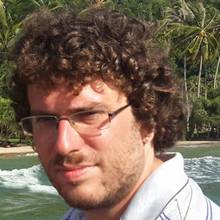
Ivan Franceschini is a Research Fellow at the Department of Asian and North African Studies, Ca' Foscari University of Venice, and a Postdoctoral Fellow at The Australian National University's Coral Bell School of Asia Pacific Affairs. His work focuses on Chinese labor movements, civil society, and political transformations. University: Ca' Foscari University of Venice Department: Department of Asian and North African Studies Email: ivan.franceschini@unive.it Franceschini's research spans labor activism, NGO strategies, and historical narratives in China. His publications in journals like The China Quarterly and Pacific Affairs analyze state-labor relations, digital activism, and garment industry exploitation. He co-edits the Made in China Journal , exploring labor and civil society dynamics. Key article trends include comparative labor studies across China and Cambodia, legal mobilization by workers, and historical reinterpretations such as the Taiping Rebellion. His 2019 work on collective bargaining and 2018 comparative analysis of garment workers highlight systemic labor challenges.
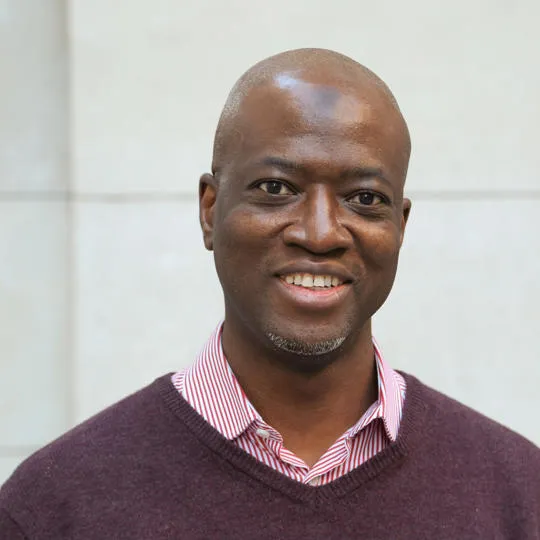
Dr Olawale Ismail is a Senior Lecturer in Leadership, Peace and Development Education at the African Leadership Centre , King's College London. He has 13+ years of experience in security and peacebuilding research, serving as Head of Research at International Alert and collaborating with institutions like Oxford University Press, Addis Ababa University, and the Conflict, Security & Development Group. PhD in Peace Studies (University of Bradford) MPhil in International Relations (University of Cambridge) His research focuses on the security-development nexus , with expertise in youth-related dynamics, including employment, radicalization, and protest movements. He applies interdisciplinary approaches to peacebuilding, mental health interventions in conflict zones, and regional security governance . Key article trends include: Youth agency in violence and peacebuilding Post-conflict psychosocial support Security cooperation with external actors Informal economy impacts on youth Policy frameworks for SDG 16 Mental health integration in peace efforts He has collaborated with global institutions including the Commonwealth Society , CODESRIA , and African Security Sector Network , and consults for DFID, SIDA, and the African Union.
Professor Norifumi Kawai serves as an Associate Professor in the Department of Management at the University of Bergamo since 2021, with an extensive international academic background spanning Universität Duisburg-Essen (Germany), Universität Tübingen (Germany), University of Sussex (UK), University of Pavia (Italy), and Sophia University (Japan). Dr. Kawai completed his academic training with a Ph.D. summa cum laude in Managerial Economics from Universität Duisburg-Essen (2010), preceded by a Master's Degree in International Political Economy from the University of Pittsburgh (2003) and a Graduate Certificate in West European Studies. His scholarly credentials include Fellow status with the UK's Higher Education Academy (FHEA). Professor Kawai's research program centers on global strategy, international human resource management, entrepreneurship, and corporate governance , with particular expertise in Japanese business contexts. His work has appeared in premier journals including Journal of World Business, British Journal of Management, International Business Review, and International Journal of Human Resource Management. His recent publications reveal an evolving focus on digital transformation, crisis management during global pandemics, and gender-specific factors in entrepreneurial success across international boundaries. His publication record demonstrates consistent scholarly productivity with current research extending through 2025, showing particular interest in how social media influences entrepreneurial opportunity identification and how multinational corporations implement progressive HR practices across cultural boundaries. His work frequently employs rigorous quantitative methodologies to examine complex organizational phenomena in global contexts. 2015 Best Paper Award of the Academy of Multinational Enterprises (Japan) 2018 Emerald Literati Award for Excellence (UK) Best Lecturer Award for 2012-2013 (University of Sussex) Excellence in Teaching Awards 2015 (University of Sussex) Professor Kawai maintains active research funding from multiple sources including the Japan Society for the Promotion of Science (2016, 2019, 2020) and All Japan Bank Academic Research Promotion Foundation (2013, 2015, 2022). He serves on the editorial review board of International Business Review (since 2021) and the editorial board of International Studies of Management & Organization (since 2017), reflecting his standing in the international business academic community. His current teaching responsibilities include International Business and Trade, Special Topics in International Business, and Business Economics for graduate programs at the University of Bergamo.
Sharon Parkinson is an Associate Professor at Swinburne University of Technology's School of Social Sciences, Media, Film and Education. Her research focuses on urban studies, housing policy, homelessness, digital inclusion, and migration. She holds a PhD in Urban Studies from RMIT University. Dr. Parkinson has supervised a Doctorate (PhD) student on socio-spatial relations in homelessness. Education: PhD in Urban Studies, RMIT University, Australia Research Interests: Her work explores urban planning, housing affordability, informal rental practices, LGBTQ+ homelessness, migration-driven urban transitions, and digital equity. She has contributed to policy frameworks addressing homelessness and housing insecurity through interdisciplinary collaborations. Grants & Collaborations: Principal investigator on multiple grants including the Australian Digital Inclusion Index (ADII) and studies on affordable housing dynamics. Collaborations with AHURI, Telstra, and state governments on housing and digital equity initiatives. Awards: 2016 Vice Chancellor's Research Excellence Award, Swinburne University 2011 AHURI Postdoctoral Fellowship Professional Activities: She serves on committees for housing research conferences and LGBTQ+ safe housing projects. She has provided expert testimony to parliamentary inquiries on housing and labor policy.
Elisabeth Fevang is a Senior Research Fellow at the Frisch Centre, affiliated with the University of Oslo. She completed her PhD at the University of Bergen in 2019 with a dissertation titled "Economic Incentives, Employment and Health." Her research focuses primarily on labor market economics and health economics, with particular attention to welfare systems, disability insurance, sick leave patterns, and elderly care economics. Dr. Fevang's research interests center on the intersection of health and labor economics. She investigates how economic incentives affect work behavior, particularly regarding sick leave, disability, and care responsibilities. Her work often examines the Norwegian welfare system's impact on labor market participation, with specific focus on vulnerable groups such as elderly caregivers and healthcare workers. She frequently employs register-based data analysis to study policy impacts on labor supply decisions. Her publication record shows consistent output with multiple high-impact articles in 2024, indicating active research in current labor market issues. Her recent work has increasingly focused on healthcare sector employment patterns, particularly shift work schedules in municipal care services, and their relationship to sick leave. Earlier publications established her expertise in disability insurance systems and the "sick pay trap" phenomenon where benefit structures may inadvertently encourage prolonged absence from work. Dr. Fevang is actively involved in numerous research projects at the Frisch Centre, including those examining labor market exclusion, social insurance systems, long-term care effects on elderly workers' participation, and effects of welfare system reforms. Her collaborative work with researchers like Knut Røed, Simen Markussen, and Heidi Gautun demonstrates her integration within Norway's economic research community.
Dr. Paul Gabriel Jackson is an Assistant Professor of Economics at the National University of Singapore (NUS). His research focuses on macroeconomics, labor economics, and monetary economics, with a particular emphasis on topics such as unemployment dynamics, underemployment, and the impact of pandemics on economic productivity. He holds a Doctor of Economics from the University of California, Irvine. His work integrates epidemiological models with labor market frameworks to analyze scarring effects of crises like the COVID-19 pandemic. Recent studies explore underemployment traps, entrepreneurial finance, and policy implications of skill loss. Jackson also contributes to economic education through innovative teaching methods, including classroom experiments and simulations. Publications span journals like Labour Economics , Journal of Monetary Economics , and European Economic Review . His research highlights the interplay between human capital, labor market frictions, and monetary policy transmission mechanisms.
Professor Andy Charlwood is a faculty member at the University of Leeds, affiliated with Leeds University Business School's Department of Management and Organisations. His primary research focuses on HR analytics, algorithmic management in HR, and healthcare workforce dynamics, with particular emphasis on how digital technologies transform HRM practices and worker experiences. He leads interdisciplinary research combining sociology, psychology, and economics approaches. His research interests include people analytics adoption, AI in human resources, healthcare workforce optimization, and digital transformation impacts on employment relations. Current projects examine relationships between workforce factors and care quality using machine learning methods. Professor Charlwood teaches HRM, strategic HRM, people analytics, and organizational studies at undergraduate and postgraduate levels. He has supervised numerous PhD students in areas including people analytics adoption, AI in HR, and healthcare workforce studies. Notable grants include funding from the UK National Institute for Health Research and collaborations with the HR Analytics Think Tank. He serves as Associate Editor for the International Journal of Human Resource Management and holds leadership positions in the British Academy of Management. His work has contributed significantly to understanding digital transformation in HR and labor relations in healthcare contexts.
Sarah Abdelnour is a Lecturer in sociology at IRISSO (Research Institute on Social Issues of Globalization), affiliated with Université Paris Dauphine - PSL. Her academic work focuses on the sociology of work, with particular expertise in new forms of independent work including self-employment and digital platform workers. She has established herself as a leading researcher on the transformation of work in the digital economy, examining how platform-based work challenges traditional employment frameworks and labor protections. Dr. Abdelnour's research interests center on the sociology of work, specifically examining new forms of independent work in the digital economy. Her work investigates the social, economic, and political implications of platform-based labor, self-employment, and the blurring boundaries between employment and entrepreneurship. She has made significant contributions to understanding how digital platform workers organize collectively, assert their rights, and navigate the legal frameworks designed for traditional employment relationships. Her research combines theoretical insights from labor sociology with empirical studies of emerging work arrangements. Her extensive publication record demonstrates a consistent focus on the evolving nature of work in contemporary society. Over the past decade, her research has traced the development of platform work from its early manifestations to its current widespread adoption across multiple sectors. A key theme throughout her work is the tension between the rhetoric of independence and autonomy promoted by platform companies and the practical realities of income insecurity and limited worker protections experienced by platform workers. Her recent publications increasingly address regulatory responses to platform work and the potential for redefining social protection systems for non-traditional work arrangements. Dr. Abdelnour has actively engaged with policy makers, having participated in senate hearings on platform work regulations. Her book "Les nouveaux travailleurs des applis" (2019), co-authored with Dominique Méda, has become an important reference in French academic and policy discussions about digital platform labor. Through her research, she contributes to broader debates about the future of work, labor rights in the digital age, and the social implications of technological transformations in the economy.
Haram Kim is an Assistant Professor in the Department of Psychological Sciences at Texas Tech University. He holds a Ph.D. in Counseling Psychology from the University of Florida, and degrees from Yonsei University (M.A. and B.A. in Psychology). His research focuses on work-wellbeing intersections, systemic inequalities in employment, school-to-work transitions, and career interventions. Dr. Kim’s work emphasizes marginalized populations and cross-cultural perspectives. Education: Ph.D., Counseling Psychology, University of Florida M.A., Counseling Psychology, Yonsei University B.A., Psychology, Yonsei University Research Focus: Dr. Kim explores how systemic structures impact labor participation, particularly among marginalized groups. His work includes analyzing work precarity, cross-cultural validation of psychological frameworks (e.g., Psychology of Working Theory), and interventions targeting equitable workplace transitions. Recent studies highlight disparities faced by Korean women with limited education and U.S./South Korean cross-cultural comparisons. Publication Trends: His articles consistently examine decent work constructs, cross-cultural validity, and systemic barriers. Notable themes include latent profile analyses of economic constraints, pandemic-era underemployment drivers, and the role of education in enabling decent work opportunities. Labs & Affiliations: His research is conducted in labs B12 & B14 at Texas Tech. Collaborations span international teams, emphasizing global applicability of findings. Current projects include social mobility studies among immigrants and validation of workplace support scales.
Anthony Rafferty is a Professor in Employment Studies and HRM at the Alliance Manchester Business School (AMBS) , University of Manchester. He leads the Work and Equalities Institute (WEI) and serves on the Executive Team of The Productivity Institute (TPI) . His research focuses on the Future of Work , Labour Market Inequalities , Job Quality , and Universal Basic Income (UBI) . He employs mixed-methods with large datasets from governments and international organizations. Key roles include advising the UK government on welfare reform and giving evidence to parliamentary committees. He collaborates with organizations like the UN ILO, Eurofound, and the ESRC. His work contributes to UN Sustainable Development Goals (SDGs) addressing inequality and sustainable economic growth. Research highlights include studying gender and ethnic disparities in employment, the impact of technological change on labour markets, and inclusive regional development strategies. He is open to supervising PhD students in quantitative or mixed-methods projects using survey data. He directs courses such as Leading People and Organisations and Engaging Human Talent in the Full-time and Global MBAs. His work bridges academia and policy, influencing initiatives like the Digital Futures Platform at the University of Manchester.
Dr. Temesgen Kifle is a Senior Lecturer at the University of Queensland's School of Economics within the Faculty of Business, Economics and Law. His research focuses on applied economics, labor economics, development economics, and public policy. He has contributed extensively to understanding issues such as job satisfaction, immigration impacts, education policy, and health economics. Dr. Kifle has held grants including the FamilyLinQ Evaluation Framework and Plan (2022–2026) and has supervised doctoral research on retirement migration in Australia. His work often combines empirical analysis with policy relevance, addressing topics like student evaluations, microcredentials, and assessment design. He maintains active engagement in academic publishing and media commentary on educational practices and economic challenges. Research Interests: Applied economics research spans labor market dynamics, immigration outcomes, education policy, and public health issues. Specific interests include the impact of part-time employment on job satisfaction, the role of remittances in development, and the design of effective educational assessments. His interdisciplinary approach integrates quantitative methodologies with policy analysis, particularly in developing economies like Eritrea and Tanzania. Grants and Funding: Current funding includes the Queensland Department of Education's FamilyLinQ Evaluation Framework (2022–2026). Past grants include UQ ResTeach support (2010–2011) and early career research on Eritrean migrant remittances (2007–2009). Media Contributions: Regularly publishes in Times Higher Education on topics like plagiarism prevention, AI in education, and microcredential design. His insights bridge academic research with practical educational challenges.
Dr Surhan Cam is a Senior Lecturer at Cardiff University's School of Social Sciences, specializing in Labour Studies, Migration, and Global Political Economy. His research focuses on neo-liberalism, emerging market economies, labour flexibility, and the dynamics of migrant workers in Britain and Turkey. He has published extensively on topics such as shipyard management strategies, workforce precarity, and the intersection of globalization with small manufacturers. Research Interests : Labour Economics and Industrial Relations Migrant Worker Experiences in Transnational Contexts Neo-liberalism's Impact on Emerging Markets Global Supply Chains and Manufacturing Dynamics Gendered Labour Patterns and Policy Implications Teaching : Migration, Race and Ethnic Relations Global Political Economy and Future of Work Quantitative Methods for Postgraduate Research His work integrates empirical analysis with theoretical frameworks, particularly in Turkey and the UK. Recent studies explore subjective well-being and performance linkages in Turkish shipyards, while earlier works include seminal analyses of underemployment and involuntary part-time work in Britain.
Claire Bonnard is a Lecturer in Educational Sciences at the University of Burgundy and Deputy Director of IREDU (Interdisciplinary Research in Education and Training). Her work focuses on school-to-work transition, vocational education, labor market integration, and professionalization in higher education. Her research interests include: Formation-emploi (training and employment dynamics) Orientation and insertion of vocational students Professionalization in higher education Labor market relations Education for marginalized populations Recent publications analyze vocational drift in French higher education, labor market outcomes for NEET youth, international mobility of PhD graduates, and pedagogical practices in work-integrated learning. She collaborates with researchers like Jean-François Giret and Nathalie Droyer, often examining policy impacts on educational and career trajectories. Her academic work appears in journals such as: British Journal of Sociology of Education Revue Française de Pédagogie Gender and Education International Journal of Educational Research She contributes to conferences like ÉGALISUP , ADMEE , and LEER , addressing topics ranging from educational inequality to graduate employability.
Thomas Rochow is a Research Associate and Affiliate at the Centre for Public Policy, University of Glasgow, specializing in qualitative research on youth studies, welfare conditionality, and care policies. His work examines how social policies shape youth transitions and family experiences within welfare systems. Education: PhD in Social Sciences, University of Glasgow (2023) Rochow's research investigates youth transitions, social security systems, underemployment, and homelessness policies through qualitative methodologies. He focuses on lived experiences of young people and low-income families, emphasizing dignity and systemic barriers in welfare systems, with fieldwork spanning the UK and Spain. His sole publication (2023) analyzes conditional housing pathways for UK youth, reflecting core themes of housing insecurity and welfare conditionality. The work demonstrates consistent attention to policy impacts on vulnerable populations and multi-level governance dynamics. Rochow leads a Robertson Trust-funded project examining policy siloes and poverty cliffedges in Scotland. He co-produces research with organizations like Changing Realities and the rEUsilience Project, collaborating directly with parents and carers to drive social security reforms. He co-convenes the Centre for Public Policy's Early Career Researcher network and is an active Social Policy Association member, contributing to academic discourse on welfare policy and youth transitions.
Stephen D. O'Connell is an Associate Professor of Economics at Emory University and an invited researcher at JPAL/IPA's Displaced Livelihoods Initiative. He holds affiliations with the Households in Conflict Network (HiCN) and the IZA Institute of Labor Economics. His research focuses on labor markets, development economics, and social policy design, particularly on topics like forced displacement, gender disparities, and policy effectiveness. He teaches courses in econometrics, labor economics, and development economics while actively advising graduate students. Education: Postdoctoral Fellow, MIT Department of Economics (2016-2018) PhD in Economics, City University of New York (2016) MPhil in Economics, City University of New York (2013) BA in Economics, Boston College (2007) His research explores how policies impact economic participation, particularly for marginalized groups. Notable projects include evaluating poverty-targeted programs, analyzing gender differences in political career progression, and studying the effects of unconditional cash transfers on refugees. Recent work emphasizes geographic targeting in social protection and employer-informed job training programs. Awards & Recognition: None explicitly mentioned in provided text. Grants & Advising: O'Connell frequently collaborates with students on research projects, as noted in his student advisement page. His work has been supported by institutions like the World Bank and JPAL, though specific grant details are not provided here. Labs & Teams: Engaged with interdisciplinary initiatives such as the Becker-Friedman Institute at the University of Chicago (visiting scholar 2025) and the HiCN, focusing on conflict-affected households.