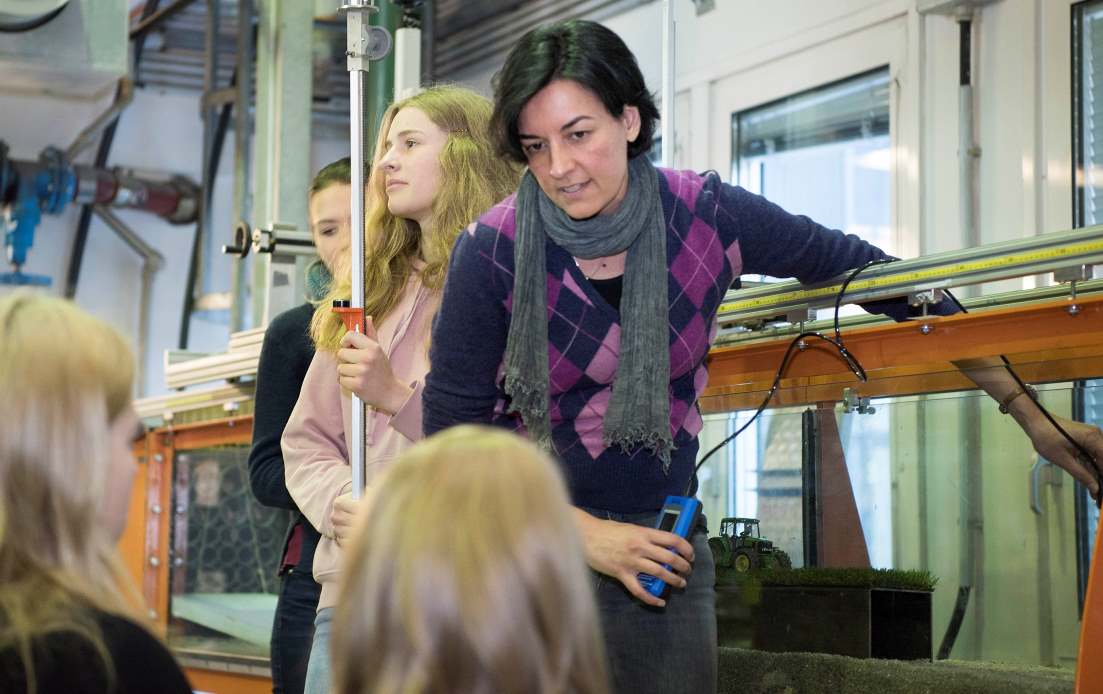
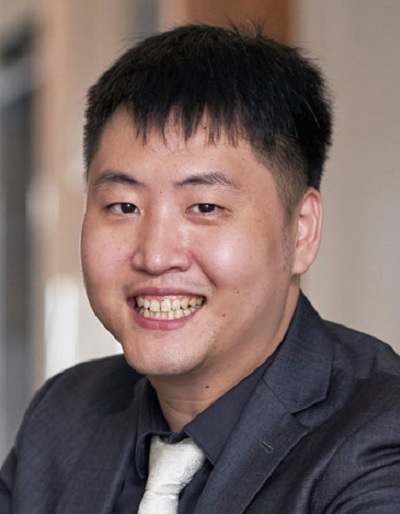
Anna Kuparinen is a Professor at the University of Jyväskylä's Faculty of Mathematics and Science, Department of Biological and Environmental Science. Her research group, EcoEvoAqua, focuses on aquatic species and their ecosystems, particularly eco-evolutionary dynamics. Key research areas include ecological modeling, fisheries-induced evolution, food web stability, and environmental impacts on species survival. Recent work examines predator reintroduction effects, climate-driven selection pressures, and parasite-host interactions in aquatic systems. Publications span theoretical ecology, conservation biology, and fisheries management. Her research emphasizes interdisciplinary approaches to address complex ecological challenges. Education details are not explicitly listed, but her academic career reflects extensive contributions to aquatic ecology and conservation. Awards are not mentioned in the text, though her prolific publication record indicates recognition in her field. She leads the EcoEvoAqua research team, which integrates computational models with empirical data to study ecosystem resilience and biodiversity. Ongoing projects include modeling Lake Oulujärvi dynamics and exploring manganese toxicity in fish populations.
Bertrand Clarke is a Professor in the Department of Statistics at the University of Nebraska-Lincoln, within the College of Agriculture & Natural Resources. He holds a PhD in Statistics from the University of Illinois (1989) and has held academic positions at Purdue University, the University of British Columbia, the University of Miami (Medical School), and served as Chair of the Department of Statistics at UNL. His research focuses on prediction, model uncertainty, and statistical methods for complex/high-dimensional data, including genomic data and machine learning applications. Education: PhD in Statistics from University of Illinois (1989), with early work recognized by the Browder J. Thompson Award. His career includes sabbaticals at University College London, Duke University (SAMSI), and the Newton Institute at Cambridge. He pioneered biostatistics programs at the University of Miami and authored a Springer textbook on data mining/machine learning. Research Interests: Prediction theory, model bias/uncertainty, ensemble methods, Bayesian approaches, and applications in genomics. He emphasizes statistical principles like variance-bias tradeoff and robustness in complex data analysis. Awards: ASA Fellow (2014), Browder J. Thompson Award (1989). Editorial roles in four journals and service on the Savage Award Committee.
Xuming He is an Associate Professor at the School of Information Science and Technology (SIST), ShanghaiTech University, where he leads the PLUS Lab. His research spans computer vision and machine learning with a focus on developing algorithms that operate effectively under limited supervision and evolving data conditions. His core research interests include weakly-supervised and few-shot learning for scenarios with sparse annotations, continual learning frameworks for knowledge retention during sequential task acquisition, semantic segmentation techniques for scene understanding, and multimodal vision-language representations. He emphasizes interpretable machine learning to build transparent AI systems capable of human-understandable reasoning, addressing critical challenges in model trustworthiness and deployment reliability. Recent publications reveal strong trends toward novel class discovery in long-tailed recognition scenarios, physics-informed generative modeling for scientific applications, and robust segmentation under distribution shifts. His work increasingly integrates large language models for multimodal reasoning while maintaining focus on efficiency in resource-constrained environments like robotic grasping and medical imaging analysis. He actively mentors students, having supervised Qian He to PhD completion and Chuanyang Hu to Master's degree in 2023. He welcomes prospective graduate students through ShanghaiTech's Computer Science & Technology program and offers undergraduate research projects requiring minimum six-month commitments. The PLUS Lab under his direction drives innovation in learning under supervision constraints, with recent work spanning medical tumor analysis, cross-view geolocation, photonic computing, and semiconductor design verification. The lab's research bridges theoretical advances with practical applications across healthcare, robotics, and scientific discovery domains.
Giorgia Ramponi is an Assistant Professor with Tenure Track at the Faculty of Business, Economics and Informatics at the University of Zurich. She is also an affiliated professor at the ETH AI Center and the Data Science and AI, Computer Science and Engineering department at Chalmers University of Technology. Her educational background includes a Ph.D. in Information Technology from Politecnico di Milano (completed June 2021 with honors), advised by Marcello Restelli, and a Master of Science in Computer Science with Honours Programme (110/110 cum laude) from la Sapienza (July 2017), advised by Flavio Chierichetti and Alessandro Panconesi. Dr. Ramponi's research focuses on machine learning and mathematical modeling, with particular emphasis on reinforcement learning and multiagent learning. Her work bridges theoretical foundations with practical applications, exploring how learning algorithms can make optimal decisions in complex environments. She has made significant contributions to areas including inverse reinforcement learning, multi-agent systems, constrained Markov decision processes, and human-AI interaction through preference learning. Her recent publications demonstrate a strong trend toward addressing fundamental challenges in reinforcement learning, particularly in multi-agent settings, constrained optimization, and learning from human feedback. Her work combines theoretical rigor with practical applications across robotics, economics, and decision-making systems. Hassler Research Grant for "Unified Feedback Integration Framework for Reinforcement Learning" Dr. Ramponi actively contributes to the academic community through conference participation, invited lectures (including at the Mediterranean Machine Learning Summer School), and teaching. She designed and taught the "Data Science and Machine Learning" course for the ETH-Ashesi Master program. She is also a member of the ELLIS community, which connects excellence in AI research across Europe. Her research group focuses on developing frameworks for reinforcement learning with various feedback types, including preferences, rewards, and demonstrations. The group aims to advance the theoretical understanding of learning algorithms while addressing practical challenges in real-world applications.
Tony Cookson is a Professor of Finance and the Michael A. Klump Endowed Professor at the Leeds School of Business , University of Colorado Boulder, where he has served since 2013. His research spans empirical finance , household and corporate financial decision-making , and the impact of social media and legal institutions on financial behavior. He has published in top journals like the Journal of Finance , Journal of Financial Economics , and Management Science , focusing on topics from investor disagreement to fracking-induced debt repayment . Education : Ph.D. in Economics (University of Chicago), M.S. in Statistics and Applied Economics (Montana State University), B.S. in Economics (Montana State University) His research interests include: How social media shapes investor sentiment and trading patterns The economic consequences of fracking and casino policy Legal institutions and their role in credit market development Behavioral finance through LLM-driven investor personas His scientific awards include the Best Paper in Investments and Asset Pricing (MFA 2023) , NASDAQ Best Paper in Asset Pricing (WFA 2021) , and Finalist for TIAA Paul A. Samuelson Award (2021) . He serves as Editor at the Review of Corporate Finance Studies and Associate Editor at multiple top journals.
Sebastian Trimpe is a Full Professor and Head of the Institute for Data Science in Mechanical Engineering at RWTH Aachen University, concurrently serving as Co-Executive Director of the RWTH Center for Artificial Intelligence since 2023. Previously, he led a Max Planck Research Group at the Max Planck Institute for Intelligent Systems from 2018 to 2022. His educational background includes: Ph.D. in Dynamic Systems and Control from ETH Zurich (2013) Dipl.-Ing. (M.Sc.) in Electrical Engineering from TU Hamburg (2007) MBA in Technology Management from TU Hamburg (2007) B.Sc. in General Engineering from TU Hamburg (2005) Professor Trimpe's research integrates machine learning with control theory to address safety and efficiency challenges in autonomous systems. His work spans theoretical frameworks for robust decision-making under uncertainty and practical implementations in robotics, with particular emphasis on event-triggered control, distributed systems, and data-efficient learning methodologies. Key contributions include novel approaches to safe reinforcement learning and model predictive control with guaranteed stability. Analysis of his recent publications reveals a pronounced focus on bridging machine learning with control engineering, especially in safety-critical robotics applications. Common themes include distribution-aware learning for medical diagnostics, diffusion-based control approximation, and hardware-in-the-loop validation of theoretical frameworks, demonstrating strong alignment between algorithmic innovation and real-world deployment. His scientific achievements have been recognized with prestigious honors: IFAC World Congress Interactive Paper Prize (2011) Klaus Tschira Award for public understanding of science (2014) Best Paper Award at International Conference on Cyber-Physical Systems (2019) Future Prize by Ewald Marquardt Stiftung (2020) As institutional leader, he directs the Institute for Data Science in Mechanical Engineering and co-leads the RWTH AI Center, overseeing strategic research initiatives and industry collaborations. His academic service includes editorial roles for IEEE Control Systems Society conferences and participation in the Cluster of Excellence 'Internet of Production'. The Institute for Data Science in Mechanical Engineering operates as a multidisciplinary hub where fundamental research in learning-based control meets industrial applications. Current projects focus on drone swarm coordination, deformable object manipulation, and medical diagnostics systems, leveraging both simulation environments and physical testbeds like the Mini Wheelbot platform.
Dr Dee Wu serves as a Senior Lecturer at the School of Civil and Environmental Engineering at the University of Technology Sydney (UTS), specializing in the integration of computational mechanics, machine learning, and engineering design. With a strong research profile focused on structural reliability and safety assessment, Dr Wu develops innovative frameworks that bridge theoretical mechanics with practical engineering applications, particularly in the realm of composite materials and uncertain structural behavior. Dr Wu's research interests center on computational stochastic and non-stochastic mechanics, with particular emphasis on machine-learning-aided engineering safety assessment, nondeterministic methods for isogeometric analysis with polymorphic uncertainties, and AI techniques for composite material design. Their work addresses critical challenges in structural engineering where uncertainty quantification becomes essential for safety evaluation. The research output reveals a clear trajectory toward developing virtual modeling techniques that significantly enhance computational efficiency while maintaining accuracy in structural analysis. Dr Wu's publications demonstrate expertise in phase-field methods, support vector regression variants (including Extended SVR, Capped SVR, and Twin SVR), and uncertainty quantification frameworks that handle both aleatoric and epistemic uncertainties. These techniques have been successfully applied to fracture mechanics, buckling analysis, vibration analysis, and impact assessment problems. Dr Wu actively pursues funded research in three main areas: Digital twin applications in Civil Engineering, Machine learning aided engineering analysis and design, and Safety assessment for Smart City initiatives. Currently, they are a key participant in the ARC Discovery Project 'Assessment of Dynamic Pile Driving Using Machine Learning' (DP230102781), running from June 2023 to May 2026, working alongside researchers Khabbaz M, Fatahi B, and Zhang X. In teaching, Dr Wu delivers courses including Introduction to Civil and Environmental Engineering (48310), Advanced Engineering Computing (48371), and Finite Element Analysis (49047), demonstrating commitment to both foundational and advanced engineering education. Their ORCID identifier is 0000-0002-7284-5024, and they maintain an active Google Scholar profile reflecting their substantial research contributions in computational structural engineering.
Jukka K Nurminen is a Professor of Computer Science at the University of Helsinki (since 2019) and a Research Professor at VTT. He leads the Empirical Software Engineering research group and supervises doctoral students in the Doctoral Programme in Computer Science. His career spans academia and industry, including roles as Adjunct Professor at Aalto University (part-time, 2016-2021) and Principal Scientist at VTT (2016-2019). His research focuses on efficient software systems , particularly energy-efficient software , mobile cloud computing , and data-intensive systems . Recent work addresses AI system testing , ethical decision-making in software , and quantum computing software . His publications highlight trends in quantum algorithms , machine learning for edge computing , and ethical AI . Best Paper Award (2023) Nurminen has supervised 6 PhD theses, 48 MSc theses, and 21 BSc theses. He has secured over 1 MEUR in research funding, including projects like FrameQ and EM4QS for quantum middleware. His teaching innovations include hackathons and summer schools, with excellence recognized in tenure-track evaluation (2018) and adjunct professorship (2015).
Sebastien Nicolas Gros is a Professor at the Department of Engineering Cybernetics, Norwegian University of Science and Technology (NTNU). His research focuses on safe reinforcement learning (RL) and data-driven model predictive control (MPC), with applications in energy systems, biomedical engineering, and autonomous vehicles. Institution: Norwegian University of Science and Technology Department: Engineering Cybernetics His work emphasizes AI-driven optimization for domestic energy storage, battery integration, and smart building management. Collaborations include Equinor, DNV, Kongsberg, Volvo, and CorPower Ocean. Key themes in his publications include: Control theory for renewable energy systems (wave energy converters, buildings) Biomedical applications (artificial pancreas, glucose monitoring) Transportation systems (electric vehicles, autonomous ships) Machine learning integration with physical models He supervises 6 PhD students and co-supervises projects on multi-rotor wind turbines and industrial PhD collaborations. The articles demonstrate a convergence of RL, MPC, and uncertainty quantification across energy, biomedical, and transportation domains.
Tim Rocktaschel is a Professor of Artificial Intelligence in the Department of Computer Science at University College London (UCL), where he has been working since 2018. He was promoted to Professor in October 2023, having previously served as an Associate Professor (2021-2023) and Lecturer (2018-2021) at the same institution. His educational background includes a Doctorat from University College London (2017) and a Diplom Informatiker from Humboldt-Universitat Berlin (2012). Rocktaschel's research focuses on the cutting edge of artificial intelligence, with particular emphasis on reinforcement learning, evolutionary computation, and open-ended learning systems. His work explores how AI systems can learn more efficiently through better exploration strategies, environment design, and the integration of language models with reinforcement learning frameworks. His recent publications reveal a strong trend toward developing more efficient and generalizable AI systems. The research spans unsupervised environment design, prompt engineering for self-improving systems, exploration strategies in reinforcement learning, and the application of language models to enhance policy learning. His work often bridges theoretical AI concepts with practical implementations, as evidenced by tools like GriddlyJS for reinforcement learning development. Rocktaschel maintains an active presence in the AI research community with numerous publications in top venues including NeurIPS, ICML, and the Journal of Artificial Intelligence Research. His work on zero-shot generalization, pragmatic understanding in language models, and open-ended learning environments has garnered significant attention in the field. He is actively involved in developing tools and datasets for the AI community, such as the large-scale NetHack dataset, which provides a complex environment for testing reinforcement learning algorithms. His research continues to push the boundaries of what's possible in artificial intelligence, particularly in creating systems that can learn and adapt in complex, open-ended environments.
Michael Everett is an Assistant Professor at Northeastern University with a joint appointment in the Department of Electrical & Computer Engineering and the Khoury College of Computer Sciences. He directs the Autonomy & Intelligence Laboratory, focusing on certifiable learning machines at the intersection of robotics, deep learning, and control theory. His research emphasizes safety, reliability, and efficiency in robotics applications like off-road navigation and social environments. Education: PhD in Mechanical Engineering, Massachusetts Institute of Technology (2020) SM in Mechanical Engineering, MIT (2017) SB in Mechanical Engineering, MIT (2015) Research Interests: Robotics and motion planning Control theory and neural network verification Reinforcement learning applications Certifiable safety guarantees for autonomous systems Navigation in dynamic/human environments Awards: Runner-Up: Best Paper Award (ICML 2022) Winner: Best Student Paper (IROS 2017/2023) Editors’ Top 5 Published Articles (IEEE Access 2021) Lab & Contributions: The Autonomy & Intelligence Lab develops algorithms for high-speed off-road autonomy, socially aware navigation, and neural feedback verification. His work includes the RAMP planning pipeline and Evora traversability learning framework. He collaborates with Google’s PAIR team on trustworthy AI.
Benjamin Bloem-Reddy is an Assistant Professor of Statistics at the University of British Columbia (UBC), affiliated with the Department of Statistics within the Faculty of Science. His research focuses on probabilistic approaches in statistics and machine learning, emphasizing symmetry, causality, and model-driven scientific knowledge acquisition. Prior to UBC, he completed his PhD under Peter Orbanz at Columbia University and a postdoc with Yee Whye Teh at the University of Oxford. He holds a physics background from Stanford and Northwestern Universities. Education: PhD in Statistics, Columbia University Postdoctoral Research, CSML Group, University of Oxford Physics degrees from Stanford and Northwestern Universities Research Interests: Bloem-Reddy explores symmetry in modeling and inference, causal discovery, and integrating scientific models with statistical frameworks. His work includes developing hypothesis tests for symmetry, causal inference via cocycles, and leveraging invariance properties in neural networks. He collaborates with scientists to apply statistical methods to domain-specific problems. Awards: Best Student Poster Award at NeurIPS 2014 Workshop on Networks Teaching & Advising: He teaches courses like STAT 460/560 (Statistical Inference) and advises a vibrant research group. His students include Boyan Beronov, Kenny Chiu, and Johnny Xi. He emphasizes recruiting curious, mathematically skilled students aligned with his research themes. Grants & Funding: Supported by NSERC, CANSSI, and UBC, with computational resources from ARC at UBC.
Bano Mehdi-Schulz is an Assistant Professor at the University of Natural Resources and Life Sciences, Vienna (BOKU), leading the 'Eco-hydrological and Land Use Modelling' group at the Institute of Hydrology and Water Management. She is a Substitute Member of the Ethics Committee. Her research focuses on ecohydrology, integrating hydrological and agricultural sciences to address water quality impacts from anthropogenic changes and future climate scenarios. Education: B.Sc. in Soil Science, M.Sc. in Agricultural Engineering, and Ph.D. from McGill University's Department of Geography. Awards include the Alexander Graham Bell Canada Graduate Scholarship (2009) and FWF Elise Richter Fellowship (2019). Her work bridges natural and social sciences, employing models to assess land use change and water resource management. Research Interests: Quantifying impacts of land use and climate change on water quality, ecohydrological modeling uncertainty, sustainable intensification strategies, and nitrate transport dynamics. Her team explores how farming practices and climate interact to influence water systems, with projects like ALUCSI (FWF-funded) and NitroClimAT (ACRP). Grants & Projects: Recent projects include ALUCSI (2019-2023), NitroClimAT (2018-2022), and UnLoadC3 (2014-2017). Current student advisees include researchers studying SWAT model uncertainty, sustainable intensification pathways, and water quality in East African basins. Labs/Teams: Leads the Eco-hydrological and Land Use Modelling group, collaborating with institutions like IIASA and SEC. Research emphasizes model coupling (e.g., SECLAND-SWAT) and satellite data integration for data-scarce regions.
Eric Frew is a Professor in the Department of Aerospace Engineering Sciences at the University of Colorado Boulder. He holds leadership roles including Director of the Autonomous Systems Interdisciplinary Research Theme (ASIRT) and former Director of the Research and Engineering Center for Unmanned Vehicles (RECUV). His research focuses on autonomous systems, heterogeneous unmanned aircraft systems, and optimal distributed sensing. He earned his PhD from Stanford University in 2003, and has been a faculty member at CU Boulder since 2004. Education: PhD, Aeronautics and Astronautics, Stanford University, 2003 MS, Aeronautics and Astronautics, Stanford University, 1996 BS, Mechanical Engineering, Cornell University, 1995 Research Interests: Networked unmanned systems Optimal distributed sensing Controlled mobility in sensor networks Miniature self-deploying systems Guidance and control of unmanned aircraft in complex atmospheric phenomena Notable Awards: Outstanding Mentor Award (2023) AIAA Associate Fellow (2013) NSF CAREER Award (2009) Grants and Labs: Leads the Center for Autonomous Air Mobility and Sensing (CAAMS), and has conducted field campaigns such as TORUS (Targeted Observation by Radars and UAS of Supercells). His work integrates theoretical research with practical deployment of autonomous systems for environmental monitoring and severe weather studies. Labs/Teams: Active in CAAMS and RECUV, collaborating with industry/government on pre-competitive research in autonomous air mobility and sensing.
**FENG Mengling** is an Associate Professor at the National University of Singapore (NUS) and holds primary affiliation with the Saw Swee Hock School of Public Health. She serves as the Domain Leader for the Biostatistics, Modelling, AI and Data Analytics (B.MAD) Domain and Director of the AI for Public Health (AI4PH) Program. Her academic credentials include a Senior Post-doc from Harvard-MIT Health Science Technology Division, a PhD from Nanyang Technological University (2009), and a Bachelor's degree (2003) from NTU. Research & Teaching: Her research focuses on causal inference for evidence-based medicine, generative models for medical time-series analysis, and healthcare data analytics. She teaches courses on big data technologies for healthcare problems and healthcare data analytics. Professional Roles & Awards: She has led the Biomedical and Healthcare Analytics Lab at the Institute for Infocomm Research (2014–2015) and currently serves as an Affiliate Scientist at Harvard-MIT. Notable accolades include the MIT Teaching & Learning Laboratory Kaufman Teaching Certificate and recognition as a finalist in MIT’s 2013 Innovation Showcase. Her work has been featured in prominent media outlets like The Straits Times and Channel NewsAsia, highlighting breakthroughs such as AI nurses and Singlish-speaking healthcare assistants. Publications & Impact: Over 50 peer-reviewed publications span AI-driven clinical decision support, medical imaging analysis, and predictive modeling in critical care. Key contributions include frameworks like MedDreamer (reinforcement learning for EHR analysis) and DivScore (LLM-generated text detection). Her research bridges causal inference, generative AI, and scalable healthcare solutions. Labs & Initiatives: As a leader in NUS’s Public Health AI Innovation Center (launching early 2025), she drives initiatives like FxMammo (AI for breast cancer screening) and the Biomedical and Healthcare Analytics Lab. Her work emphasizes ethical AI deployment and cross-disciplinary collaboration in healthcare.