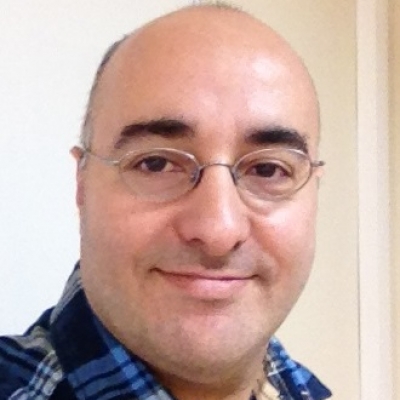
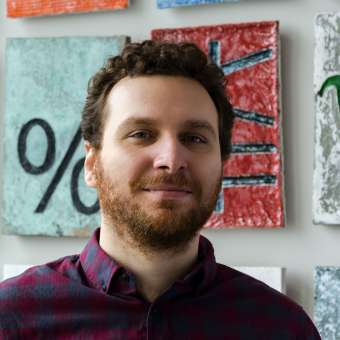
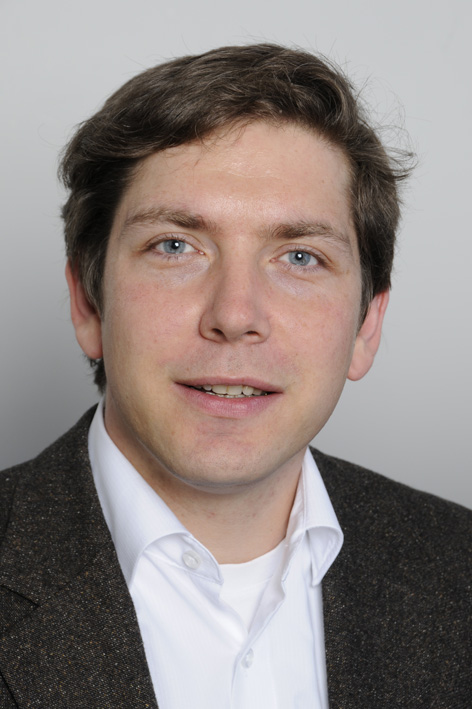
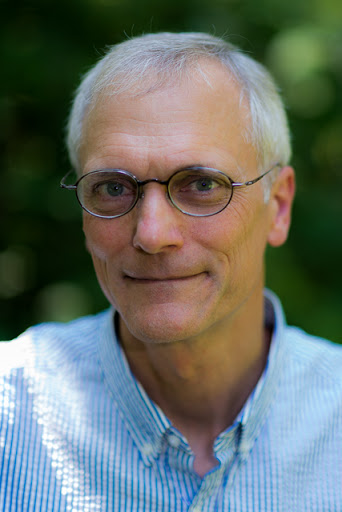
Ali Taylan Cemgil is an Associate Professor at Bogazici University's Department of Computer Engineering, College of Engineering. His research focuses on Bayesian statistics, machine learning, and audio/music processing within the Perceptual Intelligence Laboratory (PILAB). PhD in Computer Science from Radboud University Nijmegen (2004) Postdoctoral research at University of Amsterdam (Intelligent Autonomous Systems Lab) and University of Cambridge (Signal Processing and Communications Lab) Research Interests: Bayesian modeling and time series analysis Audio signal processing and source separation Human-AI collaboration frameworks Probabilistic methods in AI reliability and fairness Scientific Contributions: Recent work explores conformal prediction for model calibration, adversarial robustness in deep learning, and fairness-aware medical AI systems. His research spans theoretical foundations in Bayesian statistics and practical applications in indoor localization and capsule robotics. Academic Service: Current faculty member with extensive publications in AI/ML, signal processing, and probabilistic modeling.
Anish Das Sarma is a researcher affiliated with Google, USA , specializing in uncertain data management, MapReduce algorithms, and knowledge graph systems. He earned a PhD from Stanford University in 2010 under the supervision of Jennifer Widom and Alon Halevy, with a dissertation on "Managing Uncertain Data." His career spans collaborations with leading institutions, focusing on scalable data integration, social choice theory, and machine learning applications in scholarly knowledge organization. PhD in Computer Science, Stanford University (2010) Key collaborations: Stanford, Google Research, NFDI4DataScience His research interests intersect uncertain data modeling , MapReduce optimization , and large language model applications for scientific synthesis. Recent work includes FAIR data frameworks, ontology learning, and clinical entity linking. Article trends highlight his evolution from foundational database systems (2004-2015) to modern applications of LLMs in scholarly communication (2023-2024). Key areas: scalable algorithms, research data management, and ethical AI.
Dr. Burcu Balçık is a Professor in the Department of Industrial Engineering at Özyeğin University, where she also serves as the Academic Director of the OzU Sustainability Platform. With a PhD in Industrial Engineering from the University of Washington (2008) and degrees from Middle East Technical University, she has established herself as a leading expert in humanitarian logistics and disaster management. Her work bridges theoretical operations research with practical applications to improve disaster preparedness and response systems. Dr. Balçık's educational background includes: PhD in Industrial Engineering, University of Washington Seattle, 2008 Master's in Industrial Engineering, Middle East Technical University, 2003 Bachelor's in Industrial Engineering, Middle East Technical University, 2001 She also completed postdoctoral research at Northwestern University (2008-2009) and has been a visiting researcher at the HUMLOG Institute, HEC Montreal (2017-2018), and the Zero Hunger Lab at Tilburg University (2024-2025). Dr. Balçık's research focuses on humanitarian supply chains and disaster management, where she develops data-driven analytical approaches—including optimization, mathematical modeling, simulation, and heuristics—to improve decision-making for better disaster preparedness and response. Her work addresses critical challenges in healthcare planning and food insecurity during crises, with strong emphasis on practical implementation through collaboration with governmental and non-governmental organizations. She has pioneered methodologies for equitable resource allocation, rapid needs assessment, and collaborative prepositioning strategies in humanitarian contexts. Her publication record demonstrates a consistent focus on applying operations research to humanitarian challenges, with recent work emphasizing drone technology for post-disaster assessment, mathematical modeling for equitable vaccine distribution during pandemics, and innovative approaches to managing healthcare systems during disasters. Her research shows an evolution from foundational work on facility location and last-mile distribution to more complex systems addressing interdependent infrastructure networks, multi-country collaborations, and machine learning applications for handling ambiguity in humanitarian decision-making. Dr. Balçık's contributions have been recognized with numerous prestigious awards: Young Scientist Award from the Turkish Science Academy (2014) Best Paper Award from the College of Humanitarian Operations and Crisis Management (HOCM) for POMS (2019) Best Paper Award from SEIO-BBVA Foundation (2023) for the best applied paper in operations research Luk Van Wassenhove Career Award from EURO-HOpe (2023) Member of Science Academy of Turkey (December 2024 -) She also serves as an Associate Editor for Transportation Science and IISE Transactions, and on editorial boards of several leading journals in her field. Dr. Balçık has mentored numerous graduate students through PhD dissertations and M.S. theses, with many of her former students pursuing doctoral studies at prestigious institutions or successful careers in industry. Her research has been supported by significant grants from TUBITAK (multiple projects including 1001, 1002, 2219, and 3501 programs), the Norwegian Research Council, the Ministry of Economy and Innovation of Quebec, and IVADO. She has served as Principal Investigator (PI) for projects on resource planning for chronic dialysis patients after disasters, modeling stock-sharing strategies in humanitarian networks, and designing global humanitarian relief networks through local partnerships. As Academic Director of the OzU Sustainability Platform, Dr. Balçık leads interdisciplinary initiatives addressing sustainability challenges. She is actively involved in professional societies including INFORMS Public Sector Operations Research (PSOR) and the EURO Working Group on Humanitarian Operations (EURO-HOpe), where she has held leadership roles. She serves on the Istanbul Metropolitan Municipality's Earthquake Science Council (February 2023 – ) and collaborates with international organizations to translate research into practical disaster management solutions.
Erhun Kundakcıoğlu is a Professor in the Department of Industrial Engineering at Ozyegin University's Faculty of Engineering. He received his Ph.D. in Industrial and Systems Engineering from the University of Florida (2009) with a minor in Computer and Information Science and Engineering, following an M.S. in Industrial Engineering at Sabancı University (2004) and B.S. at Bilkent University (2002). He served as Assistant Professor at University of Houston (2009-2013) and Director/Distinguished Scientist at Optym (2019-2021). Ph.D.: Industrial and Systems Engineering, University of Florida (2009) M.S.: Industrial Engineering, Sabancı University (2004) B.S.: Industrial Engineering, Bilkent University (2002) His research focuses on combinatorial optimization and decision making under uncertainty , with applications in healthcare analytics , sustainable energy systems , supply chain management , and data science . He has developed optimization models for inventory control, lot sizing, and routing problems under uncertain demand/supply conditions, particularly in healthcare and humanitarian contexts. His work with the Datart Lab integrates mathematical programming into practical solutions for industry partners. Recent publications highlight his expertise in disaster relief inventory simulation, healthcare inventory management, and time series decomposition optimization. He supervises active graduate students including Deniz N. Yoltay (Ph.D.) and Buket İpek Akbal (M.S.). Early Career Award, TUBITAK Teaching Excellence Award, University of Houston Florida Chapter Scholarship, HIMSS Foundation As Associate Editor for the Journal of Global Optimization , Optimization Letters , and SN Operations Research Forum , he contributes to academic discourse in optimization and analytics. His consulting firm Datart R&D Management Consulting bridges academic research with industry applications in Turkey and abroad.
Assoc. Prof. ÖZLEM AKGÜN DOĞAN is an Associate Professor at Acibadem Mehmet Ali Aydinlar University, School of Medicine, Department of Medical Sciences, specializing in Pediatric Health and Diseases. She serves as Ethics Committee Member, Postgraduate Education Responsible, Deputy Postgraduate Education Coordinator, and Member of the Faculty Board at the same institution. Additionally, she is the ACURARE Vice President at Acibadem Mehmet Ali Aydinlar University School of Medicine. Dr. Akgün Doğan completed a Post Doc at Yale University (2021-2022) through the Fulbright Program. She is an active member of the European Board of Clinical Genetics and serves as the Undiagnosed Disease Network International Country Representative for Turkey. Her academic career includes teaching at undergraduate, postgraduate, and doctorate levels in courses related to Translational Medicine, Developmental Genetics, Mendelian Inheritance, and Pediatric Genetics. Her research focuses on Medical Genetics, Pediatric Genetics, Rare Diseases, Undiagnosed Diseases, and Genomic Medicine. Analysis of her recent publications reveals a strong emphasis on whole-genome sequencing applications, deep phenotyping for rare disease diagnosis, skeletal dysplasias, and molecular characterization of genetic disorders in pediatric populations. Her work demonstrates significant contributions to understanding BCL11B-related diseases, achondroplasia treatments, craniosynostosis registries, and diagnostic approaches for critically ill infants. 107 publications indexed in Web of Science 57 publications indexed in Scopus 91 H-Index in Web of Science 84 H-Index in Scopus 9 thesis advisory roles Dr. Akgün Doğan has secured multiple research grants including projects on ARID1B-related disorders, undiagnosed skeletal dysplasias, craniosynostosis registry development, and rapid genome sequencing for critically ill infants. She currently supervises postgraduate student J.Ceren on craniosynostosis registry research and serves as an Assistant Editor for the European Journal of Medical Genetics. Her leadership extends to organizing workshops on rare diseases and genomic medicine, and she is frequently invited to speak at national and international conferences on genetic diagnostics and rare disease research.
Long Wen is a Lecturer at the Technical University of Munich within the Department of Computer Science, affiliated with the Chair for Robotics, Artificial Intelligence and Real-time Systems led by Prof. Alois Knoll. He teaches the Masterseminar on Human-Robot Interaction (IN2107, IN4718) for the Winter semester 2024/25 and maintains an active research profile in robotics and AI. Office: 5607.03.054, Boltzmannstr. 3(5607)/III, 85748 Garching bei München Contact: long.wen@tum.de | +49 (89) 289 - 18112 His research concentrates on Robotics, Artificial Intelligence, and Real-time Systems with specific expertise in safety-critical control for mobile robots, autonomous driving architectures, and virtualization for software-defined vehicles. Wen investigates human-robot interaction paradigms, cloud/fog computing for robotics applications, and anomaly detection in industrial processes, emphasizing real-time performance and adaptive control in dynamic environments. Analysis of Wen's 10 publications (2023-2025) reveals a cohesive research trajectory focused on deploying AI-driven solutions in safety-critical robotics systems. Key trends include meta-learning for obstacle navigation, containerized microservice architectures for autonomous vehicles, and Gaussian process applications in uncertain control models. His work bridges theoretical control theory with practical implementations in ROS 2 frameworks and automotive virtualization. Scientific awards: No awards or fellowships were documented in the source material. Wen collaborates extensively with Prof. Alois Knoll's research group on grant-funded projects related to autonomous systems, though specific funding sources and student supervision details remain undisclosed in the provided text. He contributes to the Robotics, AI and Real-time Systems laboratory at TUM, where his team develops containerized architectures for autonomous driving software and evaluates virtualization technologies for software-defined vehicles, with recent work presented at ICRA, IROS, and IEEE conferences.
Professor Dr. Jörg Dinkelaker, holding the Chair for Adult Education and Vocational Training at Martin Luther University Halle-Wittenberg's Department of Education and Pedagogy, Faculty of Philosophy III. His research focuses on adult learning in the climate crisis, knowledge translation mechanisms, empirical educational research, and pedagogical professionalism. Key methodological contributions in videographic classroom analysis Leading research on epistemic participation in continuing education Editor of influential works on difference and translation in education Recent publications examine crisis pedagogy (2023), physical co-presence in learning (2022), and boundary analysis in educational contexts (2019-2023). His work bridges theory development with empirical studies across four decades. Current research explores: Climate crisis as learning driver Knowledge-experience differentials Digital education limitations Historiography of adult education
Gregory Wornell serves as the Sumitomo Electric Industries Professor in Engineering within MIT's Department of Electrical Engineering and Computer Science (EECS), part of the School of Engineering. He maintains key affiliations with the Computer Science and Artificial Intelligence Laboratory (CSAIL) and the Institute for Data, Systems, and Society (IDSS), while leading the Signals, Information, and Algorithms Laboratory in the Research Laboratory of Electronics (RLE). Education: BASc from the University of British Columbia SM and PhD from MIT His research program integrates theoretical foundations with practical systems across signal processing, information theory, and statistical inference. Current work explores architectures for sensing, learning, and communication systems alongside computational imaging, vision, and perception frameworks. Neuroscience applications form an emerging thread in his interdisciplinary approach, particularly regarding information processing in biological systems. Analysis of recent publications (2021-2025) reveals three dominant trends: 1) Uncertainty quantification and calibration methods for machine learning systems, 2) Fairness frameworks for AI with uncertain sensitive attributes, and 3) Novel signal processing techniques for RF communications and acoustic imaging. His work consistently bridges information-theoretic principles with deep learning implementations. Scientific awards: None specified in source materials. Advising and grants: Source materials indicate active PhD supervision through publications with students like Shah, Shen, and Sattigeri, though formal advisee lists aren't provided. Research appears supported by MIT-IBM Watson AI Lab collaborations and institutional resources from RLE/CSAIL. He directs the Signals, Information, and Algorithms Laboratory (SIAL), which focuses on developing mathematical frameworks for information extraction from complex systems. The lab maintains strong connections with MIT's wireless communications and computational imaging communities through RLE and CSAIL collaborations.
Dr. Omar Khadeer Hussain serves as an Associate Professor and Deputy Head of School (Research) at the School of Business, UNSW Canberra. He has been with the School since February 2014, initially working as a Lecturer and Senior Lecturer before his current appointment. Prior to joining UNSW, he worked as a Senior Research Fellow at Curtin University. Dr. Hussain's educational background includes a Bachelor of Technology in Computer Science from JNTU (2002), a Master of Research in Computer Science from La Trobe University (2004), and a Doctor of Philosophy in Information Management from Curtin University (2008). His research focuses on Logistics and Supply Chain Management, with particular emphasis on Supply Chain Risk Management, Distributed and Grid Systems, Decision Support, and Group Support Systems. Dr. Hussain applies these areas to develop knowledge synthesis from data for business applications such as decision making, risk management, cloud service management, new product development, and milk quality management. His work incorporates predictive analytics to enable informed business decision making, with recent research increasingly integrating artificial intelligence and large language models for supply chain risk identification and management. Analysis of Dr. Hussain's recent scholarly output reveals a strong focus on applying cutting-edge AI techniques to supply chain challenges. His work spans systematic literature reviews on supply chain risk modeling, development of frameworks for SLA violation prevention in Cloud of Things environments, and innovative applications of explainable AI in various domains. There is a clear trend toward leveraging large language models for event identification in supply chain risk management and developing dual-sided decision frameworks that integrate multiple stakeholder perspectives. His research bridges theoretical advances with practical applications in logistics and business engineering. Curtin Business School New Researcher of the Year award for 2012 Prize for Early Career Researcher, Curtin Business School (2013) Chancellor's thesis commendation award, Curtin University (2008) Master Prize – Computer Science, La Trobe University (2004) Dr. Hussain has successfully secured multiple competitive research grants, including ARC Linkage Projects on 'Economically Efficient Green Logistics through Cyber Physical Systems' (2016) and 'Intelligent CRM through Conjoint Data Mining of Heterogeneous Sources' (2015), both with Professor Elizabeth Chang as lead CI. He has also supervised 9 PhD students to completion, serving as both main and joint supervisor. While specific lab or team information isn't explicitly mentioned in the available text, Dr. Hussain's research appears to be conducted within the School of Business at UNSW Canberra, likely collaborating with colleagues across business disciplines and computer science to address complex supply chain and logistics challenges through interdisciplinary approaches.
Ozlem Dogan is an Associate Professor in the Department of Medical Microbiology at Koç University School of Medicine. Her research focuses on fundamental aspects of medical microbiology and mycology, particularly host-pathogen interactions and antimicrobial resistance mechanisms. She holds a specialization degree from Hacettepe University and completed her Bachelor's at Capital University. Her work spans molecular diagnostics, clinical microbiology, and infectious disease epidemiology. Key research areas: Medical Microbiology, Medical Mycology, Host-Pathogen Interaction Current affiliation: Koç University School of Medicine Email: ozldogan@ku.edu.tr
Alexander Wolff is a Professor at the Chair of Algorithms and Complexity within the Institute of Computer Science at the University of Würzburg. His work focuses on graph drawing, computational geometry, and algorithmic complexity, with applications in geographic information systems and network visualization. Chair of Algorithms and Complexity, Institute of Computer Science, University of Würzburg (since 2009) Managing Director, Institute of Computer Science (2011–2013, 2015–2017) Editorial roles in journals like JoCG and JGAA Conference leadership in Graph Drawing (GD) and SOFSEM His research explores geometric graph representations, obstacle numbers, and parameterized complexity. Recent publications address level planarity, polyhedral surface adjacency, and metro map visualization. Collaborative projects include algorithmic quality assurance and interactive industrial network visualization. Wolff’s work bridges theoretical graph algorithms with practical applications, such as optimizing public transport schematics and enhancing data accessibility. He has supervised numerous PhD students and co-authored over 100 publications, with editorial and organizational roles in major computational geometry and graph drawing conferences.
Giuseppe Sanfilippo is a Full Professor of Probability (MAT/06) in the Department of Mathematics and Computer Science at the University of Palermo, Italy. He holds the position of FULL PROFESSOR (MATH-03/B) and maintains office hours on Thursdays from 9:00 to 11:00 at DMI, Via Archirafi 34, second floor, Room 213. His academic appointments include teaching positions across multiple schools at the University of Palermo: School of Basic and Applied Sciences (Mathematics program) School of Basic and Applied Sciences (Artificial Intelligence program) Polytechnic School (Statistics for Data Analysis program) School of Basic and Applied Sciences (Computer Science program) Professor Sanfilippo's research focuses on the theoretical foundations of probability theory, particularly exploring the intersection between probability, mathematical logic, and conditional reasoning. His work centers on conditional events, coherence principles, trivalent logics, and connexive logic. He has made significant contributions to understanding the probabilistic interpretation of Aristotelian syllogisms, entropy and extropy measures, and the mathematical structures underlying compound conditionals. His research has important applications in artificial intelligence, uncertainty management, and decision theory, with over two decades of publications showing consistent development of these themes. Professor Sanfilippo has been actively involved in the academic community, organizing and participating in numerous international conferences including SUM (Scalable Uncertainty Management), ECSQARU (European Conferences on Symbolic and Quantitative Approaches to Reasoning with Uncertainty), and specialized workshops on connexive logic and probabilistic reasoning. His work bridges theoretical developments with practical applications in knowledge representation and reasoning under uncertainty, as evidenced by his extensive conference participation from 2014-2024 across Europe. He mentors students through various academic programs and has supervised numerous theses in probability theory and its applications. His teaching portfolio includes core courses such as 'Calculation of Probabilities' across Mathematics, Artificial Intelligence, Statistics for Data Analysis, and Computer Science programs, as well as specialized courses like 'Uncertain Reasoning and Probability,' reflecting his commitment to both foundational education and advanced research training. Professor Sanfilippo maintains an active research laboratory focused on probabilistic reasoning, where interdisciplinary teams explore the mathematical foundations of uncertainty and their applications in artificial intelligence and decision systems. His current research agenda includes extending coherence principles to complex conditional structures and developing scalable methods for uncertainty management in AI systems, as demonstrated by his upcoming conference chair position for SUM 2024 in Palermo.
Robert Feldmann is a Professor of Astrophysics at the University of Zurich's Department of Astrophysics within the Faculty of Science. His research combines computational astrophysics with data science to investigate galaxy formation and evolution across cosmic history. As a key contributor to the Feedback in Realistic Environments (FIRE) project and leader of MassiveFIRE, he develops sophisticated cosmological simulations to understand how galaxies form stars, grow, and evolve within the cosmic web. Feldmann's research interests focus on understanding how galaxies and their properties evolve over cosmic time, particularly examining the processes that determine galaxy sizes, regulate star formation rates, and shape morphology. His work bridges observational astronomy with theoretical modeling, leveraging the exponential growth in computing power and data science techniques to tackle complex astrophysical problems. He investigates the role of stellar feedback, cosmological starvation, and dark matter halo properties in shaping galaxy evolution, with particular emphasis on massive galaxies during the cosmic noon period (redshifts z~1.5-3). His publication record shows consistent output in leading astrophysics journals, with recent work focusing on applying machine learning to cosmological simulations (EMBER framework), studying submillimeter-bright galaxies, and analyzing quiescent galaxy formation. Feldmann has developed significant open-source tools including LEO-Py for statistical analysis of astronomical data and ZEBRA for photometric redshift determination, demonstrating his dual expertise in astrophysics and computational methods. Feldmann actively collaborates with researchers worldwide, including Phil Hopkins, Rachel Bezanson, and Eliot Quataert, and participates in major international projects. He regularly presents at conferences, including organizing the 2024 Ascona conference on 'Observing and Simulating Galaxy Evolution in the Era of JWST.' His work has been featured in media outlets like Sueddeutsche Zeitung, highlighting the public impact of his research on galaxy morphology. As an educator, Feldmann mentors Master's students from both University of Zurich and ETH Zurich, offering research projects in astrophysics and data science. His computational approach to galaxy evolution provides students with valuable experience in high-performance computing and data analysis techniques applicable across scientific disciplines.
Femke van Wijk is a Full Professor at Utrecht University , specializing in Immunology with a focus on inflammatory diseases and immune dysregulation. Her work is affiliated with the Child Health Infection & Immunity strategic program. Academic Rank: Professor Key Research Areas: Immunology, Inflammatory Bowel Diseases (IBD), Primary Immunodeficiency, T Cell Biology, Personalized Medicine Dr. van Wijk's research explores tissue-specific immune mechanisms, including T cell imprinting, antigen-presenting cell dysfunction, and microbiome-immune interactions. She leads studies on diseases like IBD, atopic dermatitis, and systemic autoimmune disorders, aiming to develop targeted therapies. Her recent publications highlight advancements in cellular screening, single-cell genomics, and proteomic methodologies for understanding immune diseases. Notable contributions include studies on IgA deficiencies, interferon biomarkers, and regulatory T cell paradoxes in inflammation. Scientific Awards NWO Athena award (2023) ZonMw VICI grant (2021) PhD Supervisor of the Year (2017) ZonMw VIDI grant (2014) ZonMw Veni fellowship (2010) KNAW fellowship Ter Meulen Fund (2007) Van Wijk has held advisory roles at institutions like King's College London and Reuma Nederland, contributing to international research evaluations and immunodeficiency studies.
Fabian Akkerman is a researcher at the Digital Society Institute within the Industrial Engineering & Business Information Systems department at the University of Twente . His work bridges theoretical advancements in machine learning with practical applications in logistics, energy sustainability, and transportation systems. Primary Affiliation : University of Twente, Industrial Engineering & Business Information Systems Research Focus : Artificial Intelligence, Reinforcement Learning, Autonomous Systems, and Sustainable Logistics Fabian's research specializes in sequential decision-making problems, particularly in dynamic and stochastic environments. A key area of his contributions lies in applying reinforcement learning and optimization techniques to address challenges in: Vehicle routing with uncertain demand Inventory management and warehouse operations Time slot pricing for delivery services Smart transportation and freight logistics Stochastic modeling for supply chain resilience Industry 4.0 adoption in production systems His work demonstrates a strong emphasis on developing algorithmic frameworks (e.g., DynaPlex) that combine statistical modeling with real-world implementation. Recent publications highlight applications in autonomous vehicles, intelligent transport systems, and circular economy strategies. Scientific Awards : 2024 Transportation Science Meritorious Service Award 2025 2nd Place in ISIR Research Challenge for Production-Inventory Planning at ASML