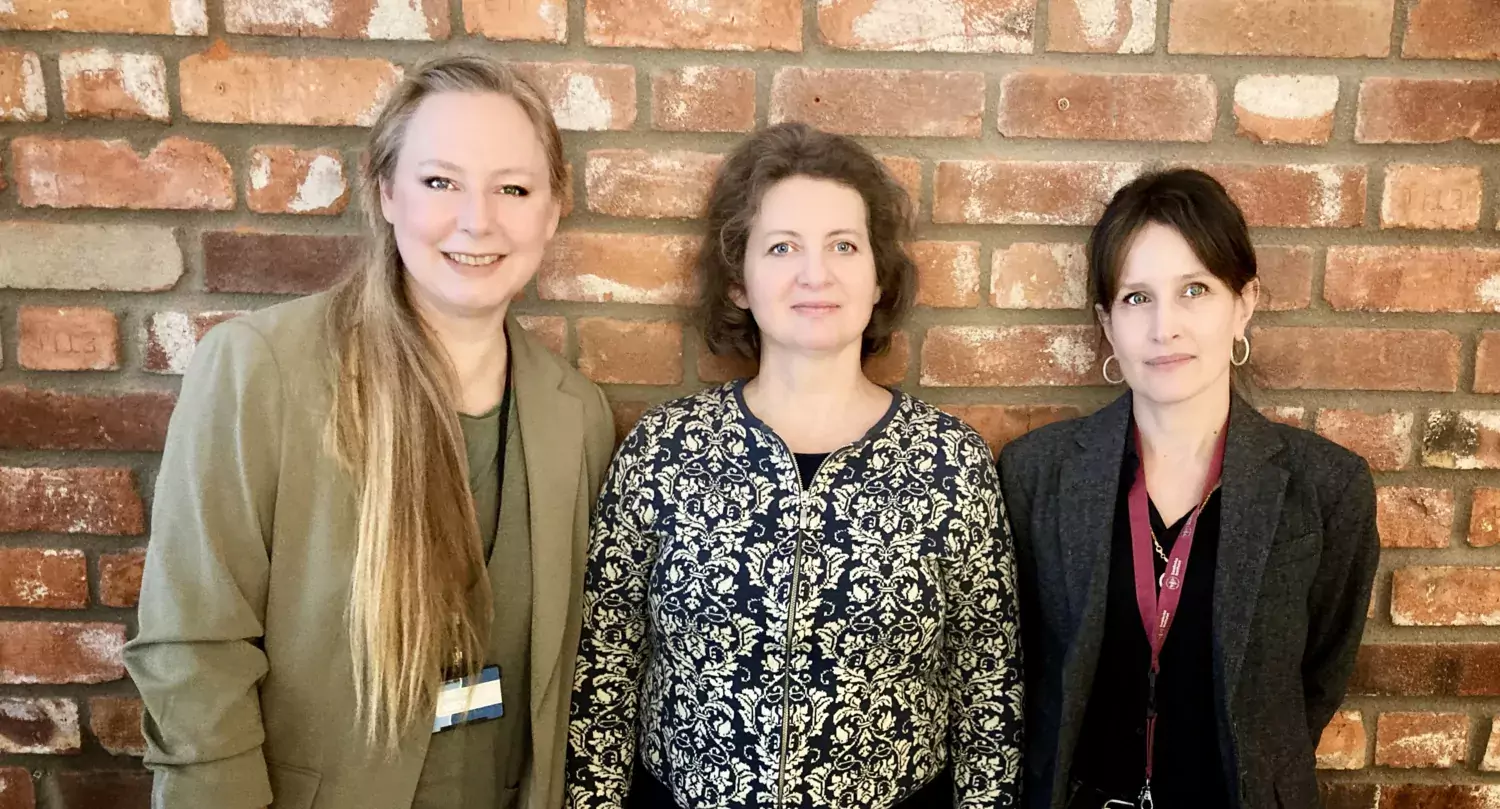
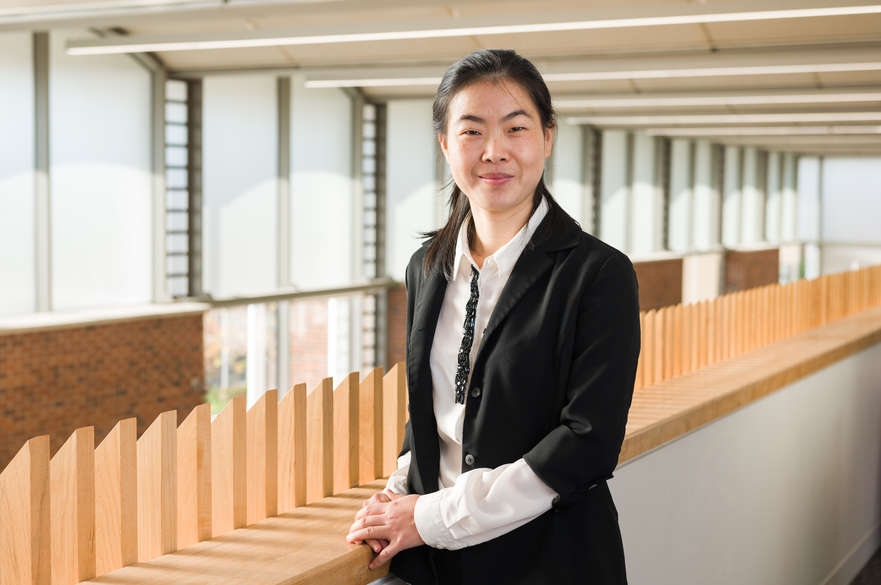
Dr. Karen Kavanagh is a Professor in the Department of Physics at Simon Fraser University (SFU), specializing in Electronic Materials Science, Semiconductor Interfaces, and Nanotechnology. Her research focuses on nanowire heterostructures, 2D materials, and advanced microscopy techniques such as helium ion microscopy and electron holography. She leads the Kavanagh Lab, located at TASC II Rm 7040, South Campus, Burnaby. Dr. Kavanagh holds a BSc from Queens University and MSc/PhD from Cornell University. Her work bridges materials science and device engineering, with applications in sensors, photovoltaics, and biomedical technologies. Notable achievements include developing ultrasensitive cytokine sensors and pioneering wafer bonding techniques at low temperatures. Dr. Kavanagh is a Fellow of the Materials Research Society and actively mentors a diverse group of graduate students and postdocs.
Kaiyu Fu is an Assistant Professor in the Department of Chemistry and Biochemistry at the University of Notre Dame, where she leads a multidisciplinary research lab at the intersection of electrochemistry, nanoscience, and synthetic biology. Her work aims to develop ultrasensitive analytical platforms for biomedical applications, particularly in point-of-care diagnostics and chronic disease management. Education: Ph.D. in Chemistry, University of Notre Dame (2018) M.S. in Polymer Chemistry, Fudan University, China (2014) B.E. in Polymer Science & Engineering, Sichuan University, China (2011) Her research focuses on three core areas: (1) nanoscale electrochemistry enabling single-entity detection; (2) electrochemical biosensors for real-time, in vivo monitoring of therapeutic agents; and (3) nanobiotechnology, including DNA nanotechnology and directed evolution of nucleic acids for precise molecular recognition. Her lab develops innovative instrumentation and materials to overcome biofouling and enhance sensor performance. The recent publications highlight a strong trend toward implantable and miniaturized sensing systems, with applications in cancer therapeutics, drug delivery, and infectious disease diagnostics. These works span advanced materials, surface engineering, and hybrid electrophotonic systems. Scientific Awards: ACS Division of Analytical Chemistry Graduate Fellowship (2018) J. Peter Grace Fellowship, University of Notre Dame (2014–2015) Kaiyu Fu advises graduate students and postdoctoral researchers, and her lab actively recruits creative and dedicated individuals. She has secured research funding to support her innovative work in biosensor development and has contributed to significant advances in electrochemical detection mechanisms, including electron transfer acceleration in nanostructured electrodes and surface charge engineering for molecular discrimination. Her collaborative work with teams at Stanford and other institutions further strengthens her research impact. The Fu lab is engaged in developing next-generation diagnostic platforms, including implantable microelectrode arrays for intratumoral pharmacokinetic monitoring and hydrogel-based aptamer switches for real-time signaling molecule detection. These projects involve interdisciplinary teams working across chemistry, engineering, and biomedical sciences.
Armando Ricciardi is an Associate Professor at the Department of Engineering (DING) , Università degli Studi del Sannio , focusing on Photonics , Optical Engineering , and Nanotechnology . His work bridges Photonic Materials and Lab-on-Fiber Technology , with a strong emphasis on Biosensing and Sensor Technology . University: Università degli Studi del Sannio Department: Department of Engineering (DING) Academic Rank: Associate Professor Research Interests include: Photonics and Plasmonics for advanced sensor design Microgel-based optical systems and tunable filters Lab-on-Fiber platforms for biomedical and environmental monitoring Hybrid Metallo-Dielectric Quasicrystals for resonance engineering Near-Infrared (NIR) optical devices and sub-wavelength structures Recent Publications highlight his contributions to Microgel Photonics , Thermo-plasmonic Probes , and Cavity-Enhanced Biosensors , with a focus on tunable photonic systems and ultrasensitive detection. His collaborations span institutions in Italy , UK , and International Networks . Lab-on-Fiber Technology is a recurring theme, addressing applications in Ultra-high Dose Monitoring , Ultrasound Detection , and Thin Film Solar Cells . While no formal scientific awards are listed, his prolific publication record (112+ items) underscores sustained impact in Optical Materials and Nanophotonic Devices .
Katalin Dobra is Professor and Senior Consultant in Molecular Pathology at Karolinska Institutet's Department of Oncology-Pathology, where she leads the Molecular Pathology of the Lung and Pleura research group. Her work bridges clinical pathology with cutting-edge molecular research focused on lung cancer and pleural diseases. Her educational background includes: 1994 MD; Summa Cum Laude, Semmelweis University Budapest, Hungary 2002 PhD Experimental Pathology, Karolinska Institutet 2008 Specialist in Clinical Pathology and Cytology, Karolinska University Hospital 2010 Associate Professor in Pathology 2014-2020 Senior Lecturer in Molecular Pathology 2021 Adjunct Professor in Clinical Pathology Dr. Dobra's research centers on optimizing integrated strategies for personalized cancer treatment through computer-assisted tumor grading, molecular mapping, and biomarker validation. Her team integrates and validates diagnostic and predictive biomarkers through comprehensive molecular characterization of lung tumors, including primary lung cancer, malignant mesothelioma, and pleural and brain metastases of non-small cell lung cancer. They develop methods for early diagnosis using molecular characterization of soluble proteins, free DNA, and exosomes from exudate and peripheral blood. Recent work combines artificial intelligence with morphological image analysis in digital pathology to better stratify patients with aggressive tumor phenotypes. Analysis of her recent publications reveals a strong focus on biomarker validation, particularly PD-L1 expression, mesothelioma diagnostics, and the role of syndecan-1 in tumor biology. Her work spans molecular characterization, diagnostic techniques, and therapeutic applications, with increasing emphasis on AI-assisted diagnostics and personalized treatment approaches. Her scientific recognition includes: 2008 Young Investigator award, KI Founds 2017 National Molecular Pathology Personalized Cancer Medicine Award from Astra Zeneca 2017 Magnus Nasiel Stipend 2021 Magnus Nasiel Stipend As an educator, Dr. Dobra has extensive experience teaching at undergraduate, graduate, and postgraduate levels. She designed and launched the master's program in diagnostic cytology and currently integrates pathology into Karolinska's six-year medical program. Her research group receives funding from multiple sources including The Cancer and Allergy Foundation, which recently awarded SEK 2.3 million to KI researchers. Her Molecular Pathology of the Lung and Pleura research group operates within Karolinska Institutet's Department of Oncology-Pathology, focusing on discovering, integrating, and validating novel diagnostic and predictive biomarkers. The team studies fundamental molecular mechanisms of tumor invasion and resistance development while conducting ex-vivo testing of tumor properties with ultrasensitive imaging analysis.
Hongquan Zhang serves as an Associate Professor in the Department of Laboratory Medicine & Pathology at the Faculty of Medicine & Dentistry, University of Alberta. His research program develops cutting-edge bioanalytical tools for ultrasensitive and point-of-care detection of biological targets, with a particular focus on infectious disease diagnostics. Education: Ph.D., University of Alberta (2009) M.Sc., Northwest University, Xi'an, China (1999) B.Sc., Northwest University, Xi'an, China (1997) Dr. Zhang's research explores binding-induced DNA assembly to create innovative diagnostic platforms. His laboratory specializes in developing fluorescent nanosensors for real-time detection in cellular environments, constructing target-triggered DNA nanomachines, and engineering novel affinity ligands through manipulation of functional nucleic acids. His work has made significant contributions to CRISPR-based diagnostics, particularly for SARS-CoV-2 detection, where his team has developed multiple point-of-care testing approaches that integrate nucleic acid amplification with CRISPR technology. Analysis of Dr. Zhang's recent publications reveals a strong research trajectory focused on integrating DNA nanotechnology with CRISPR systems to create streamlined diagnostic platforms. His work consistently addresses the challenge of moving complex molecular diagnostics from laboratory settings to point-of-care applications, with particular emphasis on sample preparation, signal amplification, and visual readout systems that eliminate the need for sophisticated equipment. The interdisciplinary nature of his research bridges chemistry, molecular biology, nanotechnology, and clinical medicine. Teaching: LABMP 551: Laboratory Research Methods LABMP 552: NSERC CREATE Course
Xudong Fan is a Professor at the University of Michigan specializing in advanced analytical and diagnostic technologies. His work bridges engineering, chemistry, and clinical medicine through innovative device development. His research focuses on: Miniaturized gas chromatography systems for portable chemical analysis and planetary science missions Optofluidic immunoassays using biolasers for ultrasensitive, label-free biomarker detection Machine learning integration for chromatographic data analysis and biosensor accuracy enhancement Breath-based diagnostics for cancer, infectious diseases, and respiratory conditions Microfluidic platforms requiring minimal sample volumes (e.g., 1μL fingertip blood) Professor Fan's 2025 publications reveal a strong emphasis on device miniaturization, automation, and multimodal sensing. Key trends include the convergence of micro-GC with photoionization detectors for field-deployable chemical analysis, deep learning solutions for chromatographic co-elution challenges, and biolaser-based platforms enabling antigen-independent cancer cell detection. These efforts target affordable point-of-care diagnostics with applications in tuberculosis monitoring, COVID-19 immunity assessment, and early lung cancer screening through breath analysis. His work demonstrates significant translational impact, particularly in resource-limited settings where cost, portability, and minimal sample requirements are critical. Current projects show strong alignment with NASA planetary science objectives through micro-GC development for extraterrestrial organic analysis.
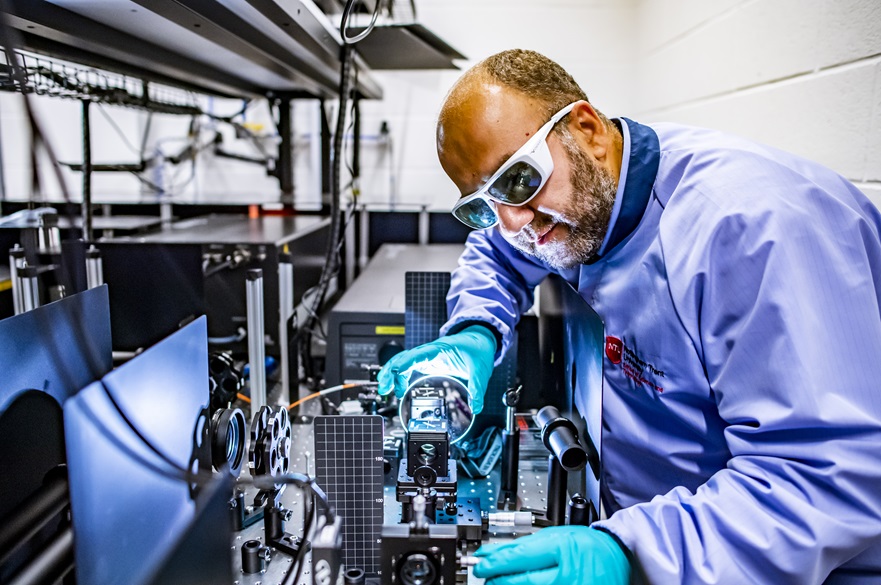
Dr. Demosthenes Koutsogeorgis is an Associate Professor of Photonic Technologies in the Department of Physics & Mathematics at Nottingham Trent University's School of Science & Technology. He serves as a Module Leader, Placement Tutor, Project Supervisor, Director of Studies for PhD programmes, IMEC Research Centre PGR coordinator, and NTU Laser Safety Adviser. He leads the iSMaRT Research Group (Innovations in Surfaces Materials And Related Technologies) based at MTIF Clifton, and was one of the founding members of industry-facing initiatives "Thin Film Services" and "Scientific Services To Industry" at NTU. Dr. Koutsogeorgis received his education at: BSc in Physics from the University of Ioannina, Greece (1997) PhD in "Investigation of laser annealing of phosphor thin films for potential luminescent devices" from Nottingham Trent University (2003) His research focuses on Material Science, with specific expertise in thin film technology, laser processing, luminescent devices, plasmonics, electronic devices, and smart coatings. His work spans numerous applications in nanotechnology across industries including photovoltaics, data storage, security and authentication, optoelectronics, flexible electronics, displays, optical coatings, and biomedical technologies. He has developed unique technologies for subsurface modification of nanoparticles and laser processing of phosphor thin films for enhanced light output and longevity. His recent publications demonstrate strong focus on laser processing techniques for transparent conductive oxides, plasmonic nanostructures, and thin film materials. The research spans from fundamental materials characterization to practical applications in electronics, photonics, and biomedical devices. Key trends include reactive laser annealing, plasmonic nanoparticle engineering, thin film transistor development, and applications of these technologies in both industrial and medical contexts. Dr. Koutsogeorgis has collaborated with numerous institutions including: University of Ioannina (Greece) Aristotle University of Thessaloniki (Greece) OpSec Group (UK) University of Southampton (UK) The University of Nottingham (UK) Sheffield Hallam University (UK) University of Milano (Italy) KAUST (Saudi Arabia) He has supervised multiple PhD students including WEST, J.M. (2023) on "Laser induced nitrogen doping of zinc oxide" and KOUTSIAKI, C. (2023) on "Photonic conversion of sol-gel organometallic precursors into inorganic thin films." His research has been supported by various sponsors including Innovate UK, EU FP7 programme, Engineering and Physical Sciences Research Council EPSRC, and numerous industrial partners. Dr. Koutsogeorgis leads the iSMaRT Research Group, which benefits from long-standing expertise in thin film technology and laser processing. The group works extensively with the MTIF (Manufacturing Technology Innovation Facility) at NTU and maintains strong industry connections through the SS2i initiative. The research environment includes advanced capabilities in deposition, processing, and characterization of thin film materials for various applications.
Tza-Huei (Jeff) Wang is a Professor in the Department of Mechanical Engineering and holds a secondary appointment in Biomedical Engineering at Johns Hopkins University . He is also affiliated with the Sidney Kimmel Comprehensive Cancer Center and the Institute for NanoBioTechnology , driving translational research in molecular diagnostics. Doctorate in Mechanical Engineering, UCLA (2002) Wang's research focuses on micro- and nano-biotechnologies for molecular analysis and biomedical applications. His work encompasses quantum dot-FRET nanosensors for cancer biomarkers, droplet magnetofluidics for infectious disease diagnostics, and single-molecule spectroscopy platforms like CICS. These technologies address critical needs in early cancer detection , antimicrobial resistance testing , and HIV viral load self-testing . Recent publications highlight advancements in digital PCR , CRISPR-assisted diagnostics , and high-throughput antimicrobial combination screening (e.g., RoboDrop platform). His team's work on HYPER-Melt enables ultrasensitive DNA methylation analysis at 0.00005% detection thresholds. Scientific Recognition NSF CAREER Award CRS Jorge Heller Award JALA Ten Award Cohen Translational Engineering Award Fellow, AIMBE, ASME, IEEE, and RSC Wang's laboratory trains future leaders in engineering and biomedical sciences, with alumni securing faculty positions at institutions like UCSD, Penn State, and Aarhus University. His innovations have resulted in 36 patents , including 14 U.S. patents, and secured $1.5M+ IMAT R33 and $2.2M NCI R01 grants for cancer screening technologies.
Salvatore BARRECA is a Fixed-term Assistant Professor of Analytical Chemistry (CHIM/01) at the University of Catania , Department of Chemical Sciences. His research focuses on environmental and food analysis, sample preparation techniques, and photochemical remediation methods. Key research areas include: Environmental pollution and water quality monitoring Chromatography and mass spectrometry applications Photochemical and photocatalytic degradation of pollutants Chemical risk assessment in food and environmental matrices Development of analytical methods for trace contaminants Endocrine disruptors and emerging pollutants Recent work emphasizes perovskite solar cell environmental safety, fluoride analysis in beverages, and heavy metal quantification in food products. His publications demonstrate expertise in hyphenated analytical techniques (UHPLC-Q-TOF-MS, LC-MS/MS) and environmental biomonitoring. Salvatore is associated with Marco Arculeo's Lab at the University of Catania. He has contributed to patents related to photochemical water purification systems while maintaining active research collaborations across Italy and international institutions like Goethe University Frankfurt and Masaryk University.
Dr. Shana O. Kelley is a Professor at the University of Toronto , holding cross-appointments in the Departments of Biochemistry, Pharmaceutical Sciences, Chemistry, and Biomedical Engineering . Her work focuses on developing novel technologies for clinical diagnostics and drug delivery , integrating nanotechnology , chemical biology , and materials science . Education : Ph.D. in Chemistry from the California Institute of Technology (Caltech), NIH postdoctoral fellow at the Scripps Research Institute Her research spans mitochondrial chemical biology , peptide-based intracellular targeting , and ultrasensitive biomolecular detection . She pioneered peptide vectors for organelle-specific drug delivery and nanoscale biosensors for disease diagnostics. Recent trends highlight her work in electrochemical cancer detection , nanotechnology-enabled diagnostics , and pathogen sensing . Notable awards : 2013 University of Toronto Distinguished Professor Award 2012 Queen Elizabeth II Diamond Jubilee Medal NSERC E.W.R. Steacie Fellowship (2010) NSF CAREER Award (2004) Dr. Kelley has founded two molecular diagnostics companies, GeneOhm Sciences (acquired by Becton Dickinson) and Xagenic Inc. , demonstrating her translation of research into clinical tools. She teaches graduate courses in precision medicine and nanobiotechnology , and her lab collaborates extensively with engineers and clinical researchers.
Cassio Mendes Fontes is an Assistant Research Professor in the Department of Biomedical Engineering at Duke University. His research focuses on advancing point-of-care diagnostics, immunoassays, and biomaterials engineering for clinical and global health applications. Education: Ph.D. from Duke University (2020) Fontes' work spans biomedical engineering domains including immunotherapy, microfluidics, and nanotechnology. His publications highlight innovations in diagnostic platforms for diseases such as Ebola, talaromycosis, and cancer, often integrating smartphone-based or inkjet-printed technologies. Recent research trends include optimizing adjuvant release kinetics , engineering synthetic biomolecular condensates , and developing ultrasensitive biosensors . Collaborations with colleagues like Joh, Heggestad, and Chilkoti underscore interdisciplinary team-based approaches.
Mohsen Rahmani is a Distinguished Professor at Nottingham Trent University's School of Science & Technology, where he serves as the Leader of the Advanced Optics and Photonics (AOP) Laboratory. He holds prestigious fellowships including the Royal Society Wolfson Fellowship and UK Research and Innovation Future Leaders Fellowship, and has been recognized as an IEEE Nanotechnology Council Distinguished Lecturer (2024) and The Royal Society Yusuf Hamied Visiting Fellow (2024). His educational background includes a PhD from the National University of Singapore (2009-2013), MSc from National Technical University of Ukraine (2007-2009), and BEng from Iran Azad University (2000-2004). Prior to joining NTU, he held positions at Australian National University (2016-2020) and Imperial College London (2013-2015). Rahmani's research focuses on Nano-materials (design, modeling, and fabrication of metallic, dielectric, and semiconductor nanoparticles), Nonlinear nano-photonics (all-optical conversation of light frequencies for NIR imaging, night-vision, and species' health detection), and Optical nano-sensing (ultrasensitive nano-scale materials for gas/liquid detection of low concentration substances/biomarkers). His work bridges fundamental physics with practical applications in imaging, sensing, and communications. His 15 most recent publications (2022-2024) demonstrate a strong focus on metasurfaces, nonlinear optics, and infrared imaging technologies. Key themes include bound states in the continuum, frequency conversion, silicon photonics, and applications in biomedical diagnostics and wireless communications. His research shows a clear trajectory toward practical implementations of nanophotonic technologies for real-world problems. Outstanding Editor Award, Opto-Electronic Advances (2020) Eureka Prize for Outstanding Early Careers (2018) Australian Optical Society Geoff Opat Early Career Researcher Prize (2018) Australian National University Vice Chancellor's Award (2018) Young Scientist Medal and Prize from IUPAP (2017) Royal Society Wolfson Fellowship UKRI Future Leaders Fellowship (£1.2 million) Rahmani has secured significant research funding from The UK Research and Innovation, The Royal Society, and The Australian Research Council. At NTU, he built the Advanced Optics and Photonics Lab from scratch, attracting outstanding scientists and students to work on ambitious projects including nano-particle based disease detection systems and technologies to reduce light pollution. His editorial roles include Associate Editor of Opto-Electronic Advances (2018-present) and past Guest Editor for Nanomaterials (2020-2022). Through the AOP Lab (www.aoplab.com), Rahmani leads a dynamic research team focused on developing transformative nanophotonic technologies. His lab's work spans fundamental research on light-matter interactions at the nanoscale to applied projects with potential commercial impact, particularly in medical diagnostics and energy-efficient imaging technologies.
Cuifeng Ying serves as a Senior Lecturer in Electrical Engineering within the Department of Engineering at Nottingham Trent University's School of Science and Technology. She leads research in the Advanced Optics and Photonics Group (AOP Lab), specializing in cutting-edge nanopore and plasmonic technologies for single-molecule analysis. Her academic foundation includes: Ph.D. in Physics from Nankai University (2013), developing photonic crystals and plasmonic nanocavities for biosensing Postdoctoral research at Nankai University's Centre for Nanoscale Science and Technology on single-molecule nanopore sensing Postdoctoral position with Prof. Michael Mayer at the Adolphe Merkle Institute, University of Fribourg Dr. Ying's research pioneers solid-state nanopore fabrication and plasmonic nanotweezers for real-time monitoring of unmodified protein dynamics. Her work enables fingerprinting of individual proteins through innovative surface functionalization methods and data analysis algorithms, with direct applications in disease mechanism studies and biosensor development. She bridges nanotechnology, biophysics, and electrical engineering to solve fundamental challenges in molecular characterization. Analysis of her 15 most recent publications reveals consistent focus on advancing nanopore technology (60% of works) and plasmonic biosensing (40%), with growing integration of machine learning for data analysis. Her research spans fundamental nanofluidics to applied biomedical diagnostics, evidenced by collaborations with institutions in Switzerland, Australia, and India. Her scientific recognition includes: Academy of Medical Sciences Springboard Fellowship (2025) for "Dynamic Profiling of Individual, Unmodified Intrinsically Disordered Proteins using Optical Nanotweezers" As Principal Investigator, Dr. Ying secured the £125k AMS Springboard Award (2025-2027) and £12k Royal Society International Exchanges grant (2025-2027) with Nagaoka University of Technology. She co-leads the UKIERI-SPARC India collaboration (£60k, 2024-2025) and contributes to major projects including the Royal Society Wolfson Fellowship (£250k) and UKRI Future Leaders Fellowship extension (£567k). Within the AOP Lab, she directs the bio-photonics stream developing ultrasensitive sensors capable of single-protein detection, with recent breakthroughs in optical nanotweezers for protein disassembly kinetics.
Alastair Wark serves as a Senior Lecturer in Pure And Applied Chemistry at the University of Strathclyde, where he leads research in nanomaterial synthesis, optical imaging, and bioanalytical applications. His multidisciplinary work bridges chemistry, physics, engineering, and medicine to develop novel nanotechnologies for real-time biomolecular monitoring. His research focuses on creating advanced nanomaterials and optical techniques for ultrasensitive detection, including single-particle tracking methods and multimodal imaging systems. Key areas include surface plasmon resonance, shell-isolated nanoparticle spectroscopy (SHINERS), and hybrid nanostructures for cellular interaction studies, contributing significantly to UN Sustainable Development Goals through biomedical applications. His publication trends reveal consistent contributions to nanotechnology and analytical chemistry, with emphasis on single-molecule detection, nanoparticle functionalization, and biomedical sensor development. Recent work integrates prosthetics research through EPSRC-funded projects. Andersonian Centenary Prize (1993) Carnegie Undergraduate Scholarship (1994) He actively supervises PhD students and collaborates across disciplines, evidenced by participation in 22 projects including the EPSRC Centre for Doctoral Training in Prosthetics & Orthotics. His laboratory utilizes specialized equipment including darkfield/fluorescence microscopy and Nanosight systems for nanoparticle characterization, supporting research in complex biological environments.
Dr. Maria Soler serves as a Senior Researcher at the Catalan Institute of Nanoscience and Nanotechnology (ICN2), conducting pioneering work in the Nanobiosensors and Bioanalytical Applications group (NanoB2A) under the Networking Research Center of Bioengineering, Biomaterials and Nanomedicine (CIBER-BBN). Her expertise spans nanophotonic biosensor development for real-time, label-free detection in complex biomedical environments. Her academic credentials include: PhD in Biochemistry, Molecular Biology and Biomedicine from Autonomous University of Barcelona (2015, with distinguished honors) Postdoctoral research at Ecole Polytechnique Federale de Lausanne (EPFL, Switzerland) for 3 years Dr. Soler's research integrates optical biosensor development , nanoplasmonics , and surface chemistry with molecular biology to create diagnostic platforms for immunology and personalized medicine. The NanoB2A group focuses on nanoplasmonic biosensors, silicon nanophotonic systems, lab-on-a-chip integration, and surface biofunctionalization, targeting clinical diagnostics and environmental applications through interdisciplinary innovation. Her publication trends reveal consistent advancement in label-free photonic biosensors for precision diagnostics, particularly in point-of-care testing for infectious diseases (including multiple SARS-CoV-2 applications) and cancer immunotherapy monitoring. This work bridges nanotechnology fundamentals with urgent healthcare needs, demonstrating exceptional translational potential in pandemic response and personalized treatment strategies. Dr. Soler's contributions have been recognized through distinguished PhD honors and features in Laser Focus World, though specific awards remain unlisted in available materials. Her research has secured significant ERDF funding for laboratory enhancements within the Biodeposition and Biodetection Unit (U4 NANBIOSIS). As leader of the NanoB2A laboratory at ICN2, she oversees cutting-edge equipment for nanobiosensor development and application, recently upgraded through European Regional Development Fund investments to advance diagnostic capabilities for complex biomedical challenges.