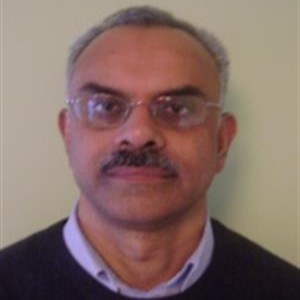
Ricardo Pedro Lopes Martins de Mendes Ribeiro serves as an Assistant Professor in the Department of Physics at the School of Sciences, University of Minho, with his office located in room 06.01.17.18 on the Gualtar campus. His research centers on Theoretical Solid State Physics, specializing in two-dimensional materials such as graphene. Key areas include quantum materials characterization and computational modeling via Density Functional Theory (DFT), reflecting a strong focus on emergent electronic properties in nanoscale systems.
Josephine Lübeck serves as a Researcher within the Section for Environmental Chemistry and Physics at the University of Copenhagen's Department of Plant and Environmental Sciences, Faculty of Science. Holding a Ph.D. in Environmental Sciences (awarded 2020), she maintains active research collaborations with the University of Copenhagen and international institutions as evidenced by her co-authorship network spanning Denmark, Italy, and the Netherlands. Her research expertise centers on advanced analytical methodologies for environmental contaminant characterization, with particular emphasis on non-target screening techniques, supercritical fluid chromatography, and high-resolution mass spectrometry applications. Dr. Lübeck specializes in developing complementary analytical platforms for identifying organic pollutants in complex matrices including urban sediments, sewage sludge, and bio-oils, with recent work focusing on circular economy applications for waste-to-energy conversion. Analysis of her publication record (2016-2025) reveals an evolving research trajectory from fundamental pollutant source apportionment toward innovative methodological developments for renewable energy feedstocks. Her 2023-2025 work demonstrates increasing focus on sewage sludge pyrolysis biocrude analysis and non-target screening prioritization strategies, reflecting growing interdisciplinary connections between environmental chemistry and sustainable engineering. Dr. Lübeck maintains active research collaborations with Professor Jan H. Christensen's group at the University of Copenhagen and international partners including researchers from the University of Amsterdam and University of Campinas. Her work has generated significant academic engagement with 30+ Mendeley readers per recent publication and social media mentions across Bluesky and X platforms.
Associate Professor Rey Chin is affiliated with the University of Adelaide's School of Electrical and Mechanical Engineering, Department of Mechanical Engineering. He specializes in fluid mechanics, turbulence, and computational fluid dynamics, with a focus on flow control, multiphase flows, and aerospace applications. Research Interests Hypersonic flows and jet dynamics in crossflow environments Rough wall turbulence and surface roughness effects Wind turbine wake dynamics and renewable energy systems Computational modeling of particle-laden flows and heat transfer Recent publications emphasize advanced turbulence modeling, flow control mechanisms, and experimental investigations in aerodynamics. He actively supervises PhD candidates in hypersonic flows, coronary blood flow analysis, UAV dynamics, and multiphase flow systems. Key research trends include integrating machine learning with fluid dynamics simulations and exploring passive flow control strategies for drag reduction. His work bridges computational modeling with experimental validation, particularly in high-Reynolds-number flows and biomedical applications like coronary artery hemodynamics.
Dr. Michael Woerner is the Head of Department C3 "Femtosecond Spectroscopy on Solids" and Coordinator of Projects 3.2 and 3.3 at the Max Born Institute in Berlin. His research focuses on ultrafast and nonlinear phenomena in condensed matter, including solids, nanostructures, and transient structural dynamics using THz to hard X-ray techniques. He holds a PhD from TU Munich (1991) and a Habilitation from Humboldt University Berlin (1999). His postdoctoral work spanned TU Munich (1991–1993), the Max Born Institute (1993–1996), and Bell Laboratories (1997). Research Interests: Woerner specializes in femtosecond spectroscopy of solids, two-dimensional THz spectroscopy, and X-ray absorption experiments. His work explores nonequilibrium dynamics of excitations (e.g., electrons, spins, phonons) and ultrafast structural changes in materials like InSb and YBa 2 Cu 3 O 7−δ . Recent highlights include studies on quantum coherence in solids and amplification of high-frequency sound waves. Publications (select): His 1990s work includes seminal papers on femtosecond infrared pulse generation, exciton dynamics in quantum wells, and plasma oscillations in semiconductors. Key contributions address coherence properties and ultrafast heating mechanisms in nanoscale materials.
Bert Zwart is a Professor at Technische Universiteit Eindhoven and holds a Scientific Staff Member position at Centrum Wiskunde & Informatica (CWI), Amsterdam. He leads research groups in stochastic systems and optimization, with expertise in queueing theory, large deviations, and stochastic networks. His work bridges theoretical probability with applications in power systems, operations research, and telecommunications. Zwart has been awarded prestigious honors including the Dantzig Prize (2015), Erlang Prize (2008), and IBM Faculty Award (2008/2009). His research focuses on extreme-value analysis, heavy-tailed processes, and stochastic modeling of complex systems. Notable contributions include studies on fork-join queues, power flow dynamics, and random graph structures. Grants: Led or co-led multiple NWO-funded projects, including a €1.5M VICI grant (2015) for rare event research and a €420K TOP program grant for two-dimensional queueing models (2014–2018). Teaching: Recently taught courses such as Stochastic Decision Theory and Asymptotic Methods in Queueing Theory at TU Eindhoven. Labs/Teams: Active in CWI’s Stochastics group and collaborates with academic/industry partners like Shell and VU University. His recent articles analyze tail behaviors in fork-join systems, power grid optimization under stochastic loads, and dynamic random graph structures. Research emphasizes bridging theoretical insights with practical applications in high-reliability systems.
Jingyi Jessica Li is a Professor at the University of California Los Angeles (UCLA), holding joint appointments in the Departments of Statistics and Data Science, Human Genetics, Computational Medicine, and Biostatistics. Her research focuses on developing statistical and computational methods for analyzing high-throughput genomic data, with applications in transcriptomics, single-cell analysis, and epigenetics. She earned her B.S. in Biological Sciences from Tsinghua University (2007) and her Ph.D. in Biostatistics from UC Berkeley (2013). Her work emphasizes methodological advancements in bioinformatics, including tools for single-cell RNA-seq analysis (e.g., scDesign, scImpute), contamination detection (scCDC), and differential expression (PseudotimeDE). She has contributed significantly to understanding transcriptional regulation, epigenetic mechanisms, and translational control in biological systems. Research Themes: Single-cell genomics, statistical methodology, computational biology, epigenomics, and systems biology Labs/Teams: jsb_ucla Lab Dr. Li has received numerous accolades, including the COPSS Emerging Leader Award (2023), ISCB Overton Prize (2023), and a Radcliffe Fellowship (2022–2023). Her work bridges statistical rigor and biological insight, addressing challenges in large-scale genomic data interpretation.
Hagen Neidhardt is a Research Fellow at the Weierstrass Institute for Applied Analysis and Stochastics (WIAS), Berlin. His research focuses on advanced mathematical physics topics including quantum systems, operator theory, and partial differential equations. He specializes in non-autonomous Cauchy problems, scattering theory, and spectral analysis of operators in quantum mechanics. Neidhardt's work addresses theoretical challenges in mathematical physics, such as Trotter product formulas, boundary triples, and perturbation determinants. His contributions span functional analysis applications to quantum transport, nanowire heterostructures, and spin-boson Hamiltonians. Recent studies include light emitting-absorbing quantum dot devices and non-equilibrium steady states in open quantum systems. Collaborations with institutions like Humboldt University and contributions to WIAS research groups (e.g., Partial Differential Equations, Laser Dynamics) highlight his role in interdisciplinary mathematical research. His publications explore operator extensions, trace formulas, and mathematical models for semiconductor devices.
Mark Saffman is the Johannes Rydberg Professor in the Department of Physics at the University of Wisconsin–Madison , and directs the Wisconsin Quantum Institute . His research focuses on quantum computing with neutral atoms, quantum optics, and entanglement, leveraging atomic physics principles to advance scalable quantum systems. He leads a lab developing neutral atom quantum processors with applications in quantum algorithms, error correction, and hybrid quantum networks. Key research areas include Rydberg atom arrays , optical trap engineering , and quantum gate optimization , with recent work addressing challenges in qubit connectivity, fault tolerance, and multi-species atom manipulation. His lab designs optical systems for large-scale qubit control, including passive optical masks and acousto-optic beam steering. Funding sources include the NSF, Department of Energy, and private quantum tech initiatives. Dr. Saffman collaborates with industry partners to transition academic breakthroughs into practical quantum devices. His group emphasizes interdisciplinary approaches, integrating atomic physics, optics, and computer science to tackle quantum computing bottlenecks. The lab’s innovations include novel qubit readout techniques, entanglement generation protocols, and scalable architectures for neutral atom arrays.
Prof. Klaus Reimann is a leading researcher at the Max Born Institute for Nonlinear Optics and Short Pulse Spectroscopy , specializing in the Femtosecond Spectroscopy of Solids department. His work focuses on ultrafast phenomena, terahertz spectroscopy, and nonlinear dynamics in condensed matter and semiconductors. Key research interests include solvated electrons, coherent phonon dynamics, and quantum pathways in materials like bismuth, boron nitride, and crystalline systems. He has pioneered techniques in phase-resolved two-dimensional spectroscopy and time-resolved x-ray diffraction to study ultrafast charge and lattice motions. Recent studies involve nonperturbative terahertz excitations, symmetry reduction in bismuth, and soft-mode dynamics in ionic crystals. His contributions span from fundamental physics to applied photonics, with a focus on high-field effects and coherent energy transport. Collaborations include work on quantum cascade lasers and metasurface-enhanced phonon amplification. No academic awards are explicitly listed, but his extensive publication record reflects high scientific impact. Advising roles and student collaborations are not detailed in available texts. His group operates within advanced facilities at the Max Born Institute, leveraging femtosecond laser systems and cutting-edge spectroscopic tools. Current projects explore terahertz-driven polaron oscillations in liquids and anharmonic phonon couplings in layered materials.
Assoc. Prof. Andrew Busch is the Head of the School of Engineering and Built Environment at Griffith University since 2024. With over two decades of academic experience, he specializes in machine vision for agricultural applications , medical imaging , human movement analysis , and marine science engineering . His research has secured over $14M in funding (including $6M from ARC and $7M from industry partners) and spans collaborations across disciplines. Education: PhD, Queensland University of Technology (2004) BEng (Electrical and Electronic), Queensland University of Technology (1998) Bachelor of Information Technology, Queensland University of Technology (1998) Andrew's research bridges computer vision and artificial intelligence with applications in smart farming , medical device development , and marine ecosystem monitoring . Recent works focus on sugarcane quality automation, retinal vessel delineation, and AI-driven energy systems for buildings. His 15 most recent publications (2025-2002) highlight trends in: Agricultural engineering (sugarcane billet analysis, strawberry grading) Medical imaging (retinal vasculature, speech enhancement) Energy systems (smart buildings, digital twins) Education innovation (industry placements, curriculum design) Scientific Awards: 2021: Excellence in Teaching - Group Educational Leadership Award (Highly Commended) Andrew has supervised 13 doctoral students across projects in aquaculture automation, sugarcane AI systems, and medical diagnostics. He chairs conferences like AAEE 2023 and leads programs such as the Bachelor of Advanced Engineering (Honours) . Labs & Teams: He collaborates with the Institute for Integrated and Intelligent Systems (2018-2024) and directs projects funded by Sugar Research Australia , ARC , and DFAT .
Gábor Hetyei is a Professor of Mathematics at the University of North Carolina at Charlotte (UNCC), part of the Department of Mathematics & Statistics. His academic career spans over two decades, with roles including Assistant Professor (2000-2006), Associate Professor (2006-2014), and Professor (2014–present). He previously held positions at the University of Kansas, MIT, and the Mathematical Sciences Research Institute (MSRI). Education PhD in Mathematics, MIT (1994), advised by Richard P. Stanley. Master of Science (with honors) in Mathematics, Eötvös University Budapest (1988). Research Interests Hetyei's work focuses on topological, enumerative, polyhedral, and algebraic combinatorics , with contributions to knot theory, poset topology, hypermap theory, and combinatorial geometry. His research bridges algebraic structures and geometric/topological insights, often involving combinatorial objects like permutations, partitions, and polytopes. Recent Trends in Publications His recent work emphasizes knot invariants (e.g., braid indices of pretzel links), combinatorial geometry (hypermonopoles, triangulations), and algebraic combinatorics (Tchebyshev transforms, Catalan-Spitzer permutations). These studies often intersect with topological graph theory and geometric representation theory. Awards and Grants Simons Foundation Collaboration Grants (2012–2024). National Security Agency Grant for combinatorial research (2007–2009). International recognition including a silver medal at the 1983 International Mathematical Olympiad. Advising and Professional Contributions Advised doctoral student Sarah Birdsong (2013) on cubical complex invariants. Active in organizing the Algebra, Combinatorics, and Number Theory Seminar at UNCC. Authored over 60 refereed articles and conference proceedings, with contributions to journals like Discrete & Computational Geometry and European Journal of Combinatorics.
Rakesh is a Professor in the Department of Mathematical Sciences at the University of Delaware (UD), part of the College of Arts & Sciences. He holds a BA(Hons) and MA from the University of Delhi, India, and a PhD from Cornell University, USA. His research focuses on inverse problems for hyperbolic partial differential equations (PDEs), including the Fixed Angle Scattering Problem, Backscattering Problem, and Inversion of the Spherical Mean Value Operator. He has also contributed to dynamical systems, geometry, probability, and economics. Education: BA(Hons) in Mathematics, University of Delhi MA in Mathematics, University of Delhi PhD in Mathematics, Cornell University His research emphasizes theoretical and applied aspects of inverse problems, such as uniqueness, stability, and inversion techniques for hyperbolic PDEs. Recent work includes contributions to formally determined inverse problems in Lorentzian and Riemannian geometries. Earlier research included studies on the spherical mean value operator and one-dimensional hyperbolic inverse problems. His publications span over 30 years, addressing topics like wave equation inverse problems, dynamic pricing models, and spectral analysis of Brownian motion. He has been on sabbatical for 2025. Rakesh collaborates internationally, with notable co-authors including Mikko Salo, Gunther Uhlmann, and Paul Sacks. His work bridges pure and applied mathematics, with applications in physics, engineering, and economics.
Dr. Stephen Tierney is a Senior Lecturer in Business Analytics at the Sydney Business School, University of Sydney . His research focuses on machine learning , computer vision , image processing , and recommendation systems , with contributions to subspace clustering, data visualization, and image restoration. He advises two current PhD students: Pengqing SHI (on scalable graph neural networks) and Widhiyo SUDIYONO (on stock market prediction via deep learning). Recent work includes policy-relevant studies on NSW teachers' pay trends and labor market skill dynamics. His publications span top-tier journals like Signal Processing and conferences such as IEEE CVPR, covering topics ranging from efficient subspace clustering algorithms to image fusion techniques in remote sensing. Key contributions include robust functional manifold clustering (2021) and low-rank sequential subspace clustering (2015). Interdisciplinary projects merge business analytics with technical domains like computer vision and signal processing.
Michael Boutsikas is an Associate Professor in the Department of Statistics and Insurance Science at the University of Piraeus. His academic career includes roles such as teaching Statistics II: Hypothesis Testing, Reliability Theory, and Stochastic Finance. He holds a PhD in Applied Probability from the University of Athens (2000), an MSc in Statistics and Operations Research (1998), and a Mathematics Diploma (1995). His research focuses on stochastic orders, probability metrics, reliability theory, and extreme value theory. Key contributions include work on scan statistics, compound Poisson approximation, and risk models. Recent studies address surplus processes in jump diffusion models and exit time analysis under barrier conditions. Teaching spans courses like Multivariate Statistical Analysis and Statistical Software Packages. His work often intersects actuarial science and financial modeling, with applications in insurance mathematics and risk management. Office hours are arranged via email.
Benjamin Castellaz is a Research Assistant and doctoral candidate at the Institute for Stochastics and Applications, University of Stuttgart, specializing in mathematical modeling of cellular systems with emphasis on inverse uncertainty quantification and stochastic inverse problems. His academic journey includes a B.Sc. and M.Sc. in Simulation Technology from the University of Stuttgart (with a year at the University of Toronto), followed by an MSc in Mathematical Modelling and Scientific Computing from the University of Oxford. Doctoral Studies (2024-present): University of Stuttgart MSc Mathematical Modelling and Scientific Computing (2023-2024): University of Oxford M.Sc. Simulation Technology (2020-2023): University of Stuttgart (including University of Toronto) B.Sc. Simulation Technology (2017-2020): University of Stuttgart Castellaz's research integrates stochastic modeling, inverse problems, and uncertainty quantification to address challenges in systems biology. His work develops computational frameworks for parameter inference in high-variability biological data, contributing to the understanding of cellular dynamics through rigorous mathematical approaches. His two recent publications (2022, 2024) in computational science and bioinformatics journals demonstrate a cohesive research trajectory focused on advancing methods for stochastic inverse problems, with applications in modeling biological systems. No scientific awards were listed in the available information. He has served as a Teaching Assistant for Mathematical Statistics and Systems Theory in Systems Biology courses. There is no mention of research grants or student advising. Castellaz is affiliated with the Institute for Stochastics and Applications at the University of Stuttgart, but specific laboratory or team structures were not detailed.