Dr. Yogambha Ramaswamy is a Senior Lecturer in the School of Biomedical Engineering at The University of Sydney and a member of the Sydney Nano Institute. She holds a Master’s in Biotechnology from the University of Queensland and a PhD in Biomedical Engineering from the University of Sydney (2009). Her postdoctoral career began as a Vice-Chancellor’s Postdoctoral Research Fellow at the University of New South Wales, followed by a Peter Doherty Early Career Fellowship in 2013 before joining the University of Sydney in 2015. Dr. Ramaswamy’s research focuses on biomaterials, tissue engineering, and mechanobiology, with a particular emphasis on developing calcium silicate-based ceramics and biopolymers for orthopedic and regenerative applications. Her recent work explores the role of physical cues in modulating stem and cancer cell behavior. She teaches courses such as AMME1961 (Introduction to Biomedical Engineering B) and AMME5962 (Introduction to Mechanobiology). Her research has been supported by grants including the NHMRC Early Career Fellowship and collaborations with institutions like the CSIR-Indian Institute of Chemical Technology and the University of Otago. Her publications span biomaterials, nanotechnology, and mechanobiology, with recent work addressing atherosclerosis, hydrogel design, and nanomedicine. She currently supervises PhD students Frank (biomaterials) and Alexander (atherosclerosis research).
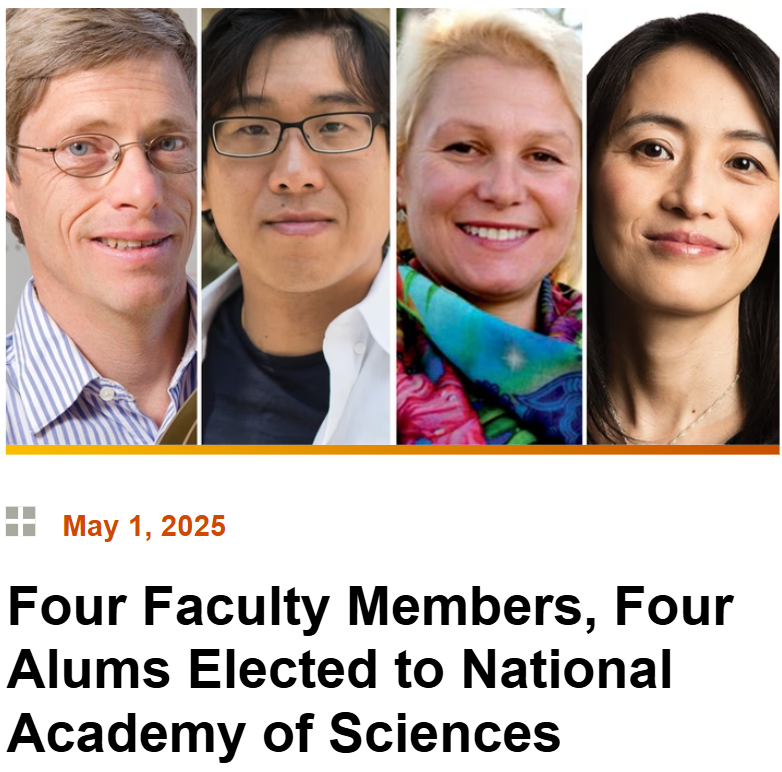
Julia R. Greer serves as the Ruben F. and Donna Mettler Professor of Materials Science, Mechanics and Medical Engineering at the California Institute of Technology (Caltech), where she also holds the position of Executive Officer for Applied Physics and Materials Science since 2025. She earned her B.S. from MIT (1997) and M.S./Ph.D. from Stanford University (2000/2005), joining Caltech as Assistant Professor in 2007, promoted to Professor in 2013, and appointed to her current named professorship in 2019. Her research spans mechanics of hierarchical architectures , nanomaterials , and additive manufacturing , with significant contributions to energy storage systems and biomedical materials . Key focus areas include nano-scale mechanical properties, in-situ deformation analysis, and development of novel fabrication techniques for micro-architected materials. Her group pioneered hydrogel infusion additive manufacturing for metals and multiphoton 3D lithography standards. Analysis of recent publications reveals strong emphasis on solid-state battery interfaces (2025), bioresorbable microrobots (2024), and AI-enabled material design (2024), demonstrating cross-disciplinary impact across energy, healthcare, and quantum technologies. Her work consistently bridges fundamental nanomechanics with practical applications in energy storage and medical devices. 2024 ASME Nadai Medal 2024 SES A.C. Eringen Medal Elected to National Academy of Sciences (2025) Fletcher Jones Foundation Director (2019-2025) Professor Greer has advised over 40 PhD students including Seola Lee (2025) and Wenxin Zhang (2025), with research funded by collaborations spanning MIT, UCSF, Purdue, and ETH Zurich. Her group maintains active projects in lightweight nanoarchitected materials for impact absorption, electroactive polymers for braille devices, and 3D interdigitated solid-state batteries. Current leadership includes Editor-in-Chief of the Journal of Applied Physics (2024-) and direction of Caltech's Materials Science department.
Yayue Pan is a Professor at the Department of Mechanical and Industrial Engineering, University of Illinois Chicago (UIC) , and serves as the Director of NASA MIRO Center for In-Space Manufacturing: Recycling and Regolith Processing (CISM-R2) . Her research focuses on advancing Additive Manufacturing (AM) technologies for applications in biomedical engineering , energy storage , and smart structures . Ph.D., Industrial and Systems Engineering, University of Southern California (2014) M.S., Mechanical Manufacturing and Automation, Zhejiang University, China (2010) B.S., Industrial Engineering, Zhejiang University of Technology, China (2007) Her work addresses technical challenges in AM such as multi-material printing , multi-scale fabrication , and field-assisted processes . Notable projects include: Development of electrostatically-assisted direct ink writing (eDIW) for high-speed, high-resolution printing Continuous projection stereolithography for rapid solid object manufacturing Acoustic field-assisted particle patterning for smart composites Light-curable hydrogels for corneal repair applications Her 15 most recent publications (2022–2025) span topics in: Multi-material AM (conductive polymers, hierarchical composites) Biomedical applications (soft robotics, corneal repair) Energy components (battery electrolytes, supercapacitors) Field-assisted processes (acoustic, electrostatic, magnetic) Scientific Awards : 2024 ASME Chao and Trigger Young Manufacturing Engineer Award 2022 UIC Researcher of the Year Rising Star Award 2020 ASME CIE TC Leadership Award 2019 UIC Outstanding Teaching Award 2017 SME Outstanding Young Manufacturing Engineer Award NSF REU Supplements (2023–2024) Advising : Mentored 24+ graduate/undergraduate researchers, including 17 NASA/GPIP interns. Former advisees hold academic positions at University at Buffalo and University of North Carolina at Charlotte , and industry roles at Apple , GE Healthcare , and ANSYS . Grants : Recipient of a $4.65M NASA grant and multiple NSF awards. Collaborations include Northwestern University, University of Michigan, and NASA centers.
H. Jerry Qi is a Professor in the Department of Mechanical Engineering at the Georgia Institute of Technology. He specializes in finite deformation multiphysics modeling of soft active materials, with a focus on shape memory polymers, 4D printing, and material recycling. His research integrates experimental and computational approaches to advance additive manufacturing technologies. Education: Sc.D., Massachusetts Institute of Technology, 2003 Ph.D., Tsinghua University, China, 1999 B.S., Tsinghua University, China, 1994 Research Interests: Dr. Qi's work spans 4D printing of active materials, mechanics in 3D printing, and sustainable polymer processing. His group develops hybrid printing methods and recyclable thermosetting polymers, collaborating with institutions like SUTD and AFRL. Key areas include smart material design, photomechanical experiments, and finite element modeling. Scientific Awards: ASME Fellow (2015) Woodruff Faculty Fellow (2015) J. T. Oden Faculty Fellowship (2012) NSF Career Award (2007) Advising & Grants: Dr. Qi actively seeks undergraduate, PhD, and postdoc researchers. His projects are funded by NSF, AFOSR, and industry partnerships. He leads a research group focused on advancing active materials and sustainable manufacturing. Labs & Teams: His lab integrates computational modeling, experimental mechanics, and additive manufacturing to create innovative materials and structures for applications in aerospace, biomedical, and environmental engineering.
Dr. Parth Chansoria is a Lecturer at the Department of Health Sciences and Technology at ETH Zürich, where he leads biofabrication research within the Tissue Engineering and Biofabrication (TEB) group. His work focuses on structured light technology for regenerative medicine applications, including in vivo bioprinting and microgravity-based tissue engineering. He holds Ambizione and Spark grants from the Swiss National Science Foundation and has pioneered innovations in light-guided biofabrication, collagen-based resins, and anisotropic tissue design. Research domains include: Filamented light biofabrication for aligned tissues Minimally invasive light-based in vivo bioprinting Musculoskeletal tissue engineering in microgravity Isotonic collagen-based photocrosslinkable resins He has secured over 6 patents and received prestigious awards including the ISBF Early Career Investigator Award (2022), Marie Curie Actions Fellowship (2021), and SME 30 Under 30 recognition (2021). His interdisciplinary research bridges bioengineering, materials science, and clinical applications. Key collaborations include projects at UNC Chapel Hill (USA) and NC State (USA), where he developed biomimetic patches for dynamic organ pathologies and ultrasound-assisted cell patterning. His lab explores novel bioinks, hybrid fabrication techniques, and translational applications in regenerative medicine.
Renaud BACHELOT is a full Professor of Physics at the University of Technology of Troyes (UTT) since 1996. He leads the Light, Nanomaterials, and Nanotechnologies (L2n) laboratory and directs the Graduate School 'Nano-optics & Nanophotonics'. He holds adjunct professorships at the University of Paris-Saclay (LuMIn Lab) and Shanghai University (1000-talents Grant). His research focuses on nano-optics, plasmonics, and hybrid nanoplasmonics, with expertise in photopolymerization and plasmon-driven chemical processes. Education: PhD and graduate studies at Université Paris-Cité and ESPCI Paris Research Interests: BACHELOT’s work spans nanoscale light-matter interactions, including plasmonic nanostructures, photopolymerization-based fabrication, and applications in optical sensing and quantum photonics. His lab employs advanced techniques like near-field scanning optical microscopy (NSOM) and two-photon polymerization. Grants & Projects: ANR-PIA3 STRONG-NANO (2023-2026) ANR ADVANSPEC (2022-2025) International collaborations with NTU Singapore and Argonne National Lab Labs & Teams: Directs L2n (CNRS-UMR 7076) and collaborates across interdisciplinary platforms like InSyTE and LIST3N. His team develops novel hybrid materials and nanophotonic devices.
Ulrich B. Wiesner is the Spencer T. Olin Professor of Engineering at Cornell University since 2008, with a career spanning over two decades in polymer-inorganic hybrid nanomaterials. His work bridges materials science, chemistry, and biomedical engineering, focusing on block copolymer self-assembly for multifunctional materials. Education: Diploma in Chemistry (University of Mainz, 1988), Ph.D. in Physical Chemistry (University of Mainz & MPI-P, 1991) Research Interests center on combining soft polymeric materials with inorganic/solid-state chemistry to create hierarchical hybrid materials. Key areas include: Energy conversion and storage via mesoporous oxides/non-oxides Clean water technologies through advanced materials Nanomedicine applications in cancer therapy and bioimaging Development of C-dots: ultrasmall fluorescent silica nanoparticles Structure-directing agents from dendron architectures His article trends reveal a focus on asymmetric porous structures (2024-2025), 3D-printed quantum materials (2024), and biomedical applications of C-dots for super-resolution microscopy and targeted drug delivery (2023-2025). Scientific Awards include: National Academy of Inventors Fellow (2024) "Ambassadeur pour la Chimie Française" (2019) Arthur K. Doolittle Award (2016) ACS PMSE Fellow (2015) NSF Creativity Award (2008) Cornell Teaching Excellence Award (2005) IBM Faculty Partnership Award (2001) Carl Duisberg Memorial Award (1999) As co-director of the MSKCC-Cornell Center for Translation of Cancer Nanomedicine (2015-present), he leads interdisciplinary teams developing clinical nanoparticle probes. His work has produced >250 peer-reviewed publications and numerous patents, with recent breakthroughs in antibody fragment-nanoparticle therapeutics for gastric cancer eradication.
Professor Craig Priest is a faculty member at the University of South Australia within UniSA STEM , focusing on microfluidics , optofluidics , and interfacial science applications. He serves as a Research Degree Supervisor and has contributed to advancements in sensor technology, biomedical engineering, and materials science. Key Research Themes : Development of micropillar array-integrated sensors for rapid vapor detection 3D-printed microstructures to mitigate matrix effects in electrochemical sensing Wettability engineering for passive fluid control in lab-on-a-chip devices PDMS-PS bonding protocols enabling robust cell culture platforms like Heart-Dyno Collaborations & Grants : Collaborated with Queensland University of Technology and QIMR Berghofer on biomedical devices Involved in ARC grants: ARC IH150100028 and ARC DP1094337 Industry partnerships with BHP Billiton and ULVAC Inc. Academic Contributions : Published in IEEE Sensors , APL Materials , and ACS Applied Materials & Interfaces Active in microfluidic device design for biomedical and environmental applications Developed evaporation-driven fluid transport systems for portable biosensing platforms
Professor John G Rarity serves as Professor of Optical Communication Systems within the School of Electrical, Electronic and Mechanical Engineering at the University of Bristol, where he leads research at QET Labs and the Bristol Quantum Information Institute. His work spans quantum communication, photonics, and quantum information systems with significant contributions to quantum cryptography and sensing. Research focuses on quantum communication networks , quantum cryptography , and quantum sensing applications . His fingerprint reveals dominant expertise in Quantum Dot Physics (100%), Photonics Physics (94%), Photonic Crystal Material Science (60%), and Quantum Cryptography (48%). Current work emphasizes entanglement distribution, counterfactual communication protocols, and quantum-enhanced sensing for environmental monitoring. Recent publications (2025) demonstrate leadership in multi-node quantum networks, deterministic teleportation, and methane sensing via quantum techniques. His 438 research outputs show consistent focus on practical quantum systems integration, particularly in overcoming classical-quantum channel coexistence challenges in fiber networks. Principal Investigator for 75 projects including active EPSRC grants EP/N00762X/1, EP/R022054/1, and EP/R023018/1 Supervised 36 research students Developed quantum communication systems for CubeSat deployment Pioneered quantum sensing applications for greenhouse gas detection Rarity actively collaborates across international quantum research networks, with recent work involving hollow-core fiber quantum channels, NV-center quantum sensors, and photonic integrated circuits for scalable quantum systems. His lab maintains strong industry partnerships with BT Research and optical communications firms.
Dr. Jang Ah Kim is a Lecturer at the Hamlyn Centre, Department of Mechanical Engineering, Imperial College London. She leads the Micro-Nano Innovation Lab and focuses on developing micro/nanostructured biomedical sensors and robotic strategies for diagnostics and minimally invasive therapies. Her work integrates light-matter interaction principles to innovate in areas like localized drug delivery and cellular surgery. Education: BSc (2011) and PhD (2017) in Mechanical Engineering/Nano Engineering from Sungkyunkwan University, South Korea. Prior roles include Research Associate positions at Imperial College London's Department of Computing and Department of Materials, where she specialized in fiber-optic biosensors and SERS-based diagnostics. Research Interests: Biomedical sensing, nanophotonics, medical robotics, diagnostics (biosensors), and nanomaterial applications. Key projects include plasmonic sensors for infection screening, bacterial swarming manipulation, and advanced fabrication techniques like two-photon polymerization. Lab Affiliations: Hamlyn Centre, Institute of Global Health Innovation. Her work bridges engineering and medicine to address unmet clinical needs in precision diagnostics and surgical robotics.
Professor Tobin J. Marks is the Vladimir N. Ipatieff Professor of Catalytic Chemistry, Professor of Materials Science and Engineering, Professor of Applied Physics, and Professor of Chemical and Biological Engineering at Northwestern University. He also serves as a Distinguished Adjunct Professor at Texas A&M Qatar University and is a Senior Fellow of the Hong Kong Institute for Advanced Study at City University of Hong Kong. Dr. Marks is a member of the US National Academy of Engineering, the US National Academy of Sciences, and a Fellow of the Royal Society of Chemistry, UK. Dr. Marks received his BSc in Chemistry from the University of Maryland in 1966 and his PhD in Inorganic Chemistry from MIT in 1970. His academic career at Northwestern began as an Assistant Professor of Chemistry in 1970, progressing to Associate Professor in 1974, Professor of Chemistry in 1978, Charles E. & Emma H. Morrison Professor of Chemistry from 1986-1999, Vladimir N. Ipatieff Professor of Catalytic Chemistry since 1999, Professor of Materials Science and Engineering since 1987, Professor of Applied Physics since 2009, and Professor of Chemical and Biological Engineering since 2017. Professor Marks' research spans numerous areas of chemistry and materials science. His work focuses on transition metal and f element organometallic chemistry, catalysis, vibrational spectroscopy, synthetic facsimiles of metalloprotein active sites, carcinostatic metal complexes, solid state chemistry and low-dimensional molecular metals, nonlinear optical materials, polymer chemistry, tetrahydroborate coordination chemistry, macrocycle coordination chemistry, molecular electro-optics, metal-organic chemical vapor deposition, polymerization catalysis, printed flexible electronics, solar energy, and transparent conductors. His research group consists of nearly 40 researchers working across four laboratories. Analysis of Professor Marks' recent publications reveals a strong focus on advanced materials for electronic and energy applications. His work spans organic electronics, flexible and stretchable devices, catalysis for sustainable chemistry, and novel materials characterization techniques. Key trends include the development of organic electrochemical transistors, high-efficiency organic solar cells, advanced catalysts for polymer recycling, and quantum materials for next-generation electronics. Professor Marks has received numerous prestigious awards throughout his career, including: US National Medal of Science American Chemical Society Joseph Priestley Medal Camille and Henry Dreyfus Prize in the Chemical Sciences Principe de Asturias Prize for Technical and Scientific Research US National Academy of Sciences Award in the Chemical Sciences Materials Research Society Von Hippel Award Harvey Prize in Science and Technology Karl Ziegler Prize from the German Chemical Society Professor Marks has mentored numerous students and postdoctoral researchers throughout his career, with his group currently consisting of nearly 40 researchers. He has received substantial research funding from multiple agencies including NSF, DOE, and DoD. His entrepreneurial spirit has led to the founding or co-founding of 15 startups, with technologies generating an estimated USD 100 billion in sales. Professor Marks leads several research teams focused on catalysis and organic electronic materials. His work has significant implications for sustainable chemistry, renewable energy, and next-generation electronic devices. He continues to be highly active in research, with numerous publications in 2025 demonstrating his ongoing scientific leadership.
Prof. Xiao-Hua Qin is an Assistant Professor in the Department of Health Sciences and Technology at ETH Zürich, leading the Biomaterials Engineering research team and co-leading the Laboratory for Bone Biomechanics. He specializes in creating biomaterials for tissue biomanufacturing and regenerative medicine, with a focus on miniaturized in vitro bone models for disease modeling and drug discovery. His work has been recognized by prestigious grants such as the ERC Starting Grant and SNSF NRP 79, and he co-leads editorial roles for Biomedical Materials . He teaches courses on engineering with living materials and multiscale bone biomechanics. His research emphasizes constructing 3D microenvironments to study bone physiology/pathology, with recent breakthroughs in hydrogel-based systems for cell network formation and organoid-on-chip tools. He has pioneered techniques like two-photon subtractive biofabrication and volumetric bioprinting. Qin's honors include Young Academy of Europe membership and multiple awards for innovative biomaterials and poster presentations. He mentors 6 PhD students and collaborates across disciplines, aiming to replace animal experiments with human organoid models (3Rs principle). His lab's innovations span biodegradable hydrogels, photoresponsive materials, and microscale 3D printing technologies.
Pietro MAGARO' is a researcher (Assistant Professor equivalent) in the Department of Mechanical, Energy and Management Engineering at the University of Calabria. His academic focus is in Mechanical Design and Machine Construction, with particular expertise in materials science and mechanical engineering applications. His research interests span several key areas in mechanical engineering and materials science: Mechanical characterization of engineering materials at micro and macro scales Verification and design of complex structures Shape memory alloys and their applications Additive manufacturing and laser processing technologies Fatigue analysis and fracture mechanics Tribology and wear mechanisms Dr. MAGARO's recent publication record demonstrates his active research in shape memory alloys (particularly NiTi), additive manufacturing, fatigue analysis, and advanced materials. His work often involves multi-scale approaches to material characterization and structural analysis, with applications ranging from automotive to oil&gas sectors. His research combines both experimental and computational methodologies to address complex mechanical engineering problems. Dr. MAGARO' teaches courses in Mechanics of Materials, Machine Design, and Machine Elements for both Mechanical Engineering and Management Engineering programs. His teaching reflects his research expertise in mechanical design and materials science.
Eva Blasco is an Associated Group Leader at the Functional Polymeric Materials Research Unit under the Institute of Nanotechnology at Karlsruhe Institute of Technology (KIT), with affiliations to the University of Heidelberg. Her work bridges 3D printing , polymer chemistry , and nanophotonics , focusing on light-driven material design. Her research centers on photochemically activated 3D printing inks , light-stabilized dynamic materials , and multi-photon lithography . She explores how two-color light absorption , alkoxyamine chemistry , and visible light post-processing enable adaptable microstructures. Key trends include 4D printing , biodegradable inks , and temperature/light-responsive systems . Blasco's publications highlight collaborations with institutions like KIT, University of Heidelberg, and international teams. Her work spans photonic metamaterials , bio-inspired 3D scaffolds , and subtractive laser lithography , often involving interdisciplinary applications of light in material science.
Professor Joanna Ortyl works at the Faculty of Chemical Engineering and Technology, Tadeusz Kościuszko Cracow University of Technology (Poland). She is also CEO and Co-owner of Photo HiTech Ltd., a company developing visible-light cationic photoinitiators since 2013. Her academic background includes: MSc in Plastics Technology (2007, Cracow University of Technology) PhD in Chemistry (2012, Cracow University of Technology) Habilitation in Chemical Engineering (2020, Cracow University of Technology) She has undertaken international research experiences including: Postdoctoral research at Münster University of Applied Sciences (Germany, 2012-2013) Visiting Professor at Université de Haute-Alsace (France, 2015, 2016, 2019) Master of Business Economics (Haas School of Business, UC Berkeley, 2013) Her research focuses on practical applications of photochemistry in polymerization processes, including: Synthesis of visible-light photoinitiators for cationic polymerization Development of fluorescent probes for polymerization monitoring Two-interpenetrating polymer networks (IPN) through hybrid mechanisms 3D-VAT printing materials and technologies She holds over 30 patents and has received more than 50 scientific awards. Her grant portfolio includes: LIDER 471/L-4/2012 (2012-2016) UMO-2012/07/D/ST5/02300 (2012-2015) TEAM TECH/2016-2/15 (2018-2022) TANGO 2 - DZP/TANGO2/391/2016 (2017-2021) Her work bridges organic chemistry, materials science, and industrial applications in 3D printing and polymer coatings.