- Active Galactic Nuclei
- Quasars
- Galaxy Evolution
- +۷ مورد دیگر
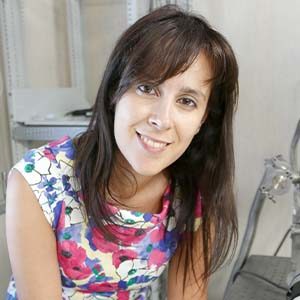
Julia Dusk Kennefick serves as Associate Professor and Department Chair in the Physics Department at the University of Arkansas' College of Arts and Sciences. A native Arkansan and University of Arkansas alumnus, she returned to her alma mater in 2003 after completing her Ph.D. at Caltech and postdoctoral work at Ohio State University and Oxford University. Education: B.S. in Physics (1989), University of Arkansas Ph.D. in Physics (1995), California Institute of Technology Research Focus: Dr. Kennefick's work centers on observational astronomy with emphasis on active galactic nuclei (AGN) and quasars . She investigates AGN-host galaxy relationships, conducts deep-space surveys for high-redshift quasars, and develops methods to measure supermassive black hole masses through spiral arm pitch angles. Her recent expansion into studying galaxy outskirts for dwarf galaxies and gamma ray bursts demonstrates her evolving research trajectory across extragalactic phenomena. Publication Trends: Analysis of her 15 most recent publications reveals a dominant focus on the black hole-galaxy connection , particularly how spiral structure metrics correlate with central black hole masses. Her methodological innovations in pitch angle measurement using Fourier decomposition have become influential, while her dual-AGN identification work addresses critical questions about galaxy mergers. The consistent use of multi-wavelength data (optical, infrared, UV) from global observatories underscores her observational approach. Scientific Recognition: Fulbright College Master Advisor Award (2023) Robert C. and Sandra Connor Endowed Faculty Fellowship (2007) National Science Foundation ADVANCE Fellowship (2004-2007) National Physical Science Consortium Graduate Fellowship (1989-1995) Kingsley Foundation Graduate Fellowship, Caltech (1992) Mentorship & Resources: As Master Advisor Award recipient, Dr. Kennefick actively guides student research including gamma ray burst studies. Her observational program leverages major facilities like Hubble Space Telescope, Palomar Observatory, and international telescopes across Chile, Hawaii, and Australia. Fellowship support from NSF and Caltech provided critical early-career resources for her survey work. Collaborative Framework: Leading the Arkansas Center for Space and Planetary Sciences, she coordinates observational campaigns involving international teams. Her research group frequently collaborates with her husband (also Physics Professor at UARK) and institutions including Ohio State and Oxford, while utilizing data from space telescopes like Spitzer and GALEX for multi-spectral analysis.