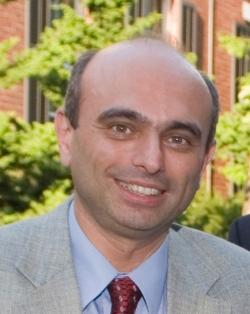
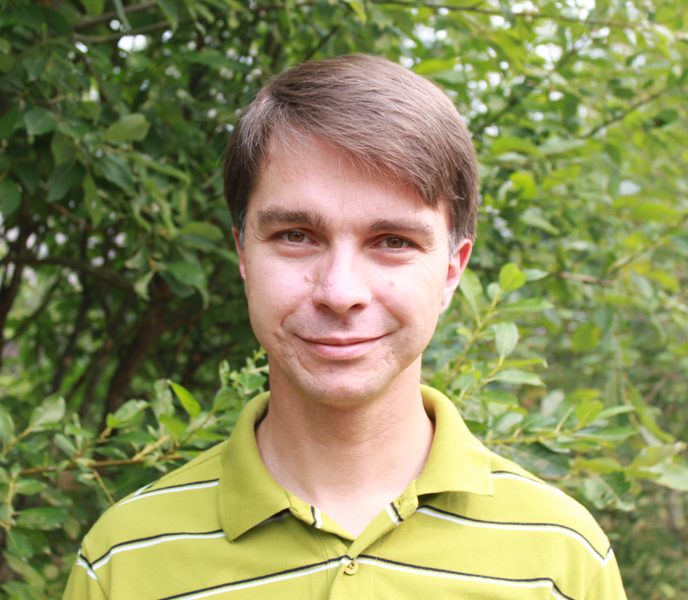
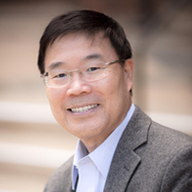
Roberto Tamassia is the James A. and Julie N. Brown Professor of Computer Science and Chair of the Computer Science Department at Brown University. He is also Director of Brown's Center for Geometric Computing. His research focuses on information security, cryptography, algorithms, graph drawing, and computational geometry. He has authored six textbooks and over 250 publications, and his work has been funded by ARO, DARPA, NATO, NSF, and industry sponsors. Education: PhD in Electrical and Computer Engineering from the University of Illinois at Urbana-Champaign. Research Interests: Cryptography and Secure Systems Algorithm Design and Optimization Graph Drawing and Geometric Computing Encrypted Database Security Awards and Honors: IEEE Fellow Technical Achievement Award from IEEE Computer Society Listed among the 360 most cited computer science authors by ISI Grants and Funding: His research has been supported by major agencies and organizations including ARO, DARPA, and NSF, as well as industry partnerships. Labs and Affiliations: Directs Brown's Center for Geometric Computing, a hub for interdisciplinary research in computational geometry and graph algorithms.
M. Tamer Özsu is a University Professor of Computer Science at the David R. Cheriton School of Computer Science, University of Waterloo, where he holds a Cheriton Faculty Fellowship. He also serves as a Distinguished Visiting Professor at Tsinghua University and is the Founding Director of Waterloo-Huawei Joint Innovation Laboratory since 2018. His extensive contributions to computing have earned him numerous prestigious awards including the 2024 ACM Presidential Award for long-standing and significant contributions to the computing field. Professor Özsu's research focuses on data engineering aspects of data science, particularly addressing data management issues with two main foci: management of non-traditional data and large-scale distributed data management. He is renowned for his seminal book "Principles of Distributed Database Systems" (co-authored with Patrick Valduriez), now in its fourth edition, and the "Encyclopedia of Database Systems" (co-edited with Ling Liu), in its second edition. His work bridges theoretical foundations with practical system implementations, targeting grand societal challenges through computational approaches. His recent publications reveal a strong trend toward graph analytics, streaming data processing, and the integration of large language models with vector data management. The research shows increasing focus on GPU-accelerated graph processing, RDF query optimization, and multimodal data analysis, reflecting the evolution of data management challenges in the era of big data and AI. His work continues to address fundamental challenges in distributed data systems while adapting to emerging technologies and application domains. Scientific Awards and Fellowships ACM Presidential Award (2024) IEEE TCDE Education Award (2024) IEEE Innovation in Societal Infrastructure Award (2022) CS Can | Info Can Lifetime Achievement Award (2018/2019) ACM SIGMOD Test-of-Time Award (2015) ACM SIGMOD Contributions Award (2006) The Ohio State University College of Engineering Distinguished Alumnus Award (2008) Fellow of the Royal Society of Canada Fellow of the American Association for the Advancement of Science (AAAS) Life Fellow of the Association for Computing Machinery (ACM) Life Fellow of the Institute of Electrical and Electronics Engineers (IEEE) Fellow of the Asia-Pacific Artificial Intelligence Association (AAIA) Elected member of the Science Academy, Türkiye Professor Özsu has been deeply involved in academic leadership and community building. As Founding Editor-in-Chief of ACM Books (2013-2019), he launched a series that by 2019 had published 28 major books with another 30 under contract. His service to ACM, particularly through SIGMOD, has been exemplary and widely recognized. He directs the Waterloo-Huawei Joint Innovation Laboratory, which focuses on cutting-edge research in data management and distributed systems, fostering strong industry-academia collaboration.
Dr. Mark Bissett is Reader in Nanomaterials at the University of Manchester's Department of Materials Engineering. He holds a PhD in Nanotechnology from Flinders University and was Research Assistant Professor at Kyushu University before joining Manchester. He directs the Advanced Nanomaterials Group focusing on 2D material applications. His research integrates graphene, carbon nanotubes, and transition metal dichalcogenides into electrochemical energy storage devices and polymer nanocomposites. Key areas include: Supercapacitor and battery electrode design Tribological coatings for industrial applications Multifunctional structural composites Publications span electrodeposition techniques, composite reinforcement strategies, and nanomaterial synthesis. Recent work shows strong emphasis on graphene-enhanced composites, MXene applications, and energy storage innovations. He teaches nanotechnology and composites courses, and leads the Nanotechnology unit coordination. Industrial collaborations include his role as CSO at MOLYMEM Limited. Laboratory facilities at the National Graphene Institute support his group's experimental work.
Stanislav Smirnov is a Professor at the University of Geneva and holds a part-time position at the Chebyshev Laboratory of St. Petersburg State University. A leading figure in mathematical physics, he works on probability, complex analysis, and dynamical systems, with significant contributions to conformal invariance in statistical mechanics models.
Fatih Ecevit is Full Professor of Mathematics at Boğaziçi University, serving as Vice Chair of the Mathematics Department. Former research associate at Max-Planck-Institut für Mathematik in den Naturwissenschaften, Leipzig (2005-2007). Research develops computational methods for high-frequency scattering problems, including: Boundary element methods for wave propagation Asymptotic analysis of scattering phenomena Galerkin formulations for integral equations Lattice sum evaluations in graph theory Principal investigator for TÜBİTAK-funded project: 'Hybrid integral equation methods for high-frequency scattering problems' (2017-2020). Teaches graduate and undergraduate courses in numerical analysis, partial differential equations, and real analysis.
David Damanik is the Robert L. Moody, Sr. Professor of Mathematics at Rice University, where he has established himself as a leading researcher in spectral theory, dynamical systems, and aperiodic order. His work bridges pure mathematics with mathematical physics, focusing on the spectral properties of operators arising in quantum mechanics and quasicrystal theory. Dr. Damanik received his academic training at Johann Wolfgang Goethe-Universität in Frankfurt, Germany, earning a Dipl.-Math. in 1995, Dipl.-Inform. in 1996, and Dr. phil. nat. in 1998. His educational background reflects a strong foundation in both mathematics and computer science, which informs his interdisciplinary research approach. His research interests center around spectral theory of Schrödinger operators, particularly those with ergodic, quasi-periodic, and aperiodic potentials. He has made significant contributions to understanding the spectral properties of operators associated with quasicrystals, substitution sequences, and other aperiodic structures. His work often connects spectral properties with dynamical systems concepts, particularly through the study of rotation numbers, Lyapunov exponents, and gap labeling theorems. Damanik's research has profound implications for understanding quantum transport in aperiodic media and the mathematical foundations of condensed matter physics. Analysis of his recent publications (2022-2024) reveals a continued focus on ergodic Schrödinger operators, with two comprehensive monographs providing a systematic treatment of the field. His work spans both theoretical foundations and specific applications, addressing problems in one-dimensional systems, quasi-periodic potentials, and aperiodic tilings. The research demonstrates strong connections between spectral theory, dynamical systems, and mathematical physics, with particular emphasis on the interplay between spectral properties and the underlying dynamics of the potential. Annales Henri Poincaré Prize (2014) for the paper "Continuum Schrödinger operators associated with aperiodic subshifts" Professor Damanik has mentored numerous PhD students and maintains an extensive network of collaborators across the globe, as evidenced by his long list of coauthors. His research has been supported by various grants that enable him to organize workshops and conferences, fostering collaboration in his field. He has been instrumental in organizing major conferences such as the Spectral Theory and Mathematical Physics conference honoring Barry Simon's 80th birthday (scheduled for 2026) and multiple workshops on aperiodic order at prestigious institutions like Banff International Research Station and Mathematisches Forschungsinstitut Oberwolfach. Through his teaching of specialized courses like "Mathematics of Aperiodic Order" and "Ergodic Theory and Topological Dynamics," Damanik has cultivated the next generation of researchers in his field. His leadership in organizing conferences and workshops has established him as a central figure in the international community studying spectral theory and aperiodic structures.
Cesare Franchini is a full Professor at the University of Vienna's Faculty of Physics, leading the Computational Materials Physics research group. His work focuses on theoretical understanding and computational modeling of quantum materials using first principles methods, particularly VASP. He maintains an active research program with numerous postdocs, PhD students, and collaborations across multiple institutions including the University of Bologna. Professor Franchini's research centers on quantum materials with many interacting degrees of freedom (lattice, spin, and electron orbital) that enable novel electronic and magnetic phases. His specific interests include metal-insulator transitions, polaron physics (electron-phonon interactions), non-collinear spin orderings, topological Dirac/Weyl phases, multiferroism, and superconductivity. He has increasingly incorporated machine learning data-driven tools and diagrammatic Monte Carlo techniques into his computational approaches. Analysis of his recent publications (2024-2025) reveals a strong focus on polaron physics across multiple material systems, with significant work on hematite, titanium dioxide, and quantum paraelectrics like KTaO3. His research increasingly integrates machine learning with traditional first-principles methods, particularly for studying hydrogen diffusion, surface science phenomena, and electronic structure calculations. There's also substantial work on single-atom catalysis and the application of advanced computational techniques to understand fundamental charge transport mechanisms in energy materials. Professor Franchini actively supervises numerous PhD students and postdocs, including Andrea Angeletti, Viktor Birschitzky, Lorenzo Celiberti, and several others working on diverse aspects of computational materials physics. He leads or participates in major research projects including TACO (Taming Complexity in Materials Modeling), DCAFM (Doctoral College Advanced Functional Materials), and the recently launched Spin-orbit entangled anharmonic polarons project. His group maintains strong collaborations with experimentalists at Charles University, Technical University of Vienna, and other international institutions.
Daniel Vanmaekelbergh is a Professor in the Department of Chemistry at Utrecht University, where he leads research in the Condensed Matter and Interfaces group within the Debye Institute for Nanomaterials Science. His academic career spans over two decades with continuous contributions to nanomaterials science and semiconductor physics. Professor Vanmaekelbergh's research focuses on the fundamental properties of semiconductor nanocrystals, quantum dots, and artificial electronic lattices. His work bridges theoretical and experimental approaches to investigate electron transport, quantum confinement effects, and the optical properties of nanoscale materials. He has made significant contributions to understanding the formation mechanisms of nanocrystal superlattices, the electronic structure of artificial honeycomb lattices, and the dynamics of excitons in confined systems. His research group, known as the Vanmaekelbergh Lab, employs advanced techniques including scanning tunneling spectroscopy, electron microscopy, and optical spectroscopy to probe nanoscale phenomena. Analysis of his recent publications reveals a strong emphasis on the physics of quantum-confined systems, particularly in lead chalcogenide and cadmium selenide nanocrystals. His work explores the relationship between nanocrystal structure and electronic properties, with applications in optoelectronics and quantum technologies. Recent research has focused on oriented attachment processes, artificial quantum systems with fractal geometries, and the fundamental limits of light-matter interactions in nanoscale materials. Professor Vanmaekelbergh has established a productive research program with numerous collaborations across the Netherlands and internationally. His work has been published consistently in high-impact journals including Nature Physics, Nano Letters, and ACS Nano, demonstrating the significance of his contributions to the field of nanomaterials science.
Xiaoqing Pan is a Professor and Henry Samueli Endowed Chair in Engineering at the University of California, Irvine, with dual appointments in the Department of Materials Science and Engineering and the Department of Physics and Astronomy. He serves as Director of the Irvine Materials Research Institute (IMRI) and the Center for Complex and Active Materials (NSF MRSEC). A renowned electron microscopy expert, Pan has developed advanced transmission electron microscopy (TEM) techniques for atomic-scale material characterization. Ph.D., Universität des Saarlandes, Germany (1991) His research focuses on atomic-scale structure-property relationships in oxide heterostructures, ferroelectrics, nanocatalysts, and 2D functional materials. Pan leads development of novel 4D-STEM and momentum-resolved vibrational electron microscopy methods to study single-atom catalysts and complex oxides. With over 400 high-impact publications in Nature , Science , and Nature Materials , his work has been recognized by major fellowships and awards from the American Ceramic Society, American Physical Society, and National Science Foundation. Pan's recent work includes: Atomic-scale analysis of grain boundary phonon anisotropy Advances in FeSe/SrTiO 3 interface electron-phonon coupling Plastic waste upcycling through carbon intermediate interception Control of metal-support interactions in photocatalysts Strain engineering in high-entropy oxide films His laboratory at UCI represents the forefront of materials characterization technology development.
Barney Bramham is a Professor in the Mathematics Department at Ruhr University Bochum, affiliated with the Faculty of Mathematics and the Floer Center of Geometry. He is a core member of the Symplectic Geometry research group. His work focuses on Symplectic Topology, Dynamical Systems, and Geometric Analysis, with notable contributions to pseudo-rotations, systolic inequalities, and Reeb dynamics. Bramham has collaborated extensively on projects like the SFB/TRR 191 (Symplectic Structures in Geometry, Algebra, and Dynamics) and has authored/co-authored over 20 peer-reviewed publications. His research bridges pure mathematics with applications in topology and geometric analysis. Research interests include symplectic and contact topology, Hamiltonian dynamics, and the geometric analysis of low-dimensional manifolds. Key contributions involve systolic inequalities for spheres, rigidity of pseudo-rotations, and the use of pseudoholomorphic curves in dynamical systems. His work often intersects with differential geometry and mathematical physics. Publications span high-impact journals like Inventiones mathematicae and Annals of Mathematics , reflecting his expertise in foundational aspects of symplectic geometry. Bramham’s research also involves collaborative projects, such as the SFB/TRR 191 initiative, which explores symplectic structures across multiple mathematical disciplines.
Dr. Guillem Müller Rigat is a Postdoctoral Researcher at the Institute of Photonic Sciences (ICFO), working in the Quantum Optics Theory research group. He holds a PhD in Photonics from the Universitat Politècnica de Catalunya (Spain). His research focuses on quantum information theory and quantum optics, with a particular emphasis on entanglement, Bell inequalities, and many-body quantum systems. He explores topics such as quantum resource certification, symmetry in quantum states, and applications of machine learning in quantum tomography. Müller Rigat’s work bridges fundamental quantum theory and experimental feasibility, addressing challenges in quantum metrology, nonlocality, and chaos. His recent studies include developing methods to infer quantum correlations from observable data and enhancing protocols for entanglement detection in complex systems. He contributes to advancing theoretical frameworks for certifying quantum systems with minimal experimental resources. He is affiliated with ICFO’s Quantum Optics Theory group, where he collaborates on projects involving Bell inequalities, spin-nematic squeezing, and quantum Fisher information. Despite his postdoctoral focus, he actively publishes in high-impact journals, with a strong emphasis on interdisciplinary approaches combining quantum foundations and applied quantum technologies.
Tim Derdenger is an Associate Professor of Marketing and Strategy at Carnegie Mellon University’s Tepper School of Business. He holds a Ph.D. in Economics from the University of Southern California and a B.B.A. from George Washington University. His research focuses on technology markets and sports marketing, including platform dynamics, bundling strategies, celebrity endorsements, and dynamic demand modeling. He coordinates the Technology Strategy and Product Management Track for MBA students. As an Associate Editor for Management Science and editorial board member of Marketing Science , he contributes to academic publishing. His work spans empirical studies on golf equipment endorsements, EV subsidies, and AI regulation. He advises on topics like NIL in college football and generative AI bias. His affiliations include roles in executive education and industry panels on golf and tech strategy.
Halina Frydman is a Professor in the Department of Statistics and Operations Research at the Leonard N. Stern School of Business, New York University, where she has been a faculty member since 1978. Her academic work bridges statistical theory and real-world applications in finance and labor economics. Institution: New York University School: Leonard N. Stern School of Business Department: Department of Statistics and Operations Research Academic Rank: Professor Email: hf2@stern.nyu.edu Education: Ph.D. in Mathematical Statistics, Columbia University, 1978 M.A. in Mathematical Statistics, Columbia University, 1974 B.S. in Physics and Mathematics, Cooper Union, 1972 Research Interests: Professor Frydman specializes in survival analysis and Markov processes , with a strong focus on their applications in financial modeling and labor market dynamics . Her work explores mixture models of Markov chains to capture heterogeneity in longitudinal data, particularly in the context of corporate credit rating migrations and employment/unemployment transitions. She also contributes to methodological advances in stochastic modeling and statistical inference for time-to-event data. Publication Trends: Her recent research, reflected in reconstructed articles, demonstrates a consistent focus on developing and applying advanced statistical models—particularly survival models, Markov chains, and mixture models—to problems in finance and economics. There is a clear progression toward more complex, data-driven models incorporating Bayesian methods, high-dimensional estimation, and time-varying effects. Scientific Awards: No awards explicitly mentioned in the source text. Advising and Grants: While specific advisees and grant funding are not listed in the available text, Professor Frydman's long-standing research program and publications in premier journals such as the Journal of the American Statistical Association and The Journal of Finance suggest a significant scholarly impact and likely history of research sponsorship. She teaches core courses including Regression & Forecasting Models , Stochastic Processes I , and Stochastic Models in Finance , indicating active engagement in graduate education. Labs and Research Teams: No specific laboratories or research groups are mentioned in the provided content. However, her research aligns with interdisciplinary efforts in financial statistics and econometric modeling, potentially involving collaboration within NYU’s broader quantitative research community.
Prof. Dr. Thorsten Sander is an adjunct professor in philosophy at the University of Duisburg-Essen's Institute of Philosophy, within the Faculty of Humanities. His research focuses on philosophy of language, pragmatics, and Gottlob Frege's contributions to semantics. He holds a PhD from Universität Gesamthochschule Essen (2001) and has authored influential works such as Frege's Pragmatics (2025) and Bedeutung als Gebrauch (2018). His work bridges historical analysis of Frege's theories with contemporary issues in semantics and psycholinguistics. Research Interests: Non-at-issue contents (e.g., implicatures) Fregean pragmatics (coloring, side-thoughts) Register differences and use-conditional meaning Meta-ethics and moral semantics Publications highlight his engagement with Frege's legacy, including analyses of modality, presupposition, and pragmatic vs. semantic meaning distinctions. He critiques traditional categorizations like 'epistemic implicature' and advocates for precise semantic profiles tailored to theoretical goals. Prof. Sander's contributions span books, peer-reviewed articles, and reviews. His current projects include exploring pejoratives and Frege's influence on modern psycholinguistics. Office hours are Fridays at 12 noon (email预约).
Lena Simine is an Associate Professor in the Department of Chemistry at McGill University, affiliated with the Faculty of Science. She holds a B.Sc. (2009) and Ph.D. (2015) from the University of Toronto, followed by a postdoctoral fellowship at Rice University (2015–2019). Her laboratory is located in P&P 118A, focusing on developing computational approaches for modeling molecular phenomena in theoretical chemistry and chemical physics. Her research interests center on computational materials design, quantum dynamics, and the application of machine learning to chemistry. Specific areas include simulating amorphous materials, aptamer design, and quantum systems modeling. She teaches CHEM 365 (Statistical Thermodynamics) and CHEM 593 (Statistical Mechanics and Machine Learning for Chemistry). Her work explores interdisciplinary frontiers, such as path-integral simulations, GFlowNets for molecular design, and the physical principles underlying deep learning in materials science. Recent studies highlight innovations like DeltaGzip for binding affinity prediction and the MAP protocol for 3D disordered matter simulations. Her lab’s contributions span computational methods, material innovation, and quantum phenomena, with a focus on advancing both theoretical frameworks and practical applications in chemistry and materials science.