Professor Thomas Bein is affiliated with the Department of Chemistry at Ludwig-Maximilians-Universität München (LMU) , where he leads the Functional Nanosystems research group. His work focuses on synthesizing and characterizing nanostructured materials with applications in energy, catalysis, and biomedical delivery. Mesoporous nanoparticles for drug delivery Semiconductor nano-morphologies for photovoltaics Photoelectrochemical water splitting Metal-organic frameworks (MOFs) Electroactive networks His research emphasizes atomic-scale control of material architectures using self-assembly, hydrogen bonding, and covalent interactions, enabling precise tuning of electronic, optical, and catalytic properties. A review of his recent publications reveals cutting-edge investigations into covalent organic frameworks (COFs), perovskite-inspired solar materials, and functional nanoparticle systems. Key trends include optimizing energy conversion efficiency, enhancing stability in optoelectronic devices, and exploring bio-compatible nanocarriers for targeted therapies. Professor Bein’s group actively contributes to interdisciplinary projects at the intersection of chemistry, physics, and biomedical engineering, with ongoing collaborations in solar energy, sustainable materials, and nanomedicine.
Prof. Dr. Nils Kröger serves as Chair for "Biomimetic Materials" at the Technical University of Dresden, Germany, where he leads the Kröger Group dedicated to studying diatoms and their remarkable biological capabilities. His research program investigates two extraordinary phenomena exhibited by these microalgae: silica biomineralization and underwater adhesion. Academic Background: Diploma in Chemistry, University of Regensburg, Germany (1991) PhD in Biochemistry, University of Regensburg, Germany (1995) Habilitation in Biochemistry, University of Regensburg, Germany (2001) Assistant Professor, Georgia Institute of Technology, Atlanta, USA (2005) Associate Professor, Georgia Institute of Technology, Atlanta, USA (2011) W3 Professor for Biomimetic Materials, TU Dresden, Germany (2012) Professor Kröger's research sits at the intersection of biology, materials science, and nanotechnology. His group employs biochemical, molecular genetic, and cell biological approaches to unravel how diatoms construct intricate silica structures and adhere to surfaces underwater. This work has significant implications for developing novel bio-inspired materials and understanding fundamental biological processes. Recent advancements in his laboratory have revealed molecular mechanisms behind diatom motility and the precise control of silica pattern formation. Analysis of Professor Kröger's publication record shows consistent focus on diatom biology with increasing interdisciplinary collaboration. His recent work demonstrates sophisticated integration of physics, engineering, and biology to understand the mechanical aspects of diatom movement and structure formation. The research shows progression from basic protein characterization to complex systems-level understanding of diatom motility and morphogenesis. Current Research Funding: Deutsche Forschungsgemeinschaft (DFG): PoL Nucleation grant with Prof. Stefan Diez (2022-2025) - Acto-myosin cooperativity and regulation underlying diatom gliding motility Deutsche Forschungsgemeinschaft (DFG) (2018-2022) - Molecular basis of diatom adhesion and motility Previous funding from Air Force Office of Scientific Research (AFOSR) (2010-2016) - Molecular Mechanism of Diatom Adhesion Professor Kröger actively mentors PhD students and maintains a vibrant research group comprising senior scientists, postdoctoral researchers, technicians, and graduate students. His laboratory serves as a hub for interdisciplinary collaboration, bridging traditional boundaries between biology, chemistry, physics, and materials science. The group maintains strong international connections and participates in numerous collaborative research initiatives focused on biomineralization and bio-inspired materials.
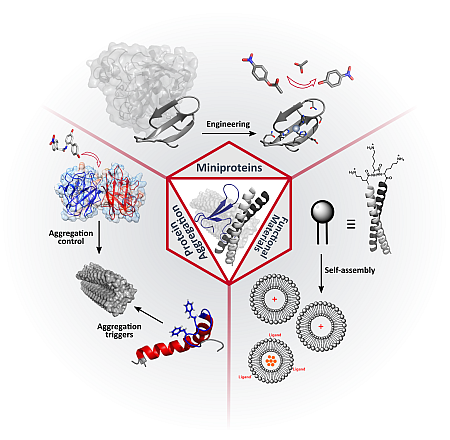
Jun.-Prof. Dr. Franziska Thomas is a Junior Professor at the Institute of Organic Chemistry, Heidelberg University, leading an active research group at the interface of organic chemistry, biochemistry, and biophysics. Her work centers on understanding protein folding mechanisms and their implications for biological function. Dr. Thomas established her independent research group at Georg-August-Universität Göttingen in June 2015 before moving to Heidelberg University in February 2020. She was offered her current tenure track position at Heidelberg on April 26, 2019. Her research program has two primary focuses: (1) designing peptide scaffolds with catalytic activity using de novo designed components that can be chemically synthesized and modified, and (2) studying protein aggregation mechanisms relevant to neurodegenerative diseases such as amyotrophic lateral sclerosis. She employs small, well-characterized self-assembling peptides to create novel materials and understand disease pathways. Analysis of her publication record reveals consistent advancement in peptide and protein engineering, with recent work emphasizing WW domains, β-sheet miniproteins, and innovative solid-phase synthesis techniques. Her research bridges fundamental protein science with applications in materials engineering and disease mechanism understanding. Her work has received significant funding including: The excellence cluster 3DMM2O for the project 'Design of Structured Adhesion Miniproteins for Tissue Engineering' The Deutsche Forschungsgemeinschaft for the research grant 'The WW-domain scaffold as a model system for the de novo design of miniaturized phosphate receptors, phosphatases and sulfatases' Dr. Thomas actively mentors a large research team including 11 PhD students and 2 Master's students, with numerous past students who have successfully completed their theses. She teaches courses including 'Chemische Biologie' and 'OC-Z6 Synthese und Retrosynthese' and participates in seminar series such as IMSEAM and 3DMM2O. The Thomas Lab maintains strong collaborative connections with multiple research groups including the Kivala, Kemerink, Blasco, Klein, Comba, and Gräter groups, reflecting an interdisciplinary approach to peptide and protein science.
Prof. Dr. Stefan Eicker is a Professor and Chairholder of Business Information Systems and Software Engineering at the Faculty of Computer Science, University of Duisburg-Essen, Germany. He has held this position since April 2004, following previous academic appointments at the Technical University of Clausthal, the University of Essen, and other German institutions. His research spans multiple domains within information systems and software engineering, with a particular focus on digital transformation and emerging technologies. Prof. Eicker's research interests center around Smart Products , Service Systems , Internet of Things , and Platform Economics . His work explores how digital technologies transform traditional business models and create new value propositions. He has developed taxonomies for smart services and investigated quality factors in self-tracking solutions, demonstrating his interdisciplinary approach that bridges technical and business perspectives. His research particularly emphasizes the integration of physical and digital components in modern products and services. His recent publications (2019-2024) reveal a strong focus on digital platform economies, smart services, and IoT applications. The research shows a clear trajectory toward understanding value creation mechanisms in digital ecosystems, with increasing attention to practical applications in energy systems, self-tracking technologies, and business model innovation. His work often involves collaboration with colleagues like Gero Strobel and Tobias Brogt, indicating an active research group focused on digital transformation. Prof. Eicker has contributed significantly to the academic community through his extensive publication record spanning nearly two decades, with work appearing in journals, conference proceedings, and edited volumes. His research bridges theoretical frameworks with practical applications in business contexts. He maintains an active role in academic administration and education at the University of Duisburg-Essen, where he has contributed to curriculum development and the implementation of systems for managing academic information. His work on the bolognaT3 system demonstrates his commitment to improving academic processes through technology.
Prof. Dirk Schneider is a Full Professor (W3) of Biochemistry at Johannes Gutenberg University Mainz since 2010, with previous appointments at the University of Freiburg (2003-2009) and postdoctoral training at Yale University. His research spans membrane biochemistry, biophysics, and transmembrane protein folding/assembly, focusing on thylakoid membrane biogenesis and protein-lipid interactions in cyanobacteria and chloroplasts. Current roles: Full Professor, University Mainz Previous roles: Assistant Professor (W1), University of Freiburg Education: PhD (summa cum laude) from Ruhr-University Bochum His research interests include: Membrane protein folding and stability ESCRT-III/Vipp1/PspA family structural dynamics ABC transporter activity regulation (e.g., BmrA) Protein-lipid interaction mechanisms Thylakoid membrane remodeling Comparative membrane biology between prokaryotes and eukaryotes Development of spectroscopic and computational methods Recent publications reveal trends in bacterial membrane remodeling (SynDLP, PspA), lipid effects on transporter activity (BmrA), and IM30/Vipp1-mediated membrane fusion. His work combines structural biology, biophysics, and functional assays to elucidate membrane dynamics. Awarded the Dr. Heinrich Kost Award (2001) and Leopoldina Fellowship (2001) , he has held leadership roles including Study Section Speaker (2010-2014) , Director of Institute of Pharmacy and Biochemistry (2013-2015) , and Dean of Faculty of Chemistry (2015-2020) . His scientific advisory roles include editorial board memberships and study section leadership.
Prof. Dr. Heinrich Jung is a Professor of Microbiology at Ludwig-Maximilians-Universität München (LMU), leading the research group on Bacterial Physiology and Biochemistry. He holds multiple administrative roles, including Dean of Studies for the Faculty of Biology and Biological Safety Officer. His research focuses on microbial transport systems, bacterial metabolism, and protein structure-function relationships. Key interests include efflux systems in Pseudomonas putida, membrane transporter dynamics, and microbial cooperation mechanisms. Education and Academic Background: Prof. Jung’s expertise stems from extensive research in microbial biochemistry and membrane biology. His work integrates biochemical, genetic, and structural approaches to study prokaryotic transport proteins. He also contributes to science education through initiatives like the "Biologie macht Schule PLUS" program. Research Trends: Recent publications emphasize efflux system roles in siderophore secretion, acetate metabolism regulation, and antibiotic resistance mechanisms. He explores cooperative behaviors in microbial populations and structural features of transporters like PutP and CaiT. Articles highlight interdisciplinary methods, including protein purification and EPR spectroscopy. Scientific Contributions: Over 50 peer-reviewed articles focusing on microbial physiology, transport biology, and protein structure. Labs/Teams: Head of the AG H. Jung team at LMU’s Biocenter, collaborating with groups like AG K. Jung and AG T. Cordes. Grants & Awards: No specific awards listed, but sustained research funding evident via publication output. His lab’s infrastructure supports structural biology studies and microbial genetics, with ongoing projects on bacterial response to environmental stressors and metabolic pathways.
Vicky Fasen-Hartmann is a Professor at the Karlsruhe Institute of Technology (KIT) within the Department of Mathematics, specifically affiliated with the Institute of Stochastics. She has held her W3 Professor position since October 2012, with two periods of parental leave (August 2016-August 2017 and October 2018-October 2019). Prior to her current position, she held postdoctoral research positions at ETH Zurich (RiskLab), TU Munich, Université Pierre et Marie Curie, and Cornell University. Her educational background includes: Habilitation (2010) in Heavy Tails in Finance, Insurance and Telecommunication from TU Munich Ph.D. (2004) in Extremes of Lévy Driven Moving Average Processes with Applications in Finance from TU Munich Diploma in Mathematics (2002) from Karlsruhe Institute of Technology Professor Fasen-Hartmann's research spans multiple areas of theoretical and applied statistics with a focus on extreme value theory, heavy-tailed distributions, and their applications in finance and risk management. Her work bridges theoretical probability with practical financial applications, particularly in modeling rare events and systemic risks. She has made significant contributions to the understanding of Lévy processes, continuous-time ARMA models, and multivariate extremes. Her research combines rigorous mathematical theory with practical applications in financial mathematics, insurance, and telecommunications networks. The trends in her recent publications (2020-2025) show a clear evolution toward high-dimensional extreme value theory, financial network risk contagion, and advanced modeling of continuous-time processes. Her work increasingly addresses the challenges of modern financial systems, including systemic risk measurement, high-dimensional dependency structures, and the statistical properties of extreme events in complex systems. She has developed innovative methodologies for analyzing multivariate extremes, risk contagion, and continuous-time state space models. Professor Fasen-Hartmann has served in significant editorial roles including Associate Editor for the Scandinavian Journal of Statistics since 2014, Managing Editor of Lévy Matters (2008-2014), and Editor of Bernoulli News (2009-2011). She has also been active in academic service through committee work, including the Steering Committee of the Probability and Statistics Group in Germany (2014-2016) and the Examination Board of the Department of Mathematics at KIT (since 2017). She has supervised numerous doctoral and master's students, with current PhD candidates including Lucas Butsch (since 2021) and previously Lea Schenk, Celeste Mayer, Markus Scholz, and Sebastian Kimmig. Her teaching portfolio includes advanced courses in Time Series Analysis, Continuous Time Finance, Extreme Value Theory, and Asymptotic Stochastics. She regularly organizes workshops and conferences on specialized topics in probability and statistics, demonstrating her leadership in the academic community.
Sangyoung Park is an Assistant Professor of Smart Mobility Systems at the Faculty of Mechanical Engineering and Transport Systems, Technical University of Berlin, and is co-affiliated with the Einstein Center for Digital Future. His research focuses on two main areas: enhancing vehicle safety through digitalization and connectivity, and advancing the electrification of the transport sector with emphasis on electric vehicle battery systems design and management. He leads the Chair of Smart Mobility Systems at TU Berlin, where his team investigates how vehicle connectivity can improve energy efficiency, traffic flow, and safety in autonomous vehicle systems. Dr. Park completed his PhD in Electrical Engineering and Computer Science at Seoul National University in Korea, where he focused on energy management techniques for hybrid energy storage systems in electric vehicles. Before joining TU Berlin in 2018, he conducted postdoctoral research at the Technical University of Munich, working on energy management for smartphones in collaboration with Google and studying battery aging processes. His research interests span smart mobility systems, electric vehicle battery management, energy consumption optimization, vehicle connectivity, and autonomous driving systems. Park's work bridges the gap between design engineers and software engineers, investigating how different energy storage components (fuel cells, supercapacitors, lithium-ion batteries) should be interconnected and managed together for maximum efficiency. His research also addresses the design of charging infrastructure for electric vehicles. Analysis of Dr. Park's recent publications reveals a strong focus on digital twin technology for teleoperated driving, battery management systems for electric vehicles, and vehicle connectivity for improved safety and efficiency. His research increasingly integrates cybersecurity aspects of connected vehicles and explores novel approaches to extend battery lifespan through advanced cell balancing techniques. The interdisciplinary nature of his work connects electrical engineering, computer science, transportation systems, and urban infrastructure planning. Dr. Park supervises multiple doctoral students, including Philipp Kremer, Ongun Türkçüoglu, Kil Young Lee, Maria Claudia Miguel de Priego, Muzaffer Citir, Andrea Reindl, Subhendu Bhadra, and Hueseyin Türkyilmaz. His research is supported by various funding sources including the ECDF grant, DAAD projects (ide3a), and government scholarships. He collaborates with institutions including OTH Regensburg and Siemens Mobility. His laboratory, the Smart Mobility Systems group, focuses on developing system-level approaches for measuring, analyzing, and balancing energy consumption in battery-powered mobile systems. The team investigates how direct communication among autonomous vehicles can enable control scenarios that improve energy efficiency, traffic flow, and safety beyond what human drivers or isolated autonomous vehicles can achieve.
Prof. Dr. Wolfgang Lippmann is a Senior Scientist at the Institute of Process Engineering and Environmental Technology, Chair of Hydrogen and Nuclear Energy at Technical University of Dresden. He has maintained continuous affiliation with TU Dresden since 1974, progressing from student to professorial status, with his current role beginning in 2021 after decades as Scientific Staff member. From 2017-2020, he served as Substitute Chair for Prof. Antonio Hurtado during Hurtado's tenure as Vice-Rector for University Development. His academic journey includes: 1974-1978: Studies of energy technology at Technical University of Dresden 1978-1983: Scientific assistant at Chair of Nuclear Energy Technology 1984: PhD on reactor containment stress analysis during cooling loss scenarios 1989: Post-doctoral thesis on pressurized-water reactor containment stress Lippmann's research bridges nuclear engineering with hydrogen technologies through innovative laser-based applications. His work spans reactor safety analysis, high-temperature ceramic materials, and nuclear-hydrogen system integration. He has pioneered laser joining techniques for silicon carbide ceramics in nuclear applications, developed laser decontamination systems for nuclear decommissioning, and conducted safety analyses of hydrogen systems coupled with nuclear power plants. His research integrates fundamental materials science with practical engineering solutions for next-generation energy systems. Analysis of his recent publications reveals three dominant research thrusts: nuclear-hydrogen integration (particularly PEM electrolysis coupled with nuclear plants), laser-based nuclear technologies (decontamination and ceramic joining), and advanced safety analysis of energy systems. His work demonstrates increasing focus on cross-sector energy integration while maintaining strong foundations in nuclear materials and safety engineering. Lippmann leads multiple significant research initiatives including TE-Cer (ceramic composites for thermo-electrical systems), F-Bridge (GEN IV fuel design), MANOLA (laser ablation systems), eJoin and CeraJoin (ceramic joining technologies), DELTA (integrated electrolyzer-hydrocarbon systems), LaDECO (laser decontamination), TE-K-SYSTEM (thermoelectric modules), and SYNKOPE-flex (energy carrier coupling). His laboratory at George-Bähr-Straße 3b in Dresden houses specialized equipment for laser processing, materials characterization, and thermal testing of nuclear components.
Prof. Dr. Heinrich Jung is a faculty member at the Department of Microbiology, Faculty of Biology, Ludwig Maximilian University of Munich. His research focuses on membrane protein structure-function relationships, particularly sodium-coupled transporters like PutP and CaiT in prokaryotes. Specializes in Microbiology and Membrane Protein Dynamics Utilizes crystallography , EPR spectroscopy , and functional assays Investigates transport mechanisms in pathogens like Helicobacter pylori Research trends in recent publications highlight: Elucidating efflux systems (e.g., ParXY, TtgABC) and their roles in bacterial resistance Structural and functional analysis of solute/sodium symporters and antiporters Exploration of two-component regulatory systems (MxtR/ErdR) in carbon metabolism Biophysical studies on transmembrane domain dynamics using DEER spectroscopy
Prof. Dr. Martin Hofmann is Chairholder of Photonics and Terahertz Technology at Ruhr University Bochum (RUB), part of the Faculty of Electrical Engineering and Information Technology. He leads research in optical materials, semiconductor lasers, and THz technology. His academic journey includes a doctorate (1994) and habilitation (2000) from Philipps University of Marburg, followed by roles as Scientific Assistant and Head of the Optoelectronic Devices and Materials Group before assuming his current position in 2007. Research Interests: Focuses on THz radiation sources , semiconductor laser characterization , and biomedical optical applications . His work bridges fundamental physics with applied technologies like compact THz systems and photonics for industrial and medical use. Publications: Recent work emphasizes THz generation using VCSELs, mode-locked lasers, and holographic measurement techniques. Key themes include coherent THz systems, dispersive optics, and miniaturized photonic components. Affiliations: Active in RUB’s Photonics and Terahertz Technology department, contributing to projects like TopING doctoral program and Spin-off promotions. Lab activities involve developing compact THz instruments and advanced laser systems.
Prof. Dr. Karsten Niehaus serves as Head of the Proteome and Metabolome Research Group at the Center for Biotechnology (CeBiTec) and Faculty of Biology, University of Bielefeld. His research focuses on proteomics and metabolomics applications in plant-microbe interactions, bacterial stress responses, and disease model systems. His laboratory employs advanced mass spectrometry imaging and cell phenotyping technologies to investigate molecular responses in crops like sugar beet and grapevines under abiotic stress conditions, as well as in cancer models where differentiation therapy impacts tumor malignancy. The group also explores microbial biotechnology through Xanthomonas campestris studies on xanthan production and stress adaptation. Selected publications highlight innovations in 3D microfluidics for biomarker detection and bioinformatics platforms like MetHoS for metabolomics data analysis. His work appears in journals covering Frontiers in Plant Science , Scientific Reports , and Journal of Experimental Botany . Contact: kniehaus@cebitec.uni-bielefeld.de | Office: UHG W7-117
Ayhan Demircan is an Adjunct Professor at the Leibniz School of Optics and Photonics in Leibniz University Hannover. He leads the Micro and Nano Photonics task group and contributes to institutions including the Institute of Quantum Optics , Ultrafast Laser Laboratory , and Hannover Centre for Optical Technologies (HOT) . His work spans photonics, quantum optics, and nonlinear dynamics, with applications in terahertz technology, soliton physics, and optical modeling. Research Interests: Photonics, quantum optics, terahertz radiation, soliton dynamics, nanophotonics, and computational modeling of optical systems. Key Institutions: Leibniz School of Optics and Photonics, Institute of Quantum Optics, HOT, and PhoenixD Cluster of Excellence. Technical Expertise: Develops Python-based tools for nonlinear Schrödinger equations, optical parametric oscillators, and ultrafast laser systems. Contact: demircan@iqo.uni-hannover.de
Prof. Dr. Matti Schneider serves as Professor of Engineering Mathematics and Head of the Institute of Engineering Mathematics within the Faculty of Civil Engineering at the University of Duisburg-Essen. His academic leadership spans computational mechanics research and teaching core mathematics courses for civil engineering students. His educational background includes: Diploma in Applied Mathematics with distinction from TU Bergakademie Freiberg (2009) PhD (Dr. rer. nat.) from Leipzig University (2013) on "The Leray-Serre spectral sequence in Morse homology on Hilbert manifolds and in Floer homology on cotangent bundles" Professor Schneider's research focuses on advancing computational methods for solid mechanics through FFT-based homogenization techniques, microstructure modeling, and multi-scale material analysis. His work bridges applied mathematics and engineering to solve complex problems in heterogeneous material systems, with particular emphasis on numerical stability, boundary condition implementation, and efficient solver development for industrial applications. His methodologies enable accurate prediction of material behavior across scales from microscopic structures to macroscopic components. Analysis of his 15 most recent publications reveals dominant trends in FFT-based computational homogenization, with significant contributions to thermal problems, porous media, and fiber-reinforced composites. He pioneers the integration of machine learning (particularly deep material networks) with traditional numerical methods to model complex material behaviors like shear-thinning suspensions and 3D-printed materials. His work consistently addresses computational challenges in boundary condition implementation and convergence for stochastic microstructures. Professor Schneider leads the Institute of Engineering Mathematics and directs research within the ERC-funded BeyondRVE project, which focuses on extending representative volume element concepts for advanced material modeling. His collaborative network includes major German research institutions like Fraunhofer ITWM and international partners in materials science.
Rana X. Adhikari is a Professor of Physics at the California Institute of Technology (Caltech) in the Division of Physics, Mathematics and Astronomy, and an Associate Faculty member at the International Centre for Theoretical Sciences of the Tata Institute of Fundamental Research (ICTS-TIFR) in Bengaluru, India. His career spans over two decades in experimental physics, with significant contributions to gravitational wave detection and quantum metrology. Professor of Physics at Caltech since 2012 (tenured) Assistant Professor at Caltech (2006-2012) Adjunct Professor at ICTS-TIFR since 2012 Postdoctoral Researcher at Caltech LIGO project (2004-2006) Adhikari's research focuses on experimental physics of gravitational wave detection, quantum metrology, precision measurement, and intelligent control systems. His work aims to surpass fundamental physical limits to discover new phenomena related to gravity, quantum mechanics, and the nature of space and time. He has pioneered noise reduction techniques in laser interferometers, which were critical for LIGO's successful detection of gravitational waves in 2015. His research group at Caltech develops new detector technologies for fundamental physics experiments including gravitational waves, dark matter, and near-field gravity. He also collaborates extensively with the international gravitational-wave community including OzGrav, KAGRA, and GEO600. Analysis of his recent publications shows consistent focus on advancing gravitational wave detection capabilities across multiple fronts - from improving ground-based detectors like KAGRA to developing concepts for space-based systems like TianGO. His work bridges theoretical concepts with practical experimental implementations, particularly in quantum measurement techniques applied to gravitational physics. New Horizons in Physics Prize (2019) Albert Einstein Medal (2017) Princess of Asturias Award (2017) Bruno Rossi Prize (2017) Royal Astronomical Society Group Achievement Award (2017) Gruber Cosmology Prize (2016) Breakthrough Prize in Fundamental Physics (2016) Adhikari actively mentors students through the International LIGO SURF program, which hosts talented undergraduate students from Indian institutions. He has secured significant funding for the LIGO-India project, which aims to build a gravitational-wave observatory in India. His laboratory at Caltech collaborates with the Materials Science Department to advance mechanical oscillators, nonlinear optics, acoustic metamaterials, and high-efficiency photodetection for quantum measurements. He is also involved in interdisciplinary projects combining science and art, including scientific installations and collaborations with artists exploring gravitational wave concepts.