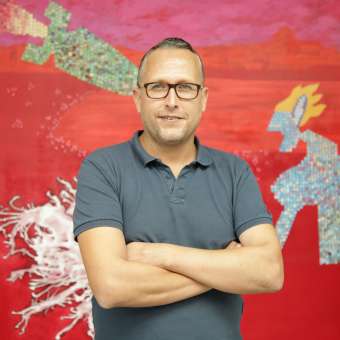
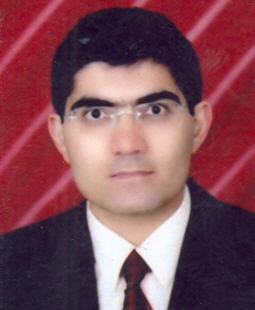
Prof. Dr. Gülşen Eryiğit is a Professor at Istanbul Technical University within the Faculty of Computer and Informatics , Department of Artificial Intelligence and Data Engineering . She founded and directs the ITU Natural Language Processing Group , Turkey's leading team in Turkish-language NLP, and serves as Senior Action Editor for ACL RR , Director of ITU TÖMER (Turkish Language Teaching Center), and Co-Chair of the EU UniDive Cost Action WG3. Education: PhD in Computer Engineering from ITU (2007), MSc and BSc from ITU and Marmara University Research: Focuses on Natural Language Processing for Turkish, including dependency parsing , coreference resolution , multiword expressions , and language education technology Her recent work involves multilingual transfer learning , LLM applications for Turkish text simplification, and gamification for morphology education. She has received prestigious awards like the Siemens Excellence Award and TÜBİTAK's Above Threshold Award . Her research has produced 65+ publications and 29+ projects funded by EU, TÜBİTAK, and industry partners. Scientific Awards: Siemens Excellence Award (2007) Above Threshold Award (TÜBİTAK, 2015) Certificate of Appreciation (EU 7th Framework, 2012) Thank You Plaque (ITU, 2017) The ITU NLP Group under her leadership has developed Turkey's first licensed NLP software exported internationally. She collaborates with European institutions through COST actions and participates in ACL, CoNLL, and LREC conferences. Her lab focuses on language technology for Turkish , including sign language processing and social media normalization.
MUSTAFA KESKİN serves as an Associate Professor in the Department of Arabic Language and Rhetoric within the Faculty of Theology at Gaziantep University, Turkey. Appointed to this position in 2021 after serving as a Doctor Lecturer since 2013, his academic career is deeply rooted in Islamic theological studies with specialized expertise in Arabic linguistics and rhetoric. His institutional affiliation spans both the Department of Fundamental Islamic Sciences and the specialized Department of Arabic Language and Rhetoric, reflecting his dual focus on theological scholarship and linguistic analysis. His educational trajectory includes: Doctorate (2013-2017): Gaziantep University, Institute of Social Sciences, Department of Basic Islamic Sciences Master's (2011-2013): Harran University, Institute of Social Sciences, Tafsir (Thesis) Licence (2008-2010): Ankara University, Faculty of Theology, Theology Undergraduation Completion (Distance Education) Associate Degree (2006-2008): Anadolu University, Faculty of Open Education, Department of Theology Licence (1995-2002): Anadolu University, Faculty of Business Administration Professor Keskin's research centers on the intersection of Arabic linguistic structures and Islamic theological texts, with particular emphasis on rhetorical devices in the Quran and Hadith literature. His work explores how classical Arabic grammatical frameworks inform Quranic exegesis, analyzes historical linguistic schools like the Baghdad tradition, and investigates poetic devices in early Islamic literature. This scholarship bridges philological precision with theological interpretation, revealing how linguistic choices shape religious meaning in foundational Islamic texts. His publications consistently demonstrate methodological rigor in applying classical Arabic linguistic theories to theological source materials. Analysis of his 15 most recent publications (2018-2024) reveals three dominant scholarly trajectories: systematic examination of rhetorical devices in Quranic surahs (particularly tibāq and metaphor), critical engagement with classical Arabic grammatical treatises (including works by Müberred and al-Fārisī), and historical studies of Islamic scholarly networks connecting Anatolia and Syria. His work demonstrates growing international collaboration, with increasing co-authorship in Arabic-language publications alongside Turkish and English outputs. The research consistently applies linguistic analysis to theological questions, creating a distinctive niche in Quranic stylistics and classical Arabic rhetoric. No scientific awards were documented in the source materials. Professor Keskin has supervised 15 graduate students across doctoral and master's programs, with thesis topics reflecting his core research interests. Doctoral work includes semantic analysis of Quranic roots (e.g., 'krm') and classical rhetorical poetry, while master's research spans prophetic traditions in poetry, Quranic command structures, and human values in early Arabic poetry. His editorial work on 6 academic volumes complements this mentoring role, particularly in publishing classical Arabic texts with contemporary commentary. Conference presentations (9 international venues) demonstrate active scholarly engagement, though specific research grants were not documented in the source materials. No dedicated research laboratories or formal research teams were mentioned in the institutional documentation.
Assoc. Prof. Dr. Ali Şükrü Özbay currently serves as an Associate Professor at Karadeniz Technical University's Faculty of Arts, Department of English Language and Literature. He earned his PhD and MA in Applied Linguistics from Karadeniz Technical University and holds a BA in English Language and Literature from Ankara University. Education : PhD (2015) and MA (2004) from Karadeniz Technical University; BA (1996) from Ankara University Dr. Özbay's research focuses on Corpus Linguistics , Learner Corpora , Academic Writing , Translation Studies , and Language Pedagogy . His work investigates lexical bundles, support verb constructions, and pragmatic markers through computational corpus analysis. Recent publications analyze four-word recurrent expressions in educational technology contexts, collocational priming in Turkish EFL learners' mental lexicon, and semantic prosody of intensifiers in academic corpora. He supervises theses on data-driven learning applications and corpus-based teaching materials. Dr. Özbay has held managerial roles including Deputy Head of Department (2019–present) and Assistant Coordinator for Erasmus+ programs (2017–2021). He actively participates in international conferences and has published in journals like Turkish Studies , Australian Journal of Applied Linguistics , and Hacettepe Eğitim Dergisi .
Dr. Duygu Yavuz is an Assistant Professor at Yeditepe University's Faculty of Arts and Sciences, Department of Turkish Language and Literature. Her academic journey includes a PhD in Turkish Language and Literature from Sakarya University (2011-2017), MA in Old Turkish from Mimar Sinan Fine Arts University (2009-2011), and BA in Turkish Language and Literature from the same institution (2005-2009). Education: PhD: Turkish Language and Literature, Sakarya University (2011-2017) MA: Old Turkish, Mimar Sinan Fine Arts University (2009-2011) BA: Turkish Language and Literature, Mimar Sinan Fine Arts University (2005-2009) Her research focuses on historical linguistics, Turkic dialectology, metaphorical semantics, and loanword adaptation in Old Turkish texts. She has extensively analyzed Turkic conceptual systems through light and fire metaphors, verb morphology, and reduplication patterns in folklore. Recent publications examine Harezm Turkish, Uyghur texts, and compounding mechanisms in Turkic languages. She has presented at international conferences on topics like dialectal variations and cultural symbolism in historical linguistics. Teaching Experience: Turkish Language History (EDTR 121, TLL 113) Old Turkish (EDTR 211-212, TLL 219-220) Contemporary Turkish (EDTR 261-262, TKL 201-202) Teacher Training (PTUR 402-403) Previously worked at the Turkish Ministry of National Education (2014) teaching Turkish Language and Literature. Affiliated with academic societies tracked through memberships in indexing services like TR DİZİN, MLA, and SOBIAD.
Assoc. Prof. Dr. Erdoğan Sökmen serves as a full-time academician at Kırşehir Ahi Evran University Faculty of Medicine within the Department of Internal Medical Sciences . His clinical and research activities focus on cardiology, particularly coronary artery disease and electrophysiological assessments. His educational background includes a Medical Degree from Istanbul University Cerrahpasa Faculty of Medicine (2007) and Medical Specialization in Internal Medical Sciences from Health Sciences University (2012). He maintains professional certifications in Good Clinical Practices and holds advanced English proficiency (YDS 93). Dr. Sökmen's research centers on cardiovascular pathophysiology with emphasis on: Electrocardiographic parameters in myocardial infarction Inflammatory biomarkers in hypertension Coronary artery anomalies and reperfusion phenomena Metabolic interactions in cardiovascular disease His publication analysis reveals consistent contributions to understanding no-reflow phenomenon, ventricular repolarization abnormalities, and novel biomarkers like nesfatin-1 and omentin-1. He actively participates in academic service as a member of both the Turkish Cardiology Association and European Society of Cardiology since 2012. His mentorship includes supervising Samet Altunbaş's thesis on myocardial infarction biomarkers. With an h-index of 11 (UNIS) and 10 (WoS), his work demonstrates significant scholarly impact in cardiovascular medicine.
Assoc. Prof. Dr. Osman AKTAŞ is a Turkish academic affiliated with Ankara Social Sciences University as an Associate Professor in the Faculty of Islamic Sciences , Department of Basic Islamic Sciences. His career spans roles such as Research Assistant (2013–2017) at Osmaniye Korkut Ata University and Doctorate Teaching Staff (2019–2022) at his current institution. Education: PhD in Fundamental Islamic Sciences (2016–2019), Ankara Yıldırım Beyazıt University Master's in Fundamental Islamic Sciences (2014–2016), Yıldırım Beyazıt University BA in Religious Culture and Moral Knowledge (2002–2006), Ankara University Research Interests include Arabic Language and Rhetoric , comparative linguistics between Turkish and Arabic, Islamic sciences, and interdisciplinary neuroscience studies on topics like epilepsy and laughter physiology. He has published extensively in these areas, including works on punctuation systems, prepositions, and word/sentence structures. Advising involves guiding four graduate students, including Mehmet Fevzi Sargın (PhD, 2024) and Asma Idrıs Mohammed Alfassı (Master’s, 2024). A TÜBİTAK 2211/A Domestic Doctoral Scholarship (2017–2019) supported his doctoral research. Despite his academic output, no scientific awards are documented.
Hüseyin Çiçek is a Researcher in the Department of Arabic Language and Rhetoric at Gaziantep University's Faculty of Theology, Turkey, serving since 2019. His expertise bridges classical Arabic linguistic theory with contemporary pragmatic and syntactic analysis, focusing on Islamic scholarly traditions. His academic credentials include: Doctorate in Basic Islamic Sciences, Ankara Social Sciences University (2020-2025) Master's in Basic Islamic Sciences (with thesis), Ankara Social Sciences University (2018-2020) Licence in Islamic Sciences, Ankara Yildirim Beyazit University (2013-2018) Çiçek's research centers on Arabic pragmatics, syntax, and functional grammar, with specialized investigations into medieval scholars like Abd al-Qahir al-Jurjani and Sekkâkî. He examines religious expressions through sociolinguistic lenses and conducts diachronic semantic analyses of Arabic roots, connecting historical Islamic scholarship to modern linguistic discourse. His 2024-2025 publications reveal a cohesive trajectory: applying functionalist and formalist frameworks to classical Arabic texts while exploring pragmatic functions in religious contexts. This work consistently bridges Islamic intellectual heritage with contemporary linguistic theory across multiple publication formats. As a researcher on the national project "Translation of Theology Academy Journal Issues on Islamic Economics and Religious Discourse" (2021-2023), he contributed to translating Turkish theological content into Arabic and English. No information indicates student supervision or additional grant activities.
Nafi YALÇIN is an Assistant Professor at the Department of English Translation and Interpreting , Üsküdar Üniversitesi , within the Faculty of Humanities and Social Sciences. He holds a PhD in English Linguistics from Hacettepe Üniversitesi (2002) and has served as Head of the Department of English Translation and Interpreting (2021-2024). His research focuses on language teaching methodologies, linguistic analysis, cultural studies, and translation studies. Education: BSc in English Language and Literature, Boğaziçi Üniversitesi (1986) MSc in English Linguistics, Boğaziçi Üniversitesi (1989) PhD in English Linguistics, Hacettepe Üniversitesi (2002) Research Interests: His work explores cultural aspects of language education, syntactic structures in Turkish, language reform history, and the application of films in language classrooms. He actively contributes to academic conferences and editorial roles, including the International Journal of Human Studies and a 2023 anthology on expanded scientific frameworks. Recent Projects: Leading a BAP-funded project investigating translation technologies' impact on student performance (2026) Contributing to international congresses on creation and science Teaching Activities: In 2023-2024, he taught courses including English for Academic Purposes , General Linguistics I , and Contrastive Analysis of Turkish-English to undergraduate students.
Ayça Dinçer serves as a Lecturer at Çukurova University's School of Foreign Languages since 2010, holding a PhD in English Language Education from the same institution. Her academic foundation includes doctoral (2008-2014) and postgraduate (2005-2008) studies in Foreign Language Education at Çukurova University, and an undergraduate degree in English Linguistics from Hacettepe University (1994-1999). Her educational background encompasses: Doctorate (2008-2014): Çukurova University, Foreign Language Education, English Language Education Postgraduate (2005-2008): Çukurova University, Foreign Language Education, English Language Education Undergraduate (1994-1999): Hacettepe University, Faculty of Literature, English Linguistics Dinçer's research centers on English Language Teaching methodology, with emphasis on discourse analysis, figurative language, and self-regulated learning strategies. She investigates collocations in EFL materials, metonymy in coursebooks, gender representation, and teacher-student dynamics in writing instruction. Her work bridges theoretical linguistics with classroom applications, particularly in Turkish higher education contexts. Analysis of her 2014-2022 publications reveals persistent focus on linguistic phenomena in pedagogical materials and learner outcomes. Key trends include collocation patterns in student writing, metonymic structures in textbooks, and self-regulation frameworks for writing instruction. These studies collectively advance evidence-based ELT practices through empirical classroom research. No scientific awards were documented in the source material. She executed two significant research projects: 'Promotion of Self-Regulation in Writing Instruction' (2015-2016) and 'Collocational Analysis of EFL Coursebooks' (2018-2020). Dinçer actively promotes institutional collaboration through the Language-for-All Conference series, serving as editor for multiple proceedings and organizing four international conferences (2022-2025) focused on language education innovation.
Prof. Dr. Ali KARATAŞ is a Professor at the Department of Basic Islamic Sciences, Faculty of Theology at Sakarya University. He holds a PhD from Ankara University and has served in academic leadership roles, including Head of the Tafsir Department and member of the Senate. His expertise lies in Quranic exegesis (Tafsir), focusing on the Maturidi School and methodological approaches to interpretation. He has authored influential works like Tefsir Geleneğinde Rivayet and Anlamdan Yoruma Kur'an . Education: PhD: Ankara University, Institute of Social Sciences (2011) MA: Dicle University, Institute of Social Sciences (2002) Bachelor's: Ondokuz Mayıs University, Faculty of Theology (1999) His research emphasizes historical and philosophical dimensions of Tafsir, with a focus on Maturidi’s hermeneutics and contemporary challenges in Quranic interpretation. He has published over 50 articles in indexed journals and edited volumes, including works on the methodology of Tafsir and critical editions of classical texts. Prof. Karataş has supervised numerous PhD and master’s theses, such as those analyzing Maturidi’s works, contemporary Tafsir problems, and the role of narration in exegesis. He has also served as editor for journals like Tefsir Araştırmaları Dergisi and received the Best Presentation Award in 2016.
Sedat EROL is an Associate Professor in the Department of Turkish and Social Sciences Education at Adıyaman University's Faculty of Education. He currently serves as the vice dean of the Faculty of Education and has extensive experience in Turkish language education, both domestically and internationally. His academic career spans teaching, research, and administrative roles across multiple institutions in Turkey. His educational background includes: Born in Adıyaman in 1986, completed primary and secondary education there Graduated from Turkish Language Teaching Department of Gaziantep University's Muallim Rıfat Faculty of Education in 2009 Completed master's degree at Adıyaman University in 2014 Completed doctorate at İnönü University in 2019 Dr. EROL's research primarily focuses on teaching Turkish as a foreign language, children's literature, and Turkish language education. His work particularly emphasizes educational games, social media literacy, and critical reading methods in Turkish instruction. He has published extensively on these topics, with 20 articles, 10 books, 17 proceedings, and 7 editorships to his name. His publications consistently explore innovative approaches to Turkish language teaching, with special attention to refugee education and Turkish instruction for foreign learners. His publication record shows a clear evolution toward practical applications of educational theory, with increasing focus on digital literacy, social media, and educational technology applications in language teaching since 2020. Much of his recent work addresses the educational needs of Syrian refugees learning Turkish in Turkey, as well as Arab students studying Turkish as a foreign language. Dr. EROL serves as a consultant, researcher, and facilitator in projects supported by TÜBİTAK, the EU, Erasmus, and the Ministry of National Education. He has led numerous significant projects including 'A Festival of Cultures Meet with Flavor,' 'Moral Support for Earthquake Volunteers,' and 'A Comparative Analysis of Social Media Literacy Status among Students.' His administrative experience includes serving as deputy director of TÖMER and deputy director of the Graduate Education Institute before becoming vice dean of the Faculty of Education.
Assoc. Prof. Dr. Ihab Said Ibrahim IBRAHİM is a faculty member at the Faculty of Theology , Kastamonu University , Turkey, since 2014. His research focuses on Arabic Language and Rhetoric within Islamic Studies, with expertise in phonology, semiotics, and Quranic exegesis. PhD in Arabic Language and Literature (Tanta University, 2011) MA in Arabic Language and Literature (Menoufia University, 2005) BA in Arabic Language and Literature (Menoufia University, 2000) His research explores phonological patterns in classical Arabic texts, semantic shifts in Quranic interpretation, and interdisciplinary applications of linguistics in literary and religious contexts. Recent publications analyze syntactic deviations in Arabic poetry, lexical semiotics in dictionaries, and phonetic analysis of Quran recitations. He has supervised 12 graduate theses, including studies on stylistic innovations in pre-Islamic poetry and phonetic analysis of Quranic manuscripts. His work appears in journals like Turkish Studies and Harran Theology Journal .
Ervin Daleth Ostos Santos is a Spanish Lecturer in the Modern Languages Program at Özyeğin University. He holds advanced qualifications including a Master of Arts in Applied Linguistics from Nebrija University and a Bachelor’s degree in Economics from Universidad Autónoma del Estado de Hidalgo. Academic Title: Lecturer Institution: Özyeğin University School: School of Foreign Languages Department: Modern Languages Program His research is centered on linguistic analysis and pedagogy, particularly focusing on the acquisition of Spanish as a second language. Key areas include: Morphosyntactic structures in language learners Applied linguistics for language instruction Development of teaching methodologies Analysis of written production by Turkish learners Spanish teacher certification frameworks Virtual classroom instruction (AVE certificates) Ervin has been teaching Spanish since 2009. He possesses specialized certifications from the Cervantes Institute, including DELE Examiner status and AVE virtual classroom instruction credentials. His graduate thesis at Nebrija University investigated the morphosyntactic patterns in written Spanish by Turkish speakers, indicating a focus on error analysis and language acquisition challenges.
Mehmet Çiçek is a Professor at Gaziantep University's Faculty of Education in the Department of Turkish Language Education. He holds a doctorate in Linguistics from Université de Reims Champagne-Ardenne (France) and has served in various academic and administrative roles since 1992. Doctorate: Linguistics, Université de Reims Champagne-Ardenne (1995-1999) Master's: Linguistics, Université de Reims Champagne-Ardenne (1993-1995) Licence: Atatürk University, Turkey (1987-1991) His research focuses on Turkish language education, semiotics, discourse analysis, and cross-linguistic studies. Recent work examines textual analysis, cultural representation in language learning, and pedagogical methodologies. His publications span Turkish language structure, semiotic systems, and educational applications. Articles include analyses of adjective placement, plural/possessive morphology, and discourse in literary and visual contexts. Prof. Çiçek has supervised multiple graduate theses on Turkish pedagogy, cultural transfer in language teaching, and discourse analysis. He has held leadership roles including Faculty Dean and Department Chair at Gaziantep University. He contributes to academic governance as a board member and serves on examination juries for professorship and doctoral applications.
Mustafa ŞENTÜRK is a Professor of Quranic Studies and Fundamental Islamic Sciences at Trakya University's Faculty of Theology. He holds a Doctorate from Dokuz Eylül University (2009) with a thesis comparing Ibn Atiyya and Tabresi's Quranic approaches. His academic career includes roles as Department Head at Bayburt University (2013–present) and Vice Dean (2010–2012). He has served as a faculty member at both Trakya and Bayburt Universities since 2013. Education: Bachelor's in Theology: Dokuz Eylül University (1997) Master's in Sociology: Anadolu University (2013) Doctorate in Quranic Exegesis: Dokuz Eylül University (2009) Research Interests: His work focuses on Quranic exegesis (tafsir), historical and comparative approaches to Islamic texts, and sociological dimensions of religious practices. Key themes include Quranic language analysis, interfaith marriage in Islamic jurisprudence, and the role of tafsir in modern scholarship. Publications: Over 20 peer-reviewed articles and book chapters on topics like Quranic linguistics, Ottoman tafsir traditions, and the application of statistical methods to Quranic study. Notable works include analyses of Moses and Khidr's narrative, the concept of 'social change' in the Quran, and historical studies of Andalusian tafsir. Grants/Advising: Supervised six ongoing/completed theses, including studies on Quranic ethics, comparative tafsir methodologies, and women's rights in Islamic law. Administrative Roles: Served on multiple university boards, including the Faculty of Theology at Bayburt University and the Social Sciences Institute. Currently chairs the Department of Fundamental Islamic Sciences at Trakya University.