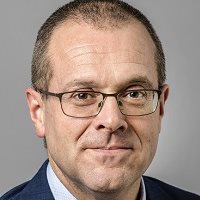
Dr Hans Henri P. Kluge serves as WHO Regional Director for Europe since February 2020 and holds a Visiting Fellowship at LSE Health, London School of Economics and Political Science. With 25 years of global public health experience, he has led critical initiatives with Médecins Sans Frontières and the World Health Organization across conflict zones and post-Soviet regions. He earned his medical degree in Medicine, Surgery and Obstetrics from the Catholic University of Leuven (1994), beginning his career as a family physician in Belgium before transitioning to international emergency response. His research concentrates on Tuberculosis epidemiology, Health Systems strengthening, Health Policy Reform, and Healthcare delivery mechanisms. Career highlights include pioneering TB control programs in Liberian/Somali conflict zones, Siberian prisons, and former Soviet Union countries, alongside leadership in WHO Europe's universal health coverage framework. As Director of WHO Europe's Division of Health Systems and Public Health (2010-2020), he championed integrated primary care models and forged strategic partnerships with the European Commission, OECD, and World Bank to advance health system resilience across 53 member states.
Michaela Gazdik Stofer is an Associate Teaching Professor in the Department of Biological Sciences at NC State University's College of Sciences, specializing in Microbiology. She joined the faculty in August 2023. Her role includes teaching responsibilities and academic advising within the undergraduate program. Education: Earned PhD in Immunology and Infectious Disease from SUNY Albany. Over 16 years of experience in undergraduate education since 2007. Research Interests: Bacterial pathogenesis mechanisms Historical and societal impacts of infectious diseases Active learning strategies using case studies Course-based undergraduate research experiences (CUREs) No specific grants or awards mentioned in current profile. Lab/Team Affiliations: Part of the Department of Biological Sciences' teaching faculty team and affiliated with Microbiology graduate programs in the College of Agriculture and Life Sciences.
Ian Larson is a Senior Lecturer in the Department of Pharmacy and Pharmaceutical Sciences Education at Monash University's Faculty of Pharmacy and Pharmaceutical Sciences. His research focuses on drug delivery systems, colloid chemistry, and formulation science, with notable contributions to aerosolization behavior of powders and virtual learning tools like Pharmatopia. He has led or co-led 10 research projects, including initiatives on study strategies and quality improvement in pharmaceutical education. Teaching expertise spans colloid chemistry, polymer chemistry, and formulation design. He has received prestigious awards including the Vice Chancellor's Teaching Excellence Award (2010) and AACP Innovation in Teaching Award (2022). Larson's work aligns with UN Sustainable Development Goals related to quality education and good health. Key collaborations involve Monash Institute of Pharmaceutical Sciences and international partners like the University of Warwick. His projects emphasize interdisciplinary approaches, such as 3D printing for drug formulation and virtual reality for dementia education. Over 129 peer-reviewed outputs highlight his contributions to both scientific innovation and pedagogical advancements.
Jishnu Das is Distinguished Professor of Public Policy at Georgetown University's McCourt School of Public Policy and Walsh School of Foreign Service. His research examines health/education systems in low/middle-income countries using large-scale cohort studies. Research focuses on health system quality measurement, market dynamics in education, and policy evaluation methodologies. Key interests include primary care delivery optimization, private sector engagement, health workforce competence, and educational quality improvements through market-based interventions. Recent publications demonstrate methodological innovation in standardized patient studies, equilibrium analyses of education markets, and COVID-19 impact assessments. Articles consistently integrate rigorous econometric approaches with field implementation insights. George Bereday Award Stockholm Challenge Award Research Academy Award (World Bank, 2017) Research Academy Award (World Bank, 2013) Flander's Visiting Professor, McGill University
Magnus Steigedal is the Head of the Department of Clinical and Molecular Medicine at NTNU, where he also serves as a Researcher at the Centre of Molecular Inflammation Research (CEMIR). Previously, he held leadership roles including Director of NTNU's Thematic Strategic Area of Health, Welfare and Technology (2014–2021) and Project Manager for the Joint Programming Initiative on Antimicrobial Resistance (JPIAMR) Grant (2015–2017). His research focuses on understanding bacterial infections, particularly Mycobacterium avium and tuberculosis, aiming to identify novel antibiotic targets and vaccine strategies. Education & Career: PhD in Biotechnology, NTNU (2001–2006) Postdoctoral research at the Department of Cancer Research and Molecular Medicine, NTNU (2006–2012) Research Fellow at Harvard School of Public Health, Boston, USA (2010–2011) Research Interests: Magnus's work centers on bacterial pathogenesis, host-pathogen interactions, and the development of antimicrobial strategies. Key areas include: Iron acquisition mechanisms in mycobacteria Vaccine development using attenuated Mycobacterium smegmatis vectors Genetic dissection of virulence factors in Mycobacterium avium Role of innate immunity in mycobacterial infections Grants & Projects: NTNU/Helse Midt-Norge RHF Grant (2012–present) RCN GLOBVAC Programme Young Scientist Grant (2013–2016) JPIAMR Strategic Grant (2015–2017) Labs/Teams: Active within the Centre of Molecular Inflammation Research (CEMIR) at NTNU, collaborating with teams specializing in mycobacterial genetics, immunology, and drug discovery.
Magdalena Hurtado is a Professor in the School of Human Evolution and Social Change at Arizona State University (ASU), and an Affiliate Faculty member of the Global Institute of Sustainability and Innovation. She joined ASU in 2009 to establish the first anthropology-based Global Health program. Previously, she held positions at Emory University and the University of New Mexico. In 2012, she was inducted as a Fellow of the American Academy of Arts and Sciences. Her research focuses on mortality reduction, niche construction, and public health, with a focus on indigenous populations like the Ache and Hiwi hunter-gatherers of South America. Education includes a Ph.D. in Anthropology from the University of Utah (1995), postdoctoral training in epidemiology at the University of Michigan (1991–1992), and community-based participatory research at the University of New Mexico (2002–2004). Research interests span human ecology, infectious diseases, and evolutionary medicine. Key topics include TB epidemiology among indigenous groups, evolutionary origins of public health behaviors, and the interplay between cultural practices and health outcomes. She has authored/co-authored over 100 publications, including the seminal Ache Life History . Awards include the American Academy of Arts and Sciences Fellowship (2012). Grants include funding for studies on disease ecologies in the Nivacle of Paraguay and global health initiatives. She directs the Indigenous Health Sciences and Human Rights Group and the Global Health in Latin America Research Group. Teaching includes courses like Introduction to Global Health and mentorship in global health and biological anthropology. She has advised grassroots health programs in Paraguay and Venezuela, improving healthcare access and land rights for indigenous communities.
Evan Wilson is an Assistant Professor of Medicine at Queen’s University, serving as Program Director for the Infectious Diseases Residency Training Program. He holds a Master of Science in Immunology from the University of Alberta and completed medical training at the University of Alberta, followed by internal medicine residency at Queen’s University and Infectious Diseases subspecialty training at the University of Calgary. Previously, he worked as an infectious diseases consultant with Vancouver Island Health in Victoria, BC. Dr. Wilson’s clinical focus includes inpatient consultations and ambulatory clinics for general infectious diseases, HIV, and tuberculosis. He leads the anti-microbial stewardship program at Kingston Health Sciences Centre (asK), emphasizing quality improvement in anti-microbial utilization and expanding access to outpatient therapies. His research interests span clinical infectious diseases and healthcare operational efficiency. His academic contributions include over 15 peer-reviewed articles addressing cognitive science, visual perception, and medical education innovations. Dr. Wilson maintains active roles in medical training and hospital clinical governance through his departmental responsibilities at Queen’s University.
Janardan Devkota is a Researcher in the Department of Mental Health at Johns Hopkins University. He holds an MPH from the University of Oviedo and Catholic University of Louvain, an MS in Nutrition and Dietetics from Purbanchal University, and a BS in Public Health from Pokhara University. His work focuses on substance use behaviors, particularly involving tobacco, alcohol, opioids, and cannabis, using event-level data and mobile health (mHealth) approaches. He specializes in coordinating research and data analysis for projects addressing substance use and digital health interventions. Research Interests: His primary areas include substance use epidemiology, behavioral health, and the application of digital tools (e.g., mobile apps) to study and intervene in substance use patterns. His recent work emphasizes real-time monitoring via ecological momentary assessment (EMA) and the interplay between chronic pain management and substance use. Publications: His research spans topics like smoking cessation app design, postpartum alcohol use, and cannabis use among young adults. Notable work includes studies on opioid and cannabis craving mechanisms in chronic pain patients and the efficacy of social media reduction interventions for mental health. Grants & Teams: While specific grants are not listed, his affiliations with Johns Hopkins suggest involvement in institutional research initiatives. No advising roles or lab teams are explicitly mentioned in the provided data.
Dr. Mari Armstrong-Hough is an Associate Professor in the Department of Social & Behavioral Sciences and Epidemiology at the NYU School of Global Public Health. Her research focuses on global health, particularly the epidemiologic intersections of tuberculosis (TB), HIV, and non-communicable diseases. She co-directs an NIH-funded Mixed-Methods Fellowship at Makerere University and leads a prospective cohort study in Uganda on TB treatment. In the U.S., she examines racial disparities in respiratory failure outcomes through the PRECIPICE studies. Her work integrates epidemiology and sociology, emphasizing interventions for early case-finding and improving patient outcomes in high-burden regions. She has conducted fieldwork in Uganda, Ethiopia, Nepal, and Japan, and her research has been published in journals such as The Lancet Respiratory Medicine and the Journal of AIDS . Dr. Armstrong-Hough previously held positions at Yale School of Public Health and taught at Duke University and Meiji University. She is a recipient of the Robert E. Leet and Clara Guthrie Patterson Trust Award in Clinical Research . Co-PI: Promoting Equity via Changes In Practice for Respiratory Failure (PRECIPICE) studies PI: Prospective cohort study of pulmonary TB treatment in Uganda Co-Investigator: NIH-funded TB contact tracing studies Her book, Biomedicalization and the Practice of Culture , explores global medicine's cultural adaptations. She also co-leads educational initiatives to train public health professionals in mixed-methods research. Key collaborations include the Pulmonary Complications of AIDS Research Training Program and NIH-funded studies on TB contact tracing. Her U.S.-based research uses ICU data to address disparities in respiratory failure care and long-term survival.
Dr. Nicholas Drey is a Senior Lecturer in Health Services Research at City St George's, University of London, with a focus on quantitative methods and research ethics. He has previously held academic positions at City University London and the University of Southampton, and has professional experience in the NHS and pharmaceutical industry. He is actively involved in research on patient safety, infection prevention and control, and research methodology. PhD, School of Medicine, University of Southampton, 2000 PG Cert. Academic Practice (Merit), City, University of London, 2011 Diploma in Epidemiology, Royal College of Physicians, 1997 Certificate in Health Economics, University of Aberdeen, 1994 MBA, University of Glasgow Business School, 1990 BA Hons. Archaeology, University of Durham, 1988 Dr. Drey's research centers on patient safety, particularly infection prevention and control (IPC) in acute care settings, with a strong emphasis on hand hygiene compliance. He has led and co-authored multiple Cochrane Systematic Reviews on interventions to improve hand hygiene and has supervised several PhD students in related areas. His second major research stream focuses on research ethics and methodology, stemming from his role as Chair of the School's Research Ethics Committee. He has published extensively in high-impact journals such as The Lancet Infectious Diseases , BMJ Quality & Safety , and Journal of Hospital Infection , with recent work exploring electronic consent, research ethics in radiography, and challenges in aseptic technique. His 15 most recent publications reveal a consistent focus on infection control, patient safety, and research ethics, with increasing attention to digital health, mental health, and cross-disciplinary applications of research methodology. The works span systematic reviews, qualitative studies, and methodological innovations, reflecting a diverse yet cohesive research program. South and West RHA Training Fellowship (1994) NIHR Investigator - National Institute For Health Research (2008) Dr. Drey supervises multiple PhD students on topics including healthcare worker empowerment, IPC compliance, patient experiences in cytotoxic drug management, and mental health worker wellbeing. He has secured research funding from bodies such as the NIHR and City University London. He has contributed to major collaborative projects including Europeristat-II and the evaluation of the Reducing Infant Mortality Programme in Hackney. He teaches research methods across BSc, MSc, and MRes programs in public health, nursing, and clinical research, and has led PhD workshops. He is a member of the Society for Social Medicine (since 1993) and the John Snow Society (since 1995), and has presented at numerous national and international conferences on public health, nephrology, and infection control.
Dr Mark Cheong Wing Loong is a Senior Lecturer and Deputy Head of School (Education) at Monash University's School of Pharmacy. He holds visiting positions at the United Nations University - International Institute for Global Health and the Asia School of Business' Maybank ASEAN Research Center. His research focuses on public health, palliative care, and health equity, with themes including social determinants of health for life-limiting illnesses, community-based participatory research, and equitable access to healthcare services. He has led or co-led multiple research projects addressing palliative care needs, tuberculosis public health impacts, and NCD management in ASEAN. Dr Cheong has been awarded grants including the MUM High Impact Research Support Fund (2024) and contributed to policy development through Malaysia's National Palliative Care Committee. His work spans over 40 publications, emphasizing healthcare access inequality, digital health interventions, and biomarkers in traumatic brain injury. He actively participates in editorial roles for journals like Palliative Medicine and PLOS Global Public Health . Education: Not explicitly listed in provided texts (may require additional sourcing). Research Interests: Health Policy Advocacy for Equity CBPR for Culturally Tailored Interventions Health System Strengthening Key Projects: Palliative Care Needs in Chronic Illness (2020-2024) Latent Tuberculosis Public Health Impact (2020-2023) Digital Healthy Aging Coach (AGATHA) (2022) Labs/Teams: Collaborates with WHO, Drugs for Neglected Diseases initiative, and Ministry of Health Malaysia.
Matthew Romo, PharmD, PhD, MPH, is a Research Fellow in Global Health and Social Medicine at Harvard Medical School, working with Dr. Molly Franke on drug-resistant tuberculosis research. He holds expertise in epidemiology and pharmacy, with prior experience at the US Military HIV Research Program focusing on global HIV prevention, treatment, and cure. His work spans infectious diseases, particularly HIV, neurocysticercosis, and tuberculosis, with a focus on global health equity and marginalized populations. Romo's research interests include the epidemiology of infectious diseases, healthcare access in low-resource settings, and the intersection of public health interventions with vulnerable groups such as truck drivers and people living with HIV. His studies frequently address implementation gaps in preventive measures (e.g., PrEP) and treatment adherence, particularly in Sub-Saharan Africa and Latin America. His articles highlight themes like HIV post-exposure prophylaxis uptake, asymptomatic SARS-CoV-2 infections among HIV patients, and disparities in antiretroviral therapy access. He has contributed to understanding neurocysticercosis pathophysiology and treatment outcomes, as well as the impact of dolutegravir on weight gain and adherence. Romo's work emphasizes global health challenges, including pandemic responses (e.g., vaccine safety in military populations) and chronic disease comorbidities in HIV-positive individuals. His interdisciplinary approach combines epidemiological analysis with clinical and behavioral insights to address systemic healthcare inequities.
Cecilia Trevisi is a Research Fellow in the Department of Global Health and Social Medicine at Harvard Medical School. She is currently enrolled in the Statistics and Data Science track of the Master’s program in Statistics and Economics at the University of Milano-Bicocca, where she also earned her Bachelor's degree in Statistics and Information Management. Her research focuses on applying advanced statistical methodologies to analyze causal relationships between healthcare interventions and clinical outcomes, particularly in the context of emerging regimens for drug-resistant tuberculosis. Education: Bachelor's degree in Statistics and Information Management, University of Milano-Bicocca Master’s in Statistics and Economics (Statistics and Data Science track), University of Milano-Bicocca Research Interests: Cecilia’s work integrates statistical analysis with global health challenges, emphasizing the application of graph-based dependence structures and causal inference methods. Her current projects address critical gaps in understanding treatment efficacy for drug-resistant tuberculosis, leveraging interdisciplinary approaches to improve clinical outcomes. Advising & Grants: No specific grants or advising roles are listed in the provided information. Labs/Teams: Affiliated with the Department of Global Health and Social Medicine at Harvard Medical School, contributing to its broader initiatives in global health equity and evidence-based interventions.
Courtney M. Yuen is an Assistant Professor of Global Health and Social Medicine at Harvard Medical School and an Associate Professor of Medicine at Brigham and Women's Hospital. She specializes in global health epidemiology, particularly focusing on childhood drug-resistant tuberculosis and its public health implications. Previously, she worked at the U.S. Centers for Disease Control and Prevention (CDC) in the Division of Tuberculosis Elimination. Her research emphasizes improving tuberculosis prevention and treatment strategies, including contact investigations and preventive therapy implementation. She collaborates with programs in Kenya and Peru to evaluate interventions aimed at reducing tuberculosis burden. Dr. Yuen’s work bridges clinical practice, epidemiological research, and global health policy. No specific scientific awards, grants, or advising records are disclosed in the provided text. Her ongoing projects include global health equity initiatives and tuberculosis case-finding strategies in resource-limited settings.
Katsuhiko Murakami is a Professor in the Department of Biochemistry and Molecular Biology at Pennsylvania State University. He holds affiliations with the Huck Institutes of the Life Sciences and the Center for Structural Biology. His research focuses on understanding gene expression mechanisms, particularly RNA polymerase structures and transcription regulation in bacteria, archaea, and bacteriophages. He employs X-ray crystallography and cryo-EM techniques. Recent work includes studies on SARS-CoV-2 proteins and drug development for tuberculosis. Dr. Murakami earned his Ph.D. from the National Institute of Genetics in Japan (1997) and completed postdoctoral training at Rockefeller University (1998–2003). He joined Penn State in 2003 and became a full Professor in 2015. He has held prestigious awards including the Pew Scholars Program (2005–2009) and AAAS Fellowship (2020). His lab investigates transcription mechanisms, structural biology, and infectious diseases. Key areas include RNA polymerase inhibitor design and SARS-CoV-2 protease studies. He advises graduate students like Natalie Smith and George Fordjour, and collaborates on drug development projects. Dr. Murakami leads the Murakami Lab and directs the Center for Structural Biology. His work bridges structural biology with functional genomics, contributing to both basic science and applied medical research.