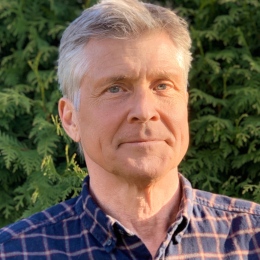
John McDonagh is an Associate Professor in Global Development and the Environment at the School of Global Development, University of East Anglia. His academic journey began with a BSc in Botany (University of Bristol, 1987), followed by an MSc in Tropical Soil Fertility Management (Imperial College, 1988) and a PhD in Tropical Agronomy (University of London, 1993). He joined UEA in 1997 and is a member of the Tyndall Centre for Climate Change Research. His research focuses on tropical soil management, sustainable farming systems, and land degradation assessment across Africa, Asia, and Latin America. Notable projects include GEF-funded ecosystem carbon assessment tools and DFID-supported biochar studies in Ghana and China. He has also contributed to FAO’s LADA project on dryland degradation. McDonagh has extensive field experience in Thailand, Madagascar, Tanzania, and Namibia, blending scientific research with community-based approaches. His interdisciplinary work addresses the nexus of agriculture, environment, and livelihoods, aligning with UN SDGs related to climate action and zero hunger.
Thomas Pape is a Professor at The Natural History Museum of the University of Copenhagen, specializing in the systematics, taxonomy, phylogeny, biogeography and evolution of Diptera (two-winged insects), with special emphasis on Calyptratae families including Sarcophagidae, Oestridae, and Calliphoridae. He has been a professor since 2025 after serving as an Associate Professor from 2004-2024. PhD from Copenhagen University (1990) Docent at Stockholm University (1998) Associate Professor at Danish Bilharziasis Laboratory (1990-1992) Research Entomologist at Naturhistoriska Riksmuseet, Stockholm (1994-2004) His research spans taxonomy, systematics, phylogeny, biogeography and evolution of Diptera with special emphasis on calyptrate families. He collaborates on Systema Dipterorum, conducts comparative larval morphology studies, and investigates the phylogeny of Calyptrata. His work includes Diptera nomenclature and large-scale biodiversity inventories. Analysis of his recent publications reveals a strong trend toward molecular phylogenetics (using RAD-seq and anchored phylogenomics), forensic entomology applications, and biodiversity informatics. His research spans entomology, systematics, evolutionary biology, and increasingly intersects with bioinformatics and conservation science, with significant contributions to understanding flesh flies, bot flies, and blow flies. President of the International Council of Zoological Nomenclature (since 2016) Chair of the Council for the International Congresses of Dipterology (2010-2018) Member of editorial boards for Entomotropica, Studia dipterologica, Stuttgarter Beiträge zur Naturkunde, and Tijdschrift voor Entomologie Dr. Pape teaches courses in Entomology (structure, phylogeny and biology of terrestrial arthropods), Field Biology II - Zoology, and Ecology and Evolution of East Africa (a 2-week field course in Tanzania with Nikolaj Scharff). He has served on scientific panels for SYNTHESYS and as chair of the scientific advisory committee for Museum Koenig in Bonn (2006-2009). His research group employs both morphological and molecular approaches to address evolutionary questions in Diptera, with particular expertise in calyptrate families. The laboratory maintains active international collaborations across multiple continents, as evidenced by his extensive publication record and research network.
Prof. Dr. Deniz Tasdemir is a Full Professor (W3) of Marine Natural Products Chemistry at GEOMAR Helmholtz-Zentrum für Ozeanforschung Kiel and serves as Director of the GEOMAR-Biotech center and Head of the Marine Natural Product Chemistry Research Unit. Her career spans institutions including the National University of Ireland Galway and UCL School of Pharmacy. PhD in Pharmacy, ETH Zurich (1997) Post-doctoral work, University of Utah (2001) Dr. Helmut Legerlotz Fellowship, University of Zurich (2002-2025) Her research focuses on marine chemical ecology , metabolomics , and bioprospecting for bioactive compounds from sponges, algae, and marine microbiomes. Recent work explores seagrass pathogen reduction, microbiome interactions, and aquafeed applications. Scientific awards include: Waters Award for Natural Products Innovation (2016) Egon Stahl Silver Medal (2005) Pierre Fabre Prize (2004) ETH Zurich Medal (1997) She leads collaborative projects on ocean sustainability and marine drug discovery, with editorial roles in Marine Drugs , Planta Medica , and Phytochemistry Letters .
Jennifer Smith is a faculty researcher at the Scripps Institution of Oceanography, University of California, San Diego, where she leads the Smith Lab within the Center for Marine Biodiversity and Conservation. Her work focuses on coral reef ecosystems, integrating ecology with conservation, restoration, and sustainability. Her research explores how human activities such as nutrient pollution, invasive species, and climate change affect benthic marine communities. She has pioneered the use of large-area imaging and structure-from-motion technology to monitor long-term changes in Maui's coral reefs, including responses to sequential bleaching events and wildfire impacts. Her lab investigates microbial interactions with corals and the role of algae in reef degradation and resilience. Dr. Smith’s publication record reveals a strong focus on coral-algal interactions, nutrient dynamics, invasive seaweeds, and ecosystem-scale analyses. Her work spans tropical regions including Hawaii and the Great Barrier Reef, contributing to global understanding of reef resilience. She mentors graduate students and collaborates widely across marine science disciplines. Scientific Awards: No awards mentioned in the provided text. Advising and Grants: Dr. Smith advises graduate students such as Orion McCarthy and Morgan Winston. Her lab conducts long-term monitoring supported by institutional and likely federal funding, though specific grants are not listed. She leads field campaigns in Hawaii and publishes in high-impact journals. Labs and Teams: The Smith Lab is actively engaged in coral reef research, focusing on resilience, restoration, and human impacts. The team includes researchers and volunteers who conduct field surveys, analyze imagery, and produce outreach materials such as the 'Underwater Gardens' film.
Dr. Matthew Brookhouse is a Senior Lecturer at the Fenner School of Environment & Society, part of the Australian National University's Institute for Climate, Energy & Disaster Solutions. With a PhD in Dendroclimatology from ANU, he specializes in using forest structural complexity and tree-ring analysis to understand climate interactions and ecological responses in Australian subalpine environments. Research Focus: Sub-alpine ecology, Dendrochronology, CO2 responsiveness in eucalypt species Teaching: First-year research methods with emphasis on statistical application, advanced modeling and field botany Projects: Leading collaborative snow-gum dieback research and dendrochronological monitoring initiatives His publications span 2006-2025 with recent emphasis on machine learning applications for forest monitoring, tropical tree-ring chronologies for climate change, and climate sensitivity in Australian alpine ecosystems. Key collaborations include institutions like Australian Nuclear Science and Technology Organisation and University of Canberra researchers. Current projects focus on snow-gum woodland dieback mechanisms, high-resolution dendrometric monitoring, and integrating dendrochronology with environmental policy frameworks. He maintains active supervision of research students and contributes to both undergraduate and postgraduate curriculum development.
Thomas Gillespie is a Professor and Co-Chair of the Environmental Science and Engineering (D.Env.) Program at the Department of Geography, University of California, Los Angeles (UCLA). His research integrates Geographic Information Systems (GIS), remote sensing, and biogeography to study tropical dry forests in biodiversity hotspots and develop predictive models for species distribution and conservation. Education: Ph.D. in Geography, UCLA (1998) M.A. in Geography and Planning, California State University, Chico (1994) B.A. in International Affairs, University of Colorado, Boulder (1990) Research Interests: Gillespie’s work focuses on field-based floristic surveys and remote sensing analysis of tropical dry forests across the Pacific, Caribbean, and California. He combines GIS with ecological data to model biodiversity patterns, anthropogenic disturbance impacts, and climate change scenarios. His research spans biogeography, conservation science, and environmental policy. Scientific Awards: NASA Earth and Space Science Fellowship Grants: Gillespie has secured major grants from the National Science Foundation (NSF), Environmental Protection Agency (EPA), National Institutes of Health (NIA, NICHD), and MacArthur Foundation for projects on urban greening, disaster recovery, and tropical forest conservation.
Russell Mittermeier is an Adjunct Professor at the State University of New York at Stony Brook and Chief Conservation Officer at Re:wild. He holds a Ph.D. and M.A. in Biological Anthropology from Harvard University and a B.A. from Dartmouth College (Summa Cum Laude, Phi Beta Kappa). His career spans over 45 years in biodiversity conservation, with fieldwork in 30+ countries, focusing on Amazonia, Atlantic Forest, and Madagascar. Education : Ph.D. and M.A. in Biological Anthropology (Harvard), B.A. (Dartmouth) Mittermeier's research centers on primate and herpetofauna conservation, species discovery (18 new species described), and linking biodiversity to climate change mitigation. He has authored 35 books and over 650 publications, advocating for conservation corridors and partnerships with indigenous communities. His 2015–2019 publications demonstrate interdisciplinary work across primatology, herpetology, and conservation policy, with a focus on tropical ecosystems. Recent studies include taxonomic revisions of titi monkeys, cactus extinction risks, and Amazon turtle hotspots. Scientific Awards : TIME Magazine Hero for the Planet Honorary Doctorate from SUNY Stony Brook Lifetime Honorary IUCN Member Mittermeier collaborates with global institutions like IUCN, Conservation International, and the Margot Marsh Biodiversity Foundation, emphasizing fieldwork, scientific rigor, and community engagement to protect Earth's most vulnerable ecosystems.
Matthew D. Barrett is a researcher at James Cook University , specializing in plant systematics and fungal taxonomy. His work spans diverse areas including angiosperm phylogenomics, fungal biodiversity, and conservation biology of rare Australian flora. Research Focus : Phylogenomic analysis, fungal systematics, and ecological adaptations of Australian plant species. Publications : Contributed to major studies in Nature , Studies in Mycology , and Telopea , with a particular emphasis on Western Australian endemics. His recent publications highlight integrative approaches combining morphological and molecular data for taxonomic revisions, particularly in Basidiomycota and Orchidaceae.
Professor Brendan Choat is a leading plant physiologist and Professor at the Hawkesbury Institute for the Environment, Western Sydney University. With a distinguished career in plant hydraulics and water relations research, he has established himself as a global expert in understanding how plants respond to drought stress. His work spans both natural ecosystems and agricultural systems, with particular emphasis on Australian native forests and crop species. Choat's research focuses on the intricate relationship between plant water transport systems and environmental stressors, particularly drought. His work examines how the xylem tissue functions as a hydraulic system that must balance water delivery to leaves while avoiding cavitation (embolism) that can lead to plant mortality. His groundbreaking research has demonstrated that many woody plant species operate close to their physiological safety margins with respect to drought, making them vulnerable to future climate changes. His laboratory employs cutting-edge non-invasive imaging techniques, including X-ray Micro Computed Tomography (microCT) and Magnetic Resonance Imaging (MRI), to directly visualize xylem function in living plants. This approach has allowed his team to address fundamental questions about how cavitation forms and spreads through plant vascular systems during drought stress. Analysis of Professor Choat's extensive publication record reveals a consistent focus on plant drought responses, with particular emphasis on Eucalyptus species and mangrove ecosystems. His research has increasingly incorporated large-scale monitoring approaches, remote sensing data, and trait databases to understand vegetation responses to climate extremes across broader spatial scales. Clarivate Highly Cited Researcher (2018-2024) ARC Future Fellowship (2013) Humboldt Fellowship for Experienced Researchers (2010) Thomson Reuters Citation and Innovation Award (2015) Professor Choat leads multiple significant research projects examining tree dieback in Australian forests, particularly focusing on Eucalyptus species. His work with citizen scientists through the 'Dead Tree Detective' project has provided valuable data on drought impacts across diverse forest biomes. He maintains active collaborations with researchers across Australia and internationally, contributing to large-scale initiatives like the AusTraits plant trait database. His research has direct implications for forest management, conservation strategies, and predicting ecosystem responses to climate change.
Zaheer Baber is a Professor at the University of Toronto Mississauga in the Department of Sociology . His research bridges social theory , science and technology studies , and comparative/historical sociology , with a focus on race and racial projects , visual sociology , and environmental sociology . He is affiliated with the Institute of Communication, Culture and Information Technology , Munk School of Global Affairs and Public Policy , and Centre for South Asian Civilizations . University of Toronto Mississauga : 2023–present National University of Singapore : 1994–2001 University of Tokyo : 1996 (Japan Society for the Promotion of Science Fellow) University of Saskatchewan : 2001–05 (Canada Research Chair) University of Victoria : 1993 His work critically examines the intersections of science , colonialism , and environmental crisis , exemplified by his SSHRC-funded project on botanical gardens and colonial botany . Recent publications analyze climate politics , racialization in Japan , and neoliberal urbanism , often through interdisciplinary and transnational lenses. He contributes to public sociology via essays in Nature , Times Literary Supplement , and Economic and Political Weekly , blending visual media with critical theory . His methodological approach spans historical analysis , ethnography , and photo-essays . Scientific Awards Canada Research Chair (2001–05) Japan Society for the Promotion of Science Fellow (1997) As an active supervisor, Baber mentors graduate students in critical sociology , science studies , and transnational social theory . His research emphasizes decolonizing knowledge and environmental justice across South Asian and global contexts.
Dr. Lesley Batty is a Reader in Ecological Education at the School of Geography, Earth and Environmental Sciences, University of Birmingham. She plays key leadership roles as Head of Wellbeing and Head of Employability and Placements within the School, reflecting her strong commitment to student development and inclusive education. Her educational background includes a PhD from the University of Sheffield, an MRes and BSc from the University of Reading, and a Postgraduate Certificate in Learning and Teaching from the University of Birmingham. She is a Senior Fellow of the Higher Education Academy and a HEFi Scholar, underscoring her excellence in teaching. Dr. Batty's research centers on the ecology of industrial pollution, particularly in post-mining landscapes. She investigates phytoremediation techniques for contaminated soils, focusing on heavy metals and polycyclic aromatic hydrocarbons (PAHs). Her work extends to ecological education, where she explores inclusive teaching practices, barriers in STEM laboratories, and the integration of employability skills into the curriculum. She is actively involved in national educational policy through her role as Lead Secretary of the British Ecological Society Special Interest Group in Teaching and Learning and as an Associate Editor for the Journal of Geochemical Exploration. Her recent publications reveal a dual focus: one stream on environmental contamination and remediation (e.g., metal and PAH pollution in brownfield sites, phytoremediation with bacteria and chelates), and another on innovative pedagogy in geography and ecology (e.g., virtual field trips, inclusive lab practices, and the future of fieldwork education). This reflects her unique position at the intersection of environmental science and educational leadership. Senior Fellow of the Higher Education Academy (HEA) HEFi Scholar Lead Secretary, British Ecological Society Special Interest Group in Teaching and Learning Dr. Batty is a dedicated educator and researcher who bridges the gap between environmental science and pedagogical innovation. She has made significant contributions to both her field of research and the national discourse on ecological education. Her leadership in student wellbeing and employability, combined with her research on pollution and inclusive learning, demonstrates a holistic approach to academic life. She actively supervises research, as evidenced by her co-authorship with doctoral researchers, and welcomes PhD applications in her areas of expertise. She is a key member of several research groups, including those focused on Physical Geography, Global Biogeochemistry, and Environmental Health Sciences at the University of Birmingham. Her collaborative work, especially in large consortia on conservation education, highlights her strong network and impact in the academic community.
Thomas Wernberg is a Professor in the School of Biological Sciences at The University of Western Australia (UWA), affiliated with the UWA Oceans Institute. His research focuses on ecological interactions in coastal marine habitats, particularly kelp forests, and their responses to climate change, marine heatwaves, and invasive species. He has held roles including Chair of UWA's Boating & Diving Safety Committee and Editor-in-Chief of Aquatic Botany . Wernberg has contributed to over 267 publications and secured 53 grants, including projects on kelp restoration and blue carbon management. He is a recipient of multiple 'Highly Cited Researcher' awards and has advised on initiatives like Seaforester . His work bridges sub-cellular to macro-ecological scales, addressing climate mitigation through marine ecosystem services. Education: MSc from Roskilde University (RUC). Previous Positions: ARC Future Fellow (2011–2015), Senior Lecturer (2015–2021), and various postdoctoral roles at UWA and other institutions. Research Themes: Climate change impacts, marine heatwaves, kelp restoration ( Green Gravel ), blue carbon, and biodiversity conservation. His lab explores resilience thresholds, ecological costs of stress, and genetic diversity's role in adaptation. Collaborations span global institutions, with active research in Arctic/Subarctic regions and Australian marine ecosystems. Grants & Projects: Includes operational upscaling of seaforestation, hydrodynamic energy attenuation studies, and blue carbon management. He leads initiatives to protect 4 million hectares of kelp forests by 2040. Awards: 2019–2022 Highly Cited Researcher (Web of Science), 2022 Senior Research Award (UWA School of Biological Sciences). Labs/Teams: Collaborates with the Great Southern Reef Foundation, Uluu Scientific Advisory Board, and international networks like the Green Gravel Action Group .
Mats Björk is a Professor at Stockholm University's Department of Ecology, Environment and Botany, where he leads the Birch research group focused on marine plant physiology and seagrass ecosystems. He coordinates the bilateral Marine Science Programme between Sweden and Tanzania, building capacity at the University of Dar es Salaam. His research examines: Seagrass productivity and carbon sequestration dynamics in tropical/temperate regions Impacts of environmental stressors (e.g., pollution, acidification) on marine vegetation Blue carbon storage in coastal landscapes including mangroves and seagrass meadows His work spans field studies in Eastern Africa and the Baltic Sea, combining ecophysiology with ecosystem-scale carbon flux assessments. Research interests emphasize: Photosynthetic adaptations of marine angiosperms Sediment carbon storage mechanisms Climate resilience of coastal carbon sinks Analysis of recent publications reveals strong emphasis on blue carbon dynamics, with 11 of 15 articles (2016-2023) addressing carbon sequestration in seagrasses. Work increasingly integrates molecular ecology (e.g., gene expression in Posidonia ) and anthropogenic impacts (microplastics, land-use change). Notable recognitions include co-authorship of IUCN climate resilience guidelines and contributions to intergovernmental blue carbon assessments. Current projects include: CLIM-SCAPE (Baltic coastal carbon hotspots) Ag + släke (nutrient reduction/biodiversity conservation) Fisheries/aquaculture capacity-building in Tanzania
Dr. Chiara Bertelli is a Lecturer in Biosciences at Swansea University within the Faculty of Science and Engineering, School of Biosciences, Geography and Physics. With over 15 years of experience in coastal and marine ecological surveys, she specializes in seagrass ecology and restoration, marine conservation, and habitat suitability modeling. Dr. Bertelli has extensive field experience including boat-based surveys, SCUBA diving, and snorkeling in both temperate and tropical environments. She is currently completing her PhD part-time focusing on environmental drivers of change in seagrass meadows in the UK and Brazil. Her educational background includes advanced training in marine biology with specialization in ecological survey techniques and data analysis using R and Primer. Her primary research focuses on seagrass ecology as nature-based solutions for climate change. She develops habitat suitability models to inform optimal locations for seagrass restoration, with applications in carbon sequestration (blue carbon) and marine biodiversity enhancement. Her work aligns with UN Sustainable Development Goals 13 (Climate Action) and 14 (Life Below Water). Analysis of Dr. Bertelli's recent publications (2020-2025) reveals a strong emphasis on practical applications of seagrass research to inform restoration efforts. Her work spans habitat suitability modeling, environmental stress responses, nutrient dynamics, and decision-support tool development. A significant portion addresses seed-based restoration techniques, ecosystem services, and the socio-ecological dimensions of marine conservation. Dr. Bertelli actively collaborates with external organizations including Project Seagrass, Sky Ocean Rescue, WWF, Natural England, and the National Oceanographic Centre. Her current ReSOW project aims to develop the CEEDS (Coastal Ecosystem Enhancement Decision Support) tool, an open-source platform to guide seagrass restoration practitioners. As an educator, Dr. Bertelli teaches several field-based marine biology courses including BIO260 Marine Biology Field Course, BIO327 Tropical Marine Ecology Field Course, and BIO346 Professional Skills in Marine Biology. Her teaching emphasizes practical, field-based learning and professional skill development for marine biologists, with a focus on survey techniques, data analysis, and environmental impact assessment. Dr. Bertelli is actively involved in research teams focused on marine ecosystem restoration and coastal management. Her work bridges academic research with practical conservation applications, working closely with government agencies, NGOs, and international research partners to translate scientific findings into actionable conservation strategies.
Steven Hall is an Assistant Professor and Extension Specialist in the Department of Plant and Agroecosystem Sciences at the University of Wisconsin-Madison (UW-Madison), College of Agricultural & Life Sciences. Previously, he held roles as Assistant and Associate Professor in the Department of Ecology, Evolution, and Organismal Biology at Iowa State University. His research focuses on agroecosystem water quality, soil carbon dynamics, and nutrient management in agricultural landscapes, with an emphasis on how redox conditions, geochemical factors, and microbial communities influence carbon sequestration and greenhouse gas emissions. He obtained a PhD in Ecosystem Science from UC Berkeley and MS/BS degrees from UW-Madison in Environment and Resources/Botany, respectively. His educational background includes studies at the University of California-Berkeley (PhD, Ecosystem Science), University of Wisconsin-Madison (MS, Environment & Resources; BS, Botany). Research priorities include evaluating conservation practices, crop diversification, and novel fertilizer technologies for environmental benefits. The Hall Lab employs mesocosm experiments, isotopic tracing, and continental-scale datasets to address challenges in climate-smart agriculture and water quality preservation. Research highlights include groundbreaking work on iron-driven carbon decomposition mechanisms, microbial controls on lignin mineralization, and nitrous oxide emissions from tile-drained soils. Recent studies emphasize the role of poorly drained depressions as nutrient leaching hotspots and the unexpected carbon losses from anaerobic soils, challenging existing biogeochemical models. Advising and grants involve mentoring current graduate students (Moira Keith, Hariom Yadav) and undergraduate researchers. Opportunities to join his lab depend on funded projects. Collaborations include the International Soil Radiocarbon Database (ISRaD) and partnerships with institutions like the Savanna Institute. The lab is situated in Moore Hall, Plant Sciences Building, with outreach activities through UW-Madison's extension programs. Key infrastructure includes automated gas flux measurement systems and soil block mesocosms. Ongoing work integrates machine learning with NEON soil data to model organic carbon dynamics, while field studies explore digestate amendments and biochar impacts. His research bridges laboratory experiments with landscape-level observations to inform sustainable agricultural practices.