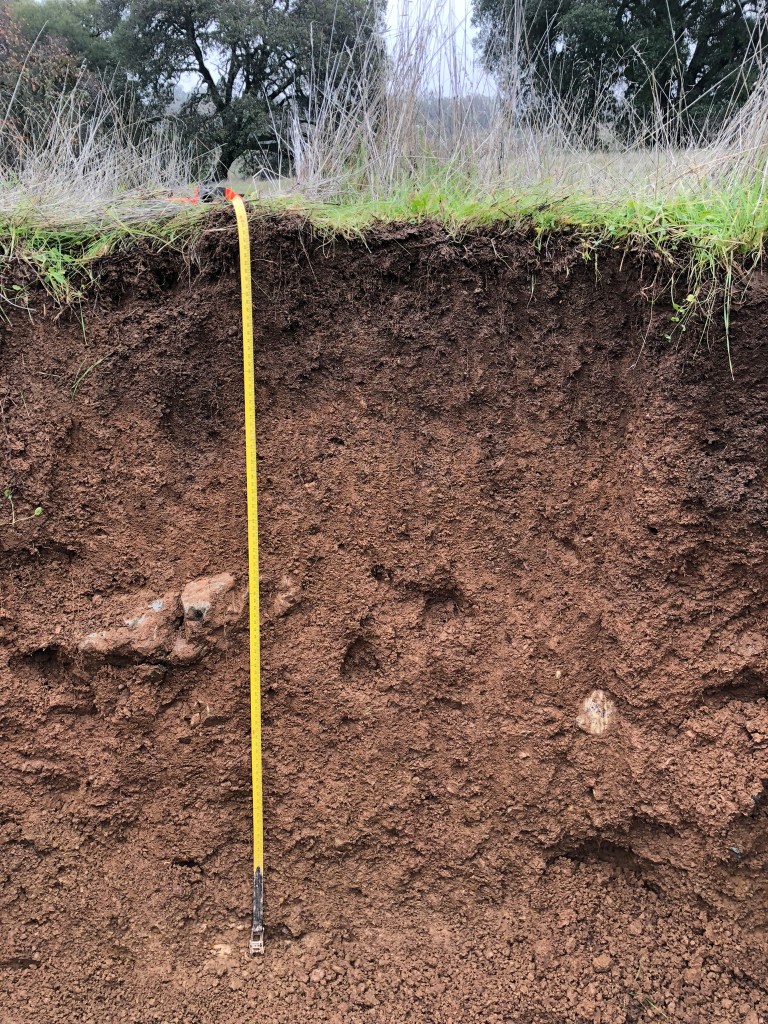
Eric Slessarev is an Assistant Professor at Yale University , affiliated with the Department of Ecology and Evolutionary Biology and the Yale Center for Natural Carbon Capture. His research focuses on soil biogeochemistry, particularly how soil properties influence carbon and nutrient cycling in terrestrial ecosystems, with applications to climate change mitigation strategies like enhanced rock weathering and perennial grass cultivation. Teaches Ecology of Landforms and General Ecology Labs located at KGL 318 (research) and KGL 417 (office) His recent publications highlight interdisciplinary approaches to understanding mineral-organic matter interactions, microbial controls on carbon cycling, and policy implications for soil-based carbon removal strategies. Key methodologies include global data synthesis, isotope tracing, and experimental manipulation of soil-plant systems across depth profiles. Notably, his 2025 work demonstrates drought impacts on carbon persistence, microbial harnessing for CO2 removal, and economic modeling of reversible carbon storage. 2024 studies explore deep-rooted plant effects on carbon fractions, calcium's role in mollisol formation, and policy optimization for carbon sequestration.
Paul Wilson serves as the Grainger Professor of Nuclear Engineering and Chair of the Department of Nuclear Engineering & Engineering Physics at the University of Wisconsin-Madison. His research develops computational tools for modeling nuclear energy systems with applications in radiation shielding, waste management, non-proliferation, and energy policy. Education: PhD in Nuclear Engineering, University of Wisconsin-Madison (1999) Dr.-Ing in Mechanical Engineering, Technical University of Karlsruhe (1998) MS in Nuclear Engineering, University of Wisconsin-Madison (1995) B.A.Sc. in Engineering Science (Nuclear Power option), University of Toronto (1992) Wilson's research spans computational nuclear engineering with emphasis on Monte Carlo methods, nuclear fuel cycles, and proliferation analysis. His Computational Nuclear Engineering Research Group (CNERG) develops simulation tools for radiation transport, waste transmutation, and fusion systems. Key projects include the Infinity Two fusion pilot plant design and Cyclus nuclear fuel cycle simulator. Recent publications reveal strong focus on fusion energy systems (particularly stellarator-based designs like Infinity Two), machine learning applications in nuclear security, and advanced neutronics modeling. His work bridges computational methods with real-world nuclear challenges including waste management and non-proliferation. Scientific awards: Fellow of the American Nuclear Society (2023) American Nuclear Society Young Member Advancement Award (2019) American Nuclear Society Arthur Holly Compton Award (2018) Grainger Professor of Nuclear Engineering (2016) American Nuclear Society Presidential Citation (1996) Wilson advises graduate students through thesis research courses (N E 790/890/990) and has secured significant funding from the U.S. Department of Energy. His consultancy roles include work with CEA Saclay, Karlsruhe Institute of Technology, and the Blue Ribbon Commission on America’s Nuclear Energy Future. He previously served on the Generation IV Technology Roadmap Committee (2001-2003). He leads the Computational Nuclear Engineering Research Group (CNERG), which develops open-source tools including PyNE and Cyclus. The group's work spans fusion pilot plant design, nuclear security applications, and fuel cycle simulation for next-generation nuclear systems.
Prof. Dr. Hüseyin Yapıcı is a faculty member in the Department of Mechanical Engineering at Başkent University . His research focuses on Nuclear Energy Systems , Accelerator Technology , and Thermodynamics . Nuclear Reactor Design Energy Systems Optimization Heat Transfer Analysis His work involves numerical simulations , neutronic analysis , and nuclear waste transmutation . Recent publications highlight three-dimensional power density modeling in accelerator-driven systems and tritium production studies. Prof. Yapıcı has supervised numerous students, including Gizem Bakır , Alper Buğra Arslan , and Büşra Durmaz , across diverse projects from fusion-fission hybrids to renewable energy systems .
Paul D. Brooks is a Professor in the Department of Geology/Geophysics at the University of Utah, where he has been a faculty member since July 2014. His research focuses on understanding water, energy, and biogeochemical cycling in seasonally snow-covered catchments, with increasing emphasis on predicting how climate and land use changes impact snow accumulation, ablation, and snowmelt-derived surface and ground water resources. His educational background includes a BS in Biology and Chemistry from Florida State University, followed by an MS in Ecohydrology (1991) and PhD in Biogeochemistry (1995), both from the University of Colorado, Boulder. Prior to his position at the University of Utah, Dr. Brooks was a Professor in the Department of Hydrology and Water Resources at the University of Arizona from December 2000 to June 2014. Dr. Brooks' research spans multiple disciplines within earth sciences, focusing primarily on hydrology, ecohydrology, and biogeochemical cycling in mountainous, snow-dominated environments. His work examines how climate change affects snowmelt processes, groundwater-surface water interactions, and water resource availability in the western United States. He employs a combination of field measurements, isotope hydrology, and modeling approaches to understand complex hydrological processes across multiple spatial and temporal scales. His research increasingly involves collaboration with stakeholders to translate scientific findings into practical water resource management applications. Analysis of Dr. Brooks' recent publications reveals a strong focus on groundwater-surface water interactions in snowmelt-dominated systems, with particular attention to how climate change affects streamflow generation processes. His work bridges fundamental hydrological science with practical water resource concerns, examining topics such as runoff efficiency, groundwater storage dynamics, and the impacts of land cover changes on hydrological processes. A significant portion of his recent research investigates the Western United States water resources under changing climate conditions. AGU Fellow (American Geophysical Union) Dr. Brooks actively mentors graduate students through thesis research (both PhD and Master's level) as evidenced by his teaching activities. His lab conducts research supported by various grants focused on understanding water resources in mountainous regions, particularly examining how climate change affects snowmelt hydrology and water availability. He collaborates extensively with researchers across multiple institutions, as demonstrated by his numerous co-authored publications with scientists from various universities and research organizations. Dr. Brooks leads research efforts through his lab at the University of Utah and is involved with the Wasatch Environmental Observatory, a mountain-to-urban research network in the semi-arid Western US. His work integrates field measurements across complex terrain to understand how topography, vegetation, and climate interact to control water, energy, and biogeochemical cycling in seasonally snow-covered environments.
Lucie Tvrznikova is a Postdoctoral Researcher at Lawrence Livermore National Laboratory, specializing in experimental particle physics and detector engineering. Her work focuses on direct dark matter detection, nuclear physics, and cyclotron radiation emission spectroscopy (CRES). She holds a Ph.D. from Yale University (2019), where her dissertation explored sub-GeV dark matter searches and electric field modeling in the LUX and LZ experiments. Her research has advanced understanding of low-mass dark matter particles, detector calibration techniques, and high-voltage behavior in liquid noble gases through projects like XeBrA and the Project 8 collaboration. Key contributions include developing methods to extend LUX's sensitivity using Bremsstrahlung and Migdal effects, creating 3D electric field models for xenon detectors, and advancing CRES technology for neutrino mass measurements. She collaborates on major experiments like LZ and the LUX-ZEPLIN initiative, addressing challenges in next-generation noble liquid detectors. Current work focuses on dielectric breakdown studies in liquid xenon, machine learning applications for data analysis, and neutrino mass measurements using Project 8's Kr and tritium systems.
Dr. Andreas Kopmann serves as Deputy Director of the Institute for Process Data Processing and Electronics (IPE) at Karlsruhe Institute of Technology (KIT) and leads the Process Data Processing group. With over two decades of experience in experimental physics and data systems, he plays a pivotal role in major international research collaborations including the KATRIN neutrino experiment and PANDA detector project. PhD in Electrical Engineering, University of Hannover (2000) Diploma in Electrical Engineering, University of Hannover (1994) Dr. Kopmann's research focuses on data acquisition systems, trigger systems, real-time monitoring, GPU computing, and data management for large-scale physics experiments. His work bridges experimental physics requirements with advanced computing technologies, particularly in high-data-rate applications for particle physics and synchrotron radiation facilities. He has pioneered novel detector technologies and data processing frameworks that enable cutting-edge scientific discoveries in neutrino physics and accelerator science. Analysis of Dr. Kopmann's recent publications reveals a strong trajectory toward higher data rates, sophisticated real-time processing, and integration of machine learning techniques. His work spans neutrino physics through KATRIN, detector development for PANDA and other experiments, and innovative data acquisition systems like KALYPSO and UFO. The interdisciplinary nature of his research combines particle physics, computing science, and electronics engineering to solve complex experimental challenges. KIT Program Lead for "Matter and Technologies" (2021-present) Coordinator of Helmholtz Program Topic "Detector Technologies and Systems" Principal Investigator in Karlsruhe School for Elementary Particle Physics (KSETA) Project Leader for Data Acquisition in KATRIN experiment As Deputy Director of IPE, Dr. Kopmann oversees research groups developing critical technologies for experiments at KIT, DESY, CERN, and other international facilities. His team's work on high-speed data acquisition, detector electronics, and computing infrastructure supports groundbreaking research in particle physics, neutrino physics, and materials science.
Professor Christian Weinheimer is a leading experimental physicist at the University of Münster's Institute of Nuclear Physics, where he holds a full professorship and serves as the Managing Director of the Institute. His research focuses on fundamental questions in particle and astroparticle physics, particularly neutrino mass measurements and the search for dark matter. He plays key roles in major international collaborations including KATRIN (neutrino mass experiment at Karlsruhe Institute of Technology) and XENONnT (dark matter search experiment at the Italian LNGS underground laboratory). Weinheimer's research interests span neutrino physics , dark matter detection , precision measurement techniques , and detector development . His group develops cutting-edge technologies for the KATRIN experiment's precision high-voltage system and electrode components, while also pioneering cryogenic distillation techniques for the XENON experiments to remove radioactive contaminants. His work extends to medical applications through the BOLD-PET project, developing novel detectors using trimethylbismuth for positron emission tomography. Analysis of his recent publications reveals a strong focus on pushing the boundaries of neutrino mass measurements, developing next-generation dark matter detectors capable of reaching the 'neutrino fog' sensitivity limit, and exploring innovative detector technologies. His work consistently combines theoretical insight with experimental ingenuity to address fundamental questions about the universe's composition and fundamental particles. Scientific awards: ERC Advanced Grant (2022) Helmholtz-Preis (2001) Dissertationspreis from Vereinigung der Freunde der Universität Mainz (1993) CERN Fellowship (1995-1996) Weinheimer actively mentors PhD students working on KATRIN background reduction, dark matter searches with XENON, precision energy measurements, and novel PET detector development. His research is supported by major grants including the ERC Advanced Grant LowRad project (2022-2027), multiple DFG-funded Collaborative Research Centers, and international collaborations with CERN, DESY, and research institutions worldwide. He also leads the development of technologies for the future DARWIN/XLZD observatory, which aims to be the most sensitive dark matter detector ever built. His laboratory operates specialized facilities including a large xenon purification system, detector development labs for the BOLD-PET project, and precision measurement equipment for high-voltage and low-background applications. Weinheimer's group collaborates extensively with other research teams at Münster University, particularly with the Cells in Motion initiative and the European Institute for Molecular Imaging.
Tim Mays is Professor of Chemical and Materials Engineering at the University of Bath, where he also serves as Director of the Institute for Sustainable Energy and the Environment and Co-Director of the Centre for Sustainable Chemical Technologies. Research Focus: His work centers on hydrogen storage technologies, nanoporous materials, and sustainable energy systems. Current projects include developing advanced materials for cryogenic hydrogen storage and low tritium isotope separation for fusion power applications. Leadership: Directs multidisciplinary research initiatives through the Water Innovation and Research Centre and Centre for Sustainable Energy Systems, leading projects funded by EPSRC and Aerospace Technology Institute.
Dr. Yeong E. Kim is Professor of Physics at Purdue University, where he has maintained continuous faculty appointment since 1967. He currently serves as Director of the Center for Sensing Science and Technology (CSST) since 2001 and leads the Purdue Nuclear and Many-Body Theory Group. His academic career spans over five decades with significant contributions to theoretical physics. Undergraduate studies at Seoul National University (1954-1955) B.S. from Lincoln Memorial University (1959) Ph.D. from University of California, Berkeley (1963) Dr. Kim's research spans theoretical nuclear physics with extensions into condensed matter physics, atomic/molecular/optical physics, nuclear astrophysics, and quantum statistical mechanics. His most distinctive work focuses on theoretical frameworks for low-energy nuclear reactions in condensed matter environments, particularly examining how quantum effects in metal hydrides might enable nuclear reactions at substantially lower energies than conventional nuclear physics predicts. His research bridges fundamental quantum theory with potential applications in clean energy technologies and sensing science. Analysis of Dr. Kim's publication record reveals a consistent trajectory exploring quantum statistical mechanics applications to nuclear phenomena. His work demonstrates increasing focus on Bose-Einstein condensation mechanisms applied to nuclear fusion in metal hydride systems, with particular attention to micro/nano-scale phenomena. This research direction represents an unconventional approach to nuclear reaction theory that has generated both interest and debate within the physics community. Fellow of the American Physical Society (elected 1977) Senior U.S. Scientist Award from Alexander von Humboldt Foundation (1977) Dr. Kim has supervised 10 Ph.D. students throughout his career and authored or co-authored over 200 refereed scientific publications. As Director of CSST, he has successfully translated research into commercial applications, guiding the creation of six startup companies (Griffin Analytical, Prosolia, Quadraspec, 2K, PathoChip, and QE) based on technologies developed by CSST researchers. His leadership extends to numerous advisory roles for government agencies and international conferences in nuclear physics, including chairing the first Gordon Research Conference on Few Body Problems in Physics (1977) and serving on multiple international advisory committees for Asia-Pacific conferences on Few-Body Problems. Dr. Kim leads the Purdue Nuclear and Many-Body Theory Group, established in 1967, and directs the Center for Sensing Science and Technology. His research group has maintained consistent productivity for decades, with recent work focusing on theoretical interpretations of anomalous nuclear phenomena in condensed matter systems. The CSST under his direction has become a significant hub for translating fundamental physics research into practical sensing technologies with commercial applications.
Professor David Armstrong serves as Professor of Materials Science and Engineering at the University of Oxford and Fellow and Tutor at St Edmund Hall. His work focuses on developing materials for extreme environments including nuclear fusion reactors, aerospace systems, and energy storage applications through microstructural control and advanced mechanical characterization. His educational background includes a first degree in Materials Science from St Anne’s College, Oxford and a DPhil from Corpus Christi, Oxford investigating micromechanical properties in copper and nickel alloys. This foundational work evolved into radiation damage studies during his Culham Centre for Fusion Energy Junior Research Fellowship. Armstrong's research centers on mechanical behavior of materials under extreme conditions—high temperatures (jet engines, reactors), radiation exposure (nuclear facilities, space), and high stresses (batteries, geological systems). He develops novel testing methodologies for nanoscale mechanical properties up to 1300 K, collaborating with Rolls Royce, UKAEA, ESA, and Berkeley on fusion materials, aerospace components, and battery technologies. His work bridges fundamental micromechanics with industrial applications in energy systems. Analysis of his 2023-2025 publications reveals dominant themes in nuclear fusion materials (tungsten, ODS steels), lithium battery interfaces, and ceramic composites for extreme environments. Methodologically, his group pioneers correlative microscopy combining nanoindentation, TEM, and atom probe tomography to study irradiation effects, high-temperature deformation, and interfacial degradation across length scales. His scientific recognition includes: Culham Centre for Fusion Energy Junior Research fellowship (2009) Royal Academy of Engineering Research Fellowship (2013) Institute of Materials Minerals and Mining Grunfeld Memorial Award & Medal (2015) As an educator, Armstrong teaches core mechanical properties courses across undergraduate years and leads Fusion CDT modules on nuclear materials. He supervises numerous doctoral students while serving on the EPSRC Fusion Advisory Board and CDT management board. Current grants support micro-engineering of alloys for nuclear environments and lithium-metal battery development through industry partnerships with Rolls Royce and MicroMaterials. His research group operates advanced micromechanical testing facilities for high-temperature and irradiated materials, collaborating with UKAEA’s Culham Centre and European fusion laboratories on plasma-facing component development. Future work targets solid-state battery interfaces and radiation-resistant high-entropy alloys for next-generation fusion reactors.
Andrew Turner is a Visiting Associate Professor at the University of Plymouth within the School of Geography, Earth and Environmental Sciences , Faculty of Science and Engineering. His work focuses on marine and environmental biogeochemistry, with particular emphasis on plastic and chemical pollutants in marine, terrestrial, and atmospheric systems. Teaches marine and environmental biogeochemistry Researches plastics, heavy metals, and emerging contaminants Integrates citizen science with conventional research Collaborates with 20+ international institutions Research Themes: Specializes in microplastic/nanoplastic pollution, toxic metal interactions, waste management, and atmospheric plastic transport. His studies include human exposure to microplastics, contamination of consumer goods, and environmental impacts of recycling processes. Publication Trends: Recent articles show increasing focus on microplastic-air interactions, human health implications, and analytical advancements in plastic and metal detection. Key subfields: atmospheric microplastics, biofluid contamination, dust storm transport, and consumer product leaching. Advising & Collaboration: Supervises PhD/MRes candidates and 150+ MSc students. Collaborates with organizations including WHO, Science Museum, and academic institutions across 15 countries.
Carl R. Brune is a Professor in the Department of Physics and Astronomy at Ohio University, affiliated with the College of Arts and Sciences. He is actively involved in research at the Edwards Accelerator Lab, the Institute of Nuclear & Particle Physics (INPP), and the Astrophysical Institute. Ph.D., California Institute of Technology (1994) B.S., University of California, Santa Barbara (1988) Brune's research focuses on experimental low-energy nuclear physics, particularly nuclear astrophysics—studying nuclear processes from the Big Bang to stellar evolution and supernovae. His work also explores nuclear structure, fundamental interactions, and applications in medical physics and cargo screening. He frequently conducts experiments at Ohio University's Edwards Accelerator Laboratory and national facilities like Oak Ridge and Notre Dame. His recent publications (2023–2025) highlight advancements in quantum physics of stars, machine learning applications in astrophysical reaction measurements, and probabilistic methods in R-matrix analyses. These works span topics such as neutron production, level densities, cross section measurements, and nucleosynthesis processes. Brune has contributed to major collaborative scientific efforts, including white papers on nuclear astrophysics and next-generation gamma-ray sources, reflecting his leadership in the field. Member, Institute of Nuclear and Particle Physics (INPP) Active researcher in nuclear data and reaction modeling Collaborator on large-scale experimental campaigns
Samuel A. Bryan serves as a Lab Fellow and Chemist at Pacific Northwest National Laboratory (PNNL), where he pioneers spectroelectrochemical sensor development for measuring chemical species in highly complex nuclear systems. His innovations have resolved critical Department of Energy safety issues, particularly regarding ferrocyanide concentration determination in nuclear waste and hydrogen flammability in Hanford waste tanks. Dr. Bryan earned his B.S. in Chemistry from Boise State University (1979), followed by M.S. and Ph.D. degrees in Inorganic Chemistry from Washington State University (1983, 1985). His educational background established the foundation for his expertise in complex chemical systems analysis. His research focuses on real-time spectroscopic monitoring methodologies for nuclear applications. Key contributions include developing the first-ever luminescence detection from technetium complexes, creating sensors for nuclear waste analysis, and establishing predictive models for hydrogen gas generation that continue to inform Hanford Waste Treatment Plant safety designs 25 years later. His work bridges fundamental chemistry with practical nuclear engineering solutions. Analysis of his recent publications reveals strong emphasis on multi-modal spectroscopy (Raman, UV-Visible, NIR) combined with chemometric analysis for nuclear applications. His research spans from fundamental sensor development to practical implementation in nuclear fuel recycling, waste treatment, and safeguards verification. Fellow of the American Chemical Society Chair of Richland Section of the ACS (1998 and 2004) Fitzner-Eberhardt Award for Outstanding Contributions to Science and Engineering Education PNNL Laboratory Director's award (2005) ACS ChemLuminary Award for Outstanding Performance by Richland Section (2004) Dr. Bryan's technical leadership extends to mentoring junior scientists and contributing to national initiatives in nuclear safeguards. His current research focuses on microfluidic sensor systems, multi-modal spectroscopy approaches, and advanced data analysis techniques for nuclear applications, continuing to address critical challenges in nuclear waste management and national security.
Daniella M. Rempe is an Associate Professor in the Department of Earth and Planetary Sciences at the Jackson School of Geosciences, University of Texas at Austin. Her research focuses on hydrology and geomorphology, particularly how near-surface processes influence water resources, vegetation, and ecosystems. She employs hydrological and geophysical field techniques to study bedrock water storage (rock moisture), subsurface dynamics, and their impacts on ecological resilience and climate adaptation. Key research themes include plant use of bedrock water storage, vadose zone dynamics under drought, and geologic controls on water availability. Notably, her 2021 Nature paper revealed widespread use of bedrock water by woody plants across the U.S., reshaping understanding of ecosystem water budgets. Her work integrates field observations with modeling to address critical zone processes and climate change impacts. Dr. Rempe leads the Rempe Research Group, actively mentoring students and postdocs in quantitative hydrogeology and ecohydrology. Her lab investigates topics ranging from wildfire effects on water storage to karst aquifer hydrodynamics. Collaborations span disciplines, including geochemistry, remote sensing, and machine learning. Her research has been featured in Science & Vie Magazine , radio programs, and international conferences. Current projects focus on advancing predictive models of subsurface water dynamics and informing sustainable water management strategies for arid and semi-arid regions.
Thomas Shutt is a Professor of Particle Physics and Astrophysics at Stanford University, with a courtesy appointment in the Physics department. He serves as a Senior Member at the Kavli Institute for Particle Astrophysics and Cosmology (KIPAC) and holds a faculty position at the SLAC National Accelerator Laboratory within the Fundamental Physics Directorate. His office is located at the Fred Kavli Building at 2575 Sand Hill Road, Menlo Park, California. Professor Shutt's research focuses on experimental particle astrophysics, particularly in the area of dark matter detection. His work centers on developing and utilizing xenon-based detectors, especially through the Large Underground Xenon (LUX) experiment, to search for Weakly Interacting Massive Particles (WIMPs). His research interests span particle physics, astrophysics, and the development of advanced detection technologies for rare-event physics experiments. Analysis of his recent publications (2016-2017) reveals a strong emphasis on data analysis from the LUX experiment, with particular attention to improving sensitivity for low-mass WIMPs, developing calibration techniques using tritium sources, and implementing advanced trigger systems using FPGA technology. His work consistently contributes to setting increasingly stringent limits on WIMP-nucleon interaction cross-sections across multiple channels. Professor Shutt actively mentors graduate students, serving as Doctoral Dissertation Advisor for Bahrudin Trbalic and Doctoral Dissertation Co-Advisor for Drew Ames. He teaches independent research courses including PHYSICS 190 (Independent Research and Study) and PHYSICS 490 (Research) across all academic quarters. His laboratory work is primarily conducted through the LUX collaboration and previously through the Cryogenic Dark Matter Search (CDMS) experiment, representing significant contributions to the field of direct dark matter detection.