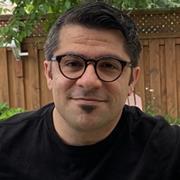
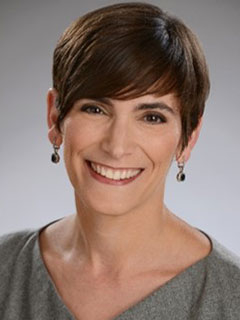
Dr. Andreas Kappes is a researcher at the Department of Psychology at City St George's, University of London . His work bridges social psychology , neuroscience , and behavioral economics to examine how uncertainty shapes social decision-making, moral judgment, and prosocial behavior. He has a particular focus on evidence-based policy for infectious diseases and pandemics. His research explores: How impact uncertainty paradoxically increases prosocial behavior The interaction between neural mechanisms and social norms in cooperative dilemmas Cultural differences in vicarious optimism and moral reasoning Recent publications highlight his contributions to understanding human-AI relational norms , end-of-life medical ethics , and cross-cultural pandemic behavior . He is a frequent contributor to BBC Worldservice , Deutsche Welle , and Al Jazeera on topics ranging from pandemic mental health to post-truth cognition.
Dr. Peter Kavsak is a Professor in the Department of Pathology and Molecular Medicine at McMaster University, Hamilton, Ontario, Canada. He is a Fellow of the Canadian Academy of Clinical Biochemistry, American Association for Clinical Chemistry (AACC) Academy, and the Canadian Cardiovascular Society. His clinical and academic work focuses on cardiac and cancer-related laboratory tests, with over 240 publications in clinical chemistry and laboratory medicine. Research areas: Cancer diagnosis, Cardiology, Medical biotechnology diagnostics, Pathology His scholarly activity includes leadership in validating high-sensitivity cardiac troponin assays , defining analytical performance limits, and addressing biomarker interference challenges (e.g., macrocomplexes). He has contributed to guidelines for cardiac biomarker use in emergency and perioperative settings, with a focus on sex-specific thresholds, delta criteria, and patient risk stratification. Scientific awards include: Fellow, Canadian Academy of Clinical Biochemistry Fellow, AACC Academy Fellow, Canadian Cardiovascular Society His work spans cardiac biomarker validation, cancer diagnostics, and laboratory medicine innovations, influencing clinical protocols for myocardial injury detection and troponin interpretation.
Rajesh Ganesan is an Associate Professor in the Department of Systems Engineering and Operations Research at George Mason University's Volgenau School of Engineering. His research focuses on applying advanced mathematical and computational methods to solve complex decision-making problems under uncertainty across multiple critical domains including cybersecurity, healthcare, defense, and transportation systems. His research interests span cybersecurity operations, healthcare resource allocation, transportation systems optimization, stochastic optimization, and reinforcement learning. Ganesan's work addresses fundamental challenges in sequential decision-making under uncertainty, with applications ranging from cybersecurity analyst scheduling to liver transplant allocation and air traffic management. His research has significant implications for national security, public health, and transportation efficiency. His publication record demonstrates consistent contributions to high-impact journals and conferences, with recent work focusing on cybersecurity operations centers (CSOCs), adaptive resource allocation, deception technologies, and healthcare optimization. His research methodology combines stochastic optimization, approximate dynamic programming, and reinforcement learning to tackle complex real-world problems. Teacher of Distinction Award, Center for Teaching Excellence ISERC Best Track Paper Award, National Security Track Faculty Study Leave, GMU Provost Office Multiple U.S. Patents in process control and manufacturing Best Paper Awards in air transportation and security domains Ganesan has successfully mentored PhD and Master's students including Poornima Balakrishna (recipient of the INFORMS Best Dissertation Award) and Sameer Kulkarni (recipient of the Transportation Research Board Graduate Research Award). His research has been funded by the National Science Foundation, Department of Defense, NIH, and other agencies, addressing critical challenges in security operations, healthcare systems, and transportation networks. His laboratory work centers around the Center for Secure Information Systems and the Center for Air Transportation Systems Research (CATSR), where he develops computational frameworks for dynamic resource allocation in complex adaptive systems.
George P. Kafentzis is a Lecturer in the Computer Science Department at the University of Crete, where he teaches Physics for Engineers (CS-112), Digital Signal Processing (CS-370), and Signals and Systems (CS-215). He is a core member of the Speech Signal Processing Lab within the Multimedia Informatics Labs, focusing on advanced signal processing methodologies. His educational background includes a Ph.D. in Signal Processing and Telecommunications from MATISSE Doctoral School (University of Rennes 1) and a Ph.D. in Computer Science and Engineering from the University of Crete (2014), a Master of Science in Computer Science (2010), and a Bachelor's degree in Computer Science (2008), all from the University of Crete. Research interests span speech, audio, and biosignal processing with emphasis on sinusoidal modeling, emotion recognition from speech, deep learning applications, pathological speech analysis, and music signal processing. His work bridges theoretical signal processing with clinical and engineering applications, particularly in non-invasive vocal fold pathology detection through glottal analysis. Recent publications demonstrate a strategic pivot toward cough sound analysis for respiratory diagnostics using AI, while maintaining core expertise in adaptive sinusoidal models for speech transformations. Publication trends reveal an evolution from fundamental speech modeling (2010-2016) toward applied health informatics (2021-present), with increasing focus on real-world diagnostic systems leveraging cough acoustics. Over 50% of recent work integrates deep learning with traditional signal processing for medical applications, particularly in low-resource settings. Graduate student Scholarship - Institute of Computer Science, FO.R.T.H. (2008-2010) Undergraduate Scholarship - Institute of Computer Science, FO.R.T.H. (2007-2008) As an active industry collaborator, Kafentzis has served as Signal Processing Engineer at Hyfe AI (2022-2025) and contractor for VoiceSignals and Toshiba Research Europe. His teaching portfolio includes a widely adopted textbook Continuous and Discrete Time Signal Processing (2019), which integrates MATLAB implementations with theoretical foundations. Current research leverages his signal processing expertise in cough monitoring systems validated through multicenter clinical trials. He leads projects in the Speech Signal Processing Lab including Novel Deep Learning Architectures for Automatic Speech Recognition and Speech Emotion Recognition and Visualization Techniques, with recent work extending to Greek-language pathological speech analysis and respiratory health monitoring systems.
Marek Bawiec serves as an Assistant Professor in the Department of Technical Informatics at the Faculty of Computer Science and Telecommunications, Wrocław University of Science and Technology. His academic profile demonstrates expertise in embedded systems design and wireless communication technologies with particular focus on practical implementations in resource-constrained environments. Dr. Bawiec's research interests center around three main pillars: Embedded Systems Development for specialized applications Indoor Localization Technologies for GPS-denied environments Internet of Things (IoT) communication protocols and implementations His work addresses critical challenges in wireless networking, particularly Bluetooth Low Energy optimization for large-scale sensor deployments where conventional communication approaches fail. Analysis of his publication record reveals consistent focus on wireless communication systems with strong emphasis on experimental validation. His research demonstrates expertise in both theoretical modeling and practical implementation of communication protocols, with applications spanning emergency response systems, health monitoring solutions, and precision agriculture. The interdisciplinary nature of his work connects computer engineering with real-world problem solving across multiple domains. Dr. Bawiec maintains active research collaborations across disciplines, as evidenced by his contributions to pandemic forecasting models and biomedical applications. His technical approach combines rigorous experimental methodology with practical system design, resulting in publications that address both theoretical challenges and implementation constraints in wireless sensor networks.
Fan Yi serves as an Assistant Professor in the Department of Mathematics and Statistical Science within the College of Science at the University of Idaho. Her academic foundation includes a Ph.D. in Biostatistics from the University of Florida (2023), an M.S. in Statistics from Nankai University (2018), and a B.S. in Mathematics from Lanzhou University (2015). Education: Ph.D. in Biostatistics, University of Florida (2023) M.S. in Statistics, Nankai University (2018) B.S. in Mathematics, Lanzhou University (2015) Research Focus: Her work bridges biostatistics and statistical process control, with emphasis on healthcare applications including chronic wound healing, biomarker analysis, and nurse burnout. She develops advanced monitoring systems using machine learning for medical and environmental contexts, demonstrated through publications on venous ulcer healing, cardiovascular biomarkers, and adaptive image analysis. Publication Trends: Recent work (2021-2024) reveals dual trajectories: clinical biostatistics focused on geriatric wound care and cardiovascular outcomes, alongside methodological innovations in sequential monitoring and image processing. Her research consistently applies statistical rigor to real-world problems across healthcare, nursing, and environmental surveillance.
Dr. Lauren Boreta serves as an Assistant Professor in the Department of Radiation Oncology at the University of California, San Francisco (UCSF), where she leads the Palliative Radiation program, serves as Associate Director for Quality Assurance/Improvement, and acts as Assistant Residency Program Director. Her clinical expertise focuses on radiation for palliation of advanced cancer and treatment of central nervous system malignancies using stereotactic radiotherapy, radiosurgery, and intensity-modulated radiation therapy. Her educational journey includes a BA in Human Biology from Stanford University (2006), an MD from UCSF (2014), an Internal Medicine internship at Kaiser Permanente San Francisco (2015), and Radiation Oncology residency at UCSF (2015-2019) where she served as Chief Resident (2017-2018). Dr. Boreta's research centers on optimizing palliative radiation efficacy, addressing cancer-care disparities, and improving management of CNS metastases. She investigates stereotactic radiosurgery outcomes for brain metastases, particularly in breast cancer and melanoma, while exploring machine learning applications for predicting acute care needs and integrating multidisciplinary oncology rounding models for advanced cancer patients. Her recent publications demonstrate strong trends in brain metastases management, with emphasis on molecular profiling, spatial radiation targeting, and personalized therapy approaches. The work consistently addresses disparities in cancer care access and outcomes while advancing technical aspects of stereotactic radiation delivery. Dean’s Summer Research Fellowship (2011) Young Physician’s Award for Patient Safety – Lucian Leape Institute (2013) Alpha Omega Alpha Medical Honor Society (2014) As Assistant Residency Program Director and Chief Resident during training, Dr. Boreta actively contributes to medical education and quality improvement. Her leadership in the Palliative Radiation program focuses on optimizing symptom relief for advanced cancer patients through timely radiation interventions, while her quality assurance role enhances departmental clinical standards. Dr. Boreta co-founded the "Cancer Co-Rounds" multidisciplinary inpatient model integrating medical oncology, neuro-oncology, and radiation oncology for complex cancer cases, demonstrating her commitment to innovative team-based care for patients with advanced disease.
Sarah M. Kelting serves as Clinical Associate Professor and Cytopathology Fellowship Program Director in the Department of Pathology and Laboratory Medicine at the University of Kansas School of Medicine. Her dual clinical expertise bridges hematopathology and cytopathology with significant contributions to gynecologic pathology diagnostics. Her educational journey includes: BA in Bachelor of Arts from University of Kansas, Lawrence MD from University of Kansas School of Medicine, Wichita Residency in Anatomic and Clinical Pathology at University of Virginia Health System Clinical Fellowship in Hematopathology at University of New Mexico Health Sciences Center Clinical Fellowship in Cytopathology at University of Kansas Medical Center Dr. Kelting's research integrates morphologic analysis with molecular genetics to advance diagnostic precision in hematologic malignancies and cytology. Her work particularly addresses acute myeloid leukemia genomics, myelodysplastic syndrome classification, and adaptation of cervical screening protocols for transgender populations. She employs multimodal approaches combining immunophenotyping, flow cytometry, and immunohistochemistry to resolve diagnostic challenges in pancreatic and lymphoid malignancies. Recent publications demonstrate consistent focus on hematopathology (67% of output) and cytopathology (33%), with emerging emphasis on molecular characterization of SRSF2-mutated AML (2023) and transgender-inclusive gynecologic cytology (2021). Key methodological trends include integration of next-generation sequencing data with traditional morphology and development of triaging algorithms for effusion specimens. She maintains active board certifications: Anatomic & Clinical Pathology (American Board of Pathology) Cytopathology (American Board of Pathology) Hematopathology (American Board of Pathology) As Cytopathology Fellowship Program Director, Dr. Kelting oversees comprehensive training in diagnostic cytology with emphasis on gynecologic, non-gynecologic, and molecular applications. Her leadership shapes curriculum development and competency assessment for future cytopathologists, though specific trainee details aren't documented. Research activities appear intrinsically linked to clinical service without mention of extramural grant funding. Dr. Kelting operates within the integrated academic-clinical framework of KU Medical Center's pathology department, contributing to both the hematopathology division's diagnostic service and the cytopathology fellowship's educational mission through ongoing scholarly activity.
Dr. Manaf Zargoush serves as Associate Professor of Health Policy & Management and Associate Dean at McMaster University's DeGroote School of Business. His academic appointments span health systems research, operations management, and data-driven healthcare policy. Education: Ph.D. in Healthcare Operations and Information Management, McGill University Ph.D. in Decision Science and Statistics, ESSEC Business School M.Phil. in Decision Sciences, ESSEC Business School M.Sc. in Socio-Economic Systems Engineering, Sharif University of Technology B.Sc. in Mechanical Engineering, Jundi-Shapoor University His research integrates data science and stochastic optimization to solve healthcare challenges, with focus areas including chronic disease management (hypertension/diabetes), aging research (disability trajectories, ALC), and causal analytics. Current projects leverage machine learning for personalized medication prescription, climate-resilient elderly care, and hospital discharge optimization. His work bridges operations research with clinical implementation through predictive-prescriptive analytics frameworks. Recent publications demonstrate strong trends in gerontechnology applications (wearable monitoring), health equity analysis (care fragmentation), and pandemic response systems . Key thematic clusters include: aging population health modeling, climate-health intersections, and AI-driven clinical decision support systems across 15 high-impact publications from 2023-2025. Teaching Portfolio: Decision Analysis for Healthcare (BUSADMIN BL718) Analytics and Decision Making in Healthcare (BUSADMIN C755) Operations Management (BUSADMIN O650) Research Issues in Health Management (BUSINESS C783) Dr. Zargoush actively leads interdisciplinary research through McMaster's health analytics initiatives, with current projects examining climate impacts on elderly care infrastructure and machine learning applications for hospital discharge optimization. His work connects mathematical modeling with real-world healthcare policy implementation.
Krystian Awgul is a researcher affiliated with the Doctoral School at Pomeranian Medical University in Szczecin, Poland. His work focuses on respiratory diseases in aging populations with emphasis on pandemic preparedness and clinical outcomes. His research interests span Pulmonology , Infectious Diseases , and Geriatrics , particularly examining pneumonia risk factors in patients over 80, SARS-CoV-2 complications in elderly populations, and AI applications in respiratory diagnostics. His work integrates clinical observations with epidemiological analysis to address vulnerabilities in aging respiratory systems. Dr. Awgul's publication portfolio demonstrates consistent focus on pandemic response and geriatric respiratory care, with 8 documented publications yielding a total impact factor of 6.8 and ministry score of 134. His research frequently employs multicenter collaboration methodologies and addresses critical gaps in elderly care during infectious disease outbreaks. No scientific awards or formal student supervision activities are documented in available records. His work appears to operate within institutional research frameworks without mention of specific grant funding or laboratory affiliations.
Rana Kaplan is an active Researcher in the Public Health department at Erasmus MC in Rotterdam, Netherlands. Her academic work focuses on healthcare utilization, costs, and outcomes with particular emphasis on oncology and hematology contexts. She recently completed her doctoral thesis in May 2025 titled 'Quality of complex care in the Netherlands' which forms part of her 12 research outputs to date. Dr. Kaplan's research interests center on health services research with specific focus areas including clinical prediction modeling, hospital volume-outcome relationships, and healthcare cost management. Her work frequently examines Acute Myeloid Leukemia (AML) treatment patterns, emergency department utilization among cancer patients, and identification of high-cost patient populations. She employs large-scale data analysis from Dutch healthcare registries to investigate how healthcare system factors influence patient outcomes and resource allocation. Analysis of her recent publications reveals a strong trend toward developing and validating prediction models for healthcare utilization, with particular emphasis on oncology settings. Her work bridges clinical care and health policy, examining how hospital characteristics, regional variations, and patient factors influence treatment decisions and outcomes. The research demonstrates methodological sophistication in handling complex healthcare datasets and applying statistical modeling to real-world clinical questions. Dr. Kaplan maintains an active collaboration network with researchers at Erasmus MC and other Dutch institutions, particularly in hematology/oncology departments. Her work has garnered attention in professional circles with news mentions and social media discussion among healthcare professionals. While no specific awards are listed in the available information, her research has generated citations and reader engagement in the scholarly community.
Karen B. Zur, MD, is a Professor at the Perelman School of Medicine, University of Pennsylvania, and holds multiple leadership positions at Children's Hospital of Philadelphia (CHOP), including Division Chief of Otolaryngology and Director of the Pediatric Voice Program. Her expertise centers on pediatric airway disorders, voice pathologies, and dysphagia. Division Chief, CHOP Otolaryngology Director, Pediatric Voice Program Associate Director, Center for Pediatric Airway Disorders E. Mortimer Newlin Endowed Chair in Pediatric Otolaryngology Research Interests : Dr. Zur specializes in pediatric laryngotracheal pathology, surgical reconstruction, and voice disorders. Her work includes anti-angiogenic therapy for recurrent respiratory papillomatosis, airway management in 22q11.2 deletion syndrome, and neonatal airway interventions. Scientific Contributions : She has received numerous awards, including the Ethel Brown Foerderer Award for Vocal Fold Scarring research and multiple Top Doctors recognitions. Her publications focus on pediatric airway reconstruction, voice outcomes, and consensus guidelines for conditions like laryngomalacia. International consensus on RRP and choanal atresia Development of competency-based assessment tools Leadership in 22q11.2 and airway programs Editorial roles in major otolaryngology journals
Amanda M Jamieson is the Esther Elizabeth Brintzenhoff Associate Professor of Molecular Microbiology and Immunology at Brown University's School of Public Health. She serves as Co-Director of the Pathobiology Graduate Program and Director of the NIH Postbaccalaureate Research Education Program (PREP). Her research focuses on host resilience mechanisms to pulmonary diseases through interdisciplinary collaborations with pulmonologists, surgeons, and neuroscientists. Her primary research areas include: Host tolerance mechanisms during pulmonary infections Immune triage in response to competing inflammatory insults Lung microbiome interactions in cancer and immunity Neural-immune-vascular crosstalk in infection Coagulation pathologies in respiratory viruses Analysis of her 15 most recent publications reveals a strong emphasis on viral-bacterial coinfections (particularly influenza/SARS-CoV-2 with bacterial pathogens), wound healing complications during pulmonary infections, and neural-immune interactions in inflammatory responses. Her work increasingly incorporates machine learning approaches for immune cell phenotyping and explores therapeutic interventions for coagulopathies. Notable scientific awards include: 2022 Carleton College Distinguished Achievement Award 2021 Dean's Award for Excellence in Teaching 2018 Society for Leukocyte Biology Women and Diversity Paper Award 2014 Salomon Research Award Jamieson directs multiple major research initiatives including an R01HL165259 grant investigating Caspase-8 in host tolerance during respiratory infections, an NHLBI R01 on lung microbiome influences, and a Rhode Island Foundation grant targeting Caspase-8 therapeutics. She has secured continuous funding since 2012 from NIH, DARPA, and private foundations totaling over $15 million. Her laboratory develops innovative models for studying viral/bacterial pulmonary coinfections, tissue resilience during infection, and innate immune prioritization between lung infections and cutaneous wounds, with particular focus on macrophage responses and chemokine signaling pathways.
Dipl.-Inform. Michael Dietrich is a researcher at the Educational Technology Lab of the German Research Center for Artificial Intelligence (DFKI), Berlin. His work focuses on AI applications in healthcare and education, particularly through mixed reality technologies. CONNECT_ED : Developing AI collaboration tools for emergency care ENSURE : Creating explainable AI algorithms for emergency diagnostics VoluProf : Pioneering photo-realistic MR teaching environments ePA Coach : Enhancing patient digital sovereignty OPTINOFA : AI optimization of ER assessment protocols Current research spans mixed reality integration and AI-driven process improvements across emergency medicine and educational technology domains. Key project outcomes include volumetric MR teaching systems and intelligent triage assistants. Active collaborations with clinical teams and educational institutions demonstrate the practical implementation of AI solutions in high-stakes environments.
Dr. Samuel McDonald is an emergency physician and Deputy CMIO (Deputy Chief Medical Information Officer) at UT Southwestern . Following a career as a research mathematician at the U.S. Department of Defense, he transitioned to medicine and earned a master’s degree in Biomedical Informatics from UT Southwestern. His work focuses on integrating clinical decision support and machine learning into electronic health records (EHRs) to improve emergency care quality. His research spans Long COVID outcomes , clinical AI applications , emergency department operations , and patient portal engagement . Recent publications highlight trends in predictive modeling for triage optimization, post-viral sequelae , and digital health disparities , particularly in underserved populations. While no explicit scientific awards are listed, his work bridges emergency medicine and health informatics , aiming to create actionable EHR tools.